Last Updated on November 27, 2025 by Bilal Hasdemir
At Liv Hospital, we use advanced CT scan technology to provide clear and detailed images that help doctors assess bone health and detect fractures. Many patients often ask, does a CT scan show bones—and the answer is yes. CT scans are among the best imaging methods for viewing bones because they create highly detailed cross-sectional images of body structures using X-rays and computer processing.
A bone CT scan can identify fractures, reveal bone density, and even detect small cracks or microfractures that regular X-rays might miss. By taking X-ray images from multiple angles, the CT scanner builds a 3D image of the area, allowing specialists to study the bone structure in great detail. This helps doctors not only confirm injuries but also plan treatments and monitor bone healing with precision. At Liv Hospital, our focus is to ensure every scan gives accurate insights for better bone health management.
Key Takeaways
- CT scans provide highly detailed cross-sectional images of body structures.
- Bone CT scans are effective for visualizing bones and detecting fractures.
- Advanced X-ray technology and computer processing enable accurate diagnosis.
- CT scans can reveal subtle changes such as microfractures or bone lesions.
- Liv Hospital utilizes CT scan technology for precise diagnostic images.
Understanding CT Scan Technology
CT scans use advanced X-ray tech and computers to show detailed images inside the body. This tech is key in medical diagnosis, giving deep insights into our internal anatomy.
What Is a Computed Tomography Scan?
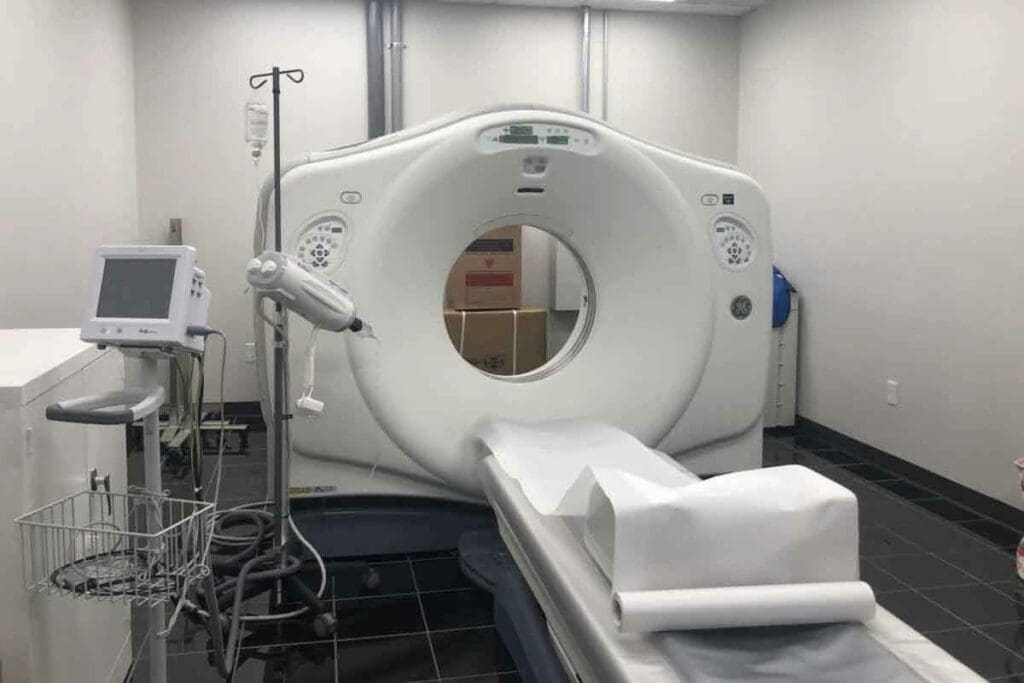
A Computed Tomography (CT) scan is a way to see inside the body. It uses X-rays from different angles to create detailed images. These images help doctors diagnose and treat many health issues.
Key components of a CT scanner include:
- X-ray tube: Produces X-rays that penetrate the body.
- Detectors: Capture the X-rays that have passed through the body.
- Computer system: Reconstructs the images from the data collected by the detectors.
How CT Scanners Create Cross-Sectional Images
CT scanners work by rotating around the patient and taking X-rays from many angles. The computer then makes detailed images of the body’s inside. It’s like slicing a loaf of bread to see its inside.
The images show important details about the body’s internal structures. This is key for diagnosing many health issues.
Evolution of CT Technology for Medical Imaging
CT technology has improved a lot over the years. It now offers better images, faster scans, and more detailed information. Some major updates include:
| Technology | Description | Impact |
| Helical CT | Continuous rotation of the X-ray tube and detectors around the patient. | Faster scan times and improved image continuity. |
| Multidetector CT (MDCT) | Use of multiple detectors to capture more data in a single rotation. | Enhanced image resolution and faster scan times. |
| Dual-Source CT | Two X-ray tubes and detectors operating simultaneously. | Improved temporal resolution, beneficial for cardiac imaging. |
These updates have made CT scans a vital tool in medical imaging. They provide detailed views of the body’s inside, helping doctors diagnose and treat many conditions.
Does a CT Scan Show Bones in Detail?

CT scans can show bones in great detail, which is a big step forward in medical imaging. They give us clear views of bone structures. This is key for making accurate diagnoses and treatment plans.
X-ray Attenuation Properties of Bone Tissue
Bone tissue has special X-ray properties that help CT scans show it clearly. The density of bone makes it absorb X-rays in a way that soft tissues don’t. This creates a clear contrast in the images.
X-rays go through bone at a higher rate than soft tissues. This is why CT scans can make detailed images of bones.
Hounsfield Units and Bone Density Measurement
CT scans use Hounsfield Units (HU) to measure bone density. This scale shows how much X-rays are absorbed by different tissues. Knowing bone density is important for checking bone health and diagnosing conditions like osteoporosis.
By using Hounsfield Units, we can see how strong and healthy bones are. This helps us figure out the risk of fractures and track changes in bone density over time.
Visualizing Bone Architecture in Three Dimensions
CT scans are great because they can show bone architecture in 3D. 3D bone visualization helps us understand bone structures better. It shows how bones are related in space.
This is really useful for planning surgeries and checking complex bone fractures. Looking at bones in 3D helps us see how injuries or diseases affect them.
CT Scan vs. Traditional X-rays for Bone Imaging
CT scans are now a top choice for bone imaging, beating traditional X-rays in detail and sensitivity. They are great for spotting complex or small fractures.
Limitations of Conventional Radiography
Traditional X-rays have been key in bone imaging for years. But, they can miss some fractures, like stress fractures. They show bones in two dimensions, making it hard to see some fractures because of overlapping bones and soft tissues.
Also, X-rays struggle to show changes in bone density. This makes it tough to catch osteoporosis early. In tricky areas like the spine, pelvis, or wrist, X-rays often fall short.
Enhanced Detail and Sensitivity in CT Bone Imaging
CT scans, though, offer a big leap forward. They take many images to show bones in three dimensions. This helps spot tiny fractures or hairline cracks that X-rays miss.
A study in Nature Communications found CT scans better at finding fractures than X-rays. This shows how important new imaging tech is, like for patients with hidden fractures.
Clinical Scenarios Where CT Outperforms X-rays
CT scans are better in many situations. For complex fractures or those with many pieces, CT scans give a clearer view. This is key for surgeons planning surgery.
CT scans also check bone health after surgery or injury. They help see how healing is going and spot any problems early.
| Imaging Modality | Fracture Detection Capability | Clinical Utility |
| Traditional X-rays | Limited sensitivity, specially for stress or microfractures | Initial assessment, simple fractures |
| CT Scans | High sensitivity for all types of fractures, including stress and microfractures | Complex fractures, surgical planning, post-traumatic or post-surgical assessment |
In summary, while X-rays are useful in some cases, CT scans are better for bone imaging, mainly for complex or small fractures. As imaging tech gets better, CT scans will play an even bigger role in helping diagnose and treat bone issues.
Specialized CT Techniques for Bone Visualization
Specialized CT methods give us amazing detail in seeing bones. They use advanced tech to show us cross-sectional images. These images are key for spotting bone problems.
Adjusting CT scan settings helps focus on bones. CT scans with bone window settings are great. They make bone details stand out, helping doctors spot bone issues.
CT Scan with Bone Window Settings
Using bone window settings on a CT scan helps see bone architecture better. By tweaking the settings, doctors can make images show bone density differences. This is vital for finding small fractures or bone lesions.
High-Resolution CT for Fine Bone Detail
High-resolution CT takes bone imaging to a new level. It gives us super detailed images of bones. This is great for looking at complex bone anatomy or finding tiny fractures.
High-resolution CT improves diagnosis and helps with surgery planning. It’s super useful in orthopedic and trauma cases where detailed bone images are key.
3D Reconstruction and Volume Rendering of Bone Structures
3D reconstruction and volume rendering are powerful tools. They let radiologists make 3D models of bones from CT scan images. This helps a lot with surgery planning and explaining complex bone info to patients.
3D reconstruction gives a full view of bone anatomy. It helps doctors see how bones relate to each other and any issues. Volume rendering makes it easier to see specific bone structures by showing different tissue densities.
Will a CT Scan Show Broken Bones? Evidence and Accuracy
Research shows CT scans are great at finding bone fractures. This is because of their advanced technology. They give detailed images of bones.
Research on CT Efficacy in Fracture Detection
Many studies have looked at how well CT scans find bone fractures. They found CT scans are better than X-rays for some fractures.
A study in a top medical journal showed CT scans are very good at finding wrist and ankle fractures. This is important for planning treatment.
Sensitivity and Specificity Rates for Different Fracture Types
CT scans work differently for different fractures. They are very good at finding spine, pelvis, and rib fractures. They have high sensitivity and specificity rates for these.
| Fracture Type | Sensitivity Rate (%) | Specificity Rate (%) |
| Spinal Fractures | 95 | 98 |
| Pelvic Fractures | 92 | 95 |
| Rib Fractures | 90 | 93 |
Detecting Occult Fractures Not Visible on X-rays
CT scans are great at finding fractures that X-rays miss. These are small or hairline fractures.
They are very helpful for people at high risk, like those with osteoporosis. CT scans help doctors diagnose and treat these fractures better.
In summary, CT scans are a reliable way to find broken bones. They are very accurate, making them a key part of medical imaging today.
Types of Bone Fractures Detected by CT Scans
CT scans are key in finding many bone fractures. They help doctors diagnose and plan treatment. This technology is very useful for spotting different types of fractures.
Simple and Compound Fractures
CT scans tell the difference between simple and compound fractures. Simple fractures don’t break the skin. Compound fractures do, which can lead to infection. The scans help doctors see how bad the fracture is and what to do next.
Stress Fractures and Microfractures
Stress fractures are small cracks from too much stress. CT scans are great at finding these. They can also spot tiny cracks called microfractures. This helps doctors catch problems early and stop them from getting worse.
Pathological Fractures
Pathological fractures happen when a bone breaks because of a problem like osteoporosis. CT scans show what’s causing the fracture and how bad it is. They help doctors create a treatment plan that fixes the fracture and the underlying issue.
| Fracture Type | Description | CT Scan Benefits |
| Simple Fractures | Closed fractures where the bone does not pierce the skin | Detailed images for accurate diagnosis |
| Compound Fractures | Open fractures where the bone breaks through the skin | Assessment of fracture severity and planning treatment |
| Stress Fractures | Small cracks due to repetitive stress or force | Detection of fractures not visible on X-rays |
| Pathological Fractures | Fractures due to pre-existing conditions like osteoporosis or tumors | Identification of underlying causes and assessment of damage |
CT Scan for Bone Fracture: The Diagnostic Process
The process of using CT scans to diagnose bone fractures includes several key steps. These steps ensure we get clear images and can interpret them correctly. We’ll walk you through each stage, showing why they’re important for a precise diagnosis.
Patient Preparation and Positioning
Getting patients ready and positioned right is essential for clear CT images. We make sure they’re placed correctly on the scanner table, usually lying down. We also center the area we’re focusing on.
Technologists use aids to keep patients in the right spot and prevent movement. We tell patients to stay as motionless as possible during the scan. Sometimes, we use special devices or give breathing tips to help them stay steady.
Scan Protocol for Suspected Fractures
When we suspect a bone fracture, we use a specific protocol for the scan. This protocol helps us get the best images and make accurate diagnoses. Here’s what we do:
- We choose the right scanning mode, like helical or axial, based on the fracture’s location and type.
- We adjust settings like slice thickness and pitch to get the highest resolution.
- In some cases, we might use contrast agents to see soft tissues better, though it’s rare for bone fractures.
Our CT scanners have advanced software. This lets us make changes to the scan in real-time. We aim to get the most detailed images possible.
Interpreting CT Images of Fractured Bones
Reading CT images of broken bones needs a lot of skill. Our radiologists look closely at the images for signs of a fracture. They check for breaks in the bone, displaced pieces, or injuries to soft tissues.
We use advanced tools like multi-planar reconstruction (MPR) and 3D volume rendering. These help us:
- Understand the fracture’s layout and how the pieces are moved.
- See if nearby joints or soft tissues are affected.
- Plan the best treatment, whether it’s surgery or not.
By combining top-notch CT images with expert analysis, we can accurately spot bone fractures. This helps us understand the bone’s structure and guide treatment choices.
Bone Scan vs. CT Scan: Understanding the Differences
Two important imaging techniques are used to diagnose bone issues: bone scans and CT scans. They have different uses and benefits.
How Nuclear Medicine Bone Scans Work
Bone scans use small amounts of radioactive tracers to see bone activity. They help find fractures, infections, and tumors in bones.
A radioactive tracer is injected into the blood. It goes to active bones. A camera picks up the radiation, showing where bones are most active.
Key benefits of bone scans include:
- They can spot bone changes early.
- They check the whole skeleton.
- They’re good for finding bone disease from cancer.
When to Use CT vs. Nuclear Bone Scan
Choosing between a CT scan and a bone scan depends on what you need to know. CT scans show detailed bone structures. They’re great for complex fractures and bone deformities.
Bone scans are better for seeing bone metabolism changes. They’re used to check the whole skeleton or find conditions not seen on CT scans.
- Use CT scans for:
- Detailed bone anatomy
- Complex fracture assessment
- Preoperative planning
- Use bone scans for:
- Detecting early bone changes
- Assessing metastatic bone disease
- Evaluating the entire skeleton
Combined Approaches: SPECT/CT Hybrid Imaging
Combining imaging modalities can give a better view of bone conditions. SPECT/CT hybrid imaging mixes SPECT’s functional info with CT’s detailed anatomy.
This mix helps pinpoint abnormal bone metabolism. It’s great for complex cases needing both functional and anatomical details.
Knowing the strengths and limits of bone scans and CT scans helps doctors pick the best imaging method. This ensures accurate diagnosis and treatment of bone conditions.
Quantitative CT for Bone Mineral Density Assessment
Quantitative CT scans are precise for measuring bone mineral density. They help diagnose and manage bone disorders. This technology is key in assessing bone health in clinics.
Measuring Bone Density with Quantitative CT
Quantitative CT measures bone mineral density in the spine, hip, or other areas. It uses a CT scanner to take images of bones. These images are then analyzed to find the bone density.
Key benefits of quantitative CT for bone density measurement include:
- High accuracy in detecting bone mineral density
- Ability to assess bone density in various parts of the body
- Useful for monitoring changes in bone density over time
Osteoporosis Evaluation and Fracture Risk Assessment
Osteoporosis weakens bones, making them prone to fractures. Quantitative CT is key in evaluating osteoporosis. It measures bone mineral density, a key indicator of bone health.
Healthcare providers use bone density to assess fracture risk. They then create treatment plans. Quantitative CT is valuable because it gives detailed bone density information.
Comparison with DEXA Scanning Technology
DEXA scanning is another method for assessing bone mineral density. Both quantitative CT and DEXA scanning serve this purpose. Yet, they differ in some ways.
| Characteristics | Quantitative CT | DEXA Scanning |
| Accuracy | High accuracy, specially for spinal bone density | Generally accurate, but can be affected by various factors |
| Radiation Exposure | Higher radiation dose compared to DEXA | Lower radiation dose |
| Application | Can be used for various bone density assessments | Primarily used for hip and spine bone density |
Quantitative CT provides detailed bone density measurements. It’s useful in specific clinical scenarios. The choice between quantitative CT and DEXA scanning depends on the patient’s needs and the healthcare provider’s judgment.
Radiation Considerations and Safety in Bone CT Imaging
CT scans for bone imaging bring up important questions about radiation safety. We use this technology to diagnose and monitor bone fractures and diseases. It’s key to understand the effects of radiation exposure.
Typical Radiation Dose in Bone CT Scans
Bone CT scans use a certain amount of radiation, measured in millisieverts (mSv). The dose can change based on the scanner and the scan protocol. Usually, the dose is low, but we aim to keep it low while keeping image quality high.
Risk-Benefit Analysis for Different Patient Populations
When we think about CT scans for bone imaging, we must compare the benefits to the risks of radiation. For some, like younger people or those needing many scans, other methods might be better. But for many, the benefits of CT scans are worth the risks.
Low-Dose CT Protocols for Bone Imaging
New CT technology has led to low-dose protocols that cut down radiation. These are great for patients needing long-term scans or at high risk from radiation. By tweaking scanning settings and using new tech, we get good images at lower doses.
We always try to meet our patients’ needs while keeping radiation low. With better scanning methods and tech, we aim to make bone CT imaging safe and effective.
Conclusion: The Future of CT Technology in Bone Imaging
Looking ahead, CT technology will keep being key in bone imaging. New advancements will make it even better at showing bone details. This means more accurate diagnoses for patients.
Future CT tech promises better image quality, faster scans, and less radiation. These changes will help doctors make more precise diagnoses. This leads to better care for patients.
CT scans will stay important for finding bone fractures and checking bone health. They will also be safer for patients with lower radiation doses. It’s exciting to think about how CT tech will improve patient care in the future.
FAQ
Does a CT scan show bones?
Yes, a CT scan is great for showing bones. It gives detailed images of bones and their density. This makes it key for diagnosing bone issues.
Can a CT scan detect broken bones?
Yes, CT scans are very good at finding bone fractures. They can spot different kinds of fractures better than X-rays.
What is the difference between a CT scan and a bone scan?
A CT scan uses X-rays to show bone details. A bone scan uses radioactive material to highlight bone activity. CT scans are better for bone structure, while bone scans show bone metabolism changes.
How does a CT scan show bone density?
CT scans measure bone density using Hounsfield Units. This helps in checking for osteoporosis and fracture risk.
Is a CT scan better than an X-ray for diagnosing bone fractures?
Often, yes. CT scans have more detail and sensitivity than X-rays. They’re great for complex fractures or unclear X-ray results.
What are the radiation considerations for bone CT imaging?
CT scans use radiation, but the benefits are often worth it. Modern scanners and low-dose settings help keep radiation low.
Can quantitative CT assess bone mineral density?
Yes, quantitative CT is good for checking bone mineral density. It’s useful for osteoporosis and fracture risk assessment.
What is the role of 3D reconstruction in bone CT imaging?
3D reconstruction helps see complex bone anatomy and fractures. It aids in diagnosis and treatment planning.
Are there specialized CT techniques for bone visualization?
Yes, using bone window settings and high-resolution CT improves seeing bone details. These methods enhance CT’s ability to diagnose bone issues.
How does SPECT/CT hybrid imaging combine the benefits of different diagnostic tools?
SPECT/CT combines nuclear medicine’s function with CT’s anatomy. It gives a full view of bone health and disease.
What is the future of CT technology in bone imaging?
CT technology is getting better, promising more precise bone imaging. This could lead to new uses and better diagnosis of bone conditions.
Reference
- Avci, M., et al. (2019). Comparison of X-Ray Imaging and Computed Tomography in diagnosing knee bone fractures. PMC. https://pmc.ncbi.nlm.nih.gov/articles/PMC6843286/