

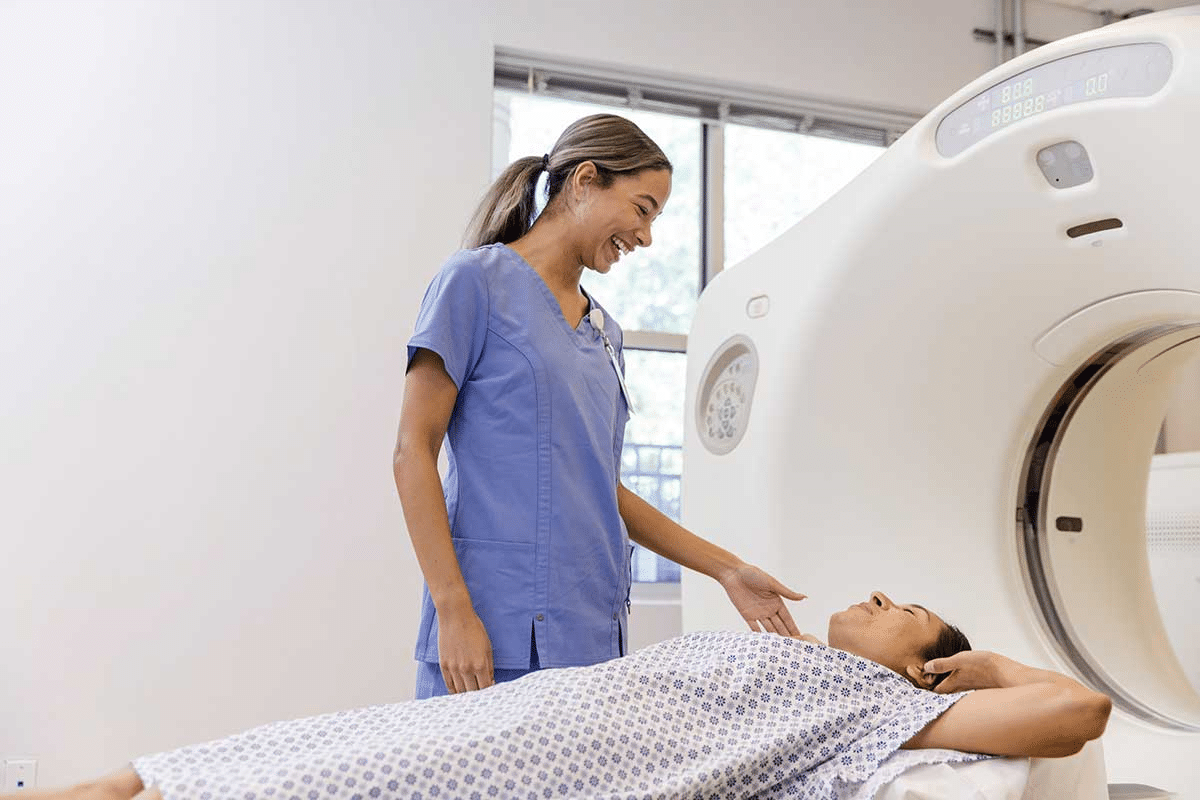
Does bone density scan show cancer? Learn what this test reveals about your health and why it is the best tool for checking osteoporosis risk. When you get a DEXA scan, you might wonder if it can find cancer. A DEXA scan mainly checks your bone mineral density. It helps figure out if you might get osteoporosis.
DEXA scans aren’t made for finding cancer. But, new studies show they might hint at cancer in bones. This is called metastatic bone disease.
At Liv Hospital, we mix top medical skills with care that puts you first. We know how important it is to understand what tests like DEXA scans can do.
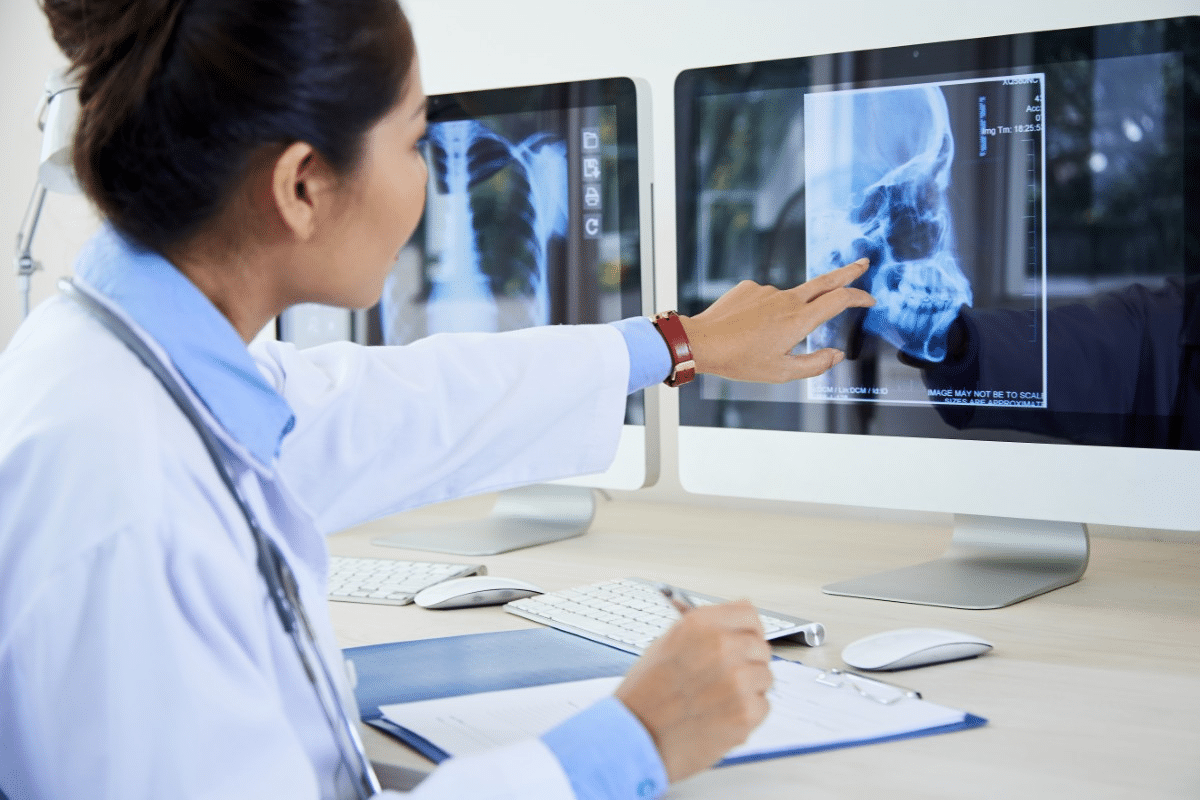
A bone density scan, also known as a DEXA scan, is a non-invasive test. It measures bone mineral density. This tool helps doctors check bone health and find conditions like osteoporosis.
A DEXA (Dual-Energy X-ray Absorptiometry) scan uses low doses of X-rays. It creates detailed images of your bones. The scan measures how much radiation your bones absorb, giving an accurate bone density reading.
The DEXA scan is painless and quick. It usually takes just a few minutes. You’ll lie on a table while a machine scans your bones, often in the hip and spine.
Bone density scans measure the density of minerals like calcium in your bones. They compare your bone density to a healthy young adult’s. This gives a T-score that shows your bone health.
|
T-Score |
Bone Health Status |
|---|---|
|
-1.0 or above |
Normal bone density |
|
Between -1.0 and -2.5 |
Osteopenia (low bone mass) |
|
-2.5 or below |
Osteoporosis |
The results of a DEXA scan are key for diagnosing osteoporosis and fracture risk. They help doctors create a plan to keep or improve your bone health.
The radiation from a DEXA scan is very low. It’s like a few hours of everyday environmental radiation. This makes DEXA scans safe and effective for all ages.
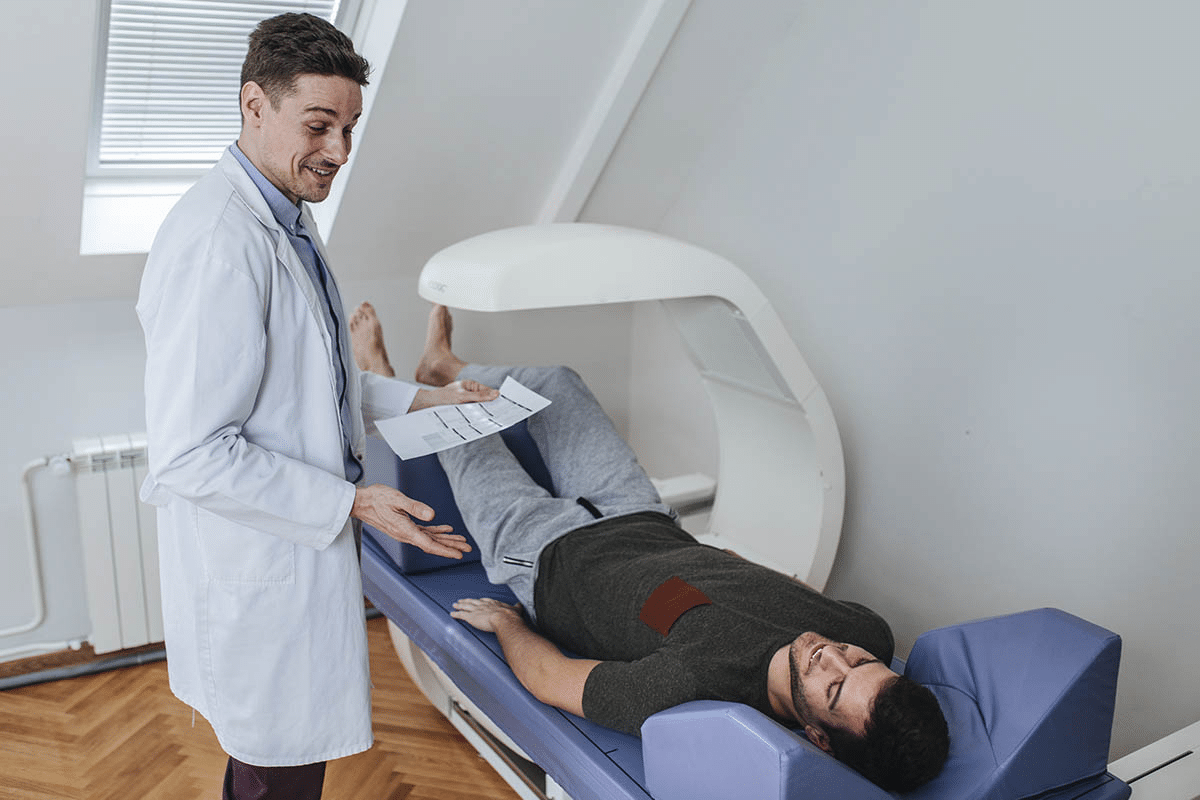
The main goal of bone density testing is to check how strong your bones are. This is key to knowing your bone health.
This test, often done with a DEXA scan, shows how strong your bones are. It helps find problems like osteoporosis and osteopenia.
Bone mineral density (BMD) shows how healthy your bones are. It looks at minerals like calcium in your bones. A DEXA scan is used to measure BMD.
The scan’s results are compared to a healthy young adult’s. This gives you a T-score. The T-score shows how your bones compare to a young adult’s.
A T-score between -1 and -2.5 means you have low bone density, or osteopenia. A score of -2.5 or lower means you have osteoporosis.
Osteoporosis makes bones weak, leading to more fractures. To check your risk, doctors look at your bone density, age, family history, and lifestyle.
The table below shows how T-scores are used to diagnose bone health:
|
T-Score Range |
Diagnosis |
|---|---|
|
+1 to -1 |
Normal bone density |
|
-1 to -2.5 |
Osteopenia (low bone density) |
|
-2.5 or lower |
Osteoporosis |
Knowing your T-score and diagnosis helps doctors plan the best treatment for your bones.
Bone density scans are great for checking if you might get osteoporosis. But, they can’t really find cancer. These scans, like DEXA scans, mainly look at bone health and body makeup.
DEXA scans have big problems when it comes to finding cancer. They can’t spot cancerous tissues or tumors. Their main job is to check bone health, not find cancer. Here are some main issues:
DEXA scans focus a lot on bone density and body makeup. They don’t give much info on soft tissues, like tumors or cancer. Other tests are needed to find and diagnose cancer.
Some things DEXA scans can’t see include:
It’s key for both patients and doctors to know these limits. While DEXA scans are good for bone health, they shouldn’t be used to find cancer.
It’s important to know the difference between bone cancer and bone density. Bone density scans help find osteoporosis risk. But, they can also show signs of bone cancer.
Bone cancer, or primary bone cancer, changes bone structure. This can make bones denser or less dense, depending on the cancer type.
Osteosarcoma, a bone cancer, can make some areas denser while destroying others. This creates an irregular bone shape. Imaging can spot these changes.
The main bone cancers are osteosarcoma, Ewing’s sarcoma, and chondrosarcoma. Each one impacts bones in its own way.
|
Type of Cancer |
Effect on Bone |
|---|---|
|
Osteosarcoma |
Produces abnormal bone tissue, leading to dense areas within the bone. |
|
Ewing’s Sarcoma |
Can cause bone destruction and sometimes produces soft tissue masses. |
|
Chondrosarcoma |
Affects cartilage, potentially leading to calcified masses within the bone. |
Knowing these differences helps doctors diagnose and treat bone cancer right. Bone density scans can hint at cancer, but more tests are needed to confirm.
DEXA scans are meant to check bone health. But sometimes, they find things that weren’t expected. These surprises can worry both patients and doctors.
DEXA scans mainly look at bone density to spot osteoporosis. But, they can also find other issues. These might include broken vertebrae, aortic calcification, or other problems not related to bones.
Studies show many patients get unexpected results from DEXA scans. These findings need more looking into. Here’s a table showing what these surprises might mean:
|
Incidental Finding |
Potential Implication |
|---|---|
|
Vertebral fractures |
Possible osteoporosis or bone metastasis |
|
Aortic calcification |
Cardiovascular disease risk |
|
Soft tissue abnormalities |
Various conditions, including cysts or tumors |
DEXA scan surprises can point to many conditions. For example, aortic calcification means you might be at risk for heart disease. Vertebral fractures could mean osteoporosis or even cancer in the bones.
If you find something unexpected, you’ll likely need more tests. This could include CT scans or MRIs to get a clearer picture.
Talking to your doctor about these findings is key. They can help figure out what’s going on and what to do next. This way, you can get the right care for any issues found by your DEXA scan.
Cancer spreading to the bones can change bone density, affecting bone health. Metastatic bone disease happens when cancer cells from other parts of the body reach the bones. This leads to various bone-related problems.
Osteolytic lesions are areas where cancer has destroyed bone. These areas can make bones more likely to break. Osteolytic metastases often come from cancers like breast, lung, and thyroid.
These lesions can make it hard to measure bone density correctly. It’s important to tell osteolytic lesions apart from other bone loss causes. This helps in giving the right diagnosis and treatment.
Osteoblastic lesions, on the other hand, are areas where bone forms around cancer cells. This can make bone density seem higher, but the bone is weak and can break easily. Osteoblastic metastases are often linked to prostate cancer.
These lesions can also affect bone density measurements. They might hide bone loss or osteoporosis. It’s key to understand these lesions to read bone density scans right.
To show the difference between osteolytic and osteoblastic lesions and their impact on bone density, here’s a table:
|
Lesion Type |
Effect on Bone Density |
Common Associated Cancers |
|---|---|---|
|
Osteolytic |
Decreases bone density |
Breast, Lung, Thyroid |
|
Osteoblastic |
Increases bone density |
Prostate |
A medical expert says, “Knowing the type of bone metastasis is key to managing patients with metastatic bone disease.” This shows how important accurate diagnosis and treatment plans are for these patients.
“The presence of metastatic bone disease complicates the interpretation of bone density measurements, requiring a nuanced understanding of both osteolytic and osteoblastic lesions.”
Medical Oncology Expert
Finding bone metastases early can greatly help patients. When cancer reaches the bones, it makes treatment harder. We’ll look at the main cancers that spread to bones and how to find them.
Certain cancers like breast cancer, prostate cancer, and lung cancer often spread to bones. This can cause a lot of pain, fractures, and high calcium levels.
The bones are a favorite spot for cancer to spread because of their blood supply and growth factors. Knowing which cancers are likely to spread helps doctors choose the right tests.
Many imaging methods help find bone metastases. Magnetic Resonance Imaging (MRI) is top-notch for early spotting. It uses strong magnets and waves to show detailed 3D images of inside the body, great for seeing bone marrow.
Computed Tomography (CT) scans give detailed cross-sections and are good for seeing bone damage and soft tissue. Positron Emission Tomography (PET) scans are also key, showing active cancer cells in bones and elsewhere.
Choosing the right imaging depends on the cancer type, patient’s health, and situation. Sometimes, doctors use more than one method for a full picture.
Spotting bone metastases early with these advanced tools is key to better managing the disease and improving patient care.
Advanced tests are key in finding cancer. DEXA scans check bone density but don’t find cancer. Other tests help spot cancer and track its spread.
Bone scans and DEXA scans are for different things. DEXA scans measure bone density to check for osteoporosis. Bone scans find abnormal bone activity, which might mean cancer or infection.
“Bone scans are great for finding cancer in bones,” experts say. They show different things about bone health than DEXA scans.
Other tests are also important for finding cancer. CT scans make detailed images with X-rays to spot tumors. MRI scans use magnets and radio waves for soft tissue images.
PET scans use radioactive glucose to see body activity. Cancer cells use more glucose, making PET scans good for finding cancer and checking treatment.
Each test has its own benefits for cancer detection and care. Knowing what each can do helps doctors choose the best test. This improves patient care.
Radiation safety is key in medical imaging, including DEXA scans. These scans use low radiation to check bone density. Knowing about radiation exposure is vital as we use more imaging for patient care.
DEXA scans use low X-ray doses to measure bone density. The radiation is similar to a standard X-ray and is safe. A DEXA scan exposes patients to 1-5 microsieverts (μSv) of radiation.
This is much less than a chest X-ray, which is around 10-20 μSv. The low radiation makes DEXA scans a safe choice. But, it’s important to follow safety steps to reduce exposure. This includes using the least amount of radiation needed and having a skilled technician perform the scan.
Imaging methods vary in radiation exposure. For example:
DEXA scans have one of the lowest doses among common imaging methods. This makes them great for checking bone health over time with little risk.
When choosing imaging, weighing benefits against risks is important. For DEXA scans, the benefits of accurate bone density checks often outweigh the low risks of radiation.
Understanding radiation levels helps healthcare providers make better choices for patient care. This knowledge also helps patients understand the safety and benefits of their tests.
Getting your DEXA scan results is the first step to find issues that need more tests. DEXA scans are great for checking bone density. But, they might show patterns that need more looking into.
Some DEXA scan results might show you need more tests. Look out for:
If your doctor sees these red flags, they might want to do more tests to find out why.
Your doctor might suggest more tests based on your DEXA scan. These could be:
These tests help your doctor understand what’s going on with your bones.
It’s key to follow your doctor’s advice for more tests. This ensures you get the right diagnosis and treatment. By doing this, you can help keep your bones healthy.
The future of bone density imaging is bright, thanks to new DEXA technologies. These advancements are changing how we scan bones. They make scans more accurate and quicker.
New DEXA tech brings better scanning methods. These include:
These updates help spot osteoporosis and other bone issues early. They give doctors the info they need to care for patients better.
Using different imaging methods together is now common. DEXA scans are paired with CT scans or MRIs. This gives a full picture of bone health.
Combining scans has many benefits. These include:
As research grows, so will the field of bone density imaging. Mixing advanced DEXA tech with other scans will be key in the future of diagnosis.
We’ve looked into how bone density scans check bone health and their limits in finding cancer. DEXA scans are great for measuring bone mineral density. But, they’re not made to spot cancer.
The main goal of a bone density scan is to see if you’re at risk for osteoporosis and to keep an eye on your bones. But, for finding cancer, other tests like CT scans, MRIs, and PET scans are better.
In short, a bone density scan is key for diagnosing and treating osteoporosis. But, it’s not the go-to for finding cancer. If you’re worried about cancer or have odd scan results, you should talk to a doctor.
Knowing what each diagnostic tool can do helps us give patients the right care. As medical tech gets better, so will our ability to see and treat bone issues.
No, bone density tests like DEXA scans are not for finding bone cancer. They mainly check bone health and risk for osteoporosis.
Sometimes, a bone density scan might show odd results. But it’s not good for finding cancer. Better tests like MRI, CT, and PET scans are needed for that.
No, DEXA scans are not for finding cancer. They help check bone density and osteoporosis risk. They might find other things by chance, but not cancer.
DEXA scans are not for finding bone metastases. They might show changes in bone density that could mean cancer is there. But, other tests like bone scans and MRI are better for this.
Bone density scans, like DEXA scans, check bone health and osteoporosis risk. Cancer screening tests aim to find cancer. Different tests, like MRI and CT scans, are used for screening.
Bone density tests, like DEXA scans, are for checking bone health and osteoporosis risk. They might find other things, but they’re not good for finding cancer.
No, DEXA scans are not for finding bone cancer. They are for checking bone density and osteoporosis risk.
No, bone density scans, like DEXA scans, are not for finding bone cancer. They mainly check bone health and osteoporosis risk.
No, DEXA scans are not reliable for finding cancer. They are for checking bone density and osteoporosis risk.
While a bone density scan might show odd results, it’s not good for finding cancer. Better tests are needed for that.
No, bone density tests, like DEXA scans, are not for finding bone cancer.
World Health Organization. DEXA Scans: Limited Cancer Detection Capabilities. Retrieved from https://apps.who.int/iris/handle/10665/41684
