
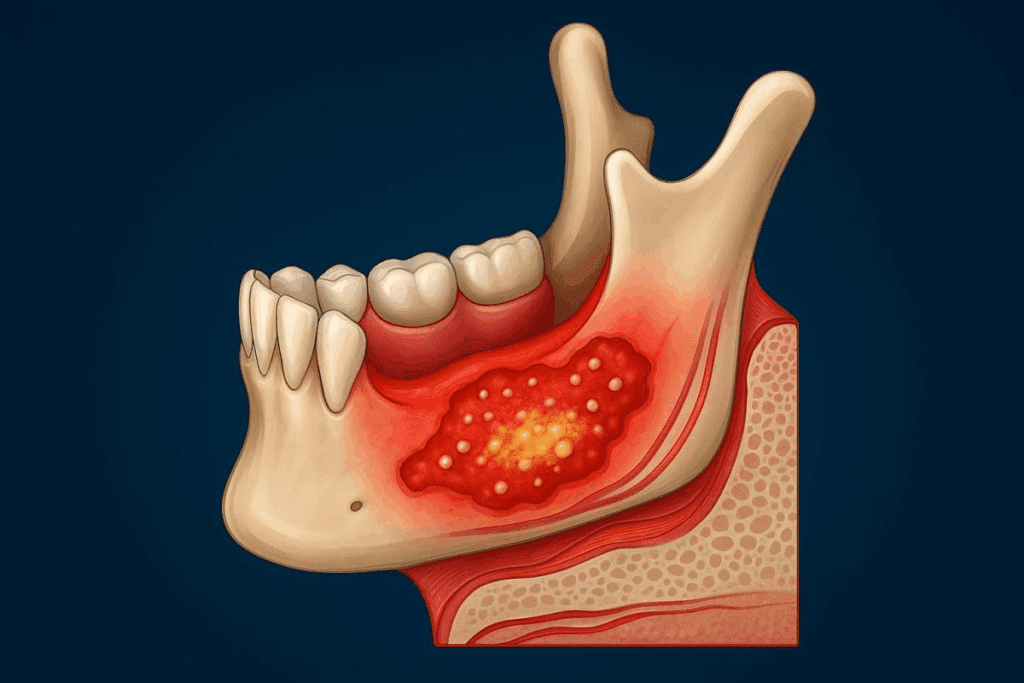
Jaw cancer can sneak up on you, looking like regular dental or TMJ issues. It’s key to know its signs to get help fast for ear and jaw pain on one side cancer.
The Medical organization says oral cancer shows up in different ways. You might see sores that won’t heal, white or red patches in your mouth, loose teeth, or trouble swallowing. Feeling ear and jaw pain on one side is a big clue.
At Liv Hospital, we focus on checking for head and neck cancers early. Spotting the signs of jaw cancer early is key to treating it well.
Key Takeaways
- Jaw cancer can present with distinctive symptoms, including ear and jaw pain on one side.
- Oral cancer can manifest as sores, patches, or difficulty swallowing.
- Comprehensive evaluations are key for catching it early.
- Liv Hospital puts patients first in treating head and neck cancer.
- Spotting symptoms early is essential for good treatment.
Understanding Jaw Cancer: Types and Prevalence

To understand jaw cancer, we need to know its types and how common they are. Squamous cell carcinoma is a key type. Jaw cancer can happen in any jaw part, like bones, tissues, and nearby areas.
Squamous Cell Carcinoma and Other Common Types
Squamous cell carcinoma is the most common jaw cancer type. It makes up a big part of oral cancers. The Warren County Dental Center says oral cancer can hit different mouth parts, like lips, gums, tongue, and the roof or floor of the mouth. Other jaw cancer types include:
- Sarcomas: Rare cancers that start in bone or soft tissue.
- Osteosarcoma: A bone cancer type that can hit the jaw.
- Odontogenic tumors: Rare tumors from tooth development tissues.
These cancers can be very different in how aggressive they are and what treatment they need.
Global Incidence and Risk Factors
Jaw cancer makes up about 4.5 percent of all squamous cell carcinomas worldwide. This shows it’s a big health problem globally. People usually get diagnosed with oral cancer at 63, which means it’s more common in older adults. Key risk factors include:
- Tobacco use: A big risk for oral and jaw cancers.
- Alcohol consumption: Drinking too much alcohol can raise jaw cancer risk.
- Human Papillomavirus (HPV): Some HPV strains are linked to higher oral cancer risk.
- Poor oral hygiene: Not taking care of your mouth can lead to jaw cancer.
Knowing these risk factors is key for prevention and catching cancer early.
Ear and Jaw Pain on One Side Cancer: A Primary Warning Sign

Ear and jaw pain on one side might be linked to cancer. It’s key to know the signs. We’ll look at how this pain is different and when to see a doctor right away.
Characteristics of Cancer-Related Pain
Cancer pain in the ear and jaw is not like other pains. It usually doesn’t go away and might come with swelling or numbness. Doctors say that sometimes, oral cancer shows up as chronic ear pain, when the cancer is near the throat or jaw.
People with ear and jaw pain on one side might feel pain and fullness in one ear. They might also see jaw swelling on their face or under their teeth. This pain can come from somewhere else, like a tumor, and feel like it’s in the ear or jaw.
Ear Fullness and Discomfort
Ear fullness is another sign that might mean cancer. It feels like your ear is blocked or under pressure. This can be uncomfortable and last a long time.
- Ear fullness can be caused by a tumor blocking the Eustachian tube.
- It can also be due to nerve damage or irritation from the cancer.
When One-Sided Pain Warrants Immediate Medical Attention
Seeing a doctor is important if you have ongoing or severe pain on one side. Here are some situations where you should go right away:
Symptom | Possible Indication |
Persistent pain on one side | Potential tumor or cancerous growth |
Swelling or lump in the jaw or face | Possible tumor or infection |
Difficulty swallowing or opening the mouth | Tumor invasion or nerve damage |
If you’re showing any of these signs, see a doctor fast. Catching cancer early can really help with treatment.
Visible Changes: Facial and Oral Symptoms
Early signs of jaw cancer can show up as changes in the face and mouth. These changes might be small at first but can grow bigger as the cancer gets worse. Seeing a doctor right away is important.
Jaw Swelling and Facial Asymmetry
Jaw swelling is a common sign of jaw cancer. It looks like a bulge or bigger jaw area. This can make one side of the face look different from the other.
These changes can affect how you look and how well you can chew or speak. It’s not just about looks; it’s about function too.
Persistent Lumps on Gums or Roof of Mouth
In the early stages, jaw cancer might show up as lumps on the gums or roof of the mouth. These lumps don’t go away in two weeks. At first, they might not hurt, but later they can be painful.
It’s important to watch for any unusual growths or changes in your mouth.
Changes in Facial Contour
As jaw cancer gets worse, it can change how your face looks. You might see swelling, asymmetry, or changes in the jaw’s shape. These changes can be upsetting and affect how you feel about yourself.
Symptom | Description | Potential Impact |
Jaw Swelling | Visible enlargement of the jaw area | Difficulty in chewing, speaking, and altered appearance |
Facial Asymmetry | One side of the face appears different from the other | Aesthetic concerns, functional issues |
Lumps on Gums or Roof of Mouth | Persistent growths that do not heal within two weeks | Discomfort, pain, and eating or speaking issues |
Changes in Facial Contour | Alterations in the shape of the jaw or surrounding areas | Aesthetic changes, psychological impact |
Spotting these changes early is key to catching jaw cancer early. If you see any of these signs, see a doctor right away.
Dental Manifestations of Jaw Cancer
Jaw cancer affects dental health and oral function in ways we might not know. It can cause various dental issues that are key for early detection and treatment.
Unexplained Loose or Displaced Teeth
Unexplained loose or displaced teeth in adults can be a sign of jaw cancer. Teeth becoming loose without trauma or gum disease might point to oral cancer. This happens because the tumor can invade the tooth sockets, making teeth loose or displaced.
Tumor Invasion Through Tooth Sockets
Tumor invasion through tooth sockets is a serious sign of jaw cancer getting worse. As the tumor grows, it can spread to the bone and tissues around the tooth sockets. This can cause pain, swelling, and trouble chewing.
Changes in Bite Alignment and Fit of Dentures
Jaw cancer can also change how teeth fit together and denture fit. The tumor can alter the jaw’s shape, affecting how upper and lower teeth align. This can make chewing and speaking hard. Also, dentures might not fit right anymore, leading to discomfort and more oral health problems.
Knowing these dental signs is key to getting medical help fast if you notice them. Early detection is vital for effective treatment and better survival chances.
- Watch for unexplained loose or displaced teeth.
- Notice any changes in bite alignment.
- Pay attention to denture fit issues.
Understanding these dental signs helps us spot jaw cancer early. This can lead to better treatment outcomes.
Persistent Mouth Sores and Bleeding
Jaw cancer often shows up as persistent mouth sores that bleed easily. Many patients notice these sores early on. They can be a sign of the disease.
Non-Healing Oral Lesions
Non-healing oral lesions are a big warning sign for jaw cancer. Studies show that a sore that doesn’t heal in two weeks might be cancer. These lesions can pop up in the gums, tongue, or roof of the mouth.
Bleeding Gums and Tissues
Bleeding gums and tissues are serious symptoms. Bleeding gums can happen when you brush your teeth or for no reason at all. It might mean a tumor is growing in the gums or bone.
Remember, bleeding gums can mean many things, not just cancer. But if it keeps happening, see a doctor right away.
Sensory Changes: Dry Mouth and Swallowing Difficulties
Patients with jaw cancer often face significant sensory changes. These include a dry mouth and trouble swallowing. These symptoms can really affect a person’s quality of life.
Dry Mouth as a Cancer Symptom
Dry mouth, or xerostomia, is common in jaw cancer patients. It happens when the tumor hits the salivary glands or the nerves that control saliva. This leads to less saliva, causing mouth dryness and discomfort.
Consequences of dry mouth include:
- Difficulty chewing and swallowing food
- Increased risk of tooth decay and oral infections
- Changes in taste or a metallic taste
- Discomfort or pain in the mouth
Progressive Dysphagia (Difficulty Swallowing)
Dysphagia, or trouble swallowing, is another big symptom in jaw cancer patients. As the tumor grows, it can block the food path or mess with the nerves that help swallow.
Stage of Dysphagia | Symptoms | Impact on Nutrition |
Mild Dysphagia | Occasional difficulty swallowing solids | Minimal impact; patient can adjust diet |
Moderate Dysphagia | Frequent difficulty swallowing solids and some liquids | Moderate impact; patient may need dietary changes |
Severe Dysphagia | Significant difficulty swallowing most foods and liquids | Severe impact; patient may require alternative nutrition methods |
Spotting these sensory changes early is key to managing jaw cancer. If you or someone you know has dry mouth or swallowing trouble, seeing a healthcare pro is a must.
Jaw Mobility Issues and Pain
The jaw is key to our daily life. Problems like limited mouth opening or trismus need attention. Jaw issues can cause pain, clicking, or trouble moving the jaw.
These symptoms can really impact your life. For example, clicking jaw sensations might signal a problem. Doctors say these sounds could point to TMJ disorders or even jaw pain cancer.
Clicking Jaw Sensations and Cancer
Clicking sounds happen when the jaw joint doesn’t work right. This can cause the jaw to click or pop. While it’s often linked to TMJ issues, it could also hint at something serious like cancer.
“Clicking sounds, along with ear or throat pain, might mean a serious issue,” says a top expert.
Limited Mouth Opening (Trismus)
Trismus, or limited mouth opening, is a big deal. It can come from infections, trauma, or tumors. If trismus is linked to cancer, it usually means the disease is advanced.
Trismus is more than just jaw trouble. It can signal a serious problem. So, if you can’t open your mouth well, see a doctor.
Differentiating Between TMJ Disorders and Cancer
Telling TMJ disorders apart from cancer can be tough. But, some clues can help. TMJ issues usually cause pain or clicking with jaw movement. Cancer pain, on the other hand, might not be linked to jaw use.
- TMJ disorders often have a history of jaw trauma or bruxism.
- Cancer-related jaw pain may be accompanied by other symptoms like unexplained weight loss or numbness.
- Imaging studies and biopsies are often necessary to determine the underlying cause of jaw mobility issues.
In summary, jaw problems and pain can mean different things. They could be simple TMJ issues or something serious like jaw pain cancer. Always get medical help for ongoing or severe symptoms to get the right diagnosis and treatment.
Throat, Ear, and Jaw Pain: The Symptom Triad
Throat, ear, and jaw pain together can signal a serious health problem, like cancer. This symptom triad is alarming if the pain doesn’t go away or gets worse. We’ll look into how these pains can be linked to cancer and why it’s important to notice this pattern.
How Cancer Can Cause Referred Pain
Cancer can cause pain in other areas by irritating nerves. For example, tumors in the jaw or throat can affect nerves that also serve the ear. Referred pain happens when the brain gets the pain signals wrong, making it hard to find the source. Doctors need to understand this to find the real cause of the pain.
Jaw cancer can spread to nearby nerves and structures, causing pain in the ear and throat. This pain can be confusing because it doesn’t always show up where the tumor is. It’s key for patients to share all their symptoms, even if they seem unrelated, to help doctors figure out what’s going on.
Pattern Recognition in Symptom Presentation
Spotting patterns in symptoms is key to catching jaw cancer early. Doctors look for symptoms like throat, ear, and jaw pain to spot possible cases. Recognizing patterns can help diagnose and treat cancer more effectively. It’s important to know these patterns and see a doctor if you notice them.
Patients should watch their symptoms closely and tell their doctor about any changes. Keeping a symptom diary can help track pain patterns. This info is very useful for finding the cause of the symptom triad.
Diagnosis and Treatment Options
Diagnosing jaw cancer involves several steps. These include physical exams, imaging tests, and biopsies. We aim to support you through this process with care and understanding.
Diagnostic Procedures and Tests
Several tests are used to diagnose jaw cancer. These include:
- Physical exams to look for jaw and area abnormalities
- Imaging tests like X-rays and CT scans to see the tumor
- Biopsy procedures to take tissue samples for tests
The Medical organization says cancer stages range from 0 to 4. This helps doctors plan the best treatment.
Treatment Approaches
Treatment for jaw cancer depends on several factors. These include the tumor’s type, stage, and location, and the patient’s health. Common treatments are:
- Surgery to remove the tumor and affected tissues
- Radiation therapy to kill cancer cells
- Chemotherapy to target cancer cells
- Targeted therapy to target cancer cells
Squamous cell carcinoma is the most common jaw cancer type. It makes up about 4.5 percent of squamous cell carcinomas worldwide.
Survival Rates and Prognosis Factors
Survival rates for jaw cancer depend on the stage and other factors. Early-stage cancers usually have a better outlook. The 5-year survival rate gives a general idea of the prognosis.
Stage | 5-Year Survival Rate |
Localized | 80% |
Regional | 50% |
Distant | 30% |
Knowing these factors helps us create personalized treatment plans. This improves outcomes and quality of life.
Conclusion: The Importance of Early Detection
Early detection is key to treating jaw cancer effectively. Spotting symptoms early can greatly improve survival chances and treatment success. We’ve talked about signs like ear and jaw pain, changes in facial and oral structures, dental issues, and dry mouth or trouble swallowing.
It’s vital to catch jaw cancer early. Research shows early detection of oral cancer leads to better treatment and survival rates. Knowing the risk factors and symptoms is important. If you notice anything unusual or persistent, see a doctor right away.
We stress the importance of regular dental visits and self-exams to catch problems early. Being proactive can lower your risk of advanced jaw cancer. If you’re worried about your oral health or have symptoms, talk to a healthcare professional quickly.
FAQ
What are the common symptoms of jaw cancer?
Jaw cancer symptoms include jaw pain and swelling. It also makes it hard to open your mouth. You might also feel ear or throat pain, or notice dentures don’t fit right.
Does jaw cancer cause ear and jaw pain on one side?
Yes, jaw cancer can lead to pain on one side of the jaw and ear. This happens when the tumor presses on nerves or tissues.
What is the difference between TMJ disorders and jaw cancer?
TMJ disorders cause jaw pain and clicking. Jaw cancer, on the other hand, can cause pain, swelling, and trouble opening your mouth. If symptoms last or are severe, see a doctor for a proper diagnosis.
Can jaw cancer cause dry mouth and swallowing difficulties?
Yes, jaw cancer can lead to dry mouth and swallowing problems. As the tumor grows, it can harm nerves and tissues needed for swallowing.
How is jaw cancer diagnosed?
Doctors use X-rays, CT scans, and biopsies to diagnose jaw cancer. They also do a physical exam to check for symptoms and abnormalities.
What are the treatment options for jaw cancer?
Treatment for jaw cancer depends on the tumor’s stage and location, and the patient’s health. It might include surgery, radiation, or chemotherapy, alone or together.
Can jaw cancer be cured?
Jaw cancer’s cure rate depends on when it’s caught. Early treatment can greatly improve survival chances. If you have symptoms or concerns, see a doctor.
What are the risk factors for developing jaw cancer?
Risk factors include tobacco use, too much alcohol, and certain genetic conditions. Radiation exposure and other factors can also raise your risk.
How can I reduce my risk of developing jaw cancer?
Avoid tobacco and limit alcohol to lower your risk. Keep your mouth clean and visit your dentist regularly. This can help catch problems early.
References
World Health Organization. (2025). What Does Jaw Cancer Feel Like Symptoms to. Retrieved from https://www.who.int/news-room/fact-sheets/detail/oral-health



 Departments
 Related Videos
 Our Doctors
 News
News