
We count on our eardrum, or tympanic membrane, to help us hear. The eardrum is a thin, semi-transparent membrane. It separates the outer ear canal from the middle ear.
Also known as the myringa, this delicate structure is key for sound transmission and hearing. When sound waves hit the eardrum, it vibrates. These vibrations then move to the inner ear, where they become sound.
Understanding the eardrum and its role is vital. Damage to the eardrum can lead to hearing loss, tinnitus, and more.
What is an ear drum (tympanic membrane) and its crucial role in hearing by transmitting sound vibrations to the middle ear.
Key Takeaways
- The eardrum, or tympanic membrane, is a critical component of the ear.
- It separates the outer ear canal from the middle ear.
- The eardrum plays a vital role in sound transmission and hearing.
- Damage to the eardrum can cause hearing loss and other complications.
- Understanding the eardrum’s function is essential for appreciating its importance.
The Anatomy of the Ear Drum
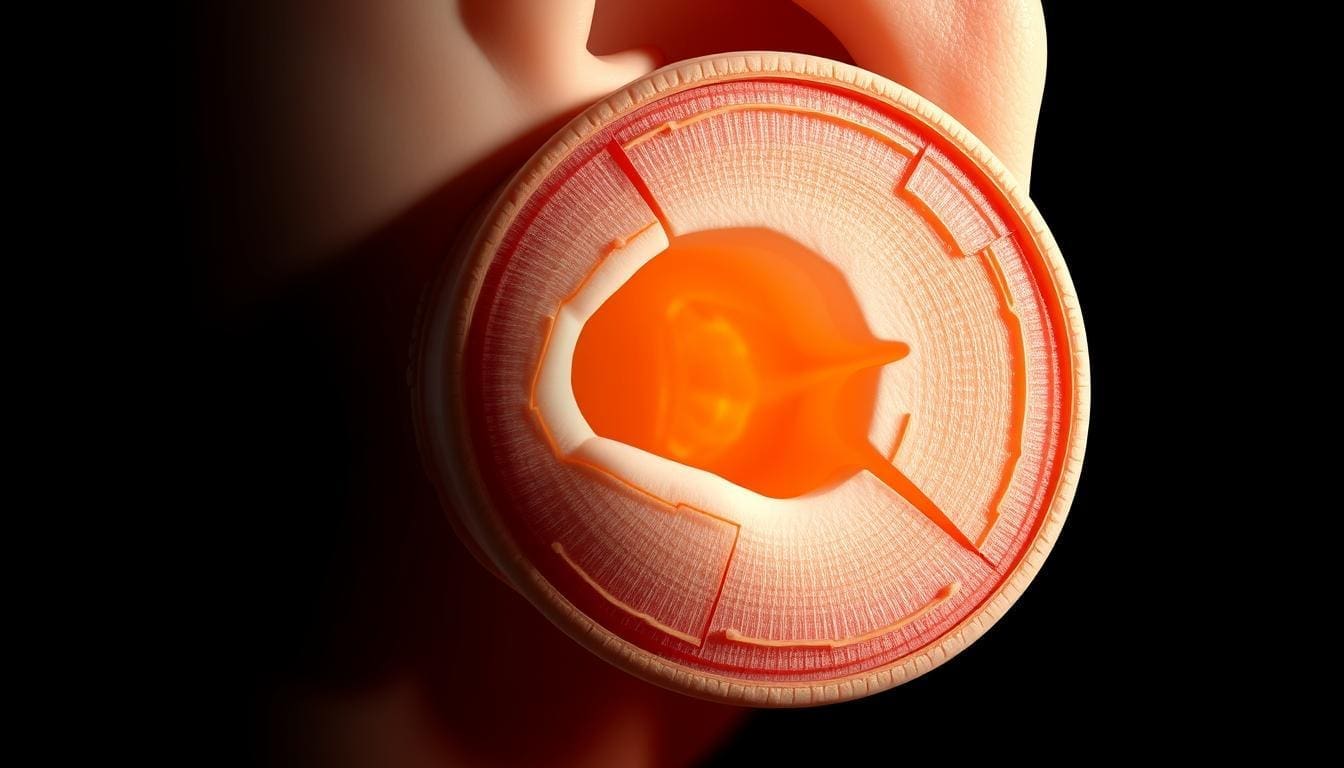
Exploring the eardrum’s anatomy shows its detailed structure and role. The eardrum, or tympanic membrane, is key to our hearing. It helps us understand sound.
Definition and Location
The eardrum is a thin membrane. It’s covered by skin on the outside and mucosa inside. It sits at the end of the ear canal, linking the outer ear to the middle ear. Its strategic position is key for sound transmission to the middle ear.
Size, Shape, and Appearance
The eardrum is about 1 centimeter wide and is usually white or gray. Its cone-shaped geometry is designed for better sound transfer. This shape is essential for its function in hearing.
The Three Layers of the Eardrum
The eardrum has three layers:
- An outer epidermis, matching the skin of the ear canal.
- A middle layer of fibers for strength and flexibility.
- An inner mucous membrane, connected to the middle ear’s lining.
These layers work together. They allow the eardrum to vibrate with sound waves. This helps send sound to the inner ear.
In summary, the eardrum’s anatomy is complex and vital. Its definition, location, size, shape, and layers are all important for hearing. Knowing about the eardrum helps us understand our hearing system better.
Structure and Design of the Eardrum
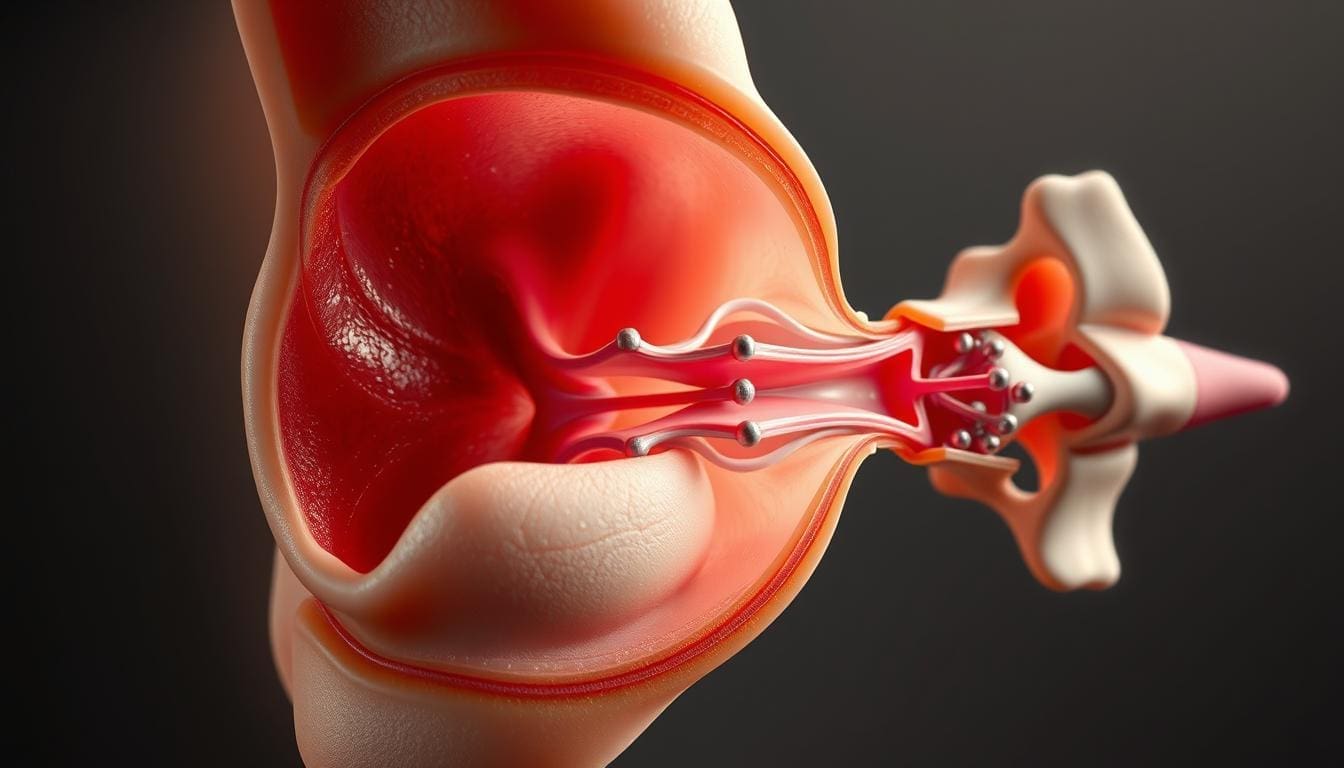
The eardrum’s design is key to our hearing. It captures sound waves and sends them to the inner ear.
Cone-Shaped Geometry and Its Purpose
The eardrum’s cone-shaped geometry is vital. It helps transfer sound force to the middle ear better than a flat membrane. Computer simulations show it’s great for high-frequency sounds.
This design makes our hearing better. The eardrum’s angle also helps in sound transmission.
Functional Regions: Pars Tensa and Pars Flaccida
The eardrum has two parts: the pars tensa and the pars flaccida. The pars tensa is big and tight, like a drum skin. It vibrates well with sound waves.
The pars flaccida is smaller and less tight. It’s important but can be more vulnerable to problems.
Attachment to the Temporal Bone
The eardrum is attached to the temporal bone. This is important for its function. The temporal bone helps the eardrum vibrate well, sending sound to the inner ear.
This attachment keeps the eardrum working right. It’s key for our hearing health.
How the Ear Drum Functions in Hearing
The eardrum is shaped like a cone and is very thin. It catches sound waves and sends them to the middle ear. This helps us hear. It turns sound waves into vibrations that get bigger and go to the inner ear.
Sound Wave Collection and Funneling
The eardrum is made to catch sound waves well. When sound hits it, it vibrates. These vibrations are not random; they match the sound’s energy.
The eardrum’s shape and size help it collect sound waves effectively. It sends these vibrations to the middle ear.
Vibration Patterns and Amplification
The way the eardrum vibrates is key for sound processing. When sound waves hit it, it vibrates in a pattern. This pattern matches the sound’s frequency and loudness.
These vibrations get amplified as they move to the ossicular chain. This makes sure the sound is strong and clear for us to hear.
Connection to the Ossicular Chain
The eardrum connects directly to the ossicular chain. This chain has three tiny bones: the malleus, incus, and stapes. The vibrations from the eardrum go through these bones to the inner ear.
This connection is key for efficient sound transmission. It helps us hear a wide range of sounds.
In short, the eardrum plays a big role in hearing. It catches sound waves, makes vibrations, and sends them to the ossicular chain. Its special shape and connection to the middle ear bones are vital for our hearing.
The Importance of the Eardrum in Sound Transmission
The eardrum is key in sound transmission. It connects the outside world to our inner ear. It transfers sound waves from the air to the fluid-filled inner ear, where they become meaningful sound.
Impedance Matching Between Air and Fluid
One of the eardrum’s main jobs is to match the air and fluid in the inner ear. Impedance matching is needed because sound waves move differently in air and fluid. If not matched, most sound energy would be lost, leading to hearing loss.
The eardrum’s structure and connection to the ossicular chain help with this matching. It transfers vibrations to the inner ear, matching the impedance. This ensures sound energy is well transmitted, letting us hear a variety of sounds.
Frequency Response and Sound Quality
The eardrum also affects the frequency response and sound quality we hear. Its cone-shaped geometry and tension let it handle a wide range of frequencies. This is key for hearing complex sounds like music and speech.
- The eardrum’s ability to vibrate in response to different frequencies enables us to hear a wide range of sounds.
- The eardrum’s tension and the ossicular chain’s mechanics work together to amplify sound vibrations, improving sound quality.
Protection of Middle and Inner Ear Structures
The eardrum also protects the middle and inner ear. It keeps out foreign objects and pathogens, preventing damage or infection.
In summary, the eardrum is vital for sound transmission, impedance matching, frequency response, and ear protection. Its role is essential, and understanding it helps us appreciate human hearing’s complexity.
The Eardrum’s Role Beyond Hearing
The eardrum does more than just help us hear. It also regulates pressure and protects our ears. These roles are key to keeping our ears healthy.
Pressure Regulation in the Middle Ear
The eardrum controls pressure in the middle ear. It lets air in through the Eustachian tube. This keeps the pressure inside and outside balanced. Proper pressure regulation stops discomfort and damage to the eardrum and nearby areas.
- Equalization of air pressure
- Prevention of eardrum damage
- Maintenance of middle ear health
Contribution to Balance and Spatial Awareness
The eardrum helps us stay balanced and aware of our surroundings. It connects to the ossicular chain and the inner ear. The vibrations it sends help us stay steady. This complex mechanism is vital for our daily lives.
Key aspects include:
- Vibration transmission
- Connection to the ossicles
- Inner ear balance mechanisms
Protection Against Foreign Objects and Pathogens
The eardrum keeps out harmful things like germs and debris. It protects the middle and inner ear. Keeping our eardrums safe from harm is important for our ear health.
Understanding the eardrum’s roles helps us value ear health more. We should take steps to protect this important part of our hearing system.
Common Eardrum Problems and Conditions
Eardrum problems are more common than you might think. Understanding these issues is vital for maintaining good ear health. The eardrum, or tympanic membrane, plays a key role in our ability to hear and maintain balance. When it is damaged or infected, it can lead to a range of problems.
Perforated Eardrum: Causes and Symptoms
A perforated eardrum is a tear or hole in the eardrum. It can be caused by trauma, infection, or Eustachian tube dysfunction. Symptoms include ear pain, hearing loss, tinnitus, and discharge from the ear. If not treated, it can lead to complications like hearing loss or recurrent infections.
Causes of a Perforated Eardrum:
- Trauma to the ear
- Infection
- Eustachian tube dysfunction
- Insertion of foreign objects into the ear
Understanding the causes and symptoms is key for seeking medical attention. A perforated eardrum can heal on its own, but sometimes surgery is needed.
Eardrum Infections and Inflammation
Eardrum infections and inflammation can come from bacterial or viral infections. This leads to conditions like otitis media. Symptoms include ear pain, fever, and hearing loss. These infections can be acute or chronic and may need antibiotic treatment or other interventions.
“Eardrum infections are a common issue, specially in children. They can cause significant discomfort and hearing impairment if not properly managed.”
Common Symptoms of Eardrum Infections:
Symptom | Description |
Ear Pain | Sharp or dull pain in the ear |
Fever | Elevated body temperature |
Hearing Loss | Temporary or permanent hearing impairment |
Other Eardrum Disorders
Besides perforation and infections, there are other eardrum disorders. These include myringitis (inflammation of the eardrum) and tympanosclerosis (scarring of the eardrum). Understanding these conditions is essential for proper diagnosis and treatment.
We have explored common eardrum problems and conditions. This includes perforated eardrum, infections, and other disorders. It is essential to be aware of the causes, symptoms, and treatment options for these conditions to maintain good ear health.
Diagnosing Eardrum Issues
Diagnosing eardrum problems requires several techniques. These methods help us understand the eardrum’s condition and function. Accurate diagnosis is key to finding the right treatment and improving patient outcomes.
Otoscopic Examination Techniques
Otoscopic exams are essential for diagnosing eardrum issues. They let doctors see the eardrum up close. They check for any damage or infection. Otoscopes have cameras and lights for a clear view.
During these exams, we look for signs like perforation or inflammation. The process is quick and doesn’t hurt. It helps guide further tests.
Tympanometry and Acoustic Reflex Testing
Tympanometry measures the eardrum’s movement and middle ear muscle reflexes. It changes air pressure in the ear canal. This shows how well the eardrum moves.
Acoustic reflex testing checks the stapedius muscle’s response to sound. It helps understand the middle ear’s function and hearing pathways.
Diagnostic Test | Purpose | Information Gained |
Otoscopic Examination | Visual inspection of the eardrum | Integrity, signs of infection or damage |
Tympanometry | Assess eardrum mobility | Eardrum movement, middle ear function |
Acoustic Reflex Testing | Evaluate stapedius muscle reflex | Middle ear function, neural pathway assessment |
Advanced Diagnostic Methods
For complex eardrum disorders, we might use advanced tests. High-resolution imaging like CT scans or MRI gives detailed ear images.
“Advanced imaging techniques have revolutionized the diagnosis of complex ear disorders, allowing for precise visualization of the eardrum and surrounding structures.” – Medical Expert, ENT Specialist
We use these advanced tests wisely. They’re for cases where initial tests show a need for more info. This thorough approach helps us give accurate diagnoses and effective treatments.
Protecting Your Ear Drum and Treatment Options
Keeping your eardrum safe is vital for your hearing health. The eardrum can get damaged by perforation, infection, or inflammation. Knowing how to protect it and when to see a doctor can help keep your hearing sharp.
Preventive Measures
Stopping eardrum damage is essential. Avoiding loud noises is a big step. Loud sounds can harm your eardrum and cause permanent hearing loss. Wearing ear protection like earplugs or earmuffs can help a lot.
Also, taking care of your ear hygiene is important. Don’t put things in your ear canal. And, treat ear infections quickly to avoid eardrum problems.
Medical and Surgical Interventions
When eardrum damage happens, there are ways to fix it. A tympanoplasty is a surgery that can repair a perforated eardrum. It uses tissue grafts to close the hole and improve hearing.
Other treatments might include antibiotics for infections or anti-inflammatory meds for swelling. Sometimes, surgery is needed to fix or replace damaged middle ear bones.
When to Seek Medical Attention
Knowing when to see a doctor is key. Signs like ear pain, hearing loss, or discharge from the ear mean you might have a problem. Seeing a doctor quickly can stop things from getting worse.
Regular visits to an ear, nose, and throat (ENT) specialist can catch issues early. Being proactive about your eardrum health can prevent long-term hearing problems.
Conclusion
The eardrum is key to our hearing. Its health affects our overall well-being. Knowing how it works helps us protect it and keep our hearing sharp.
Keeping our ears healthy is vital. It helps avoid problems with the eardrum and hearing. We must understand its role in sound and ear protection.
In conclusion, protecting our eardrums is essential. By being proactive and seeking help when needed, we can keep our eardrums healthy. This ensures our ears stay in top condition.
FAQ
What is the eardrum, and what is its medical name?
The eardrum, also known as the tympanic membrane, is a thin, semi-transparent membrane. It separates the outer ear canal from the middle ear.
What is the function of the eardrum in hearing?
The eardrum is key in hearing. It collects sound waves, vibrates, and sends these vibrations to the ossicular chain. This chain then amplifies and transmits them to the inner ear.
What are the layers of the eardrum?
The eardrum has three layers. The outer layer is the epidermis. The middle layer has radial and circular connective tissue fibers. The inner layer is a mucous membrane.
What is the significance of the eardrum’s cone-shaped geometry?
The eardrum’s cone shape helps in sound transfer. It’s better at high frequencies, making sound transmission more efficient.
What are the two main regions of the eardrum?
The eardrum has two main areas. The pars tensa is taut like a drum skin. The pars flaccida is less tense.
What is a perforated eardrum, and what are its causes?
A perforated eardrum is a tear or hole in the eardrum. It can be caused by trauma, infection, or other factors. Symptoms include ear pain and hearing loss.
How is a perforated eardrum diagnosed?
A perforated eardrum is diagnosed with an otoscopic examination. This gives a direct view of the eardrum. Other tests like tympanometry and acoustic reflex testing are also used.
What are the treatment options for a perforated eardrum?
Treatment for a perforated eardrum includes medical and surgical options. Antibiotics may be used for infection. Surgical repair is also an option.
How can I protect my eardrum?
Protect your eardrum by avoiding loud noises and trauma. Seek medical help if you notice any damage or infection symptoms.
What is the role of the eardrum in pressure regulation?
The eardrum helps maintain middle ear pressure balance. This is essential for hearing and ear function.
Can eardrum problems affect balance and spatial awareness?
Yes, eardrum problems can impact balance and spatial awareness. The eardrum plays a role in these functions.
What is the scientific name for the eardrum?
The scientific name for the eardrum is the tympanic membrane.
What is the meaning of eardrum?
The eardrum is a thin membrane that separates the outer ear canal from the middle ear. It’s vital for sound transmission and hearing.
What is myringa?
Myringa is another term for the eardrum or tympanic membrane.
What is the ear drum?
The ear drum, or eardrum, is a vital part of the ear. It plays a key role in sound transmission and hearing.
References
World Health Organization. (n.d.). Influenza (Seasonal). Retrieved from [https://www.who.int/news-room/fact-sheets/detail/influenza-(seasonal