Last Updated on November 26, 2025 by Bilal Hasdemir

Prostate cancer is a common disease in men, with 1 in 8 men getting diagnosed at some point. The American Cancer Society says this. Knowing the warning signs is key for catching it early and treating it well.
The disease often grows slowly. Spotting the early prostate cancer health warning signs early can greatly help treatment. This article will cover the 5 main signs that might mean you have prostate cancer. It aims to help men know when to see a doctor.
Key Takeaways
- Prostate cancer is a common condition among men, with a significant impact on health.
- Recognizing the first symptoms is key for early detection.
- Knowing the warning signs can lead to better treatment.
- Men should watch for health changes that could mean prostate cancer.
- Early detection greatly improves treatment results.
Understanding Prostate Cancer and Its Impact
Prostate cancer is a big health problem for men around the world. It’s a major concern in the United States. Knowing about the prostate gland and its role is key to understanding prostate cancer.
What is the Prostate and Its Function
The prostate is a small gland, about the size of a walnut, located below the bladder in men. It’s important for the male reproductive system. It makes fluids that help sperm survive during ejaculation.
The prostate’s main job is to help make seminal fluid. This fluid is vital for sperm health. As men get older, the prostate can change, leading to health problems like prostate cancer.
How Prostate Cancer Develops
Prostate cancer starts when abnormal cells in the prostate gland grow and multiply too much. This growth can cause tumors that may spread to other areas. A urology expert says knowing how prostate cancer develops is key to treating it early.
The exact reason for prostate cancer isn’t known yet. But, things like age and family history can make a man more likely to get it.
Prostate Cancer Statistics in the United States
It’s important to know about prostate cancer statistics in America. This cancer is very common among men in the U.S.
Prevalence and Mortality Rates
The American Cancer Society says prostate cancer is the second leading cause of death in men in the U.S. About 1 in 8 men will get prostate cancer in their lifetime. In 2023, there will be around 288,300 new cases in the United States.
The death rate from prostate cancer has gone down by about 52% in the last 20 years. This is thanks to better early detection and treatment. Yet, prostate cancer is a big cause of death, with about 34,700 deaths expected in 2023.
Risk Factors and Demographic Patterns
Some groups are more likely to get prostate cancer. Age is a big risk factor, with most cases in men over 65. African American men face a higher risk, with both more cases and deaths.
Family history is also important. Men with a first-degree relative (father or brother) diagnosed with prostate cancer are at higher risk. Other factors include genetic mutations, like in the BRCA1 and BRCA2 genes. Knowing these can help find men who should get screened more often.
Early Signs of Prostate Cancer: The 5 Key Indicators
Prostate cancer’s early signs can be silent. But knowing them can greatly improve treatment chances. It’s key to catch these signs early.
Why Recognizing Early Symptoms Matters
Spotting prostate cancer early is critical. It leads to better treatment and survival rates. These signs are often subtle, making it important to stay alert.
Early detection is key to managing prostate cancer well. It lets doctors start treatment before it gets worse.
The Challenge of Silent Progression
Prostate cancer can grow silently. It often doesn’t show symptoms until it’s advanced. This is why regular check-ups are so important.
Men need to be proactive about their health. Regular screenings, like PSA tests, help catch the disease early.
Knowing the risk factors and early signs is vital. The table below shows the main indicators and what they mean.
| Early Sign | Description | Implication |
| Urinary Difficulties | Weak or interrupted urine stream, difficulty starting or stopping urination | Potential prostate enlargement or cancer |
| Blood in Urine or Semen | Hematuria or hemospermia | Possible infection, inflammation, or cancer |
| Pain and Discomfort | Pain or burning during urination, pelvic or lower back pain | Could indicate prostate issues, including cancer |
| Erectile Dysfunction | Difficulty achieving or maintaining an erection | May be related to prostate health |
| Systemic Symptoms | Unexplained weight loss, fatigue, bone pain | Could indicate advanced prostate cancer |
This table shows the five main early signs of prostate cancer and their health implications.
Sign #1: Urinary Difficulties and Changes
Urinary problems are often an early sign of prostate cancer. This is because prostate cancer can change how men urinate. These changes can be a sign that something is wrong.
Weak or Interrupted Urine Stream
A weak or interrupted urine stream is a common sign of prostate cancer. This happens when the prostate gets bigger and presses on the urethra. This makes it hard for urine to flow normally.
Key aspects to consider:
- A weak urine stream can be a sign of prostate enlargement.
- Interrupted urine flow may indicate obstruction.
Difficulty Starting or Stopping Urination

Prostate cancer can also make it hard to start or stop urinating. The enlarged prostate can put pressure on the urethra. This makes it hard to begin or stop urinating.
Symptoms to watch for:
- Straining to begin urinating.
- Dribbling at the end of urination.
Increased Frequency and Urgency
Prostate cancer can also lead to more frequent and urgent urination. As the prostate grows, it can irritate the bladder. This makes men need to urinate more often and feel a strong urge to do so.
Common complaints include:
- Frequent trips to the bathroom.
- A sudden, urgent need to urinate.
Nocturia: Excessive Nighttime Urination
Nocturia, or waking up to urinate a lot at night, is another symptom. Prostate cancer can make the bladder overactive or block urine flow. This leads to not fully emptying the bladder.
Factors to consider:
- Multiple nighttime awakenings to urinate.
- Potential impact on sleep quality.
Sign #2: Blood in Urine or Semen
Blood in urine or semen is a serious sign that needs quick medical help. It might mean prostate cancer. This can show up as hematuria, blood in urine, or hemospermia, blood in semen.
Hematuria: Understanding Blood in Urine
Hematuria means blood in the urine. It can be tiny or big enough to change the urine’s color. Blood in urine can mean many things, including prostate cancer.
Bleeding in prostate cancer happens when the tumor breaks the tissue. But, blood in urine can also mean other things like infections or stones.
Key aspects to consider about hematuria include:
- It can be microscopic or visible.
- Multiple causes exist, including prostate cancer.
- A thorough medical evaluation is necessary to determine the underlying cause.
Hemospermia: Blood in Semen as a Warning Sign
Hemospermia is blood in semen. It can cause worry. While it might mean prostate cancer, it can also happen for other reasons.
| Causes of Hemospermia | Potential Implications |
| Infection or inflammation | May require antibiotic treatment or anti-inflammatory medication. |
| Prostate issues, including cancer | Could indicate a serious condition like prostate cancer, necessitating further diagnostic tests. |
| Trauma or blockage | Might result from injury or blockages in the seminal vesicles or other parts of the reproductive system. |
It’s important to know why there’s blood in semen. While not all cases are cancer, it’s a risk to consider, mainly for men at higher risk.
Sign #3: Pain and Discomfort in the Pelvic Region
Pelvic pain can be a sign of prostate cancer. It can also be caused by other conditions. This pain can spread to the lower back.
Pain or Burning During Urination
Pain or a burning feeling when you pee might mean prostate cancer. It could also be from other urinary problems. This happens when the prostate gland gets too big or inflamed.
Pelvic and Lower Back Pain Patterns
Prostate cancer can cause pain in the pelvic and lower back. This is because the cancer spreads to nearby tissues or bones. The pain can feel like a dull ache or sharp pains, depending on how far the cancer has spread.
Discomfort During Ejaculation
Pain or discomfort when you ejaculate might be linked to prostate cancer. This is because the prostate’s condition can affect the seminal vesicles or other related structures.
| Pain Pattern | Description | Possible Cause |
| Pain or Burning During Urination | Discomfort or burning sensation while urinating | Prostate enlargement or inflammation |
| Pelvic and Lower Back Pain | Dull ache or sharp pains in the pelvic and lower back regions | Cancer spread to nearby tissues or bones |
| Discomfort During Ejaculation | Pain or discomfort during ejaculation | Prostate condition affecting seminal vesicles |
Knowing about these pain patterns can help spot signs of prostate cancer. It’s key to see a doctor for a proper check-up.
Sign #4: Erectile Dysfunction and Sexual Changes
Erectile dysfunction is common in men and can be linked to prostate cancer. As men get older, they are more likely to face this issue. But if erectile dysfunction happens with other symptoms, it might mean prostate cancer.
The Connection Between Prostate Cancer and Erectile Function
Prostate cancer can harm nerves and blood vessels needed for an erection. Treatments like surgery and radiation can also affect this. Knowing this helps in catching the disease early.
The nerves for erections are near the prostate. Surgery or radiation can damage these nerves. But, other things like age and lifestyle also play a part in erectile dysfunction.
| Factors Affecting Erectile Function | Relation to Prostate Cancer | Potential Impact |
| Nerve Damage During Treatment | Directly related to prostate cancer treatment | Temporary or permanent erectile dysfunction |
| Tumor Growth Near Nerves | Directly related to prostate cancer progression | Erectile dysfunction as a symptom |
| Age and Lifestyle Factors | Indirectly related; common comorbidities | Contributes to overall erectile dysfunction risk |
Distinguishing Cancer-Related from Age-Related Sexual Changes
It’s important to tell if erectile dysfunction is from prostate cancer or aging. Cancer-related issues might also cause pain during ejaculation or pelvic pain. A doctor’s check-up is needed to find out why.
Men with sudden changes in erections, along with other symptoms, should see a doctor. This can help find prostate cancer or other conditions early.
Sign #5: Unexplained Systemic Symptoms
Unexplained systemic symptoms can be a critical sign of prostate cancer, specially in its more advanced stages. These symptoms happen when the cancer has spread beyond the prostate. It affects other parts of the body.
Weight Loss and Fatigue
Significant unexplained weight loss and fatigue are signs linked to prostate cancer. These symptoms come from the cancer’s need for energy or the body’s reaction to it.
- Unexplained weight loss can be a sign of advanced prostate cancer.
- Fatigue, or constant tiredness, can really affect your quality of life.
It’s key to tell apart normal fatigue and fatigue caused by prostate cancer. While common fatigue can be fixed with lifestyle changes, cancer-related fatigue might need medical help.
Bone Pain and Possible Metastasis
Bone pain is another sign of prostate cancer, often when it has spread to the bones. This pain can feel like a dull ache or sharp pains in different body parts. It usually happens in the hips, back, or chest.
- Bone metastasis can cause a lot of pain and increase the risk of fractures.
- Advanced prostate cancer often spreads to the bones, making bone pain a key symptom to watch.
It’s important to understand how bone pain is linked to prostate cancer. This helps in early detection and managing metastasis. Tests like bone scans can spot bone metastases.
Prostate Cancer vs. Benign Prostatic Hyperplasia (BPH)
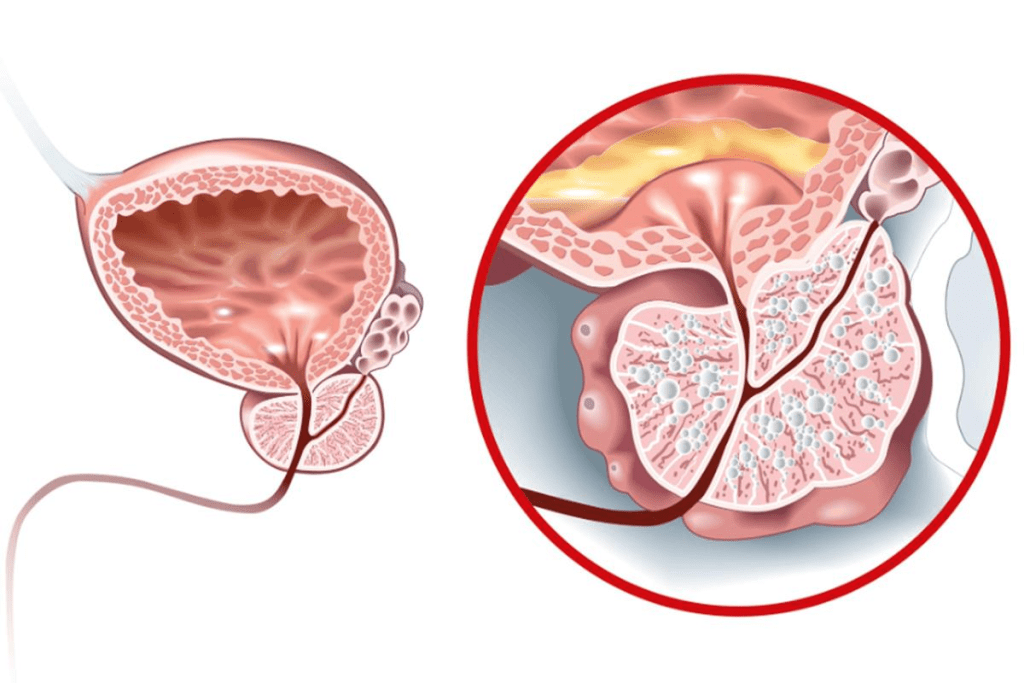
Prostate cancer and BPH share some symptoms, making it hard to tell them apart. Both affect the prostate gland but in different ways. Prostate cancer is when cancer cells grow out of control in the prostate. BPH is when the prostate gland gets bigger but it’s not cancer.
Overlapping Symptoms and Key Differences
The symptoms of prostate cancer and BPH can be similar, leading to confusion. Common symptoms include:
- Urinary difficulties, such as weak or interrupted urine flow
- Increased frequency and urgency of urination
- Nocturia (excessive nighttime urination)
But there are big differences between the two. BPH is when the prostate gets bigger, causing urine blockage. Prostate cancer might not show symptoms early on. When symptoms do show up, they can be like BPH’s but might also include pelvic pain.
Key differences to note:
- BPH is not cancer, but prostate cancer is.
- BPH causes more urine problems because of the prostate size.
- Prostate cancer can cause weight loss and fatigue later on.
When BPH Might Mask Cancer Symptoms
BPH can make it harder to find prostate cancer. If a man has BPH, his urine problems might hide cancer symptoms. Also, having BPH doesn’t mean you can’t get prostate cancer.
Men with symptoms should see a doctor for a check-up. Tests like PSA, digital rectal exam, and biopsy can tell BPH from cancer.
Diagnostic Procedures for Confirming Prostate Cancer
Diagnosing prostate cancer involves several steps. First, there are initial screenings. Then, advanced tests are used to confirm the cancer and its severity.
Initial Screening: PSA Testing and Digital Rectal Examination
The first steps in screening for prostate cancer are the PSA test and the Digital Rectal Examination (DRE). The PSA test checks for PSA in the blood. High levels can mean cancer, but they can also show other issues.
The DRE lets doctors feel the prostate for any unusual lumps. This can suggest cancer. Both tests are key for catching cancer early.
The PSA test gives a number, while the DRE provides a feel for the prostate. Together, they help find who needs more tests.
Advanced Diagnostics: Imaging and Biopsy
If early tests show a problem, more detailed tests are used. Imaging tests like MRI or CT scans show the prostate and nearby areas. They give detailed info on the cancer’s size.
A biopsy takes a tissue sample from the prostate. This is the best way to confirm cancer. It lets doctors see cancer cells under a microscope.
Emerging Diagnostic Technologies
New technologies are changing how we diagnose prostate cancer. Emerging technologies like multiparametric MRI and liquid biopsies are being tested. They might make diagnosis more accurate and less invasive.
These new tools could help find cancer sooner and more precisely. This could lead to better treatment options for patients.
When to See a Doctor About Prostate Symptoms
Knowing when to see a doctor for prostate symptoms is key. Prostate problems can show up in many ways. Spotting the signs that mean you need to see a doctor can greatly improve your health.
Urgent Warning Signs That Require Immediate Attention
Some symptoms need quick medical check-ups. These include:
- Severe pain in the pelvic area or lower back
- Difficulty urinating or inability to urinate
- Blood in urine or semen
- Painful ejaculation
- Frequent or painful urination at night
If you notice any of these urgent warning signs, get medical help fast. These signs might mean serious prostate problems, like cancer, that need quick action.
| Symptom | Possible Indication | Action |
| Severe pelvic pain | Prostate infection or cancer | Seek immediate medical attention |
| Blood in urine | Infection, stones, or cancer | Consult a doctor promptly |
| Difficulty urinating | Enlarged prostate or blockage | Schedule a doctor’s visit |
Preparing for Your Doctor’s Appointment
Before your doctor’s visit, get ready by:
- Listing your symptoms and when they happen
- Noting any changes in urination or sex function
- Making a list of medications and supplements
- Preparing questions for your doctor
Being thoroughly prepared helps your doctor make a correct diagnosis. They can then create a good treatment plan for you.
Prevention Strategies and Screening Recommendations
Managing prostate cancer starts with prevention and early detection. By using prevention strategies and following screening recommendations, men can lower their risk of advanced prostate cancer.
Lifestyle Factors That May Reduce Risk
Living a healthy lifestyle can help lower prostate cancer risk. This includes:
- Dietary changes: Eating more fruits, vegetables, and whole grains.
- Physical activity: Staying active to keep a healthy weight.
- Avoiding harmful substances: Drinking less alcohol and not smoking.
These lifestyle factors not only lower prostate cancer risk but also improve overall health.
Screening Guidelines by Age and Risk Category
Screening guidelines for prostate cancer depend on age and risk. Men usually talk to their doctor about screening at 50. But, African American men or those with a family history of prostate cancer might need to start earlier.
| Age | Risk Category | Screening Recommendation |
| 50+ | Average Risk | Discuss screening with healthcare provider |
| 45+ | High Risk | Consider early screening |
| 40+ | Very High Risk | Screening recommended |
Knowing these screening guidelines is key for early detection and managing prostate cancer well.
Conclusion: Taking Proactive Steps for Prostate Health
Knowing about prostate cancer is key for catching it early and treating it well. By spotting the early signs, people can take steps to keep their prostate healthy. Regular check-ups and a healthy lifestyle are important for preventing prostate cancer.
Men over 50 should talk to their doctor about getting screened. Finding prostate cancer early can greatly improve treatment results. It’s vital to know the signs and symptoms of prostate cancer.
By spreading the word about prostate cancer and taking action, we can lessen its effects. Stay informed, stay alert, and focus on prostate health for a better future.
FAQ
What are the first symptoms of prostate cancer?
Early signs of prostate cancer include trouble urinating and a weak urine stream. You might also notice frequent urination, blood in your urine, or pain when you pee. Other symptoms are erectile dysfunction and pelvic pain.
Is prostate cancer a silent disease?
Yes, prostate cancer can be silent, growing without symptoms in its early stages. It’s important to get regular screenings to catch it early.
How is prostate cancer diagnosed?
Doctors use PSA tests, digital rectal exams, imaging, and biopsies to diagnose prostate cancer.
What is the difference between prostate cancer and BPH?
BPH is a non-cancerous growth of the prostate, while prostate cancer is cancerous. Both can cause similar symptoms, making diagnosis tricky.
Can lifestyle changes reduce the risk of prostate cancer?
Yes, eating well, exercising, and staying at a healthy weight can lower your risk of prostate cancer.
At what age should men start screening for prostate cancer?
Men should talk to their doctor about starting prostate cancer screenings around age 50. If you’re at higher risk, you might need to start earlier.
What are the signs of advanced prostate cancer?
Signs of advanced prostate cancer include bone pain, weight loss, and feeling very tired. You might also have trouble urinating or see blood in your urine.
Can erectile dysfunction be a sign of prostate cancer?
Yes, erectile dysfunction can be a symptom of prostate cancer. But it’s also common in other conditions. If you have persistent issues, see your doctor.
How does nocturia relate to prostate cancer?
Nocturia, or needing to pee a lot at night, can be a sign of prostate cancer or BPH.
Are there any new diagnostic technologies for prostate cancer?
Yes, new tech like advanced imaging and precise biopsies are coming. They aim to make diagnosing prostate cancer more accurate.
References
- American Cancer Society. (2023, July 11). Signs and symptoms of prostate cancer.https://www.cancer.org/cancer/types/prostate-cancer/detection-diagnosis-staging/signs-symptoms.html