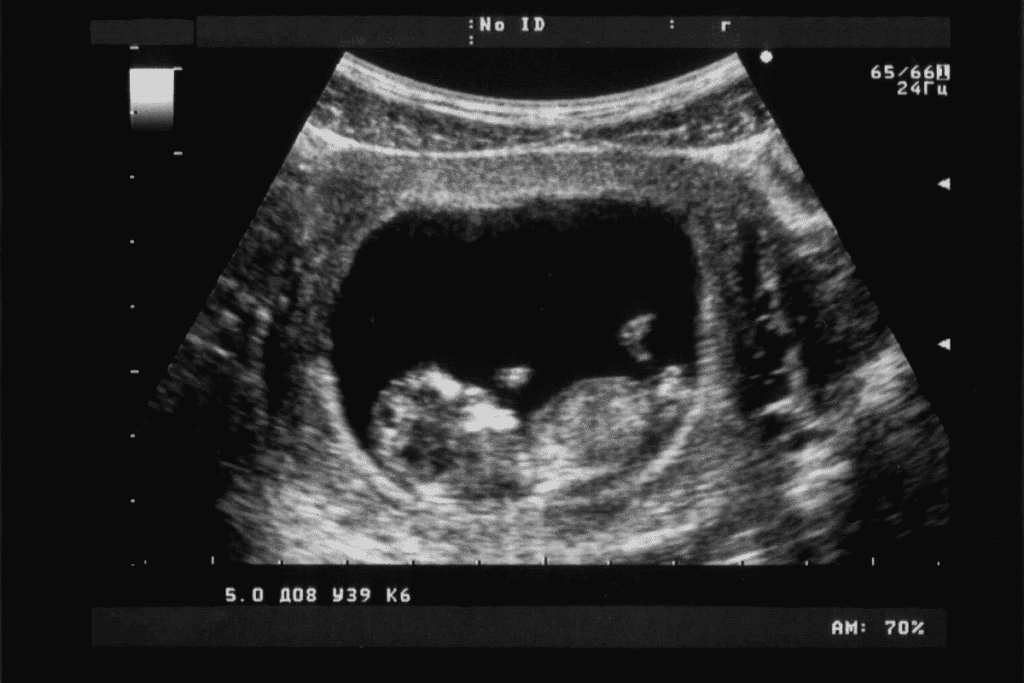
Discovering your baby’s heartbeat at 8 weeks pregnant is a moment of great joy eight week ultrasound.
During an ultrasound at this stage, you’ll see a bean-shaped embryo. It will have a beating heart. This shows your pregnancy is going well.
At Liv Hospital, we know how important this moment is. We make sure your ultrasound experience is both advanced and caring.
Key Takeaways
- An 8-week ultrasound confirms the presence of a fetal heartbeat.
- Significant fetal development milestones are visible during the scan.
- Ultrasounds provide vital information about fetal health and development.
- Liv Hospital offers a patient-centered approach to ultrasounds.
- Expectant parents can expect emotional reassurance and medical insights.
The Importance of Your 8 Weeks Pregnant Ultrasound

Getting an ultrasound at 8 weeks is a big moment in confirming a healthy pregnancy. At this time, the ultrasound is a key tool for doctors. It helps them check if the pregnancy is healthy and spot any early problems.
Why Early Ultrasounds Are Performed
Early ultrasounds, like the one at 8 weeks, have important reasons. They first confirm that the embryo is growing inside the uterus. This is key to rule out ectopic pregnancies, which need quick medical help.
Another big reason is to accurately date the pregnancy. By measuring the embryo’s size, doctors can figure out the exact due date.
Types of Ultrasounds Used at 8 Weeks
At 8 weeks, the transvaginal ultrasound is the most common. This involves a special probe in the vagina for a clear embryo view. It’s chosen because it shows more detail than other types of ultrasounds.
The choice between types depends on the pregnancy stage and medical history. But at 8 weeks, transvaginal ultrasounds give more info. They help doctors see how the embryo is doing and find any early issues.
Fetal Development Milestones at 8 Weeks

At 8 weeks, pregnancy brings big changes. The tiny embryo is now called a fetus. This is a big step in its growth.
From Embryo to Fetus: The 8-Week Transition
The term “embryo” changes to “fetus” at 8 weeks. This change shows a key time. Major organs and systems start to grow more.
Expected Size and Measurements
The fetus is about 1.5 to 2.3 cm long at 8 weeks. This is called Crown-Rump Length (CRL). It helps doctors know when the baby is due.
Crown-Rump Length (CRL) Explained
CRL is how doctors measure the fetus’s size. It goes from the top of the head to the bottom of the buttocks. It shows how well the fetus is growing.
Detecting the Heartbeat on an 8 Week Ultrasound
The 8-week ultrasound is a key moment. It shows the fetus’s heart beating, giving parents peace of mind. This is when the first signs of the baby’s growth appear.
When Cardiac Activity Becomes Visible
By 8 weeks, the fetal heartbeat can be seen on an ultrasound. This is a big moment for parents, showing the baby is growing well. The ability to see the heartbeat depends on the ultrasound quality and the technician’s skill.
Normal Heart Rate Range (150-170 BPM)
A normal fetal heart rate at 8 weeks is between 150 to 170 BPM. This is a sign of healthy development. Each baby’s heart rate can be a bit different, but big changes need more checks.
What a Healthy Heartbeat Indicates About Pregnancy Viability
A healthy heartbeat means the pregnancy is likely to be okay. It tells parents their baby is growing as it should. A heartbeat, along with other signs, helps doctors check the pregnancy’s health.
Seeing a heartbeat at 8 weeks is very reassuring for parents. It shows the pregnancy is going well and gives a first look at the baby’s growth. As the pregnancy goes on, more ultrasounds will show how the baby is doing.
Key Structures Visible on a Normal 8 Week Ultrasound
A normal 8-week ultrasound gives a peek into early pregnancy. It shows important structures that help the fetus grow.
At this time, an ultrasound can show several key things. These include the gestational sac, yolk sac, amniotic sac, and the start of the umbilical cord.
Gestational Sac Appearance and Size
The gestational sac is one of the first things seen on an ultrasound. It looks like a small, fluid-filled area around the embryo. By 8 weeks, it’s usually 2-3 cm big. Its size and presence are important signs of a healthy pregnancy.
Yolk Sac Function and Appearance
The yolk sac is also seen at 8 weeks. It gives the embryo nutrients before the placenta is ready. The yolk sac looks like a small circle inside the gestational sac. Seeing it is a good sign, showing the embryo is getting the nutrients it needs.
Amniotic Sac Development
The amniotic sac surrounds the embryo in a fluid-filled space. It protects the embryo and helps it grow. By 8 weeks, the amniotic sac is visible on an ultrasound. It’s very important for the embryo’s safety and growth.
Early Umbilical Cord Formation
The umbilical cord starts forming at about 8 weeks. It connects the embryo to the placenta. It’s essential for bringing oxygen and nutrients to the fetus and taking away waste. Seeing the early umbilical cord on an ultrasound is a sign of a vital connection between the fetus and the mother.
These structures – the gestational sac, yolk sac, amniotic sac, and early umbilical cord – are important signs of a healthy pregnancy at 8 weeks. Seeing them and knowing they’re developing normally is reassuring for parents-to-be.
Early Organ Development on an 8 Week Old Ultrasound
The 8-week ultrasound gives us a peek into the fetus’s early organ growth. At this time, many important organs start to form and grow.
Brain and Neural Tube Formation
At 8 weeks, the brain and neural tube start to take shape. The neural tube will become the brain and spinal cord. The brain divides into three parts: the forebrain, midbrain, and hindbrain. This sets the stage for future brain development.
Cardiovascular System Development
The heart is also growing fast at 8 weeks. It divides into four chambers and starts pumping blood. This early heart activity shows the fetus is likely to be healthy. The heart’s major blood vessels, like the aorta, are also starting to form.
Primitive Digestive and Urinary Systems
The digestive system starts to form, with the foregut, midgut, and hindgut developing. These parts will become the digestive tract. The urinary system also starts, with the kidneys and bladder forming. These early stages are key for the fetus’s growth.
Early Liver and Kidney Formation
The liver and kidneys start to develop at 8 weeks. The liver makes blood cells, and the kidneys will filter waste. Ultrasound can show the early stages of these organs, giving insights into fetal development.
Organ/System | Developmental Stage at 8 Weeks |
Brain and Neural Tube | Neural tube closure, initial division into forebrain, midbrain, and hindbrain |
Cardiovascular System | Heart division into four chambers, initial blood flow |
Digestive System | Formation of foregut, midgut, and hindgut |
Urinary System | Initial formation of kidneys and bladder |
Liver | Begins producing blood cells |
Kidneys | Early stages of formation |
Knowing how organs and systems develop is key to checking fetal health. The 8-week ultrasound is a big help, showing us the start of organ growth.
Limb Development Visible on an 8 Week Fetus Ultrasound
At 8 weeks, an ultrasound shows the start of limb formation. This is a key moment in a baby’s growth. We see the first signs of arm and leg buds.
Arm and Leg Buds Identification
The arm and leg buds look like small bumps on the body. They are the first steps to fully formed limbs. Their presence and shape are important signs of healthy limb growth.
Early Hand and Foot Development
As these buds grow, we see the start of hand and foot shapes. At first, hands and feet are webbed. They will later become separate fingers and toes. This is a complex process of cell and tissue changes.
Developmental Feature | Description | Significance |
Arm and Leg Buds | Small protrusions from the fetal body | Precursors to fully formed limbs |
Early Hand and Foot Formation | Webbed structures that will separate | Development into distinct fingers and toes |
What Can and Cannot Be Seen at This Stage
At 8 weeks, we can see limb buds and the start of hand and foot shapes. But we can’t see clear fingers and toes yet. The ultrasound gives us a peek into the baby’s overall growth and health.
Knowing what to look for at 8 weeks helps parents and doctors track the pregnancy. It also helps spot any problems early.
What Your Doctor Evaluates During the First Sonogram at 8 Weeks
At your first sonogram at 8 weeks, your doctor checks many important things. This ultrasound is key to making sure the pregnancy is healthy. They look at different factors to see if everything is going right.
Confirming Intrauterine Pregnancy
The main goal of the 8-week ultrasound is to check if the pregnancy is in the uterus. This is important because pregnancies outside the uterus can be dangerous. Your doctor will look for the gestational sac and embryo in the uterus to confirm it’s in the right place.
Accurately Dating the Pregnancy
Getting the pregnancy’s due date right is very important. At the 8-week ultrasound, your doctor will measure the embryo’s size. They use the Crown-Rump Length (CRL) to figure out how far along you are. This helps in setting a more accurate due date and tracking the pregnancy.
Screening for Multiple Pregnancies
The first sonogram is also a chance to check for multiple pregnancies. Your doctor will look at the ultrasound images to see if there are more than one embryo. Finding out early if you’re carrying twins or more helps in giving the right care for both mom and babies.
Identifying Potencial Early Concerns
During the 8-week ultrasound, your doctor also looks for any early problems. They check things like:
- Embryo viability
- Presence of a heartbeat
- Overall fetal development
Finding issues early means they can be dealt with quickly. This helps make sure the pregnancy goes as smoothly as possible.
Interpreting Your Ultrasound Scan at 8 Weeks Pregnancy
Understanding your 8-week ultrasound scan is key for a healthy pregnancy. It helps expectant parents understand their baby’s growth and address any worries.
Understanding Ultrasound Terminology
Ultrasound reports use technical terms that might be new to many. Key terms include:
- Gestational sac: The structure that surrounds the embryo and is the first thing visible on an ultrasound.
- Crown-Rump Length (CRL): A measurement of the embryo’s length from the top of its head to its bottom.
- Yolk sac: A structure that provides nutrition to the embryo before the placenta develops.
Common Measurements and Their Meanings
During your 8-week ultrasound, several measurements will be taken to assess your baby’s growth. These include:
- Crown-Rump Length (CRL)
- Gestational sac size
- Yolk sac size
These measurements help your healthcare provider determine if your baby is developing as expected.
How to Read Your Ultrasound Images
Ultrasound images can seem confusing at first. But understanding what you’re looking at can make it more meaningful. The images are typically in shades of gray, with different textures representing various tissues and structures. Your healthcare provider will guide you through the images, pointing out key features such as the embryo, yolk sac, and gestational sac.
Questions to Ask Your Healthcare Provider
It’s essential to be prepared with questions for your healthcare provider during your ultrasound. Some examples include:
- Is my baby’s development on track?
- Are there any concerns based on the ultrasound findings?
- What are the next steps in my pregnancy care?
Asking the right questions can help alleviate concerns and provide you with a clearer understanding of your pregnancy.
Preparing for Your Vaginal Ultrasound at 8 Weeks
Getting ready for your 8-week ultrasound can help reduce any worries you might have. A vaginal ultrasound is a common test used early in pregnancy. It helps check on how the baby is growing and makes sure mom and baby are healthy.
What to Expect During the Procedure
A healthcare professional will use a lubricated probe during your ultrasound. This probe sends sound waves that show images of your uterus and baby on a screen. The whole thing usually takes 15-30 minutes and isn’t usually painful, but you might feel a bit uncomfortable.
To prepare for the ultrasound, you’ll need to undress from the waist down. Then, you’ll lie on a table with your feet in stirrups, like a gynecological exam. The probe is moved gently to get the right images.
Tips for a Comfortable Experience
To make your ultrasound as comfortable as possible:
- Wear loose, easy-to-remove clothes.
- Make sure your bladder is empty, as you won’t need a full bladder for this ultrasound.
- Try to relax and breathe deeply; the procedure is usually quick and simple.
- If you’re feeling nervous, talk to your healthcare provider about it before the ultrasound.
Emotional Aspects of Seeing Your Baby for the First Time
Seeing your baby’s ultrasound images for the first time can be emotional and exciting. It makes your pregnancy feel more real and lets you see your baby for the first time. Many parents find this moment very special and bonding.
It’s normal to feel a range of emotions, from happiness and excitement to worry or fear. Talking about these feelings with your healthcare provider or a support group can be helpful.
When to Schedule Follow-Up Ultrasounds
Your healthcare provider will tell you when to have your next ultrasound. Usually, this is around 12 weeks, but it can change based on your pregnancy.
Follow-up ultrasounds are important for checking on your baby’s growth and health. They also help catch any possible problems early and give you reassurance throughout your pregnancy.
Conclusion: What Your 8 Week Ultrasound Reveals About Your Pregnancy Journey
The 8 week ultrasound is a key moment in your pregnancy. It shows how your baby is growing and if everything is healthy. At this time, your baby starts to look more like a fetus, with important organs and limbs beginning to form.
This ultrasound is important for checking if your baby is growing inside the womb. It helps doctors know when your baby was conceived and if you’re carrying twins or more. It also helps spot any early problems and fix them quickly.
Seeing the details of your 8 week ultrasound can be thrilling and a bit scary. We suggest talking to your doctor about any questions or worries. This ultrasound is just the start of many important check-ups you’ll have during your pregnancy.
FAQ
What can you see on an 8-week ultrasound?
At 8 weeks, an ultrasound can show the gestational sac, yolk sac, and embryo. It can also detect early heart activity. You can measure the embryo’s size and length.
Why is an 8-week ultrasound important?
An 8-week ultrasound is key to confirm pregnancy and spot issues early. It also helps estimate how far along you are.
What type of ultrasound is typically used at 8 weeks?
At 8 weeks, a transvaginal ultrasound is often used. It gives a clearer view of the embryo and its surroundings.
Can you hear a heartbeat at 8 weeks?
Yes, you can usually hear a heartbeat on an ultrasound at 8 weeks. This is a sign of a healthy pregnancy.
What is a normal heart rate for an 8-week fetus?
A normal heart rate for an 8-week fetus is between 150 to 170 beats per minute.
How is the crown-rump length (CRL) used in an 8-week ultrasound?
The CRL measurement helps estimate gestational age and track fetal growth.
What are the key structures visible on a normal 8-week ultrasound?
On a normal 8-week ultrasound, you can see the gestational sac, yolk sac, amniotic sac, and early embryo development.
How do I prepare for an 8-week vaginal ultrasound?
To prepare for an 8-week vaginal ultrasound, wear comfy clothes, follow any diet advice, and be ready to share your medical history.
What should I expect during an 8-week ultrasound procedure?
During an 8-week ultrasound, a transvaginal probe is used. You’ll see images of your embryo on a screen.
How do I interpret my ultrasound images and reports?
To understand your ultrasound images and reports, ask your healthcare provider to explain them. They can help with terminology, measurements, and findings.
When should I schedule follow-up ultrasounds?
Your healthcare provider will tell you when to schedule follow-up ultrasounds. This depends on your pregnancy and any concerns.
What if there are concerns or abnormalities detected during the 8-week ultrasound?
If there are concerns or abnormalities, your healthcare provider will discuss them with you. They will recommend further testing or actions as needed.
References
National Health Service (NHS). 8-Week Ultrasound: Embryo Visualization and Heartbeat Confirmation. Retrieved from https://www.nhs.uk/pregnancy/related-conditions/tests-and-scans/ultrasound-scans-in-pregnancy/



 Departments
 Related Videos
 Our Doctors
 News
News