Last Updated on November 25, 2025 by Ugurkan Demir
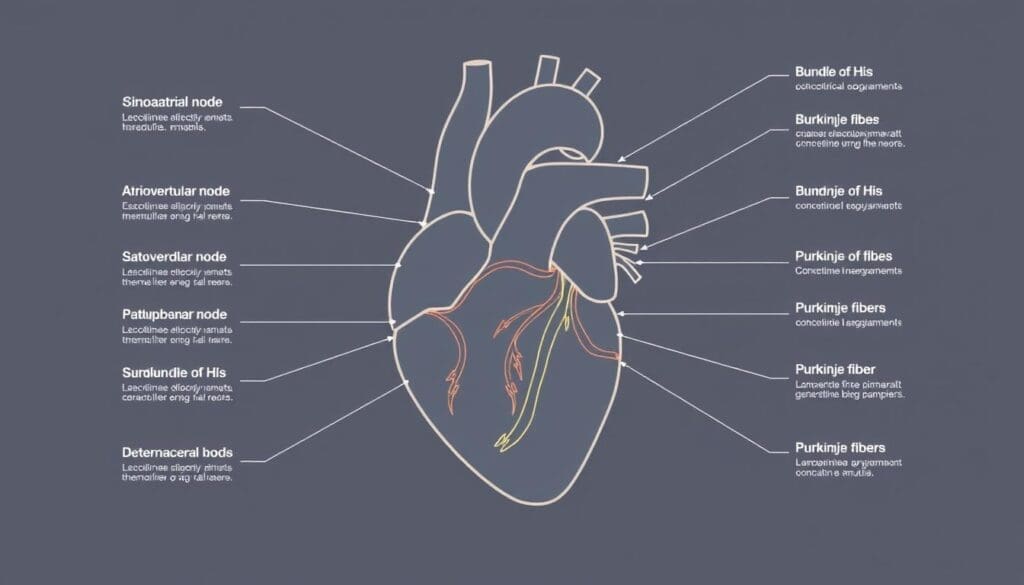
The heartbeat is controlled by a complex process involving a coordinated sequence of electric signals. At Liv Hospital, we recognize the importance of understanding the heart’s electrical activity. This is key to diagnosing and treating cardiovascular disorders effectively.
The intricate electrical system that governs the heartbeat starts with the sinus node. This leads to a cascade of events that result in the heart’s contraction and blood circulation. This process is vital for the heart to pump blood efficiently throughout the body.
Understanding how the heart’s seven essential nodes work together is vital. It helps us appreciate the heart’s function as a pump. We will explore this complex process, focusing on the critical structures that regulate the heartbeat.
Key Takeaways
- The heart’s electrical activity controls the heartbeat through a coordinated sequence of electric signals.
- The sinus node initiates the electrical impulse that leads to the heart’s contraction.
- The normal pattern of impulse conduction is key for the heart’s efficient pumping of blood.
- Understanding the heart’s electrical system is essential for diagnosing and treating cardiovascular disorders.
- The seven key nodes play a vital role in regulating the heartbeat.
The Heart’s Electrical Framework: An Overview
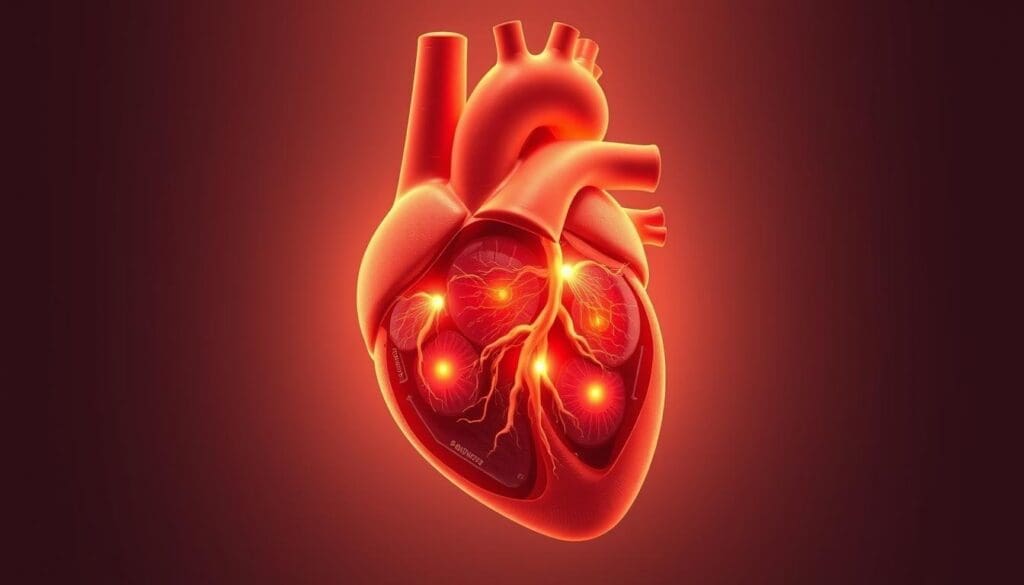
The heart works as a pump thanks to its electrical system. This system makes sure the heart beats in sync. It pumps blood all over the body efficiently.Learn about the electrical system of the heart, its key nodes, and how it maintains heartbeat.
The Purpose of Cardiac Electrical Activity
The heart’s electrical activity starts and coordinates the heartbeat. The sinoatrial (SA) node is the heart’s natural pacemaker. It’s located in the upper right atrium of the heart.
The SA node sends out electrical impulses. These impulses make the heart contract. This is key for a steady heart rate and proper heart function.
How Electrical Signals Coordinate Heartbeats
Electrical signals in the heart are vital for coordinating beats. They make sure the heart’s chambers contract together. The SA node’s electrical impulses go through the atria first, then the ventricles.
This synchronized contraction is key for effective blood pumping. The electrical system’s role shows its complexity and importance.
Understanding the Electrical System of the Heart
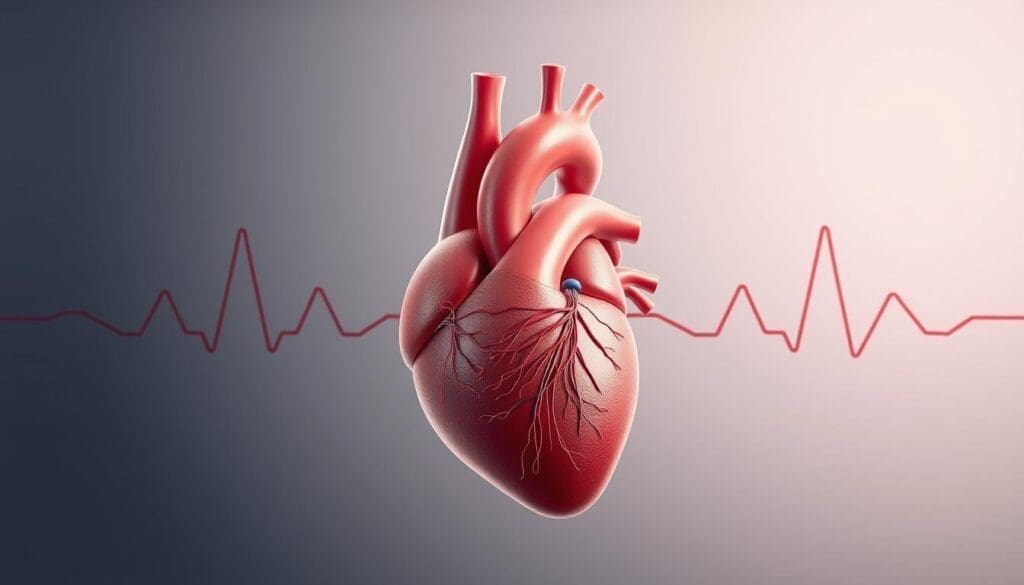
The heart’s electrical system is key to pumping blood. It sends electrical signals through the heart. This system keeps the heartbeat regular and the heart working right.
The Cardiac Conduction System Defined
The system has parts like the SA node and Purkinje fibers. This system works together to control the heartbeat. It makes sure the heart’s chambers beat in sync.
- The SA node starts the electrical signals.
- Internodal pathways send these signals to the AV node.
- The AV node sends them to the bundle of His.
- Bundle branches send the signals to the ventricles.
- Purkinje fibers help the ventricles contract.
The Relationship Between Electrical Signals and Heart Contractions
Electrical signals from the SA node make the heart’s chambers contract. This process makes sure blood flows well in the body. The heart’s coordinated contraction is key for good blood pressure and flow.
The heart’s electrical system is amazing. It controls the heartbeat with a series of electrical signals. Knowing about this system helps us understand the heart’s role in our health.
The Sinoatrial (SA) Node: The Heart’s Natural Pacemaker
The sinoatrial (SA) node is the heart’s natural pacemaker. It starts the electrical impulses that control our heartbeat. This small group of cells is in the upper right atrium, measuring about 15 mm long and 4 mm wide.
Structure and Location
The SA node is in the right atrium, one of the heart’s chambers. It’s in the lateral wall of the right atrium, near the superior vena cava. This spot helps it start the electrical impulses that move through the heart.
Initiating Electrical Impulses
The SA node sends out electrical impulses at a rate of 60-100 per minute in adults. These impulses go to the atrioventricular (AV) node and then to the ventricles. This makes the heart contract.
The rate at which the SA node fires changes based on the autonomic nervous system. This system adjusts the heart rate for our body’s needs.
The SA node’s role in starting electrical impulses is key for a normal heart rhythm. Without it, the heart might beat too slowly or irregularly. This could cause symptoms like fatigue, dizziness, or shortness of breath.
Normal Pacemaker Rate in Adults
In adults, the normal heart rate is between 60-100 beats per minute (bpm). This rate can change based on age, fitness, and health. For example, athletes might have a lower resting heart rate, sometimes as low as 40 bpm.
The autonomic nervous system’s effect on the SA node helps the heart rate adjust as needed. Whether we’re resting or active, the SA node is essential for a heart rhythm that supports our health.
Internodal Pathways: Connecting the Upper Chambers
Internodal pathways act as electrical paths between the SA node and the AV node. They help move electrical signals that control our heartbeat.
Anatomy of Internodal Pathways
The internodal pathways are special paths in the heart’s atrial tissue. They are made of cardiac myocytes that can conduct signals fast. This helps the atria contract together.
There are three main pathways: anterior, middle, and posterior. Each is key to getting electrical signals from the SA node to the AV node quickly.
Function in Atrial Conduction
Internodal pathways mainly help electrical signals move fast from the SA node to the AV node. This makes the atria contract together well, improving heart pumping.
They help the heartbeat work together smoothly. This ensures the heart pumps blood effectively.
The Atrioventricular (AV) Node: The Electrical Gateway
The AV node controls the electrical signals that make the heart’s lower chambers contract. It’s located in the heart’s center. This makes it a key part of the heart’s electrical system.
Structure and Location
The AV node sits between the heart’s upper and lower chambers. It’s near the atrioventricular septum. This spot lets it manage electrical signals between the chambers.
The Critical Delay Function
When an electrical signal from the SA node reaches the AV node, it pauses for a bit. This pause is key. It lets the ventricles fill with blood before they contract.
This delay is vital for the heart to work right. It stops the ventricles from beating too fast. This could cause them to not fill enough and affect the heart’s pumping ability.
Regulation of Ventricular Activation
The AV node also controls how fast electrical signals reach the ventricles. This is important for a coordinated heartbeat.
It ensures the heart works well by managing electrical signals. Problems with the AV node can cause irregular heartbeats or other heart issues. This shows how important it is to the heart’s electrical system.
The Bundle of His: The Electrical Bridge
The bundle of His is a key part of the heart’s electrical system. It connects the atrioventricular (AV) node to the ventricles. This structure is vital for the heart’s electrical conduction.
Anatomy and Position in the Heart
The bundle of His is found in the ventricular septum. This is the wall between the heart’s two ventricles. It continues from the AV node, which delays the electrical impulse.
This delay lets the atria fully contract before the ventricles do. The bundle of His is positioned strategically to quickly send the electrical signal to the ventricular muscle. This ensures the ventricles contract in sync.
The bundle of His has a unique structure for fast electrical conduction. It’s made of specialized fibers for efficient impulse transmission. It then splits into the left and right bundle branches, spreading the signal to the ventricles.
Role in Conducting Impulses to Ventricles
The bundle of His mainly sends electrical impulses from the AV node to the ventricles. This is key for the ventricles to contract in sync, pumping blood well. The bundle of His enables rapid transmission of the electrical signal.
- The bundle of His is essential for maintaining a normal heart rhythm.
- It ensures that electrical impulses are conducted efficiently to the ventricles.
- Dysfunction in the bundle of His can lead to serious heart rhythm disturbances.
In summary, the bundle of His is a critical part of the heart’s electrical system. It acts as the electrical bridge between the AV node and the ventricles. Its unique anatomy and position are vital for coordinating ventricular contractions, ensuring efficient blood circulation.
Bundle Branches: Right and Left Pathways
The bundle branches are special fibers that come from the bundle of His. They are key for sending electrical signals to the ventricles. The signal splits into the right and left branches, reaching each ventricle.
Structure and Distribution of Bundle Branches
The right branch is thinner and supplies the right ventricle. The left branch is thicker and splits into fascicles for the left ventricle. This ensures both ventricles contract together.
Looking at detailed diagrams helps us see how these branches work. They are vital for the heart’s electrical system.
Differences Between Right and Left Bundle Branches
The right and left branches are different. The left branch is more complex, fitting the larger left ventricle.
| Characteristics | Right Bundle Branch | Left Bundle Branch |
| Thickness | Thinner | Thicker |
| Distribution | Supplies right ventricle | Supplies left ventricle, further divides into fascicles |
| Complexity | Less complex | More complex, broader distribution |
Function in Ventricular Conduction
The bundle branches are essential for coordinated ventricular contraction. This is key for the heart to pump blood well.
Understanding the bundle branches helps us grasp the heart’s electrical activity. This knowledge is vital for diagnosing and treating heart issues.
Purkinje Fibers: The Terminal Network
Purkinje fibers are key to the heart’s electrical system. They help the ventricles contract in sync. We’ll look at their structure, where they are in the heart, and why they’re important for pumping blood.
Microscopic Structure
Purkinje fibers are bigger than regular heart cells. They look different under a microscope because of their clear center and fewer muscle fibers. This lets them send electrical signals fast.
These fibers have lots of connections that help signals move quickly. Their special design lets them send signals fast to the heart’s muscle cells.
Distribution Throughout Ventricular Myocardium
Purkinje fibers spread out in the heart’s ventricles. They form a network that makes sure the heart beats together. They’re more common in the left ventricle because it works harder.
This network helps the heart pump blood well. It’s key for the heart to work right under different conditions.
Role in Coordinated Ventricular Contraction
Purkinje fibers make sure the heart’s ventricles contract together. They send electrical signals fast to the heart’s muscle. This helps the heart beat efficiently.
| Characteristics | Description |
| Microscopic Appearance | Clear cytoplasm, fewer myofibrils |
| Distribution | Throughout ventricular myocardium |
| Function | Rapid conduction of electrical impulses |
Purkinje fibers are vital for the heart’s electrical system. They help the ventricles contract together. Their unique structure and wide reach in the heart are essential for good heart function.
Visualizing the Heart’s Electrical System
Seeing how the heart’s electrical system works gives us important insights. It helps us understand how the heartbeat is coordinated. Knowing this is key for diagnosing and treating heart problems.
Electrocardiogram (ECG/EKG) Interpretation
An electrocardiogram (ECG or EKG) is a key tool for seeing the heart’s electrical activity. It shows the heart’s electrical signals in a graph. This helps doctors see the heart rate and rhythm.
Doctors can spot heart issues like arrhythmias and conduction problems by looking at an ECG. The ECG tracing has parts like the P wave, QRS complex, and T wave. Each part shows a different part of the heart’s electrical cycle.
Modern Imaging Techniques
Modern imaging like echocardiography and cardiac MRI also help see the heart’s electrical system. These methods give detailed views of the heart’s structure and how it works. They help find any heart problems and check how well the heart is doing.
Anatomically Accurate Heart Electrical System Diagrams
Accurate diagrams of the heart’s electrical system are very important. They show the complex paths and structures of the heart’s electrical activity. By looking at these diagrams, doctors and students can learn more about the heart’s electrical network.
| Visualization Method | Description | Clinical Use |
| Electrocardiogram (ECG/EKG) | Graphical representation of heart’s electrical activity | Diagnosing arrhythmias, conduction disorders |
| Echocardiography | Ultrasound imaging of heart structure and function | Assessing cardiac anatomy and function |
| Cardiac MRI | Magnetic resonance imaging of heart structure and function | Detailed assessment of cardiac anatomy and function |
Conclusion: The Remarkable Orchestration of Cardiac Electricity
The heart’s electrical system is complex and works together perfectly. It makes the heart pump blood efficiently. The sinoatrial (SA) node, the heart’s natural pacemaker, starts the electrical impulses.
These impulses travel through the heart, making it contract and pump blood. Knowing how the heart’s electrical system works is key. It helps us understand the heart and treat any problems.
We’ve looked at the heart’s electrical system, from the SA node to the Purkinje fibers. They all work together to control the heartbeat. By using ECG/EKG and imaging, doctors can see how the heart works.
The heart’s electrical system is truly amazing. As we learn more about it, we can better diagnose and treat heart issues. This will lead to better care for patients.
FAQ
What is the normal pattern of impulse conduction through the heart?
The heart’s impulse starts in the SA node. It then goes to the atria, then to the AV node. Next, it goes through the bundle of His, the bundle branches, and the Purkinje fibers. This results in the ventricles contracting together.
What is the heart’s electrical activity dominated by?
The heart’s electrical activity is mainly controlled by the SA node. It acts as the heart’s natural pacemaker. It sends out electrical impulses at a rate of about 60-100 per minute in adults.
Where does the electrical impulse start in the heart?
The electrical impulse begins in the SA node. This is a small group of specialized cells in the right atrium.
What is the role of the AV node in the heart’s electrical system?
The AV node receives the electrical impulse from the atria. It then delays it for a fraction of a second. This allows the ventricles to fill with blood before they contract.
What is the function of the bundle of His in the heart’s electrical system?
The bundle of His sends the electrical impulse from the AV node to the ventricles. This enables the electrical signal to quickly reach the ventricular muscle.
What are the Purkinje fibers, and what is their role in the heart’s electrical system?
The Purkinje fibers are the final part of the heart’s electrical system. They are spread out in the ventricular muscle. They help the electrical impulse reach the ventricles quickly, causing them to contract together.
How can the heart’s electrical system be visualized?
The heart’s electrical system can be seen using an electrocardiogram (ECG). Modern imaging like echocardiography and cardiac MRI also work. Anatomically accurate diagrams are also helpful.
What is the significance of the internodal pathways in the heart’s electrical system?
The internodal pathways are key in the heart’s electrical system. They help the electrical impulses move from the SA node to the AV node. This ensures the atria contract together.
How do the bundle branches function in the heart’s electrical system?
The bundle branches send the electrical impulse to the right and left ventricles. The right bundle branch goes to the right ventricle. The left bundle branch goes to the left ventricle. This helps the ventricles contract together.
References
- Anderson, R. H., Sanchez-Quintana, D., & Mori, S. (2024). Anatomy of the human cardiac conduction system. Physiopedia. https://www.physio-pedia.com/Anatomy_of_the_Human_Heart