Last Updated on November 25, 2025 by Ugurkan Demir
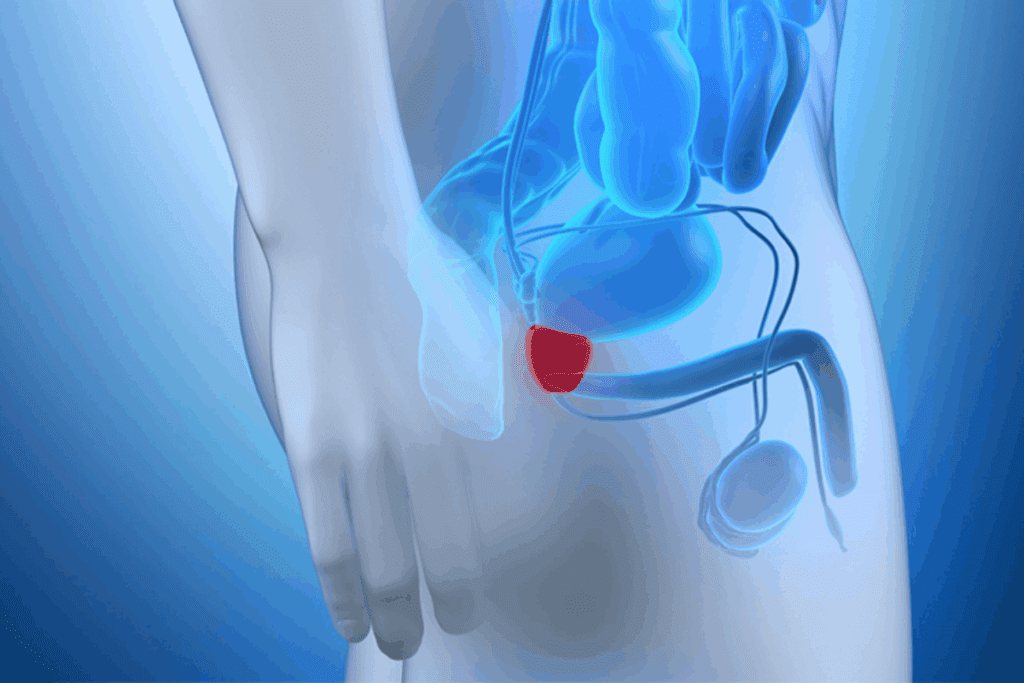
View 10 detailed enlarged prostate images and photos. Each picture is explained to help you visualize and understand the condition.
Understanding enlarged prostate is key for men’s health as they get older. This condition, also known as benign prostatic hyperplasia (BPH), makes the prostate gland grow bigger. This can lead to urinary symptoms.
To diagnose this, doctors look at medical history, do physical exams, and use imaging tests. Knowing the causes and symptoms helps men get the right care. This way, they can manage their condition well.
Understanding Benign Prostatic Hyperplasia (BPH)

Benign Prostatic Hyperplasia (BPH) is when the prostate gland gets bigger. It’s common in older men and can really affect their life quality.
Causes and Risk Factors
The exact reason for BPH isn’t known. But, it’s thought to be linked to hormonal changes. This includes the conversion of testosterone to dihydrotestosterone (DHT), which makes prostate cells grow.
Symptoms and Diagnosis
Symptoms of BPH include trouble starting to pee, weak urine flow, and needing to pee a lot at night. Doctors use a mix of medical history, physical checks, and imaging like ultrasound to diagnose it.
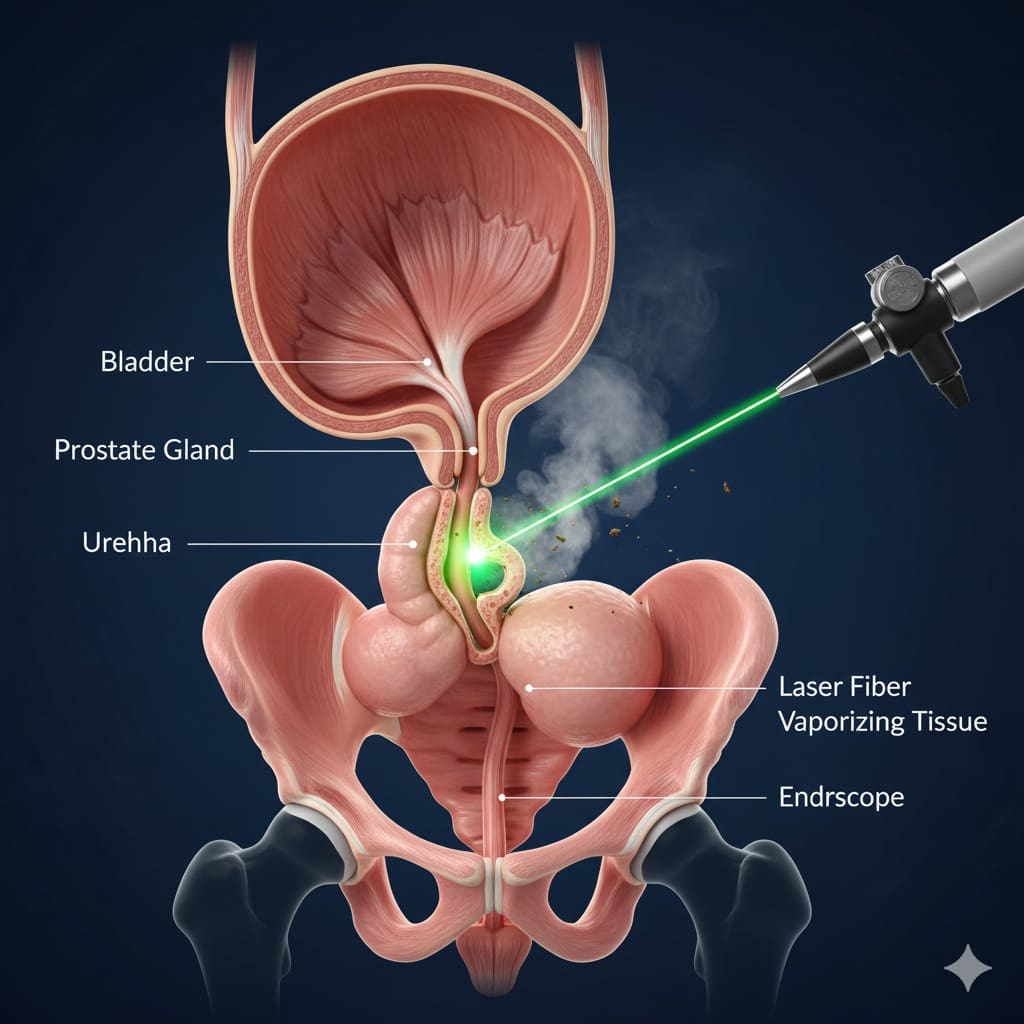
Treatment Options
Treatment for BPH can vary. It might include making lifestyle changes, taking medicine, or surgery. The choice depends on how bad the symptoms are and how they affect daily life.
Medical Imaging Techniques for Prostate Assessment

Magnetic Resonance Imaging (MRI) is key for checking prostate health. It shows detailed pictures of the prostate gland and nearby tissues. This helps spot issues like enlargement or cancer.
Ultrasound imaging is also important for prostate health checks. It’s great for seeing the prostate gland and the areas around it.
Computed Tomography (CT) scans help too. They give pictures of the body from different angles.
These imaging methods help doctors make accurate diagnoses. They also help plan the best treatments for prostate problems.
Normal vs. Enlarged Prostate: Visual Comparison
When comparing a normal prostate to an enlarged one, several key differences can be seen.
Normal Prostate Characteristics
A normal prostate is about 3 centimeters in diameter. It has a smooth, symmetrical shape. It’s usually not tender and doesn’t cause urinary symptoms.
Enlarged Prostate Characteristics
An enlarged prostate is larger than 3 centimeters in diameter. It may cause symptoms like a weak flow, frequent urination, and waking up to urinate at night. The enlarged prostate can press on the urethra, causing these symptoms.
Visual Comparison
| Characteristic | Normal Prostate | Enlarged Prostate |
| — | — | — |
| Size | Approximately 3 cm in diameter | Larger than 3 cm in diameter |
| Shape | Smooth, symmetrical | Enlarged, possibly irregular |
| Urinary Symptoms | None | Weak flow, frequent urination, nocturia |
Understanding the visual differences helps healthcare professionals diagnose and treat prostate issues better.
Image 1: Transrectal Ultrasound Revealing Prostate Enlargement
The transrectal ultrasound image shows a big prostate gland. This is typical of Benign Prostatic Hyperplasia.
The prostate’s volume is [insert volume], which is too big. This can lead to urinary problems. It might need medical help.
Image 2: MRI Cross-Section Showing BPH Nodules
MRI is a valuable tool for checking prostate growth.
Image 3: Prostate Size Grading System Visualization
The International Prostate Symptom Score (IPSS) is a key tool for checking urinary symptoms in men. It scores from 0 to 35. A higher score means more severe symptoms.
| IPSS Score | Symptom Severity |
| 0-7 | Mild |
| 8-19 | Moderate |
| 20-35 | Severe |
Knowing about the IPSS is important for diagnosing and treating Benign Prostatic Hyperplasia (BPH).
Image 4: Histopathological Sample of Hyperplastic Prostate Tissue
The prostate tissue analysis shows changes typical of Benign Prostatic Hyperplasia (BPH). The image displays a mix of glandular structures with different levels of growth. The glands are not uniform, with some looking like a sieve.
This pattern, along with glandular growth and no signs of cancer, confirms BPH.
Enlarged Prostate Images and Their Clinical Applications
Enlarged prostate images are key for diagnosing and treating Benign Prostatic Hyperplasia (BPH). They show the size and details of the prostate gland. This helps doctors choose the right treatment.
Diagnostic Value
These images are vital for diagnosing BPH and tracking its growth. They give important details about the prostate’s size and shape.
Challenges in Interpretation
But, understanding these images can be tough. This is because of differences in image quality and the need for radiology expertise.
In conclusion, enlarged prostate images are a valuable tool in diagnosing and treating BPH. It’s important for healthcare professionals to understand their role in care.
Image 5: Bladder-Prostate Relationship in BPH
It’s important to understand how the bladder and prostate work together. This is key in figuring out and treating urinary problems linked to an enlarged prostate.
The image shows how the bladder and prostate are connected. It also shows how an enlarged prostate can block urine flow.
Images 6-7: Progressive Stages of Prostate Enlargement
The growth of the prostate gland, or Benign Prostatic Hyperplasia (BPH), goes through different stages. These range from the early to the advanced.
Early Stage
In the early stage, the prostate gland starts to grow. This can cause mild urinary problems. Ultrasound imaging can spot these changes early on.
Moderate Stage
As BPH gets worse, the prostate gland grows more. This leads to more serious urinary symptoms. Imaging is key in seeing how big the prostate has grown.
Advanced Stage
In the advanced stage, the prostate gland is very large. This can cause severe urinary symptoms. It’s important to get a correct diagnosis and treatment at this point.
Images 8-10: Surgical Planning and Post-Treatment Evaluation
Imaging techniques like MRI and ultrasound are key in diagnosing and treating an enlarged prostate. They give vital details about the prostate’s size. This information helps doctors decide on the best surgery.
Before surgery, imaging guides the planning of the operation. After surgery, it checks if the treatment was successful.
Conclusion
Using enlarged prostate images and other tools is key to understanding and managing BPH. These resources help people get the care they need quickly and effectively. This improves their overall health and quality of life.
FAQ
Q: What is an enlarged prostate?
An enlarged prostate, also known as benign prostatic hyperplasia (BPH), is when the prostate gland gets bigger. This can cause urinary symptoms.
Q: What are the symptoms of an enlarged prostate?
Symptoms include trouble starting to urinate, a weak urine flow, and needing to urinate often. You might also wake up a lot at night to go to the bathroom.
Q: How is an enlarged prostate diagnosed?
Doctors use a mix of medical history, physical exams, and tests like the digital rectal exam (DRE) and PSA test. They might also use ultrasound or MRI for images.
Q: What are the treatment options for an enlarged prostate?
Options include watching it, taking medicine, or surgery. Medicines can help relax the muscles or shrink the prostate.
Q: How do imaging tests help in diagnosing an enlarged prostate?
Tests like ultrasound, MRI, and CT scans give detailed images. They help doctors see the prostate and surrounding tissues.
Q: Can an enlarged prostate be a sign of cancer?
While it’s not a direct sign of cancer, it might mean there’s something else going on. A doctor will check the prostate and suggest more tests if needed.
Q: Is an enlarged prostate a normal part of aging?
Yes, the risk goes up with age. But it’s not just a normal part of getting older. There are treatments to help manage symptoms.
Q: Can lifestyle changes help alleviate symptoms of an enlarged prostate?
Yes, changes like staying at a healthy weight and exercising can help. Avoiding certain foods and drinks can also help.
Q: What are the possible complications of an enlarged prostate?
Untreated, it can cause urinary retention, bladder damage, and kidney damage. These are serious issues.
Q: Can an enlarged prostate be treated with medication?
Yes, medicines like alpha-blockers and 5-alpha-reductase inhibitors can help. Sometimes, surgery is needed to fix other problems.
References
National Center for Biotechnology Information. (2025). Enlarged Prostate Images 10 Pictures and Photos Explained. Retrieved from https://www.ncbi.nlm.nih.gov/pmc/articles/PMC1472850/