Discovering that your ovary is swollen can be worrying. But knowing the common causes and what doctors suggest can help calm your fears. We’ll look at why your ovary might be enlarged, from normal cycle changes to serious issues enlarged right ovary.
Recent studies show that most ovarian swelling comes from functional ovarian cysts. These usually go away on their own in one to three months. At Liv Hospital, we offer top-notch medical care and focus on you, aiming to support you fully.
Key Takeaways
- Ovarian enlargement can happen for many reasons, from harmless to serious.
- Most often, swelling is due to functional ovarian cysts.
- Knowing why your ovary is enlarged is key to figuring out what to do next.
- Liv Hospital offers world-class healthcare and support for patients from abroad.
- Getting the right diagnosis and treatment can help with issues like PCOS, cysts, or endometriosis.
Understanding Normal Ovary Anatomy and Function

To understand why an ovary might get bigger, we need to know how ovaries work normally. Ovaries are key to a woman’s ability to have children and keep hormones balanced.
Normal Size and Position of Ovaries
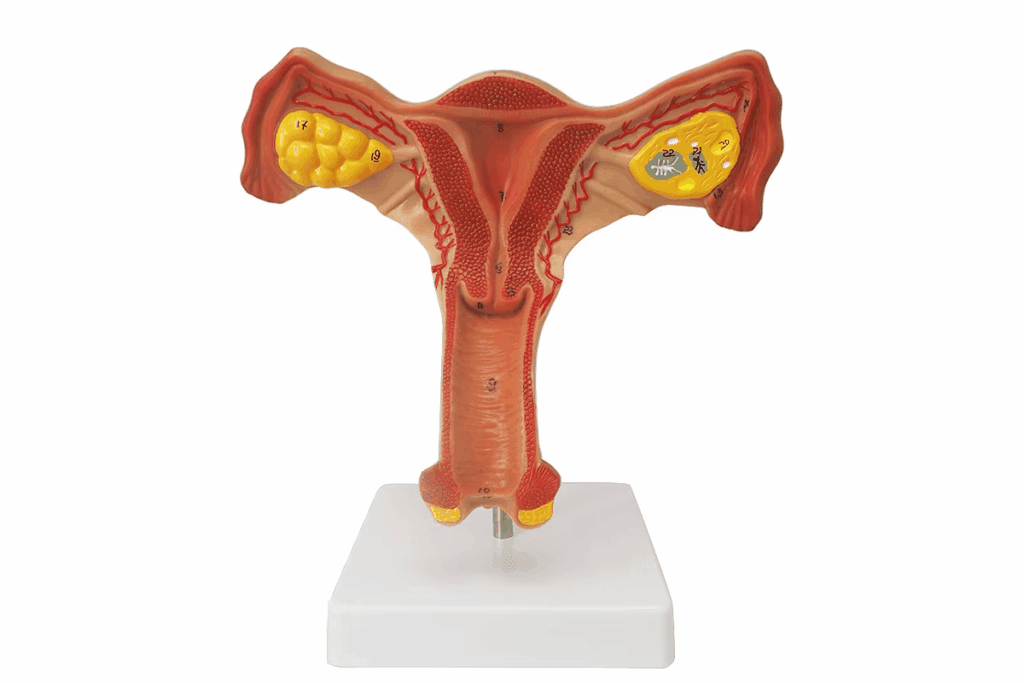
Ovaries are about the size of an almond, 3–5 cm long. They sit on each side of the uterus in the pelvic area. Their spot lets them release eggs into the fallopian tubes during ovulation. Knowing their usual size and spot helps spot any odd changes.
“The ovaries are not static organs; they change in size and function throughout the menstrual cycle,” say doctors. This change is important for health.
Hormonal Regulation and Ovarian Function
Hormones like estrogen and progesterone control the ovaries. The hypothalamus and pituitary gland send out these hormones. This system keeps the menstrual cycle and ovulation on track. It’s key for health and well-being.
This process is complex, with feedback loops to keep everything working right. Any problem can cause issues like irregular periods or bigger ovaries.
Natural Size Fluctuations During Menstrual Cycle
During the menstrual cycle, ovaries grow and shrink. This happens as follicles grow and then release an egg. After that, the corpus luteum forms, affecting size again. These changes are part of the cycle.
Ovary swelling during the period is normal. The swelling is more noticeable when follicles are getting ready to release an egg. Knowing these changes helps us tell normal from abnormal.
Looking into why ovaries might get bigger, it’s important to know these normal changes. This helps us understand when an ovary is too big and what it might mean for health.
Physiological Causes of Ovary Swelling During Period

Ovulation and other processes in the menstrual cycle can cause ovaries to swell. This swelling is normal for many women.
Ovulation and Follicular Development
The menstrual cycle brings big changes to the ovaries. Just before ovulation, dominant follicles swell with fluid. This is a natural step for egg release.
Follicular development is key to ovulation. The growth of follicles and egg release are controlled by hormones. Knowing this helps understand ovary swelling.
Corpus Luteum Formation
After ovulation, the ruptured follicle turns into the corpus luteum. This structure makes progesterone. It also causes temporary ovary swelling.
The corpus luteum gets the uterine lining ready for pregnancy. If pregnancy doesn’t happen, it breaks down, and swelling goes away.
Pregnancy-Related Changes
If pregnancy happens, the corpus luteum keeps making progesterone. This is vital for early pregnancy.
Some women might see ovary swelling early in pregnancy. But this usually goes away as the pregnancy advances.
Physiological Change | Description | Effect on Ovary |
Follicular Development | Growth of follicles in the ovaries | Temporary swelling due to follicular fluid |
Corpus Luteum Formation | Transformation of ruptured follicle into corpus luteum | Temporary swelling and progesterone production |
Pregnancy-Related Changes | Continued corpus luteum function in early pregnancy | Potential for ovary swelling until placenta takes over |
Functional Ovarian Cysts: The Most Common Cause
Functional ovarian cysts are a common reason for ovarian swelling. These cysts are not cancerous and often go away by themselves. They are linked to the menstrual cycle and grow on the ovaries.
Follicular Cysts
Follicular cysts are a common type of functional ovarian cyst. They happen when the ovary doesn’t release an egg during ovulation. This causes the follicle to keep growing.
Characteristics of Follicular Cysts:
- Typically range from 1 to 8 cm in diameter
- Can cause pelvic pain or discomfort
- Often resolve on their own within 1-3 months
Corpus Luteum Cysts
Corpus luteum cysts form after ovulation. They happen when the corpus luteum doesn’t dissolve as it should. Instead, it fills with fluid and turns into a cyst.
Characteristics of Corpus Luteum Cysts:
- Usually smaller than follicular cysts, typically less than 3 cm
- Can cause a delay in menstrual period
- May rupture, leading to sudden severe pain
Natural Resolution Timeline
Functional ovarian cysts often go away by themselves. The time it takes for them to resolve can vary. It depends on the type and size of the cyst.
Type of Cyst | Typical Resolution Time |
Follicular Cysts | 1-3 months |
Corpus Luteum Cysts | 1-2 menstrual cycles |
Knowing that functional ovarian cysts are usually harmless and temporary can help ease worries. But, it’s important to see a doctor if symptoms don’t get better or get worse.
Polycystic Ovary Syndrome (PCOS) and Enlarged Cystic Ovaries
PCOS, or Polycystic Ovary Syndrome, is a common cause of big ovaries in women of childbearing age. It affects about 1 in 10 women. It’s marked by hormonal imbalances, many follicles, and various symptoms.
Hormonal Imbalances in PCOS
In women with PCOS, hormonal imbalances cause big cystic ovaries. Elevated levels of androgens (male hormones) mess with normal ovarian function. This leads to many small cysts. These hormonal issues also cause acne, too much hair, and irregular periods.
Managing these hormonal imbalances is vital for treating PCOS. This usually means making lifestyle changes and using medicine to control hormone levels and symptoms.
Multiple Follicle Development
PCOS is known for many follicles in the ovaries. These follicles often don’t release an egg, causing cysts and big ovaries. Ultrasound imaging often shows many small follicles in the ovaries, a sign of PCOS.
Having many follicles not only makes ovaries big but also affects fertility. It’s key for women trying to get pregnant to understand this part of PCOS.
Associated Symptoms and Long-term Implications
PCOS brings more than just big ovaries. It also causes irregular periods, weight gain, and male pattern baldness. Long-term, it raises the risk of type 2 diabetes, heart disease, and endometrial cancer. Treating PCOS needs a full plan to tackle these risks.
We stress the need for early diagnosis and treatment to avoid these risks. With the help of healthcare providers, women with PCOS can get a treatment plan that meets their needs and health goals.
Endometriosis and What Causes Enlarged Ovaries
Endometriosis affects millions of women worldwide. It can cause ovaries to grow because of endometrial tissue on them. This tissue outside the uterus leads to inflammation and scarring.
When it grows on ovaries, it can make them big. This leads to the formation of endometriomas, or “chocolate cysts.”
How Endometriosis Affects the Ovaries
Endometriosis can harm ovaries in many ways. The growth of endometrial tissue on ovaries can cause cysts and adhesions. This makes ovaries big and can cause pain and fertility issues.
We will look into how this happens and its effects on ovaries.
Chocolate Cysts (Endometriomas)
Endometriosis can cause endometriomas, or “chocolate cysts.” These cysts are filled with old blood, making them dark. They can grow on ovaries, making them big and causing pain.
These cysts are common in women with endometriosis, found in 20-40% of them.
Endometriomas can be different sizes and may cause other symptoms like pelvic pain and infertility. Managing them often means surgery, if they’re big or causing problems.
Impact on Fertility and Pain
Endometriosis and enlarged ovaries can hurt fertility. The presence of endometriomas and adhesions can mess with ovulation. This makes it hard for eggs to be released.
The inflammation from endometriosis also makes it hard for fertilization and implantation.
Pain is a big symptom of endometriosis and enlarged ovaries. The growth of endometrial tissue and cysts can cause pelvic pain and painful menstruation. Managing these symptoms often needs a mix of treatments, including medicine, lifestyle changes, and sometimes surgery.
Why Is My Right Ovary Enlarged? Medical Emergencies to Consider
Several medical emergencies can cause an enlarged right ovary. It’s important to know these conditions to get help quickly. When your ovary gets bigger, it’s key to find out why fast.
Ovarian Torsion: Mechanism and Symptoms
Ovarian torsion is a serious issue where the ovary twists and cuts off blood flow. This can cause a lot of pain and even damage the ovary if not treated right away. Signs of ovarian torsion include:
- Severe, sharp pelvic pain
- Nausea and vomiting
- Fever
- Abdominal tenderness
Prompt diagnosis and treatment are key to avoid lasting damage. This condition is more common in women with cysts or tumors.
Ruptured Cysts
A ruptured ovarian cyst can cause sudden, severe pain and internal bleeding. Symptoms of a ruptured cyst include:
- Sudden, sharp pelvic pain
- Vaginal bleeding
- Dizziness or fainting
- Nausea and vomiting
Ruptured cysts often happen in women with big cysts or those under a lot of pressure. Immediate medical evaluation is needed to figure out how bad the rupture is and what to do next.
Pelvic Inflammatory Disease
Pelvic inflammatory disease (PID) is an infection of the female reproductive organs. It’s usually caused by bacteria from sex. PID can make the ovaries swell and cause other problems. Symptoms include:
- Lower abdominal pain
- Abnormal vaginal discharge
- Fever
- Pain during intercourse or urination
Early diagnosis and treatment of PID are vital to avoid serious damage. If left untreated, PID can lead to infertility and a higher risk of ectopic pregnancy.
Benign Ovarian Tumors and Growths
Many ovarian tumors are benign and can be managed well. These non-cancerous growths can affect the ovaries differently. We’ll look at the types, their characteristics, and how they’re treated.
Dermoid Cysts
Dermoid cysts, or teratomas, are benign ovarian tumors. They can have different tissues like hair, muscle, and bone. These cysts grow slowly and might not cause symptoms for years. But, if they get big, they can hurt or cause pain.
Key characteristics of dermoid cysts include:
- They can contain a variety of tissue types.
- They are typically benign but can cause complications if they become large or twisted.
- They are often diagnosed during imaging tests for other reasons.
Cystadenomas
Cystadenomas are benign ovarian tumors from the ovary’s epithelial layer. They can be serous or mucinous, with mucinous ones more likely to grow large and cause symptoms. These tumors usually affect one ovary and are treated with surgery.
Important aspects of cystadenomas:
- They originate from the ovarian surface epithelium.
- Mucinous cystadenomas can grow quite large.
- Surgical removal is often recommended to prevent complications.
Fibromas and Other Benign Tumors
Fibromas are benign ovarian tumors made of fibrous tissue. They’re linked to Meigs’ syndrome, a condition with a fibroma, ascites, and pleural effusion. Other rare benign tumors include Brenner tumors and steroid cell tumors.
Characteristics of fibromas and other benign tumors:
- Fibromas are typically solid and can be associated with Meigs’ syndrome.
- Brenner tumors are often small and benign.
- Steroid cell tumors can produce hormones, leading to various symptoms.
In conclusion, benign ovarian tumors like dermoid cysts, cystadenomas, and fibromas are non-cancerous. They can affect the ovaries differently. Knowing about these tumors helps in their effective management and treatment.
Is an Enlarged Ovary a Sign of Cancer?
Seeing an enlarged ovary can make you worry about ovarian cancer. But, knowing the facts can ease your fears. Ovarian cancer is rare, with about 22,000 new cases in the U.S. each year. An enlarged ovary can have many causes, and we’ll look into if it could mean cancer, risk factors, warning signs, and why screening is key.
Risk Factors for Ovarian Cancer
It’s important to know the risk factors for ovarian cancer. This helps figure out if an enlarged ovary might be cancer-related. Several things can raise your risk, including:
- Age: The risk goes up after 50.
- Family History: Having cancer in your family, like ovarian, breast, or colorectal.
- Genetic Mutations: Mutations like BRCA1 and BRCA2 increase your risk a lot.
- Reproductive History: Never having kids or having your first child after 35.
- Hormone Replacement Therapy (HRT): Using HRT for a long time.
Warning Signs That Differentiate Cancer from Benign Conditions
Telling if an enlarged ovary is cancer or not can be hard without a doctor’s check-up. But, some symptoms might point to cancer:
- Pelvic pain or discomfort
- Bloating or swelling in the abdomen
- Difficulty eating or feeling full quickly
- Urinary urgency or frequency
- Abnormal vaginal bleeding
These signs can also mean other, not-so-serious issues. But, if they keep happening, you should see a doctor.
Screening and Early Detection
Finding ovarian cancer early can really help you live longer. There’s no single test for ovarian cancer like there is for some other cancers. But, there are ways to catch it early:
- Pelvic examination: A routine pelvic exam can sometimes find problems.
- Imaging tests: Ultrasound, CT scans, and MRI can spot ovarian issues.
- CA-125 blood test: This test looks for a protein that’s often high in ovarian cancer, but can also be high in other conditions.
Women at high risk might need more tests and preventive steps. It’s important to talk to your doctor about your risk and what screenings you should get.
Diagnostic Methods for Swollen Right Ovary
Healthcare providers use different methods to find out why a right ovary is swollen. These techniques help figure out what’s causing the swelling. This information helps doctors choose the right treatment.
Physical Examination
A physical exam is often the first step. A doctor will check the abdomen for any unusual feelings or lumps. They also do a pelvic exam to see how big and tender the ovaries are.
Imaging Tests (Ultrasound, CT, MRI)
Imaging tests are key in finding out why an ovary is swollen. Ultrasound is the most common tool. It shows pictures of the ovaries and can spot cysts or tumors. CT scans and MRI give even more detailed images. They help find out why the ovary is swollen.
Blood Tests and Tumor Markers
Blood tests are also very important. They check for hormonal imbalances and look for tumor markers. This can help find out if there’s ovarian cancer. Some common blood tests include:
- CA-125 test: High levels might mean ovarian cancer or other issues.
- Hormone level tests: These check for hormonal imbalances that could cause swelling.
- Complete Blood Count (CBC): It helps make sure there’s no infection or inflammation.
By using these methods together, doctors get a clear picture of why a right ovary is swollen. This helps them create a good treatment plan.
Treatment Options for Ovarian Enlargement
There are many ways to treat an enlarged ovary, depending on the diagnosis. The choice of treatment depends on the cause, size of the enlargement, and the patient’s health and goals.
Watchful Waiting for Functional Cysts
Functional cysts are fluid-filled sacs on the ovaries during the menstrual cycle. For these, watchful waiting is often the best option. This means watching the cyst with regular ultrasounds to see if it goes away on its own.
“Most functional ovarian cysts will go away on their own in a few menstrual cycles,” doctors say. During this time, patients should have regular check-ups to track the cyst’s size and any symptoms.
Medication Options
For some ovarian enlargements, medication is needed, often due to hormonal imbalances. Hormonal birth control pills can help regulate cycles and prevent new cysts. Pain relief medication may also be suggested if pain is a problem.
As a doctor notes,
“Hormonal therapies can be effective in managing symptoms associated with ovarian cysts and preventing new cyst formation.”
The right medication depends on the patient’s condition, medical history, and if they want to get pregnant.
Surgical Interventions
When ovarian enlargement is due to large or complex cysts, or if there’s a risk of ovarian torsion, surgical intervention is needed. The surgery can be minimally invasive or more extensive, depending on the situation.
Surgery is considered for large, persistent cysts or those causing severe symptoms. The goal is to remove the cyst or affected ovary while keeping as much tissue as possible, for women who might want to have children.
Conclusion: When to Seek Medical Attention
Knowing when to see a doctor for an enlarged ovary is key. We’ve talked about why ovaries might get bigger, like during certain times in a woman’s life or due to health issues. These include things like cysts, PCOS, and endometriosis.
Signs like ongoing pelvic pain, unusual bleeding, or changes in your cycle mean you should see a doctor. Severe pain, fever, or throwing up are emergencies. They could mean your ovary has twisted or there’s another serious problem.
Going for regular check-ups and tests can catch problems early. Doctors use things like ultrasounds and blood tests to figure out what’s going on. Then, they can suggest the right treatment.
Knowing the signs of swollen ovaries helps you stay healthy. If you’re worried or notice any symptoms, talk to a doctor. They can give you the help you need.
FAQ
What causes an ovary to become enlarged?
Many things can make an ovary get bigger. This includes changes in the menstrual cycle, cysts, and conditions like PCOS and endometriosis. Even serious issues like ovarian torsion and cancer can cause it.
Is an enlarged ovary a sign of cancer?
An enlarged ovary might mean cancer, but it’s not always true. Many times, it’s due to harmless cysts or tumors. It’s key to see a doctor to find out why.
What are the symptoms of an enlarged ovary?
You might feel pelvic pain, bloating, or discomfort in your belly. Irregular periods can also happen. Sometimes, you won’t notice anything wrong.
How is an enlarged ovary diagnosed?
Doctors use a physical check-up and imaging like ultrasound or MRI. They also do blood tests to look for markers or hormonal issues.
What is the treatment for an enlarged ovary?
Treatment varies based on the cause. For simple cysts, waiting might be best. But for other issues, medicine or surgery might be needed.
Can PCOS cause enlarged ovaries?
Yes, PCOS often leads to big cystic ovaries. This is because of hormonal imbalances and many follicles growing.
How does endometriosis affect the ovaries?
Endometriosis can cause chocolate cysts or endometriomas on ovaries. This makes them bigger and can hurt fertility and cause pain.
What is ovarian torsion, and how is it related to an enlarged ovary?
Ovarian torsion is a serious issue where the ovary twists off. This cuts off blood supply. An enlarged ovary is more likely to twist, causing severe pain and nausea.
Are benign ovarian tumors a common cause of ovarian enlargement?
Yes, benign tumors like dermoid cysts and fibromas can make ovaries bigger.
Can pregnancy cause changes in ovarian size?
Yes, pregnancy can change ovarian size. This is due to hormonal changes and the growth of corpus luteum cysts.
Why do my ovaries feel swollen during my period?
Swelling during your period is normal. It’s because of ovulation, follicle growth, and corpus luteum formation.
What are the risk factors for ovarian cancer?
Risk factors include family history, genetic mutations, age, and certain reproductive factors.
How can I determine if my enlarged ovary is a cause for concern?
See a healthcare provider for a check-up. They’ll look at your symptoms, medical history, and test results. They’ll then tell you what to do next.
References
World Health Organization. Enlarged Right Ovary: Causes and Clinical Significance. Retrieved from https://www.who.int/news-room/fact-sheets/detail/endometriosis