

Diabetic ketoacidosis (DKA) is a serious condition that can be deadly if not treated quickly. It’s marked by severe high blood sugar, metabolic acidosis, and imbalances in electrolytes. At Liv Hospital, we know how critical it is to spot and treat DKA early.
Knowing the critical laboratory parameters is key for diagnosing and managing DKA. The seven main lab values give vital clues about DKA’s causes. This helps doctors provide the right care fast.
Learn 7 essential key lab values in the patho of dka (Diabetic Ketoacidosis). Understand the roles of glucose, pH, and potassium clearly.
Key Takeaways
- DKA is a life-threatening complication of diabetes.
- Early recognition is critical for effective treatment.
- Seven key lab values guide clinical diagnosis and severity assessment.
- Understanding DKA pathophysiology is vital for management.
- Liv Hospital is committed to delivering trustworthy, patient-centred care.
The Metabolic Crisis of Diabetic Ketoacidosis
Diabetic ketoacidosis (DKA) is a serious condition. It happens when blood sugar is too high, there are ketones in the blood, and the body’s acid levels are off. It’s a big problem for people with diabetes and needs quick and good care.
Definition and Epidemiology of DKA
DKA is marked by high blood sugar, ketones in the blood, and acid imbalance. It mostly affects people with type 1 diabetes but can also hit those with type 2 diabetes. StatPearls says DKA is a big reason for sickness and death in people with diabetes.
Risk Factors and Precipitating Events
Things that raise the risk of DKA include not having enough insulin, getting sick, and other stressful events. These events make the body release hormones like glucagon, cortisol, and catecholamines. These hormones make the metabolic problems worse, leading to DKA.
DKA is often caused by things that mess with insulin or make the body need more insulin,
as studies show.
So, is DKA linked to high blood sugar? Yes, it is. High blood sugar is a key part of DKA, caused by not enough insulin and too much glucagon.
In short, DKA is a complex problem that needs a deep understanding of its causes and risks. Knowing what triggers it and how high blood sugar plays a role helps doctors treat it better.
The Patho of DKA: Fundamental Metabolic Derangements
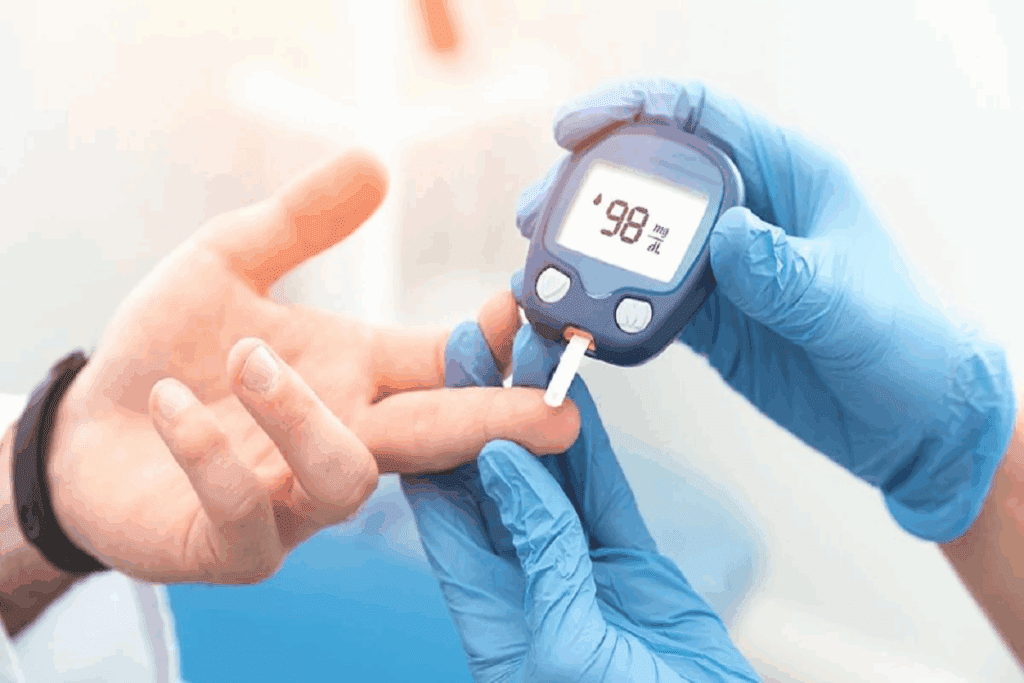
To grasp DKA’s pathophysiology, we must explore its metabolic changes. Diabetic ketoacidosis (DKA) is a severe diabetes complication. It’s marked by high levels of ketoacids in the blood.
Insulin Deficiency and Hormonal Counterregulation
DKA is mainly caused by a lack of insulin. This lack triggers a series of metabolic issues. Without enough insulin, the body’s counterregulatory hormones (like glucagon, cortisol, and adrenaline) increase.
This hormonal shift leads to high blood sugar. Glucose moves from stored energy to the bloodstream. The high glucagon/insulin ratio also boosts ketone body production, causing acidosis.
Metabolic Consequences and Systemic Effects
The metabolic problems in DKA affect the whole body. High blood sugar and ketoacidosis cause dehydration and electrolyte imbalances.
The severity of these issues is evident in DKA’s symptoms. They can range from mild to very serious.
| Metabolic Derangement | Clinical Consequence |
|---|---|
| Hyperglycemia | Osmotic diuresis, dehydration |
| Ketoacidosis | Metabolic acidosis, electrolyte imbalances |
| Insulin deficiency | Hyperglycemia, ketone body production |
Understanding these key metabolic changes helps us see DKA’s complexity. It also guides us in managing it effectively.
Clinical Manifestations of Diabetic Ketoacidosis
It’s important to know the signs of DKA to catch it early and treat it well. Diabetic ketoacidosis (DKA) is a serious condition with high blood sugar, acid buildup, and ketosis. The symptoms of DKA can be different, but they all need quick attention.
Classic Symptoms and Physical Findings
People with DKA often have polyuria, polydipsia, and abdominal pain. These symptoms come from high blood sugar and dehydration. They can also have nausea, vomiting, and stomach pain, which might confuse doctors.
Looking at someone with DKA might show dehydration signs like dry mouth, fast heart rate, and low blood pressure. Deep, hard breathing is a sign of acid buildup. In bad cases, they might act confused or even fall into a coma.
“The presence of ketones in the urine or blood, along with hyperglycemia and metabolic acidosis, confirms the diagnosis of DKA.”
Severity Classification Systems
DKA is divided into mild, moderate, or severe based on acid levels, consciousness, and other signs. This helps doctors decide how to treat it.
- Mild DKA has a pH between 7.25 and 7.30 and bicarbonate levels between 15 and 18 mmol/L.
- Moderate DKA has a pH between 7.00 and 7.24 and bicarbonate levels between 10 and 15 mmol/L.
- Severe DKA has a pH below 7.00 and bicarbonate levels below 10 mmol/L.
Knowing how severe DKA is helps doctors make better treatment plans. The dka glucose level and other metabolic problems are key in figuring out how bad it is and how to treat it.
Blood Glucose: The Primary Diagnostic Marker
Understanding blood glucose’s role in DKA is key for diagnosis and treatment. Blood glucose levels are vital in diagnosing Diabetic Ketoacidosis. They show the patient’s metabolic state.
Pathophysiologic Basis of Hyperglycemia in DKA
Hyperglycemia, or high blood glucose, is a key sign of DKA. It comes from insulin deficiency and increased gluconeogenesis. Without enough insulin, the body can’t use glucose well. This leads to the liver making more glucose, causing high blood glucose levels.
The reasons for high blood glucose in DKA are complex. It’s not just the lack of insulin. Hormones like glucagon, cortisol, and catecholamines also play a part. They help make more glucose and use less.
Diagnostic Thresholds and Interpretation
To diagnose DKA, blood glucose levels must be over 250 mg/dL. But, this can change. It’s important to look at blood glucose levels with other signs and lab results. For example, finding ketones in the blood or urine helps confirm DKA.
When looking at blood glucose levels, we must see how severe they are. Higher levels mean more severe problems. But, how fast glucose levels change can also tell us a lot about the patient’s health.
Euglycemic DKA: Recognition and Significance
Euglycemic DKA is when DKA happens with normal or near-normal blood glucose levels. It’s more common in type 1 diabetes patients or those on SGLT2 inhibitors. It’s hard to spot because it doesn’t show high blood glucose, so we must be very careful.
Euglycemic DKA is serious because it can lead to late diagnosis and treatment. This can make things worse. So, we must think of DKA when patients have metabolic acidosis, even if their blood glucose is normal.
Arterial pH: Quantifying Acidosis in DKA
Arterial pH is key in diabetic ketoacidosis (DKA) to measure acidosis levels. Acidosis is a major sign of DKA, showing a low arterial pH.
Normal pH Versus DKA Ranges
The normal pH range is 7.35 to 7.45. DKA patients have a pH under 7.3, often between 6.8 and 7.3. In very bad cases, the pH can drop below 6.8.
Table 1: Arterial pH Ranges in Normal Individuals and DKA Patients
| Condition | Arterial pH Range |
|---|---|
| Normal | 7.35 – 7.45 |
| DKA | 6.8 – 7.3 |
| Severe DKA | < 6.8 |
Relationship Between pH and Clinical Severity
The acidosis level, shown by arterial pH, shows how severe DKA is. A lower pH means more severe acidosis and a higher risk of problems.
Clinical assessment is very important. It helps decide how intense the treatment should be. For example, a pH under 7.0 might need more serious action.
Compensatory Respiratory Mechanisms
The body tries to fight acidosis with respiratory compensation. DKA patients often breathe deeply and hard, trying to get rid of more CO2.
It’s vital to know these body responses to manage DKA well. By understanding how the body reacts to acidosis, doctors can make better treatment plans.
Serum Bicarbonate: Buffer System Depletion
Understanding serum bicarbonate is key to managing DKA. It helps keep acid-base balance right. When it drops, it shows metabolic acidosis in DKA.
Pathophysiology of Bicarbonate Reduction
In DKA, the body’s buffer system gets too much from ketones. This leads to a big drop in serum bicarbonate. It’s a way to fight metabolic acidosis, as bicarbonate helps soak up hydrogen ions.
The drop in bicarbonate shows how bad the metabolic problem is. More ketones mean more hydrogen ions. This makes the body use up more bicarbonate.
Clinical Significance in DKA Assessment
Serum bicarbonate levels are very important in DKA. A low level means severe metabolic acidosis and a higher risk of problems.
We check serum bicarbonate levels with others to see how bad DKA is. Watching how bicarbonate changes helps us see if treatment is working. We then adjust as needed.
Correlation with Other Acid-Base Parameters
Serum bicarbonate is closely tied to other acid-base markers, like arterial pH and anion gap. In DKA, bicarbonate goes down, and anion gap goes up. This is because of more unmeasured anions, like ketones.
- The link between bicarbonate and pH shows how severe acidosis is.
- Anion gap helps find unmeasured anions.
- Watching these together gives a full picture of acid-base status.
Knowing how serum bicarbonate works in DKA and its link to other markers helps us care for patients better.
Anion Gap: Measuring Unmeasured Acids
In diabetic ketoacidosis, the anion gap is key to measuring metabolic acidosis. It shows the balance between ions we can measure and those we can’t. This helps doctors understand how severe the acidosis is.
Calculation Methods and Normal Values
To find the anion gap, doctors use the formula: Anion Gap = Sodium – (Chloride + Bicarbonate). It usually ranges from 8 to 12 mEq/L. Knowing this helps doctors see how bad the acidosis is in DKA.
Elevated Anion Gap in ketoacidosis means more unmeasured anions, like ketones. These build up because of lack of insulin and too much of other hormones.
Elevated Anion Gap in Ketoacidosis
In DKA, the anion gap goes up because of ketone bodies. These are acidic and build up because of insulin lack. This leads to metabolic acidosis, with low pH and bicarbonate levels.
The severity of the anion gap elevation shows how bad DKA is. So, watching the anion gap is key in treating DKA patients.
Differential Diagnosis of High Anion Gap Metabolic Acidosis
High anion gap metabolic acidosis isn’t just from DKA. It can also be from lactic acidosis, kidney failure, or toxic ingestions. So, doctors need to check carefully to find the real cause.
Doctors must think about these other causes when treating patients with high anion gap metabolic acidosis. This ensures the right treatment is used.
Serum Ketones: Direct Markers of Ketoacidosis
Serum ketones, like beta-hydroxybutyrate, are key signs of diabetic ketoacidosis (DKA). They show up in the blood when there’s not enough insulin and too much glucagon. This leads to fatty acids breaking down.
Beta-hydroxybutyrate: The Predominant Ketone Body
Beta-hydroxybutyrate is the main ketone in DKA. It’s made in the liver from fatty acids when insulin is low. Its level shows how severe ketoacidosis is. High levels of beta-hydroxybutyrate mean more serious illness if not treated quickly.
We use beta-hydroxybutyrate levels to check how bad DKA is and if treatment is working. It’s not just a marker; it’s key for making treatment choices.
Acetoacetate and Acetone: Secondary Ketones
Acetoacetate and acetone are also made in ketoacidosis, but beta-hydroxybutyrate is more important. Acetoacetate levels are usually lower. Acetone is found in breath tests.
These secondary ketones help confirm ketoacidosis, but beta-hydroxybutyrate is more important for measuring how severe it is.
Testing Methodologies and Limitations
There are many ways to test for serum ketones, like lab tests and quick tests. These tests help diagnose DKA, but they’re not perfect. They can vary in accuracy and what they measure.
We need to know these limits when we look at test results. Some tests might not tell the difference between ketones or get their levels wrong. Knowing this helps us make better choices in treating patients.
Serum Potassium: Critical Electrolyte Imbalances
In DKA, serum potassium levels can be tricky to understand. They need careful attention and management. Even though the body is low on potassium, the levels in the blood can seem high.
Mechanisms of Potassium Shifts
In DKA, the body’s acid state makes potassium move from inside cells to the blood. This happens because hydrogen ions swap with potassium ions. This leads to higher potassium levels in the blood at first.
Also, without enough insulin, the body can’t move potassium back into cells. This makes the potassium in the blood go up even more.
Total Body Depletion Despite Serum Elevations
Even though the blood potassium seems fine, the body actually has less potassium. This is because of how high blood sugar makes the body lose potassium in urine.
It’s important to remember that normal or high blood potassium doesn’t mean the body has enough potassium. People with DKA often have a lot less potassium than they should.
Monitoring and Replacement Strategies
Keeping an eye on blood potassium is key in treating DKA. As insulin starts working and the body’s acid levels go down, potassium moves back into cells. This can cause potassium levels in the blood to drop too low.
To handle potassium levels well, we suggest:
- Checking blood potassium often, mainly at the start of treatment.
- Adding potassium quickly when levels are low or if the body is making a lot of urine.
- Changing how fast to add potassium based on blood levels and how the patient is doing.
By knowing how potassium moves and using the right ways to check and replace it, we can manage DKA’s electrolyte problems well.
Serum Sodium: Osmotic Effects and Corrections
The high blood sugar in DKA affects serum sodium levels. It’s important to watch these levels closely. High glucose can cause a lot of water loss, changing sodium levels.
Mechanisms of Sodium Alterations in DKA
In DKA, blood sugar can change sodium levels. This can cause either too much or too little sodium in the blood. The high sugar pulls water out of cells, diluting sodium.
As stated by
“The presence of hyperglycemia can lead to a falsely low serum sodium measurement, a phenomenon known as pseudohyponatremia.”
This means we need to calculate the sodium levels correctly. This helps us understand the patient’s sodium status better.
Corrected Sodium Calculations
To get the right sodium levels, we use a special formula. The formula is: Corrected Sodium = Measured Sodium + (Glucose – 100) / 100 * 1.6 (or 2.4 for more severe hyperglycemia).
| Glucose Level (mg/dL) | Correction Factor |
|---|---|
| 100-200 | 1.6 |
| >200 | 2.4 |
Clinical Implications of Sodium Abnormalities
Abnormal sodium levels in DKA can cause serious problems. Both too much and too little sodium can lead to seizures and brain swelling.
It’s key to understand how sodium changes in DKA and to use the right calculations. By watching sodium levels and adjusting treatment, we can reduce risks.
Comprehensive Laboratory Evaluation and Monitoring
Diagnosing and managing DKA needs a detailed lab check. These tests confirm the diagnosis, show how severe it is, and check how well treatment is working.
American Diabetes Association Diagnostic Criteria
The American Diabetes Association (ADA) has clear rules for diagnosing DKA. These include:
- High blood sugar (blood glucose > 250 mg/dL)
- Metabolic acidosis (arterial pH
- Ketones in the body
These rules help doctors know if someone has DKA and how bad it is.
Additional Laboratory Parameters
Other lab tests are key for managing DKA. These include:
- Serum electrolytes (sodium, potassium, chloride)
- Anion gap
- Serum osmolality
- Renal function tests (BUN, creatinine)
These tests help doctors understand the body’s state and guide fluid and electrolyte therapy.
Serum potassium levels are very important. They can be high even when the body has low potassium. It’s important to watch them closely and replace them to avoid low potassium.
Temporal Changes in Lab Values During Treatment
During DKA treatment, lab values are watched closely. Changes in these values show how well the treatment is working.
“The resolution of DKA is indicated by normalization of blood glucose, improvement in metabolic acidosis, and clearance of ketones.”
— ADA Guidelines
As treatment goes on, we see:
- The anion gap goes down
- Serum bicarbonate gets back to normal
- pH levels get better
Watching these changes helps doctors adjust treatment and get the best results for patients.
Managing DKA well means understanding lab values and what they mean. By watching these closely, doctors can make better choices and help patients get better.
Conclusion: Integrating Lab Values for Optimal DKA Management
Managing diabetic ketoacidosis (DKA) well needs a deep understanding of its causes and the right lab values. The seven lab values we talked about are key for making good decisions and helping patients get better.
Knowing how DKA works is vital for using lab values right and planning treatment. It’s important to look at how insulin lack, hormonal reactions, and metabolic problems affect patients with DKA.
DKA and metabolic acidosis are closely related. Lab values help show how bad the acidosis is and if treatment is working. By watching these values closely, doctors can adjust treatment plans to fit each patient’s needs.
We stress the need to use these lab values in treating DKA. This way, doctors can help patients more and lower the chance of serious problems from this complex disorder.
FAQ:
What are the 7 key lab values used to diagnose and manage Diabetic Ketoacidosis (DKA)?
The 7 key lab values are blood glucose, arterial pH, serum bicarbonate, anion gap, serum ketones, serum potassium, and serum sodium.
What is the normal range for arterial pH, and how does it change in DKA?
The normal range for arterial pH is about 7.35-7.45. In DKA, the pH drops, often below 7.3, showing acidosis.
What is euglycemic DKA, and how is it recognized?
Euglycemic DKA has normal blood glucose levels. It’s recognized by ketoacidosis and acidosis, even with normal blood sugar.
How is the anion gap calculated, and what is its significance in DKA?
The anion gap is found by subtracting chloride and bicarbonate from sodium. An elevated anion gap shows unmeasured acids, like ketones, in DKA.
What is the role of serum ketones in diagnosing DKA?
Serum ketones, like beta-hydroxybutyrate, are key markers of ketoacidosis. They are vital in diagnosing DKA.
Why is serum potassium critical in DKA management?
Serum potassium is critical because DKA can cause potassium shifts. This can lead to a body potassium deficit, even with normal or high serum levels.
How are sodium levels affected in DKA, and why are corrected sodium calculations important?
Sodium levels can change in DKA due to high blood sugar and dehydration. Corrected sodium calculations help accurately assess sodium levels and guide fluid management.
What are the diagnostic criteria for DKA according to the American Diabetes Association?
The criteria include high blood glucose (over 250 mg/dL), metabolic acidosis (arterial pH
How do lab values change during the treatment of DKA?
During treatment, lab values like blood glucose, arterial pH, bicarbonate, and anion gap are closely monitored. They usually return to normal as the patient recovers. The rate of normalization depends on the condition’s severity and treatment effectiveness.
What is the significance of metabolic acidosis in DKA?
Metabolic acidosis is a key feature of DKA, caused by ketone and organic acid buildup. It’s a major factor in diagnosing and classifying DKA’s severity.
References:
National Center for Biotechnology Information. DKA Lab Values: Understanding Diabetic Ketoacidosis Pathophysiology. Retrieved from https://www.ncbi.nlm.nih.gov/pmc/articles/PMC2813874/