Last Updated on November 27, 2025 by Bilal Hasdemir
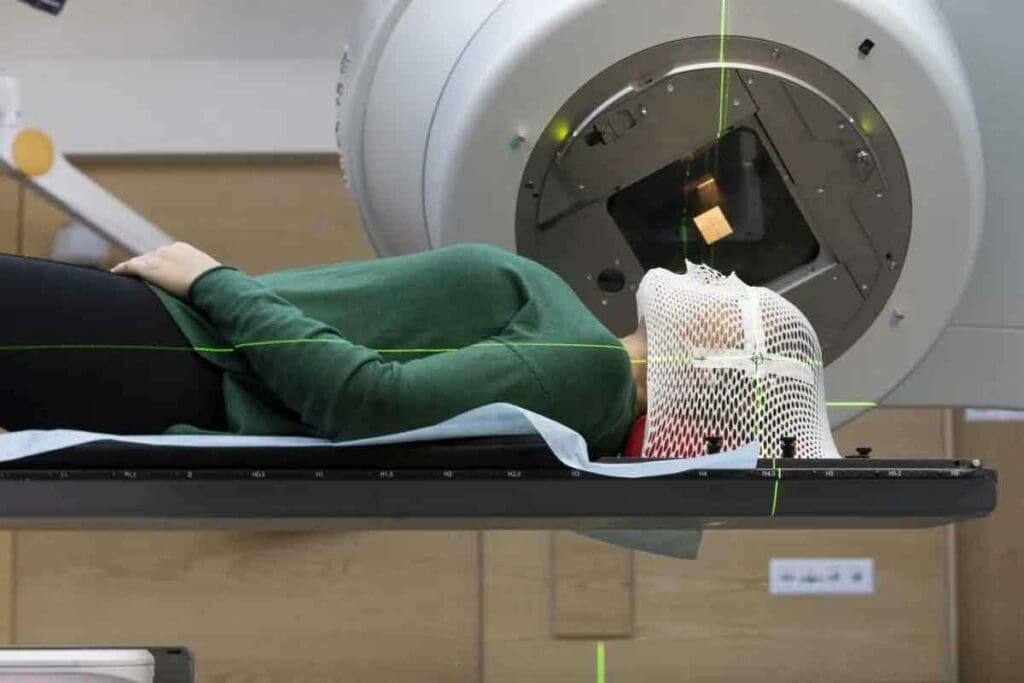
External beam radiation therapy (EBRT) is a common treatment for cancer. It uses radiation beams to shrink or destroy tumors.
This treatment is often used for cancers in one area. It can be tailored to protect nearby healthy tissue. You usually get radiation treatments once a day, five days a week, for several weeks.
Liv Hospital offers trusted, innovative, patient-centered radiotherapy. It’s tailored to individual needs and sets international standards in medical outcomes.
Key Takeaways
- EBRT is a common treatment for various types of cancer.
- Treatment schedules typically involve daily sessions, five days a week.
- The duration of treatment varies depending on individual needs.
- Advanced imaging techniques help protect healthy tissue.
- Liv Hospital provides patient-centered radiotherapy with international standards.
What Is External Radiation and How Does It Work?
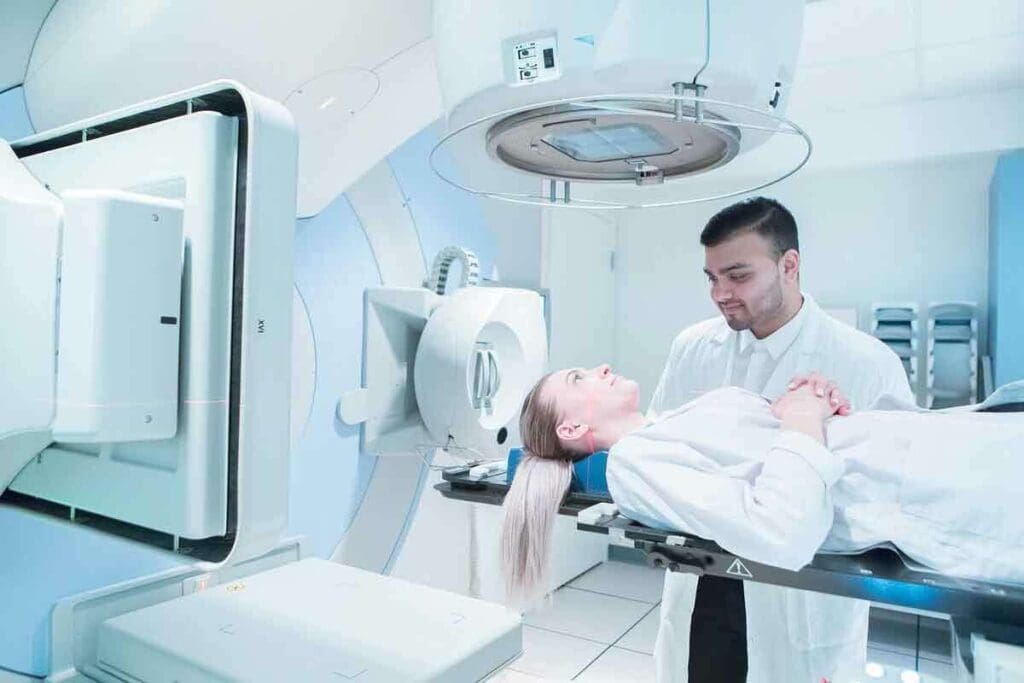
External radiation therapy, also known as external beam radiation therapy (EBRT), is a common cancer treatment. It uses high-energy radiation beams.
EBRT works by targeting cancer cells with precision. This helps avoid harming healthy tissue nearby. The beam radiation is carefully set to focus on the tumor.
The Science Behind Radiation Beams
Radiation beams in external radiation therapy come from photons, protons, and electrons. Photon beams are the most common. They can reach tumors deep inside the body.
How Cancer Cells Are Targeted
Targeting cancer cells involves detailed planning and imaging. This ensures the beam radiation hits the tumor accurately. This precision helps the treatment work better and reduces side effects.
Equipment Used in EBRT Delivery
The delivery of external beam radiation therapy uses advanced equipment. Linear accelerators generate high-energy radiation beams. Trained professionals control the equipment to ensure accurate treatment.
| Particle Type | Characteristics | Common Uses |
| Photons | High-energy X-rays, deep penetration | Treating deep-seated tumors |
| Protons | Precise energy delivery, minimal damage beyond the tumor | Treating tumors near critical structures |
| Electrons | Variable penetration depth, useful for superficial tumors | Treating skin cancers or superficial lesions |
Types of External Beam Radiation Techniques
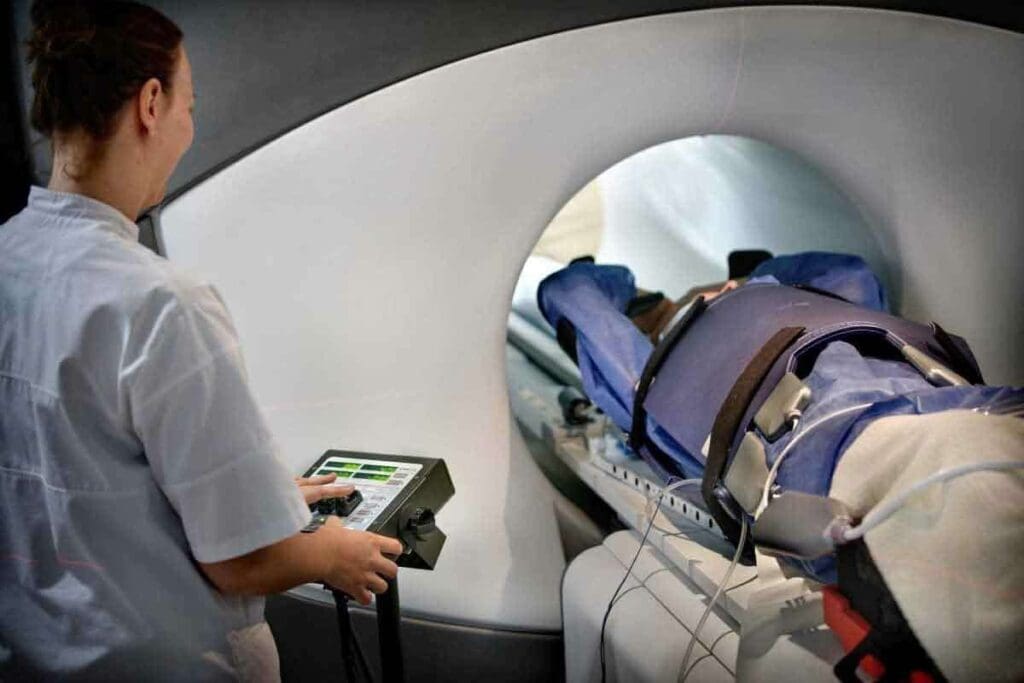
External beam radiation therapy has grown a lot, with new ways to fight cancer. These new methods help target tumors better and protect healthy tissues. This makes treatments more effective.
Conventional External Radiation
Conventional external radiation is a traditional cancer treatment. It uses a machine outside the body to send radiation to the tumor. But it might not always hit the tumor right, which can harm nearby healthy tissues.
3D Conformal Radiation Therapy
3D conformal radiation therapy is a big step forward in fighting cancer. It uses advanced imaging to make a 3D model of the tumor. This lets doctors send radiation beams more accurately, hitting the tumor better and protecting healthy tissues.
This method is getting more popular because it shapes the radiation dose to fit the tumor. This makes treatments more effective and cuts down on side effects.
Image-Guided Radiation Therapy (IGRT)
Image-guided radiation therapy (IGRT) uses imaging like X-rays or CT scans to guide radiation beams. It makes sure the radiation hits the tumor right, even if it moves during treatment. This is great for tumors that move or are close to important areas.
IGRT improves how well radiation is delivered. It makes treatments more effective and safer for healthy tissues.
Standard Treatment Schedules for External Radiation Therapy
Knowing how often you get radiation treatments is key for those getting external beam radiation therapy. The schedule is planned to make the therapy work best and reduce side effects.
The Typical Five-Day Weekly Schedule
Most people get radiation therapy once a day, five days a week, for weeks. This standard fractionation schedule gives a steady dose of radiation. It also lets healthy tissues recover between sessions.
The usual days are Monday through Friday, with weekends off. This break lowers the chance of side effects and helps patients recover.
Duration Variations by Cancer Type
The length of radiation therapy changes based on the cancer type and stage. For example:
- Curative treatments for some cancers might last up to 8 weeks.
- Palliative treatments to ease symptoms might be shorter, sometimes just a few sessions.
Talking to your radiation oncologist about your treatment schedule is important. It helps you know what to expect.
What Happens During Each Session
During each session, you’ll be on a treatment table. The radiation therapist will set up the machine according to your plan. The radiation itself is painless and only lasts a few minutes.
Here’s what happens during each session:
- The radiation therapist will put you on the treatment table and leave to control the machine from another room.
- The machine will move around you to give radiation from different angles.
- You might hear the machine, but it won’t touch you.
- The session is very short, and you can go home or do normal activities afterward.
Knowing about the treatment process and schedule can help reduce anxiety. It makes the experience more manageable for patients.
Factors That Determine Your Radiation Treatment Frequency
Radiation treatment frequency depends on many things. These include the patient’s health and what the treatment aims to achieve. Each person’s treatment plan is unique, based on their specific needs.
Cancer Type and Stage Considerations
The type and stage of cancer are key in setting the treatment schedule. Different cancers react differently to radiation. The cancer’s stage also affects how often and how intense the treatment will be.
For example, cancers in early stages might need fewer treatments than those in later stages. A renowned oncologist explains, “The type and stage of cancer are vital in deciding the radiation treatment schedule. It’s not just about the cancer itself, but how far it has spread.”
Treatment Goals: Curative vs. Palliative Approaches
The goals of radiation therapy also play a big role. Curative treatments aim to get rid of the cancer. They often need more frequent sessions to be effective. On the other hand, palliative treatments focus on easing symptoms and improving life quality. They might not need as many sessions.
“The treatment goals are a key determinant in the frequency of radiation therapy. Curative intent often requires a more aggressive schedule,” – A Radiation Oncologist
Patient-Specific Health Factors
Patient-specific health factors also matter. These include the patient’s overall health, age, and any other medical conditions. Patients with certain health issues might need their treatment plans adjusted to avoid side effects.
A study in the Journal of Clinical Oncology showed that these factors can greatly affect treatment outcomes and how often it’s needed. This highlights the need for personalized treatment plans in radiation therapy.
Knowing these factors helps patients and their families understand radiation treatment better. It prepares them for what’s ahead in their treatment journey.
How Long Is Radiation Therapy? Timeline Expectations
The time needed for radiation therapy changes based on several things. These include the type of cancer and what the treatment aims to do. Knowing how long treatment will last helps patients get ready.
Short-Course Treatments (1-2 Weeks)
Some treatments last just one to two weeks. This is called short-course radiation therapy. It’s often used to ease symptoms and improve life quality.
It’s for patients with advanced cancer. The goal is to reduce pain or other symptoms. Even though the dose is higher, the treatment is shorter.
Standard Treatment Durations (3-8 Weeks)
Most treatments last between three to eight weeks. This lets the tumor be treated while protecting healthy tissues. The exact time depends on the cancer type, stage, and the patient’s health.
For example, breast cancer patients might get treatment for five to six weeks. This helps in planning the treatment better.
| Cancer Type | Typical Treatment Duration |
| Breast Cancer | 5-6 weeks |
| Prostate Cancer | 6-8 weeks |
| Lung Cancer | 4-6 weeks |
Extended Treatment Protocols (8+ Weeks)
In some cases, treatment goes beyond eight weeks. This might be needed for a higher dose or to allow for recovery. Extended treatments need careful planning and monitoring.
The team will watch the patient closely and adjust the plan as needed. This ensures the patient stays healthy and can handle the treatment.
“The key to successful radiation therapy is not just the total dose, but how it’s delivered over time. Fractionation allows us to target the tumor effectively while protecting healthy tissues.” – A Radiation Oncologist
Understanding what affects treatment length helps patients prepare for their journey. It’s important to know what to expect.
The Science of Fractionation in Beam Radiation Therapy
Beam radiation therapy uses fractionation to control tumors and protect healthy tissues. Fractionation means giving the total dose in many sessions, not all at once.
Why Radiation Is Delivered in Multiple Sessions
Splitting radiation into many sessions helps healthy cells recover. This method targets cancer cells more effectively. An Expert explained, “Fractionation works because normal cells heal faster than cancer cells between treatments.”
“The rationale for fractionation is rooted in the four Rs of radiobiology: repair, reassortment, repopulation, and reoxygenation.”
Radiobiology for the Radiologist
Balancing Tumor Control and Healthy Tissue Protection
The main goal of fractionation is to control tumors and protect healthy tissues. By using smaller doses, side effects are less likely. This way, doctors can give a higher dose to tumors without harming nearby healthy tissues.
Calculating Total and Daily Radiation Doses
Figuring out total and daily doses is complex. It depends on the cancer type, size, location, and the patient’s health. The total dose is split into daily fractions based on the treatment plan.
For example, some cancers might get 2 Gy per fraction, five days a week, for weeks. The total dose and how many fractions are planned to control tumors and avoid side effects.
Advanced Approaches: Hypofractionation and Accelerated Treatments
New methods in radiation therapy are giving cancer patients hope. Hypofractionation and accelerated treatments are changing how we fight cancer. They offer faster and possibly more effective ways to treat the disease.
Larger Doses in Fewer Sessions
Hypofractionation means giving more radiation in fewer visits than usual. It aims to kill cancer cells quickly while protecting healthy tissues. This method is based on giving higher doses in a shorter time.
Key aspects of hypofractionation include:
- Reduced the number of treatment sessions
- Higher dose per fraction
- Potential for improved tumor control
- Enhanced patient convenience
Benefits and Patient Eligibility Criteria
Hypofractionation can make treatment easier for patients. It might reduce side effects and improve outcomes. But, who can get this treatment depends on several factors.
Eligibility criteria often consider:
- Cancer type and stage
- Tumor size and location
- Patient’s performance status
- Previous treatments
Cancer Types Most Suitable for Hypofractionated Schedules
Some cancers, like prostate, breast, and lung tumors, benefit from hypofractionation. Whether it’s right for you depends on a thorough check-up with a radiation oncologist.
The following table summarizes some common cancer types treated with hypofractionation:
| Cancer Type | Typical Fractionation | Benefits |
| Prostate Cancer | 5-20 fractions | Improved tumor control, fewer sessions |
| Breast Cancer | 5-15 fractions | Convenience, potentially reduced side effects |
| Lung Cancer | 3-8 fractions | Effective for early-stage disease, fewer sessions |
Research keeps growing, and hypofractionation is being used for more cancers. This opens up new options for both patients and doctors.
Pinpoint Radiation Treatment: Precision Techniques
Thanks to modern tech, pinpoint radiation treatment is now a reality. These new methods make treatments more precise and effective. They also reduce side effects.
IMRT (Intensity-Modulated Radiation Therapy)
IMRT changes the intensity of the radiation beam. It sends precise doses to tumors, protecting healthy tissues nearby.
- Delivers precise radiation doses
- Minimizes damage to healthy tissues
- Effective for complex tumor shapes
SBRT (Stereotactic Body Radiation Therapy)
SBRT uses high doses of radiation for small tumors in a few sessions. It’s very precise and treats tumors that are hard to reach with regular therapy.
- High doses of radiation in few fractions
- Precise targeting of small tumors
- Effective for tumors in challenging locations
Proton Therapy Scheduling Considerations
Proton therapy uses protons to kill cancer cells. It’s great for tumors near important areas.
Impact on Treatment Frequency and Duration
Proton therapy’s precision can shorten treatment time. This is good for patients with tumors near vital areas.
How Many Rounds of Radiation Is Normal? Cancer-Specific Protocols
Cancer patients often wonder how many rounds of radiation therapy they will need. The answer depends on the cancer type and stage, and the treatment goals.
Different cancers have their own radiation therapy plans. Knowing these plans can help patients prepare for their treatment.
Breast Cancer Radiation Schedules
For breast cancer, radiation is used after surgery to kill any remaining cancer cells. The usual schedule is once daily, five days a week, for 3 to 6 weeks. Some might get hypofractionated therapy, with larger doses in 3 weeks.
Prostate Cancer Radiation Schedules
Prostate cancer radiation therapy can last different amounts of time. Conventional therapy is 5 days a week for 8 to 9 weeks. Some might get hypofractionated therapy, lasting 4 to 5 weeks. For more info, visit National Cancer Institute.
Lung Cancer Radiation Schedules
Lung cancer radiation therapy plans vary by stage and type. Non-small cell lung cancer therapy can last 6 to 7 weeks. Early-stage lung cancer might get 3 to 5 fractions in 1 to 2 weeks with SBRT.
Head and Neck Cancer Radiation Schedules
Head and neck cancer therapy often combines with chemotherapy. The usual schedule is 5 days a week for 6 to 7 weeks. IMRT is used to target tumors while protecting healthy tissues.
| Cancer Type | Typical Radiation Schedule | Duration |
| Breast Cancer | Once daily, 5 days a week | 3 to 6 weeks |
| Prostate Cancer | 5 days a week | 8 to 9 weeks (conventional), 4 to 5 weeks (hypofractionated) |
| Lung Cancer | Varies (conventional or SBRT) | 6 to 7 weeks (conventional), 1 to 2 weeks (SBRT) |
| Head and Neck Cancer | 5 days a week | 6 to 7 weeks |
Knowing the details of radiation therapy for different cancers helps patients and families prepare. It’s key to talk to a healthcare provider to find the best radiation schedule for individual needs.
Can You Get External Radiation Treatment More Than Once?
Getting radiation therapy more than once is a big decision in cancer treatment. It depends on the cancer type and stage, how well previous treatments worked, and the patient’s health.
Re-Irradiation Considerations and Limitations
Oncologists look at the benefits and risks of re-irradiation. A study on the National Center for Biotechnology Information shows it can help some patients. But, it needs careful planning.
There are limits to re-irradiation. It can harm healthy tissues and cause serious side effects. Doctors must think about these risks and benefits.
Recommended Time Intervals Between Treatment Courses
The time between radiation treatments is key for safety and success. A longer gap helps normal tissues recover.
The exact time depends on the initial treatment dose, cancer type, and how well the patient responded to the first therapy.
Special Techniques for Safe Re-Treatment
New radiation methods like Intensity-Modulated Radiation Therapy (IMRT) and Stereotactic Body Radiation Therapy (SBRT) make re-irradiation safer. They help target tumors better, protecting healthy tissues.
Managing Cumulative Radiation Exposure
It’s important to manage the total radiation dose in re-irradiation. Doctors calculate the total dose and check for risks of radiation damage.
They use advanced planning systems to lower these risks. This ensures the benefits of re-irradiation are worth the risks.
Conclusion: Making the Most of Your Radiation Therapy Journey
Navigating radiation therapy can be tough and complex. It’s key for patients to understand external beam radiation therapy well. This helps them make better choices about their treatment.
Knowing about treatment schedules, techniques, and side effects helps patients prepare. This knowledge lets them be more involved in their care. It makes the experience more positive and productive.
To make the most of radiation therapy, patients need to understand the treatment process well. They should work closely with their healthcare team. This way, they can create a treatment plan that meets their specific needs and goals.
By understanding and working with their healthcare team, patients can get the most out of radiation therapy. They can reduce side effects and improve their quality of life. This proactive approach helps patients achieve the best outcomes from their treatment.
FAQ
How often do you get external beam radiation therapy?
The frequency of external beam radiation therapy depends on several factors. These include the cancer type and stage, treatment goals, and the patient’s health. Usually, treatments are given five days a week, Monday through Friday, for several weeks.
What is external radiation therapy, and how does it work?
External radiation therapy, also known as external beam radiation therapy (EBRT), uses high-energy beams to kill cancer cells. A machine called a linear accelerator creates these beams. They are then aimed at the tumor site with great precision.
How many rounds of radiation is normal for different types of cancer?
The number of radiation treatments varies by cancer type and stage. For example, breast cancer patients might get 15-30 fractions. Prostate cancer patients could receive 20-40 fractions. Lung and head and neck cancer patients might get 10-30 fractions.
Can you get external radiation treatment more than once?
Yes, external radiation treatment can be given more than once. This depends on the initial dose, time elapsed, and the patient’s health. Re-irradiation is considered on a case-by-case basis. Special techniques are used to reduce side effects.
What are the different techniques used in external beam radiation therapy?
Several techniques are used in EBRT. These include conventional external radiation, 3D conformal radiation therapy, intensity-modulated radiation therapy (IMRT), stereotactic body radiation therapy (SBRT), and proton therapy. Each has its own benefits and is used for specific cancers.
How long is radiation therapy?
Radiation therapy’s length varies by cancer type, stage, treatment goals, and patient health. Treatment can last from a few days to several weeks or months.
What is fractionation in beam radiation therapy?
Fractionation means delivering radiation in multiple sessions. This allows healthy tissues to recover between treatments. It’s a key part of EBRT, balancing tumor control with protecting healthy tissue.
What are the benefits of hypofractionation and accelerated treatments?
Hypofractionation and accelerated treatments involve giving larger doses in fewer sessions. These methods can be beneficial for cancers like prostate and breast. They can also shorten treatment time.
How is the total and daily radiation dose calculated?
The total and daily radiation dose is calculated based on several factors. These include cancer type and stage, treatment goals, and patient health. The radiation oncologist determines the best dose and schedule for each patient.
What happens during each radiation treatment session?
During each session, the patient is positioned on a treatment table. The radiation therapist uses imaging to ensure accurate targeting. The radiation is then delivered according to the treatment plan.
References
- National Cancer Institute. (2018). External Beam Radiation Therapy for Cancer. https://www.cancer.gov/about-cancer/treatment/types/radiation-therapy/external-beam
- Beddok, A., et al. (2025). Reirradiation: Standards, challenges, and patient-focused approaches. CA: A Cancer Journal for Clinicians. https://pubmed.ncbi.nlm.nih.gov/40438993/