Last Updated on November 27, 2025 by Bilal Hasdemir
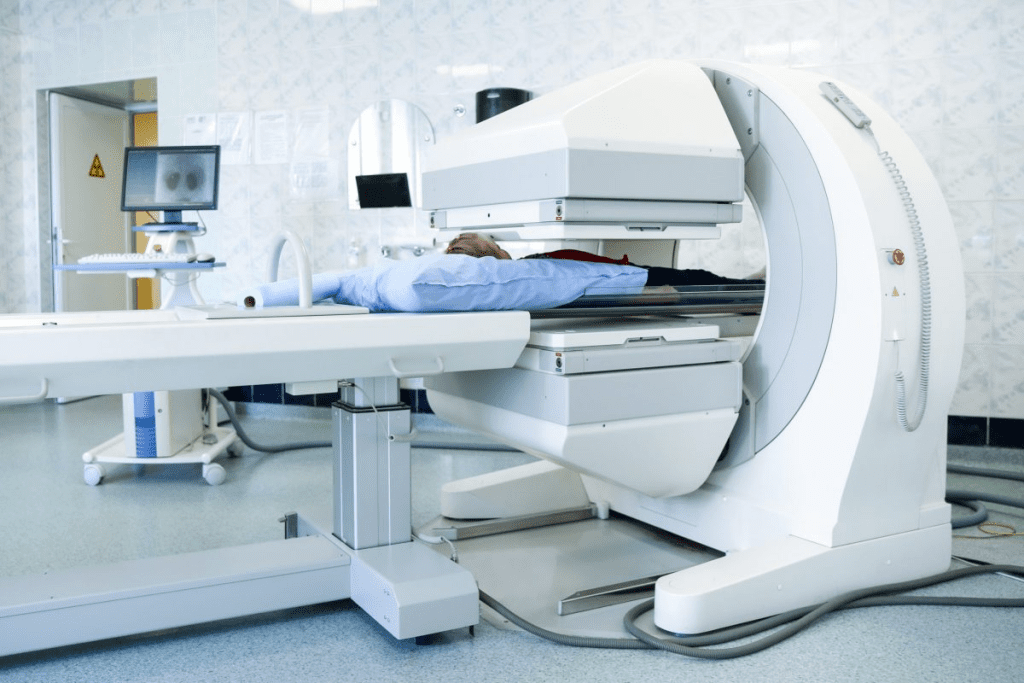
At Liv Hospital, we rely on nuclear medicine for advanced care. The gamma camera turns invisible radioactivity into clear images. These images help doctors make precise decisions for our patients.
A gamma camera is a special tool for detecting gamma rays. It uses radiopharmaceuticals to see inside the body. This helps doctors understand how organs like the lungs and heart work.
Key Takeaways
- Gamma cameras detect radiation emitted by the body after administering radiopharmaceuticals.
- The process of using a gamma camera is painless and does not cause discomfort to the patient.
- Technetium-99m is the most widely used tracer in gamma camera procedures.
- Gamma cameras are critical for diagnosing and tracking medical conditions.
- Scintigraphy with Technetium 99 usually takes 3-4 hours, involving the injection of a radio-isotope tracer.
The Fundamentals of Gamma Camera Nuclear Medicine
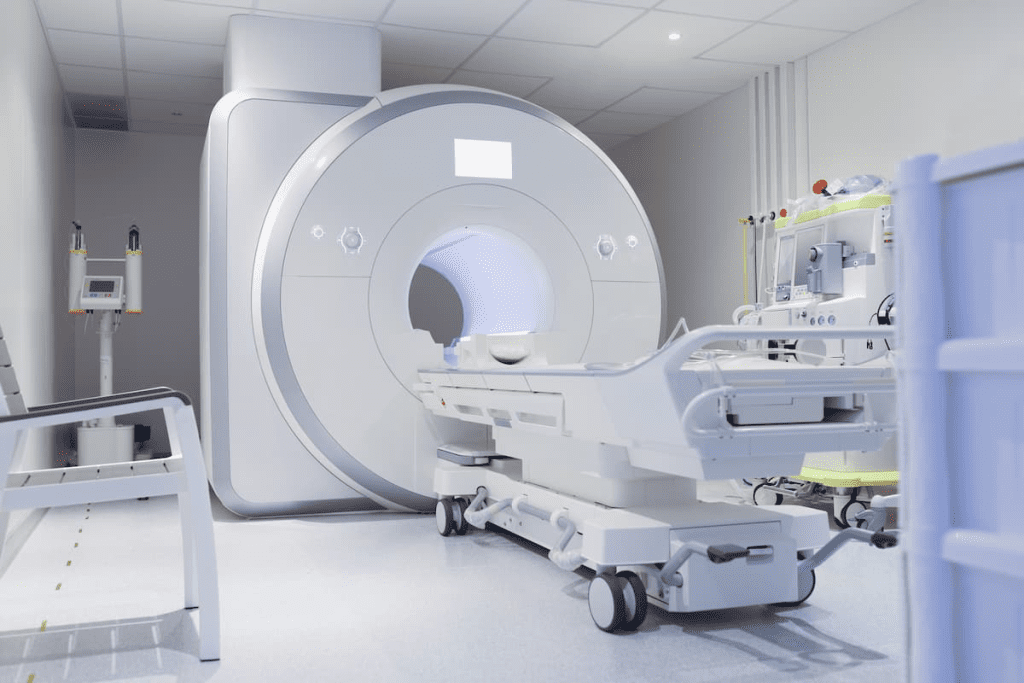
The gamma camera is key in nuclear medicine, helping us see inside the body. It detects gamma radiation from special medicines. This lets us see how the body works and find health problems.
Definition and Basic Principles
A gamma camera, also known as a nuclear medicine camera or a gamma camera Nuclear Medicine device, works on the Anger principle. It catches gamma rays from the body after a special medicine is given. This lets us make images that show where the medicine is in the body, helping us understand health issues.
The gamma camera turns gamma radiation into light, which we then use to make images. It uses many parts to create clear pictures that help doctors diagnose.
Historical Development of Nuclear Imaging
The historical development of nuclear imaging started in the mid-20th century. The first gamma cameras were made then. Over time, these cameras have gotten better, with more sensitivity and clearer images.
From simple static images to today’s advanced systems, gamma cameras have changed a lot. These changes have helped us better diagnose and treat many diseases, including heart problems and cancer.
The Science Behind Gamma Radiation Detection
Gamma camera technology is based on detecting gamma radiation from radiopharmaceuticals. This tech helps us see inside the body and find medical issues. It works by understanding gamma rays and how they interact with our bodies.
Gamma Ray Physics Fundamentals
Gamma rays are high-energy waves from radioactive stuff. They travel far without mass or charge. The gamma camera catches these rays using a sodium iodide crystal that flashes when hit by gamma rays.
Radiopharmaceuticals and Tracer Principles
Radiopharmaceuticals have tiny amounts of radioactive stuff. When in the body, they send out gamma rays for the camera to catch. The right radiopharmaceutical depends on the medical issue we’re looking at.
These substances work as tracers because they join in the body’s metabolic actions. By watching where and how much these tracers spread, we learn a lot about the body’s functions. This helps us spot any problems.
Key Components of a Gamma Camera Machine
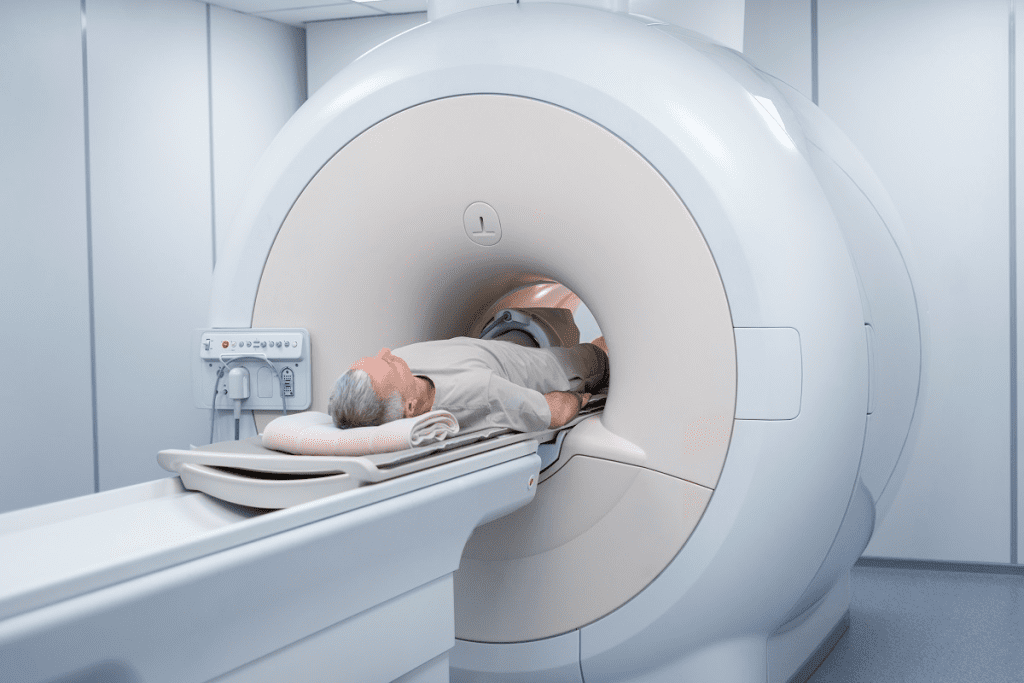
A gamma camera machine has several important parts. These parts work together to turn gamma radiation into useful images. The main parts include the collimator, sodium iodide (NaI) crystal, light guide, photomultiplier tubes, and localization matrix. They all help detect gamma rays from the patient’s body.
Sodium Iodide Crystal Detectors
The sodium iodide crystal detector is key. It changes gamma radiation into visible light. This happens when gamma rays hit the NaI crystal, causing scintillations. These scintillations are then detected by other parts of the gamma camera.
The NaI crystal is great for this job. It has excellent scintillation properties and can detect low-energy gamma rays well.
Collimators: Types and Functions
Collimators are very important. They decide which gamma rays can enter the gamma camera. By only letting in rays that are straight, collimators help make accurate images of the radioactive parts in the patient’s body.
There are different types of collimators. These include parallel-hole, converging, diverging, and pinhole collimators. Each type is used for different imaging needs.
Photomultiplier Tubes and Signal Processing
Photomultiplier tubes (PMTs) boost the weak light signals from the NaI crystal. These signals come from gamma rays hitting the crystal. The PMTs turn these light signals into electrical signals.
These electrical signals are then processed. They help figure out the energy and position of the gamma rays. This info is key for making a clear image of the radioactive tracer in the patient’s body.
The gamma camera machine is designed to be gentle. It makes sure patients are comfortable and get low radiation exposure. Knowing about the parts and how they work helps us see how gamma cameras help doctors diagnose.
How Gamma Cameras Work in Nuclear Medicine
Gamma cameras are key in nuclear medicine. They help us see gamma radiation in the body. This is thanks to the devices’ ability to detect and image gamma rays.
Detection Process of Gamma Rays
The first step is capturing gamma rays from radiopharmaceuticals. Gamma cameras have camera heads, usually one to three. These heads are placed close to the patient for better detection.
Image Formation and Processing
After detecting gamma rays, the camera forms an image. It turns the rays into electrical signals. Then, it processes these signals to show where the radiopharmaceuticals are in the body.
Modern gamma cameras, like SPECT machines, give us detailed images. This helps doctors see more clearly what’s going on inside the body.
Digital Conversion and Display
The electrical signals are turned into digital data. This data is then shown as images on a computer screen. This process lets us enhance the images for better clarity.
The images help us understand how the body works. They are essential for making accurate diagnoses and treatment plans.
We use these advanced tools to give the best care to our patients. Our diagnostic equipment is always up to date with the latest in nuclear medicine.
Types of Gamma Camera Scans and Procedures
Gamma cameras are very versatile. They can do many scans, like planar scintigraphy and SPECT imaging. These tools are key for radiologists. They help create detailed images of organs, which are vital for medical diagnosis.
Planar Scintigraphy Imaging
Planar scintigraphy is a basic but powerful tool in nuclear medicine. It takes two-dimensional images of where radiopharmaceuticals are in the body. This helps doctors see how organs work and spot problems.
Planar imaging is simple yet effective. It’s great for diagnosing some conditions. This makes it a valuable tool for doctors.
SPECT (Single Photon Emission Computed Tomography)
SPECT imaging is a big step forward in nuclear medicine. It creates three-dimensional pictures of the body’s inside. The gamma camera moves around the patient to get images from different angles.
These images are then put together to form a 3D picture. SPECT imaging is super for checking the heart, brain, and cancer. It helps doctors get a clearer picture of what’s going on inside the body.
Dynamic and Static Imaging Capabilities
Gamma cameras can do both dynamic and static imaging. Dynamic imaging takes pictures over time. It shows how organs work and how radiopharmaceuticals move.
Static imaging takes a single picture. It’s good for finding structural problems. Both types are important for different medical needs.
Gamma cameras are very flexible. They support many imaging types, like planar scintigraphy, SPECT, and dynamic and static imaging. These tools are essential for diagnosing and treating many health issues.
Clinical Applications of Gamma Imaging
Gamma imaging is a key tool in today’s medicine. It helps us understand how our bodies work and what might be wrong. We use gamma cameras to check on the heart, thyroid, kidneys, and bones.
Cardiac Imaging and Diagnostics
Gamma imaging is vital for heart health checks. It shows how blood flows to the heart muscles and checks the heart’s function. This is great for spotting heart disease and other heart issues. Cardiac imaging finds where blood flow is low, helping us act fast.
The main benefits of gamma imaging for the heart are:
- Checking blood flow and muscle health
- Looking at the heart’s pumping ability
- Finding heart artery disease
Thyroid and Endocrine Studies
Gamma cameras also help with thyroid and hormone studies. They help us spot issues like too much thyroid hormone and thyroid nodules. We use special medicines that target the thyroid gland.
The good things about gamma imaging for the thyroid are:
- Checking thyroid hormone levels
- Finding thyroid nodules and cancer
- Seeing if thyroid treatments work
Renal Function Assessment
Gamma imaging is also used to check on the kidneys. It helps us see if there are problems like blockages or if the kidneys aren’t working right. This is done through a test called dynamic renal scintigraphy.
Some main uses of gamma imaging for the kidneys are:
- Looking at kidney function and blockages
- Checking how well transplanted kidneys work
- Finding kidney damage or disease
Bone Scans and Orthopedic Applications
Gamma imaging is also key for bone scans. It helps us find issues like bone cancer, fractures, and infections. It shows changes in bone activity, helping us treat problems early.
- Finding bone cancer and other diseases
- Spotting stress fractures and injuries
- Tracking bone infections and inflammation
Interpreting Gamma Camera Images
Understanding scintigraphy results is key to good patient care. Gamma camera images help us see inside the body. They show how different parts work and if there are problems.
Understanding Scintigraphy Results
Scintigraphy results give us a peek into the body’s inner workings. Experts study these images to see how the body’s parts function. This is vital for diagnosing and treating many conditions.
We look at how radiopharmaceuticals spread in the body with scintigraphy. The way they spread can tell us if something is working right or not. For example, bone scans can show if there are tumors or breaks.
Normal vs. Abnormal Findings
Telling normal from abnormal in gamma camera images is important. Normal findings show even distribution of the radiopharmaceutical. Abnormal findings show uneven areas.
In heart scans, a normal scan means the heart muscle takes up the radiopharmaceutical evenly. But an abnormal scan might show spots where it doesn’t, which could mean heart problems. Getting these findings right is key for treatment.
Role of Nuclear Medicine Physicians
Nuclear medicine physicians are essential for reading gamma camera images. They make sure we understand scintigraphy results well. This helps us care for patients better.
These doctors check how patients react to treatments. This lets us change treatments to help patients more. They mix their medical knowledge with imaging skills for full care.
We value their role in using imaging and medical knowledge together. This helps us make better treatment plans and improve patient results.
Patient Experience During a Gamma Camera Scan
Many patients are new to gamma camera scans and have lots of questions. We get it, it can be a bit scary. But don’t worry, we’re here to help you understand what to expect.
Preparation and Procedure Steps
Before your scan, our team will give you clear instructions. You might need to avoid certain foods or meds. On the day of the scan, you’ll get a small dose of a special tracer.
The scan itself is safe and easy. You’ll lie on a table that slides into the machine. It might take a few minutes to a few hours, depending on the scan.
Key Steps in the Gamma Camera Scan Process:
- Preparation according to our team’s instructions
- Administration of the radiopharmaceutical
- Positioning on the scan table
- The actual scanning process
Radiation Exposure Considerations
Patients often worry about radiation. But don’t worry, we control the radiation carefully. This ensures your safety while getting the needed images.
| Procedure | Typical Radiation Exposure |
| Cardiac Stress Test | 9-12 mSv |
| Bone Scan | 4-6 mSv |
| Thyroid Scan | 1-3 mSv |
The amount of radiation varies by procedure and your body. Our team will talk to you about this and answer your questions.
Post-Scan Care and Follow-up
After the scan, you can go back to your usual activities. The tracer will leave your body on its own.
We’ll give you instructions on what to do next. This might include drinking lots of water. You’ll also have a follow-up to talk about the scan results.
We care about your comfort and safety during the scan. If you have any worries or questions, please let us know.
Advancements in Modern Gamma Camera Technology
The latest gamma cameras have changed nuclear imaging a lot. They offer better accuracy and clearer images, which helps a lot in patient care.
Current Generation Equipment
Today’s gamma cameras, like SPECT-capable ones, are more advanced. They allow for detailed imaging and insights into body functions. Studies show these upgrades have greatly improved diagnosis.
Key features of the current generation gamma cameras include:
- Enhanced sensitivity and resolution
- Improved image processing algorithms
- Advanced collimator designs for better spatial resolution
Hybrid Imaging Systems (SPECT-CT)
Hybrid systems, like SPECT-CT, have changed nuclear medicine a lot. They combine functional and anatomical images for better diagnosis. Experts say this mix has made diagnoses more accurate in many areas.
“The fusion of SPECT and CT technologies has opened new avenues for precise diagnosis and treatment planning.”
These systems use scintillators to create detailed images of the body. This is very helpful in treating cancer, heart issues, and brain diseases.
Software Innovations in Image Processing
Software updates have greatly improved gamma cameras. New algorithms make images clearer, reduce noise, and boost confidence in diagnoses. We’re seeing software that can handle complex tasks better.
Some of the key software innovations include:
- Advanced iterative reconstruction algorithms
- Artificial intelligence (AI) integration for image analysis
- Enhanced data visualization tools for better interpretation
Future Developments in Nuclear Imaging
We’re expecting even more improvements in gamma cameras soon. Future updates will likely focus on better sensitivity, lower radiation doses, and more AI in image analysis. As research goes on, we’ll see smaller, more efficient cameras making nuclear medicine more accessible.
Potential future developments include:
- Cryogenic detectors for improved sensitivity
- Advanced photon counting technologies
- Integration of machine learning algorithms for predictive analytics
As gamma camera tech keeps getting better, we’re committed to bringing the latest to our patients. The future of nuclear medicine looks bright, with new tech set to improve diagnosis and care.
Conclusion
We’ve looked at how gamma cameras are key in nuclear medicine. They are vital for medical imaging and making accurate diagnoses. These cameras help with both planar and SPECT scans, which are important for finding and treating many health issues.
Thanks to new tech, gamma cameras are getting better at personalized nuclear medicine. They can show detailed pictures of what’s inside our bodies. This helps doctors make the right diagnoses and plan the best treatments.
As we keep making gamma cameras better, we’ll see even more accurate diagnoses and better care for patients. The role of gamma cameras in nuclear medicine is huge. Their ongoing improvement will help shape the future of medical imaging.
FAQ
What is a gamma camera used for in nuclear medicine?
A gamma camera detects gamma radiation in the body. It helps diagnose and manage medical conditions.
How does a gamma camera work?
A gamma camera detects gamma rays from radiopharmaceuticals. It converts these rays into electrical signals. Then, it processes these signals to create images.
What are the key components of a gamma camera machine?
The main parts are sodium iodide crystal detectors, collimators, and photomultiplier tubes. They work together to detect and image gamma radiation.
What is the difference between planar scintigraphy and SPECT?
Planar scintigraphy gives two-dimensional images. SPECT, or Single Photon Emission Computed Tomography, creates three-dimensional images by rotating the camera around the patient.
How do I prepare for a gamma camera scan?
Preparation may include fasting and avoiding certain medications. You might also need to remove jewelry or metal objects. Your healthcare provider will give you specific instructions.
What are the benefits of using gamma cameras in cardiac imaging?
Gamma cameras help diagnose and manage heart conditions. They provide information on heart function and viability.
How is radiation exposure minimized during a gamma camera scan?
Radiation exposure is kept low by using the least amount of radiopharmaceutical needed. Scan protocols are optimized, and the camera is properly calibrated.
What is the role of nuclear medicine physicians in interpreting gamma camera images?
Nuclear medicine physicians interpret gamma camera images. They match the images with clinical information to make accurate diagnoses and guide patient care.
What advancements have been made in modern gamma camera technology?
Modern gamma cameras have better detector materials and hybrid systems like SPECT-CT. There are also software improvements for image processing and analysis.
What is the correct spelling for the recording of radioactivity with gamma cameras?
The correct term is scintigraphy. It refers to recording radioactivity with gamma cameras.
Are gamma cameras a relevant tool in modern medical imaging?
Yes, gamma cameras are essential in nuclear medicine. They provide valuable diagnostic information and continue to evolve with new technology.
References
- National Center for Biotechnology Information (NCBI). Nuclear Medicine Instrumentation – StatPearls (2023). https://www.ncbi.nlm.nih.gov/books/NBK597384/
- American Scientific Research Journal for Engineering, Technology, and Sciences (2024). Gamma Cameras: Exploring the Technology, Applications, and Future Prospects. https://asrjetsjournal.org/American_Scientific_Journal/article/view/10875