


Gastroesophageal reflux disease (GERD) happens when stomach acid moves up into the esophagus. This leads to symptoms like heartburn and regurgitation. It affects 18.1 to 27.8 percent of adults in the United States. Why does GERD difficulty swallowing happen? Learn about the causes (esophagitis, stricture) and how to manage this symptom.
Dysphagia, or difficulty swallowing, is a common symptom of GERD. It affects about 18% to 31.6% of patients. At Liv Hospital, we know how uncomfortable and distressing this can be.
We focus on our patients at Liv Hospital. Our internationally recognized expertise helps us understand why GERD causes difficulty swallowing. We provide treatments that are tailored to your needs.
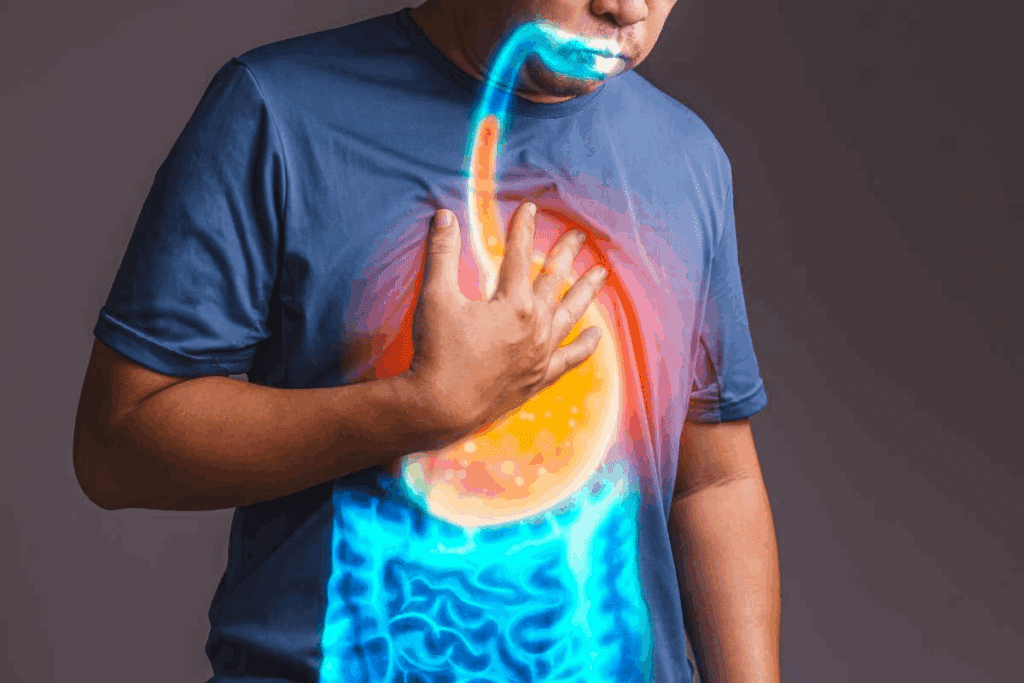
Gastroesophageal reflux disease, or GERD, is more common than you might think. It happens when stomach acid flows back into the tube that connects your mouth and stomach. This backflow can irritate the esophagus, causing discomfort and possibly leading to serious problems.
Gastroesophageal reflux disease (GERD) is a chronic condition. It’s when stomach contents flow back into the esophagus, causing symptoms and possibly complications. Unlike occasional acid reflux, GERD happens when the lower esophageal sphincter (LES) weakens or relaxes too much, letting stomach acid flow back.
The difference between GERD and occasional heartburn is how often and how severe the acid reflux is. While heartburn is common, GERD can also cause regurgitation, trouble swallowing, and chest pain.
Studies show that between 18.1% and 27.8% of adults in the United States have GERD. This makes it a big health issue. The different rates might come from different study groups and how they define GERD.
GERD affects a lot of people, impacting their quality of life and healthcare costs. Knowing how common it is helps us plan better for managing and treating it.
Several things can make you more likely to get GERD. These include being overweight, pregnant, smoking, and taking certain medicines. Your diet and eating habits also matter. Eating big or fatty meals can make symptoms worse.
Also, having health conditions like hiatal hernia and diabetes can raise your risk of GERD. Knowing these risk factors is key to preventing and treating GERD early.
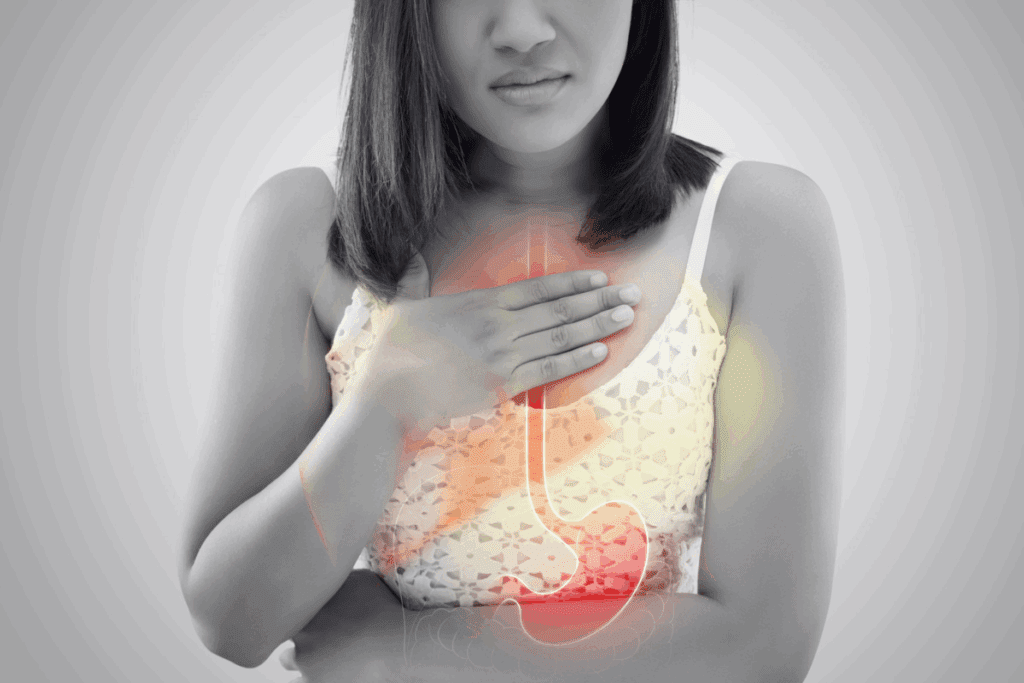
Many people with GERD struggle with swallowing, which affects their daily life. We’ll look into what dysphagia is, how common it is in GERD patients, and what research says. This will help us understand how GERD leads to swallowing problems.
Dysphagia is when it’s hard to swallow food or liquids. It’s a medical term for swallowing disorders. Dysphagia can be oropharyngeal or esophageal, depending on where the problem is.
Research shows dysphagia is a big issue for GERD patients. 31.6% of GERD patients often have trouble swallowing, and 18% sometimes do. This shows why doctors need to treat dysphagia when managing GERD.
Studies have uncovered how acid reflux affects swallowing. They found that stomach acid can damage the esophagus, causing dysphagia. Also, research using special monitoring tools shows GERD symptoms and dysphagia are linked.
Here’s a table with important study findings on GERD and dysphagia:
Study | Prevalence of Dysphagia | Key Findings |
Study A | 31.6% frequent dysphagia | Correlation between GERD severity and dysphagia frequency |
Study B | 18% infrequent dysphagia | Impact of acid reflux on esophageal function |
To understand how GERD affects swallowing, we need to know how swallowing works normally. Swallowing is a complex action that needs many nerves and muscles working together. We’ll look at how this happens and how GERD can mess it up.
Swallowing starts with food or liquid going into our mouth. The tongue then shapes it into a bolus.
The muscles involved in swallowing include skeletal muscles, such as those in the tongue and the pharynx, and smooth muscles, found in the esophagus. These muscles work together, guided by cranial nerves. This ensures food goes into the esophagus safely, without going into the airway.
The swallowing process has three main phases: oral, pharyngeal, and esophageal.
A gastroenterology expert notes,
“Swallowing is a complex process that requires precise coordination between multiple nerves and muscles. Disruption in any part of this process can lead to swallowing difficulties.”
GERD can mess with swallowing in several ways. Acid reflux can cause inflammation and irritation in the esophagus. This can lead to problems with the esophagus moving food and the upper esophageal sphincter working right.
Mechanism | Effect on Swallowing |
Esophageal Inflammation | Dysmotility and pain during swallowing |
Upper Esophageal Sphincter Dysfunction | Difficulty initiating swallows, sensation of food stuck |
Esophageal Stricture Formation | Narrowing of the esophagus, obstructing food passage |
Understanding these issues is key to diagnosing and treating swallowing problems linked to GERD. We’ll keep exploring how GERD affects swallowing in the next sections.
It’s important to understand how GERD and upper esophageal sphincter dysfunction are linked. The upper esophageal sphincter (UES) plays a key role in swallowing. Its problems can cause a lot of discomfort and health issues in people with GERD.
The UES is a muscular ring that connects the pharynx to the esophagus. It keeps air out of the esophagus when we breathe and protects the airway from food and liquids when we swallow. It relaxes to let food in and then tightens to stop reflux.
In people with GERD, the UES doesn’t work right. Studies show that GERD can make the UES stay open too long during swallowing. This can make swallowing hard and increase the chance of food going into the airway.
Key effects of GERD on UES function include:
The UES’s control is complex, involving the brainstem and cranial nerves. In GERD patients, this control can be disrupted. Inflammation, irritation, and stress can affect the UES’s neural pathways, making swallowing harder.
The complex relationship between GERD, UES dysfunction, and neurological factors shows why a detailed approach is needed for diagnosing and treating swallowing disorders.
Esophageal inflammation is a common problem linked to GERD. It can make swallowing hard. This happens when stomach acid flows back into the esophagus, causing irritation and inflammation. This leads to a condition called reflux esophagitis.
Reflux esophagitis happens when the esophagus is exposed to stomach acid. This causes inflammation and damage. It often comes from long-term GERD, where the lower esophageal sphincter doesn’t stop stomach acid from flowing back up.
The repeated exposure to acid can lead to esophageal inflammation. This can cause symptoms like heartburn, chest pain, and trouble swallowing.
Inflammation from reflux esophagitis can harm the esophagus’s normal function. This leads to dysphagia. The esophagus may become narrowed or strictured, making it harder for food to pass through.
The inflammation can also hurt the muscles and nerves involved in swallowing. This makes swallowing even harder.
Chronic reflux esophagitis can lead to Barrett’s esophagus. This is a condition where the esophagus’s lining changes, raising the risk of esophageal cancer. While Barrett’s esophagus itself may not directly cause dysphagia, the inflammation and possible stricture formation can make swallowing hard.
Monitoring and managing GERD is key to prevent such complications.
In conclusion, esophageal inflammation from GERD can greatly affect swallowing. Knowing the causes and effects of reflux esophagitis and its complications is vital for managing and treating it effectively.
Chronic GERD can lead to esophageal strictures. This is when the esophagus narrows due to scarring and inflammation.
Esophageal strictures form slowly. They start with stomach acid damaging the esophagus, causing inflammation and scarring. This scarring narrows the esophagus, making it hard for food to move through.
“The formation of strictures is a complication that shows how important it is to manage GERD well.”
When the esophagus narrows, it blocks food passage. This can cause dysphagia, or trouble swallowing. Food may get stuck or move slowly, leading to discomfort and pain.
GERD can cause specific strictures like Schatzki rings and peptic strictures. Schatzki rings are narrow tissue rings that can block food, mainly solids. Peptic strictures are wider narrowings from long-term acid damage. Both need medical care to ease symptoms and prevent more problems.
It’s key to understand how GERD and strictures are linked for good treatment. By tackling GERD’s causes and symptoms, doctors can help prevent strictures and improve patients’ lives.
GERD-related dysphagia can really affect someone’s life, making meals uncomfortable and stressful. It’s important to know the symptoms and warning signs of this condition. This helps us understand how GERD impacts swallowing.
People with GERD-related dysphagia often face various symptoms. These can range from mild to severe. Some common symptoms include:
These symptoms can be scary and might make someone avoid certain foods or eating altogether. This can affect their nutrition.
A key symptom of GERD-related dysphagia is feeling like food is stuck in the throat. This usually happens because of esophageal inflammation or spasm from acid reflux. This feeling can be very worrying and may cause anxiety when eating.
It’s important to tell GERD-related dysphagia apart from other swallowing problems. Conditions like esophageal strictures, achalasia, or eosinophilic esophagitis can have similar symptoms. A detailed medical check-up is needed to find out the real cause of dysphagia.
If you’re having trouble swallowing that doesn’t go away or gets worse, you should see a doctor. Signs that mean you need to see a doctor right away include:
Getting a diagnosis and treatment early can greatly improve your situation. It also lowers the chance of serious problems.
Diagnosing GERD-related swallowing issues involves several steps. First, we conduct a detailed medical evaluation. This helps us understand the patient’s symptoms and medical history.
A thorough medical evaluation is key for diagnosing GERD-related dysphagia. We start by taking a detailed medical history. This includes the patient’s symptoms, how long they’ve had them, and how severe they are.
We also perform a physical examination. This helps us find any signs that might indicate GERD or other related conditions.
During the evaluation, we assess the patient’s overall health. We look for risk factors for GERD, such as obesity or smoking. This information helps us figure out if GERD is likely the cause of the patient’s dysphagia.
Several tests are used to evaluate dysphagia in patients with GERD. These tests help us understand the cause of the swallowing difficulties and how severe they are.
Diagnostic Test | Purpose | Key Findings |
Endoscopy | Visual examination of the esophagus and stomach | Inflammation, strictures, or Barrett’s esophagus |
Barium Swallow | Assessment of esophageal structure and function | Structural abnormalities or functional issues |
Esophageal Manometry | Measurement of esophageal muscle contractions | Abnormal muscle function or sphincter dysfunction |
pH Monitoring | Measurement of esophageal acid levels | Excessive acid reflux |
When diagnosing GERD-related dysphagia, we must consider other possible causes of swallowing difficulties. Differential diagnosis involves ruling out other conditions that may have similar symptoms, such as esophageal motility disorders, infections, or malignancies.
By combining the results of the medical evaluation and diagnostic tests, we can accurately diagnose GERD-related dysphagia. Then, we can develop an appropriate treatment plan.
Managing GERD-induced dysphagia requires a mix of medical, surgical, and lifestyle changes. We’ll dive into each option to help you understand how to tackle this condition effectively.
Medicines are key in controlling GERD symptoms, including dysphagia. The main types are:
Medication Type | Mechanism of Action | Common Examples |
Proton Pump Inhibitors (PPIs) | Reduce stomach acid production | Omeprazole, Lansoprazole |
H2 Receptor Blockers | Reduce stomach acid production | Ranitidine, Famotidine |
Antacids | Neutralize stomach acid | Tums, Rolaids |
For severe GERD-induced dysphagia, surgery might be needed. The main options are:
These surgeries are considered when meds don’t work or when complications like esophageal strictures happen.
Changing your lifestyle is vital in managing GERD-induced dysphagia. Key changes include:
By making these lifestyle changes, you can significantly improve your symptoms and life quality.
GERD and dysphagia can really affect your life. But, with the right steps, you can feel better and live more easily.
Changing what you eat is key for dysphagia. Eat softer foods and avoid things like citrus or spicy foods. Also, try eating smaller meals more often.
Choose foods that are good for you but easy on your esophagus. For example, cooked veggies and soft meats are great choices.
Food Type | Recommended | To Avoid |
Fruits | Ripe bananas, avocados | Citrus fruits, raw apples |
Vegetables | Cooked carrots, mashed potatoes | Raw vegetables, broccoli |
Proteins | Tender meats, fish | Tough meats, dry chicken |
Using certain eating methods and positions can help a lot. Eat slowly, take small bites, and stay upright while and after eating.
“Eating smaller, more frequent meals and avoiding lying down after eating can help manage GERD symptoms and improve swallowing.”
Speech and swallowing therapists are very important. They help strengthen your swallowing muscles and teach better eating techniques.
GERD and dysphagia can also affect your mind, causing anxiety or depression. Using strategies like mindfulness or joining support groups can help.
It’s important to deal with the emotional side of these conditions to feel better overall.
Understanding GERD and its link to swallowing problems is key. This knowledge helps us manage GERD and improve how we swallow. Effective management of GERD is vital for better symptoms and a better life.
Controlling GERD means making lifestyle changes, using medicine, and sometimes surgery. Working with doctors helps create a plan that fits your needs. This way, you can tackle GERD effectively.
Improving how we swallow needs a deep look at why it’s hard. Doctors can find the cause and suggest treatments. This helps get swallowing back to normal.
If you have GERD or swallowing issues, see a doctor. With the right care, you can manage GERD and swallow better. This improves your overall health and life quality.
GERD is a long-term condition where stomach acid flows back into the esophagus. This can cause heartburn and make swallowing hard. The acid can also irritate and inflame the esophagus, making it tough to swallow.
Yes, GERD can lead to trouble swallowing, known as dysphagia. The acid reflux can cause inflammation and scarring. This can narrow the esophagus, making it hard for food to go down.
Dysphagia is quite common in GERD patients. Studies show many people with GERD have trouble swallowing.
Symptoms include feeling like food is stuck in your throat. You might also have trouble swallowing solids or liquids. Swallowing can be uncomfortable or painful.
Doctors use a medical history, physical exam, and tests like endoscopy to diagnose GERD-related dysphagia. They might also use barium swallow or esophageal manometry.
Treatments include medicines to reduce acid, dietary changes, and sometimes surgery. These help manage GERD and dysphagia.
Yes, changes like eating smaller meals and avoiding trigger foods can help. Elevating your bed can also reduce symptoms.
Eating softer foods and avoiding dry or sticky foods can help. Drinking plenty of fluids also makes swallowing easier.
Speech and swallowing therapists teach safe eating techniques. They also provide exercises to improve swallowing. Their help improves quality of life.
Yes, untreated GERD can damage the esophagus. This can lead to inflammation, scarring, and narrowing. These changes can cause persistent swallowing problems.
Lying down worsens GERD symptoms, including swallowing trouble. Without gravity, stomach acid flows more easily into the esophagus.
Esophageal strictures are narrowings of the esophagus. They can result from chronic inflammation and scarring from GERD. This makes it hard for food to pass through

Your Comparison List (you must select at least 2 packages)
