Last Updated on November 4, 2025 by mcelik
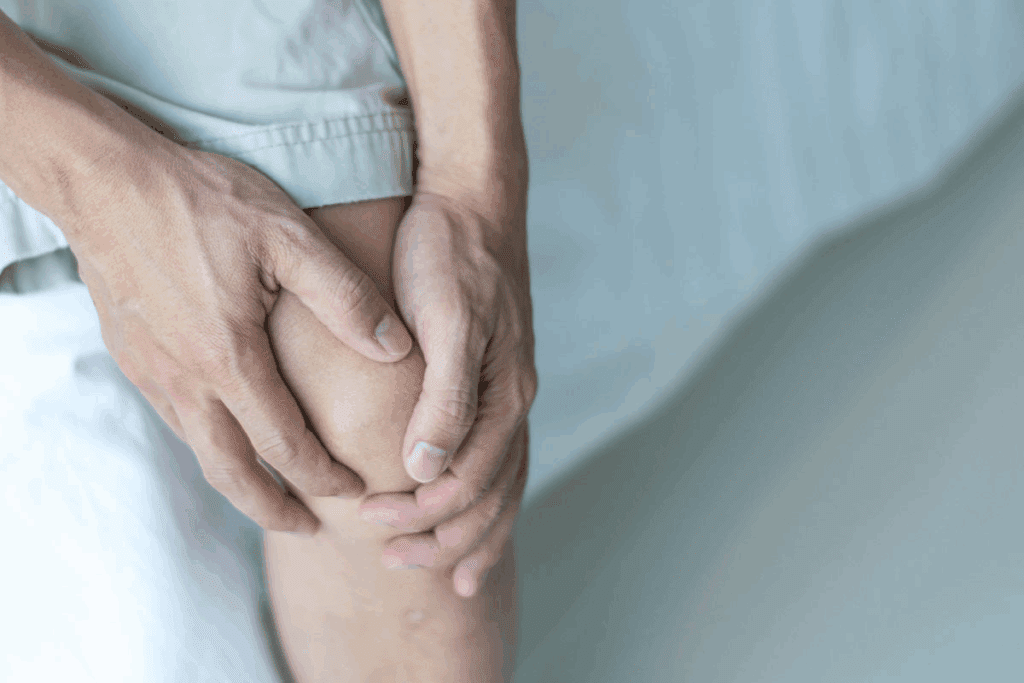
Gout is a type of inflammatory arthritis that causes sudden, severe pain and swelling. It often hits the big toe but can also affect the knee. Gout in the knee can make everyday activities hard because of the pain.
Sudden onset of intense pain is a key sign of gout in the knee. It’s often paired with swelling and redness.
Understanding how gout affects the knee is essential for effective management.
Key Takeaways
- Gout is a form of inflammatory arthritis that can affect any joint, including the knee.
- Sudden, severe pain is a characteristic symptom of gout in the knee.
- Swelling and redness often accompany the pain.
- Understanding the visual symptoms can be aided by looking at gout knee images.
- Early recognition of symptoms is crucial for effective management.
The Nature of Gout and Its Impact on the Knee
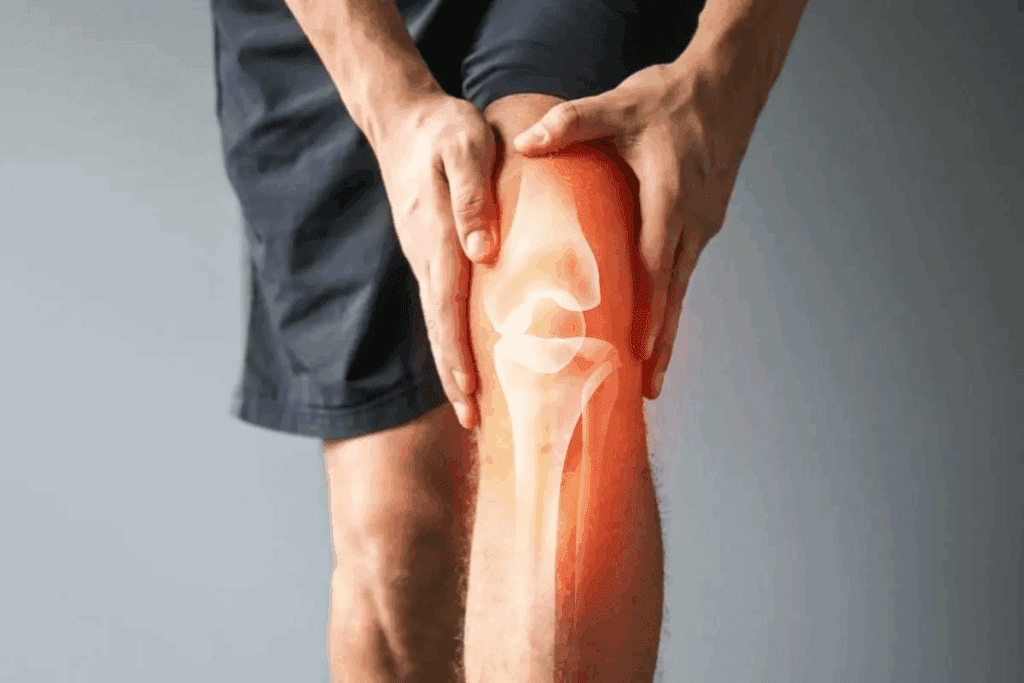
Gout is a type of arthritis that causes sudden, severe pain and swelling in joints. It often affects the big toe but can also hit the knee. Understanding how gout affects the knee is essential for effective management. We’ll look at how uric acid crystals form and why they often land in the knee.
What Causes Gout in the Knee
Gout happens when urate crystals build up in a joint, leading to pain and inflammation. This buildup is due to high uric acid levels in the blood. The knee is a target because of genetics, diet, and other health issues.
Uric Acid Crystal Formation Process
The process of uric acid crystal formation is complex. It involves the breakdown of purines. Normally, uric acid dissolves in the blood and is removed through the kidneys. But, if there’s too much uric acid or the kidneys don’t remove enough, crystals form in joints or tissues.
Why the Knee is a Common Target
Understanding how gout affects the knee is essential for effective management.
Recognizing the Early Warning Signs
Understanding how gout affects the knee is essential for effective management.
Prodromal Symptoms Before a Full Attack
Some people may feel mild discomfort or stiffness in the knee before a full gout attack. These signs might seem minor, but they can signal an upcoming flare.
Timing and Progression of Symptoms
Gout symptoms can get worse fast. Pain can spike in just a few hours, with swelling, redness, and warmth around the joint. Knowing how symptoms progress helps in getting medical help quickly.
The Characteristic Nighttime Onset
Gout attacks often start at night, waking people up. This nighttime start is a key sign of gout. The exact cause is still a mystery, but it’s thought to be linked to sleep-related changes.
| Symptom | Description | Timing |
| Mild Discomfort | Stiffness or mild pain in the knee | Often precedes a full attack |
| Swelling and Redness | Visible swelling and redness around the knee | Develops rapidly, often within hours |
| Warmth | The affected area feels warm to the touch | Accompanied by swelling and redness |
Gout Knee Pain Symptoms: What to Expect
Knee gout pain is a severe symptom that needs to be understood well. It can cause a lot of discomfort and limit movement. We will look at what gout knee pain feels like, how long it lasts, and how it changes with movement.
The Unique Quality of Gout Pain
Gout pain is intense and often comes with swelling and redness. It feels sharp and stabbing, making even light touches painful. One patient said,
“The pain was like nothing I’ve ever experienced before; it felt like my knee was on fire.”
This kind of pain is a key sign of gout, setting it apart from other arthritis types.
Intensity and Duration Patterns
Understanding how gout affects the knee is essential for effective management.
How Movement Affects Pain Levels
Moving around can make gout pain worse. Simple actions like walking or bending can hurt a lot during an attack. This is because moving the joint makes the pain worse. Resting the joint and avoiding hard activities can help ease the pain.
Understanding gout knee pain helps patients find better ways to treat it and manage their symptoms.
Visual Characteristics: Gout in the Knee Photos
Understanding how gout affects the knee is essential for effective management.
External Appearance During Acute Flares
An acute gout flare in the knee can show several clear signs. The skin around the knee might turn red, swell, and feel warm. This is because of the body’s reaction to urate crystals in the joint.
The redness and swelling can be quite noticeable. This makes the knee look inflamed and sore.
Skin Color and Texture Changes
The skin over the knee can change color and feel. It might become tender and sensitive, looking shiny because of swelling. Sometimes, the skin feels tight or stretched.
These changes often come with the knee feeling warmer than the rest of the area.
Swelling Patterns Specific to Gout
Gout in the knee usually causes swelling in a specific way. The knee can look bigger than normal because of the swelling. This swelling is often painful and tender, making it hard to move the knee or put weight on it.
The swelling can affect the whole knee joint, making it look puffy.
Important signs to watch for include:
- Redness and inflammation around the knee
- Swelling that makes the knee appear larger
- Warmth or heat emanating from the knee
- Tenderness to the touch
- Shiny or tight skin around the knee
Spotting these signs can help both patients and doctors diagnose gout in the knee and start the right treatment.
Knee Gout Images: Identifying the Condition Visually
Seeing gout in the knee is key to early treatment. Gout can change the knee’s look, including tophi. These are deposits of uric acid crystals under the skin.
Early vs. Advanced Stage Appearances
In the early stages, the knee may swell and turn red. It can feel warm to the touch. As gout gets worse, the knee can look deformed, with tophi under the skin.
Key differences between early and advanced stages include:
- Increased swelling and redness
- Formation of tophi
- Potential deformation of the knee joint
Tophi Formation and Appearance
Tophi are a sign of long-term gout. They look like firm, painless nodules under the skin. They can vary in size and often appear around the knee.
The appearance of tophi can vary, but they are typically:
- White or yellowish in color
- Firm to the touch
- Painless, though they can be associated with chronic pain
Using Visual Aids for Self-Assessment
Visual aids, like images of gout in the knee, are very helpful. They help people understand their condition better by comparing their symptoms with others.
“Visual examination is a critical component of diagnosing gout. Healthcare providers often use images to help patients understand their condition and the changes they are experiencing.”
Medical Professional
Looking at knee gout images helps people recognize the signs. This way, they can get medical help quickly. They can then work with their doctors to find the best treatment.
Patient Experiences: How Knee Gout Actually Feels
Living with gout in the knee is tough. Many say the pain is intense and stops them from doing things. It also affects their daily life and happiness.
First-Hand Accounts of Gout Attacks
People who’ve had gout attacks in their knees talk about sudden, severe pain. They say it happens without warning. Their stories give us a real look at what it’s like to live with gout.
“The pain was so sudden and severe that it felt like my knee was on fire. I couldn’t even bear the weight of a sheet on it.”
Anonymous Patient
These stories show how bad gout attacks can be. They really change a person’s life.
Pain Descriptions from Sufferers
Those with gout say the pain feels sharp, stabbing, or throbbing. It’s so bad that it can mess up their day and sleep.
- Sharp pain that worsens with movement
- Throbbing pain that persists even at rest
- Increased sensitivity around the affected knee
These details show why we need good ways to manage the pain. We need to help improve their quality.
Impact on Daily Activities and Sleep
Gout in the knee not only hurts but also affects daily life and sleep. Even simple tasks are hard. And sleep is often poor.
| Activity | Impact of Gout |
| Walking | Pain and stiffness make it difficult |
| Climbing Stairs | Increased pain due to bending |
| Sleep | Disrupted due to pain and discomfort |
It’s important to understand these effects. We need to create care plans that help with pain and overall well-being.
Can You Have Gout in the Knee? Joint Vulnerability
Gout is a type of inflammatory arthritis that can hit any joint, like the knee. It’s often linked to the big toe, but it can also affect other joints. This leads to a lot of pain and discomfort.
Anatomical Factors Making the Knee Susceptible
The knee’s design makes it prone to gout. It has bones, cartilage, and ligaments that can be hurt by uric acid crystals. These crystals are what cause gout.
- The knee’s synovial fluid can trap uric acid crystals, leading to inflammation.
- The joint’s structure allows for the accumulation of these crystals, increasing the risk of gout attacks.
- Previous injuries or conditions affecting the knee can make it more vulnerable to gout.
Prevalence of Knee Gout Compared to Other Joints
Gout often hits the base of the big toe, but it can also affect the knee. Research shows that while the big toe is the most common spot, other joints like the knee can get involved, too. This is especially true in more severe cases.
Key statistics on gout prevalence include:
- Gout affects millions of people worldwide.
- The condition is more common in men than in women.
- Knee involvement can occur in both acute and chronic gout.
Bilateral vs. Unilateral Knee Involvement
Gout can hit one or both knees. When it affects both knees, it’s often in more severe or chronic cases. But it can also just affect one knee.
The pattern of joint involvement can provide clues about the underlying condition and guide treatment decisions.
Does Gout Move Around? Migration Between Joints
“Gout can be quite unpredictable,” says a rheumatologist. “One day it’s in the big toe, the next it’s in the knee or ankle. Understanding this pattern is crucial for effective management.”
Patterns of Joint Involvement Over Time
Gout can affect different joints at different times. Its pattern of involvement varies from person to person. Some people may have recurring attacks in the same joint. Others may find that gout migrates to different joints over time.
- Initial attacks often occur in a single joint, typically the big toe.
- Subsequent attacks may involve the same joint or migrate to other joints.
- Commonly affected joints include the knees, ankles, and wrists.
Why Gout Travels Between Different Joints
The exact reasons for gout migration between joints are not fully understood. Several factors contribute to this phenomenon. Uric acid crystal formation and deposition in various joints play a significant role.
Key factors influencing gout migration include:
- Uric acid levels: Fluctuations in uric acid levels can trigger gout attacks in different joints.
- Joint susceptibility: Certain joints may be more prone to gout due to factors like trauma or inflammation.
- Systemic inflammation: Gout is a systemic condition that can affect multiple joints.
Predicting Migration Based on History
Predicting gout migration can be challenging. However, a patient’s history of gout attacks can provide valuable insights. By analyzing the pattern of previous attacks, healthcare providers can better understand the likelihood of future migrations.
“Understanding a patient’s history is crucial in managing gout effectively. It helps us identify patterns and potentially prevent future attacks,” says a rheumatology specialist.
By examining the patterns of joint involvement and understanding the factors that influence gout migration, patients and healthcare providers can work together. They can develop effective management strategies.
What Can Gout Be Mistaken For? Differential Diagnosis
Gout can be confused with other joint conditions. This makes it important to get a correct diagnosis. Gout symptoms, like sudden pain, redness, and swelling, can look like other diseases.
Rheumatoid Arthritis vs. Gout
Rheumatoid arthritis (RA) is a chronic disease that causes joint pain and swelling. It’s different from gout because RA affects many joints at once. Gout usually hits one joint, like the big toe or knee.
A key difference is the presence of uric acid crystals in gout patients. A joint aspiration can tell the two apart.
Osteoarthritis Similarities and Differences
Osteoarthritis (OA) is a degenerative disease that causes joint pain and stiffness. It’s often slower than gout but can have sudden flare-ups. OA is more about joint damage and cartilage loss than inflammation.
X-rays can show the difference between OA and gout. They look for joint damage or uric acid crystals.
Pseudogout (Calcium Pyrophosphate Deposition)
Pseudogout, or calcium pyrophosphate deposition disease (CPPD), causes joint pain and inflammation. It’s hard to tell apart from gout because of similar symptoms.
A joint aspiration can help tell gout and pseudogout apart. It looks for the type of crystals.
Infectious Arthritis Considerations
Infectious arthritis is caused by a bacterial or fungal infection in the joint. Its symptoms, like redness, swelling, and pain, can be similar to gout.
To tell infectious arthritis from gout, a joint aspiration is key. Finding microorganisms in the joint fluid means it’s infectious arthritis.
| Condition | Key Characteristics | Diagnostic Tests |
| Gout | Sudden onset of intense pain, redness, and swelling; presence of uric acid crystals | Joint aspiration and analysis; serum uric acid levels |
| Rheumatoid Arthritis | Chronic autoimmune disorder; multiple joint involvement; presence of rheumatoid factor | Rheumatoid factor test; joint aspiration and analysis |
| Osteoarthritis | Degenerative joint disease; gradual onset; joint damage and loss of cartilage | Imaging studies (X-rays), joint aspiration, and analysis |
| Pseudogout | Presence of calcium pyrophosphate crystals; joint pain and inflammation | Joint aspiration and analysis; imaging studies (X-rays) |
| Infectious Arthritis | Presence of microorganisms in joint fluid; redness, swelling, and pain | Joint aspiration and analysis; culture and sensitivity tests |
Gout-Like Symptoms from Other Conditions
Joint pain isn’t always from gout. Other conditions can cause similar symptoms. Many patients are surprised to find their pain isn’t gout. We’ll look at these conditions and how to tell them apart from gout.
Reactive Arthritis Manifestations
Reactive arthritis happens after an infection, often in the gut or urethra. It can cause joint pain and swelling, like gout. But it usually affects the lower legs and might include eye or urethral issues.
Bursitis and Tendinitis Confusion
Bursitis and tendinitis are conditions that affect the bursae and tendons. They can cause pain and swelling, similar to gout, especially in the knee. But they usually hurt in one spot and are linked to certain movements.
Trauma-Related Inflammation
Joint trauma can lead to inflammation that looks like gout. Knowing if you’ve hurt the joint recently is key. This type of inflammation might not get better with usual gout treatments, and tests are needed to find the cause.
Systemic Inflammatory Conditions
Conditions like rheumatoid arthritis or lupus can also cause joint pain that looks like gout. They often affect more than one joint and can have other symptoms like fever or rash. Blood tests and other tools help tell these conditions apart from gout.
Knowing about all the conditions that can cause gout-like symptoms is important. It helps us give better care to patients with joint pain and swelling.
Diagnosing Gout in the Knee Definitively
Understanding how gout affects the knee is essential for effective management.
Physical Examination Findings
The first thing doctors do is check you physically. They look for signs like redness, swelling, and warmth in your knee. They also check for tenderness and how well you can move your knee. These signs can show if you have gout or something else.
Joint Fluid Analysis (Gold Standard)
Looking at joint fluid is the best way to tell if you have gout. Doctors take fluid from your knee joint. Then, they look for monosodium urate crystals under a microscope. Finding these crystals means you definitely have gout.
Blood Tests and Limitations
Blood tests can show if you have high uric acid levels, which can mean gout. But some people with gout might have normal levels during an attack. Also, high levels don’t always mean you have gout. So, blood tests are helpful but not enough on their own.
Imaging Studies: X-rays, Ultrasound, and DECT
Imaging, like X-rays, ultrasound, and DEC, T can help confirm gout. X-rays show joint damage. Ultrasound can spot tophi and check for inflammation. DECT can find urate crystals in joints. These tools help doctors see how bad the gout is and what treatment you need.
Gouty Arthritis: Joints Affected Beyond the Knee
Gouty arthritis isn’t just about the knee. It can hit many joints in the body. It brings sudden, severe pain, swelling, redness, and tenderness. This often starts at the base of the big toe but can also affect other joints.
Common Pattern of Joint Involvement
The way gout affects joints varies from person to person. Some might get gout in just one joint at a time. Others might see it in many joints at once, known as polyarticular gout. Commonly affected areas include the ankles, feet, elbows, wrists, and hands, besides the knee.
Why Certain Joints Are Targeted
Some joints are more likely to get gout. This is due to things like lower body temperature and higher uric acid levels. The metatarsophalangeal joint at the big toe’s base is often hit first. But any joint can get gout. The exact reason for this is still a mystery, but it might have to do with the joint’s environment.
Polyarticular Gout Presentation
Polyarticular gout, where many joints are involved, is harder to deal with. It can look like other types of arthritis, like rheumatoid arthritis. People with this type of gout often have worse symptoms and more uric acid crystals. This can lead to more joints being affected over time.
Understanding how gout affects the knee is essential for effective management.
Immediate Relief for Knee Gout Pain
There are ways to get quick relief from knee gout pain. You can use medical treatments and self-care methods. Gout attacks can be tough to handle, but there are options to ease the pain and swelling.
Pharmaceutical Interventions
Medicines are key in fighting gout attacks. Here are some common ones:
- NSAIDs: Nonsteroidal anti-inflammatory drugs like ibuprofen can help reduce pain and inflammation.
- Colchicine: This medication is effective in reducing gout pain and can be used when NSAIDs are not suitable.
- Corticosteroids: Oral or injectable corticosteroids can provide quick relief from gout symptoms.
Always talk to a doctor before starting any medication. They can help choose the best one for you and warn you about possible side effects.
RICE Method Application
The RICE method is a good way to manage knee gout pain. It stands for Rest, Ice, Compression, and Elevation:
- Rest: Avoid activities that make the pain worse.
- Ice: Use ice packs on the affected area to lessen swelling.
- Compression: A compression bandage can help reduce swelling.
- Elevation: Keeping the knee higher than the heart can also help reduce swelling.
Using the RICE method can help ease pain and swelling during a gout attack.
When to Seek Emergency Care
While most gout attacks can be handled at home, there are times when you need emergency care:
- Severe Pain: If the pain is too much and doesn’t get better with medicine.
- Signs of Infection: If the knee gets red, warm, or swollen, and you have a fever.
- Uncertain Diagnosis: If you’re not sure if your symptoms are from gout or something else.
Remedy for Gout in the Knee: Long-Term Management
Managing gout in the knee needs a mix of medicine, lifestyle changes, and regular check-ups. This approach can lessen how often and how badly gout attacks are. It makes life better for those with gout.
Uric Acid-Lowering Medications
Medicines that lower uric acid are key in managing gout. They help by making less uric acid or getting rid of it. Doctors often prescribe allopurinol or febuxostat. It’s important to talk to a doctor about the right medicine and how much to take.
Dietary Modifications with Evidence
Changing what you eat is also important for gout. Eating less of foods high in purines, like some meats and seafood, can help. Also, drinking less alcohol, especially beer, and avoiding sugary drinks is good. Eating more fruits, veggies, and whole grains is helpful too.
- Increase consumption of low-fat dairy products.
- Stay hydrated by drinking plenty of water
- Avoid foods high in purines
Weight Management Strategies
Keeping a healthy weight is key to gout. Being overweight can make uric acid levels go up, making gout symptoms worse. Eating right and exercising can help keep a healthy weight. Crash diets are not good because they can raise uric acid levels.
Hydration and Alcohol Considerations
Drinking enough water is important for getting rid of uric acid. We suggest drinking at least eight glasses of water a day. Drinking less alcohol, especially beer and spirits, is also important. Alcohol can make uric acid levels go up and cause gout attacks.
By using these methods together—medicines, diet changes, weight control, and watching hydration and alcohol—we can manage gout in the knee well. This helps lower the chance of future attacks.
Knee Swelling from Gout Images: Monitoring Progress
By taking pictures of knee swelling, people with gout can better understand their condition. They can also see how well their treatment is working. This is a great way to manage gout.
Using Photos to Track Treatment Effectiveness
Images can show how gout is progressing and if treatments are working. It’s best to take photos at the same time every day. Use the same lighting and angle for comparison.
Key considerations for effective photo tracking:
- Use a fixed reference point for comparison.
- Maintain consistent lighting conditions.
- Capture images from multiple angles if necessary.
Visual Signs of Improvement
As treatment works, you might see several signs of improvement. These include:
- Reduced redness and inflammation.
- Decreased swelling and better joint mobility.
- Less warmth or heat around the affected area.
Warning Signs of Worsening Condition
On the other hand, some signs might mean your condition is getting worse. These include:
- Increased swelling or redness.
- More warmth or heat around the joint.
- Visible tophi or urate crystal deposits.
| Visual Indicator | Improvement | Worsening |
| Swelling | Decreased | Increased |
| Redness | Reduced | Enhanced |
| Warmth/Heat | Less | More |
Creating a Visual Health Journal
Keeping a visual health journal can be very helpful. It lets you and your doctor see how you’re doing over time. This can help make better treatment choices.
Tips for maintaining a visual health journal:
- Regularly update the journal with new images.
- Record relevant information such as date, time, and symptoms.
- Share the journal with healthcare providers during consultations.
Conclusion: Living Successfully with Gout
We’ve looked into the challenges of gout, especially in the knee. It’s a chronic issue that causes sudden, severe pain and swelling. This usually happens at night.
Understanding how gout affects the knee is essential for effective management.
Effective gout management includes taking certain medicines, eating right, keeping a healthy weight, and drinking plenty of water. These steps can ease symptoms and enhance life quality.
By actively managing gout, people can live full and healthy lives. It’s crucial to work with doctors to create a treatment plan that fits your needs.
FAQ
What are the symptoms of gout in the knee?
Gout in the knee causes sudden, severe pain and swelling. The knee may also feel warm, red, and stiff. This pain can be very intense.
What does knee gout look like?
Knee gout makes the knee swell, turn red, and feel warm. The skin might look shiny and tight. Moving the knee can be hard because of the swelling.
What can gout be mistaken for?
Gout can look like other arthritis types, like rheumatoid or osteoarthritis. It might also seem like pseudogout, infectious arthritis, or other inflammatory conditions.
Can gout move around or affect different joints?
Yes, gout can move from one joint to another. It can affect different joints, like the knees, ankles, and toes. The pattern of joint involvement can change over time.
How is gout diagnosed in the knee?
Doctors use a physical exam, joint fluid analysis, blood tests, and imaging, like X-rays or ultrasounds, to diagnose gout. Joint fluid analysis is the most accurate method.
What are the treatment options for knee gout pain?
To treat knee gout pain, doctors might prescribe anti-inflammatory drugs. The RICE method (rest, ice, compression, elevation) can also help. Uric acid-lowering medications are used for long-term management.
Can images help identify gout in the knee?
Yes, images can help spot gout in the knee. Photos show the swelling, redness, and skin changes of gout. Seeing early and advanced stages can help doctors diagnose.
How can I monitor the progress of gout treatment?
To track gout treatment progress, watch for changes in symptoms like pain and swelling. Use photos to see improvements or worsening. Keeping a visual health journal is helpful.
What lifestyle changes can help manage gout in the knee?
To manage gout in the knee, make dietary changes, manage your weight, stay hydrated, and limit alcohol. Uric acid-lowering medications can also help manage the condition.
Can gout affect other joints besides the knee?
Yes, gout can affect other joints like the ankles, toes, elbows, and wrists. It can happen in one or many joints, and the pattern can change over time.
References
- Dalbeth, N., Gosling, A. L., Gaffo, A., & Abhishek, A. (2021). Gout. The Lancet, *397*(10287), 1843-1855. https://pubmed.ncbi.nlm.nih.gov/33798500/