Last Updated on November 26, 2025 by Bilal Hasdemir
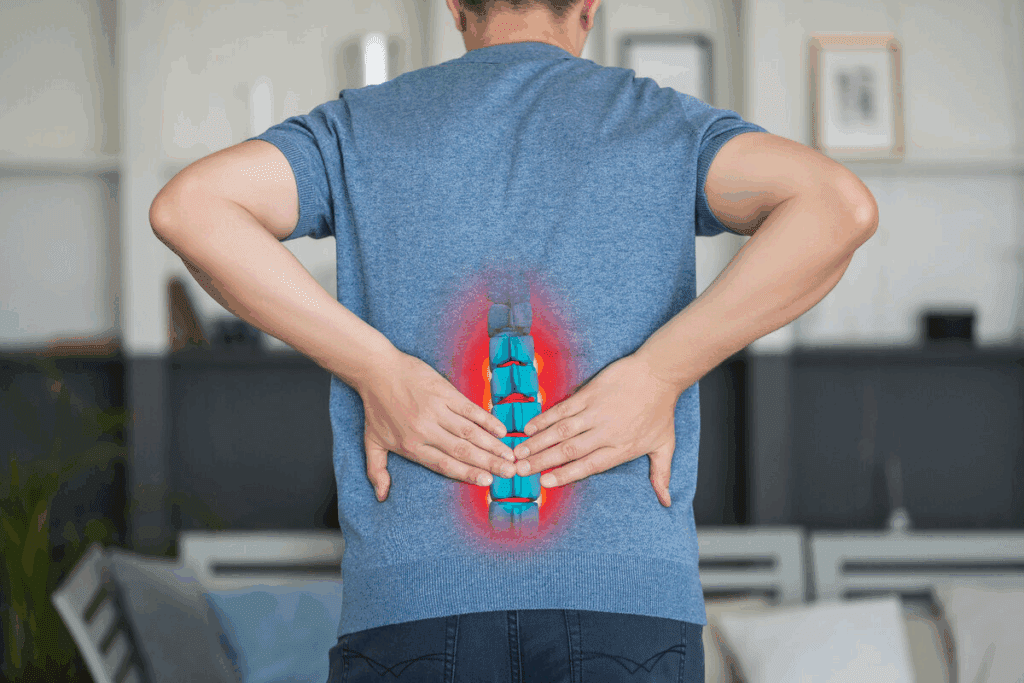
A lump or pain in your back or side can be unsettling. Many people think hernias only happen in the abdomen or groin. But, rare types can occur in the back or flank, leading to confusing symptoms. What is a hernia in back? Learn 7 shocking causes, the key symptoms, and get a clear explanation of a flank hernia.
A hernia happens when part of an internal organ pushes through muscle or tissue. This can occur in the back or flank area, causing discomfort. The team at Liv Hospital, known for their patient-focused care, helps with these complex cases. They use advanced diagnostics and have a team of experts.
Key Takeaways
- A hernia can occur in the back or flank area.
- Hernias in the back can refer to either herniated discs or true abdominal wall hernias.
- Causes and symptoms of hernias in the back can vary.
- Liv Hospital specialists offer advanced diagnostics and care for complex cases.
- Understanding the type and cause of a hernia is key for effective treatment.
Understanding Back Hernias: Types and Definitions
“Back hernia” refers to several conditions, like spinal and abdominal wall hernias. Each has its own features. Knowing these differences is key for the right diagnosis and treatment.
Differentiating Between Spinal Hernias and Abdominal Wall Hernias
Spinal hernias, also known as herniated discs, happen when the soft inner gel leaks out. This can cause pain, numbness, or weakness in the legs. Abdominal wall hernias, including flank ones, occur when the abdominal contents bulge through a weak spot in the wall.
Key differences between spinal hernias and abdominal wall hernias include:
- Location: Spinal hernias are in the spinal column, while abdominal wall hernias are in the abdominal wall, including the flank area.
- Causes: Spinal hernias often stem from degeneration, injury, or genetics. Abdominal wall hernias can come from birth defects, scars, or increased pressure.
- Symptoms: Both can cause pain, but spinal hernias tend to lead to numbness and weakness. Abdominal wall hernias might show a bulge.
The Anatomy of the Back and Flank Region
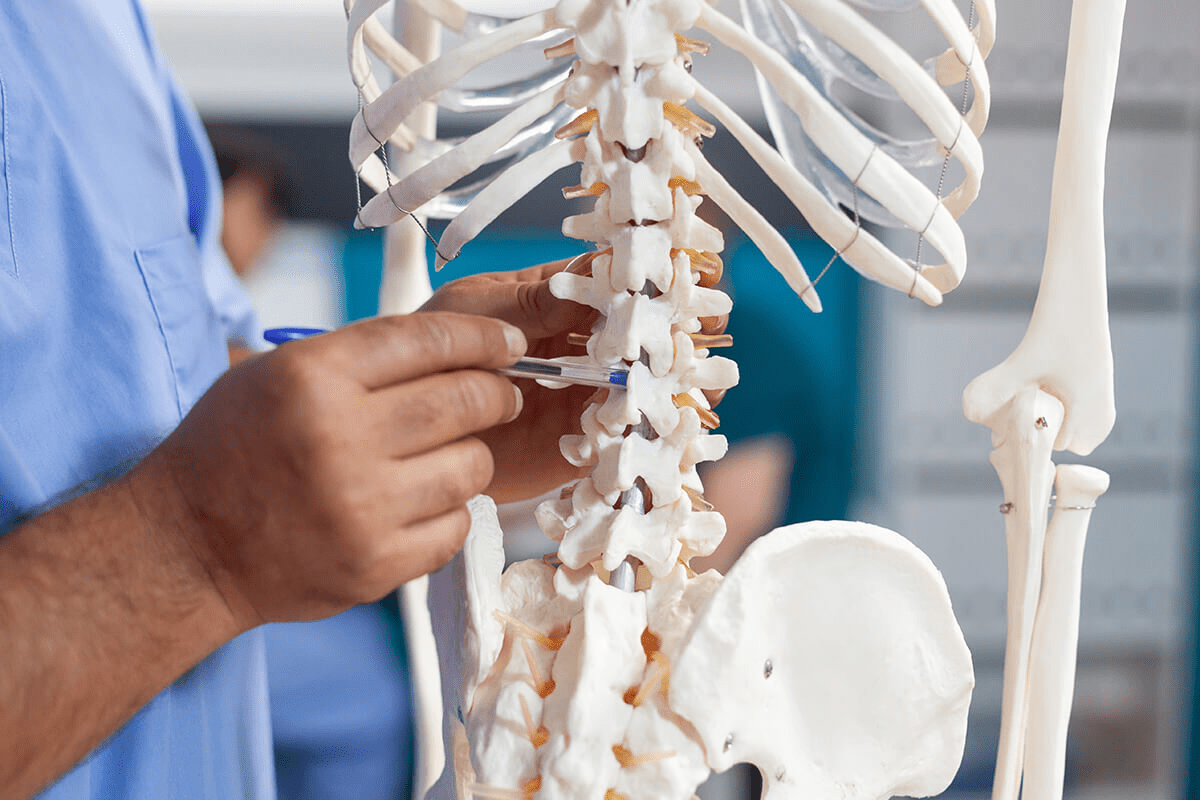
The back and flank area is complex, with the spine, abdominal muscles, and organs. The flank is between the ribs and the iliac crest, with the spine and muscles on the sides.
Knowing the anatomy is vital for diagnosing and treating hernias in this area. The table below outlines the key structures and their role in back and flank hernias:
| Anatomical Structure | Relevance to Back and Flank Hernias |
| Spine | Site of spinal hernias (herniated discs) |
| Abdominal Muscles | Forms the boundary of the flank region and can be a site for abdominal wall hernias |
| Intervertebral Discs | Can herniate, causing spinal hernias |
Understanding the types of back hernias and the anatomy of the back and flank helps healthcare providers. This leads to better diagnosis and treatment, improving patient care.
What Is a Hernia in Back? Key Concepts Explained
“Hernia in back” refers to different issues, like herniated discs and abdominal wall hernias. Knowing the differences is key for the right diagnosis and treatment.
Herniated Discs vs. True Abdominal Wall Hernias
A herniated disc happens when the soft center of the disc leaks out. This can cause back pain and leg pain. A true abdominal wall hernia is when a part of the intestine bulges through a weak spot in the abdominal wall. Both can hurt, but in different ways.
It’s important to tell these two apart for the right care. For example, a hernia in the back might be a lumbar hernia, a type of abdominal wall hernia. Knowing which you have helps choose the best treatment.
Prevalence and General Statistics
Back hernias, like herniated discs and abdominal wall hernias, are common. Many people will get a herniated disc at some point. For instance, up to 5% of men and 3% of women over 50 might have a lumbar disc herniation.
- Herniated discs often hit people aged 30-50.
- Lumbar hernias, a rare type of abdominal wall hernia, can happen due to injury or birth defects.
- Knowing how common back hernias are helps us understand their importance.
Impact on Daily Life and Functionality
Back hernias can really affect your daily life. Symptoms like pain, numbness, or weakness can make it hard to move or do everyday tasks. Yes, you can have a hernia on your side, like a lumbar hernia.
The effect on your life depends on the hernia’s severity and where it is. Some people might just feel a little discomfort, while others could have severe pain that makes it hard to work or move around.
- Severe cases might need surgery to fix the problem and help you move better.
- Milder cases might be treated with physical therapy and pain relief.
- Knowing the exact type and how it affects you is key to finding the right treatment.
Herniated Discs: The Most Common Back Hernia
Herniated discs are the most common back hernia, affecting daily life a lot. They are also known as slipped or ruptured discs. This happens when the soft inner gel of the spinal disc leaks out through a tear in the outer disc.
How Spinal Discs Function
Spinal discs are key to the spine’s structure and function. They act as shock absorbers between the vertebrae. This allows for flexibility and movement while supporting the spine’s weight. Each disc has a tough outer layer called the annulus fibrosus and a soft, gel-like center known as the nucleus pulposus.
The annulus fibrosus provides structure and containment. The nucleus pulposus absorbs compressive forces. This enables the spine to withstand various stresses. Knowing how these parts work together is key to understanding what happens during a herniated disc.
What Happens During Disc Herniation
Disc herniation happens when there’s a tear in the annulus fibrosus. This allows the nucleus pulposus to escape. This can be due to aging, wear and tear, or injury. When the disc herniates, it can press on nearby nerves. This causes pain, numbness, or weakness in the back or legs.
- The severity of symptoms depends on the location and size of the herniation.
- Some herniated discs may not cause symptoms and might only be discovered during imaging tests for other reasons.
- In other cases, the herniation can lead to significant discomfort and neurological symptoms.
Common Locations for Herniated Discs
Herniated discs can occur at any level of the spine, but they are most common in the lumbar spine (lower back) and cervical spine (neck). The lumbar region is more frequently affected due to the greater mechanical stress it endures.
- Lumbar herniated discs often cause sciatica, a condition characterized by pain radiating down the leg.
- Cervical herniated discs can lead to pain or numbness in the neck, shoulder, or arm.
Understanding the common locations and symptoms of herniated discs is key for diagnosis and treatment planning.
Flank Hernias: Anatomy and Classification
The flank area is complex and prone to a specific hernia type, known as flank or lumbar hernias. These hernias happen when abdominal contents bulge through a weakness in the back of the abdominal wall.
Defining Lumbar (Flank) Hernias
Lumbar hernias, or flank hernias, happen when stuff from inside the belly pushes out through a weak spot in the back. This is a less common type of hernia compared to others.
Anatomical Boundaries of the Flank Region
The flank area has clear boundaries. It starts at the 12th rib and ends at the iliac crest. It’s also bordered by muscles and the external oblique muscle. Knowing these boundaries helps doctors diagnose and treat flank hernias.
Types of Flank Hernias
Flank hernias are divided into two types based on where they occur in the back. The more common type is the superior hernia, happening in the Grynfeltt-Lesshaft triangle. This area is defined by the 12th rib, the internal oblique muscle, and the quadratus lumborum muscle.
Key characteristics of flank hernias include:
- They occur through a defect in the lumbar region
- They can contain different types of abdominal contents
- They can show up in different ways, from no symptoms to pain
Getting the right diagnosis and classification is key to choosing the best treatment for flank hernias.
Common Causes and Risk Factors
Knowing what causes back hernias is key to preventing and managing them. Back hernias, like herniated discs and flank hernias, come from many factors.
Risk Factors for Herniated Discs
Herniated discs happen due to several reasons. Key risk factors include:
- Age: As we get older, the risk of herniated discs grows because spinal discs degenerate naturally.
- Physical Activity: Not moving enough or doing too much heavy lifting or bending can cause disc herniation.
- Genetics: If your family has a history of herniated discs, you might be more likely to get one too.
- Smoking: Smoking can cut down on blood flow to discs, speeding up their wear and tear.
Jobs that involve a lot of strain or heavy lifting can also up your risk of getting a herniated disc.
Causes of Flank Hernias
Flank hernias, or lumbar hernias, happen through weak spots in the abdominal wall in the flank area. The reasons include:
- Congenital Weakness: Some people are born with weak spots in their abdominal wall, leading to flank hernias.
- Trauma: Getting hurt directly in the flank area can cause a hernia.
- Surgical Complications: Surgery in the flank area can weaken tissue, leading to hernias.
Flank hernias can appear on either side of the body. Factors like obesity or chronic coughing, which raise intra-abdominal pressure, can increase your risk.
By knowing these risk factors and causes, you can prevent them and get help early if symptoms show up.
Recognizing Symptoms of Herniated Discs
It’s important to know the signs of herniated discs to get help quickly. These issues can really affect your life and health.
Localized Pain and Discomfort
Localized pain is a key symptom of herniated discs. This pain can feel like a dull ache or a sharp stab. It usually happens in the lower back or neck.
Doing heavy lifting, bending, or twisting can make the pain worse. But resting and changing positions might help.
Radiating Pain and Sciatica
Radiating pain happens when a herniated disc presses on nerves. This pain spreads along the nerve and is often called sciatica in the lower back. Sciatica feels like pain from the lower back down to the leg.
- Pain that gets worse with movement
- Numbness or tingling in the affected limb
- Muscle weakness in the nerve’s area
Neurological Symptoms (Numbness, Weakness)
Herniated discs can also cause neurological symptoms from nerve compression. These symptoms include:
- Numbness or changed feeling in the nerve’s area
- Muscle weakness that makes tasks hard
- In severe cases, loss of reflexes or big motor weakness
Spotting these symptoms early can help with treatment. If you notice any, talk to a healthcare expert for the right care.
Flank Hernia Symptoms and Presentation
Flank hernias show unique signs that need careful checking. They happen in the lumbar area, which is different from other hernias.
Visible Bulging in the Flank Area
A visible bulge or swelling in the flank area is a key sign of a flank hernia. This bulge gets bigger when you stand or strain. It might get smaller or go away when you lie down.
The size of the bulge can change based on the hernia’s size and your body type.
Some bulges can also feel like a mass that hurts when touched. Seeing or feeling a bulge is a big reason people go to the doctor.
Associated Discomfort and Pain Patterns
Flank hernias can cause different kinds of pain. People might feel a dull ache or sharp pains in the flank area. These pains can spread to the lower back or belly.
Pain can get worse with activities, heavy lifting, or straining during bowel movements.
Pain patterns can vary a lot among people. Some feel pain all the time, while others have it off and on. How bad the pain is can depend on the hernia’s size and any complications.
How Flank Hernias Differ from Other Abdominal Hernias
Flank hernias are different because they happen in the lumbar region. They go through defects in this area, which involves complex structures.
Understanding the anatomy and challenges of flank hernias is key. Accurate diagnosis is very important to tell flank hernias apart from other issues like muscle strains or other belly problems.
Diagnosing Back and Flank Hernias
To diagnose back and flank hernias, doctors use a mix of physical checks and advanced imaging. Getting the diagnosis right is key to finding the right treatment and easing symptoms.
Physical Examination Techniques
First, doctors do a detailed physical check. They look for any bulges or tenderness in the affected area. This is done through palpation.
Key components of a physical examination for back and flank hernias include:
- Visual inspection to identify any visible bulges or asymmetry
- Palpation to assess tenderness and the presence of a hernia
- Provocative maneuvers, such as the Valsalva maneuver, to detect hernias that may not be apparent at rest
Imaging Studies
Even with a physical check, imaging is often needed to confirm the diagnosis. It helps see how severe the hernia is.
Common imaging modalities used include:
- Ultrasound, which is useful for detecting hernias and assessing their contents
- Computed Tomography (CT) scans, which provide detailed images of the hernia and surrounding anatomy
- Magnetic Resonance Imaging (MRI), which is useful for soft tissue and herniated discs
Differential Diagnosis: Conditions That Mimic Back Hernias
It’s important to tell back and flank hernias apart from other conditions. These can include muscle strains, degenerative disc disease, and other hernias.
A thorough differential diagnosis involves:
- Careful history taking to identify risk factors and symptoms
- Physical examination to assess for signs of a hernia or other conditions
- Imaging studies to confirm the diagnosis and rule out other causes
Treatment Options for Herniated Discs
Managing herniated discs requires looking at different treatment options. The right choice depends on how bad the symptoms are, the size and location of the herniation, and the patient’s health.
Conservative Management Approaches
For herniated discs, the first step is often conservative management. This includes:
- Physical Therapy: Exercises to strengthen back muscles and improve flexibility.
- Pain Management: Using over-the-counter pain relievers to manage pain and inflammation.
- Lifestyle Modifications: Keeping a healthy weight, improving posture, and avoiding heavy lifting.
The American Academy of Orthopaedic Surgeons says, “Conservative treatment works well for many patients with herniated discs.”
“Conservative treatment is successful in managing symptoms for many patients with herniated discs.”
American Academy of Orthopaedic Surgeons
Interventional Procedures
If conservative management doesn’t work, interventional procedures might be needed. These include:
- Epidural Steroid Injections: Injecting steroids into the epidural space to reduce inflammation and relieve pain.
- Nerve Root Blocks: Injecting anesthetics or steroids around the affected nerve root to alleviate pain.
| Procedure | Description | Benefits |
| Epidural Steroid Injections | Steroid injection into the epidural space | Reduces inflammation, relieves pain |
| Nerve Root Blocks | Anesthetic or steroid injection around the nerve root | Alleviates pain, diagnostic value |
Surgical Interventions: When They’re Necessary
Surgery is considered when other treatments fail and symptoms worsen. Surgical options include:
- Discectomy: Removing the herniated portion of the disc.
- Microdiscectomy: A minimally invasive version of discectomy.
- Spinal Fusion: Fusing the vertebrae together to stabilize the spine.
Deciding on surgery should be a careful choice after talking to a healthcare provider. It’s important to weigh the risks and benefits.
Managing and Treating Flank Hernias
Managing flank hernias involves different strategies. These range from watching the hernia to surgery. The treatment choice depends on the hernia’s size, symptoms, and the patient’s health.
Monitoring Small, Asymptomatic Hernias
For small, painless hernias, a careful watch is often the first step. This means regular monitoring for any changes. Patients should look out for signs like more pain and seek help if they notice these.
Watchful waiting is suggested for small hernias without big symptoms. This way, patients avoid surgery unless the hernia starts causing trouble.
Surgical Repair Techniques
For bigger hernias or those causing a lot of pain, surgery is usually needed. There are surgical techniques like open repair and laparoscopic repair. The choice depends on the case and the surgeon’s skill.
Laparoscopic repair uses small cuts and a camera for guidance. It can lead to quicker recovery times and less pain compared to open repair.
Recovery Expectations After Flank Hernia Repair
Recovery from surgery for flank hernias varies. It depends on the surgery type and the patient’s health. Most patients will feel some postoperative pain, which can be managed with medicine.
Following the surgeon’s postoperative care instructions is key. This helps avoid complications and ensures a smooth recovery. Patients should avoid heavy lifting, bending, or hard activities for a while.
Knowing the treatment options and what to expect during recovery helps patients make informed choices. This way, they can get the best results from their care.
Complications and When to Seek Medical Attention
It’s important to know the complications of hernias to avoid long-term health problems. If not treated, hernias can cause serious issues that need quick medical help.
Potential Complications of Untreated Hernias
Untreated hernias can lead to serious problems. One major issue is incarceration, where the hernia gets stuck and can’t go back in. This can cause strangulation, where the blood supply to the hernia is cut off, leading to tissue death.
The table below shows the complications of untreated hernias:
| Complication | Description | Symptoms |
| Incarceration | Herniated tissue becomes trapped | Pain, tenderness, and a palpable lump |
| Strangulation | Blood supply to herniated tissue is cut off | Severe pain, nausea, vomiting, and fever |
| Obstruction | Herniated tissue obstructs the intestine | Abdominal pain, constipation, and vomiting |
Red Flag Symptoms Requiring Immediate Care
Some symptoms mean you need to see a doctor right away. These red flag symptoms include severe stomach pain, vomiting, fever, and a tender lump. If you have these symptoms, get medical help fast.
Preparing for Your Doctor’s Appointment
Before your doctor visit, write down your symptoms and when they started. Also, bring any medical records and a list of your medicines. Being ready helps your doctor give you the best care.
At your appointment, your doctor will check you and might do tests to confirm the diagnosis. It’s key to talk about your treatment options and any worries you have. This helps manage your condition well.
Conclusion
Understanding hernias in the back is key for proper diagnosis and treatment. A hernia can really affect your daily life, causing pain and discomfort.
Herniated discs and flank hernias have different causes and symptoms. Herniated discs often come from spinal disc wear and tear. Flank hernias happen when the abdominal wall weakens.
Diagnosing these conditions involves physical exams and imaging studies. This helps find the best treatment options. For herniated discs, treatment can be non-surgical or surgery. Flank hernias usually need surgery to fix.
Knowing the symptoms of a hernia in the back and the treatment options is important. It helps people get medical help quickly. This can lower the risk of serious problems and improve health outcomes.
Being informed about hernias in the back, including flank hernias, helps people manage their condition better. This can greatly improve their quality of life.
FAQ
Can you have a hernia in your lower back?
Yes, hernias can happen in the lower back. They are called lumbar or flank hernias. These occur in the flank area.
What is a flank hernia?
A flank hernia is a type of hernia in the flank area. This is between the ribs and the hip.
Can you get a hernia on your side?
Yes, hernias can appear on the side of the abdomen. They are known as flank or lumbar hernias.
What are the symptoms of a flank hernia?
Symptoms include a visible bulge in the flank area. You might also feel discomfort and pain. These symptoms can get worse when you cough, strain, or lift heavy things.
How is a flank hernia diagnosed?
Doctors use a physical exam and imaging like CT scans or MRI to diagnose a flank hernia. They might also check for other conditions.
Can a herniated disc be considered a type of hernia in the back?
A herniated disc is different from a true abdominal wall hernia. But both can cause back pain and discomfort.
What is the difference between a herniated disc and a true abdominal wall hernia?
A herniated disc affects the spinal discs and is related to the spine. A true abdominal wall hernia is a bulge through a weakness in the abdominal wall.
How are herniated discs treated?
Treatment for herniated discs can include physical therapy and pain management. Sometimes, injections or surgery are needed.
What are the treatment options for flank hernias?
Flank hernias are often treated with surgery. Small, painless hernias might be watched. The surgery method depends on the hernia’s size and location.
Can untreated hernias lead to complications?
Yes, untreated hernias can cause problems. This includes more pain, neurological symptoms, or even serious complications like incarceration or strangulation.
When should I seek medical attention for a suspected hernia?
You should see a doctor if you have severe pain or red flag symptoms. This includes sudden severe pain or trouble with bowel or bladder control. Also, watch for a new or growing bulge.
References:
- Garruti, G., et al. (2018). Cholecystectomy: a way forward and back to metabolic disease? Current Opinion in Lipidology, 29(3), 189-195. Retrieved from https://pmc.ncbi.nlm.nih.gov/articles/PMC8114797