Last Updated on November 26, 2025 by Bilal Hasdemir
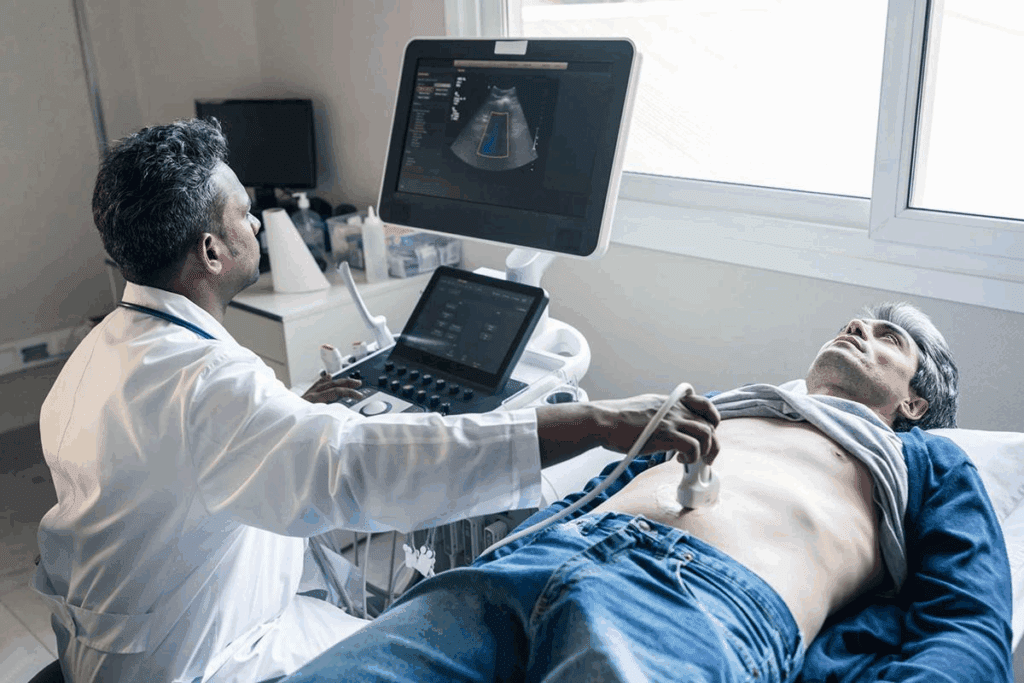
At Liv Hospital, we know how vital accurate diagnosis is for good treatment. Inguinal hernias are very common and often need surgery. It’s key to diagnose them right for the best care.
Hernia ultrasound is now a top choice for finding inguinal hernias. It’s very sensitive and doesn’t hurt. This method lets us see the inguinal canal clearly. It helps us spot hernias and plan surgeries better. At Liv Hospital, we use the latest ultrasound tech to help our patients get the right treatment.
Key Takeaways
- Inguinal hernias are a common condition requiring surgical intervention.
- Hernia ultrasound is a sensitive and non-invasive diagnostic tool.
- Accurate diagnosis is key for good treatment plans.
- Liv Hospital uses top-notch ultrasound technology.
- Seeing the inguinal canal clearly helps find hernias.
The Fundamentals of Hernia Ultrasound

For those suspected of having an inguinal hernia, ultrasound is often the first choice. It’s known for its high sensitivity and specificity in finding inguinal hernias.
Why Ultrasound is the First-Line Imaging Tool
Ultrasound is favored for many reasons. It’s non-invasive and doesn’t use radiation, making it safe for many, including pregnant women and kids. It also offers real-time images, which helps in assessing hernias as they move.
Ultrasound’s benefits include clear images of the inguinal canal and its contents. This is key for identifying hernia types and treatment plans.
The 95-100% Sensitivity Advantage
Ultrasound’s high sensitivity, from 95% to 100%, is a big plus. It accurately spots inguinal hernias most of the time, often avoiding the need for more tests.
| Diagnostic Modality | Sensitivity | Specificity |
| Ultrasound | 95-100% | High |
| CT Scan | High | High |
| Physical Examination | Variable | Variable |
The table shows ultrasound’s high sensitivity for inguinal hernias, making it a trusted diagnostic tool. Its non-invasive and radiation-free nature adds to its benefits.
We use ultrasound to guide treatment choices, ensuring patients get the right care. Its ability to accurately predict if a hernia needs surgery is very helpful in practice.
Inguinal Canal Ultrasound: Anatomy and Technique
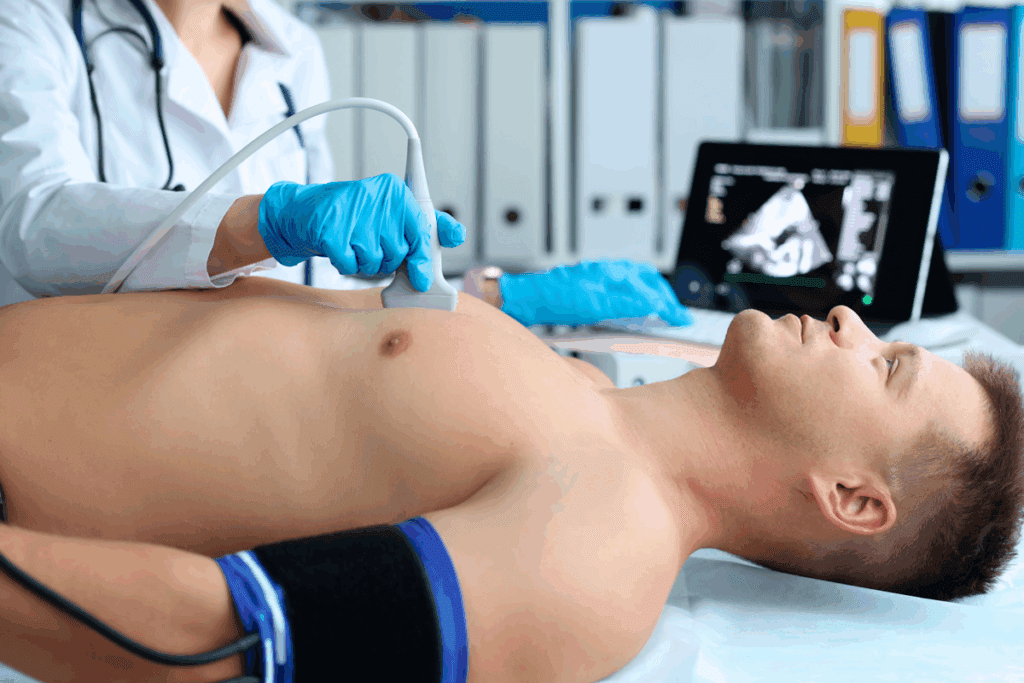
Ultrasound imaging of the inguinal canal is a complex process. It requires a deep understanding of the area’s anatomy. This imaging modality helps us diagnose inguinal hernias accurately and plan effective treatments.
Understanding Inguinal Region Anatomy
The anatomy of the inguinal region is complex. It includes various structures important for diagnosing inguinal hernias. The inguinal canal, surrounded by muscles, contains the spermatic cord in males and the round ligament in females. Knowing the normal anatomy is key to spotting abnormalities.
Key anatomical landmarks include the pubic tubercle, the inguinal ligament, and the conjoint tendon. These structures are vital for accurately assessing the inguinal canal.
| Anatomical Structure | Description | Relevance to Inguinal Hernia Diagnosis |
| Inguinal Canal | A passage through the abdominal wall | Common site for hernias |
| Pubic Tubercle | A bony prominence on the pubic bone | Landmark for identifying direct vs. indirect hernias |
| Conjoint Tendon | Fused aponeuroses of internal oblique and transversus abdominis | Forms the posterior wall of the inguinal canal |
High-Frequency Linear Transducers: The Gold Standard
For inguinal canal ultrasound, high-frequency linear transducers are the gold standard. They provide high-resolution images of superficial structures. These transducers operate at frequencies between 7.5 to 12 MHz, giving detailed views of the inguinal canal and its contents.
The choice of transducer frequency is critical. It affects penetration depth and image resolution. High-frequency transducers are best for the inguinal region because of its superficial structures.
By understanding the anatomy of the inguinal region and using high-frequency linear transducers, clinicians can accurately diagnose inguinal hernias. This allows for effective treatment planning.
Key Insight #1: Differentiating Direct vs. Indirect Inguinal Hernias
Direct and indirect inguinal hernias have different signs that ultrasound can spot. Knowing the difference is key for the right diagnosis and treatment.
Ultrasound Characteristics of Direct Hernias
Direct inguinal hernias happen when part of the intestine bulges through a weak spot in the abdominal wall. Ultrasound shows direct hernias by their location and how they bulge. Key ultrasound features include:
- A bulge or protrusion through the abdominal wall
- Location: medial to the inferior epigastric vessels
- Often associated with a weakened posterior wall of the inguinal canal
Direct hernias are more common in adults. This is because of weakened abdominal walls from age or muscle strain.
Imaging Features of Indirect Hernias
Indirect inguinal hernias happen when tissue bulges through the internal inguinal ring, on the side of the inferior epigastric vessels. Ultrasound imaging shows indirect hernias by:
- Protrusion through the internal inguinal ring
- Location: lateral to the inferior epigastric vessels
- Often associated with a patent processus vaginalis
Indirect hernias are more common in kids because of birth defects. In adults, it might mean a patent processus vaginalis.
Understanding the ultrasound signs of direct and indirect hernias helps us diagnose better. It also guides the right treatment.
Key Insight #2: Hernia Content Visualization Through Sonography
Sonography is key in diagnosing hernias by showing what’s inside them. This is important for making the right treatment plan. We use ultrasound to see the hernia details, helping us decide on surgery.
Identifying Bowel, Omentum, and Fluid
Ultrasound helps us see what’s in a hernia, like bowel, omentum, or fluid. Knowing what’s inside is very important for figuring out how serious the hernia is and what surgery is needed.
For example, if bowel is in the hernia, it could mean there’s a higher chance of serious problems. Omentum inside might mean the hernia is more complex and needs special care during surgery.
Dynamic Evaluation of Hernia Contents
Ultrasound also lets us watch how the hernia moves, like when you cough or strain. This shows us how the hernia behaves and if the tissues around it are okay.
By watching the hernia move, we learn more about its size and how it might affect nearby areas. This helps us plan the best surgery for you.
| Hernia Content | Ultrasound Characteristics | Clinical Implication |
| Bowel | Hypoechoic loops with peristalsis | Risk of incarceration or strangulation |
| Omentum | Hyperechoic, often with a characteristic pattern | May indicate a complex hernia |
| Fluid | Anechoic or hypoechoic fluid collection | May indicate associated hydrocele or seroma |
In summary, sonography is a powerful tool for diagnosing hernias. It helps us see what’s inside and how it moves. This way, we can give more accurate diagnoses and plan better treatments.
Key Insight #3: Ultrasound for Inguinal Hernia in Equivocal Clinical Cases
In cases where physical examination is unclear, ultrasound is key for diagnosing inguinal hernias. It helps us make a clear diagnosis when findings are not clear.
Ultrasound is great for patients with a high BMI or complex medical history. It uses high-frequency transducers to show detailed images of the inguinal area. This helps us spot hernias that are hard to see during a physical check-up.
When Physical Examination Is Inconclusive
When physical exams don’t give clear results, ultrasound steps in to help. It lets us check the inguinal canal and nearby areas for signs of a hernia, like bowel or omental protrusion.
Ultrasound’s ability to show movement in real-time is very helpful. We can see how the hernia moves during actions like coughing or straining. This info is key in figuring out if a hernia is there and how big it is.
Small Hernia Detection Strategies
Finding small hernias can be tough, but ultrasound makes it easier. We use both transverse and longitudinal scans to see the inguinal canal and spot hernias.
One good trick is to have the patient do a Valsalva maneuver. This can make small hernias show up that are hard to see when the patient is at rest. By looking closely at the ultrasound images, we can find even small hernias and give a correct diagnosis.
By using ultrasound’s strengths, we can get better at diagnosing in unclear cases. This helps us give the best care to patients with inguinal hernias.
Key Insight #4: Recognizing Inguinoscrotal Hernia Ultrasound Patterns
Inguinoscrotal hernias show unique ultrasound patterns. These patterns are key for correct diagnosis. They help us tell inguinoscrotal hernias apart from other scrotal issues and see how big the hernia is.
Characteristic Appearances and Measurements
Ultrasound shows inguinoscrotal hernias as hypoechoic or mixed masses. These masses start in the inguinal canal and go into the scrotum. The main signs include:
- A hypoechoic mass that connects with the inguinal canal
- Bowel loops or omentum in the scrotal sac
- Contents move when you do a Valsalva maneuver or cough
We measure the hernia’s size, like its diameter and how much of the scrotum it covers. Getting these measurements right is important for planning surgery.
Scrotal Extension Assessment
Checking how far a hernia goes into the scrotum is key for surgery planning. We look at how much the hernia goes into the scrotum and how it affects nearby areas.
Important things we look at include:
- How far the hernia goes into the scrotum
- If there are any complications like incarceration or strangulation
- If the hernia touches other scrotal structures
By spotting these ultrasound signs and checking scrotal extension, we can give accurate diagnoses. This helps us create good treatment plans for patients with inguinoscrotal hernias.
Key Insight #5: Abdominal Hernia on Ultrasound: Beyond the Inguinal Region
Ultrasound technology is key in finding abdominal hernias outside the inguinal area. It helps us spot different hernias, making diagnosis more accurate and care better.
Femoral, Umbilical, and Incisional Hernias
Femoral hernias happen through the femoral canal, below the inguinal ligament. On ultrasound, they show up as a bulge or mass in the femoral area. Key ultrasound features include:
- Location below the inguinal ligament
- Presence of bowel or fat within the hernia sac
- Potential for incarceration or strangulation
Umbilical hernias pop up around the umbilicus, often because of weak scar tissue. Ultrasound shows:
- Protrusion through the umbilical ring
- Variable size, from small to large defects
- Potential for bowel or omental content
Incisional hernias form through old surgical scars. Ultrasound might show:
- Defect in the abdominal wall at the site of a previous scar
- Hernia sac containing bowel or omentum
- Variable size, depending on the extent of the defect
Comparative Ultrasound Features
Looking at the ultrasound features of different hernias helps us diagnose them right. Here’s a table that shows the main differences:
| Hernia Type | Typical Location | Common Contents |
| Femoral | Below inguinal ligament | Bowel, fat |
| Umbilical | Around umbilicus | Bowel, omentum |
| Incisional | Previous surgical scar | Bowel, omentum |
Knowing these differences helps us give more precise diagnoses and treatment plans. Ultrasound’s power to check hernia contents and spot complications makes it a key tool in hernia management.
Key Insight #6: Detecting Complications Using Ultrasound for Inguinal Hernia
Ultrasound is a big step forward in finding problems with inguinal hernias. It helps us spot issues early on.
Identifying Incarceration and Strangulation
Incarceration and strangulation are serious problems with inguinal hernias. They need quick medical help. Ultrasound can spot these issues by looking at the hernia and blood flow.
Incarceration happens when a hernia gets stuck and can’t go back inside. Strangulation is worse, where the blood to the hernia is cut off. It’s very important to catch these early to avoid serious damage.
| Complication | Ultrasound Features |
| Incarceration | Trapped hernia contents, reduced mobility |
| Strangulation | Reduced blood flow, increased echogenicity, free fluid |
Emergency Findings Requiring Immediate Intervention
Some ultrasound signs mean you need to see a doctor right away. These include strangulation signs, a lot of free fluid, or bowel blockage.
Emergency signs on ultrasound include:
- Hyperechoic bowel wall showing ischemia
- Free fluid in the hernia sac
- No blood flow on Doppler
Spotting these signs early helps doctors act fast. This can save lives and make patients better sooner.
Key Insight #7: Ultrasound-Guided Surgical Planning
Pre-operative ultrasound assessments are key in planning surgeries for inguinal hernias. They give detailed info on the hernia’s size, location, and what’s inside. This helps surgeons plan a precise and effective surgery.
Pre-operative Measurements and Considerations
Ultrasound-guided planning starts with detailed pre-operative measurements. These measurements are vital for choosing the right mesh size and surgical method. Accurate measurements lower the risk of complications and improve results.
We look at several important factors during the ultrasound. These include the hernia’s diameter, its location, and any complications like incarceration. This info is essential for customizing the surgery to each patient’s needs.
Mesh Placement Planning
Mesh placement is a key part of inguinal hernia repair. Ultrasound helps plan mesh placement precisely. This ensures the mesh supports well and reduces recurrence risk. Ultrasound in mesh placement planning has been shown to improve results and lower complications.
A recent study found that “Ultrasound-guided mesh placement in inguinal hernia repair significantly reduces post-operative complications and improves patient outcomes”
“The integration of ultrasound in surgical planning represents a significant advancement in the field of hernia repair, providing a more precise and personalized approach to treatment.”
Ultrasound helps surgeons create a more effective and personalized surgical plan. This leads to better patient outcomes. As hernia repair advances, ultrasound-guided planning will likely play an even bigger role.
USG Images of Inguinal Hernia: Interpretation Guide
Understanding USG images of inguinal hernias is key for diagnosis and treatment. These images help us know if a hernia is present, its size, and type. This information guides our treatment plans.
Normal vs. Abnormal Findings
It’s important to tell normal from abnormal in USG images of inguinal hernias. A normal inguinal canal looks like a dark area with bright fat around it. An inguinal hernia shows up as a bulge in the canal.
Key features of abnormal findings include:
- A hypoechoic or mixed echogenic mass protruding through the inguinal canal
- Movement of the hernial sac with coughing or straining
- Presence of bowel loops, omentum, or fluid within the hernial sac
Common Pitfalls in Image Interpretation
Reading USG images of inguinal hernias can be tricky. One big problem is mistaking normal structures for hernias. For example, a big blood vessel or a lymph node might look like a hernia.
| Pitfall | Description | Corrective Measure |
| Anisotropy | Variable echogenicity due to angle of incidence | Adjust probe angle to optimize image |
| Reverberation artifacts | False echoes behind strong reflectors | Change probe position or angle |
| Misinterpretation of normal structures | Normal anatomy mistaken for pathology | Correlate with clinical findings and use multiple views |
Knowing these common pitfalls helps us improve our USG image readings. This leads to better care for our patients.
Conclusion: Maximizing the Value of Hernia Ultrasound in Clinical Practice
We’ve looked at how important hernia ultrasound is for diagnosing and treating inguinal hernias. Knowing how it works and its uses helps us use it better in healthcare.
Hernia ultrasound is a key tool for finding inguinal hernias. It’s very good at spotting them and can tell if they’re direct or indirect. It also shows what’s inside the hernia and if there are any problems.
In healthcare, hernia ultrasound helps us figure out if someone has a hernia. It’s really helpful when it’s not clear. It also helps plan surgeries by giving measurements and deciding if mesh is needed.
Using hernia ultrasound in our work helps patients get better care. As medical tech gets better, using hernia ultrasound even more will be key to top-notch patient care.
FAQ
What is hernia ultrasound, and how is it used in diagnosing inguinal hernias?
A hernia ultrasound is a non-invasive test to find inguinal hernias. It uses sound waves to create images of the area. This lets doctors see the hernia and what’s inside.
Why is ultrasound preferred for inguinal hernia diagnosis?
Ultrasound is top choice because it’s very good at finding hernias. It’s also easy on the body and shows how the hernia moves.
What type of transducer is used for inguinal canal ultrasound?
For inguinal canal ultrasound, high-frequency linear transducers are used. They give clear images of the area.
How do direct and indirect inguinal hernias differ on ultrasound?
Direct hernias show up as weaknesses in the inguinal canal’s back wall on ultrasound. Indirect hernias appear through the deep inguinal ring.
Can ultrasound identify the contents of a hernia?
Yes, ultrasound can see what’s inside a hernia, like bowel or fluid. It also shows how these things move.
How is ultrasound used when physical examination is inconclusive?
Ultrasound is great when a physical check doesn’t give clear results. It can spot small hernias and confirm a diagnosis.
What are the characteristic ultrasound patterns of inguinoscrotal hernias?
Inguinoscrotal hernias show specific signs on ultrasound. These include bowel or omentum in the scrotum. It also checks if the scrotum is involved.
Can ultrasound detect complications of inguinal hernias, such as incarceration or strangulation?
Yes, ultrasound can spot problems like incarceration or strangulation. These need quick medical help.
How does ultrasound guide surgical planning for inguinal hernias?
Ultrasound helps plan surgery by giving measurements before the operation. It also helps place mesh correctly, making the surgery more precise.
What are the common pitfalls in interpreting USG images of inguinal hernias?
Common mistakes include mistaking normal for abnormal or missing small hernias. This shows why it’s key to have experts reading the images.
What other types of abdominal hernias can be diagnosed using ultrasound?
Ultrasound can also find other abdominal hernias like femoral, umbilical, and incisional hernias. Each has its own ultrasound signs.
References
Shrestha, G. (2023). Spigelian hernia: A rare case presentation and review of literature. Journal of Surgical Case Reports. Retrieved from https://www.sciencedirect.com/science/article/pii/S2210261223002079