Last Updated on November 4, 2025 by mcelik
Feeling pain that radiates from the hip down to the leg and foot can really hurt and mess up your day. This pain is often linked to sciatica pain. It’s a condition that makes you feel discomfort or numbness along the sciatic nerve.
It’s important to know why referred pain from hip happens. We look into nerve compression and other reasons that might cause this pain.
Key Takeaways
- Radiating pain from the hip to the leg and foot can be caused by various factors.
- Sciatica pain is a common condition associated with this type of radiating discomfort.
- Understanding the underlying causes is key to effective management.
- Nerve compression is a significant factor in hip pain radiating down the leg.
- Referred pain from the hip can manifest in different ways.
The Mechanism Behind Radiating Pain
Pain that moves from the hip to the foot is a complex process. It shows there’s a problem in our body’s nerve system. This system is key to how we feel pain.
Pain Signal Pathways in the Body
Our body has a smart pain system. It warns us of danger or harm. Pain signals travel through nerves from the spinal cord to different parts of our body.
When there’s inflammation or injury in the hip, it can hurt nearby nerves. This sends pain signals to the brain. It’s a complex process involving nerve cells and the spinal cord.
How Nerve Compression Causes Radiating Symptoms
Nerve compression happens when a nerve gets squeezed. This is often because of changes in tissue or bone around it. In cases of hip pain, this usually happens in the lumbar spine.
This compression can cause numbness, tingling, and pain. Nerve compression is a big reason for radiating pain. Knowing this helps doctors find and treat the problem.
Doctors say it’s important to understand the cause of radiating pain. This starts with knowing about nerve compression and pain pathways.
Understanding Hip Pain Radiating Down Leg: Anatomy Explained

To understand hip pain that goes down the leg, we need to look at the connections between the hip, spine, and legs. The nerves, muscles, and bones in this area are key in sending pain signals.
The Hip-Spine-Leg Connection
The hip, spine, and leg are linked by nerves and muscles. The lumbar spine is important because it sends nerves to the leg. Problems here can cause pain to spread.
The sciatic nerve starts in the lumbar spine and goes to the foot. It plays a big role in sending pain from the hip to the leg. Issues like herniated discs or spinal stenosis can irritate this nerve, causing pain.
Key Nerves That Transmit Pain from Hip to Foot
Many nerves carry pain from the hip to the foot. Knowing about these nerves helps find the cause of pain.
| Nerve | Origin | Function | Common Issues |
| Sciatic Nerve | Lumbar Spine (L4-S3) | Controls lower limb movement and sensation | Compression by piriformis muscle (Piriformis Syndrome), radiculopathy |
| Femoral Nerve | Lumbar Spine (L2-L4) | Controls hip flexion and knee extension | Nerve root compression, diabetic neuropathy |
| Obturator Nerve | Lumbar Spine (L2-L4) | Controls thigh adduction | Compression during childbirth, pelvic trauma |
These nerves can get hurt by compression, inflammation, or injury. This leads to pain that spreads. Knowing which nerve is affected helps in treating it right.
Differentiating Types of Radiating Pain
It’s important for doctors to know the difference between types of radiating pain. This helps them create the right treatment plans. Radiating pain can be tricky, so knowing its different forms is key to managing it well.
Referred Pain vs. Radicular Pain
Referred pain is felt in a place other than where the pain starts. It’s often linked to muscle or organ problems. Radicular pain, on the other hand, comes from nerve root irritation or compression. It makes pain spread along the nerve’s path.
Referred pain is usually more spread out and can come with stiffness or trouble moving. Radicular pain, though, is sharper and stays close to the nerve. It might also cause numbness or tingling.
Characteristics of Nerve-Related vs. Musculoskeletal Pain
Nerve-related pain, like radicular pain, has its own signs. These include sharp, burning feelings, numbness, and sometimes weakness. This pain comes from nerve problems.
Musculoskeletal pain, by contrast, affects muscles, bones, or joints. It’s often from overuse, injury, or conditions like arthritis. This pain feels dull and can get worse with movement or certain positions.
| Characteristics | Nerve-Related Pain | Musculoskeletal Pain |
| Pain Description | Shooting, burning, or electric shock-like | Aching, dull, or throbbing |
| Associated Symptoms | Numbness, tingling, weakness | Stiffness, limited range of motion |
| Triggers | Nerve compression, irritation | Muscle strain, joint issues, arthritis |
Knowing the differences helps doctors find and treat the real cause of radiating pain. By figuring out if the pain is from nerves or muscles, they can give the best treatment.
Sciatica: The Most Common Cause of Radiating Hip Pain

Sciatica is a common problem that causes pain in the hips and legs. It happens when the sciatic nerve gets irritated or compressed. This nerve runs from the lower back to the legs.
When the nerve is affected, it can lead to pain, numbness, and weakness in the leg. This makes it hard to move or feel sensations in the affected area.
What Happens When the Sciatic Nerve Is Compressed
There are many reasons why the sciatic nerve can get compressed. These include herniated disks, bone spurs, or tight muscles. When compressed, the nerve can’t function properly, causing pain and other symptoms.
The compression can occur anywhere along the nerve’s path. This means it can happen from the lower back to the leg.
Common causes of sciatic nerve compression include:
- Herniated or bulging disks in the lumbar spine
- Bone spurs or other structural abnormalities
- Piriformis syndrome, where the piriformis muscle compresses the sciatic nerve
- Lumbar spinal stenosis, a narrowing of the spinal canal
Classic Symptoms of Sciatic Nerve Irritation
The symptoms of sciatica can vary. But there are some common signs that indicate the nerve is irritated. These include:
| Symptom | Description |
| Pain | Sharp, shooting, or burning pain that radiates from the lower back down to the leg |
| Numbness | Numbness or tingling sensations in the leg or foot |
| Weakness | Muscle weakness in the affected leg, making it difficult to move or control |
The Path of Sciatic Pain from Hip to Foot
Sciatic pain usually follows the sciatic nerve’s path. It starts in the lower back, goes through the hip, and down to the foot. The pain can be constant or come and go, and it might get worse with certain activities or positions.
Knowing the path of sciatic pain is key to diagnosing and treating it. By finding out where the nerve is compressed or irritated, doctors can create a treatment plan. This plan aims to reduce symptoms and improve your quality of life.
Lumbar Spine Conditions That Cause Hip Pain Radiating Down Leg
Many lumbar spine conditions can make hip pain spread down the leg. The lower back, or lumbar spine, is key for supporting our body and helping us move. When it gets hurt, pain can move to other parts of our lower body.
Herniated and Bulging Discs
Herniated and bulging discs are common problems in the lower back. A herniated disc happens when the soft center leaks out through a tear. This can hurt nearby nerves, causing pain in the leg. Bulging discs can also press on nerves, making it hard to move and causing pain from the hip to the foot.
The signs of herniated and bulging discs can differ. They might include:
- Sharp, shooting pain down the leg
- Numbness or tingling sensations
- Weakness in the muscles of the leg
Spinal Stenosis and Nerve Compression
Spinal stenosis is when the spinal canal gets smaller, pressing on nerves. This can cause pain, numbness, and weakness in the legs. When it happens in the lower back, it can also cause hip pain that goes down the leg.
Spinal stenosis symptoms can get worse when you stand or walk. But bending forward or sitting can help.
Degenerative Disc Disease and Radiating Pain
Degenerative disc disease is when the discs between vertebrae wear out. This can make the spine unstable and hurt nearby nerves. So, people might feel hip pain that goes down the leg.
There are ways to manage pain from degenerative disc disease. These include physical therapy, medicine, and changing your lifestyle.
Hip Joint Disorders Causing Leg and Foot Pain
The hip joint is key for moving around. Problems with it can cause pain in the leg and foot. It’s important to know about these issues to find and fix the pain’s source.
Hip Osteoarthritis and Referred Pain
Hip osteoarthritis is a disease that wears down the cartilage in the hip. This leads to bone rubbing on bone, causing a lot of pain. The pain can spread to the leg and foot because of shared nerves. It feels like a dull ache that gets worse with movement and better with rest.
Key characteristics of hip osteoarthritis include:
- Progressive joint pain and stiffness
- Reduced range of motion in the hip
- Pain that radiates to the groin, thigh, or knee
- Swelling and tenderness around the hip joint
Hip Impingement Syndrome (FAI)
Hip impingement syndrome, or FAI, happens when the femoral head and acetabulum don’t fit right. This can cause pain in the hip, groin, and sometimes the leg. The pain gets worse when you move your hip in certain ways.
The main types of FAI are:
- Pincer impingement: Overcoverage of the acetabulum
- CAM impingement: Abnormal shape of the femoral head
- Combined impingement: A mix of both pincer and CAM types
Hip Bursitis and Its Radiating Effects
Hip bursitis is when the bursae around the hip get inflamed. Bursae are fluid-filled sacs that help reduce friction. When they’re inflamed, it can cause pain in the hip that spreads to the leg. The pain is sharp and gets worse with activity.
Common symptoms of hip bursitis include:
- Pain on the outer hip or groin area
- Tenderness to the touch
- Swelling or redness around the hip
- Pain when lying on the affected side or moving the hip
Muscle and Soft Tissue Causes of Radiating Pain
Many people think radiating hip pain comes from the spine. But, muscles and soft tissues play a big role too. The hip area has many muscles and soft tissues. When these get inflamed, strained, or compressed, pain can spread down the leg.
Piriformis Syndrome: When a Muscle Compresses the Sciatic Nerve
Piriformis syndrome happens when the piriformis muscle in the buttock presses on the sciatic nerve. This can cause pain, numbness, and tingling that goes down the leg to the foot. The piriformis muscle helps rotate the hip outward. If it gets tight or inflamed, it can press on the sciatic nerve.
Symptoms of piriformis syndrome can be hard to tell apart from sciatica. But, tests like the Freiberg test can help figure out if it’s piriformis syndrome or something else.
Hip Flexor Strains and Tendonitis
Hip flexor strains and tendonitis can also cause pain that spreads. The hip flexors lift the knee towards the chest. Strains or inflammation in these muscles can lead to pain in the front of the hip. This pain can go down to the knee or even the foot.
Tendonitis, or inflammation of the tendons, can also cause pain. When the tendons around the hip joint get inflamed, it can lead to pain and stiffness, mainly when moving.
The table below shows the main differences between piriformis syndrome and hip flexor strains/tendonitis:
| Condition | Primary Location of Pain | Nature of Pain | Aggravating Factors |
| Piriformis Syndrome | Buttock region | Numbness, tingling, radiating pain | Sitting, climbing stairs |
| Hip Flexor Strains/Tendonitis | Front of the hip | Pain, stiffness, sharp pain with movement | Running, kicking, lifting the knee |
Knowing about these muscle and soft tissue causes is key for proper diagnosis and treatment. By pinpointing the exact cause of radiating pain, doctors can create specific treatment plans. This helps to ease symptoms and improve patient outcomes.
Diagnosing the Source of Radiating Hip and Leg Pain
Healthcare experts use many tools to find the cause of hip and leg pain. This is key to treating the problem right.
Clinical Evaluation and Physical Tests
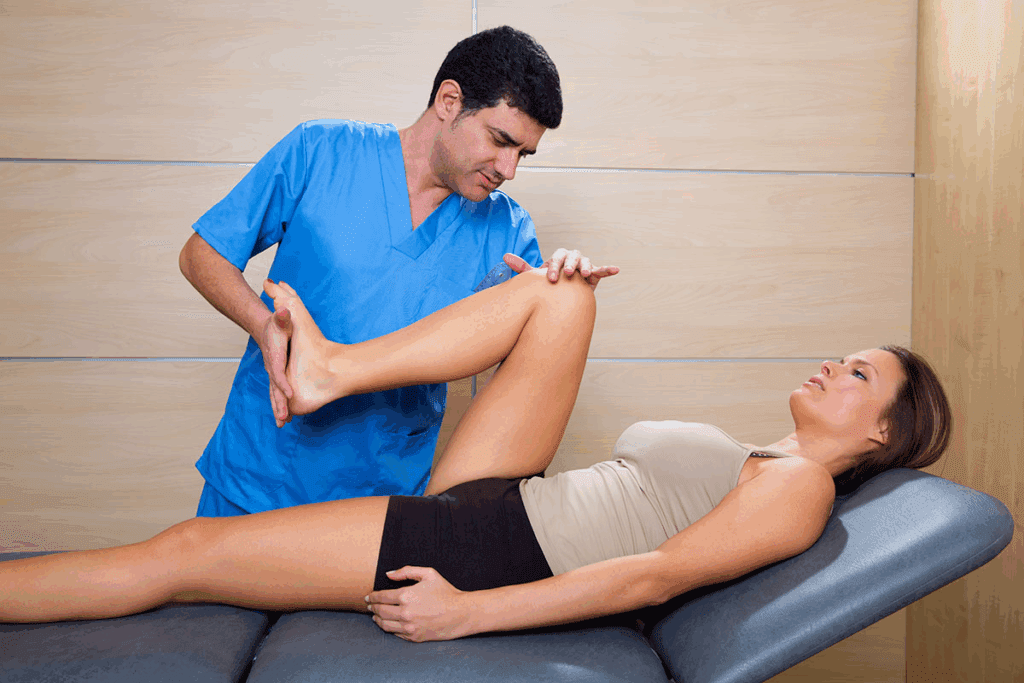
First, they do a detailed check-up. This includes looking at your medical history and doing a physical exam. Physical tests like the straight leg raise test help find sciatic nerve issues.
They check your muscle strength, reflexes, and how you feel in your leg. They might also do special tests to see where the pain comes from.
Imaging Studies for Accurate Diagnosis
Imaging tests are very important. Magnetic Resonance Imaging (MRI) shows soft tissues like nerves and muscles. It can spot problems like herniated discs and nerve compression.
X-rays and Computed Tomography (CT) scans look at bones. They can find issues like osteoarthritis or fractures. Sometimes, electromyography (EMG) and nerve conduction studies (NCS) are used to check nerve health.
Differential Diagnosis Challenges
Finding the right diagnosis can be tough. This is because there are many possible reasons for hip and leg pain. It’s like solving a puzzle.
Doctors have to think about many things. They look at your medical history, do physical exams, and use imaging tests. This helps them figure out what’s wrong and how to fix it.
- Key factors in differential diagnosis include:
- Medical history and symptom presentation
- Physical examination findings
- Imaging study results
- Response to initial treatments
By looking at all these things, doctors can find the right diagnosis. Then, they can make a treatment plan just for you.
Medical Treatments for Hip Pain That Radiates to the Foot
Hip pain that goes down to the foot can be really tough. But, there are many medical treatments that can help. The right treatment depends on the cause of the pain, how bad it is, and the patient’s health.
Medication Options for Pain Management
There are different medicines for hip pain that goes to the foot. These include:
- Nonsteroidal Anti-Inflammatory Drugs (NSAIDs): Good for cutting down inflammation and pain.
- Muscle Relaxants: Helps with muscle spasms that can cause pain.
- Oral Steroids: Used for severe inflammation.
- Pain Modulators: Like gabapentin or pregabalin, they help with nerve pain.
It’s important to follow what your doctor says about these medicines. They can have side effects and interact with other drugs.
Injection Therapies and Nerve Blocks
Injection therapies can target pain more directly. These include:
| Therapy Type | Description | Benefits |
| Corticosteroid Injections | Injecting steroids into the affected area to reduce inflammation. | Quick reduction in pain and inflammation. |
| Nerve Blocks | Injecting local anesthetics or steroids around nerves to block pain signals. | Diagnostic and therapeutic benefits, providing significant pain relief. |
| Platelet-rich Plasma (PRP) Therapy | Using the patient’s platelets to promote healing. | Potential for long-term healing and tissue repair. |
A medical expert says, “Injection therapies can give a lot of relief for patients with hip pain that goes to the foot, when other treatments don’t work.” (
A well-timed injection can be a game-changer for patients suffering from chronic pain.
)
Surgical Interventions for Severe Cases
When other treatments don’t work, surgery might be needed. This can include:
- Discectomy: Removing a herniated disc that may be compressing nerves.
- Spinal Fusion: Stabilizing the spine by fusing vertebrae together.
- Hip Replacement Surgery: Replacing a damaged hip joint with an artificial one.
Surgery is usually for severe cases where other treatments haven’t helped enough. It’s important to talk about the risks and benefits with a healthcare provider.
Knowing the medical treatments for hip pain that goes to the foot is the first step to getting better. By working with healthcare providers, patients can find the best treatment for their condition.
Physical Therapy and Rehabilitation Approaches
Physical therapy and rehabilitation are key in treating hip pain that spreads to the leg. Every patient is different, so a custom plan is needed to tackle their pain’s root causes.
Targeted Exercises for Sciatic Pain Relief
Specific exercises are vital in easing sciatic pain. Stretching exercises help ease muscle tension that might press on the sciatic nerve. Strengthening exercises make the hip and lower back more stable, cutting down on irritation.
Some good exercises include:
- Piriformis stretches to ease tension in the piriformis muscle, which can press on the sciatic nerve.
- Hamstring stretches to boost flexibility and lessen strain on the lower back.
- Core strengthening exercises, like planks and bridges, to strengthen the lumbar spine.
Core and Hip Strengthening Programs
A strong core and hip muscles are essential for supporting the lower back and preventing pain. Our physical therapy programs aim to build muscle around the hip and boost core stability. This helps ease pressure on the sciatic nerve and other pain-causing structures.
Core strengthening exercises are great for keeping the right posture and lowering back strain. Hip strengthening exercises also help the hip joint work better, easing pain and boosting movement.
Adding these exercises to a full physical therapy plan can greatly help patients with radiating hip pain. It can also enhance their overall life quality.
Self-Care Strategies to Manage Hip Pain Radiating Down Leg
Self-care is key in managing hip pain that goes down the leg. It helps find relief and boosts quality of life. By adding self-care to your daily routine, you can handle your symptoms better. This might also cut down on how often you feel pain.
Heat and Cold Therapy Applications
Using heat or cold therapy is a simple yet powerful way to manage hip pain. Heat therapy, like a warm bath or heating pad, relaxes muscles and boosts blood flow. Cold therapy, such as an ice pack, reduces swelling and numbs pain.
Switching between heat and cold or sticking to one can really help. Always wrap ice packs or heating pads in a towel to avoid skin contact. Limit use to 15-20 minutes at a time.
Proper Body Mechanics During Daily Activities
Keeping a good posture and lifting right is vital for hip pain relief. For example, bending at the knees when lifting can ease strain on the hip and lower back.
Standing and stretching regularly when sitting for a long time also helps. Being mindful of how you move and sit can lessen hip joint stress and nerve pressure.
Supportive Equipment and Ergonomic Adjustments
Using supportive equipment and making ergonomic adjustments can also help. Ergonomic chairs, adjusting desk heights, or using canes can reduce hip and leg strain.
| Equipment/Adjustment | Description | Benefit |
| Ergonomic Chair | A chair designed to support the natural curve of the spine | Reduces strain on the hip and lower back |
| Standing Desk | A desk that allows for working while standing | Encourages movement and reduces sitting time |
| Supportive Cane/Walker | A device to aid in walking and balance | Reduces strain on the hips and legs during mobility |
Adding these self-care steps to your daily life can greatly help manage hip pain. Combining these with medical treatments can lead to better pain control and overall health.
Alternative and Complementary Treatments
There are many ways to manage radiating hip pain, not just traditional treatments. Alternative and complementary therapies offer a holistic approach. They focus on the whole person, not just the pain.
Acupuncture and Dry Needling
Acupuncture is an ancient practice that uses thin needles to stimulate healing. Dry needling is similar but based on modern science. Both can help by releasing muscle tension and improving nerve function.
Studies show acupuncture can reduce pain and improve function in hip osteoarthritis. Dry needling is also effective for myofascial pain syndrome, causing pain from the hip to the leg.
Massage Therapy for Radiating Pain
Massage therapy is a great option for hip pain. It targets muscles and soft tissues around the hip and lower back. Deep tissue massage and myofascial release are good for addressing pain causes.
Massage not only relieves pain but also boosts circulation and relaxation. Regular sessions are key to managing hip pain that spreads to the leg.
Chiropractic Care and Spinal Manipulation
Chiropractic care, including spinal manipulation, is a popular choice for hip pain. Chiropractors adjust the spine to improve joint mobility and reduce inflammation. This relieves nerve pressure that causes pain to spread down the leg.
Spinal manipulation applies controlled force to specific spine joints. It restores normal movement, reduces pain, and improves function. Many find chiropractic care helpful in managing pain and improving their quality of life.
When to Seek Immediate Medical Attention
Radiating hip pain can sometimes signal a serious condition that needs prompt medical evaluation. Most hip pain radiating down the leg is due to common issues like sciatica or lumbar spine problems. But, some symptoms need immediate medical attention to avoid long-term damage or complications.
Red Flag Symptoms That Require Emergency Care
Specific symptoms with radiating hip pain need urgent medical evaluation. These red flag symptoms include:
- Sudden onset of severe pain
- Loss of bladder or bowel control
- Progressive weakness in the legs
- Significant trauma or injury to the hip or lower back
- Severe pain following a fall or accident
If you experience any of these symptoms, it’s vital to seek emergency care right away.
| Possible Indication | |
| Sudden severe pain | Possible fracture or severe nerve compression |
| Loss of bladder/bowel control | Cauda equina syndrome |
| Progressive leg weakness | Severe nerve damage or compression |
Progressive neurological symptoms are another critical indicator for immediate medical attention. These symptoms may include:
- Increasing numbness or tingling in the legs or feet
- Weakness in the legs that worsens over time
- Difficulty walking or maintaining balance
- Changes in reflexes
As one medical expert notes, “Prompt evaluation of progressive neurological symptoms is critical. It prevents permanent nerve damage and ensures the best outcomes.”
If you’re experiencing any of these progressive neurological symptoms, we recommend consulting with a healthcare professional as soon as possible. This will help determine the underlying cause and the right treatment.
Preventing Recurrence and Managing Chronic Radiating Pain
To stop radiating hip pain from coming back, we need to change our lifestyle and how we move. It’s important to manage chronic pain well. This helps us live better and avoid more problems.
Lifestyle Modifications for Long-Term Relief
Changing our lifestyle is key to lasting relief from hip pain. We should keep a healthy weight, exercise regularly, and stay away from activities that make pain worse.
Key Lifestyle Modifications:
- Maintaining a healthy weight to reduce pressure on the hip joint
- Engaging in low-impact exercises such as swimming or cycling
- Avoiding heavy lifting and bending
Maintaining proper posture and body mechanics is essential to prevent the recurrence of hip pain.
Maintaining proper posture and body mechanics is essential to prevent the recurrence of hip pain.
Tips for Maintaining Proper Posture:
- Standing up straight with shoulders back and weight evenly distributed on both feet
- Sitting with a straight back and feet flat on the floor or on a footrest
- Using proper lifting techniques, bending at the knees instead of the waist
Here’s a summary of lifestyle modifications and their benefits:
| Lifestyle Modification | Benefit |
| Maintaining a healthy weight | Reduces pressure on the hip joint |
| Regular low-impact exercise | Improves joint mobility and strengthens surrounding muscles |
| Avoiding heavy lifting and bending | Reduces strain on the hip and lower back |
By making these lifestyle changes and keeping good posture, we can lower the chance of hip pain coming back. We can also manage chronic pain better.
Conclusion: Taking Control of Your Hip and Leg Pain
Managing hip pain that goes down the leg needs a full plan. This includes knowing the causes, getting the right medical help, and taking care of yourself. By figuring out why the pain happens, you can start managing it better.
We’ve looked at why hip pain might spread to the leg. It could be from sciatica, back problems, hip issues, or muscle troubles. Knowing these reasons is key to managing hip pain well.
To control pain, you need to try different treatments, physical therapy, and self-care. Being active in your care can lessen symptoms, make life better, and lower the chance of long-term pain.
In the end, taking control of pain means understanding your condition, looking into treatments, and changing your lifestyle. This way, you can take back your life and find lasting relief from hip and leg pain.
FAQ
What are the common causes of hip pain that radiates down to the leg and foot?
Hip pain that spreads to the leg and foot can come from many sources. Sciatica, referred pain, and nerve compression are common causes. Also, issues like herniated discs and spinal stenosis in the lumbar spine can cause it. Hip disorders like osteoarthritis and muscle problems like piriformis syndrome also play a role.
How does nerve compression cause radiating pain from the hip to the leg?
Nerve compression happens when a nerve gets pinched. This can be due to a herniated disc or spinal stenosis. When this happens, pain signals travel from the hip to the leg and foot, leading to radiating pain.
What is the difference between referred pain and radicular pain?
Referred pain is felt in a different place than where it starts. Radicular pain, on the other hand, is caused by nerve root compression. It follows a specific pattern.
How is sciatica diagnosed and treated?
Doctors use a combination of tests and imaging to diagnose sciatica. Treatment includes medication, physical therapy, and sometimes injections or surgery.
Can hip osteoarthritis cause radiating pain down the leg?
Yes, hip osteoarthritis can lead to pain in the leg. This is due to referred pain and possible nerve compression.
What is piriformis syndrome, and how does it cause radiating pain?
Piriformis syndrome happens when the piriformis muscle presses on the sciatic nerve. This causes pain that radiates from the hip to the leg and foot.
How can physical therapy help manage radiating hip pain?
Physical therapy can target exercises to strengthen the core and hip. It helps manage radiating hip pain through rehabilitation.
What self-care strategies can help alleviate hip pain that radiates down the leg?
Using heat or cold therapy and maintaining proper posture can help. Wearing supportive equipment also aids in relieving hip pain.
When should I seek immediate medical attention for radiating hip pain?
Seek medical help right away if you have sudden severe pain, numbness, or weakness. Also, if your symptoms get worse over time.
Can lifestyle modifications help prevent the recurrence of radiating hip pain?
Yes, making lifestyle changes can help. Keeping a good posture, exercising regularly, and managing your weight can prevent hip pain from coming back.
What alternative and complementary treatments are available for radiating hip pain?
Options like acupuncture, dry needling, massage, and chiropractic care can offer relief. They are alternative and complementary treatments for hip pain.
How can I manage chronic radiating hip pain?
Managing chronic hip pain requires a full approach. This includes medical treatments, physical therapy, self-care, and lifestyle changes.
Reference
- Fardon, D. F., & Milette, P. C. (2001). Nomenclature and classification of lumbar disc pathology. Spine, 26(5), E93–E113. https://pubmed.ncbi.nlm.nih.gov/11242379/