Last Updated on December 1, 2025 by Bilal Hasdemir
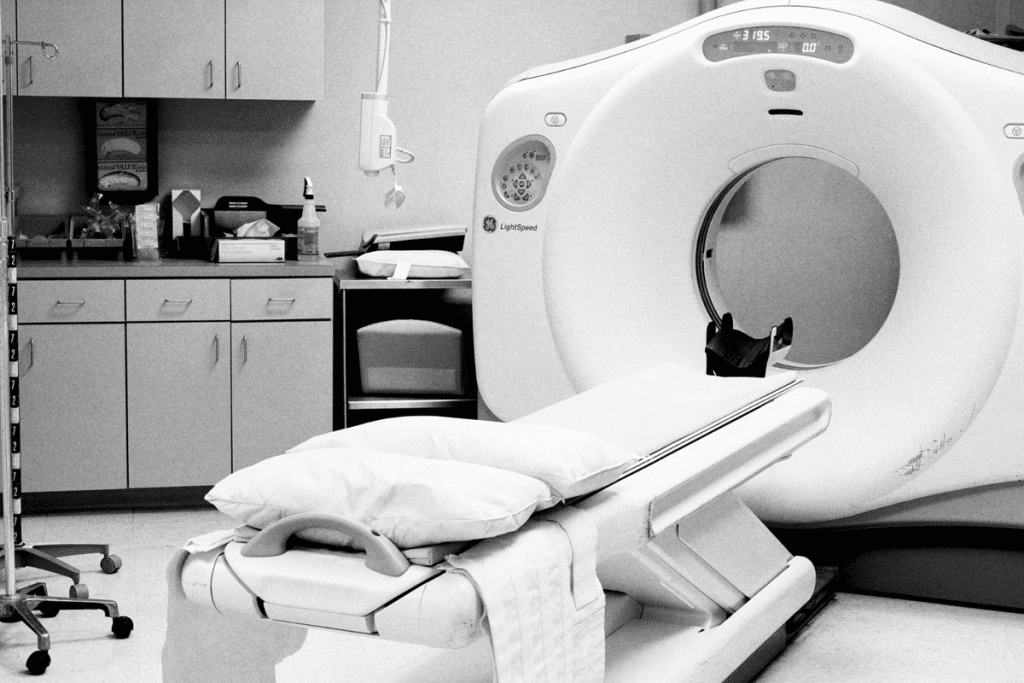
The radioactive tracer used in a PET scan has a short half-life of about 110 minutes, so it is mostly eliminated from the body by the next day.
Hours radioactive after PET scan is a common concern for many patients. The radioactive tracer used in a PET scan has a short half-life of about 110 minutes, which means most of it is eliminated from the body within 24 hours. PET scans help diagnose and monitor various health conditions by showing how tissues and organs function. Understanding how long you remain radioactive can ease worries and help you take simple precautions to protect yourself and those around you after the scan.
A PET scan uses a radioactive tracer injected into the body to diagnose and monitor health. People often ask how long they stay radioactive after the scan.
Key Takeaways
- The half-life of the radioactive tracer used in PET scans is 110 minutes.
- The radioactive material is generally no longer detectable in the body by the next day.
- PET scans involve injecting a radioactive tracer to diagnose medical conditions.
- Patients often have concerns about the duration of radioactivity after a PET scan.
- Understanding the duration of radioactivity can help alleviate patient concerns.
Understanding PET Scans and Radioactive Tracers
PET scans are key in medical imaging. They show how body tissues and organs work by using radioactive tracers. This method is vital for diagnosing and treating diseases like cancer, neurological issues, and heart problems.
What is a PET scan?
A PET scan uses a special drug to see how body parts work. This drug, called 18-FDG (Fluorodeoxyglucose), is attached to a radioactive atom. It helps find areas with lots of activity, like growing cancer cells.
Types of radioactive tracers used
While F-18 FDG is the top choice, other tracers are used too. These tracers target specific cells or proteins. The right tracer depends on the disease and what doctors need to know.
How radioactive tracers work in the body
Once in the body, the tracer is taken up by tissues and organs. It then decays, sending out positrons. These positrons meet electrons, creating gamma rays. The PET scanner picks up these rays, making detailed images of the body’s inner workings.
PET scans with radioactive tracers are a big leap in medical imaging. They give doctors insights not seen with other tests. Knowing how PET scans and tracers work helps us see their importance in healthcare.
The Science Behind Radioactivity in PET Scans
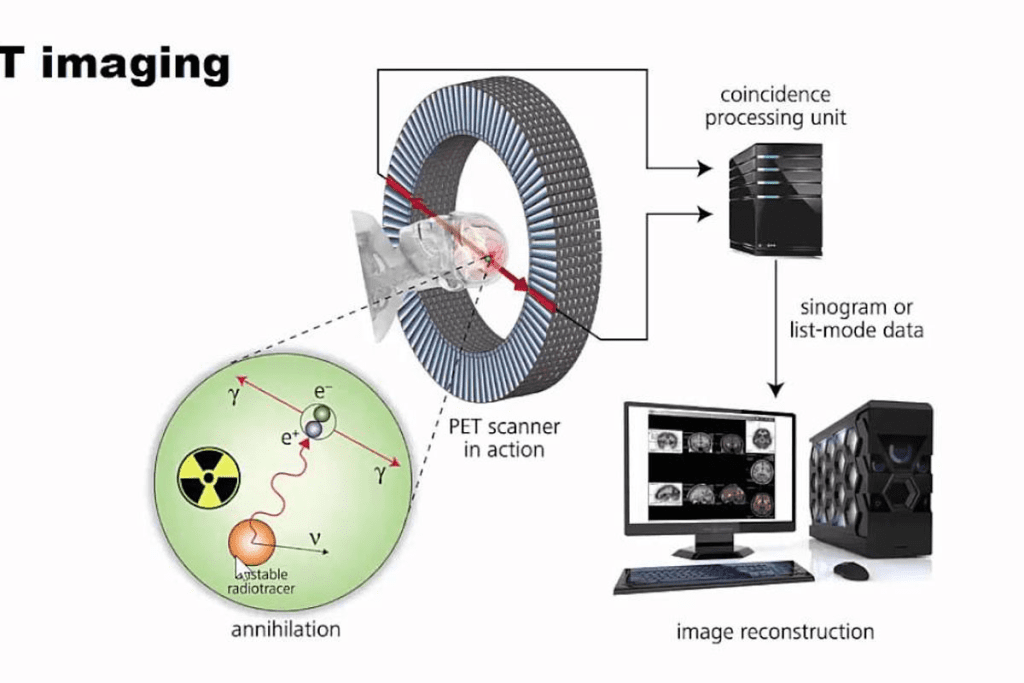
Understanding radioactivity in PET scans is key for patients. PET scans use radioactive tracers to see how the body works. Knowing how these tracers work helps us see why PET scans are safe and effective.
F-18 FDG: The most common PET tracer
F-18 FDG (Fluorodeoxyglucose) is the top tracer in PET scans. It’s a glucose molecule with a radioactive fluorine-18 atom. Cancer cells eat more glucose, so they take in more F-18 FDG, making them visible during the scan.
This tracer helps find many conditions, like cancer, brain disorders, and heart disease.
Understanding half-life in radioactive materials
The half-life of a radioactive material is how long it takes for its radioactivity to cut in half. F-18 FDG has a half-life of about 110 minutes. This short half-life means it decays quickly, lowering the time of radiation exposure for patients and others nearby.
Knowing the half-life is important for keeping everyone safe after the scan.
How radioactive decay affects your body
As F-18 FDG decays, it releases positrons that meet electrons in the body, creating the PET scan images. After the scan, the radioactive material keeps decaying, reducing its radioactivity. The body also gets rid of the tracer, lowering radiation exposure even more.
Most of the radioactive material leaves the body in a few hours. This quick decay and removal are why PET scans are safe.
By understanding how radioactive tracers work and decay, patients can see the steps taken to keep radiation exposure low.
How Many Hours Radioactive After PET Scan: The Timeline
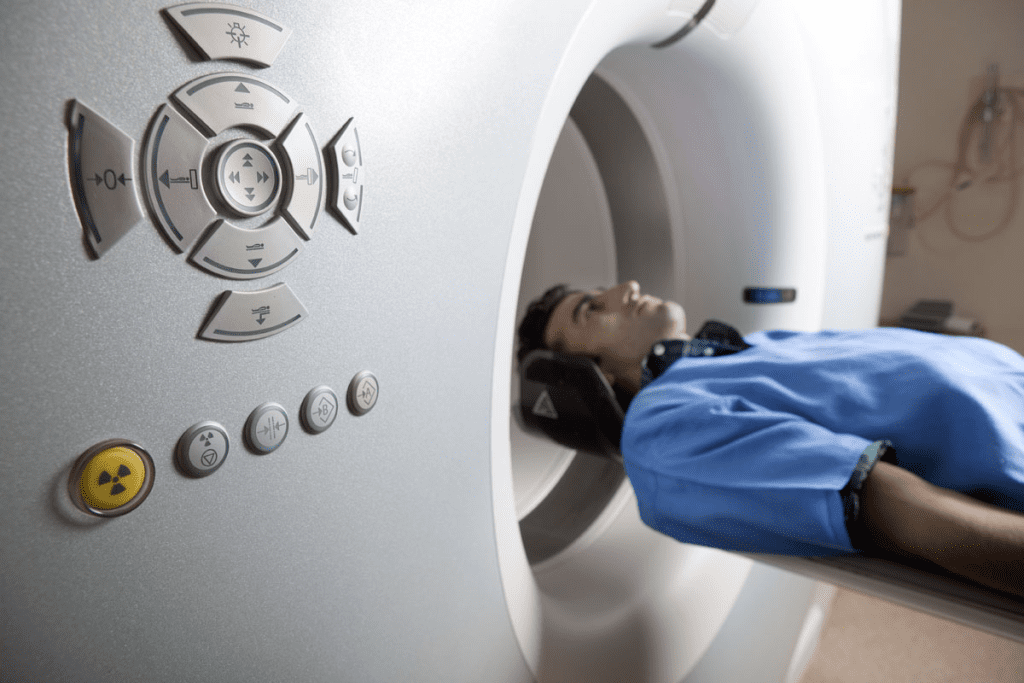
Knowing how long you’re radioactive after a PET scan is key for your safety. Right after the scan, the radioactive tracer starts to break down. This makes its radioactivity go down over time.
Initial Radioactivity Levels
Right after a PET scan, the tracer is at its most radioactive. The amount of radioactivity is measured in millicuries (mCi). The dose varies based on the scan type and your health.
The typical dose of F-18 FDG, the most common PET tracer, ranges from 10 to 20 mCi. This dose is safe for tests, but it’s good to know how long it lasts.
The 6-Hour Mark: What to Expect
After 6 hours, the radioactivity drops a lot. The physical half-life of F-18 FDG is about 110 minutes. By then, the radioactivity is about 25% of what it was at first.
12-24 Hours Post-Scan
In 12 to 24 hours, the radioactivity keeps going down. By then, it’s safe for you to do your usual things.
Most guidelines say you can go back to normal after 24 hours. By then, the tracer is too weak to show up on standard detectors.
Complete Clearance Timeframe
It takes a few days for the tracer to fully leave your body. But by 24 hours, you’re not emitting much radiation anymore.
Drinking lots of water helps get rid of the tracer faster. Staying hydrated is important for quick clearance.
Factors Affecting Radioactivity Duration
Knowing what affects how long you stay radioactive after a PET scan is important. The time you stay radioactive can change a lot. This depends on several key things.
Type of Radiotracer Used
The radiotracer used in a PET scan greatly affects how long you stay radioactive. Each tracer has a different half-life. This is the time it takes for the radioactivity to cut in half. For example, F-18 FDG, a common PET tracer, has a half-life of about 110 minutes.
Patient-Specific Factors
Things specific to you can also change how long you stay radioactive. These include:
Body Mass and Metabolism
Your body mass and how fast you metabolize can affect how quickly the tracer leaves your body. People with a faster metabolism might clear the tracer faster.
Kidney and Liver Function
How well your kidneys and liver work is key to clearing the tracer. If these organs don’t work well, it can take longer to clear the tracer.
Hydration and Its Impact on Clearance
Drinking enough water is important for clearing the tracer. Drinking lots of water can help get rid of the tracer faster. It’s suggested to drink a lot of fluids after a PET scan to help with this.
| Factor | Influence on Radioactivity Duration | Recommendation |
| Type of Radiotracer | Varies based on half-life | Discuss with healthcare provider |
| Body Mass and Metabolism | Faster clearance with higher metabolism | Maintain a healthy lifestyle |
| Kidney and Liver Function | Impaired function can prolong radioactivity | Monitor and manage organ function |
| Hydration | Adequate hydration aids in clearance | Drink plenty of water |
Safety Precautions After Your PET Scan
After a PET scan, it’s key to follow safety steps to lower radiation risk for others. The tracer in your body for a while emits radiation. This could harm those nearby.
General guidelines for the first 6 hours
For the first 6 hours after your PET scan, do the following:
- Drink lots of water to clear the tracer from your body.
- Stay away from pregnant women and kids.
- Keep your interactions with others to a minimum, avoiding crowded places.
- Practice good hygiene, like washing your hands well after using the bathroom.
Interactions with vulnerable populations
Some groups are more at risk from radiation. It’s important to be extra careful around them.
Pregnant women
Pregnant women are at high risk because of the fetus. It’s best to avoid them for at least 6 hours after the scan.
Children
Children are also more sensitive to radiation. Keeping a safe distance from them for 6 hours after the scan can help protect them.
Public transportation and social gatherings
Be careful when using public transport or going to social events. Try to sit in less crowded areas or keep a safe distance from others. This can help lower radiation exposure for those around you.
| Precaution | Duration | Reason |
| Avoid close contact with pregnant women and children | 6 hours | Minimize radiation exposure to vulnerable populations |
| Drink plenty of fluids | Throughout the day | Flush out radioactive tracer |
| Limit interactions with others | 6 hours | Reduce radiation exposure to others |
Radiation Exposure to Others: What You Need to Know
Many patients worry about radiation exposure to others after a PET scan. They wonder how the radioactive tracer might affect those around them.
Understanding Radiation Exposure Levels
The risk of radiation exposure to others is low. The tracer in PET scans, like F-18 FDG, has a short half-life of about 110 minutes. This means radiation levels drop quickly.
Understanding radiation exposure levels
Research shows that exposure to others is usually minimal. The Nuclear Regulatory Commission sets a public dose limit at 0.1 rem (1 mSv) per year. After a PET scan, exposure to others is far below this limit.
Safe distance recommendations
To keep others safe, patients should stay far from them, like children and pregnant women. Keeping at least 3 feet away for a few hours is advised.
Here are some guidelines for safe distances:
- Stay at least 3 feet away from others for the first 6 hours after the scan.
- Avoid close contact with children and pregnant women for 6-12 hours after the scan.
- Sleep alone for the first night after the scan, if possible.
Duration of contact restrictions
Contact restrictions depend on the tracer used and the patient’s health. Usually, patients can go back to normal activities after 24 hours.
The American College of Radiology says, “Patients can usually return to their normal activities immediately after the PET scan. But they should follow their healthcare provider’s instructions on radiation safety.”
“The radiation exposure to others is relatively low, and most patients can resume normal activities within 24 hours.”
In summary, while precautions are needed, the risk of radiation exposure to others after a PET scan is low. By understanding radiation levels, following safe distances, and sticking to contact restrictions, patients can minimize risks and recover safely.
Managing Daily Activities Post-PET Scan
After a PET scan, it’s important to know how to manage daily activities safely. This includes avoiding radiation exposure to others. The tracer used in PET scans is mostly safe, but there are steps to take to protect others.
Returning to Work
Most people can go back to work the day after a PET scan. This is because the radioactivity drops a lot in 24 hours. But, if you work close to pregnant women or kids, you might need to be extra careful or talk to your doctor first.
Household Interactions
It’s best to keep a safe distance from others, like pregnant women and kids, for the first 24 hours. Sleeping in a separate bed is a good idea to reduce exposure.
Sleeping Arrangements
For the first 24 hours, sleeping alone is key to avoid radiation exposure to your partner. If you can’t sleep alone, try to stay as far apart as possible.
Using Bathrooms and Handling Bodily Fluids
When you use the bathroom, flushing twice helps get rid of radioactive materials. Always wash your hands well after using the bathroom. Be careful when handling bodily fluids and follow good hygiene practices.
| Activity | Recommendation | Duration |
| Returning to Work | Resume work, avoid close contact with vulnerable populations | After 24 hours |
| Household Interactions | Maintain safe distance, specially from pregnant women and children | First 24 hours |
| Sleeping Arrangements | Sleep alone or maintain distance from bed partner | First 24 hours |
| Bathroom Use | Flush twice, wash hands thoroughly | Until radioactivity has decreased |
By following these tips, you can reduce radiation exposure to others after a PET scan. Always check with your doctor for advice that fits your situation.
Common Questions About Post-PET Scan Radioactivity
After a PET scan, many patients wonder about radioactivity’s impact on their daily life. The body breaks down the radioactive tracer used in the scan. This raises concerns about safety and how it might affect others.
Can I be around my pets?
It’s best to keep a distance from pets, kids, and pregnant women for 24 hours after a PET scan. This helps protect them from any leftover radioactivity. Doctors say it’s wise to limit contact with those who are more vulnerable to radiation.
Is it safe to prepare food for others?
It’s okay to cook for others, but make sure to wash your hands well before starting. The chance of passing on radioactive material through food is low after 24 hours.
When can I resume intimate contact?
Avoid intimate contact for at least 24 hours after the scan. This gives enough time for the radioactive material to leave your body. It lowers the risk of exposing others to radiation.
Do I need to take special precautions with waste?
For 24 to 48 hours, flush the toilet twice after each use. Also, wash your hands well after using the bathroom. These steps help reduce any radioactive waste.
Knowing these guidelines helps patients safely go about their day after a PET scan. It ensures safety for themselves and those around them. Always follow the advice given by healthcare professionals.
Conclusion
Knowing how long you stay radioactive after a PET scan is key for your safety and others’. The time you stay radioactive depends on the type of tracer used and your health.
By understanding what to expect and following safety tips, you can lower radiation risks for others. Usually, most of the radioactivity goes away within 24 hours. By then, you’re likely safe to go back to your usual activities.
It’s important to follow safety rules after a PET scan. This means being careful around kids and pregnant women. Also, be cautious when using public transport or going to social events.
Being aware of how long you stay radioactive and taking the right steps helps you live safely after a PET scan.
FAQ
How long does the radioactive tracer stay in my body after a PET scan?
The tracer, F-18 FDG, has a half-life of about 110 minutes. This means it’s mostly gone after 6 hours. By 12-24 hours, most of it is out of your body.
How many hours after a PET scan am I considered radioactive?
You’re radioactive for a few hours after a PET scan. The exact time depends on the tracer and how fast it leaves your body. But, after 6 hours, you’re much safer.
Can I be around children and pregnant women after a PET scan?
It’s best to stay away from kids and pregnant women for the first 6 hours. After that, the risk goes down a lot. But, always check with your doctor first.
Is it safe to use public transportation after a PET scan?
Using public transport is usually okay after a PET scan. Just keep a safe distance from others, mainly those who are more vulnerable, for the first 6 hours.
How long should I avoid intimate contact after a PET scan?
Avoid close contact for at least 6 hours to protect others from radiation. But, this time can change based on the tracer and your body.
Can I prepare food for others after a PET scan?
It’s best not to cook for others, mainly those who are more at risk, for the first 6 hours. After that, you can usually go back to normal. But, always check with your doctor.
Do I need to take special precautions with waste after a PET scan?
You don’t need to worry about waste from a PET scan. The tracer is mostly gone through urine. But, it’s good to keep up with hygiene.
How long does it take for the PET scan tracer to be completely eliminated from the body?
The tracer, F-18 FDG, is usually out of your body in 12-24 hours. But, this can change based on how much you drink and your health.
What factors affect the duration of radioactivity after a PET scan?
Several things can change how long you’re radioactive after a PET scan. These include the tracer type, your body, and how much you drink. Drinking water helps get rid of the tracer faster.
References
- PETScan Lucknow. (2025, April 19). After PET scan how long are you radioactive? Answered. https://petscanlucknow.in/after-pet-scan-how-long-are-you-radioactive/
- National Institutes of Health. (2025, February 25). PET scanning. In StatPearls. https://www.ncbi.nlm.nih.gov/books/NBK559089/
- International Atomic Energy Agency. (2017, August 6). Radiation protection during PET/CT. https://www.iaea.org/resources/rpop/health-professionals/nuclear-medicine/pet-ct
- Wahl, R. L., et al. (2010). The promise and pitfalls of positron emission tomography and radionuclide imaging. Radiologic Clinics of North America, 48(1), 193-216. https://pmc.ncbi.nlm.nih.gov/articles/PMC4337868/