Last Updated on November 27, 2025 by Bilal Hasdemir
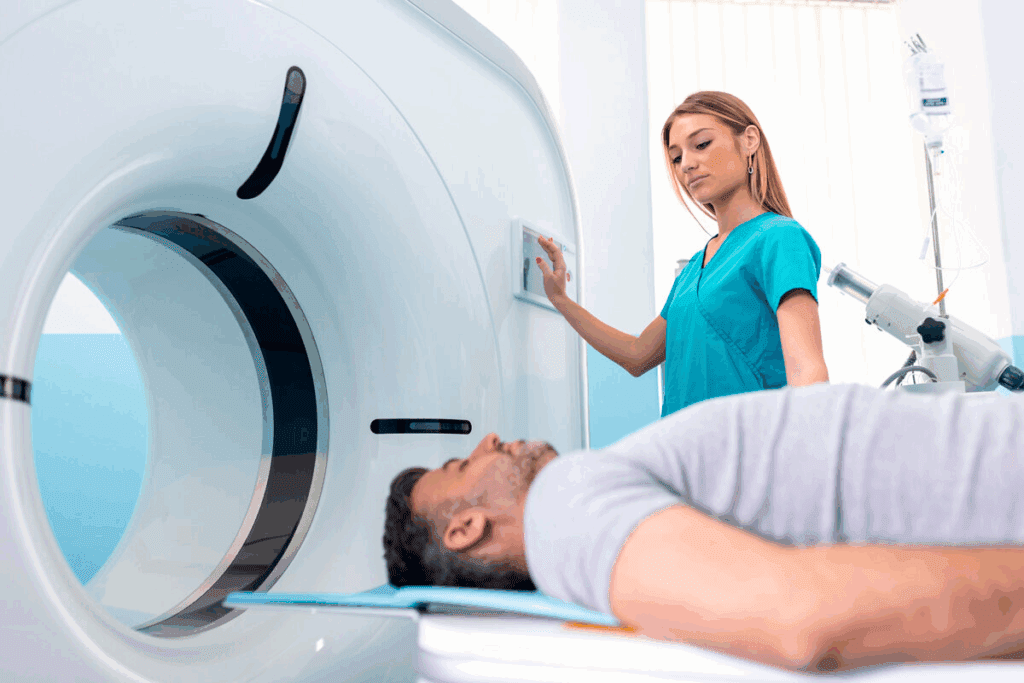
Every year, over 2 million Positron Emission Tomography (PET) scans are done in the United States. They help find and track many health issues, like cancer.
A PET scan shows how the body’s cells work. It helps doctors see if there’s disease and where it is.
If a PET scan shows something positive, it might mean you have cancer, brain problems, or heart disease. Knowing what a PET scan shows is key. It helps both patients and doctors decide on the best treatment.
Key Takeaways
- A PET scan is a diagnostic tool that visualizes metabolic processes in the body.
- A positive PET scan result can indicate various medical conditions.
- PET scan results help healthcare providers diagnose and monitor diseases.
- Understanding PET scan results is crucial for informed treatment decisions.
- PET scans are commonly used to diagnose and monitor cancer.
Understanding PET Scans and Their Purpose
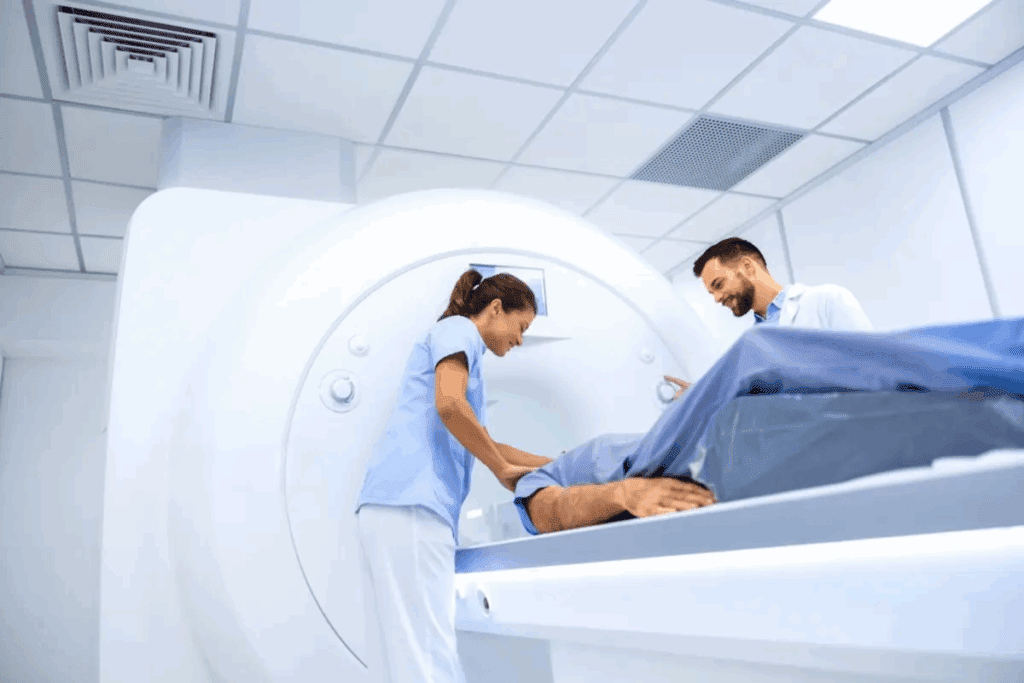
Positron Emission Tomography, or PET scans, are key in finding and tracking many health issues. They show how the body’s cells work, helping doctors spot problems and plan treatments.
What is Positron Emission Tomography?
PET scans use a special sugar molecule to see how the body’s cells work. A tiny bit of this sugar is given to the patient, and the body absorbs it. The scanner picks up signals from this sugar, making detailed pictures of the body’s inner workings.
PET scans are especially helpful in finding and tracking cancer, brain disorders, and heart disease.
How PET Scans Detect Metabolic Activity
PET scans work by finding where the body’s cells are most active. Cancer cells, for example, use more of the sugar molecule. This makes them show up clearly on the scan, helping doctors find and track them.
Common Medical Conditions Requiring PET Scans
PET scans help diagnose and keep an eye on many health issues, including:
- Cancer diagnosis and staging
- Neurological disorders such as Alzheimer’s disease and Parkinson’s disease
- Cardiovascular disease, including coronary artery disease
A study in the Journal of Nuclear Medicine showed PET scans are great for cancer care. It said, “PET/CT has become a key tool in oncology, giving vital info for diagnosis, staging, and treatment tracking.”
“The mix of PET and CT imaging has made cancer diagnosis and staging more accurate. This leads to more tailored and effective treatments.”
– Journal of Nuclear Medicine
| Medical Condition | PET Scan Application |
| Cancer | Diagnosis, staging, treatment monitoring |
| Neurological Disorders | Diagnosis, disease progression monitoring |
| Cardiovascular Disease | Coronary artery disease assessment, myocardial viability |
How Long Does a PET Scan Take: Complete Procedure Timeline
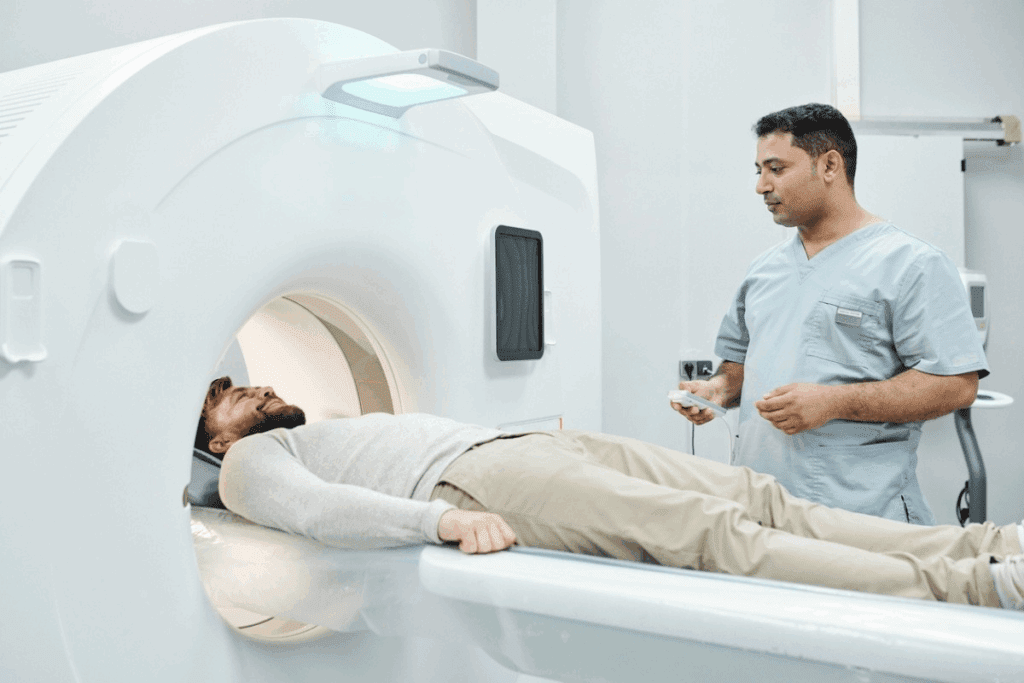
Many patients ask how long a PET scan takes, from start to finish. The time can vary, but it usually takes several hours. This includes preparation and the actual scan.
Pre-Scan Preparation Time (4-6 Hours)
Preparation for a PET scan starts hours before the scan. Patients must fast for 4 to 6 hours beforehand. This ensures accurate results. They might also need to avoid certain activities and medications.
Radiotracer Uptake Period (45-60 Minutes)
After getting the radiotracer, patients wait 45 to 60 minutes. This lets the body absorb it. The radiotracer then shows up in the areas of interest during the scan.
Actual Scanning Duration (20-45 Minutes)
The actual scan takes 20 to 45 minutes. The patient lies on a table that slides into the scanner. The scanner then detects the radiotracer’s activity.
Total Time Commitment for Patients
The total time for a PET scan includes preparation, waiting, and scanning. It can be from 6 to 12 hours. Patients should plan ahead. Bringing reading material or a companion can make the wait easier.
| Procedure Stage | Time Required |
| Pre-Scan Preparation | 4-6 Hours |
| Radiotracer Uptake | 45-60 Minutes |
| Actual Scanning | 20-45 Minutes |
| Total Time Commitment | 6-12 Hours |
The PET Scan Process: What to Expect
The PET scan uses a special tracer to see how active your body’s cells are. It’s a key tool for finding diseases like cancer, brain issues, and heart problems.
Patient Preparation Requirements
Before a PET scan, you need to get ready. This means:
- Fasting for 4-6 hours to avoid messing with the tracer
- Not doing hard exercise or drinking caffeine on the scan day
- Telling your doctor about any meds, allergies, or health issues
- Getting there early to fill out forms and get ready
Following these steps helps make sure your scan is good and accurate.
Radiotracer Administration
The scan starts with a tracer injection into a vein. This tracer goes to active areas like tumors or inflamed spots.
Important things about the tracer include:
- The tracer type changes based on what you’re being checked for
- It’s injected through an arm vein
- You might feel a pinch or sting during the injection
The Scanning Experience
After the tracer is in your body for 45-60 minutes, it’s time for the scan. The PET scanner is a big, doughnut-shaped machine that picks up the tracer’s radiation.
During the scan, you lie still on a table that moves into the scanner. The whole thing takes 20-45 minutes, depending on where you’re being scanned.
Immediate Post-Scan Procedures
After the scan, you can usually go back to normal unless your doctor says otherwise. The tracer leaves your body through urine and feces in a few hours.
Things to do after the scan include:
- Drink lots of water to help get rid of the tracer
- Avoid being close to pregnant women, kids, and people with weak immune systems for a few hours
- Follow any diet or activity rules your doctor gives you
Knowing what to expect from a PET scan helps you feel more ready and less worried.
Interpreting PET Scan Results: Understanding the Images
When we look at PET scan results, we analyze values and images to see how the body works. This is key for spotting and tracking diseases like cancer, brain issues, and heart problems.
Standardized Uptake Values (SUV) Explained
Standardized Uptake Values (SUV) are important in reading PET scans. SUV shows how much of the tracer is taken up by a part of the body compared to the rest. A high SUV means more activity, which might mean a problem like cancer.
SUV Calculation: To find the SUV, we use a formula: SUV = (tissue activity concentration) / (injected dose / body weight). This gives us a way to measure how much tracer is in tissues.
Color Interpretation on PET Images
PET images use colors to show how much tracer is taken up. Hotter colors like red and yellow mean more activity. Cooler colors like blue and green show less. Knowing this helps us understand PET scan results better.
Normal vs. Abnormal Metabolic Activity
Telling normal from abnormal activity in PET scans is crucial. Different parts of the body have different levels of activity. For example, the brain uses a lot of glucose, while the liver and spleen use a bit less.
| Organ/Tissue | Normal SUV Range | Abnormal SUV Indication |
| Liver | 2.0 – 3.0 | SUV > 3.0 may indicate pathology |
| Brain | 6.0 – 8.0 | SUV 8.0 may indicate abnormality |
| Lung | 0.5 – 1.5 | SUV > 2.0 may suggest malignancy |
Understanding SUV values, colors, and what’s normal helps doctors make good decisions for patients. This knowledge is key for patient care and treatment plans.
What Defines a “Positive” PET Scan Result?
A “positive” PET scan means the scan found abnormal metabolic processes. This could mean different health issues. It shows areas with high metabolic activity that need more medical checks.
Clinical Definition of Positive Findings
Positive PET scan results show more radiotracer in certain body areas. This is often linked to malignant or benign conditions with higher metabolic rates than normal tissues.
Doctors look at both the look and the numbers of the scan. Qualitatively, they check for unusual uptake. Quantitatively, they use Standardized Uptake Values (SUV) to measure how much radiotracer is taken up.
Differentiating Malignant from Benign Uptake
Telling malignant from benign uptake on a PET scan is tricky. Doctors look at the uptake’s intensity, location, and spread. For example, a high SUV value might mean cancer, while a low one could suggest a benign condition.
The table below shows how to tell malignant from benign uptake:
| Characteristics | Malignant Uptake | Benign Uptake |
| SUV Value | Typically High | Usually Low |
| Pattern of Uptake | Focal or Heterogeneous | Diffuse or Homogeneous |
| Location | Often in Known Tumor Sites | May be in Areas of Inflammation or Infection |
False positives can happen for many reasons, like inflammation, infection, or benign tumors. Knowing these can help doctors understand PET scan results better.
Timeframe for Receiving PET Scan Results
PET scan results delivery times can change based on several things. These include the facility’s rules and how complex the case is. Knowing these can help patients know what to expect.
Standard Result Delivery Timeline
PET scan results usually come a few days after the scan. The standard result delivery timeline is between 24 to 72 hours. This depends on the radiology department’s workload and how urgent the case is.
A study in the Journal of Nuclear Medicine found an average of 48 hours for PET scan results. But, this time can differ a lot between different healthcare places.
| Healthcare Provider | Average Turnaround Time |
| Hospital Radiology Departments | 24-72 hours |
| Specialized Imaging Centers | 48-96 hours |
| Emergency Cases | Within 24 hours |
Factors That May Expedite or Delay Results
Many things can affect when PET scan results are ready. Urgency of the case is a big one; emergency cases get results faster. The complexity of the scan and if more images or talks are needed can slow things down.
“The timely delivery of PET scan results is crucial for patient management. Factors such as the radiologist’s workload and the need for multidisciplinary review can impact the turnaround time.” –
How Results Are Typically Communicated
PET scan results are usually shared by the patient’s doctor. How they share the results can vary. It might be in person, over the phone, or through a patient portal. It’s important for patients to understand their results and ask questions.
Questions to Ask When Receiving Results
When getting PET scan results, patients should be ready to ask questions. Important questions include: “What do the results mean for my condition?” “Are there any areas of concern that need more checking?” and “What are the next steps in my treatment plan?”
- What are the implications of the PET scan results for my diagnosis?
- Are additional tests or scans required?
- How will the results influence my treatment plan?
Understanding when PET scan results come and being ready to talk about them with their doctor helps patients on their diagnostic journey.
Immediate Medical Response to a Positive PET Scan
When a PET scan shows something positive, doctors do a full check-up. They want to know what’s going on and how bad it is.
Physician Consultation and Result Discussion
First, you’ll talk to a doctor about your PET scan results. This talk is key to understanding what the scan found. It helps figure out what to do next.
Be ready to ask questions. You might want to know what parts of your body the scan looked at. Or what tests you’ll need next.
Additional Diagnostic Testing Requirements
More tests are often needed after a positive PET scan. These tests help get a clearer picture of what’s going on.
- CT or MRI scans give detailed views of your body
- Blood tests look for signs of certain conditions
- Other tests might be needed based on the PET scan’s findings
Biopsy and Tissue Sampling Procedures
In some cases, a biopsy might be suggested. This means taking a tissue sample for a closer look. It’s done to confirm a diagnosis.
How a biopsy is done depends on where and what it’s for. It might be done with local or general anesthesia.
Specialist Referrals and Multidisciplinary Approach
After more tests, you might see specialists. A team of doctors works together to find the best treatment plan.
This team could include oncologists, radiologists, and surgeons. They all help give you the best care possible.
Positive PET Scans in Oncology: Cancer Implications
PET scans are key in cancer care. They help diagnose, stage, and monitor cancer. A positive PET scan means a lot for patient care.
Initial Cancer Diagnosis Confirmation
A positive PET scan can confirm cancer. It shows where cancer cells are active. This helps doctors find tumors.
Key benefits of PET scans in initial diagnosis include:
- Early detection of cancerous cells
- Accurate identification of tumor locations
- Guidance for biopsy procedures
Cancer Staging and Metastasis Detection
PET scans are vital for cancer staging and finding metastasis. They show how far the cancer has spread. This helps doctors choose the right treatment.
| Cancer Stage | PET Scan Findings | Treatment Implications |
| Early Stage | Limited tumor activity | Localized treatment (surgery, radiation) |
| Advanced Stage | Widespread metabolic activity | Systemic treatment (chemotherapy, targeted therapy) |
Treatment Planning Based on PET Findings
PET scan results are crucial for treatment planning. Doctors use them to create a treatment plan that fits each patient.
Treatment planning considerations include:
- Assessing tumor aggressiveness
- Identifying potential targets for therapy
- Monitoring response to treatment
Monitoring Treatment Response and Recurrence
PET scans help track treatment success and catch recurrence early. This allows for quick changes to treatment plans.
Benefits of PET scans in monitoring include:
- Early detection of treatment response
- Identification of residual disease
- Guidance for post-treatment surveillance
Cardiac PET Scan Positive Results: Heart Disease Implications
Knowing what a positive cardiac PET scan means is key for heart health. It can show different heart problems. This helps doctors make better treatment plans and can lead to better health for patients.
Coronary Artery Disease Identification
Cardiac PET scans are mainly used to find coronary artery disease (CAD). CAD happens when the heart’s blood supply gets blocked by plaque. A positive scan shows where blood flow is low, pointing to CAD.
The American Heart Association says CAD is the top killer worldwide. Early detection and treatment are very important.
“Early detection of CAD through cardiac PET scans can significantly improve treatment outcomes.”
Myocardial Viability Assessment
These scans also check myocardial viability. They see if heart muscle is alive but not working well because of blood flow issues. This info helps decide between surgery or other treatments.
A study in the Journal of the American College of Cardiology shows PET scans help predict heart recovery after surgery. This shows how important these scans are for treatment choices.
Cardiac Inflammation and Sarcoidosis
Positive scans can also show cardiac inflammation or sarcoidosis. These are conditions where the heart gets inflamed. Finding these is crucial for starting the right treatments.
A clinical expert says, “Cardiac PET scans are great for spotting heart inflammation. They help diagnose and manage conditions like sarcoidosis.”
Neurological Positive Findings on PET Scans
PET scans are now key in neurology for diagnosing and managing many conditions. This includes brain tumors and Alzheimer’s disease. Their ability to show metabolic activity makes them very useful.
Brain Tumor Characterization
Diagnosing brain tumors can be tough with old imaging methods. But, PET scans offer vital info on tumor metabolism. This helps doctors tell if a tumor is benign or malignant.
This info is key for planning treatment and predicting outcomes.
- Metabolic Activity: PET scans show how active brain tumors are, which shows how aggressive they might be.
- Tumor Grading: They help grade tumors based on activity, which is crucial for choosing the right treatment.
- Treatment Response: PET scans also track how tumors react to treatment, helping adjust plans as needed.
Alzheimer’s Disease and Dementia Patterns
PET scans are vital for diagnosing and managing Alzheimer’s and other dementias. They spot specific brain activity patterns linked to these conditions.
Here’s how PET scans help with Alzheimer’s:
- They find reduced activity in certain brain areas, a sign of Alzheimer’s.
- They help tell Alzheimer’s apart from other dementia causes by their unique patterns.
- They track how the disease progresses and check if treatments work.
Epilepsy Focus Localization
PET scans are crucial for finding the seizure focus in epilepsy patients. This is key for planning surgery.
The steps include:
- They pinpoint areas of brain metabolism changes that might be the seizure focus.
- This info guides surgical planning or other treatments to cut down seizures.
Neurological Treatment Planning
PET scans give deep insights into neurological conditions’ metabolic activity. This helps doctors plan targeted treatments.
Here’s how PET scans help in treatment planning:
| Condition | Treatment Approach |
| Brain Tumors | Surgery, chemotherapy, radiation therapy tailored to tumor type and grade. |
| Alzheimer’s Disease | Management with medications, lifestyle changes, and potentially future treatments targeting disease pathology. |
| Epilepsy | Anti-seizure medications, surgical intervention, or other treatments like vagus nerve stimulation. |
Comparing PET Scan Results with Other Diagnostic Methods
When we compare PET scan results with CT and MRI scans, we get a clearer picture of health issues. This method helps doctors use each scan’s best features.
PET vs. CT Scan Findings
PET scans and CT scans are used for different things. PET scans show how active body parts are, while CT scans give detailed pictures of the body’s structure.
Key differences include:
- PET scans are better at finding cancer and seeing how active it is.
- CT scans are great for showing where and how big something is in the body.
Together, PET and CT scans give a full picture. The PET scan shows where things are not working right, and the CT scan tells us exactly where and how big they are. This helps doctors plan better treatments.
PET vs. MRI Results
MRI scans also give detailed pictures of the body but focus on soft tissues. They are very good for looking at the brain, spinal cord, and joints.
The comparison between PET and MRI results reveals:
- PET scans are better at finding metabolic changes, especially in cancer.
- MRI scans are great for detailed pictures of soft tissues, helping with brain and joint problems.
Using both PET and MRI scans together is especially helpful in neurology. PET can spot metabolic changes, and MRI can show brain details. This helps doctors understand and treat complex brain conditions better.
In summary, comparing PET scan results with CT and MRI scans makes diagnosis and treatment planning more accurate. Knowing what each scan can do helps doctors give better care to patients.
Potential Risks and Limitations of PET Scan Results
PET scans are both helpful and risky. They help doctors diagnose but also have downsides. It’s important for patients and doctors to know these risks and limits.
Radiation Exposure Considerations
PET scans use small amounts of radioactive tracers. This can expose patients to radiation. While the dose is usually safe, too much over time might raise cancer risk.
The amount of radiation from a PET scan depends on the tracer and the scan’s details. For example, F-FDG PET scans give about 7-14 mSv. A chest CT scan gives around 7 mSv for comparison.
Limitations in Result Interpretation
Reading PET scan results can be tricky. It depends on the scan quality, the doctor’s skill, and the tracer’s type. This can lead to wrong or delayed diagnoses.
For instance, inflammation or infection might show up as false positives. Some tumors might not show up because they don’t take up the tracer well.
Special Population Considerations
Some groups need extra care with PET scans. Pregnant or breastfeeding women and kids are at higher risk from radiation. They might need safer tests instead.
Children are especially sensitive to radiation. Their long-term health could be at risk from PET scans.
When PET Scans May Not Be Definitive
PET scans are useful but not always clear. They might miss small or slow-growing tumors. In these cases, more tests or other scans are needed.
More tests or scans can help confirm a diagnosis or plan treatment. This is especially true for unclear cases.
Conclusion: Navigating Life After a Positive PET Scan
Getting a positive PET scan result can be tough. But knowing what it means and what to do next can help. A positive scan shows abnormal activity, which could mean different health issues like cancer, heart disease, or brain problems.
After a positive PET scan, there are important steps to take. First, talk to a doctor to understand the results and what to do next. You might need more tests, like biopsies or more scans, to confirm what’s going on.
There are many places to find support, like patient groups, online forums, and counseling. Knowing about your diagnosis and treatment options helps you manage your health better. This way, you can make informed choices about your care.
Living with a positive PET scan diagnosis means a big effort. It involves medical treatment, emotional support, and changing your lifestyle. With the help of doctors and support from others, you can handle your diagnosis and get better.
FAQ
What is a PET scan, and how does it work?
A PET (Positron Emission Tomography) scan is a medical test. It uses a special tracer to see how the body works. It detects energy from the tracer to show detailed images inside the body.
How long does a PET scan take to complete?
A PET scan usually takes 2 to 4 hours. This includes getting ready, getting the tracer, and scanning.
What is the radiotracer used in PET scans, and how is it administered?
The radiotracer is given through an IV. The type used depends on the scan’s purpose. For example, FDG is used for cancer or heart scans.
How are PET scan results interpreted?
Results are looked at for unusual activity. They use values and colors to show what’s normal or not.
What does a “positive” PET scan result mean?
A positive result means there’s unusual activity. This could be due to many things, like cancer or heart disease.
How long does it take to receive PET scan results?
Results can take a few hours to a few days. It depends on how complex the scan is and the doctor’s schedule.
What happens after a positive PET scan result?
After a positive result, more tests are done. This includes talking to a doctor, more scans, and sometimes biopsies to confirm the diagnosis.
How do PET scans compare to other diagnostic imaging methods?
PET scans show how active the body is. They work with CT and MRI scans to give a full picture of the body.
Are there any risks or limitations associated with PET scans?
PET scans use radiation. There might be times when the results are hard to understand, especially in certain cases.
How do PET scans help in cancer diagnosis and treatment?
PET scans are key in finding and treating cancer. They help doctors plan and check how well treatments are working.
Can PET scans be used for cardiac or neurological applications?
Yes, PET scans can check the heart and brain. They help find heart disease and brain issues like tumors or Alzheimer’s.
What are the implications of a positive cardiac PET scan result?
A positive heart scan might show heart disease or other issues. It helps doctors decide on the next steps for treatment.
How do PET scan results inform neurological treatment planning?
PET scans help find brain tumors and understand brain disorders. They help doctors plan the best treatment for each patient.
Reference
- Dorbala, S., Di Carli, M. F., Beanlands, R. S., Merhige, M. E., Williams, B. A., Veilleux, M. E., & Chow, B. J. (2021). Prognostic value of stress myocardial perfusion PET: Results from a multicenter observational registry. Journal of the American College of Cardiology, 77(11), 1507–1518. https://pmc.ncbi.nlm.nih.gov/articles/PMC8039500/