The journey of sperm to fertilize an egg is complex and highly regulated. After ejaculation, millions of sperm are released. But only a few hundred reach the fallopian tubes. Understanding this process is key for those trying to conceive or wanting to know about their reproductive health. Clarifying the total time needed for how long does it take from fertilisation to implantation.
At Liv Hospital, we offer trusted, evidence-based information and top-notch medical care. The time it takes for sperm to fertilize an egg varies. This depends on sperm motility and when intercourse happens compared to ovulation.
Fast-swimming sperm can reach the egg in about 30 minutes. Others might take several hours. We guide patients through these reproductive processes. We combine innovative solutions with caring support for our patients.
Key Takeaways
- The fertilization process starts with sperm transport, a remarkable journey.
- Sperm motility and timing of intercourse relative to ovulation affect fertilization time.
- Millions of sperm are released during ejaculation, but only a few hundred reach the fallopian tubes.
- Fast-swimming sperm can reach the egg in about 30 minutes.
- Understanding the fertilization process is vital for reproductive health.
The Biological Journey of Conception

The journey to conception is filled with amazing steps. It starts with the egg and sperm coming together. This complex process involves many biological steps.
Key Milestones in the Fertilization Process
The fertilization journey has key moments. First, sperm must be deposited into the female reproductive tract during sex. Then, they travel through the cervix and uterus to the fallopian tubes, where fertilization happens.
- Sperm capacitation: Sperm must undergo biochemical changes to become capable of fertilizing an egg.
- Penetration of the zona pellucida: The sperm must penetrate the outer layer of the egg.
- Fusion of sperm and egg: The genetic material from the sperm and egg combine.
Why Understanding Conception Timing Matters
Knowing when conception happens is vital for couples trying to have a baby. Understanding ovulation and sperm survival is key to successful fertilization.
Timing intercourse around ovulation is a smart strategy. Sperm can live up to 5 days. So, having sex before ovulation increases the chances of fertilization.
Male Reproductive Biology: Where the Journey Begins

Understanding male reproductive biology is key to knowing how sperm fertilize an egg. The male system is vital for fertilization. It’s important to see how complex sperm production and maturation are.
The journey of sperm starts in the testes. Here, they are made through spermatogenesis. This complex process turns immature cells into mature sperm, then stores them in the epididymis.
Sperm Production and Maturation Timeline
Sperm production, or spermatogenesis, takes about 64 to 72 days. During this time, immature cells in the testes become mature sperm cells. The maturation process has several stages:
- Spermatogonia: The initial cells that give rise to sperm cells
- Spermatocytes: Cells that undergo division to produce spermatids
- Spermatids: Immature cells that mature into sperm cells
After maturation, sperm cells go to the epididymis. Here, they gain motility and are nourished. The epididymis is key for sperm maturation. Issues here can affect fertility.
Stage | Duration | Description |
Spermatogenesis | 64-72 days | Production of sperm cells in the testes |
Epididymal maturation | 2 weeks | Maturation of sperm cells in the epididymis |
What Happens During Ejaculation
Ejaculation is when mature sperm cells are released. During this, sperm cells mix with seminal fluids to form semen. This semen is then expelled through the urethra.
Ejaculation involves muscle contractions in the pelvic floor. These contractions help push semen out of the body. The semen also has enzymes and nutrients that support sperm health and motility.
In conclusion, male reproductive biology is essential for fertilization. Knowing about sperm production, maturation, and ejaculation helps us understand male fertility better.
Female Reproductive System: The Path to Fertilization
The female reproductive system is key in the journey to fertilization. It creates the perfect setting for sperm and egg to meet and fertilize.
The Fallopian Tubes: Meeting Place for Sperm and Egg
The fallopian tubes are two narrow tubes that link the ovaries to the uterus. They are the main spot where fertilization usually happens.
Key Functions of the Fallopian Tubes:
- Provide the site for fertilization
- Facilitate the transport of the egg from the ovary to the uterus
- Support the early development of the fertilized egg
The Ovulation Cycle and Its Timing
Ovulation is a key event in the female cycle, where a mature egg is released into the fallopian tube.
Ovulation’s timing varies among women but usually happens around the cycle’s midpoint, about day 14 of a 28-day cycle.
Day of Menstrual Cycle | Event | Relevance to Fertilization |
1-5 | Menstruation | Preparation for new cycle |
6-14 | Follicular development | Egg maturation |
14 | Ovulation | Release of egg |
15-28 | Luteal phase | Preparation for implantation |
Knowing the ovulation cycle and its timing is vital for those trying to conceive. It helps pinpoint the best time for fertilization.
How Long Does Sperm Take to Reach the Egg
The time it takes for sperm to fertilize an egg varies a lot. This is because of many biological factors. Some sperm are very fast, while others are slower, depending on the conditions in the female reproductive tract.
The 30-Minute Sprint: Fast-Swimming Sperm
The fastest sperm can reach the egg in about 30 minutes. These fast-swimming sperm have the right motility and get help from the female reproductive tract.
This quick journey is rare, showing how special some sperm are.
Average Travel Times Through the Female Reproductive Tract
While some sperm are quick, most take longer. Things like sperm motility and the quality of cervical mucus affect how fast sperm can get to the egg.
On average, it takes several hours for sperm to get to the fallopian tubes. That’s where fertilization usually happens.
Biological Barriers and Natural Selection Process
The trip to the egg faces many biological barriers. These include the acidic vagina and the cervical canal’s selective filtering.
These barriers help only the healthiest sperm reach the egg. This natural selection process boosts the chances of successful fertilization.
The Numbers Game: From Millions to One
Conception is a numbers game. About 40 to 150 million sperm are released during ejaculation. Yet, only one makes it to fertilize the egg. This shows the incredible journey sperm take to reach the egg.
How Many Sperm Make It to the Egg
The journey through the female reproductive tract is tough. Only a few hundred sperm out of millions make it to the fallopian tubes. This is where fertilization usually happens.
“The odds are stacked against the sperm,” an expert says. “Only the healthiest and most motile sperm can beat the barriers and reach the egg.”
Why Only a Few Hundred Reach the Fallopian Tubes
Many factors make it hard for sperm to reach the fallopian tubes. The vagina’s acidic environment, cervical mucus, and uterine contractions are big challenges. So, only a small part of the sperm released can make it past these obstacles.
- The vaginal environment is acidic, which can slow down sperm.
- Cervical mucus can help or hinder sperm passage, depending on its type and timing.
- Uterine contractions can push sperm forward but can also confuse or lose some.
The Final Competition at the Egg’s Surface
When a few hundred sperm reach the fallopian tubes, they must compete to fertilize the egg. The egg has a layer called the zona pellucida that sperm must penetrate. This final step ensures only the strongest sperm succeed.
The process is highly selective. It makes sure the sperm that fertilizes the egg has the best genetic material. As we dive deeper into fertilization, it’s clear the journey of sperm is about quality and resilience, not just numbers.
Sperm Survival: How Long Sperm Live in the Female Body
Sperm survival is key for fertilization. It affects the chances of getting pregnant. The female body’s reproductive tract helps sperm live longer.
The 3-5 Day Lifespan of Healthy Sperm
Healthy sperm can live 3 to 5 days in the female body. This long life gives sperm a better chance to meet the egg.
Environmental Factors Affecting Sperm Longevity
Many things can change how long sperm live. These include:
- The quality of the sperm themselves
- The condition of the female reproductive tract
- Hormonal changes throughout the menstrual cycle
How Sperm Wait for Ovulation
Sperm can stay alive in the fallopian tubes, waiting for ovulation. This waiting is important for fertilization. It makes sure sperm are ready when the egg is released.
Factor | Description | Impact on Sperm Survival |
Sperm Quality | Healthy sperm with normal morphology and motility | Survive up to 3-5 days |
Reproductive Tract Condition | A healthy, infection-free environment | Supports longer survival |
Hormonal Changes | Fluctuations in estrogen and progesterone levels | Influences sperm viability and motility |
The Capacitation Process: Preparing Sperm for Fertilization
Before sperm can fertilize an egg, they must go through a process called capacitation. This change is key for sperm to get past the egg’s outer layer and fertilize it successfully.
Biochemical Changes Required Before Fertilization
Capacitation changes the sperm’s structure and function through biochemical changes. It alters the sperm membrane, mainly in the acrosome region. This area is vital for the sperm to get through the egg.
During capacitation, sperm experience:
- Increased membrane fluidity
- Changes in protein tyrosine phosphorylation
- Activation of signaling pathways
These changes help sperm respond to the egg’s signals. They also prepare for the acrosome reaction, a key step in fertilization.
How Long Capacitation Takes
Capacitation’s length varies, but it usually takes a few hours. In humans, it can finish in 2-6 hours after ejaculation. But, this time can change based on many factors and conditions.
Species | Capacitation Time |
Human | 2-6 hours |
Mouse | 1-2 hours |
Cattle | 4-6 hours |
Why This Step Is Critical for Successful Fertilization
Capacitation is vital for fertilization. It lets sperm get the right changes to fertilize the egg. Without it, sperm can’t get past the egg’s outer layer.
The importance of capacitation lies in its role in:
- Enhancing sperm motility and responsiveness to egg signals
- Facilitating the acrosome reaction
- Enabling sperm to penetrate the zona pellucida
Understanding capacitation helps us see how complex fertilization is. It shows the detailed dance between sperm and egg.
The Moment of Fertilization: When Sperm Meets Egg
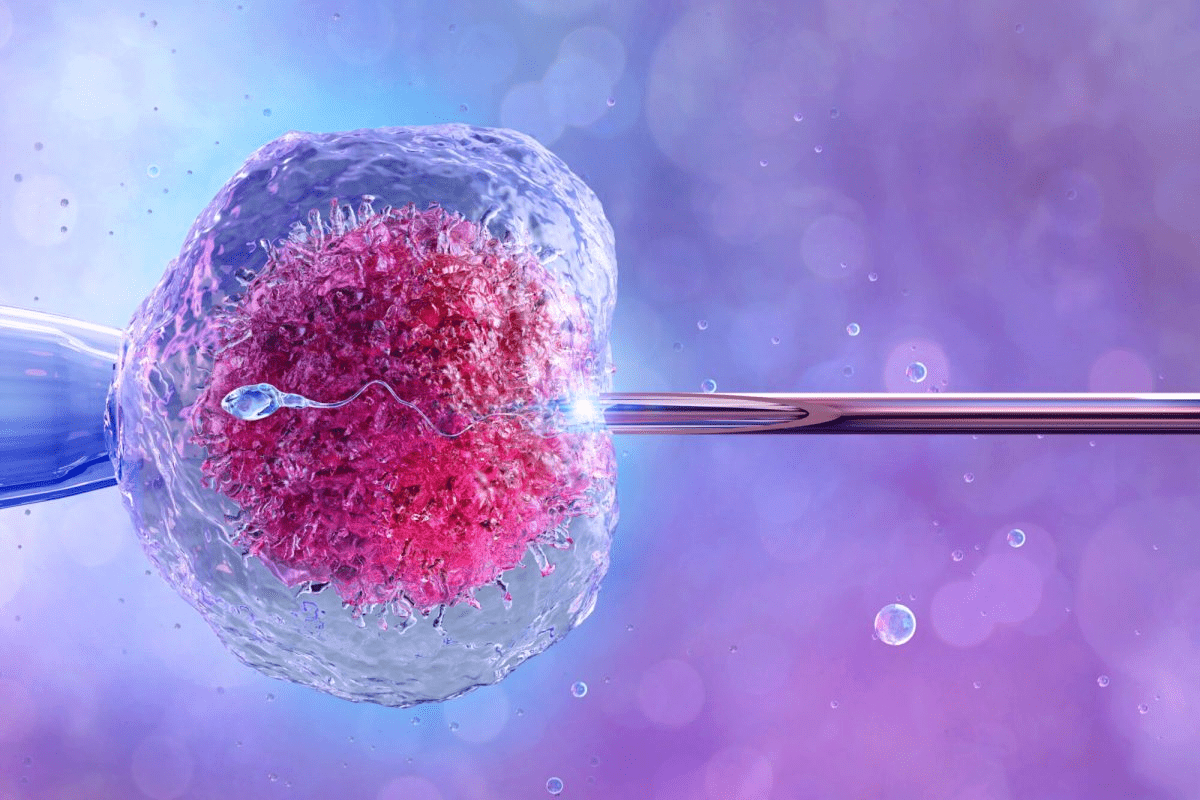
At fertilization, a sperm breaks through the egg’s zona pellucida. This is the end of a long journey for sperm and egg to meet.
Penetrating the Zona Pellucida
The zona pellucida is a protective layer around the egg. It only lets sperm with the right shape and speed pass through. For this to happen, the sperm must go through capacitation, a change that lets it bind to the zona pellucida and break it down.
After breaking through, the sperm merges with the egg’s membrane. Its genetic material then enters the egg.
The Block to Polyspermy: Nature’s One-Sperm Rule
The egg has a way to stop more than one sperm from getting in. This is called the block to polyspermy. When the first sperm gets in, the egg changes its zona pellucida. This makes it hard for other sperm to get in.
This rule makes sure only one sperm fertilizes the egg. This keeps the zygote with the right number of chromosomes.
Completion of the Genetic Blueprint
When fertilization is successful, the sperm and egg’s genetic material mix. This creates a zygote with a full genome. This is when a new life starts, with all the genes needed for growth.
This is a key moment. It decides what traits and characteristics the offspring will have.
How Long Does It Take From Fertilisation to Implantation
Understanding the journey from fertilization to implantation is key to knowing the early stages of pregnancy. After fertilization, the embryo starts a complex journey. It goes through many stages of cell division and development as it moves to the uterus.
Early Cell Division After Fertilization
Right after fertilization, the zygote starts dividing into cells, a process called cleavage. This happens as it travels through the fallopian tube. This stage is very important for the embryo’s growth.
By the time it reaches the uterus, the embryo has turned into a blastocyst. It has an inner cell mass that will become the fetus and an outer layer for the placenta.
The Embryo’s Journey to the Uterus
The embryo’s trip from the fallopian tube to the uterus takes about 3-4 days. During this time, it goes through big changes, getting ready for implantation.
The uterine environment is key for implantation. The lining (endometrium) gets thicker, ready to welcome the embryo.
The Implantation Window and Process
Implantation happens 6-10 days after fertilization. The blastocyst sticks to the uterine lining. A complex process involving the embryo and the uterine tissue embeds it.
Successful implantation is vital for a healthy pregnancy. It lets the mother and the embryo exchange nutrients and waste.
Stage | Time Frame | Description |
Fertilization | Day 1 | Sperm fertilizes the egg in the fallopian tube. |
Cleavage | Days 2-3 | The zygote undergoes several cell divisions. |
Blastocyst Formation | Days 4-5 | The embryo develops into a blastocyst. |
Implantation | Days 6-10 | The blastocyst implants in the uterine lining. |
Factors That Can Speed Up or Delay Fertilization
Knowing what affects fertilization timing is key for those trying to conceive. Many things can change how well and when fertilization happens. These include age, health, hormones, and what we’re exposed to.
Age and Reproductive Health Influences
Age is a big deal for fertility. As we get older, our reproductive cells get worse. Women’s fertility drops sharply after 35. Men’s fertility also goes down, but it’s harder to predict.
- Female Age: Eggs get less quality with age, making it harder to get pregnant.
- Male Age: Men keep making sperm, but older age can make them less healthy.
Hormonal Factors That Affect Timing
Hormones are very important for getting pregnant. If hormones are off, it can mess up ovulation and sperm making.
- Hormonal Regulation: Problems like PCOS can stop ovulation.
- Thyroid Function: Too little or too much thyroid hormone can hurt fertility.
Environmental and Lifestyle Impacts
Our choices and what we’re exposed to can really affect getting pregnant.
- Smoking and Alcohol: Both can hurt sperm and ovulation.
- Nutritional Factors: Eating well helps keep reproductive health strong.
- Stress: Too much stress can mess with hormones and fertility.
How to Help Sperm Reach the Egg: Improving Fertilization Chances
Couples can try several ways to boost their chances of getting pregnant. Knowing how to time things right and keeping healthy habits is key. It’s important to understand what affects sperm health and how they move.
Optimal Timing of Intercourse for Conception
Timing is everything when it comes to getting pregnant. The best time is usually five days before ovulation and the day of ovulation. Knowing when you ovulate can really help.
To time things right, couples can:
- Use basal body temperature or ovulation predictor kits to track ovulation.
- Have regular, unprotected sex during the fertile window.
- Remember, sperm can live inside the woman’s body for up to five days.
Lifestyle Changes to Support Sperm Health and Motility
Living a healthy lifestyle is key for sperm health. Some changes can really help improve sperm quality and fertility.
Lifestyle Factor | Impact on Sperm Health | Recommended Change |
Diet | A diet rich in antioxidants can improve sperm quality. | Eat foods high in vitamins C and E, zinc, and selenium. |
Exercise | Regular exercise can enhance sperm motility. | Do at least 30 minutes of brisk walking a day. |
Smoking and Alcohol | Smoking and too much alcohol can harm sperm. | Stop smoking and drink less to help sperm health. |
Experts say,
“A healthy lifestyle is the base for better sperm health and fertility. Simple changes can make a big difference.”
When to Consider Medical Assistance
Not all couples get pregnant on their own. If you’ve been trying for over a year, it might be time to see a doctor.
Medical help includes:
- Fertility tests to find any issues.
- Treatments like intrauterine insemination (IUI) or in vitro fertilization (IVF).
- Talking to a fertility specialist for advice.
By understanding how fertilization works and taking action, couples can increase their chances of getting pregnant. Whether it’s timing sex right, living healthy, or getting medical help, there are many ways to help fertilization succeed.
Conclusion
Understanding how fertilization works is key for those trying to have a baby. We’ve looked at how sperm meet an egg, covering the biology and lifestyle impacts. This journey is complex but knowing about it helps a lot.
Fertilization is a tightly controlled process. Learning about it can give us insights into how our bodies work and how to stay fertile. This knowledge helps us make better choices for our reproductive health.
The path of sperm to egg is shaped by many things. This includes the health of the sperm, when ovulation happens, and overall reproductive health. By focusing on these areas, we can improve our chances of fertilization.
In the end, knowing about fertilization and reproductive health gives us power over our fertility. By using this knowledge, we can aim for a healthy pregnancy and support our reproductive health.
FAQ
How long does it take for sperm to fertilize an egg?
It usually takes about 24 hours after ovulation for sperm to fertilize an egg. Sperm can stay alive inside the female body for up to 5 days. This means they can fertilize the egg even if intercourse happens before ovulation.
How long does sperm take to reach the egg?
Sperm can reach the egg in as little as 30 minutes. But, on average, it takes 6-12 hours. The journey is affected by how well the sperm move and the conditions in the female body.
How many sperm make it to the egg?
Millions of sperm are released during ejaculation. But, only a few hundred make it to the fallopian tubes. And only one sperm actually fertilizes the egg.
How long does it take for sperm to fertilize an egg after intercourse?
Fertilization can happen within a few hours to a day after sex. This depends on when ovulation happens and the quality of the sperm.
How long does implantation take after fertilization?
Implantation usually happens 6-10 days after fertilization. The embryo travels from the fallopian tube to the uterus during this time.
What factors influence the time it takes for sperm to fertilize an egg?
Several things can affect how long it takes for sperm to fertilize an egg. These include how well the sperm move, the quality of cervical mucus, and when sex happens relative to ovulation.
How can I improve my chances of fertilization?
To increase your chances of fertilization, time sex during the fertile window. Also, live a healthy lifestyle and know when to seek medical help.
How long do sperm live inside the female body?
Healthy sperm can survive for 3-5 days inside the female body. This gives them time to wait for ovulation and fertilize the egg.
What is capacitation, and how long does it take?
Capacitation is a process that prepares sperm to penetrate the egg’s outer layer. It takes several hours. This step is key for fertilization to happen.
How can I support sperm health and motility?
To support sperm health and motility, live a healthy lifestyle. Eat a balanced diet, exercise regularly, and avoid harmful environmental toxins.
References
National Center for Biotechnology Information. Evidence-Based Medical Guidance. Retrieved from https://pmc.ncbi.nlm.nih.gov/articles/PMC2846064/