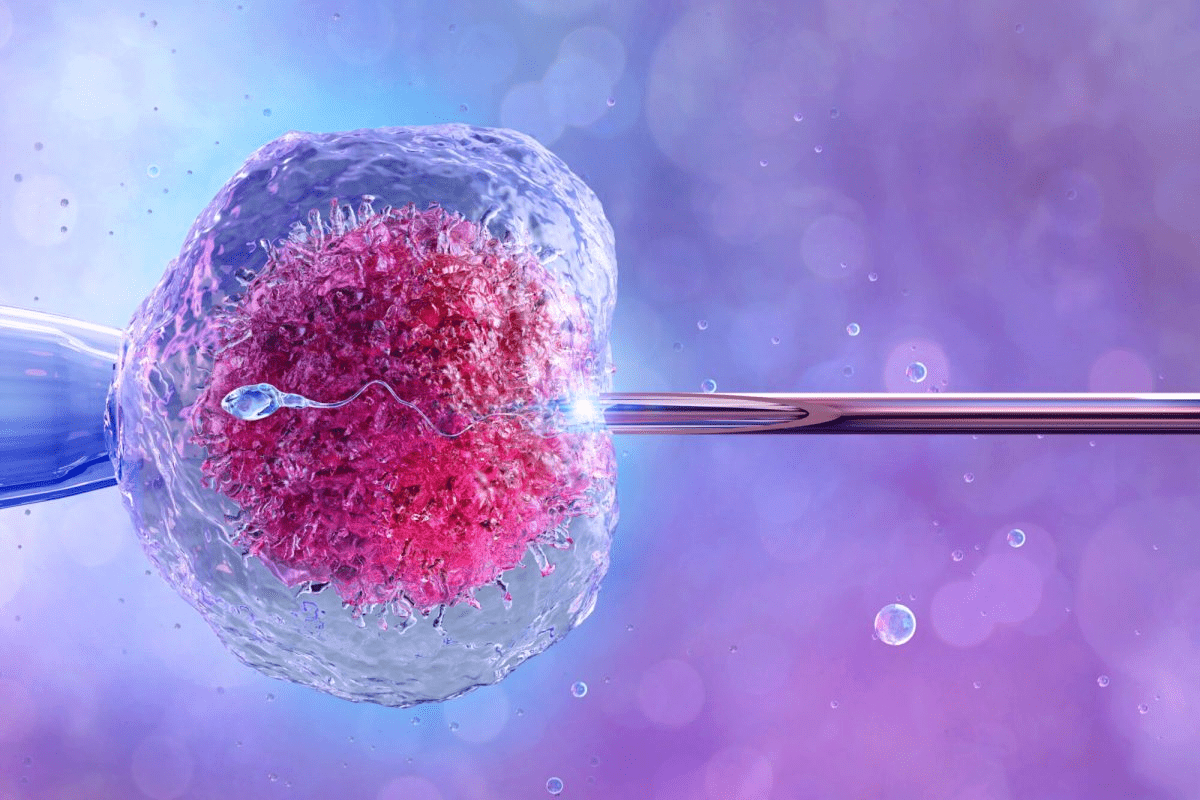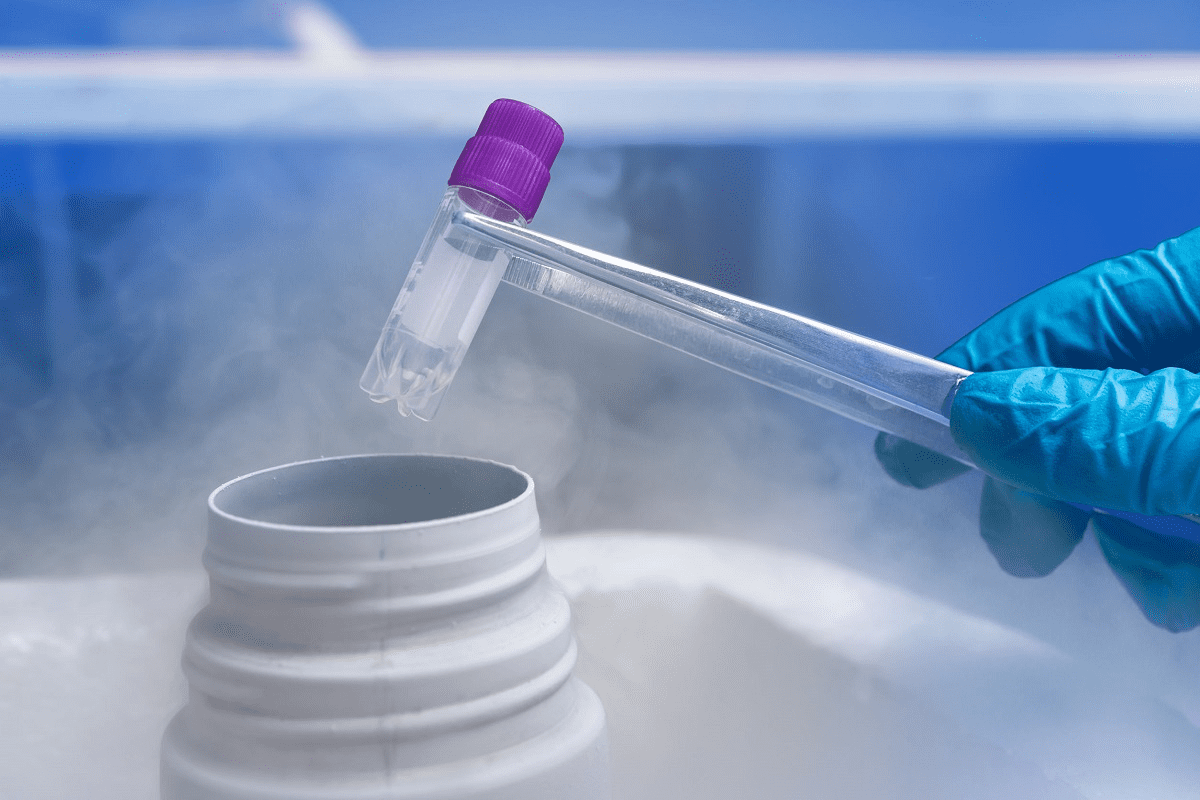
Explaining the process and how long does it take to thaw an embryo using vitrification protocols. When thinking about frozen embryo transfer (FET), knowing about embryo thawing is key. The first thawing step is fast, taking about 15 minutes. But the whole process, from taking the embryo out of the freezer to checking if it’s good, takes about 1 to 2 hours.
The embryo thawing process is called devitrification. It quickly warms up vitrified embryos to get them working again. This step is very important for FET success.
At our place, we focus on being clear and supportive during FET. Knowing what happens during embryo thawing helps patients make better choices about their fertility treatment.
Key Takeaways
- The embryo thawing process takes approximately 15 minutes.
- The total procedure from removal to assessment takes 1 to 2 hours.
- Devitrification is used to rapidly warm vitrified embryos.
- FET success rates are comparable to fresh embryo transfer cycles.
- Understanding the thawing process helps patients make informed decisions.
What Is Frozen Embryo Transfer (FET)?
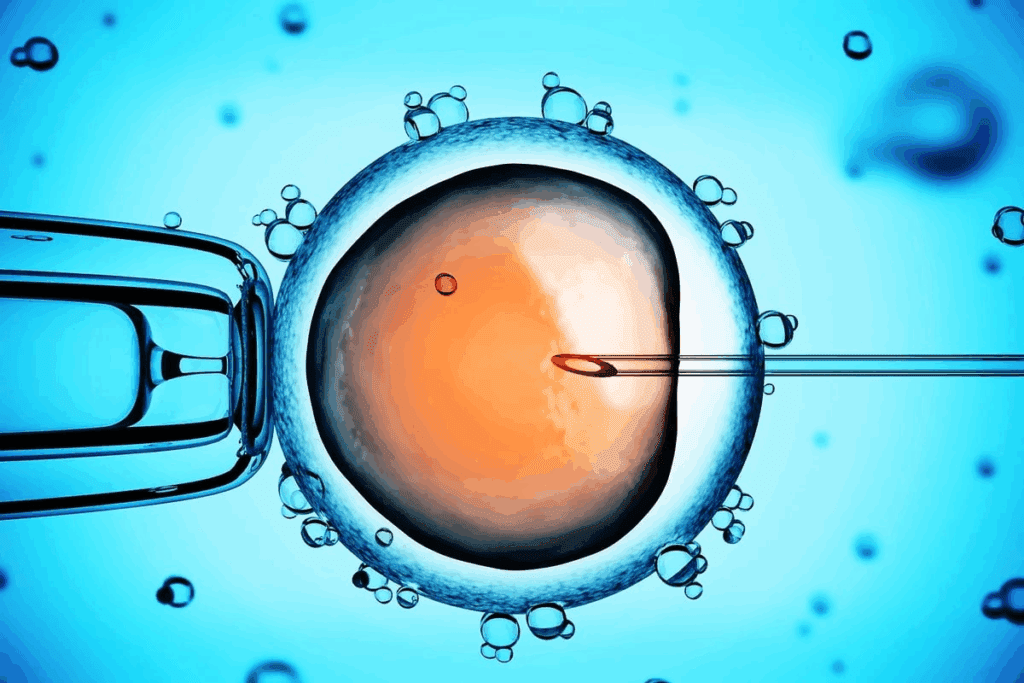
Frozen Embryo Transfer, or FET, has changed how we approach fertility treatments. It involves thawing and transferring frozen embryos into a woman’s uterus to start a pregnancy. This method is key in assisted reproductive technology, helping many people conceive.
Definition and Basic Process
FET starts with thawing embryos that were frozen earlier. These embryos are then put into the woman’s uterus when it’s most ready. This increases the chances of the embryo sticking and starting a pregnancy.
It’s often used in IVF cycles. It’s great for those with extra embryos or who need genetic tests before transferring. Freezing embryos lets you choose the best time for the transfer, boosting success rates.
When FET Is Recommended
FET is suggested in many cases. It’s perfect for those who’ve had IVF before and have frozen embryos. It’s also good when genetic tests are needed, as these take time.
It’s also good for women at risk of OHSS during IVF. Freezing embryos and transferring them later reduces this risk. Plus, it lets the transfer match up with the natural cycle, which can help the embryo stick.
Advantages Over Fresh Embryo Transfer
FET has many benefits over fresh transfers. One big plus is the chance to test embryos for genetic issues before transferring. This can lead to a healthier pregnancy and fewer miscarriages.
Another plus is that it lets the uterus recover from IVF hormones. This can make implantation more likely. FET also gives more flexibility in when the transfer happens, fitting better with personal schedules.
The Science Behind Embryo Freezing
]
Embryo freezing is based on cryobiology and precise lab work. It’s a key part of assisted reproductive technology (ART). This has changed how we treat fertility issues.
How Is an Embryo Frozen?
Freezing an embryo starts with getting them ready. We check each embryo to see if it’s good for freezing. We use cryoprotectant solutions to stop ice crystals from harming the embryo’s cells.
Then, we use vitrification to cool the embryos quickly. This method has made freezing embryos more successful. Vitrification turns the embryo into a glassy state, avoiding ice crystals.
Cryoprotectant Solutions and Their Role
Cryoprotectant solutions are vital in freezing embryos. They contain chemicals that protect embryos from ice damage. These solutions dehydrate cells and replace water with a protective agent, stopping ice crystals.
We pick cryoprotectant solutions carefully. They must be safe and effective for preserving embryos. The right choice is key for successful freezing and thawing.
Storage in Liquid Nitrogen at -196°C
After freezing, embryos are stored in liquid nitrogen at -196°C. This cold temperature stops all activity, keeping embryos safe for a long time.
Storing embryos in liquid nitrogen is a controlled process. We keep them in cryogenic tanks that keep the temperature low. These tanks have systems to check the temperature, protecting the embryos.
Freezing Techniques: Vitrification vs. Slow Freezing
Vitrification and slow freezing are two ways to freeze embryos. Each has its own benefits and drawbacks. The choice between them can greatly affect the success of frozen embryo transfers.
Modern Vitrification Process
Vitrification is a fast freezing method that’s better than slow freezing. It uses special solutions to stop ice crystals from forming. This way, embryos are frozen quickly, in just minutes, to keep them safe.
Key benefits of vitrification include:
- Higher survival rates of embryos post-thawing
- Reduced risk of ice crystal damage
- Faster freezing process
Traditional Slow Freezing Methods
Slow freezing cools embryos slowly over 1-2 hours. It tries to avoid ice crystals but might not work as well as vitrification.
Characteristics of slow freezing include:
- Gradual cooling process
- Lower concentration of cryoprotectants
- Longer duration of the freezing process
Impact on Embryo Survival Rates
Research shows vitrification is better at keeping embryos alive. Its fast freezing reduces ice crystal damage, leading to higher survival rates.
| Freezing Technique | Survival Rate | Key Characteristics |
|---|---|---|
| Vitrification | 95% | Rapid cooling, high cryoprotectant concentration |
| Slow Freezing | 80-90% | Gradual cooling, lower cryoprotectant concentration |
In conclusion, vitrification is now the top choice for freezing embryos. It offers better survival rates than slow freezing. Knowing the differences between these methods is key for making the right choice in fertility preservation.
How Long Does It Take to Thaw an Embryo? The Complete Timeline
Embryo thawing is a detailed process. Its time can change based on the clinic’s methods and how many embryos are thawed. Knowing the thawing timeline is key for those planning Frozen Embryo Transfer (FET).
The 15-Minute Core Thawing Process
The embryo thawing itself is quite fast, taking about 15 minutes. This quick thaw is thanks to new vitrification methods. These methods have greatly improved cryopreservation.
1-2 Hour Complete Procedure Time
While thawing itself is quick, the whole process takes about 1 to 2 hours. This time includes getting ready and checking the thawed embryos. It ensures they are ready for transfer.
Factors That May Affect Thawing Duration
Several things can change how long thawing takes. These include:
- The number of embryos being thawed
- The specific protocols used by the fertility clinic
- The experience of the laboratory staff
To show how these factors can affect thawing time, look at this table:
| Factor | Potential Impact on Thawing Time |
|---|---|
| Number of Embryos | More embryos may require slightly longer thawing times |
| Clinic Protocols | Different clinics may have varying procedures affecting overall duration |
| Laboratory Experience | More experienced staff can potentially expedite the process |
In summary, while thawing itself is fast, the whole process can take a couple of hours. Knowing these times and factors helps people prepare better for their FET cycles.
The Embryo Thawing Process Explained Step by Step
Thawing embryos for Frozen Embryo Transfer (FET) is a detailed process. It involves several important steps. These steps are designed to protect the embryos and increase their chances of success.
Removal from Cryogenic Storage
The first step is carefully taking embryos out of cryogenic storage. They are kept in liquid nitrogen at -196°C. This step needs precision to avoid harming the embryos.
Gradual Warming Protocols
After being taken out, embryos are warmed up slowly. This step is key to prevent damage from ice crystals.
Key aspects of gradual warming include:
- Controlled rate of warming
- Use of specialized equipment
- Monitoring to prevent thermal shock
Rehydration and Cryoprotectant Removal
After warming, embryos are rehydrated and cryoprotectants are removed. Cryoprotectants help prevent ice crystals but can be harmful if not removed correctly.
The rehydration process involves:
- Gradual dilution of cryoprotectants
- Rehydration solutions to restore the embryo’s natural osmotic balance
- Careful monitoring to ensure the embryo’s health
Assessment of Post-Thaw Viability
The last step is checking if the thawed embryos are viable. This is key to decide which embryos are healthy enough for transfer.
Factors considered during assessment include:
- Embryo morphology
- Cell survival rate
- Overall embryo health
By following these steps, we ensure embryos are thawed safely. This increases their chances of survival and successful implantation during the FET cycle.
Embryo Survival After Thawing
The thawing of embryos is a delicate process. Knowing about embryo survival rates is key for those going through Frozen Embryo Transfer (FET).
Using vitrification, a modern freezing method, greatly increases the chances of embryo survival during thawing.
95% Survival Rate with Vitrification
Embryos frozen with vitrification usually survive at a rate of about 95%. This is because vitrification cools them quickly. This quick cooling stops ice crystals from forming, which can harm the embryo.
Vitrification’s high survival rate makes it a top choice for many fertility clinics.
The 50% Cell Survival Threshold
Even with vitrification’s high success rate, not all embryo cells survive thawing.
For an embryo to be considered viable, at least 50% of its cells must survive thawing. This 50% cell survival threshold is a key factor in deciding if an embryo can be transferred.
How Clinics Evaluate Thawed Embryo Quality
After thawing, thawed embryo quality is checked in several ways. This includes the percentage of cells that survive and the embryo’s overall shape and health.
We look at the embryo’s developmental stage, cell integrity, and other features to see if it’s ready for transfer.
Preparing for Your FET Cycle
Getting ready for a FET cycle involves many steps. It’s important to plan carefully to get the best results. We’ll walk you through each step to help you prepare for a successful Frozen Embryo Transfer.
Endometrial Preparation Before Thawing
Preparing the endometrium is key for FET success. Hormonal treatments make the uterine lining ready for the embryo. We start with a baseline ultrasound to check the endometrium’s state.
We use estrogen and progesterone to match the endometrium with the embryo’s stage. Ultrasounds and blood tests help us adjust the hormones. This ensures the endometrium is thick and receptive.
Timing Considerations for Optimal Transfer
Timing is everything in FET cycles. We aim to thaw the embryo when the endometrium is most ready. This is done through careful planning and cycle monitoring.
The goal is to transfer the embryo 5-7 days after starting progesterone. This matches the natural implantation window, boosting success chances.
Pre-Transfer Testing and Monitoring
Before the transfer, we run tests to ensure the uterine environment is perfect. Ultrasounds check the endometrium’s thickness and shape. Blood tests monitor hormone levels.
| Test | Purpose | Frequency |
|---|---|---|
| Ultrasound | Assess endometrial thickness and morphology | Every 2-3 days |
| Blood tests | Monitor hormone levels (estrogen, progesterone) | As needed based on hormonal regimen |
| Endometrial biopsy | Assess endometrial receptivity | Optional, based on individual case |
By preparing the endometrium, timing the transfer right, and doing pre-transfer tests, we boost FET success. Our goal is to support and inform you every step of the way.
The Embryo Transfer Appointment
The embryo transfer appointment is a key moment in the FET process. It’s the end of a lot of planning and preparation. Here, the thawed embryo is placed in the uterine cavity. This step needs a lot of skill and care.
What Happens During the 20-30 Minute Procedure
The embryo transfer takes about 20-30 minutes. Our team uses a catheter to put the embryo in the uterine cavity. They use ultrasound for guidance. This process is usually painless and doesn’t need anesthesia.
Key Steps During the Procedure:
- Preparation of the cervix and uterine cavity
- Insertion of the catheter containing the embryo
- Ultrasound-guided placement of the embryo
- Confirmation of the embryo’s position
The Actual Transfer Process
The transfer process is very delicate. Our skilled practitioners use ultrasound to place the embryo exactly right. This helps the embryo implant better and reduces risks.
Post-Transfer Instructions
After the transfer, we give patients special instructions. These help them during the wait before the pregnancy test. We tell them about rest, medication, and when to come back for more checks.
| Post-Transfer Instructions | Purpose |
|---|---|
| Rest and relaxation | To minimize stress and support implantation |
| Progesterone supplementation | To support the luteal phase and embryonic development |
| Follow-up appointments | To monitor progress and address any concerns |
By following these instructions, patients can increase their chances of success. Our team is here to help with any questions and support during this time.
How Clinics Decide Which Embryos to Thaw
Choosing which embryos to thaw is a detailed process. It looks at the quality and health of the frozen embryos. This step is key to the success of the Frozen Embryo Transfer (FET) cycle.
Selection Criteria for Thawing
We look at several important factors when picking embryos for thawing. These include the embryo’s quality, health, and the patient’s medical history. The embryo selection criteria aim to find the best embryos for implantation and pregnancy.
We examine the embryo’s development stage, shape, and genetic health. We use advanced tools like time-lapse imaging and genetic testing. These help us understand the embryo’s quality and spot any problems.
| Criteria | Description | Importance |
|---|---|---|
| Developmental Stage | The stage of embryo development, typically assessed on Day 3 or Day 5. | High |
| Morphology | The shape and structure of the embryo, including the number of cells and their arrangement. | High |
| Genetic Integrity | The presence or absence of genetic abnormalities, often assessed through genetic testing. | Critical |
Single vs. Multiple Embryo Thawing
Deciding to thaw one or more embryos depends on several factors. These include the patient’s age, embryo quality, and past IVF results. Single vs. multiple embryo thawing strategies vary based on each case. They aim to balance the chance of a successful pregnancy with the risks of having twins or more.
We talk to our patients about the risks and benefits. Then, we create a plan that fits their reproductive goals and medical needs.
Contingency Planning for Non-Viable Embryos
Even with careful selection, some thawed embryos may not be viable. In such cases, we have contingency planning for FET. This might include looking at other frozen embryos or exploring other options with the patient.
Our goal is to offer full care and support during the FET cycle. We aim to ensure the best outcome for our patients.
Success Rates and Outcomes of FET with Thawed Embryos
Knowing the success rates of FET is key for making good choices in fertility treatment. The success of Frozen Embryo Transfer (FET) with thawed embryos depends on many things. These include the quality of the embryos, how ready the uterus is, and how well the transfer is done.
Statistical Success Rates
Research shows FET success rates are often as good as, or even better than, fresh embryo transfers. The success of FET depends on several important factors. These include the woman’s age when the embryos were frozen, the quality of the embryos, and the thawing and transfer methods used.
Key statistics on FET success rates include:
- Embryos survive thawing very well, often over 95% with modern methods.
- Clinical pregnancy rates per FET cycle are between 40% to 60%, based on the population and treatment.
- Live birth rates per FET cycle are also high, often between 30% to 50%.
Factors Affecting FET Success
Several factors can affect FET success. These include:
- Embryo Quality: The quality of the embryos at freezing time greatly affects FET success. High-quality embryos with minimal damage during freezing and thawing have better success rates.
- Uterine Receptivity: How ready the uterus is for implantation is very important. Things like uterine thickness, hormonal balance, and the absence of uterine problems play a big role.
- Precision of Transfer: The skill in the embryo transfer process, including where the embryo is placed, can greatly affect success rates.
Fertility experts say, “The key to successful FET is choosing the right embryos and matching them with the uterine environment.” (
This matching is key for the best chance of a successful pregnancy.
)
Comparing Outcomes with Fresh Transfers
Studies show FET can have similar or even better success rates than fresh embryo transfers. FET has several advantages. These include:
- Less risk of ovarian hyperstimulation syndrome (OHSS).
- Improved uterine receptivity due to avoiding high estrogen levels from fresh cycles.
- More flexibility in scheduling the transfer, making planning easier.
In conclusion, FET with thawed embryos is a very effective fertility treatment option. Success rates are influenced by many factors. By understanding these factors and improving the FET process, people can increase their chances of success.
Common Questions About Thawed Embryos
When patients go through Frozen Embryo Transfer (FET), they often have questions about thawed embryos. The thawing and handling of embryos are key parts of fertility treatment. Knowing about these steps can help ease worries and set realistic hopes.
How Long Can a Thawed Embryo Survive Before Transfer?
Thawed embryos are usually transferred right after thawing. This is because they are most likely to work well right then. How long a thawed embryo can live outside cold storage depends on its quality and the clinic’s methods. Usually, embryos are transferred within a few hours after thawing, which boosts their implantation chances.
Can Thawed Embryos Be Refrozen?
Whether thawed embryos can be refrozen depends on several things. These include the embryo’s initial quality, its state after thawing, and the clinic’s rules. While refreezing is possible, it’s not often done because of the risks and lower success rates. Our clinic looks at each embryo’s situation to decide the best move, aiming for a successful pregnancy.
What Does a Frozen and Thawed Embryo Look Like?
A thawed embryo looks different from a frozen one. After thawing, embryos are checked for how well they might work. A good thawed embryo looks healthy, with clear cells and little damage. The look can change based on when the embryo was frozen and thawed. Our team carefully checks each thawed embryo to see if it’s good for transfer.
It’s important for patients to know about thawed embryos during FET. By answering these common questions, we aim to clear up any confusion and give reassurance during the fertility journey.
Conclusion
Frozen Embryo Transfer (FET) shows how far reproductive technology has come. It’s a success story thanks to the hard work of fertility experts. This complex process needs careful planning, precise techniques, and support for the patient.
Every step, from freezing to transfer, is key for a successful pregnancy. Knowing about the FET process helps patients on their fertility journey. They can make better choices with the help of their healthcare team.
Our look at the FET process shows it’s a good way to become parents. Understanding the steps and what affects success helps people make smart choices about fertility treatments.
FAQ
What is Frozen Embryo Transfer (FET)?
Frozen Embryo Transfer (FET) is a method in assisted reproductive technology. It involves thawing embryos that were frozen before. Then, they are transferred into the uterus.
How long does it take to thaw an embryo?
Thawing an embryo takes about 15 minutes. But, the whole process from thawing to checking if it’s viable takes 1 to 2 hours.
How is an embryo frozen?
Embryos are frozen using vitrification. This is a quick cooling method. It uses cryoprotectant solutions to prevent ice crystals. Then, they are stored in liquid nitrogen at -196°C.
What is the difference between vitrification and slow freezing?
Vitrification is quick and helps embryos survive better. Slow freezing is older and can damage embryos more.
How long can a thawed embryo survive before transfer?
How long a thawed embryo can survive varies. But, it’s usually transferred soon after thawing for the best chance of success.
Can thawed embryos be refrozen?
Thawed embryos are usually not refrozen. They are either transferred or cultured for a few days. Then, a decision is made about their viability or if they can be frozen again.
What does a frozen and thawed embryo look like?
After thawing, embryos are checked for viability. Their appearance can vary. They are evaluated based on cell survival and overall shape.
What is the survival rate of embryos after thawing?
About 95% of embryos survive thawing with vitrification. Many have more than 50% of their cells intact.
How are thawed embryos evaluated for quality?
Clinics check thawed embryos based on cell survival and shape. This helps determine their quality.
What factors affect the success of FET?
FET success depends on embryo quality, uterine lining receptivity, and transfer procedure details.
How is the uterine lining prepared for FET?
For FET, hormonal treatments prepare the uterine lining. This ensures it’s ready for the embryo.
What happens during the embryo transfer appointment?
The transfer involves inserting a catheter through the cervix. It’s guided by ultrasound. The embryo is placed in the uterine cavity, taking 20-30 minutes.
References
National Center for Biotechnology Information. Evidence-Based Medical Guidance. Retrieved from https://www.ncbi.nlm.nih.gov/pmc/articles/PMC5575248/