Last Updated on November 27, 2025 by Bilal Hasdemir
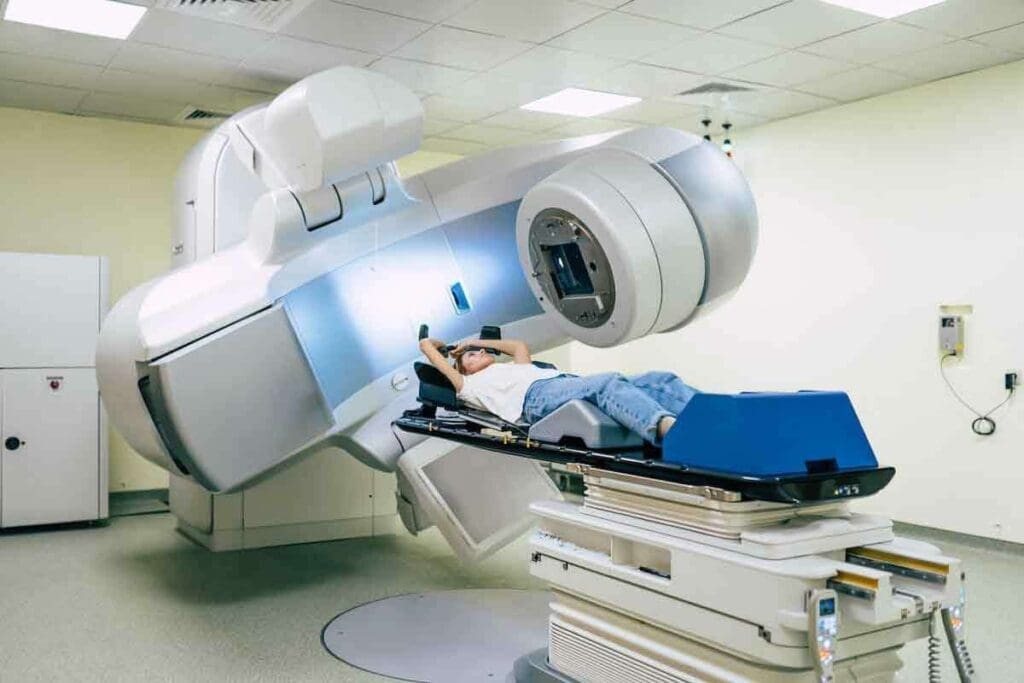
Knowing how long and how often radiation therapy happens is key for cancer patients. External-beam radiation therapy (EBRT) sends high-energy beams to tumors.
External radiation therapy is done outside the hospital, every weekday. It lasts 5 to 8 weeks. The weekends off help normal cells heal, making the treatment better. Many patients ask, how long does radiation therapy take, as the duration can vary based on the treatment plan.
Key Takeaways
- Radiation therapy is usually administered daily, five days a week.
- Treatment duration typically ranges from 5 to 8 weeks.
- External-beam radiation therapy is a painless procedure.
- Weekend breaks help normal cells recover.
- Treatment is often conducted on an outpatient basis.
Understanding Radiation Therapy as a Cancer Treatment

Radiation therapy is a key part of cancer treatment. It uses high-energy beams to kill tumor cells. This method aims to hit cancer areas hard but keep healthy tissues safe.
This treatment is good at targeting fast-growing cancer cells. It messes up their DNA, stopping them from growing and dying off.
The Science Behind Radiation Therapy
Radiation therapy uses high-energy waves like X-rays to kill cancer cells. It works because cancer cells are more sensitive to radiation. This lets doctors selectively target tumors without harming healthy tissue.
- High-energy radiation beams are used to target cancer cells.
- The treatment aims to minimize exposure to surrounding healthy tissues.
- Radiation damages the DNA of cancer cells, preventing them from dividing.
Types of Radiation Therapy Available
There are two main types of radiation therapy. External beam radiation therapy (EBRT) uses a machine outside the body. Internal radiation therapy puts radioactive material inside or near the tumor.
- External Beam Radiation Therapy (EBRT): This is the most common type, where the radiation source is outside the body.
- Internal Radiation Therapy: Also known as brachytherapy, this involves placing a radioactive source inside the body near the tumor.
Knowing about these types helps patients make better choices. The right choice depends on the cancer type and stage, among other things.
External-Beam Radiation Therapy (EBRT): The Most Common Approach

External-Beam Radiation Therapy is a common cancer treatment. It uses precise radiation beams to target tumors. This method sends high-energy rays from outside the body to kill cancer cells.
How EBRT Works
EBRT directs beams of radiation from a machine outside the body. These beams target and kill cancer cells. The radiation damages the DNA of cancer cells, stopping them from dividing and growing.
Types of Beams Used in EBRT:
- Photon Beams: The most common type, often referred to as x-ray beams.
- Particle Beams: Less commonly used, these include proton and neutron beams.
- Electron Beams: Used for specific cases, like tumors close to the surface.
Modern EBRT Technologies
Technology has greatly improved EBRT. Modern machines and techniques allow for more precise targeting. This reduces damage to healthy tissues nearby.
Key Technologies:
| Technology | Description | Benefits |
|---|---|---|
| Linear Accelerators | Machines that generate high-energy radiation beams. | Precise beam delivery, adjustable energy levels. |
| Intensity-Modulated Radiation Therapy (IMRT) | A technique that modulates the intensity of radiation beams. | High precision, reduced side effects. |
| Image-Guided Radiation Therapy (IGRT) | Uses imaging to guide the delivery of radiation. | Enhanced accuracy, real-time adjustments. |
The Treatment Planning Process
The treatment planning process is key in radiation therapy. It decides if the treatment will work. It involves steps to make the treatment fit the patient’s needs.
Initial Consultation and Assessment
The first step is an initial consultation. Here, the patient’s health and cancer details are checked. It’s important to know how far the disease has spread and the patient’s medical history.
The radiation oncologist talks about the treatment’s goals, possible side effects, and what to expect. Patients can also ask questions and learn about the process.
Simulation and Mapping
The next step is simulation and mapping. Imaging like CT scans is used to find the tumor’s location and size. This info is key for a precise treatment plan.
During simulation, the patient lies on a table. Immobilization devices help keep them in the same spot for each treatment. The imaging data helps map the treatment area.
Treatment Plan Development
With the simulation data, the team creates a treatment plan. This plan shows the radiation dose, how many sessions, and how often. The aim is to hit the tumor hard while protecting healthy tissues.
The plan is made just for the patient. It considers the cancer type, stage, and overall health. The process can take days to weeks, depending on the case.
A team of healthcare pros, like radiation oncologists and therapists, care for the patient. They work together to plan the treatment.
The Standard Timeline: How Long Does Radiation Therapy Take
Many people wonder how long radiation therapy lasts. The time it takes can change a lot. This depends on the cancer type, stage, and treatment goals.
Typical Treatment Duration
Most people get radiation therapy for 5 to 8 weeks. This is a common time frame. But, the actual time can be shorter or longer for each person.
Some patients might get a shorter treatment, called hypofractionated radiation therapy. This gives higher doses over a shorter time.
The exact number of treatments depends on the cancer type, location, and goals. For example, some cancers like breast or prostate might need a shorter treatment. But, more complex or advanced cancers might need longer.
Factors That Influence Treatment Length
Several things can change how long radiation therapy lasts. These include:
- Type and stage of cancer: The cancer’s type and stage are key. More advanced cancers often need longer treatments.
- Treatment goals: Whether the goal is to cure or just relieve symptoms can affect the length.
- Patient’s overall health: A patient’s health and how well they can handle the therapy also matter.
- Radiation therapy technique: The type of radiation therapy used, like IMRT or proton therapy, can also impact the time.
Knowing these factors can help patients prepare for their radiation therapy. It can also help them understand what to expect in terms of time.
Daily Treatment Sessions: What to Expect
Knowing what to expect during daily radiation therapy can ease anxiety. Patients usually go through treatment once a day, from Monday to Friday. Each session lasts about an hour.
Preparation Before Each Session
Before each radiation therapy session, patients need to:
- Arrive at least 15 minutes early to fill out paperwork or get ready.
- Put on a hospital gown for the treatment.
- Take off jewelry, glasses, or anything that might get in the way.
- Follow any special diet instructions from their healthcare team.
The Actual Radiation Delivery Time
The actual radiation part is quick, lasting just a few minutes. But getting ready and positioned can take 15-45 minutes per session.
Post-Treatment Procedures
After the radiation, patients will:
- Be watched for a bit to see if they have any side effects.
- Get advice on how to care for themselves after treatment and any follow-up appointments.
- Get contact info for their healthcare team in case they have questions or concerns later.
By knowing what to expect, patients can prepare better for radiation therapy. This helps manage their expectations.
How Often Are Radiation Treatments Scheduled?
The frequency of radiation treatments varies based on several factors. These include the type and stage of cancer.
External-beam radiation therapy is given daily, five days a week. This schedule helps deliver a steady dose of radiation. It also gives normal cells time to recover over the weekend.
The Standard Five-Day Schedule
Most people get radiation treatments every weekday for weeks. The five-day schedule is the standard. It aims to be effective while protecting healthy tissues.
Benefits of the Five-Day Schedule:
- Consistent delivery of radiation doses
- Allows normal cells to recover during weekend breaks
- Enhances treatment effectiveness
Exceptions to the Standard Schedule
While the five-day schedule is common, there are exceptions. These depend on the cancer type, the dose needed, and the patient’s health.
Some cases may involve:
- Hypofractionation: Larger doses given less frequently
- Accelerated fractionation: More frequent treatments to shorten overall treatment time
Weekend Breaks and Their Importance
Weekend breaks are key. They allow normal cells to recover from radiation. This recovery is vital for reducing side effects and improving quality of life.
| Day | Treatment Schedule | Notes |
|---|---|---|
| Monday | Radiation Therapy | Initial treatment day |
| Tuesday | Radiation Therapy | |
| Wednesday | Radiation Therapy | Mid-week treatment |
| Thursday | Radiation Therapy | |
| Friday | Radiation Therapy | Last treatment of the week |
| Sat-Sun | No Treatment | Weekend break for recovery |
Knowing the radiation treatment schedule helps patients prepare. It also helps them understand the treatment’s frequency and length.
Variations in Treatment Frequency Based on Cancer Type
The frequency of radiation therapy changes a lot depending on the cancer type. Each cancer is different, affecting how often and long radiation is given. Doctors plan the treatment carefully to fight the cancer well and protect healthy tissues.
Breast Cancer Radiation Schedules
For breast cancer, radiation is used after surgery to kill any left-over cancer cells. The usual schedule is once a day, 5 days a week, for 5-6 weeks. Some might get hypofractionated treatment, which is shorter, lasting 3-4 weeks.
Prostate Cancer Radiation Schedules
Prostate cancer radiation therapy can vary. The usual plan is daily treatments, 5 days a week, for 8-9 weeks. Some might get hypofractionated treatment, which is shorter, lasting 5-6 weeks or even less.
Brain Tumor Radiation Schedules
Radiation for brain tumors depends on the tumor’s type, size, and where it is. Treatments can be short for some tumors or longer for others. The goal is to hit the tumor hard while protecting the brain.
Lung Cancer Radiation Schedules
Lung cancer radiation plans change based on the cancer’s stage and type. Early-stage lung cancer might get stereotactic body radiation therapy (SBRT), which is 3-5 fractions over 1-2 weeks. More advanced cases might need longer treatment, over 6-7 weeks.
Effective radiation therapy depends on customizing the treatment for each patient. This approach helps get the best results while reducing side effects.
- Breast Cancer: Typically 5-6 weeks, with hypofractionation options.
- Prostate Cancer: Conventional fractionation over 8-9 weeks or hypofractionation.
- Brain Tumors: Varies widely based on tumor specifics.
- Lung Cancer: Ranges from SBRT for early-stage to conventional fractionation for advanced stages.
Precision Techniques: Pinpoint Radiation Treatment
Modern radiation therapy uses advanced methods like Intensity-Modulated Radiation Therapy (IMRT), Image-Guided Radiation Therapy (IGRT), and proton therapy. These techniques have changed how we treat cancer. They help doctors target tumors better and protect healthy tissues.
Intensity-Modulated Radiation Therapy (IMRT)
IMRT changes the intensity of the radiation beam. This lets doctors give the right dose to the tumor. It also reduces harm to nearby healthy areas. External radiation therapy often uses IMRT for better results.
Image-Guided Radiation Therapy (IGRT)
IGRT uses images to guide the radiation. This makes sure the radiation hits the tumor right, even if it moves. IGRT makes treatment more accurate and effective.
Proton Therapy and Other Advanced Approaches
Proton therapy uses protons to kill cancer cells. It’s great for tumors near important areas. Other advanced methods include SBRT and SRS. They give high doses to small, precise tumors.
| Treatment Technique | Description | Benefits |
|---|---|---|
| IMRT | Modulates radiation beam intensity | Precise dosing, reduced side effects |
| IGRT | Uses imaging to guide radiation | Enhanced accuracy, improved outcomes |
| Proton Therapy | Uses protons to kill cancer cells | Effective for tumors near critical structures |
Liv Hospital follows the latest in radiation oncology. They use these advanced techniques. This means patients get the best and most precise treatment.
Short-Course vs. Long-Course Radiation Therapy
It’s important for patients to know the difference between short-course and long-course radiation therapy. Treatment plans are made just for each person. The length of therapy can change a lot based on the cancer type, stage, and treatment goals.
Radiation therapy can be split into two types: short-course and long-course treatments. Short-course radiation therapy has fewer sessions and is often used to ease symptoms. On the other hand, long-course radiation therapy aims to get rid of the cancer and is used for curative treatments.
When Short-Course Treatment Is Recommended
Short-course radiation therapy is suggested for certain cases, like when the cancer is advanced and the focus is on easing symptoms. It can help with pain, bleeding, or swallowing problems. For example, someone with cancer that has spread might get a short course of radiation to ease bone pain.
The choice for short-course radiation therapy depends on the patient’s health, how far the cancer has spread, and any previous treatments. It’s good when quick symptom relief is needed.
Benefits and Limitations of Each Approach
Both short-course and long-course radiation therapies have their own ups and downs. Short-course therapy has the advantage of fewer sessions, which can be easier on the patient and might reduce side effects. But, it’s not right for treatments aiming to cure the cancer because it can’t deliver as high a dose of radiation.
- Benefits of Short-Course Therapy:Fewer treatment sessions
- Quick relief from symptoms
- Reduced overall treatment burden
- Limitations of Short-Course Therapy:Not suitable for curative treatments
- May not provide long-term cancer control
Long-course radiation therapy lets doctors give higher doses of radiation, which is key for trying to cure the cancer. This method can lead to better long-term cancer control but needs more sessions, which can increase side effects.
| Therapy Type | Typical Use | Benefits | Limitations |
|---|---|---|---|
| Short-Course | Palliative care | Fewer sessions, quick symptom relief | Not for curative intent |
| Long-Course | Curative treatments | Better long-term cancer control | More treatment sessions, more side effects |
In conclusion, choosing between short-course and long-course radiation therapy depends on the patient’s situation, treatment goals, and health. Knowing the good and bad of each is key to making the right choice for cancer treatment.
How Many Rounds of Radiation Is Normal?
Radiation therapy plans vary for each person, based on their cancer type. The treatment is split into smaller doses called fractions. This makes treatment easier to handle, reducing side effects and improving results.
Defining Treatment “Rounds” vs. “Fractions”
In radiation therapy, “rounds” and “fractions” are used, but they mean different things. A “fraction” is one dose of radiation. The total number of fractions is the treatment course. “Rounds” might mean the whole treatment plan or a series of treatments.
Key differences between “rounds” and “fractions”:
- A fraction is a single radiation treatment session.
- The total number of fractions depends on the cancer type, size, and location.
- “Rounds” informally refers to the treatment regimen, including the number of fractions and duration.
Typical Number of Sessions by Cancer Type
The number of radiation therapy sessions changes with the cancer type. For example:
| Cancer Type | Typical Number of Fractions |
|---|---|
| Breast Cancer | 15-25 fractions |
| Prostate Cancer | 20-40 fractions |
| Brain Tumors | 10-30 fractions |
These are general estimates. The actual number of fractions depends on the treatment plan by the radiation oncologist.
Hypofractionated Schedules: Fewer Treatments, Higher Doses
Hypofractionated radiation therapy gives higher doses in fewer fractions. It’s becoming more common for some cancers. This method shortens treatment time.
“Hypofractionation offers a more convenient schedule. It’s great for patients with mobility issues or those far from treatment centers.”
Here are some examples of hypofractionated schedules:
- Breast cancer: 5-10 fractions
- Prostate cancer: 5-20 fractions
Choosing hypofractionated schedules depends on the tumor’s size, location, and the patient’s health.
Can You Get Radiation Treatment More Than Once?
Radiation therapy is usually a one-time treatment. But, some patients might need more sessions under certain conditions. The choice to have more radiation therapy depends on the cancer type, how well the first treatment worked, and the patient’s health.
Considerations for Repeated Radiation Therapy
More radiation therapy is considered if cancer comes back or if a new cancer appears in a treated area. Whether reirradiation is possible depends on several things. These include the dose and type of first radiation, how long ago it was, and where and how big the cancer is.
Key considerations include:
- The benefits of reirradiation in controlling cancer
- The risks of getting too much radiation
- The patient’s overall health and how well they can handle more treatment
Managing Cumulative Radiation Exposure
When thinking about more radiation therapy, it’s important to think about how much radiation the body can handle. There’s a limit to how much radiation an area can safely get over a lifetime. To keep this in mind, doctors use new techniques to protect healthy tissues.
Reirradiation Techniques and Safety
New techniques for reirradiation have made it safer and more effective. These include advanced imaging and ways to deliver radiation more precisely. This helps target tumors better while protecting normal tissues.
| Reirradiation Technique | Description | Benefits |
|---|---|---|
| Intensity-Modulated Radiation Therapy (IMRT) | Delivers precise radiation doses to tumors | Reduces exposure to surrounding healthy tissues |
| Image-Guided Radiation Therapy (IGRT) | Uses imaging to guide radiation delivery | Enhances accuracy and reduces side effects |
| Proton Therapy | Uses protons instead of X-rays to kill cancer cells | Offers precise control over radiation dose |
Some patients might get more than one round of radiation therapy if it’s medically needed. The decision is made based on the latest research and the patient’s situation.
Conclusion: Preparing for Your Radiation Therapy Journey
Radiation therapy is a common treatment for cancer. Knowing what to expect can help patients prepare. This knowledge can make coping with treatment and its side effects easier.
Radiation therapy can cure, prevent, or ease cancer symptoms. The treatment involves several sessions. The number and length of sessions depend on the cancer type and stage.
Preparation includes understanding the treatment planning and types of radiation therapy. It also means knowing the possible side effects. Patients should talk to their healthcare provider to choose the best treatment.
Being informed and prepared helps patients face their radiation therapy journey confidently. Knowing what to expect can reduce anxiety. This allows patients to focus on their recovery.
FAQ
What is radiation therapy and how does it work?
Radiation therapy is a treatment for cancer. It uses beams like X-rays or protons to kill cancer cells. This stops them from growing and dividing.
How long does radiation therapy typically take?
The time for radiation therapy varies. It depends on the cancer type and stage. It can last from a few days to months.
How often are radiation treatments scheduled?
Treatments are usually given five days a week. This is Monday to Friday, with weekends off. But, the schedule can change based on the treatment plan.
What is external-beam radiation therapy (EBRT)?
EBRT is a common radiation therapy. It uses a machine outside the body to send beams to the tumor.
What are the different types of beams used in EBRT?
EBRT uses beams like X-rays, gamma rays, and protons. These beams target the tumor site.
How is the treatment plan developed for radiation therapy?
The plan starts with a consultation and simulation. Then, it’s mapped and a personalized plan is made.
Can radiation treatment be given more than once?
Yes, treatment can be repeated. It depends on the total radiation dose and the treatment plan.
What is the difference between treatment “rounds” and “fractions”?
“Fractions” are single sessions of radiation therapy. “Rounds” is not a common term. The number of fractions changes based on the cancer and plan.
What are hypofractionated schedules?
Hypofractionated schedules give higher doses in fewer sessions. This is good for some cancers.
How does radiation therapy vary for different types of cancer?
Schedules and doses change for each cancer type. This includes breast, prostate, brain, and lung cancers.
What are precision techniques in radiation therapy?
Techniques like IMRT, IGRT, and proton therapy are precise. They target tumors accurately, reducing harm to nearby tissues.
What is the benefit of short-course radiation therapy?
Short-course therapy is good for some patients. It has fewer sessions, making treatment shorter.
How is cumulative radiation exposure managed?
Exposure is managed by planning and monitoring doses. The patient’s treatment history is also considered.
Reference
- Bhatnagar, A. K., Heron, D. E., Flickinger, J. C., Beriwal, S., & Shrivastava, S. K. (2020). Radiation fractionation schedules in modern radiation oncology: Lessons from evidence-based practice. Frontiers in Oncology, 10, 237. https://pubmed.ncbi.nlm.nih.gov/32231660/