Last Updated on November 18, 2025 by Ugurkan Demir
At Liv Hospital, we know how important clear information is for surgeries. Knee arthroscopy is a small surgery to find and fix knee problems. The time it takes can change based on how complex the case is and the surgery methods used.
Arthroscopic knee surgery usually lasts between 30 to 45 minutes. But, if the surgery is more complicated, it might take up to 2 hours. New medical tools, like the da Vinci robot, help make these surgeries more precise and successful.
We focus on giving high-quality, patient-centered care. We make sure our patients know about their treatment and what to expect during recovery.
Key Takeaways
- Typical duration for knee arthroscopy surgery ranges from 30 to 45 minutes.
- Complex cases can extend the surgery duration up to 2 hours.
- Advanced technology like the da Vinci robot is used in orthopedic procedures.
- Liv Hospital is dedicated to patient-centered care and high-quality treatment.
- Recovery process varies based on the complexity of the surgery and patient health.
Understanding Knee Arthroscopy: A Minimally Invasive Approach
Knee arthroscopy is a less invasive surgery compared to open surgery. It has changed how we treat knee problems. Patients recover faster and have less scarring.
What Is Knee Arthroscopy?
A small camera, called an arthroscope, and special tools are inserted through small cuts in the knee. This lets surgeons see inside the knee on a screen. They can then fix any issues. The surgery is done under local or general anesthesia to keep patients comfortable.
Knee arthroscopy is popular because it treats many knee issues with little harm to the surrounding tissue. This method lowers the risk of problems and helps patients heal faster.
Common Conditions Treated With Arthroscopic Surgery
Knee arthroscopy helps diagnose and treat many knee problems. These include meniscal tears, ligament injuries, and osteoarthritis. It lets surgeons see and treat the knee’s structures, like cartilage and ligaments, accurately.
| Condition | Description | Treatment via Arthroscopy |
|---|---|---|
| Meniscal Tears | Tears in the meniscus, the cartilage between the knee joint’s bones. | Repair or removal of the damaged meniscus. |
| Ligament Injuries | Damage to the ligaments surrounding the knee joint. | Reconstruction or repair of the injured ligament. |
| Osteoarthritis | Wear and tear on the knee joint’s cartilage. | Debridement, or removal of damaged cartilage and bone fragments. |
Arthroscopic surgery helps patients with knee problems a lot. It improves knee function and reduces pain. The surgery’s minimally invasive nature makes it appealing. It leads to less pain after surgery and a quicker recovery.
How Long Is Knee Arthroscopy Surgery? Typical Duration Explained
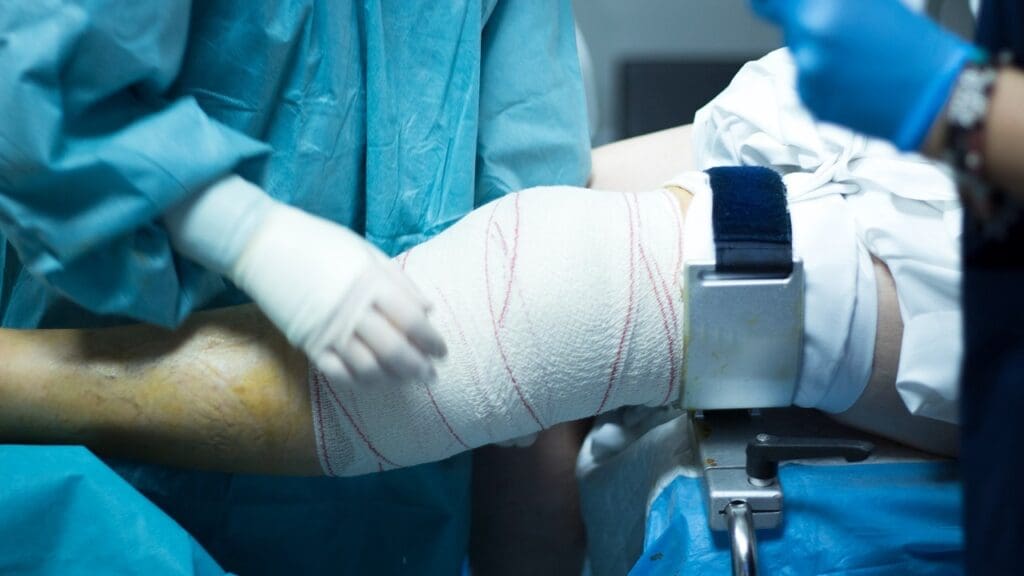
Knowing how long knee arthroscopy surgery takes helps patients get ready. We’ll cover the usual time and what can change it.
Standard Procedure Duration: 30-45 Minutes
The usual time for knee arthroscopy is 30 to 45 minutes. This can change a bit based on the problem and the patient’s body.
Factors That May Extend Surgery Time
Several things can make knee arthroscopy take longer. These include:
- The complexity of the condition being treated
- The need for additional repairs or interventions
- The presence of complicating factors such as scar tissue or inflammation
Our surgical team looks at each case closely to give a better idea of time.
Complex Cases: When Surgery Takes Longer
For some, knee arthroscopy can last longer than 30-45 minutes. This is true for complex cases, like big cartilage damage or ligament work.
| Procedure Type | Typical Duration | Factors Influencing Duration |
|---|---|---|
| Standard Knee Arthroscopy | 30-45 minutes | Simple diagnostic or minor repair |
| Complex Knee Arthroscopy | 45-60 minutes or more | Significant repairs, multiple interventions |
| Ligament Reconstruction | 60-90 minutes | Complexity of the reconstruction, graft harvesting |
It’s key for patients to know that while we give a usual time, things can change it for you.
Types of Knee Arthroscopy Procedures and Their Durations
Knee arthroscopy is used to diagnose and treat many knee problems. Each procedure’s length depends on its complexity. The time needed can change a lot, based on the technique and the condition being treated.
Diagnostic Arthroscopy: Shortest Duration
Diagnostic arthroscopy is the quickest, usually done in under 30 minutes. It uses a small camera to see inside the knee. This helps find the cause of pain or damage.
Meniscus Repair: Moderate Duration
Fixing meniscus tears takes about 45 minutes to an hour. The exact time depends on the tear’s complexity and the repair method.
Ligament Reconstruction: Longer Duration
Rebuilding ligaments, like the ACL, is more complex and takes longer. It can last from 1 to 2 hours. This involves using a graft to fix the damaged ligament.
Right Knee Arthroscopy vs. Left Knee Considerations
Whether the surgery is on the right or left knee can slightly affect the time. Surgeons might prefer one side over the other, which could influence the procedure’s length.
Here’s a table showing the different procedure times:
| Procedure Type | Typical Duration | Complexity Level |
|---|---|---|
| Diagnostic Arthroscopy | 30 minutes | Low |
| Meniscus Repair | 45-60 minutes | Moderate |
| Ligament Reconstruction | 1-2 hours | High |
Knowing about the different knee arthroscopy procedures and their times helps patients prepare. It’s key to talk to a healthcare professional for a more accurate time estimate based on your situation.
Preparing for Your Knee Arthroscopy: Timeline Before Surgery
Getting ready for knee arthroscopy involves several important steps. These steps help make sure your surgery goes well. We’ll walk you through what to expect and how to prepare for your surgery.
Pre-Surgical Consultations and Tests
Before your surgery, we need to check your health and knee condition. This includes looking at your medical history, doing a physical exam, and possibly some tests like X-rays or an MRI. “A detailed check before surgery is key to spotting any risks and making sure you’re a good fit for the procedure,” says an orthopedic specialist.
We’ll also talk about your anesthesia choices, the surgery plan, and what recovery will be like. It’s important to follow any medication instructions we give you. Some medicines might need to be changed or stopped before surgery.
Day-of-Surgery Preparation
On surgery day, arrive early at the hospital or surgical center. You’ll need to finish any paperwork, change into a gown, and get ready for the team to go over the surgery with you. “Being ready on surgery day can really help reduce stress and make things go smoothly,” says our surgical coordinator.
It’s a good idea to have someone with you at the hospital. They can offer support and help you get home after the surgery.
What to Bring to the Hospital
When you go to the hospital for your knee arthroscopy, bring your ID, insurance info, and a list of your medicines. Wear comfy, loose clothes and leave valuables at home. “We want you to be as comfortable as possible during your stay, so let us know if you have any special needs or worries,” says our patient care coordinator.
Also, bring a copy of your pre-surgery instructions and any important medical records. We’ll give you all the details on what to expect and how to get ready for going home.
The Arthroscopic Procedure: What Happens During Surgery
Arthroscopic surgery is a detailed process. It’s designed to ensure a good outcome and easy recovery. Knowing what happens can help reduce anxiety and prepare you for what’s next.
Anesthesia Options and Their Effects on Surgery Time
Anesthesia is key in arthroscopic surgery. It affects how long the surgery lasts and how comfortable you feel. We offer different types, like general, regional, and local anesthesia with sedation.
General Anesthesia: You’ll be completely asleep. It’s used for complex cases or if you prefer.
Regional Anesthesia: This numbs a bigger area, like your waist down. It’s good for knee surgeries because it relieves pain well.
Local Anesthesia with Sedation: This numbs just the area being operated on. You’ll be relaxed but awake. It’s less common for knee surgery but might be used for smaller procedures.
| Anesthesia Type | Effect on Surgery Time | Patient Comfort Level |
|---|---|---|
| General Anesthesia | May slightly increase surgery time due to induction and recovery | High comfort during surgery |
| Regional Anesthesia | Can be administered relatively quickly | High comfort during and after surgery |
| Local Anesthesia with Sedation | Quick administration | Variable comfort; sedation helps relaxation |
Step-by-Step Surgical Process
The arthroscopic procedure has several important steps:
- Preparation: The knee is cleaned and draped. A tourniquet might be used to reduce bleeding.
- Incision and Arthroscope Insertion: Small cuts are made for the arthroscope and tools.
- Diagnostic Examination: The arthroscope lets us see inside the knee to find any problems.
- Surgical Intervention: We fix any issues found, like repairing the meniscus or ligaments.
- Irrigation and Closure: The joint is cleaned, and the cuts are closed.
Closing and Immediate Post-Op Care
After surgery, we focus on your care to help you recover well. This includes:
- Managing pain with medicine
- Watching for any complications
- Teaching you how to care for yourself at home
- Scheduling follow-up visits to check on your healing
Understanding the arthroscopic procedure helps you prepare for a successful surgery and recovery.
Immediate Recovery: The First 48 Hours After Knee Arthroscopy
The first 48 hours after knee arthroscopy are very important. Knowing what to expect can help your recovery a lot.
Hospital Stay Duration
Most knee arthroscopy surgeries are done on an outpatient basis. This means you can usually go home the same day. Hospital stay duration is usually a few hours, giving you time to recover from the anesthesia and initial checks. But, the exact time can depend on your situation and the surgery details.
It’s a good idea to have someone with you at the hospital and drive you home. You might not be fully awake from the anesthesia yet.
Pain Management Strategies
Managing pain well is key in the first few days. Your healthcare team will give you specific advice on how to handle pain. This might include:
- Prescription pain medications
- Over-the-counter pain relievers
- Cold compression therapy
- Elevation of the affected leg
“Pain is what we call ‘the fifth vital sign’ in medicine,” showing how important it is for your care. By controlling your pain, you can make your recovery better.
“Adequate pain control is not just about comfort; it’s a critical component of the recovery process, enabling patients to participate in essential physical therapy and rehabilitation exercises sooner.” – Medical Expert
Initial Mobility Expectations
Patients usually can walk right after surgery, but might need crutches or a walker. Initial mobility is encouraged to prevent stiffness and promote circulation. You might feel swollen and uncomfortable in the first 48 hours, and these feelings can last a few weeks.
Following your surgeon’s advice on activity, wound care, and follow-up visits is very important. It helps ensure a smooth and successful recovery.
Early Recovery Phase: Weeks 1-2 Post-Surgery
The first two weeks after knee arthroscopy surgery are key. They set the stage for a good recovery. During this time, patients see a lot of progress in their healing.
When You Can Start Walking After Surgery
Patients often wonder when they can start walking after knee arthroscopy. Usually, you can start walking soon after surgery, with help from crutches or a walker. The exact time depends on your condition and the surgeon’s advice.
Start with short walks and gradually increase the distance. This helps as you get stronger and more comfortable.
Managing Swelling and Discomfort
Reducing swelling and discomfort is important in the early recovery phase. Elevating your knee and using ice packs can help a lot. Also, wearing compression bandages can reduce swelling.
- Elevate your knee above the level of your heart
- Apply ice packs for 15-20 minutes, several times a day
- Use compression bandages as directed by your healthcare provider
Initial Physical Therapy Exercises
Starting physical therapy exercises is vital. Gentle exercises help improve knee mobility and strength. Begin with simple actions like straightening and bending your knee.
- Straight leg raises: Lift your leg straight out in front of you
- Knee bends: Gradually bend your knee, holding for a few seconds
- Ankle rotations: Rotate your ankle in both clockwise and counterclockwise directions
When Can I Get My Knee Wet After Surgery?
Many patients wonder when they can get their knee wet after surgery. Generally, you can get your knee wet around 48 hours post-surgery. But, always follow your surgeon’s specific advice. Avoid submerging your knee in water at first, like taking a bath or swimming.
Before getting your knee wet, check with your healthcare provider. They will tell you if it’s safe based on your recovery.
Mid-Recovery Timeline: 2-6 Weeks After Knee Arthroscopy
The mid-recovery timeline is from 2 to 6 weeks after knee arthroscopy. It’s key for getting strength and mobility back. During this time, patients see big improvements in their health.
Progression of Physical Activities
As patients move through the mid-recovery phase, they can do more physical activities. It’s important to stick to a structured rehab plan. This helps healing and lowers the chance of problems.
- Start with simple exercises like straightening and bending the knee.
- Then, move to harder activities like strengthening exercises.
- Always listen to your body and don’t do too much.
When Light Exercise Can Resume
Light exercise can start a few weeks after surgery. This depends on how well you’re recovering and what your doctor says. Start slow and watch how your body reacts.
- Start with easy activities like walking or swimming.
- Slowly make the exercises more intense and longer.
- Watch for pain or discomfort and adjust as needed.
Monitoring Your Recovery Progress
Keeping an eye on how you’re recovering is key. Regular check-ups with doctors help see how you’re healing. This lets you make changes to your rehab plan if needed.
By watching your recovery and following your rehab plan, you can get back to your usual activities. This is a successful outcome.
The 6 Weeks After Knee Arthroscopy Milestone
At the 6-week mark after knee arthroscopy, patients see big improvements. This time is key in the recovery journey.
What to Expect at Your 6-Week Follow-Up
At your 6-week check-up, your doctor will look at your knee’s progress. They’ll check for any issues and see how well you can move and lift.
Key aspects to discuss during this visit include:
- Any persistent pain or discomfort
- Progress in physical therapy
- Ability to perform daily activities
- Plans for returning to sports or strenuous activities
Typical Activity Levels at 6 Weeks
By six weeks, most people can do more. They can walk on their own and start low-impact exercises.
Remember, everyone recovers at their own pace. Some might be ready for harder activities sooner, while others need more time.
| Activity Level | Typical Progress at 6 Weeks |
|---|---|
| Walking | Most patients can walk without assistance |
| Low-Impact Exercises | Can be started, depending on individual recovery |
| High-Impact Activities | Usually in the rehabilitation phase |
Recovery Time For Scoped Knee: Individual Variations
Recovery times vary due to many factors. These include how big the surgery was, your health, and how well you follow your rehab plan.
Every person’s recovery is different. Things like age, health before surgery, and how complex the surgery was can affect how long it takes to get better.
Special Considerations: Meniscus Surgery and Bracing
Deciding on a knee brace after meniscus surgery depends on several factors. These include the type of repair, injury extent, and the surgeon’s advice.
Meniscus surgery is a common procedure. It involves repairing or removing the damaged meniscus. The recovery process varies greatly among patients. One topic of debate is the use of a knee brace.
Do You Need a Knee Brace After Meniscus Surgery?
Whether a knee brace is needed after surgery depends on the situation. For some, a brace offers extra support and stability during healing.
The main reasons for using a knee brace include:
- Providing stability to the knee joint
- Reducing stress on the repaired meniscus
- Protecting the knee from excessive movement or twisting
- Aiding in pain management by limiting certain movements
Types of Braces and Their Functions
Several knee braces may be used after surgery, each with a specific purpose:
- Hinged knee braces: These allow for flexion and extension while providing lateral support.
- Prophylactic braces: Designed to prevent injuries, these can also be used post-operatively for protection.
- Rehabilitation braces: These are often used after surgery to help guide the knee through a safe range of motion.
Duration of Brace Wear
The time needed to wear a knee brace varies. Some may only need it for a few weeks, while others may require it for up to 6 weeks or more.
Several factors influence how long a brace is needed:
- The extent of the meniscus damage
- The type of surgical repair performed
- The patient’s overall knee stability
- The surgeon’s specific post-operative protocol
Following the surgeon’s instructions on brace wear is key for a good recovery.
Returning to Normal Activities: Work, Sports, and Daily Life
Understanding when you can go back to normal activities is key after knee arthroscopy. The time it takes to get back to work, sports, and daily life varies. It depends on the surgery’s complexity and your health.
Timeline for Returning to Work
The time to get back to work after knee arthroscopy depends on your job. Desk jobs might let you return in a few days to a week. But, jobs that need heavy lifting, bending, or standing for long times might take 2-6 weeks.
Resuming Sports and High-Impact Activities
Getting back to sports and high-impact activities is a big step in recovery. You can start with low-impact exercises like swimming or cycling in 4-6 weeks. But, high-impact activities like running or jumping might take 8-12 weeks or more, based on your progress and the doctor’s advice.
Long-Term Recovery Expectations
Most patients can get back to normal activities in a few months. But, full recovery and getting the most from knee arthroscopy can take longer. It’s important to stick to the rehabilitation plan and go to follow-up appointments for the best results.
Recovery Time for Arthroscopic Surgery: Complete Picture
The recovery time for arthroscopic surgery varies. But, with the right care and rehab, most patients see big improvements in their knee function and pain reduction. We stress the need for patience and following post-operative instructions for a smooth recovery.
Conclusion: What to Remember About Knee Arthroscopy Timing and Recovery
Knowing when and how to recover from knee arthroscopy is key. At Liv Hospital, we aim to give international patients the best care. This helps them get back to their normal lives.
The time needed for knee arthroscopy surgery varies. It usually takes 30-45 minutes. Right after surgery, managing pain and starting to move are very important.
As patients get better, they can start doing normal things again. This includes going back to work and sports in a few weeks. Our team at Liv Hospital is here to help every step of the way.
Learning about knee arthroscopy timing and recovery helps patients feel ready for their surgery and healing. We’re here to support you every step of the way.
FAQ
How long does arthroscopic knee surgery take?
The surgery usually lasts 30 to 45 minutes. But, more complex cases might take longer.
What factors influence the duration of knee arthroscopy surgery?
Several things can affect how long the surgery takes. These include the case’s complexity, any additional repairs needed, and complicating conditions.
How long does a knee scope surgery take?
Knee scope surgery, or arthroscopic knee surgery, usually lasts 30 to 45 minutes. But, it can vary based on the techniques used and the case’s complexity.
When can I get my knee wet after surgery?
You should keep your knee dry for the first 48 hours after surgery. This helps prevent infection. After 48 hours, you can usually get your knee wet. Just make sure to follow your surgeon’s instructions.
How long is the recovery time for arthroscopic knee surgery?
Recovery time varies. It depends on your health, the surgery’s complexity, and your rehabilitation progress. Most people can get back to normal activities in 6 weeks. But, full recovery might take longer.
Do I need a knee brace after meniscus surgery?
Whether you need a knee brace after meniscus surgery depends on your specific needs and your surgeon’s advice. Some patients might need to wear a brace to support their knee while it heals.
What is the typical duration of a knee arthroscopy procedure?
The length of a knee arthroscopy procedure varies. Diagnostic arthroscopy is usually the shortest. Meniscus repair and ligament reconstruction take longer. The specific techniques and the case’s complexity are key factors.
How long does it take to recover from a scoped knee?
Recovery from a scoped knee varies. Most people can get back to normal activities in 6 weeks. But, everyone recovers at their own pace, and some might take longer.
What can I expect 6 weeks after knee arthroscopy?
At 6 weeks after knee arthroscopy, you’ll likely have a follow-up appointment with your surgeon. You might be more active by then. But, it’s important to keep following your rehabilitation plan.