Last Updated on November 26, 2025 by Bilal Hasdemir

Coronary artery disease happens when plaque builds up in the arteries. This can lead to serious heart problems. Coronary stents are used during coronary angioplasty to keep the arteries open.
At Liv Hospital, we know how important it is to find the right number of stents for each patient. The number of stents depends on several factors. These include the extent of coronary artery disease and the heart’s anatomy.
It’s key for patients with coronary artery disease to understand how many stents can be put in a heart and the limits and safety of multiple stents. We aim to provide top-notch cardiovascular care, ensuring the best results for our patients.
Key Takeaways
- The number of stents is determined based on individual patient needs and heart anatomy.
- Coronary stents are used to treat plaque buildup in the coronary arteries.
- Liv Hospital provides advanced cardiovascular care with a focus on patient safety.
- The decision on the number of stents involves assessing the extent of coronary artery disease.
- Understanding the safety and limits of multiple stents is key for effective treatment.
Understanding Coronary Stents and Their Purpose

Coronary stents are small, expandable tubes that help treat heart disease. They keep arteries open. These devices are key in heart care, providing a safe way to improve blood flow to the heart.
What Are Coronary Stents?
Coronary stents are made from a metal mesh that fits well with the body. They are placed in the coronary arteries to keep them open. This improves blood flow to the heart muscle. Dr. Eric Topol, a renowned cardiologist, says stents have greatly helped in treating heart disease.
How Stents Work to Treat Heart Disease
Stents are inserted into blocked or narrowed arteries during a procedure called PCI. Once in, the stent expands, pushing aside the blockage. This restores blood flow and relieves symptoms like chest pain. It also lowers the risk of heart attacks. Dr. David Holmes, a cardiologist at the Medical organization, says stents have greatly improved patient outcomes.
Types of Cardiac Stents Available Today
There are many types of coronary stents, each for different needs. The main types are:
- Bare-metal stents: These are the first type of stent, made from a metal mesh.
- Drug-eluting stents: These stents release medication to prevent the artery from narrowing again.
- Bioresorbable stents: These stents are made to dissolve in the body over time, aiming to reduce long-term issues.
The right stent depends on the patient’s health, the blockage’s location and severity, and how they might benefit from a specific stent’s features.
How Many Stents Can Be Put in a Heart?
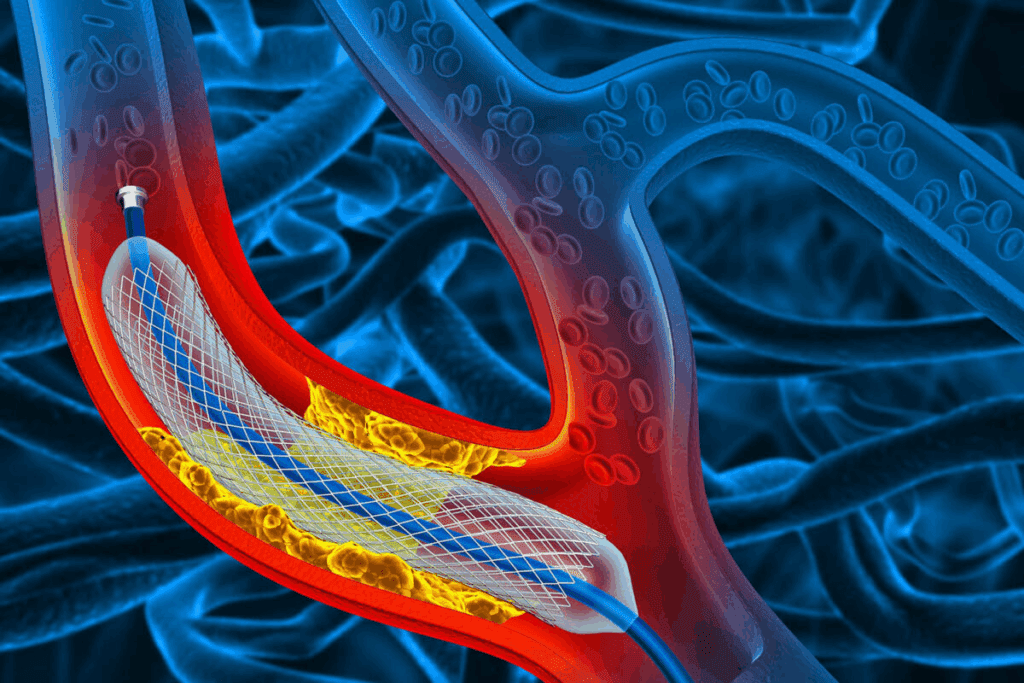
The question of how many stents can be placed in a heart is complex. It depends on many factors. We will look at the maximum limits, documented cases, and average numbers in clinical practice. This will give us a full understanding.
Is There a Maximum Limit to Heart Stents?
There’s no one-size-fits-all answer. Clinical guidelines say the decision to place multiple stents depends on the disease’s severity and extent. The safety and efficacy of stent placement are key in deciding the maximum number of stents a patient can have.
Documented Cases of Up to 9 Stents in a Single Patient
There have been cases where patients got up to 9 stents. These are rare and usually involve very complex disease. The decision to place multiple stents in such cases is made after careful consideration of the patient’s overall health and their specific condition.
To better understand the context of multiple stent placements, let’s examine some clinical data:
| Number of Stents | Frequency in Clinical Practice | Common Indications |
| 1-2 Stents | Common | Single vessel disease, straightforward cases |
| 3-5 Stents | Less common, but regularly seen | Multi-vessel disease, complex lesions |
| 6 or more Stents | Rare, exceptional cases | Severe, diffuse coronary artery disease |
Average Number of Stents in Clinical Practice
In clinical practice, the average number of stents varies widely. Most patients get 1-2 stents. But, some may need more due to the complexity of their condition.
Many factors influence the number of stents. These include the extent of coronary artery disease, the heart’s anatomy, and the patient’s health.
Factors That Determine the Number of Stents Needed
Choosing the right number of stents for a patient is a detailed process. It’s tailored to each person’s unique situation.
Extent and Location of Coronary Artery Disease
The size and where the coronary artery disease (CAD) is located are key. CAD can block one or many arteries, and the blockages can be different. Dr. Eric Topol, a well-known cardiologist, says, “The size of CAD is very important in deciding if stents are needed.”
If CAD is in many places, a person might need more than one stent. The location of these blockages also matters. Some areas are harder to treat than others.
Individual Heart Anatomy Considerations
Every heart is different, and this affects how many stents are needed. The size and shape of the arteries, and any unusual heart features, are important. These details help doctors decide on the right stent placement.
For example, if a person’s arteries are small or twisted, doctors might use fewer stents. Cardiovascular specialists stress the importance of knowing the heart’s unique features for successful stenting.
Patient-Specific Health Factors
Health factors like overall health, other health issues, and medications also play a role. For instance, people with diabetes or kidney disease might need special care. This can affect how many stents are used.
“The mix of patient-specific factors and CAD complexity guides the best stenting plan,” says Dr. Deepak Bhatt, a top interventional cardiologist.
Healthcare providers use these factors to create a treatment plan. They aim to balance the need for effective treatment with the risks of using many stents.
Common Multiple Stent Scenarios
Understanding multiple stent scenarios is key for both patients and healthcare providers. The number of stents needed varies. This depends on the extent of coronary artery disease and the heart’s anatomy.
Living with 2-3 Stents: The Most Common Cases
Many patients get 2-3 stents. This is common when there are blockages in the coronary arteries. Patients with 2-3 stents usually have a good outlook with proper care.
We keep a close eye on these patients. This ensures the stents work well and catches any problems early.
4-5 Stents in Heart: What to Expect
Having 4-5 stents is less common but manageable. These patients often have more severe coronary artery disease. It’s vital for them to work closely with their healthcare team.
Regular check-ups and lifestyle changes are key. They help keep these patients healthy.
Cases of 6 or More Stents: Special Considerations
Receiving 6 or more stents is rare. It usually means complex coronary artery disease. Patients with this many stents need specialized care and monitoring.
We tailor our care to each patient’s needs. We consider their overall health, other medical conditions, and heart anatomy.
In conclusion, managing coronary artery disease with multiple stents is complex. But understanding these scenarios helps patients and healthcare providers. This way, they can better handle the challenges of coronary stenting.
Placing Multiple Stents in a Single Procedure
Putting multiple stents in one go is common but raises safety and effectiveness questions. It’s key for patients and doctors to understand the impact of having more than one stent at once.
Safety of Placing 2-3 Stents in One Session
Putting 2-3 stents in one session is usually safe when done by skilled cardiologists. Research shows the risk of problems is low, compared to not treating coronary artery disease. But, each case is different, and the decision depends on the patient’s health and the disease’s complexity.
Thanks to better stent tech and antiplatelet therapy, safety improves. Yet, patients with many stents need closer watch for issues like stent blockage or narrowing.
Recovery Differences with Multiple Stent Placement
Recovery time after stent placement can differ based on how many stents are used. More stents might mean a longer recovery because of more severe disease.
Patients are usually told to rest for a few days and then slowly get back to normal. Regular check-ups and adjusting meds are key to healing.
Decision-Making Process for Single vs. Multiple Sessions
Choosing to put multiple stents in one session or spread it over time depends on several things. These include the disease’s extent, the patient’s health, and any other health issues.
Factors Influencing the Decision
- The severity and location of coronary lesions
- Patient’s renal function and risk of contrast-induced nephropathy
- Presence of diabetes or other comorbidities
Clinical Outcomes
Most patients with multiple stents see big improvements in symptoms and life quality. But, results can vary based on sticking to medication and lifestyle changes.
Patient Satisfaction
Patient happiness is a big part of the decision. Talking to patients about the procedure and its benefits can boost their satisfaction and follow-up care.
By carefully considering each patient’s situation, doctors can make the best choice for placing multiple stents at once. This aims to ensure both safety and effectiveness.
Living with Multiple Stents: Long-Term Outlook
For those with multiple stents, knowing what to expect long-term is key. It’s about managing your heart health through meds, check-ups, and lifestyle changes. These steps help keep your stents working well.
Medication Requirements for Multiple Stents
People with multiple stents need to take certain meds to stop clots and keep their heart healthy. Antiplatelet therapy is often needed, which might include aspirin and clopidogrel. How long you’ll need these meds depends on your stents and health.
It’s very important to take your meds as your doctor tells you. Not taking them or changing doses can lead to serious problems, like stent blockage.
Follow-Up Care and Monitoring
Regular visits to your cardiologist are a must for those with multiple stents. This includes:
- Regular check-ups with a cardiologist
- Tests like echocardiograms or stress tests to check your heart
- Changing your meds or treatment if needed
Lifestyle Adjustments for Optimal Stent Function
Changing your lifestyle can greatly help your stents work better long-term. Here are some tips:
- Eat a diet full of fruits, veggies, and whole grains
- Do regular exercise, as your doctor suggests
- Stop smoking and avoid secondhand smoke
- Find ways to manage stress, like meditation or yoga
By sticking to your meds, getting regular check-ups, and living a healthy lifestyle, you can keep your heart in good shape with multiple stents.
Conclusion: Balancing Necessity and Safety in Cardiac Stenting
The number of stents in a heart depends on the patient’s needs and the disease’s complexity. Cardiac stenting is key for treating heart disease. Knowing its limits and safety is very important.
At Liv Hospital, we follow the latest in interventional cardiology. We put patient safety first. Our goal is to give patients the best care with the newest techniques and technologies.
Keeping patients safe during stenting is our main focus. We look at each patient’s condition to decide on the right number of stents. This balance helps achieve the best results.
Patients can understand the factors affecting stent placement and the long-term effects of multiple stents. We are committed to top-notch healthcare. We offer full support and guidance to our patients.
FAQ
How many stents can be placed in a heart?
The number of stents in a heart varies. It depends on the person’s health, the disease’s extent, and other factors. Doctors decide on a case-by-case basis, considering the patient’s health and the procedure’s complexity.
Is there a maximum limit to the number of stents a person can have?
There’s no strict limit on the number of stents. But, doctors carefully weigh the risks and benefits. They consider the disease’s severity and the patient’s health.
Can you have 6 stents in your heart?
Yes, having 6 stents is possible. It’s rare but can happen in complex cases. Doctors will consider the patient’s condition and risks before deciding.
How many stents can be placed at one time?
The number of stents at once varies. It depends on the procedure’s complexity, the patient’s health, and the doctor’s judgment. Sometimes, multiple stents are placed in one go. Other times, procedures are done in stages to reduce risks.
What are the factors that determine the number of stents needed?
Several factors decide the number of stents. These include the disease’s extent, heart anatomy, and patient health. Doctors evaluate these to choose the best treatment.
How many stents can a person get?
The number of stents varies greatly. It depends on the individual’s condition. The number can range from one to several, based on the case’s complexity.
What are the implications of having multiple stents?
Multiple stents need careful management. This includes following medication, regular check-ups, and lifestyle changes. Patients with multiple stents must work closely with their healthcare team to manage risks and maintain health.
Can multiple stents be placed in a single session?
Yes, multiple stents can be placed in one session. But, it depends on the procedure’s complexity and the patient’s health. The safety of this approach is evaluated for each case.
What is the long-term outlook for patients with multiple stents?
The long-term outlook varies. It depends on the condition, medication adherence, and lifestyle. With proper care, many patients with multiple stents can live active, fulfilling lives.
References
- Antoniv, M., et al. (2025). Impact of Multi-Institutional Enhanced Recovery After Surgery (ERAS) Implementation on Morbidity Following Elective Colorectal Surgery: A Retrospective Cohort Study. Annals of Surgery.