High fever in children worries parents a lot. Sponging is a common way to lower a fever. But it must be done right to work well and safely.
Recent medical advice says to sponge a child if their fever is over 40 °C (104 °F) and doesn’t go down with medicine. It’s important to use lukewarm water, between 29.4 °C and 32.2 °C (85 ° to 90 °F), to help avoid making the child uncomfortable or shiver. This method is a gentle way to reduce the fever naturally. Knowing how to reduce fever in baby naturally includes such safe sponging alongside ensuring hydration, light clothing, and rest to support the child’s recovery.
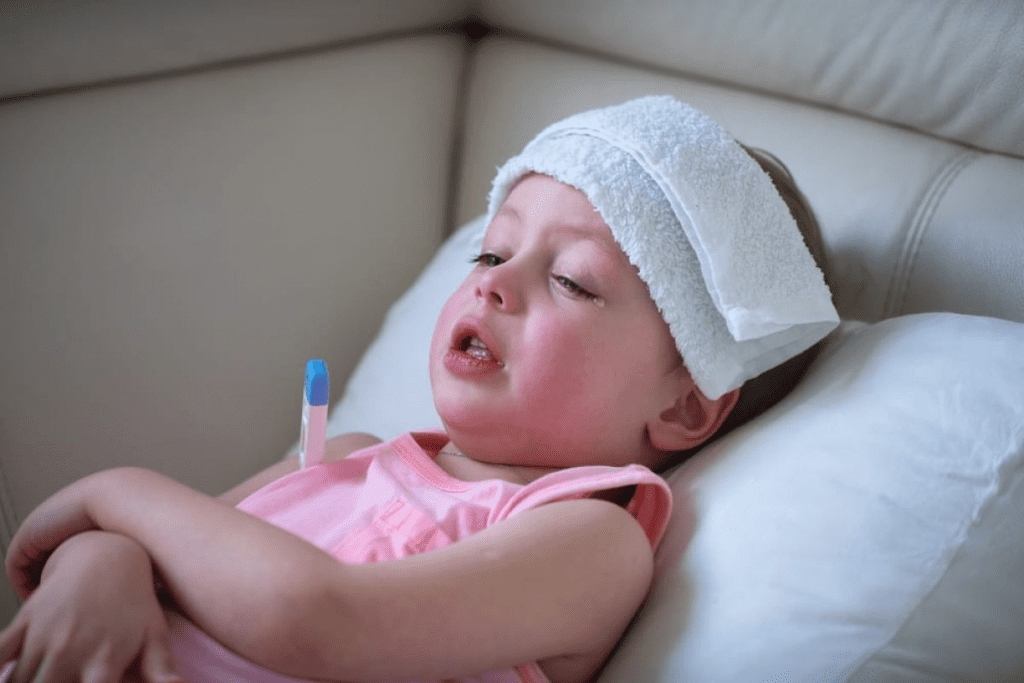
To sponge a child, gently use lukewarm water for 20-30 minutes. This is seen as a natural remedy for fever and can be very effective if done right.
Key Takeaways
- Sponging is recommended for fevers above 40 °C (104 °F).
- Use lukewarm water between 29.4 °C and 32.2 °C 8 °F and 90 °F).
- Sponging should be done for 20-30 minutes.
- It’s a natural remedy for fever.
- Antipyretic medication should be tried before sponging.
Understanding High Fevers in Children
Fevers are common in kids and important to understand. A fever is how the body fights off germs. It’s a natural defence.
What Constitutes a High Fever by Age Group
The idea of a high fever changes with age and how it’s measured. For babies under 3 months, a fever is over 38 °C (100.4 °F). Kids 3-6 months old have a fever if it’s over 39 °C (102.2 °F). Knowing these numbers helps decide what to do next.
Normal Temperature Ranges by Age:
- Infants (0-3 months): 36.5-38 °C (97.7-100.4 °F)
- Infants (3-6 months): 36.5-39 °C (97.7-102.2 °F)
- Children (6 months and above): 36-39 °C (96.8-102.2 °F)
Common Causes of High Fevers in Children
High fevers in kids often come from infections. These can be from viruses or bacteria. Common ones include ear infections, pneumonia, and urinary tract infections. Sometimes, fevers happen because of vaccines or when kids are teething.
It’s key to find out why the fever is happening to treaproperlyright.
The Body’s Natural Fever Response
The body’s fever is a natural defence. When it finds an infection, it gets hotter. This makes it hard for the germs to survive. It helps the body fight off the sickness.
Prevalence of Significant Fevers in Infants
Infants get significant fevers more often. About 14 out of 1,000 infants have them. This shows why it’s important to watch them closely for fevers and know when to get medical help.
Key Facts About Fevers in Children:
- Fever is a natural response to infection.
- The definition of a high fever varies by age.
- Common causes include infections, vaccinations, and teething.
- The body’s fever response helps fight off infections.
Understanding fevers in kids helps parents take care of their children better. They can use home remedies like sponging, staying hydrated, and keeping the environment comfortable.
When Sponging is Appropriate for Fever Reduction
Medication is often the first choice for treating fever. But sometimes, sponging is needed to lower a child’s temperature. This method, called tepid sponging, is used when the fever is very high and doesn’t go down with medicine.
Temperature Thresholds that Warrant Sponging
Sponging is suggested when a child’s fever hits 104 °F (40 °C) and medicine doesn’t work. At this high temperature, there’s a chance of febrile seizures. Lowering the body temperature can help avoid this risk.
Signs that Medication Alone Isn’t Sufficient
If a child’s fever stays high after taking the right amount of medicine, sponging might be an option. Look for signs like a fever that keeps going up and discomfort or distress from the fever.
Understanding the Rarity of Necessary Intervention
Fevers that need sponging are rare, happening in about 0.05% of young kids. This shows that sponging should not be the first thing to try. It’s for when the fever is very dangerous.
Situations When Sponging Should Be Avoided
Don’t sponge if the child is shivering or feels cold. This can make the body temperature go up. Also, if the child is okay and not bothered by the fever, sponging might not be needed. Always watch the child’s temperature and how they’re feeling.
Knowing when and how to sponge can help parents lower their child’s fever. This can bring relief when the temperature is too high.
How to Reduce Fever in Baa Naturally Through Sponging
Sponging can help lower a baby’s fever if done right. It uses lukewarm water to cool the body. This simple method can be done at home.
Gathering Necessary Supplies
Before you sponge your baby, you’ll need some things. These include:
- Lukewarm water
- A soft, clean cloth or sponge
- A towel for drying
- A comfortable and safe place for your baby to lie down
The water should be neither too cold nor too hot. This prevents discomfort or shock.
Preparing the Proper Water Temperature
The water should be between 29.4 °C and 32.2 °C (85 °andto 90 °F). Mix cold and warm water to get this temperature. Always check the water with your hand to make sure it’s lukewarm.
Step-by-Step Sponging Technique
To sponge your baby well, follow these steps:
- Undress your baby and place them in a comfortable position.
- Dip the cloth or sponge in the lukewarm water, wring it out thoroughly, and gently wipe your baby’s skin.
- Start with the face, then move to the neck, armpits, and the rest of the body.
- Repeat the process for 20-30 minutes.
It’s important to watch your baby’s temperature and comfort during sponging. If they shiver or seem uncomfortable, stop right away.
Duration Guidelines and Expected Results
Sponging should last 20-30 minutes to lower the fever. You can expect a drop in temperature by 1-1.5 °C. Keep an eye on your baby’s temperature after sponging to make sure it doesn’t go up again.
Remember, sponging is just one way to manage fever. Keeping your baby hydrated and comfortable is also key.
Common Myths and Dangerous Practices to Avoid
When it comes to lowering a child’s fever, there are myths and dangerous practices to steer clear of. It’s vital to know what not to do to keep your child safe and comfortable. Understanding these helps in caring for a sick child.
The Danger of Alcohol Rubs
Using alcohol rubs to lower a fever is dangerous. The American Academy of Pediatrics warns against it because of alcohol toxicity risks. Alcohol can be absorbed through the skin, leading to serious health problems. Instead, choose safer, recommended methods.
Cold Water vs. Lukewarm Water
Many think cold water is better for sponging than lukewarm water. But cold water can cause shivering, raising the body’s temperature and worsening the fever. Lukewarm water, between 29.4 °C and 32.2 °C (85 °F and 90 °F), is safer. It helps lower the fever without causing discomfort.
Over-Bundling During Fever
Over-bundling a child with too many clothes or blankets is harmful. It traps heat and stops the body from cooling down naturally. Dress your child lightly and keep the room at a comfortable temperature to manage the fever.
Inappropriate Use of Medications
Using medications incorrectly is a big concern. Always follow the recommended dosage and talk to a healthcare provider before giving any medication to children. Wrong dosages or medications can be very dangerous.
To safely manage fevers, consider the following:
- Use lukewarm water for sponging, avoiding cold water.
- Keep the child lightly dressed.
- Follow the recommended medication dosage.
- Avoid alcohol rubs and other unproven remedies.
By avoiding these myths and dangerous practices, parents can ensure their child’s safety and comfort during a fever. For more on natural and home remedies for fever, always consult a healthcare professional.
Additional Natural Remedies to Complement Sponging
To help a child with a fever, using natural remedies is key. It’s important to make them comfortable and lower their fever. There are many ways to do this.
Age-Appropriate Hydration Techniques
Keeping a child hydrated is very important when they have a fever. For babies, breast milk is the best way to keep them hydrated. For older kids, give them plenty of fluids like water, clear broths, or coconut water.
Make sure they are making enough urine. This shows they are drinking enough water.
- Offer breast milk or formula for infants.
- Provide water or electrolyte solutions for older children.
- Monitor urine output to ensure hydration.
Lightweight Clothing and Environmental Adjustments
Putting the child in lightweight clothing helps them stay cool. Keeping the room at a comfortable temperature also helps. If it’s too warm, a fan can help.
- Dress the child in light, breathable clothing.
- Maintain a comfortable room temperature.
- Use a fan if the room is too warm.
Safe Complementary Measures for Comfort
There are other ways to make a child feel better. A cool compress on the forehead or a warm bath can help. But, be careful not to use too hot water.
Monitoring Techniques During Home Treatment
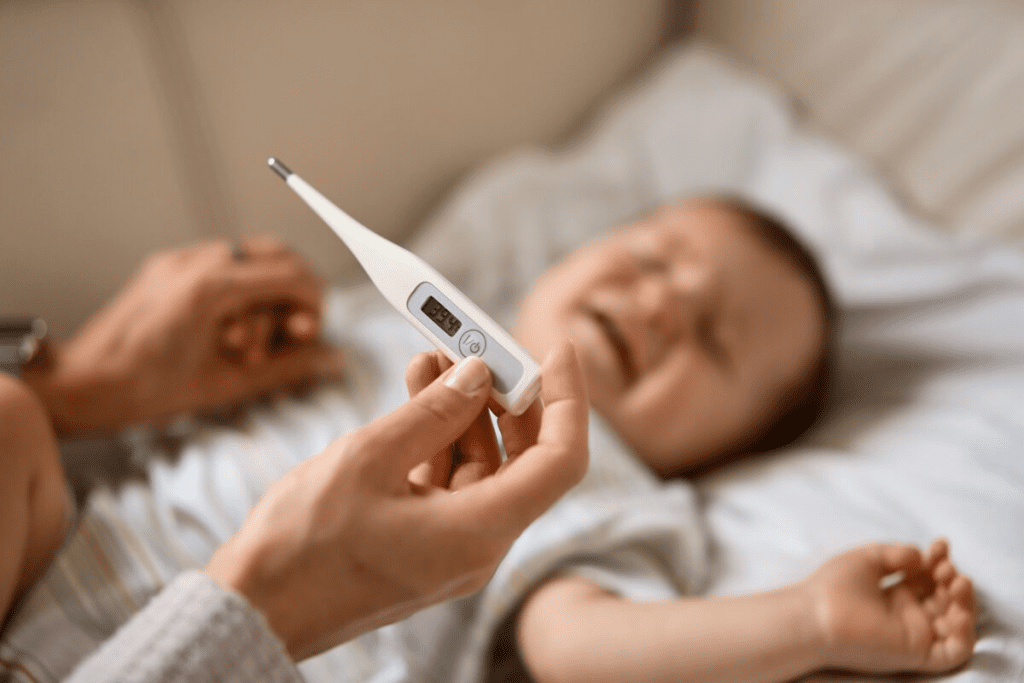
It’s important to watch the child’s temperature and how they’re feeling. Use a digital thermometer for accurate readings. Keeping a log of their temperature and symptoms helps you see how they’re doing.
By using these natural remedies together, parents can help their child feel better. This makes them more comfortable when they’re sick.
Conclusion:
Managing high fevers in children is all about knowing when and how to act. Sponging is a good way to lower a fever, which is key when it hits 40 °C (104 °F). By following a simple sponging technique, parents can help their child feel better.
Other natural ways to help include keeping kids hydrated and dressed lightly. Also, adjusting their environment can make a difference. LIVHospital stresses the need for proven methods to manage fever, making it easier to handle at home.
It’s also important to know when to go to the doctor. While most fevers can be treated at home, some need urgent care. Being well-informed helps parents take the best care of their children, keeping them safe and comfortable when they have a high fever.
FAQ’s:
What is considered a high fever in children, and when should I consider sponging?
A high fever is over 40 °C (104 °F). You should sponge your child if the fever is this high and the medicine doesn’t work.
How do I prepare the water for sponging my child?
The water should be lukewarm, between 29.4 °C and 32.2 °C (85 °Fando 90 °F). Test it by dipping your elbow; it should feel warm, not hot or cold.
What are the steps to sponge my child safely?
Start by undressing your child. Gently sponge their body with lukewarm water, starting from the face. Move down to the rest of the body. Sponge for 20-30 minutes, checking the temperature often.
Can I use cold water instead of lukewarm water for sponging?
No, cold water can make your child shiver, raising their body temperature. Lukewarm water is better as it helps lower the fever slowly.
Are there any additional natural remedies I can use alongside sponging?
Yes, make sure your child drinks plenty of water. Dress them in light clothes and keep the room comfortable. Other safe methods can also help.
How often should I check my child’s temperature during sponging?
Check the temperature every few minutes. This helps you see how the fever is changing and adjust the sponging as needed.
What are some common myths about managing fevers that I should be aware of?
Don’t use alcohol rubs, as they can be harmful. Avoid over-bundling, as it can trap heat. Lukewarm water is safer and more effective than cold water.
When should I seek medical attention for my child’s fever?
If the fever lasts or is accompanied by other worrying signs, get medical help. Always talk to a doctor if you’re not sure what to do.
Reference
National Institute for Health and Care Excellence (NICE). (2021). Fever in under 5s: assessment and initial management. NICE Guideline [NG143]. Retrieved from https://www.nice.org.uk/guidance/ng143