



Recovering from ACL surgery is tough. We’re here to help you through a step-by-step program. It’s designed to help you get strength and mobility back after ACL reconstruction.
Our guide includes a downloadable resource to support your recovery. By following our rehab protocol, you’ll move safely through each recovery phase. This ensures the best results for you.
Key Takeaways
- Structured ACL rehab protocol for safe recovery
- Step-by-step exercises to regain strength and mobility
- Personalized guidance for optimal results
- Multidisciplinary care for complete support
- International standards for ACL rehabilitation
Understanding ACL Reconstruction Recovery
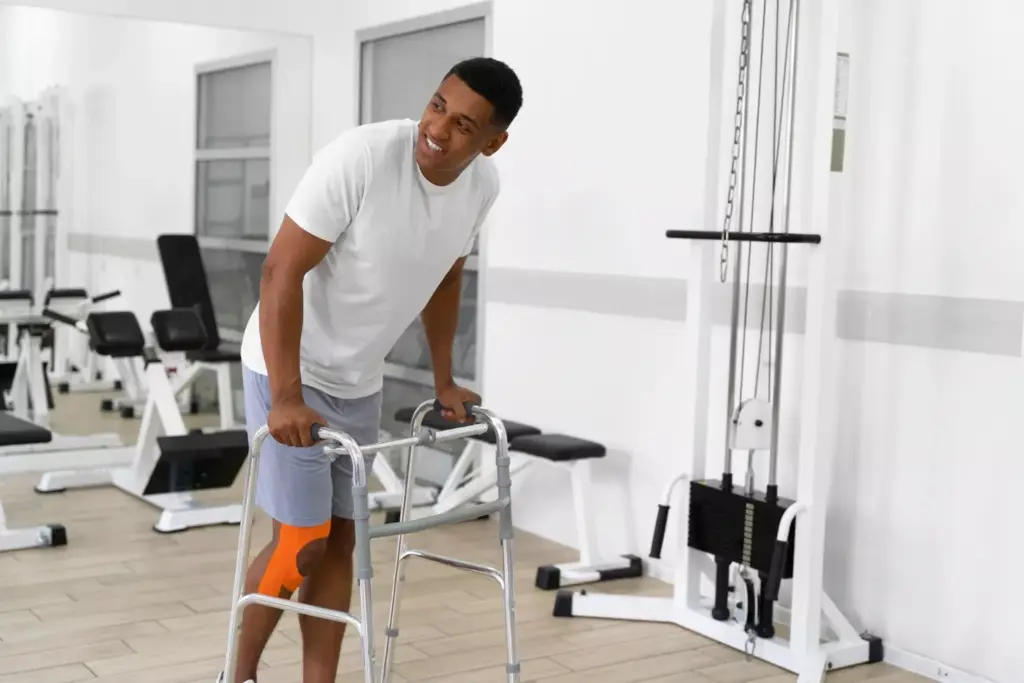
Recovering from ACL reconstruction surgery takes time, effort, and a good plan. The surgery’s success depends on the care after it and the rehab plan.
Getting your knee strong and functional again is key. A well-structured ACL rehab exercise program helps manage pain and improve movement. It also strengthens the muscles around the knee.
The Importance of Proper Rehabilitation
A good post-operative ACL protocol includes exercises and treatments to fix knee function. A detailed rehab plan is vital. It should include:
- Pain management techniques
- Range of motion exercises
- Strengthening exercises for the quadriceps and hamstring muscles
- Balance and proprioception training
By sticking to a structured ACL recovery protocol, patients can get back to their usual activities.
Setting Realistic Recovery Expectations
It’s important to have realistic hopes during recovery. ACL reconstruction recovery takes months. We tell patients to stay patient and stick to their rehab plan.
“The road to recovery after ACL surgery is not always easy, but with the right mindset and a well-structured rehabilitation plan, patients can achieve a successful outcome.”
Knowing about ACL post op care and following the rehab plan is key for a good recovery. We support our patients every step of the way. We help them manage pain, improve movement, and strengthen their muscles.
Pre-Rehabilitation Considerations
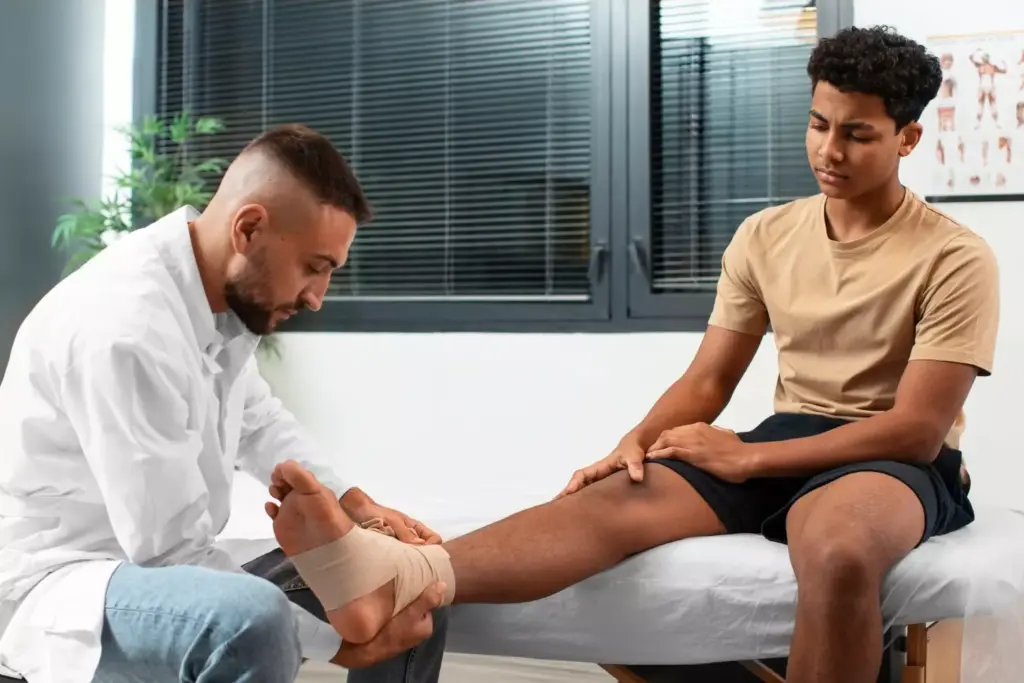
Before starting your ACL rehab, it’s key to think about a few important things. Knowing these can help you get ready for your rehab journey. This makes the start of your recovery smoother.
Consulting with Your Surgeon and Physical Therapist
Talking to your surgeon and physical therapist is a must. They will create a rehab plan just for you. This plan will fit your life and goals.
In these talks, you’ll share your health, injury details, and past medical issues. Your team will guide you on the ACL guideline for after surgery. This prepares you for what’s next in your rehab.
Essential Equipment for Home Rehabilitation
Having the right gear at home can really help your ACL recovery. You don’t need a lot, but some key items are important. They help you do your exercises right.
| Equipment | Purpose |
|---|---|
| Resistance Bands | Strengthening muscles around the knee |
| Exercise Ball | Improving balance and stability |
| Cane or Crutches | Aiding mobility during early recovery stages |
By talking to your healthcare team and getting the right gear, you’re set for a good rehab. This prep helps you follow your ACL rehabilitation protocol well. It leads to a successful recovery.
Phase 1: Immediate Post-Surgery Recovery (0-2 Weeks)
The first two weeks after ACL surgery are key for a good recovery. We focus on controlling pain and swelling, doing gentle movements, and taking care of the wound.
Managing Pain and Swelling
Managing pain right after surgery is very important. Follow your doctor’s advice on pain meds and use ice packs to lessen swelling. Also, keep your leg up to reduce swelling.
- Use ice packs as directed
- Elevate your leg above heart level
- Follow the prescribed pain medication regimen
Initial Gentle Movements: Quad Sets and Heel Slides
Doing quad sets and heel slides helps keep your knee moving. Quad sets strengthen your quadriceps, while heel slides move your knee gently.
Performing Quad Sets: Tighten your quadriceps by straightening your knee. Hold for 5 seconds, then release. Do this 10-15 times.
Proper Wound Care and Monitoring
It’s important to watch your wound for infection signs and follow wound care tips. Keep the wound clean and dry, and tell your doctor if you notice anything odd.
Signs of Infection to Watch For:
- Increased redness around the wound
- Swelling or warmth around the wound
- Pus or discharge
- Fever
Phase 2: Early Rehabilitation Exercises (2-6 Weeks)
Phase 2 of ACL rehab focuses on getting the knee moving again and building strength. It lasts from 2 to 6 weeks after surgery. This phase is key for a good recovery.
Restoring Range of Motion Techniques
Improving the knee’s range of motion is a main goal. Gentle exercises like heel slides and wall squats help with this. It’s important to do these exercises slowly and controlledly to protect the knee.
Heel slides are done by lying on your back and sliding your heel away. Then, you bring it back to start. This exercise helps increase the knee’s range of motion.
Beginning Weight-Bearing Activities
Starting weight-bearing activities helps strengthen the knee muscles. Partial weight-bearing exercises are introduced by a physical therapist. The load is increased as the knee gets stronger.
Watching for pain and swelling is key. If pain increases, cut back or talk to your therapist.
Gentle Strengthening Exercises for Quadriceps
Strengthening the quadriceps is important for knee stability. Quad sets and straight leg raises are good for this without stressing the ACL too much.
To do a quad set, sit with your leg straight and squeeze your quadriceps. Hold for a few seconds, then release. Do this often to build strength.
For more help, check out physical therapy exercises for ACL tear pdf and ACL tear recovery exercises pdf. They offer detailed rehab plans.
ACL Strengthening Exercises PDF: Your Complete Guide
We know how vital a good rehab plan is. Our ACL strengthening exercises PDF is here to help you every step of the way.
How to Use Rehabilitation Protocols
Rehab protocols are key for a good recovery after ACL surgery. Our ACL strengthening exercises PDF offers a detailed guide on using these protocols. It’s important to stick to the exercises and guidelines as shown.
Start by getting to know the exercises in each recovery phase. Our guide helps you move from simple to complex exercises. This ensures you’re always pushing your knee the right way.
Tracking Progress with Structured Guidelines
Keeping track of your progress is a big part of rehab. Our structured guidelines help you see how you’re doing and stay motivated. By following the protocols, you can see your growth and spot areas needing extra work.
To track your progress well, set specific goals for each week. Use the exercises and guidelines in our ACL strengthening exercises PDF to check your strength, range of motion, and function.
Following a structured rehab plan and tracking your progress will get you back to normal activities soon. Remember, being consistent and patient are essential for a successful recovery.
Phase 3: Progressive Strength Building (6-12 Weeks)
In Phase 3, which lasts from 6 to 12 weeks after surgery, you’ll work on getting stronger. You’ll do advanced exercises to make your knee stronger and more functional. This prepares you for more challenging activities.
Closed-Chain Exercises: Squats and Split Squats
Closed-chain exercises, where your feet stay on the ground, are key in this phase. Squats and split squats are great because they strengthen your knee muscles. These include the quadriceps, hamstrings, and gluteal muscles.
To do a squat:
- Stand with your feet shoulder-width apart.
- Slowly lower your body down, keeping your back straight and your knees behind your toes.
- Push through your heels to get back up.
For split squats:
- Stand with your feet staggered, one foot in front of the other.
- Lower your body down, keeping your front knee behind your toes and your back knee almost touching the ground.
- Push through your front heel to get back up.
Balance and Proprioception Training
Balance and proprioception exercises are vital for knee stability and balance. They help your body understand your knee’s position and movement. This improves your ability to do daily and athletic activities.
Examples include:
- Single-leg stands: Stand on one leg, holding onto a stable object if necessary.
- Balance boards or BOSU ball training: These tools challenge your balance and help improve proprioception.
Increasing Exercise Intensity Safely
As you move through Phase 3, you should make your workouts more challenging. You can do this by:
- Adding weight to your exercises, such as wearing a weighted vest during squats.
- Increasing the number of repetitions or sets.
- Decreasing rest time between exercises.
But always listen to your body and don’t push through pain. If you feel sharp pain or discomfort, stop right away and talk to your healthcare provider.
By following this structured approach in Phase 3, you’ll get a strong, stable knee. This will prepare you for your favorite sports or activities.
Home Exercises vs. Physical Therapy Sessions
Knowing the difference between home exercises and physical therapy is key for ACL recovery. Each has its own benefits and drawbacks. Finding the right mix is essential for a good recovery.
ACL Rehab Exercises at Home: What’s Safe and Effective
Doing ACL rehab at home is easy and can save money. But, it’s important to make sure you’re doing the exercises right to avoid injury. Simple exercises like quad sets, straight leg raises, and heel slides are good for the start.
To get the most from home exercises, remember:
- Stick to a structured rehab plan.
- Use the right technique to avoid injury.
- Keep track of your progress and change exercises as needed.
When Professional Guidance is Necessary
Home exercises are great, but sometimes you need a pro’s help. A physical therapist can give you personalized advice, fix any bad techniques, and add more challenging exercises as you get better. This is really important for those with serious ACL injuries or athletes wanting to get back to their sport.
| Aspect | Home Exercises | Physical Therapy Sessions |
|---|---|---|
| Convenience | High | Moderate |
| Cost | Low | Moderate to High |
| Personalized Feedback | Limited | High |
| Exercise Variety | Limited | High |
Combining Home and Clinical Approaches
The best ACL rehab combines home exercises and physical therapy. This mix offers a well-rounded and flexible program. It’s about finding a balance that fits your lifestyle and recovery goals.
For a successful rehab, follow an ACL guideline that shows how to move from basic recovery to advanced strengthening. This will help you regain knee stability and function.
Phase 4: Advanced Rehabilitation (3-6 Months)
In Phase 4 of ACL rehab, we work on advanced techniques to improve knee function. This stage is between three to six months after surgery. Patients have already regained a lot of strength and motion.
Now, we challenge the knee with more complex exercises. This helps prepare it for daily activities and sports.
Functional Strength Training Methods
Functional strength training is key in Phase 4. It gets the knee ready for everyday and sports activities. Exercises like squats, lunges, and step-ups are made harder to test the knee’s limits. We also add balance and proprioception training to boost knee stability.
Sport-Specific Movement Patterns
In this phase, we teach sport-specific movements. This includes agility drills, shuttle runs, and cutting maneuvers. These mimic the movements of sports. It helps find and fix any weaknesses or imbalances.
Plyometric Introduction and Progression
We introduce plyometric exercises like jump squats and box jumps to boost power and explosiveness. We start with easy plyometrics and make them harder as the knee gets stronger. Teaching proper technique is key to avoid injuries.
Throughout Phase 4, we keep an eye on progress and tweak the rehab plan if needed. Our aim is to make sure patients are ready to safely return to their sports or activities.
ACL Return to Running Protocol
Getting back to running after ACL surgery is a big step. It requires checking if your knee is ready and following a step-by-step training plan. We know how important it is to get back to running right. So, we help you plan it carefully.
Assessment Criteria for Running Readiness
Before you start running, check if your knee is ready. Look at your knee’s strength, stability, and how well it moves. Make sure you have:
- Sufficient quadriceps and hamstring strength
- Adequate knee flexion and extension
- Minimal pain and inflammation
For a detailed guide, check our ACL rehabilitation protocol. It has all the criteria and exercises you need to get ready for running.
Progressive Running Program Structure
A gradual running program is key for a safe return. Start with short runs and slowly increase the time and speed. Here’s how to start:
- Begin with walk-run intervals
- Move to continuous running
- Keep increasing the distance and speed
Always listen to your body and adjust the program if needed. Our experts are here to help you progress safely and effectively.
Monitoring Joint Response and Adjusting According
It’s important to watch how your knee reacts to running. Look out for pain, swelling, or instability. If you notice any problems, you might need to change your program or talk to your doctor.
By sticking to our ACL return to running protocol and watching your knee, you can safely start running again. We’re here to support you, providing the help and knowledge you need for a successful recovery.
Return to Sports Rehabilitation (6+ Months)
As we move forward in the rehab journey, the final steps are key for a successful return to sports. Athletes have usually finished the early rehab phases. Now, they’re ready for more focused training.
Sport-Specific Drills and Testing
The next step is sport-specific drills. These drills are made to match the athlete’s sport. They help get ready for the physical and technical challenges of competition.
Testing is also key. It lets physical therapists and coaches check if the athlete is ready. They look at agility, speed, and endurance. They also check if the athlete can do complex moves without pain or instability.
Psychological Readiness Assessment
Being ready to return to sports isn’t just about being physically fit. Psychological readiness is just as important. Athletes need to be mentally strong to perform well and handle competition pressure.
They might fill out questionnaires or have interviews. This helps check their confidence, fear of injury, and mental state. It makes sure athletes are ready for their sport’s demands.
Criteria for Safe Return to Competition
Before going back to competition, athletes must meet certain criteria for safe return. They need to show they have enough strength, flexibility, and endurance. They also need to be able to do sport-specific moves without pain or discomfort.
- Completing sport-specific drills without issues
- Passing psychological readiness assessments
- Meeting or exceeding pre-injury performance levels in certain metrics
By following these guidelines and working with healthcare pros, athletes can safely and successfully return to their sport.
Conclusion: Maintaining Long-Term ACL Health
After finishing your ACL rehab, keeping your knee healthy is key. It’s important to keep doing exercises that make your knee and muscles strong. Following a good ACL rehab plan PDF helps you recover well and lowers the chance of getting hurt again.
Keep doing ACL strengthening exercises PDF to target your quadriceps, hamstrings, and more. A solid ACL recovery plan will show you the way, helping you get your knee working its best.
Adding these exercises to your daily routine helps keep your knee healthy for a long time. We urge you to stick with your rehab plan and make changes if needed for the best results.
What is the typical recovery time after ACL reconstruction surgery?
ACL reconstruction surgery recovery time is about 6-12 months. This can change based on injury severity, health, and following the rehab plan.
What are the most important exercises to strengthen my ACL after surgery?
Key exercises for ACL strength after surgery include quad sets, heel slides, and straight leg raises. Wall squats also help. These improve knee mobility and strength.
How often should I perform ACL strengthening exercises?
ACL strengthening exercise frequency changes with recovery phases. Usually, do exercises 2-3 times daily, with 2-3 sets of 10-15 reps. Always follow a rehab plan and get advice from your physical therapist or surgeon.
Can I perform ACL rehab exercises at home, or do I need to attend physical therapy sessions?
Both home exercises and physical therapy are key for ACL rehab. Home exercises are convenient, but professional guidance is needed for safety and correctness. Combining both is best for recovery.
What are the signs of complications or setbacks during ACL rehabilitation?
Signs of complications include increased knee pain, swelling, or instability. Also, if walking or daily activities become hard. Seeing your surgeon or physical therapist is important if you notice these signs.
How can I track my progress during ACL rehabilitation?
Track your progress by monitoring pain, range of motion, strength, and function. Keeping a journal or using a mobile app can help stay motivated and informed.
What is the ACL return to running protocol, and how is it structured?
The ACL return to running protocol is a structured program. It assesses your readiness to run and monitors your joint response. It includes pain checks, knee stability, and running mechanics to ensure a safe return.
When can I return to sports or high-level activities after ACL reconstruction surgery?
Returning to sports or high-level activities after ACL surgery varies. It depends on injury severity, health, and rehab progress. Generally, wait 6-12 months and meet specific criteria like passing functional tests and showing enough strength and stability.



 Departments
 Related Videos
 Our Doctors
 News
News






















