Last Updated on December 3, 2025 by Ugurkan Demir
Skin cancer is a big health problem worldwide. In the United States, it’s expected that 212,200 new melanoma cases will be diagnosed in 2025. Every year, about 2 to 3 million people get non-melanoma skin cancer globally.
Skin cancer starts with abnormal cell growth on the skin. It can spread and harm healthy tissue. The main types are basal cell carcinoma, squamous cell carcinoma, and melanoma. Early detection is key for good treatment results. Knowing the signs and symptoms is important for catching skin cancer early.
Key Takeaways
- Understanding the different types of skin cancer is vital for early detection.
- Basal cell carcinoma, squamous cell carcinoma, and melanoma are the most common types of skin cancer.
- Recognizing the warning signs and symptoms is important for successful treatment.
- Liv Hospital offers top-notch dermatological care.
- Early detection greatly improves treatment outcomes for skin cancer patients.
Understanding Skin Cancer: Types and Statistics
It’s key to know the different types of skin cancer and how common they are. This knowledge helps in preventing and treating the disease. Skin cancer is a big health issue worldwide, affecting many people and healthcare systems.
Global and U.S. Skin Cancer Statistics
Skin cancer is very common globally. Every year, there are about 2 to 3 million cases of non-melanoma skin cancer worldwide. In the U.S., it’s expected that 212,200 new melanoma cases will be diagnosed in 2025. These numbers show why we need to be aware and catch it early.
Knowing how common skin cancer is helps us focus on education and prevention. We can then use our resources better for research, treatment, and health campaigns.
Common Types of Skin Cancer
The main types of skin cancer are basal cell carcinoma, squamous cell carcinoma, and melanoma. Basal cell carcinoma is the most common, making up a big part of cases. Squamous cell carcinoma can spread if not treated quickly. Melanoma is less common but very aggressive and needs early detection.
Each type of skin cancer has its own signs and risks. Knowing these helps doctors diagnose and plan treatment.
Why Early Detection Matters
Finding skin cancer early makes treatment more likely to work. Early detection lowers the risk of serious problems and improves survival chances. Regular checks by yourself and a doctor are key to catching it early.
Being aware of skin cancer signs and taking action can lower your risk. Education and awareness are key in the fight against skin cancer.
How to Tell If You Have Skin Cancer: The Basics
To spot skin cancer, knowing its common spots and looks is key. It can pop up anywhere, but sun-exposed areas are more prone.
Common Locations for Skin Cancer
Most skin cancers show up on sun-kissed spots like the scalp, face, lips, and ears. But, it can also appear in less sunny places, like the palms of the hands or under the fingernails.
It’s vital to check these areas too. Skin cancer can be more serious when it happens in these spots.
General Appearance of Suspicious Growths
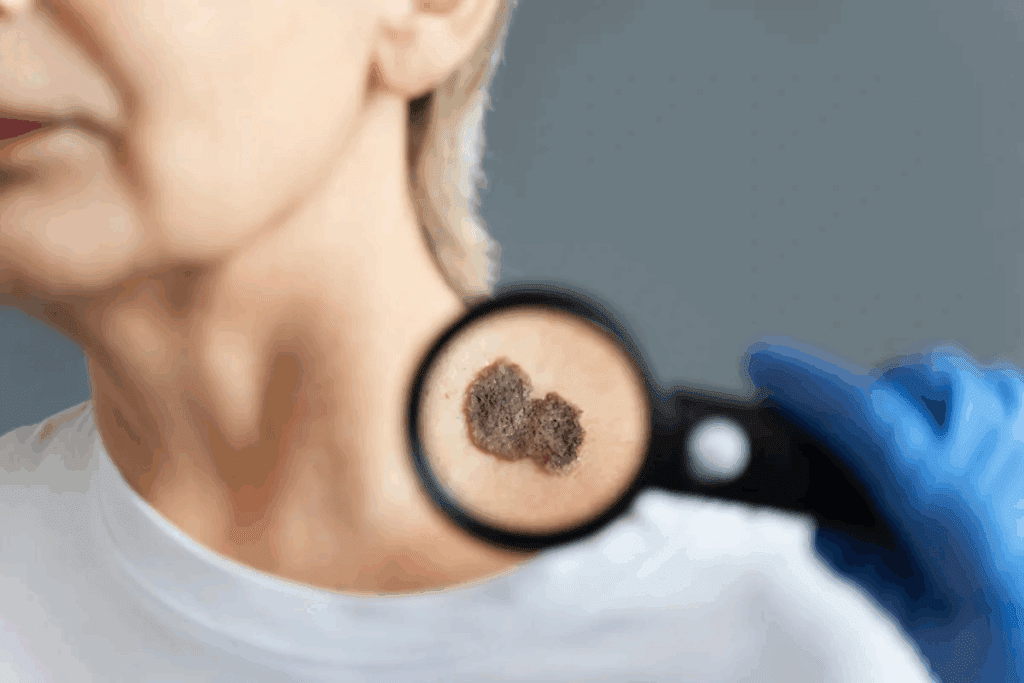
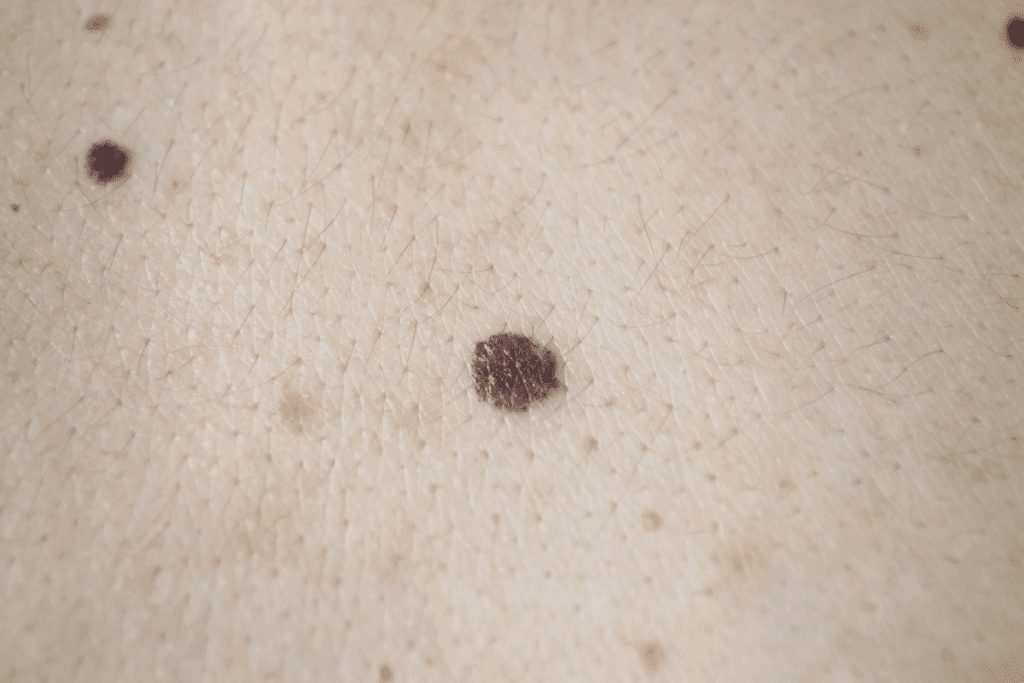
Suspicious growths or lesions that could be skin cancer look different. They might be new or changes in old moles or lesions. Look for asymmetry, irregular borders, and varied colors.
These growths can be itchy, painful, or bleed easily. If you see these signs, see a doctor right away.
Normal vs. Abnormal Skin Changes
Telling normal from abnormal skin changes is tough. Normal changes might be small blemishes or freckles from the sun. But, abnormal changes could mean skin cancer.
| Characteristics | Normal Skin Changes | Abnormal Skin Changes |
| Appearance | Minor blemishes or freckles | New or changing moles, lesions with irregular borders |
| Symptoms | No significant symptoms | Itching, pain, bleeding |
| Progression | Stable or fading over time | Changing size, color, or shape over time |
Knowing these differences can help you catch skin cancer early.
The ABCDE Rule for Melanoma Detection
The ABCDE rule is a simple way to spot melanoma. It helps people check moles for warning signs. This makes it easier to find melanoma early.
Asymmetry
The “A” in the ABCDE rule means asymmetry. A normal mole looks symmetrical. If you draw a line through it, both sides should look the same.
A melanoma, though, is not symmetrical. Its halves don’t match in shape, size, or color.
Tip: Watch out for moles that look irregular or uneven.
Border Irregularity
The “B” is for border irregularity. Benign moles have smooth borders. Melanomas have notched, ragged, or blurred edges.
Border irregularity is a key sign of melanoma.
Color Variations
The “C” is for color variations. Benign moles are usually one color, often brown. Melanomas have multiple colors or shades.
Warning Sign: Moles with many colors or uneven color should be checked by a dermatologist.
Diameter
The “D” is for diameter. Melanomas are often bigger than benign moles. If a mole is bigger than a pencil eraser, it’s worth checking.
Evolution
The “E” is for evolution or change. Melanomas grow, change shape, or color over time. It’s important to watch for these changes.
Action: Check your moles often and see a doctor if they change.
Using the ABCDE rule helps find cancerous moles early. This can lead to better treatment outcomes.
Identifying Basal Cell Carcinoma
Knowing how to spot basal cell carcinoma is key. It’s the most common skin cancer. Spotting it early is vital for treatment.
Characteristic Appearances
Basal cell carcinoma shows up in different ways. It might look like a small, fleshy bump or a skin tag. It could also be an open sore that won’t heal or a smooth growth with a dimpled center. These spots are usually painless but might bleed sometimes.
Common Locations
This skin cancer often pops up on sun-exposed areas like the face, ears, and neck. It can also show up on other parts of the body, but that’s less common.
Growth Patterns to Watch
Basal cell carcinoma grows slowly. It’s important to keep an eye on any new or changing skin spots. If a spot is growing, bleeding, or not healing, see a doctor right away.
Spotting basal cell carcinoma early makes treatment more effective. Knowing what it looks like and where it shows up helps people catch it early. This way, they can get medical help quickly.
Recognizing Squamous Cell Carcinoma
It’s important to know the signs of squamous cell carcinoma early. This type of skin cancer is common and can look different. Knowing what to look for is key.
Key Visual Indicators
Squamous cell carcinoma shows up as rough, reddish patches on the skin. These patches grow fast and can look like warts. They may bleed and hurt if not treated.
Typical Locations
This cancer often shows up in sun-exposed areas. This includes the face, ears, neck, and hands. These spots get damaged by UV rays over time.
How It Differs from Other Skin Cancers
Squamous cell carcinoma grows faster than basal cell carcinoma. It also has a higher chance of spreading. It’s important to tell the difference for the right treatment. While melanoma is the most dangerous, squamous cell carcinoma is more serious than basal cell but less than melanoma.
Less Common Skin Cancers and Their Signs
There are many types of skin cancer, not just the well-known ones. These less common types can be dangerous and need quick attention and treatment.
Merkel Cell Carcinoma
Merkel cell carcinoma is a rare and aggressive skin cancer. It starts in Merkel cells in the skin’s top layer. It looks like a firm, painless bump, often on sun-exposed areas like the face and neck. Early detection is key because it can grow fast and spread.
Dermatofibrosarcoma Protuberans
Dermatofibrosarcoma protuberans (DFSP) is a rare skin cancer that grows slowly in the skin’s dermal layer. It looks like a firm, painless nodule or plaque, usually on the trunk or limbs. DFSP is known for its high recurrence rate if not completely removed, so thorough surgery is needed.
Sebaceous Carcinoma
Sebaceous carcinoma is a malignant tumor from the sebaceous glands in the skin. It often shows up on the eyelids but can also appear on other parts of the face or body. This cancer can be aggressive and spread, so early diagnosis is critical.
| Less Common Skin Cancer | Typical Locations | Characteristic Appearance |
| Merkel Cell Carcinoma | Sun-exposed areas like face, neck, arms | Firm, painless nodule or bump |
| Dermatofibrosarcoma Protuberans | Trunk or limbs | Firm, painless nodule or plaque |
| Sebaceous Carcinoma | Eyelids, face, or body | Malignant tumor from sebaceous glands |
It’s important to recognize these less common skin cancers early. If you see any unusual skin changes or growths, see a healthcare professional right away.
Skin Cancer Across Different Skin Types
It’s important to know how skin cancer shows up in different skin types. This knowledge helps in catching it early and treating it right. Skin cancer can happen to anyone, but it looks different on different skin tones.
Appearance in Darker Skin Tones
In darker skin tones, skin cancer can pop up in places not usually hit by the sun. This includes the palms, soles, and under the nails. It’s harder to spot because it doesn’t follow the usual sun-exposure pattern.
Key signs to watch include unusual growths or changes in these areas. Also, look out for changes under the nails or in the mouth or genital areas.
Detection Challenges
Finding skin cancer in diverse groups is tough because it looks different. In darker skin, it’s not always linked to sun exposure. This can lead to late diagnosis.
We need to know how skin cancer shows up in different skin types. This way, we can catch it early. We should watch for signs that aren’t just about sun exposure.
Specific Signs for Different Ethnicities
Some types of skin cancer are more common in certain ethnic groups. But, it’s key to remember that skin cancer can happen to anyone, no matter their ethnicity.
- In people of African descent, skin cancer often occurs on the palms, soles, or under the nails.
- In individuals of Asian descent, subungual melanoma (under the nail) is more common.
- In those with lighter skin, skin cancer is more likely to occur in sun-exposed areas.
Knowing these differences helps in catching and treating skin cancer early. Regular self-checks and doctor visits are important for everyone, no matter their skin type or ethnicity.
Risk Factors That Increase Your Chances of Skin Cancer
Knowing what puts you at risk for skin cancer can save your life. Several factors can increase your chance of getting skin cancer. Knowing these can help you prevent it and catch it early.
Sun Exposure and UV Radiation
Being in the sun’s ultraviolet (UV) radiation is a big risk for skin cancer. Spending too much time outside, or during peak sun hours (10 am to 4 pm), can harm your skin. UV radiation from tanning beds also significantly increases the risk of skin cancer.
Genetic Predisposition
Genetics play a big role in your risk for skin cancer. If your family has a history of skin cancer, you’re more likely to get it. Certain genetic conditions, like albinism and xeroderma pigmentosum, also raise your risk.
Previous Skin Cancer History
If you’ve had skin cancer before, you’re at higher risk of getting it again. This shows why regular check-ups are so important. They help catch any new or changing skin lesions early.
Skin Type and Complexion
Your skin type and complexion can also affect your risk. People with fair skin, light hair, and light eyes are more at risk. But, it’s important to remember that anyone can get skin cancer, no matter their skin type.
| Risk Factor | Description | Level of Risk |
| Sun Exposure and UV Radiation | Prolonged exposure to UV rays from the sun or tanning beds | High |
| Genetic Predisposition | Family history of skin cancer or certain genetic conditions | Moderate to High |
| Previous Skin Cancer History | Having had skin cancer previously | High |
| Skin Type and Complexion | Fair skin, light hair, and light eyes | Moderate |
Understanding these risk factors is key to preventing and catching skin cancer early. By knowing what increases your risk, you can protect your skin and watch for any changes.
Self-Examination Techniques: How to Check Your Skin
Learning how to check your skin can help find skin cancer early. Regular self-exams help spot skin changes that need more attention.
Creating a Regular Self-Exam Routine
Make skin self-exams a part of your routine, like during your monthly shower. Pick a specific date each month to do your self-exam.
Start by looking at your face, focusing on your nose, lips, and ears. Don’t miss the scalp and the back of your ears.
Tools and Technology for Skin Monitoring
There are tools to help with your skin checks. You’ll need a full-length mirror and a handheld mirror to see all your body parts. There are also apps that guide you through the process and track changes.
These apps use AI to analyze your skin images. They’re not a replacement for doctor advice but can help monitor your skin.
Step-by-Step Examination Process
Here’s how to do a complete skin self-exam:
- Look at your face, ears, and neck.
- Check your scalp, using a comb or your fingers.
- Examine your hands, including the palms and between your fingers.
- Look at your arms, armpits, and shoulders.
- Inspect your neck, chest, and abdomen.
- Check your back, buttocks, and the back of your legs.
- Lastly, examine the soles of your feet, between your toes, and your toenails.
Documenting Changes Over Time
It’s important to document your skin’s condition over time. Take clear, well-lit photos of any moles or lesions you’re worried about. Use a ruler or coin for scale, and try to take photos from the same angle and distance each time.
Keep a record of your findings, noting the date and any changes. This can be very helpful when you see a dermatologist.
| Date | Description | Changes Observed |
| March 1 | Mole on back, 5mm diameter | None |
| April 1 | Mole on back | Slightly darker |
| May 1 | Mole on back | Irregular border noted |
By following these steps and keeping a record, you can help monitor your skin health and catch any issues early.
“Early detection is key to treating skin cancer effectively. Regular self-exams, combined with professional check-ups, can significantly improve outcomes.”
— Medical Expert, Dermatologist
When to See a Doctor: Red Flags That Shouldn’t Be Ignored
Skin cancer can show up in many ways. Knowing the warning signs can save lives. It’s important to know when to see a doctor.
Urgent Warning Signs
Some skin changes need quick medical help. These include:
- A new mole or lesion that’s growing or changing fast
- A sore that doesn’t heal in a few weeks
- A spot or lesion that’s bleeding, oozing, or crusting
- A mole or lesion that’s not symmetrical, has odd borders, or many colors
Don’t wait if you see any of these signs. Catching skin cancer early can greatly improve treatment results.
Non-Visual Symptoms That May Accompany Skin Cancer
Skin cancer can also cause symptoms you can’t see. These might include:
- Itching or pain in a certain area
- Numbness or tingling
- A lasting rash or irritation
These symptoms can have many causes. But, see a doctor if they keep happening or get worse.
Recommended Screening Schedules
How often you should get skin cancer screenings depends on several things. These include your risk level, family history, and past skin cancer. Generally, you should get a professional skin exam:
| Risk Level | Recommended Screening Frequency |
| Low Risk | Every 3 years |
| Moderate Risk | Every 2 years |
| High Risk | Annually |
What to Expect During a Professional Skin Exam
A dermatologist will check your skin from head to toe during an exam. They look for any suspicious spots or changes. They will:
- Examine your skin in a well-lit room
- Use a dermatoscope for a closer look at moles and lesions
- Ask about your medical history and any changes you’ve noticed
- Discuss any findings and recommend further actions if necessary
This detailed check is key for catching skin cancer early and managing it well.
Conclusion: Prevention and Early Detection Save Lives
Prevention and early detection are key to managing and surviving skin cancer. Knowing the risks and signs helps us protect our skin. By using sun protection and doing self-exams, we can make a big difference.
Everyone should do regular self-exams and see a doctor if they find anything odd. Knowing about skin cancer helps us catch it early. This way, we can lower the risk and get better treatment.
By protecting our skin from UV rays and watching for early signs, we can save lives. Let’s stay informed and vigilant. Together, we can fight skin cancer and make a difference.
FAQ
How can I tell if I have skin cancer?
Look for unusual skin changes like new growths or sores that don’t heal. Check for changes in size, shape, or color of moles. Use the ABCDE rule: Asymmetry, Border irregularity, Color variation, Diameter, and Evolving size, shape, or color.
What are the common types of skin cancer?
Basal cell carcinoma, squamous cell carcinoma, and melanoma are common. Basal cell carcinoma looks like a small, shiny bump. Squamous cell carcinoma is a firm, red nodule or a flat sore. Melanoma can be a new mole or a change in an existing one.
How do I know if I have skin cancer on my face?
Look for new or changing growths, sores that don’t heal, or unusual skin changes. Pay attention to sun-exposed areas like the nose, ears, and forehead. If you notice anything unusual, see a dermatologist.
What are the signs of skin cancer on darker skin tones?
Skin cancer can be hard to spot on darker skin because changes in color are less noticeable. Look for new growths, sores that don’t heal, or changes in existing moles. Skin cancer can also appear in areas not exposed to the sun, like the palms or soles.
How often should I get screened for skin cancer?
How often you need a skin cancer screening depends on your risk factors. This includes a history of skin cancer, family history, or excessive sun exposure. It’s usually recommended to have a professional skin exam annually or as advised by your dermatologist.
Can I use self-examination to detect skin cancer?
Yes, regular self-examination is helpful in catching skin cancer early. Create a routine to check your skin from head to toe. Use a mirror to examine hard-to-see areas. Document any changes and see a dermatologist if you notice anything unusual.
What are the risk factors for skin cancer?
Risk factors for skin cancer include excessive sun exposure, UV radiation, genetic predisposition, previous skin cancer history, and fair skin. Knowing these risk factors helps you take preventive measures and monitor your skin more effectively.
How can I reduce my risk of developing skin cancer?
Protect your skin from the sun by using sunscreen, wearing protective clothing, and seeking shade. Avoid tanning beds. Be mindful of your skin health, even if you have risk factors like fair skin or a family history of skin cancer.
What should I expect during a professional skin exam?
A dermatologist will thoroughly examine your skin during a professional skin exam. They may use a dermatoscope to look closely at moles or other growths. This exam is key for early detection and treatment of skin cancer.
Can skin cancer be treated if detected early?
Yes, skin cancer is treatable if caught early. The prognosis is good for basal cell carcinoma and squamous cell carcinoma when caught early. Melanoma also has a better prognosis in its early stages. Regular monitoring and prompt medical attention are key to successful treatment.
References
National Center for Biotechnology Information. (2025). How to Tell If You Have Skin Cancer. Retrieved from https://www.ncbi.nlm.nih.gov/books/NBK441949