Last Updated on November 26, 2025 by Bilal Hasdemir

Chronic pain affects millions worldwide. For many, just taking medicine and therapy isn’t enough. We’re here to offer new ways to help.
At top pain clinics like Liv Hospital, we use minimally invasive methods for quick, lasting relief. About 21% of Americans live with chronic pain. Pain management experts use advanced techniques to help with back and joint pain.
We know how important effective pain relief is. We offer a variety of interventional treatments for fast and lasting results. Our goal is to meet international medical standards and put our patients first.
Key Takeaways
- Chronic pain affects a significant portion of the global population.
- Minimally invasive procedures offer a viable alternative to traditional pain management.
- Liv Hospital is a trusted destination for innovative pain relief solutions.
- Advanced interventional techniques provide rapid and lasting pain relief.
- A patient-first approach ensures complete care for those with chronic pain.
The Growing Need for Advanced Pain Management
Chronic pain is a big problem worldwide. It affects many people, no matter their age, gender, or background. This condition makes life harder and costs a lot in healthcare.
Traditional pain treatments often don’t work well. Patients might get addicted to pain meds or have bad side effects. Yet, they don’t get the pain relief they need.
The Global Impact of Chronic Pain
Chronic pain is a big health issue affecting millions. The International Association for the Study of Pain says it affects about 20% of adults. It can come from injuries, infections, or diseases like arthritis.
| Condition | Prevalence | Common Pain Management Approaches |
| Lower Back Pain | 80% of adults experience it at some point | Physical therapy, medications |
| Osteoarthritis | Affects 10% of men and 18% of women over 60 | Medications, lifestyle changes, joint injections |
| Chronic Migraines | 1.2% to 2.4% of the global population | Preventive medications, lifestyle adjustments |
When Medications and Physical Therapy Aren’t Enough
For many, pain meds and physical therapy don’t help much. That’s when interventional pain management procedures offer a new hope. They target pain that other treatments can’t fix.
These procedures aim to find and fix the pain’s root cause. They’re done in pain clinics by experts in pain care.
The Promise of Targeted Interventions
Targeted pain treatments have changed how we manage pain. They go straight to the pain source, giving relief with fewer side effects than pills.
The benefits include:
- Precision in treating the pain source
- Reduced risk of medication side effects
- Potential for long-term pain relief
- Minimally invasive procedures with quicker recovery times
As we look into pain management, interventional pain procedures are key. They offer hope and relief to those who’ve tried everything else.
Understanding Interventional Pain Procedures

Interventional pain management is changing how we deal with chronic pain. It uses minimally invasive techniques to find and treat pain. This is done through image-guided procedures that target the pain source directly.
These new methods have greatly improved pain management. They offer hope to those who haven’t found relief with traditional treatments. Knowing how these procedures work helps patients make better choices for their care.
How These Procedures Interrupt Pain Pathways
Interventional pain procedures block pain signals to the brain. They do this through various methods, like injecting medications into specific spots. Or by using neuromodulation devices to change how pain is felt.
By going straight to the pain source, these methods can offer better relief than systemic drugs. Systemic drugs can have side effects and may not fix the pain’s root cause.
The Role of Imaging Guidance for Precision
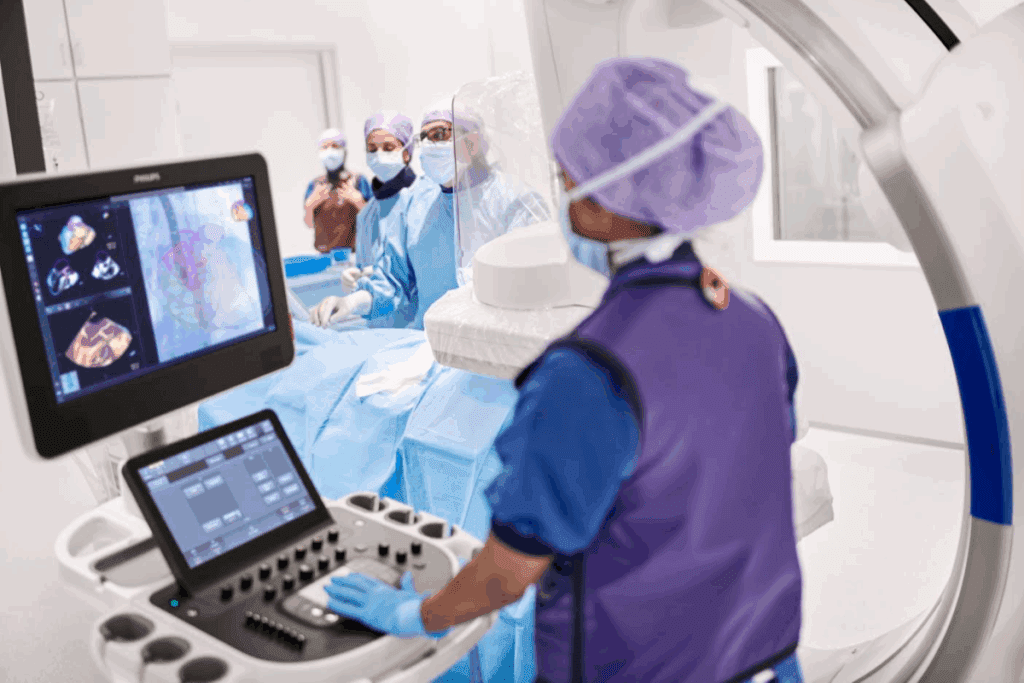
Imaging guidance is key in interventional pain procedures. It ensures precision and accuracy in treatment delivery. Tools like fluoroscopy, ultrasound, or CT scans help doctors see the target area live. This makes sure the procedure is done right.
This accuracy boosts treatment success and lowers the chance of problems. It makes these procedures safer for patients.
Minimally Invasive Approaches and Quick Recovery
Interventional pain procedures are minimally invasive. This means less damage and trauma than traditional surgery. It leads to faster recovery times, letting patients get back to their lives sooner.
Also, the risk of complications goes down. Many procedures can be done without needing to stay in the hospital. This makes them a good choice for many patients.
Epidural Steroid Injections for Spine-Related Pain
We use epidural steroid injections to treat spine-related pain. They help those with chronic back pain. These injections are great for herniated discs and spinal stenosis.
Targeting Inflammation
Epidural steroid injections target spine pain by reducing inflammation. They deliver steroids to the epidural space around the spinal cord. This pain intervention is key for those who haven’t found relief elsewhere.
Cervical, Thoracic, and Lumbar Applications
These injections can be used in different spine areas. The choice depends on where the pain is. For example, cervical epidural injections help with neck pain, and lumbar injections target lower back pain. Each back procedure for pain is customized for the patient’s needs.
Expected Duration of Relief and Repeat Treatments
The relief from epidural steroid injections varies. Some feel better for weeks to months, while others have longer relief. If pain comes back, more treatments might be needed. It’s important to talk about the risks and benefits of ir injections with a doctor.
Considering back pain procedures, epidural steroid injections are a good option. Knowing how they work and their uses helps patients make better choices for their treatment.
Facet Joint Injections and Medial Branch Blocks
Facet joint injections and medial branch blocks are key in managing pain from the spine’s facet joints. These treatments help doctors find and treat pain sources more accurately.
Identifying Facet Joint Pain
Facet joint pain can be hard to pinpoint, causing pain in the neck or back. Facet joint injections help figure out if the pain comes from these joints. Doctors inject a local anesthetic into the suspected joint to see if it’s the pain source.
These injections mix a local anesthetic with a corticosteroid. The anesthetic gives quick relief if the joint is the pain source. The corticosteroid helps reduce inflammation, leading to longer relief.
Diagnostic vs. Therapeutic Benefits
Facet joint injections have both diagnostic and therapeutic uses. They help find out if a joint is causing pain. They also offer pain relief by reducing inflammation in the joint.
Medial branch blocks are another tool to find facet joint pain. They involve injecting anesthetic onto the nerves that supply the joints. If pain relief follows, it shows the joint is likely the pain source.
Combining with Radiofrequency Ablation for Longer Relief
For those who get relief from facet joint injections or medial branch blocks, radiofrequency ablation (RFA) can be a good next step. RFA uses radio waves to heat and destroy the nerves of the painful joint, leading to longer pain relief.
Using diagnostic blocks followed by RFA can extend pain relief for months to a year or more. Studies show that patients who get RFA after positive blocks can enjoy long-lasting pain relief.
| Procedure | Diagnostic Benefit | Therapeutic Benefit | Potential Duration of Relief |
| Facet Joint Injections | Confirms if facet joint is pain source | Provides pain relief through corticosteroid | Several weeks to months |
| Medial Branch Blocks | Identifies if medial branches are involved in pain | Temporary pain relief | Hours to days |
| Radiofrequency Ablation | N/A | Long-term pain relief by ablating nerves | Several months to a year or more |
Radiofrequency Ablation: Extended Pain Relief
Radiofrequency ablation uses radio waves to heat up nerves, stopping them from sending pain signals. This method is getting a lot of attention for its long-lasting pain relief. It also has a short recovery time.
The Science Behind Nerve Deactivation
This method creates a heat lesion in nerves to block pain signals. Advanced imaging helps target the nerves accurately, making the procedure safe and effective.
To start, a special needle is placed near the nerve. Then, it sends out radio waves that heat up the nerve, stopping it from sending pain signals.
Target Conditions and Patient Selection
Radiofrequency ablation works well for several pain types:
- Facet joint arthritis
- Sacroiliac joint dysfunction
- Cervical, thoracic, or lumbar facet joint pain
Choosing the right patient is key for success. The best candidates have tried other treatments and have a confirmed diagnosis.
Impressive Success Rates and Duration
Many studies show that radiofrequency ablation helps a lot of people. Most people see relief for 6 to 12 months or more.
Some main advantages are:
- It’s minimally invasive and has quick recovery
- It offers long-lasting pain relief
- It reduces the need for pain meds
- It improves life quality
It’s important to talk to a doctor about the risks and benefits. This helps decide if radiofrequency ablation is right for you.
Spinal Cord Stimulation for Chronic Back and Limb Pain
Spinal cord stimulation is a new way to treat chronic back and limb pain. It’s a minimally invasive pain procedure. A device is implanted to send electrical signals to the spinal cord. This stops pain signals from reaching the brain.
We offer spinal cord stimulation to those who haven’t found relief elsewhere. It targets the spinal cord directly. This can greatly reduce chronic pain, making life better for those affected.
Changing Pain Perception through Neuromodulation
Neuromodulation through spinal cord stimulation changes how we feel pain. It sends electrical impulses to the spinal cord. These impulses block pain signals from reaching the brain, reducing pain.
The exact way spinal cord stimulation works is complex. But, it’s known to change pain processing long-term. This leads to lasting pain relief.
The Trial Period: Testing Before Commitment
A trial period comes before a permanent implant. It tests if spinal cord stimulation works for the patient. A temporary stimulator is implanted for a short test.
This trial is key. It lets the patient and doctor see if the therapy helps. If it does, a permanent implant can be considered.
Advances in Spinal Cord Stimulation Technology
New technology in spinal cord stimulation has made it better. Modern devices can control stimulation more precisely. This means therapy can be tailored to each person.
Better battery technology also means longer battery life. This means less need for replacements. These advancements make spinal cord stimulation a good choice for chronic pain management.
Joint Injections and Viscosupplementation
Joint injections and viscosupplementation are key in managing pain. They help with different joint issues. These methods involve putting medicine or substances into the joint. This reduces inflammation, eases pain, and boosts joint function.
Corticosteroid Injections for Inflammation
Corticosteroid injections are a common fix for joint inflammation. They put steroids right into the joint. This cuts down swelling and pain a lot. It’s great for those with arthritis or other joint inflammation.
The benefits of corticosteroid injections include:
- Rapid reduction in inflammation
- Effective pain relief
- Minimally invasive procedure
Hyaluronic Acid for Knee Osteoarthritis
Viscosupplementation uses hyaluronic acid in the knee for osteoarthritis. Hyaluronic acid is something our bodies make to keep joints lubricated. Adding more of it helps the joint move better, reduces pain, and boosts mobility.
It’s worth noting that viscosupplementation is used when other treatments don’t work well.
Sacroiliac Joint Injections for Lower Back Pain
Sacroiliac joint injections aim at lower back pain from the sacroiliac joint. They mix a local anesthetic with a corticosteroid for quick and lasting pain relief. This method is often used to find and treat sacroiliac joint dysfunction, a big cause of lower back pain.
The key advantages of sacroiliac joint injections are their targeted pain relief. They help figure out if the sacroiliac joint is causing the pain.
Innovative Procedures for Specific Conditions
New interventional techniques offer hope for those with specific conditions. We’ve seen big steps forward in pain management. These new procedures target the pain’s source, helping where old methods fail.
Kyphoplasty and Vertebroplasty for Spine Fractures
Spine fractures can be very painful. Kyphoplasty and vertebroplasty are new, less invasive ways to treat them. They inject bone cement into the fractured vertebra to stabilize it and ease pain. These methods have shown to give quick relief and improve life quality for those with vertebral compression fractures.
MILD Procedure for Lumbar Spinal Stenosis
Lumbar spinal stenosis narrows the spinal canal, causing nerve pressure and pain. The MILD procedure is a small, non-invasive treatment. It removes a bit of bone and ligament to open up the canal, easing nerve pressure and pain. It’s great for those who haven’t found relief with other treatments.
Occipital Nerve Blocks for Migraines and Headaches
Occipital nerve blocks help those with migraines and chronic headaches. This method involves injecting a local anesthetic and steroid around the occipital nerves. It reduces inflammation and blocks pain signals. Occipital nerve blocks can offer a lot of relief for those with frequent or severe headaches.
Peripheral Nerve Stimulation for Localized Pain
Peripheral nerve stimulation is a new way to manage pain. It involves implanting a device that sends electrical impulses to specific nerves. This stops pain signals from reaching the brain. It’s a new hope for those with pain that other treatments can’t help.
Conclusion: Finding Your Path to Effective Pain Relief
Interventional pain management is a modern solution for chronic pain. We’ve looked at procedures like epidural steroid injections and spinal cord stimulation. These offer quick and effective relief.
Knowing about these procedures is a big step towards a better life. It’s key to get professional help for chronic pain. A healthcare provider can find the best treatment for you.
Getting relief from pain is possible. With the right healthcare team, you can find a treatment that fits your needs. This way, you can live a more comfortable and active life.
FAQ
What are interventional pain procedures?
Interventional pain procedures are treatments that target pain pathways. They help people with chronic pain. These methods are often better than traditional pain management.
How do interventional pain procedures work?
These procedures interrupt pain pathways and reduce inflammation. They use imaging to guide the treatment. This makes them quick and effective.
What is the role of imaging guidance in interventional pain procedures?
Imaging helps place injections accurately. It makes the procedures safer and more effective.
What are epidural steroid injections used for?
Epidural steroid injections target spine inflammation. They help with pain in the spine, including the neck and lower back.
How long does relief from epidural steroid injections last?
Relief can last weeks to months. If it works, you might need more treatments.
What are facet joint injections and medial branch blocks used for?
These injections treat facet joint pain. They offer relief and can be used with radiofrequency ablation for longer pain control.
How does radiofrequency ablation work?
It uses heat to stop pain signals. This gives long-term relief for facet joint pain.
What is spinal cord stimulation?
It involves a device that sends impulses to the spinal cord. This changes pain perception and relieves chronic pain.
What are joint injections and viscosupplementation used for?
These injections treat joint inflammation. They help with knee osteoarthritis and lower back pain.
What are some innovative interventional pain procedures?
New procedures include kyphoplasty and vertebroplasty for spine fractures. The MILD procedure helps with spinal stenosis. Occipital nerve blocks treat migraines. Peripheral nerve stimulation targets specific pain areas.
Are interventional pain procedures right for me?
They might help if traditional methods haven’t worked. Talk to a pain specialist to see if they’re right for you.
What is an interventional pain specialist?
They are doctors trained in chronic pain treatment. They use injections and devices for pain relief.
What is the MILD procedure?
It’s a treatment for spinal stenosis. It removes bone and tissue to relieve nerve pressure. This eases pain and discomfort.
References
Mauri, G., et al. (2025). Evaluating the quality of online medical information videos on vertebroplasty and kyphoplasty for spinal fractures. Skeletal Radiology, 54, 1343–1352. https://pubmed.ncbi.nlm.nih.gov/40473987/