Last Updated on November 26, 2025 by Bilal Hasdemir
Computed Tomography (CT) scanning has changed the game in medicine. It’s fast and precise, making it a key part of modern healthcare. At Liv Hospital, we are committed to providing advanced diagnostic care with our top-notch CT scan radiology procedures.
We understand the importance of safety and accuracy in CT scan procedures. Our team uses the latest technology and follows strict safety protocols. This ensures our patients get the best care possible. CT scan radiology is a top choice worldwide, and we make sure we’re always up to date.
Key Takeaways
- CT scan radiology is a key tool in modern healthcare.
- Liv Hospital is dedicated to safe and advanced CT scan procedures.
- Computed Tomography (CT) scanning offers precision and speed in diagnostic imaging.
- We prioritize the latest technology and safety protocols in CT scan radiology.
- Our commitment is to delivering high-quality diagnostic care through state-of-the-art CT scan procedures.
Understanding What Is a CT Scan Radiology
CT scan radiology is a key imaging method in today’s healthcare. It gives us detailed pictures of the body’s inside. This helps doctors diagnose and treat many health issues.
The Science Behind Computed Tomography
CT scans use X-rays to make clear images of the body’s inside. A CT scanner moves around the patient, taking data. Then, a computer turns this data into detailed images.
CT scans work because different tissues absorb X-rays differently. This lets them show various body parts clearly. It’s vital for spotting injuries, cancers, and blood vessel problems.
Difference Between CT Scans and Other Imaging Methods
CT scans are different from X-rays, MRI, and ultrasound. They show soft tissues and organs better than X-rays. They’re quicker than MRI, perfect for urgent cases. Ultrasound is good for some organs, but CT scans see more.
Key advantages of CT scans include:
- High-resolution imaging of bones, soft tissues, and blood vessels
- Rapid scanning time, making it ideal for emergency diagnostics
- Ability to guide interventional procedures with precision
Knowing how CT scans work helps doctors and patients. This technology helps make diagnoses better and treatments more effective.
Essential Fact #1: The Prevalence of CT Procedures in Modern Healthcare
CT procedures are common in healthcare across the United States. They are key in diagnosing and planning treatments. CT scan radiology is essential in today’s healthcare.
2023 Statistics: 93 Million CT Procedures in the US Annually
In 2023, about 93 million CT procedures were done in the US. This shows how much computed tomography radiology is used for diagnosis. The many CT scans done each year prove their importance in healthcare.
The Critical Role of CT Scans in Diagnostic Medicine
CT scans are vital in diagnostic medicine. They give detailed images of the body. Doctors use these images to find many conditions, like injuries, infections, cancers, and vascular diseases.
CT scans are also key in emergency situations. Quick diagnosis is critical. The info from CT scans helps in personalized treatment planning. This makes patient care more effective. As technology gets better, CT scans will play an even bigger role in healthcare.
Essential Fact #2: Common Types of CT Scan Procedures
CT scan radiology is very versatile, covering many procedures for different health issues. We use CT scans to check for injuries, cancers, and heart diseases. Each procedure is designed to meet specific needs.
Abdomen and Pelvis CT Scans: The Most Frequently Performed
Abdomen and pelvis CT scans are very common. They help find problems with organs like the liver and kidneys. They also spot cancers and injuries in these areas.
We often use these scans to:
- Find the cause of belly pain
- Check for cancers and see how treatments are working
- Help with biopsies and other procedures
- Look at injuries to organs in the belly
Brain, Chest, and Specialized CT Procedures
CT scans also cover other body parts. Brain CT scans are key for spotting strokes and brain injuries. Chest CT scans check for lung diseases and heart issues.
Specialized CT procedures include:
- High-resolution scans for lung details
- CT angiography for blood vessel views
- CT perfusion scans for blood flow checks
Contrast vs. Non-Contrast CT Scan Procedures
CT scans can be with or without contrast dye. Contrast CT scans use dye to make certain areas clearer. Non-contrast CT scans don’t use dye and are used in emergencies or when dye isn’t needed.
We use contrast CT scans to:
- Make blood vessels and lesions clearer
- Distinguish between different tissues
- Get detailed images of organs and structures
The table below shows the main differences between contrast and non-contrast CT scans:
| Characteristics | Contrast CT Scans | Non-Contrast CT Scans |
| Use of Contrast Material | Yes | No |
| Visibility of Structures | Enhanced visibility of blood vessels and lesions | Limited visibility of certain structures |
| Common Applications | Diagnosing vascular diseases, certain cancers | Emergency situations, detecting hemorrhages, kidney stones |
The Complete CT Scan Procedure: Patient Experience
Learning about the CT scan procedure can make patients feel less anxious. We help patients through each step, from getting ready to after the scan. This ensures a smooth experience. Doctors consider the benefits and risks before suggesting a CT scan radiology procedure.
Preparation Guidelines for Different CT Procedures
Preparation for a CT scan changes based on the procedure type. Some scans might require fasting or avoiding certain medicines. We give clear instructions to help patients get ready for their CT procedures.
- For abdomen and pelvis CT scans, patients may need to drink a contrast material to highlight the areas of interest.
- Brain CT scans usually need no special preparation, but patients must remove any metal objects.
What Happens During and After Your CT Scan
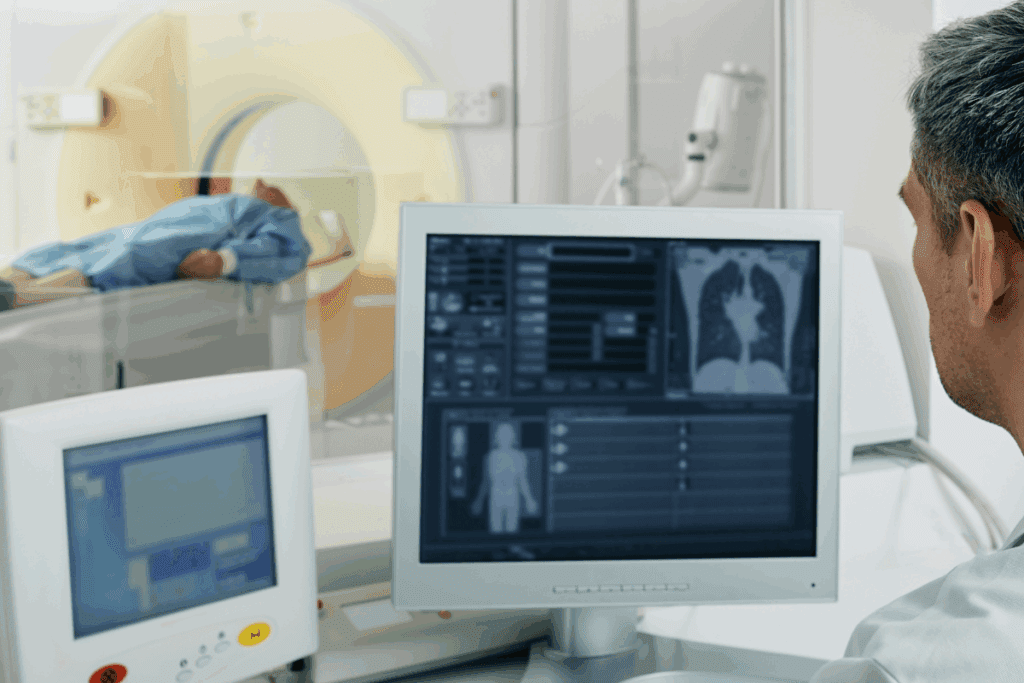
During the CT scan, patients lie on a table that slides into a large, doughnut-shaped machine. The scan is quick, lasting just a few minutes. Our radiologists and technicians are there to make sure patients are comfortable and safe.
After the scan, patients can usually go back to their normal activities unless told not to. We look at the images and share the results with the doctor. The doctor then talks to the patient about what the scan found.
Essential Fact #3: Radiation Exposure in CT Rontgen Imaging
Radiation exposure is a big worry with CT scans. It’s important for patients to know about it. We’ll look at how much radiation CT scans use and the risks. This will help patients make smart choices.
Understanding CT Radiation Levels
CT scans use X-rays to see inside the body. The radiation from a CT scan depends on the scan type, body part, and technology. CT scans usually give more radiation than regular X-rays.
A CT scan of the abdomen and pelvis can expose you to about 10 millisieverts (mSv) of radiation. This is more than the 3 mSv of background radiation we get each year. The dose from a CT scan can be between 2 to 10 mSv, based on the scan and scanner.
Research Finding: CT Scans and the 5% Cancer Risk Connection
Studies have found a link between CT scan radiation and cancer. They say CT scans might cause nearly 5 percent of new cancer cases each year. This shows how important it is to think about the risks and benefits of CT scans.
The link between CT radiation and cancer is not simple. The dose, patient age, and number of scans all affect the risk. Young people are more at risk because they have more years of life ahead and their bodies are more sensitive.
| CT Scan Type | Typical Radiation Dose (mSv) | Cancer Risk Estimate |
| Head CT | 2 | Low |
| Chest CT | 7 | Moderate |
| Abdomen and Pelvis CT | 10 | Higher |
Patients should talk to their doctors about their risks. Knowing the risks and benefits helps patients decide if a CT scan is right for them.
Essential Fact #4: Technological Advancements in Computed Tomography Radiology
The field of computed tomography radiology is seeing big changes. These changes make both patient safety and diagnosis better. New technologies are changing how CT scans are done.
Photon-Counting CT: Revolutionary Imaging Technology
Photon-counting CT is a big leap in CT technology. It gives more detailed images by counting photons, not just total energy. This means doctors can make more accurate diagnoses.
A study in the Journal of Computed Tomography shows photon-counting CT’s promise. It’s great for finding small lesions and in complex anatomy. It’s set to become more common, improving CT scan radiology.
Dose Reduction Protocols: Making CT Procedures Safer
New dose reduction protocols are also making CT scans safer. These protocols cut down radiation while keeping image quality good. Techniques like automated tube current modulation and iterative reconstruction are key.
Here’s a table comparing different dose reduction methods:
| Dose Reduction Technique | Description | Effectiveness |
| Automated Tube Current Modulation | Adjusts X-ray tube current based on patient size and anatomy | Up to 50% dose reduction |
| Iterative Reconstruction Algorithms | Improves image quality while reducing noise | Up to 70% dose reduction |
| Low-KVp Imaging | Reduces X-ray energy to decrease dose | Up to 30% dose reduction |
Dr. Cynthia McCollough says, “Dose reduction protocols are key for safer CT scans. They’re vital for patients needing many scans.”
“The future of CT scan radiology lies in its ability to balance diagnostic accuracy with patient safety, and dose reduction protocols are a significant step in this direction.”
We’re committed to using these new technologies for better patient care. By keeping up with CT tech, we ensure our patients get the best care and treatments.
Clinical Applications: When CT Scan Procedures Are Necessary
CT scans are key in many medical areas. They give detailed images of the body’s inside. This makes them very useful in different medical situations.
Emergency and Trauma Assessment
In emergency care, CT scans are often the first choice. They quickly spot internal injuries, bleeding, or serious conditions. This helps doctors make quick decisions for patient care.
For example, in head trauma, a CT scan can find bleeding or fractures fast. This guides the treatment right away.
Cancer Detection and Staging
CT scans are also vital in cancer care. They show the size and spread of tumors. This is key for planning treatment.
They help see if cancer has spread. This information is very important for treatment plans.
Neurological and Cardiovascular Diagnostics
In neurology, CT scans help diagnose strokes and other brain issues. For heart health, they show the heart and blood vessels. This helps check for heart disease and see how well the heart works.
These uses show how important CT scans are in medicine. They help in emergencies, with cancer, and for heart and brain health.
Cat Scan vs. CT Scan: Understanding the Terminology
In medical imaging, ‘CT scan’ and ‘CAT scan’ are often used the same way. But, their history is quite interesting. Let’s dive into how these terms came to be and what they mean.
The Evolution from CAT Scan to CT Scan Terminology
In the early 1970s, ‘CAT scan’ was the term for Computed Axial Tomography. This technology was a big leap, showing body parts in cross-sections. At first, ‘CAT scan’ was fitting because it described the process well: ‘Computed Axial Tomography.’
As technology got better, ‘Computed Tomography’ became the better term. So, ‘CT scan’ became the standard term.
Dr. Willi Kalender, a key figure in CT technology, said, “The switch from CAT to CT scan shows how technology has improved and imaging has gotten more complex.” This change in words shows how far medical imaging has come.
“The transition from CAT to CT scan reflects the technological advancements and the shift towards more sophisticated imaging techniques.” – Dr. Willi Kalender
Common Misconceptions About CT Scan Radiology Terms
Many think ‘CT scan’ and ‘CAT scan’ are different. But, they’re the same, with ‘CT scan’ being the newer, correct term. Some also think the name change means new technology, but it doesn’t.
| Term | Meaning | Usage |
| CAT Scan | Computed Axial Tomography | Older terminology, less commonly used now |
| CT Scan | Computed Tomography | Current and preferred terminology |
Knowing the right terms helps patients and doctors talk better. As medical imaging keeps getting better, it’s key to know the correct terms.
We hope this clears up any confusion between ‘CT scan’ and ‘CAT scan.’ Both are for the same tool, but ‘CT scan’ is the newer, more precise term.
Essential Fact #5: Balancing Benefits and Risks in Modern CT Procedures
In today’s healthcare world, it’s key to weigh the good and bad of CT scans. They are great for finding problems, but we must think about how they affect our health.
We need to look at both sides of CT scans to use them right. This means knowing about the latest in CT scan technology and how it helps patients.
The Risk-Benefit Analysis of CT Scan Radiology
Doing a detailed risk-benefit check is vital for deciding when to use CT scans. We must compare the good they do against the bad, like radiation risks.
Key factors in this analysis include:
- The clinical justification for the CT scan
- The possible use of other tests
- The patient’s health history and risks
- The latest in CT scan tech
| Factor | Benefit | Risk |
| Clinical Justification | Accurate diagnosis | Unnecessary radiation exposure |
| Alternative Diagnostics | Less radiation | Lower accuracy |
| Patient History | Personalized care | Higher risk of problems |
Current Trends: Appropriate Use and Alternative Diagnostics
Today, we focus on using CT scans wisely and looking for other ways to diagnose. This means finding ways to use less radiation and exploring other imaging options.
We’re moving towards using CT scans in a more tailored way. This means thinking about each patient’s unique situation to make the most of CT scans.
By finding a balance in CT scan use, we can get the most out of them while keeping risks low. This takes ongoing learning, new tech, and sticking to what the evidence shows.
Special Considerations for Pediatric and Recurring CT Scans
Pediatric patients need special care when getting CT scans to lower radiation exposure. Children are more vulnerable to radiation than adults. So, we take extra steps to protect them during CT scans.
Minimizing Radiation Exposure in Children
We use several ways to cut down radiation for kids. First, we adjust the CT scan settings based on the child’s size and age. We also look for other imaging options that don’t use ionizing radiation, like ultrasound or MRI.
- Adjusting CT scanner settings to accommodate smaller body sizes
- Using shielding to protect sensitive areas from radiation
- Limiting the scan area to only what’s necessary for diagnosis
Managing Cumulative Radiation from Multiple CT Procedures
For patients needing many CT scans, keeping track of radiation is key. We keep detailed records of each patient’s scans to see their total radiation dose. This helps us decide if more scans are needed and if there are other ways to diagnose.
Some ways to handle this include:
- Carefully evaluating the need for each CT scan
- Using the lowest effective dose of radiation necessary for diagnostic quality images
- Monitoring patients’ cumulative radiation exposure over time
By following these steps, we reduce risks from repeated CT scans. We make sure our patients get the care they need without too much radiation.
Conclusion: The Future of CT Scan Radiology
CT scan radiology is key in today’s healthcare. It helps doctors make accurate diagnoses and plan treatments. At Liv Hospital, we use the newest CT scan tech to give our patients top-notch care.
The future of CT scans looks bright. New tech aims to cut down on radiation and make images clearer. Things like photon-counting CT and dose reduction are changing the game.
We’re all in on these new developments. Our goal is to keep our patients safe and well-cared for. By embracing these advancements, we help improve health outcomes and push medical science forward.
FAQ
What is a CT scan radiology?
CT scan radiology, also known as computed tomography, is a medical imaging method. It uses X-rays and computer technology to create detailed images of the body’s cross-sections.
How does a CT scan work?
A CT scan works by rotating an X-ray machine around the body. It captures images from different angles. Then, a computer software reconstructs these images into detailed pictures.
What is the difference between a CT scan and a CAT scan?
There is no difference between a CT scan and a CAT scan. Both terms refer to the same technology. “CT” is the more modern and preferred term.
Are CT scans safe?
CT scans are generally safe. But, they involve exposure to ionizing radiation. This carries a small risk of cancer and other health effects, mainly with repeated or high-dose scans.
How can radiation exposure be minimized during a CT scan?
To minimize radiation exposure, use the lowest necessary dose. Optimize scan protocols and employ dose reduction technologies, like photon-counting CT.
What are the benefits of using contrast agents in CT scans?
Contrast agents make certain tissues, organs, or blood vessels more visible. This improves the accuracy of CT scans, which is important for cancer detection and vascular imaging.
How do I prepare for a CT scan?
To prepare for a CT scan, remove any metal objects and wear loose clothing. You might need to fast or avoid certain medications, depending on the scan and facility protocols.
What are the common applications of CT scans in medicine?
CT scans are used in emergency and trauma assessment, cancer detection and staging, and neurological and cardiovascular diagnostics. They are used where detailed imaging is needed.
Can children undergo CT scans, and are there any special considerations?
Yes, children can undergo CT scans. Special considerations are needed to minimize radiation exposure. This includes using child-sized protocols and adjusting dose parameters.
How are CT scans used in cancer diagnosis and treatment?
CT scans are vital in cancer diagnosis, staging, and treatment monitoring. They help detect tumors, assess their extent, and guide interventions like biopsies or radiation therapy.
References
Mauri, G., et al. (2025). Evaluating the quality of online medical information videos on vertebroplasty and kyphoplasty for spinal fractures. Skeletal Radiology, 54, 1343–1352. https://pubmed.ncbi.nlm.nih.gov/40473987/