Last Updated on December 5, 2025 by Bilal Hasdemir
Explore the strategic use of this drug. We analyze can immunotherapy cure stage 4 cancer and why it is often reserved as a late-stage or relapse option.
Despite big steps forward in immunotherapy, it’s often seen as a last choice for many with cancer. In the past, immunotherapy wasn’t the first option because it wasn’t always effective for everyone.
But, with new tech and a better grasp of how our immune system works, immunotherapy is now more reliable. It’s used to fight different kinds of cancer.

The way we view immunotherapy in cancer treatment is changing. As science keeps moving forward, it’s becoming a key part of fighting cancer.
Key Takeaways
- Immunotherapy has evolved from a last resort to a vital part of cancer treatment protocols.
- Advancements in medical technology have improved the efficacy of immunotherapy.
- Immunotherapy is now used to treat various types of cancer.
- The role of immunotherapy in cancer treatment is expanding with ongoing research.
- Immunotherapy offers new hope for patients with limited treatment options.
The Evolution of Immunotherapy in Cancer Treatment
Immunotherapy’s journey from its early beginnings to today’s cancer care is amazing. The idea of using the immune system to fight cancer started in the late 19th century. But, it wasn’t until the late 20th century that it became a real option for cancer treatment.
A striking visual evolution of immunotherapy, showcasing its transformative impact on cancer treatment. In the foreground, a series of silhouetted figures representing the progression of immunotherapeutic approaches, from early experimental stages to the cutting-edge therapies of today. The middle ground features a vibrant, colorful cascade of molecular structures and cellular mechanisms, symbolizing the scientific advancements that have propelled this field. In the distant background, a hazy, ethereal landscape of hope and possibility, hinting at the promising future of immunotherapy. Lighting is warm and golden, casting a sense of optimism and wonder. The overall composition is dynamic, with a sense of movement and progress, reflecting the dynamic nature of this revolutionary field.
Historical Perspective on Immunotherapy
William Coley first suggested immunotherapy in the 1890s. He noticed that cancer patients got better after infections. This led to Coley’s toxins, an early immunotherapy.
In the 1970s and 1980s, immunotherapy really started to take off. This was thanks to the discovery of interleukins and interferons.
Advancements in technology and understanding the immune system have pushed immunotherapy forward. The 1990s brought monoclonal antibodies, a big step in targeted cancer therapy.
Shift from Last Resort to Integrated Approach
At first, immunotherapy was seen as a last resort for advanced cancer. But, as research grew, it became clear it could work earlier. Now, it’s often used with other treatments like chemotherapy and radiation to make it more effective.
Immunotherapy is now a key part of cancer care. It offers long-term survival and better quality of life. This change shows we now see cancer as a complex disease needing many treatments.
Key Milestones in Immunotherapy Development
There have been many important moments in immunotherapy’s growth. The approval of checkpoint inhibitors like ipilimumab and pembrolizumab has changed cancer treatment. CAR-T cell therapy has also shown great results in blood cancers.
- The development of cancer vaccines, such as sipuleucel-T for prostate cancer.
- The use of oncolytic viruses, like talimogene laherparepvec, to selectively infect and kill cancer cells.
- The exploration of combination regimens to enhance immunotherapy’s effectiveness.
These steps highlight how fast immunotherapy is evolving. It’s becoming more and more important in fighting cancer.
Understanding How Immunotherapy Works
Immunotherapy uses the immune system to fight cancer. It makes the body’s defenses stronger to attack cancer cells better.
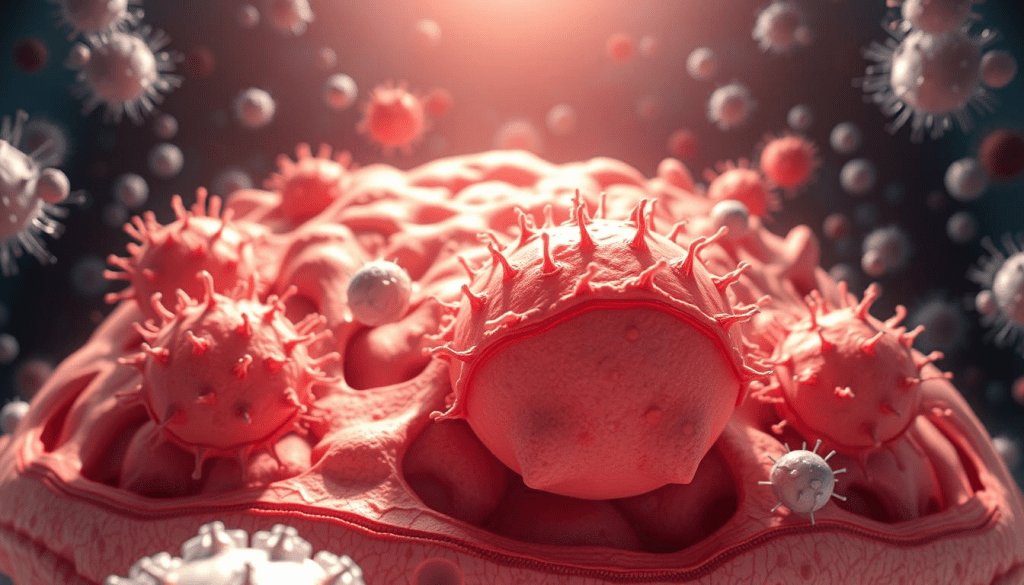
A detailed cross-section of the human immune system in action, highlighting the role of immunotherapy. In the foreground, a group of T-cells and B-cells engage with a cancerous tumor, their surfaces bristling with receptors. In the middle ground, dendritic cells present tumor antigens to the immune cells, stimulating a targeted response. In the background, cytokines and chemokines facilitate communication and coordination between the various immune components. Bright, diffuse lighting illuminates the scene, casting a warm, hopeful tone. Rendered in a highly realistic, scientifically accurate style using a high-resolution, wide-angle lens to capture the intricate details.
Mechanism of Action: Harnessing the Immune System
The immune system protects us from diseases. Immunotherapy boosts this system. It makes immune cells better at finding and fighting cancer cells.
This way, the immune system can target cancer cells without harming healthy ones.
Immunotherapy also works by blocking the immune checkpoints. Cancer cells hide from the immune system by using these checkpoints. By stopping these checkpoints, immunotherapy lets the immune system fight cancer more effectively.
Types of Immunotherapy Treatments
There are many ways to use immunotherapy to fight cancer:
- Checkpoint Inhibitors: These drugs let the immune system attack cancer cells better.
- Adoptive Cell Therapy: This method takes immune cells from the patient, changes them to fight cancer, and puts them back in.
- Monoclonal Antibodies: These are special antibodies that find and mark cancer cells for the immune system to destroy.
- Cancer Vaccines: These vaccines help the immune system learn to fight cancer cells.
Knowing about these immunotherapy types is key to making good treatment plans. As research improves, immunotherapy’s role in fighting cancer will grow.
Traditional Cancer Treatment Hierarchy
It’s key for patients to grasp the traditional cancer treatment hierarchy. Cancer treatment has a structured approach, starting with primary treatments and moving to more specialized ones.
Surgery as First-Line Treatment
Surgery is often the first step in treating many cancers, mainly those that are localized. The aim is to remove the tumor and any affected tissue around it. Sometimes, surgery is paired with chemotherapy or radiation therapy to kill all cancer cells.
In early-stage breast cancer, surgery like a lumpectomy or mastectomy is common. The choice depends on the cancer stage, tumor size, and the patient’s health.
Radiation Therapy Applications
Radiation therapy is a primary cancer treatment. It uses high-energy particles or waves to destroy cancer cells. It can be used alone or with surgery and chemotherapy.
There are different types of radiation therapy. External beam radiation therapy (EBRT) delivers radiation from outside the body. Brachytherapy places radioactive material inside or near the tumor.
| Type of Radiation Therapy | Description | Common Applications |
| External Beam Radiation Therapy (EBRT) | Delivers radiation from outside the body | Various cancers, including prostate, breast, and lung cancer |
| Brachytherapy | Involves placing radioactive material inside or near the tumor | Prostate, cervical, and breast cancers |
Chemotherapy’s Role in Cancer Care
Chemotherapy uses drugs to kill cancer cells. It’s used when cancer has spread or to reduce recurrence risk after surgery. Chemotherapy can be given orally or through an IV, depending on the drugs and patient’s condition.
“Chemotherapy remains a cornerstone in the treatment of various cancers, targeting cancer cells that may have spread throughout the body.” – Expert in Immunotherapy
Targeted Therapies Before Immunotherapy
Before immunotherapy, targeted therapies were developed for cancers with specific genetic mutations. These therapies target cancer cells’ unique features, sparing normal cells.
Examples include HER2-targeted therapies for HER2-positive breast cancer and EGFR inhibitors for non-small cell lung cancer with EGFR mutations. Targeted therapies have improved outcomes for patients with these cancers.
zAs we learn more about cancer, it’s vital to understand traditional treatments. Immunotherapy is important, but knowing traditional treatments helps us appreciate cancer care advancements.
Factors That Historically Made Immunotherapy a Last Resort
Immunotherapy was once seen as a last choice for cancer treatment. This was because of several big hurdles. We’ll dive into these obstacles.
Immunotherapy uses the body’s immune system to fight cancer. But, it faced skepticism early on because of its drawbacks. Early trials showed it had challenges compared to traditional treatments.
Limited Efficacy in Early Clinical Trials
Early trials showed limited efficacy. Many patients didn’t respond well. This made it hard to choose immunotherapy over other treatments.
Unpredictable Patient Responses and Response Rates
Another issue was the unpredictability of patient responses. Some patients did great, while others didn’t respond at all. This made it tough to know who would benefit.
Severity of Immune-Related Adverse Events
The severity of immune-related adverse events was a big worry. These events, like colitis and pneumonitis, could be severe. This raised safety concerns about immunotherapy.
Lack of Reliable Biomarkers for Patient Selection
There was also a lack of reliable biomarkers for choosing the right patients. Biomarkers help pick the best treatment for each patient. Without them, using immunotherapy was harder.
By facing and solving these issues, researchers and doctors have made immunotherapy better. They’ve also found ways to better choose who should get it.
How Is Immunotherapy Administered?
Immunotherapy can be given in several ways, each with its own benefits. The method chosen depends on the cancer type, the immunotherapy type, and the patient’s health.
Intravenous Administration Methods
Intravenous (IV) is a common way to give immunotherapy. It involves injecting the treatment into a vein, usually in the arm. IV allows for high doses and precise dosing, making it suitable for many treatments.
Benefits of IV Administration: It allows for high doses, precise dosing, and is good for many immunotherapies.
Oral and Subcutaneous Options
Immunotherapy can also be given orally or subcutaneously. Oral immunotherapy is taken as pills or liquids. Subcutaneous administration involves injecting the treatment under the skin.
- Oral administration is easy and convenient, making it popular among patients.
- Subcutaneous injections are less invasive and deliver the treatment locally.
Treatment Schedules and Duration
The treatment schedule and duration vary based on the treatment and patient response. Some treatments are given in cycles with rest periods. Others are given continuously.
| Treatment Type | Administration Frequency | Typical Duration |
| IV Immunotherapy | Every 2-4 weeks | Several months to a year or more |
| Oral Immunotherapy | Daily | Varies; often until disease progression |
| Subcutaneous Immunotherapy | Weekly to monthly | Several months to several years |
Monitoring During Administration
Monitoring patients during immunotherapy is key to manage side effects and check treatment success. Healthcare providers watch for immune-related side effects and adjust treatment plans as needed.
Current Status of Immunotherapy Approvals
Over 150 immunotherapy treatments have been approved by the FDA. This is a big step in fighting cancer. It has opened new doors for patients who had few options before.
FDA Approval Statistics
The FDA has approved over 150 immunotherapy treatments. This shows how important immunotherapy is in cancer care. Immune checkpoint inhibitors have been key, making up 81% of approvals.
These inhibitors help the immune system fight cancer better. Their success has made immunotherapy a common treatment for many cancers.
Immune Checkpoint Inhibitors: A Dominant Force
Immune checkpoint inhibitors are leading in approvals. They help the immune system attack cancer cells. They are used in treating cancers like melanoma, lung cancer, and bladder cancer.
| Cancer Type | Checkpoint Inhibitor | Approval Year |
| Melanoma | Ipilimumab | 2011 |
| Non-Small Cell Lung Cancer | Pembrolizumab | 2015 |
| Bladder Cancer | Atezolizumab | 2016 |
Approval Criteria and Regulatory Considerations
The FDA checks immunotherapy carefully before approving it. They look at how well it works and if it’s safe. They also check for reliable biomarkers to help choose the right patients.
Global Adoption Patterns
Immunotherapy is approved worldwide, not just in the U.S. Different places adopt it at different rates. This depends on their healthcare systems, economies, and cancer types.
Immunotherapy is getting better and will likely play a bigger role in cancer treatment. Ongoing research promises to improve patient care and change cancer treatment for the better.
When Is Immunotherapy Prescribed Today?
Today, doctors consider immunotherapy for many cancer types. It’s no longer just a last resort. The choice to use immunotherapy depends on the cancer type, biomarkers, and the patient’s past treatments.
Cancer Types Most Responsive to Immunotherapy
Some cancers respond well to immunotherapy. These include:
- Melanoma
- Non-Small Cell Lung Cancer (NSCLC)
- Renal Cell Carcinoma
- Bladder Cancer
- Head and Neck Cancer
These cancers often see better results with immunotherapy, alone or with other treatments.
Biomarker Status Requirements (PD-L1 Expression)
The presence of certain biomarkers, like PD-L1, is key. PD-L1 expression is a major biomarker for predicting immunotherapy success in various cancers.
Prior Treatment Failure Criteria
Immunotherapy was once a last resort. But now, it’s considered for those who didn’t respond to other treatments. The decision is based on the patient’s health, cancer type, and other treatment options.
First-Line Immunotherapy Exceptions
In some cases, immunotherapy is used right from the start. This is for cancers known to respond well, like those with high PD-L1 or specific genetic changes. The decision to use it first is made based on the latest guidelines and the patient’s situation.
Can Immunotherapy Cure Stage 4 Cancer?
Immunotherapy has made big strides in treating advanced cancers. This has opened up the possibility of a cure for some. We’re seeing a big change in how we treat stage 4 cancer, with immunotherapy at the forefront.
Success Rates in Advanced Cancers
Immunotherapy has shown great success in fighting advanced cancers. It has improved survival rates and quality of life for many patients. For example, immune checkpoint inhibitors have changed the game for several cancer types.
Non-Small Cell Lung Cancer: 23.2% vs 15.5% Survival Rates
In non-small cell lung cancer (NSCLC), immunotherapy has greatly improved survival rates. Studies show a 23.2% overall survival rate at three years for NSCLC patients treated with immunotherapy. This is much higher than the 15.5% seen with traditional treatments.
| Treatment Type | 3-Year Overall Survival Rate |
| Immunotherapy | 23.2% |
| Chemotherapy | 15.5% |
Achieving “No Evidence of Disease” Status
Immunotherapy’s biggest promise is achieving “no evidence of disease” (NED) status. NED means no detectable cancer in the body, giving hope for long-term survival or even a cure. While not all patients reach NED, the chance is a big step forward in cancer treatment.
Case Studies of Complete Remission in Advanced Disease
There are cases where patients with advanced stage 4 cancer have gone into complete remission with immunotherapy. These cases show immunotherapy’s power to change the disease’s course in some. Research is ongoing to understand what makes these successes happen, aiming to help more patients.
As we keep exploring immunotherapy, we’re seeing big progress in treating stage 4 cancer. There are challenges ahead, but the field’s advancements bring new hope to patients and their families.
Immunotherapy vs. Chemotherapy: Comparing Approaches
It’s important to know the differences between immunotherapy and chemotherapy for treating cancer. We’ll look at how they work, their side effects, and how they affect patients’ lives.
Fundamental Mechanism Differences
Immunotherapy and chemotherapy treat cancer in different ways. Chemotherapy kills cancer cells with chemicals. Immunotherapy boosts the immune system to fight cancer cells.
Chemotherapy attacks both cancer and healthy cells, causing side effects. Immunotherapy is more precise, aiming to protect healthy cells while targeting cancer.
Side Effect Profiles and Management
Chemotherapy and immunotherapy have different side effects. Chemotherapy can cause hair loss, nausea, and fatigue. It affects cells that grow fast, like hair and the gut lining.
Immunotherapy has fewer side effects but can cause immune problems like skin rash and diarrhea. To manage these, doctors might use steroids or other drugs.
Quality of Life Considerations
Both treatments affect quality of life differently. Chemotherapy can make daily life hard due to fatigue and pain. Immunotherapy might offer a better life for some, with fewer side effects for certain cancers.
But, every patient’s experience is unique. The choice between treatments depends on the cancer type, stage, and the patient’s health.
When to Choose Immunotherapy Over Chemotherapy
Choosing immunotherapy over chemotherapy depends on several factors. These include the cancer type, biomarkers like PD-L1, and the patient’s health. For some cancers, like melanoma and lung cancer, immunotherapy is often the first choice.
We’re learning more about when to use immunotherapy. Research aims to find biomarkers that show who will benefit most from it.
Combination Therapies: Enhancing Immunotherapy Effectiveness
Combining different treatments can make immunotherapy work better. This way, we can beat the limits of single treatments and help patients more.
Chemo-Immunotherapy Combinations
Chemo-immunotherapy is a big hope. It mixes chemotherapy with immunotherapy. This mix has shown great results, like an 88.9% response rate in small cell lung cancer.
| Treatment Type | Response Rate | Survival Benefit |
| Chemo-Immunotherapy | 88.9% | Improved overall survival |
| Chemotherapy alone | 60-70% | Variable survival benefit |
A recent study found that mixing chemotherapy with immunotherapy works better. It boosts anti-tumor activity and helps patients more.
“The future of cancer treatment lies in combining different modalities to achieve better outcomes.”
Radiation and Immunotherapy Synergy
Research also looks at mixing radiation therapy with immunotherapy. This mix might make immunotherapy more effective. It could release more tumor antigens and boost the immune response against tumors.
Multi-Agent Immunotherapy Approaches
Multi-agent immunotherapy uses different immunotherapeutic agents. It targets different parts of the immune response. This method might overcome resistance and improve results.
- Checkpoint inhibitors
- Cytokine therapies
- Cancer vaccines
- Adoptive T-cell therapies
Novel Combination Strategies in Development
Scientists are always finding new ways to make immunotherapy better. They’re looking at mixing it with targeted therapies, oncolytic viruses, and other new ideas.
By using these combination therapies, we might change how we treat cancer. We could make treatments more effective and help patients more.
Challenges and Limitations of Immunotherapy
Immunotherapy holds great promise but faces challenges that impact patient results. Despite its groundbreaking role in cancer treatment, several hurdles need to be overcome. This will help make it more effective and accessible to more people.
Primary and Acquired Resistance Mechanisms
One major hurdle is the development of resistance, both primary and acquired. Primary resistance happens when patients don’t respond to treatment right away. Acquired resistance develops as cancer cells find ways to avoid the immune system over time.
Many factors contribute to resistance, like the tumor environment and genetic changes in cancer cells. For example, PD-L1 on tumor cells is important, but its absence doesn’t mean treatment won’t work. It’s key to understand these mechanisms to find ways to beat resistance.
Managing Immune-Related Adverse Events
Immunotherapy can cause immune-related adverse events (irAEs), which can be mild or severe. These happen because treatment targets cancer cells but also affects normal tissues. Managing these side effects requires close monitoring and sometimes using drugs that suppress the immune system.
“The management of immune-related adverse events is a critical aspect of immunotherapy, requiring a multidisciplinary approach to mitigate risks while maintaining therapeutic efficacy.” – Expert in Immunotherapy
Patient Selection Challenges
Choosing the right patients for immunotherapy is a big challenge. Biomarkers like PD-L1 expression help predict response, but they’re not perfect for all cancers. Better biomarkers are needed to find the patients most likely to benefit.
Also, patient-specific factors like health and past treatments are important. A personalized approach, taking into account both the tumor and the patient’s health, is key to better treatment results.
The Future of Immunotherapy in Cancer Treatment
Immunotherapy is set to become a key part of cancer treatment. New methods and technologies are being developed to make it more effective.
Emerging Immunotherapy Approaches
New ways to improve immunotherapy are being explored. These include:
- Cancer vaccines to help the immune system fight cancer
- Adoptive T-cell therapy to make T-cells more effective against cancer
- Oncolytic virus therapy to kill cancer cells and trigger an immune response
A study on PMC shows these methods could greatly help patients.
Biomarker Development for Better Patient Selection
Creating reliable biomarkers is key to finding the right patients for immunotherapy. Biomarkers like PD-L1, tumor mutational burden, and microsatellite instability help predict how well a patient will respond.
| Biomarker | Description | Potential Use |
| PD-L1 Expression | Measures the amount of PD-L1 protein on tumor cells | Predicting response to checkpoint inhibitors |
| Tumor Mutational Burden | Quantifies the number of mutations within a tumor | Identifying patients likely to respond to immunotherapy |
| Microsatellite Instability | A condition of genetic hypermutability | Predicting response to immunotherapy in certain cancer types |
Moving Immunotherapy to Earlier Treatment Lines
Immunotherapy is being used earlier in treatment, which could lead to better outcomes. Studies show it works best when started early.
“The integration of immunotherapy into earlier treatment lines represents a significant shift in cancer care, opening up new chances for better patient outcomes.” –
Personalized Immunotherapy Approaches
Personalized treatments are becoming more common in immunotherapy. This includes treatments based on a patient’s unique genetic profile.
Key aspects of personalized immunotherapy include:
- Neoantigen identification and targeting
- Personalized cancer vaccines
- Tumor profiling to guide treatment decisions
In conclusion, the future of immunotherapy looks promising. New methods, biomarkers, and personalized treatments will change cancer care. As research improves, we can expect better results for patients everywhere.
Conclusion: Redefining Immunotherapy’s Place in Cancer Care
Immunotherapy has changed cancer treatment, bringing hope to patients everywhere. We’ve looked at how it has evolved, how it works, and its role today. Now, it’s seen as a key part of treating cancer, not just a last option.
Adding immunotherapy to treatment plans has opened new doors for patients, even those with advanced cancer. It uses the body’s immune system to target cancer cells. This approach has improved results and life quality for many.
As research keeps moving forward, we expect immunotherapy’s role to grow even more. New methods and combining therapies will likely make it even more important in fighting cancer.
In short, immunotherapy’s role in cancer care has been redefined. Its importance will only increase as we continue to battle cancer.
FAQ
What is immunotherapy, and how does it work?
Immunotherapy is a cancer treatment that uses the immune system to fight cancer. It makes the immune system attack cancer cells. This is done through different methods like checkpoint inhibitors and CAR-T cell therapy.
How is immunotherapy administered?
Immunotherapy can be given in several ways, like through veins, by mouth, or under the skin. The treatment’s schedule and length depend on the type and the patient’s health.
What are the differences between immunotherapy and chemotherapy?
Immunotherapy and chemotherapy work differently. Immunotherapy boosts the immune system to fight cancer. Chemotherapy uses chemicals to kill cancer cells. Immunotherapy often has different side effects and may improve quality of life.
Can immunotherapy cure stage 4 cancer?
Immunotherapy has shown promise in treating stage 4 cancer. Success rates vary, but some patients have seen complete remission or “no evidence of disease” status.
What are the challenges and limitations of immunotherapy?
Immunotherapy faces challenges like resistance and managing side effects. Research is ongoing to improve its effectiveness.
Is immunotherapy a last resort for cancer treatment?
Historically, immunotherapy was seen as a last resort. But, with new technology and understanding of the immune system, it’s now a key part of cancer treatment.
What are the current criteria for prescribing immunotherapy?
Immunotherapy is given to patients with certain cancers and biomarker status. The decision depends on the patient’s health and medical history.
Are there any combination therapies that enhance the effectiveness of immunotherapy?
Yes, combining immunotherapy with other treatments has shown promise. New combination strategies are being explored.
What is the future of immunotherapy in cancer treatment?
Immunotherapy’s future looks bright, with new approaches and biomarkers being developed. Research aims to improve its effectiveness and use it earlier in treatment.
How does immunotherapy compare to traditional cancer treatments like surgery and radiation therapy?
Immunotherapy offers a new way to treat cancer, different from surgery and radiation. While these treatments are important, immunotherapy provides a unique option with different outcomes.
References
- Florou, V., Mamdani, H., Byrne, K., & Argiris, A. (2021). Considerations for immunotherapy in patients with cancer and preexisting autoimmune disease. Annals of Translational Medicine, 9(15), 1297. https://atm.amegroups.org/article/view/56690/html
- Pitsios, C., Demoly, P., Gerth van Wijk, R., Halken, S., Jung, K., Klimek, L., et al. (2015). Clinical contraindications to allergen immunotherapy: An EAACI Task Force consensus statement. Allergy, 70(7), 897-909. https://onlinelibrary.wiley.com/doi/abs/10.1111/all.12638
Del RÃo, P. R., Plaza, A. M., Ramos, S., & Llorente-Ramos, M. (2017). Physicians’ experience and opinion on contraindications to allergen immunotherapy. Annals of Allergy, Asthma & Immunology, 118(4), 460-464. https://www.sciencedirect.com/science/article/abs/pii/S108112061730114X