Last Updated on November 4, 2025 by mcelik

Spinal stenosis affects millions worldwide, causing significant discomfort and disability. Recent studies show it’s a leading cause of years lived with disability.Understand is spinal stenosis a disability and how it affects long-term mobility.
This condition can severely impact an individual’s quality of life. It raises questions about its long-term effects. The condition’s impact on daily activities and mobility can be substantial, leading to concerns about whether it constitutes a permanent disability.
Understanding the implications of spinal stenosis on one’s life is key for those affected. It’s important to explore the condition’s effects and the available options for managing it.
Key Takeaways
- Spinal stenosis is a significant cause of disability worldwide.
- The condition can severely impact daily life and mobility.
- Understanding the long-term effects is key for those affected.
- Exploring management options is essential for improving quality of life.
- The condition’s impact on daily activities can be substantial.
Understanding Spinal Stenosis
Spinal stenosis is when the spinal canal gets narrower. This can harm the spinal cord and nerves. It happens in the neck and lower back.
Definition and Types of Spinal Stenosis
Spinal stenosis means the spinal canal gets smaller. This can press on the spinal cord or nerves. There are two main types:
- Congenital Spinal Stenosis: This is rare and happens at birth. It’s due to spine development issues.
- Acquired Spinal Stenosis: This is more common. It develops over time due to aging, wear, or certain conditions.
Common Causes of Spinal Stenosis
Spinal stenosis can be caused by many things:
- Aging and degenerative changes
- Herniated discs
- Ligament thickening
- Spondylolisthesis (slippage of one vertebra over another)
- Osteoarthritis
These factors can make the spinal canal narrower. Knowing these causes helps prevent and treat the condition.
| Cause | Description | Impact on Spinal Stenosis |
| Aging | Degenerative changes over time | Increases risk of spinal stenosis |
| Herniated Discs | Disc material bulges into the spinal canal | Can compress nerves or spinal cord |
| Ligament Thickening | Ligaments around the spine thicken | Narrowing of the spinal canal |
Symptoms and Progression of Spinal Stenosis

It’s important to know the symptoms and how spinal stenosis progresses. This condition narrows the spinal canal, putting pressure on nerves. This can cause various symptoms.
Early Signs and Symptoms
The first signs of spinal stenosis are often mild and slow to appear. Early symptoms include:
- Mild pain or ache in the lower back or legs
- Numbness or tingling sensations in the legs or feet
- Weakness in the legs or feet
- Pain or cramping in the legs when standing or walking
These symptoms can be intermittent, often improving with rest or a change in position. But, as the condition gets worse, these symptoms can get worse too.
Advanced Symptoms and Complications
As spinal stenosis gets worse, symptoms can become more serious. Advanced symptoms include:
- Severe pain in the back, legs, or arms
- Persistent numbness or weakness in the legs or feet
- Difficulty walking or maintaining balance
- Loss of bladder or bowel control in severe cases
If not treated, spinal stenosis can lead to serious problems. These include permanent nerve damage, chronic pain, and disability.
Natural Progression of the Condition
How spinal stenosis progresses can vary. Some people see symptoms get worse over time. Others may stay the same for years. The severity of the narrowing, other health issues, and treatment effectiveness play a role.
Key factors that can affect the progression of spinal stenosis include:
- The degree of spinal canal narrowing
- The presence of other spinal conditions, such as herniated discs or osteoarthritis
- The individual’s overall health and lifestyle
Knowing these factors helps manage spinal stenosis better. It improves your quality of life.
Diagnosis and Medical Evaluation of Spinal Stenosis
Diagnosing spinal stenosis needs a look at your medical history and special imaging tests. Getting the right diagnosis is key. It helps decide the best treatment and if you qualify for disability benefits.
Diagnostic Tests and Procedures
Several tests and procedures help diagnose spinal stenosis. Here are some:
- Magnetic Resonance Imaging (MRI): MRI is top for spotting spinal stenosis. It shows the spinal cord and nerve roots clearly.
- Computed Tomography (CT) scans: CT scans show the spine’s bones and find any oddities.
- X-rays: X-rays help find bone spurs, fractures, or other spine issues that might cause stenosis.
- Myelogram: A myelogram uses dye in the spinal canal to find compression spots.
- Electromyography (EMG): EMG checks muscle electrical activity to spot nerve damage.
Medical Documentation Requirements
Good medical records are vital for treatment and disability claims. They should include:
| Documentation Type | Description | Importance |
| Medical History | A detailed patient history, including symptoms and past treatments. | Crucial for understanding the condition’s progression. |
| Imaging Results | Results from MRI, CT scans, X-rays, and other tests. | Key for diagnosing spinal stenosis and its severity. |
| Treatment Records | Records of all treatments, like medications, physical therapy, and surgery. | Important for checking treatment success and need for more care. |
Comprehensive medical records support the diagnosis, treatment plan, and any disability claims. They ensure patients get the right care and benefits.
Treatment Options for Spinal Stenosis
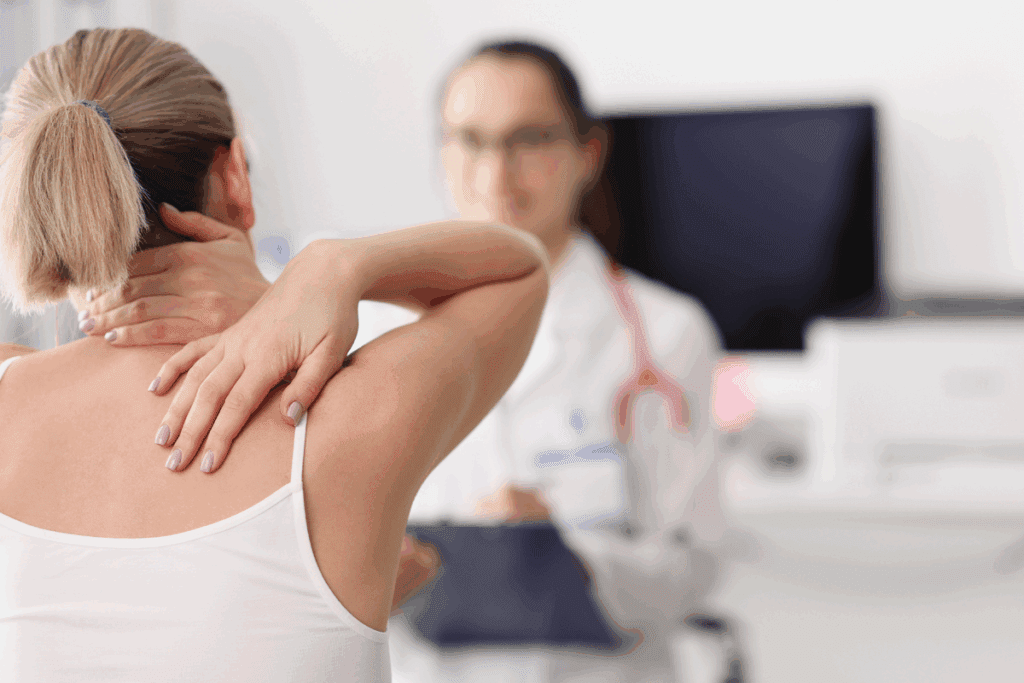
Spinal stenosis treatment includes both non-surgical and surgical methods. Each plan is made just for the patient, based on their symptoms, health, and what they prefer.
Conservative Treatment Approaches
Physical therapy is often the first step in treating spinal stenosis. It helps improve flexibility and strength. Doctors might also prescribe nonsteroidal anti-inflammatory drugs (NSAIDs) and corticosteroids to reduce pain and swelling.
Changing your lifestyle can also help. Losing weight and exercising regularly can ease symptoms. Some people also try chiropractic care and acupuncture as part of their treatment.
Surgical Interventions
If non-surgical treatments don’t work, surgical interventions might be needed. Procedures like decompression surgery, laminectomy, or spinal fusion can help. These surgeries aim to take pressure off the spinal cord and nerves.
The type of surgery depends on the patient’s condition. It’s usually considered when symptoms are severe and non-surgical treatments have failed.
Pain Management Strategies
Pain management is key in treating spinal stenosis. This can include various medications, like pain relievers and nerve pain medications. Sometimes, epidural steroid injections are suggested to lessen inflammation and pain.
Using a multidisciplinary approach to pain management is best. This involves doctors, pain specialists, and physical therapists working together. It helps improve treatment results and the patient’s quality of life.
Is Spinal Stenosis a Disability? Legal Definitions
To figure out if spinal stenosis is a disability, we need to look at the laws in the United States. The legal definition of disability is key. It decides if someone can get benefits and special help.
How Disability is Defined in the United States
In the United States, laws like the Social Security Act and the Americans with Disabilities Act (ADA) set the rules for disability. The Social Security Administration (SSA) says a disability is when you can’t work because of a health problem. This problem must last at least 12 months or lead to death.
The Americans with Disabilities Act (ADA) has a different view. It says a disability is any health issue that makes it hard to do everyday things. This view is wider and covers more health problems and activities.
Temporary vs. Permanent Disability Classifications
Disabilities can be either short-term or long-lasting. Knowing this is important for getting the right help and support.
- Temporary Disability: This is a short-term problem that can get better with treatment. People with temporary disabilities might get short-term help or special arrangements.
- Permanent Disability: This is a lasting problem that won’t get much better with treatment. Those with permanent disabilities might get long-term benefits.
Figuring out if spinal stenosis is temporary or permanent needs a detailed medical check-up. Knowing this helps decide what kind of support and benefits someone can get.
Important things that decide if it’s temporary or permanent include:
- The severity of the condition
- How much it affects your ability to work
- How long it’s expected to last
- How well treatments work
Qualifying for Social Security Disability with Spinal Stenosis
To get Social Security Disability, people with spinal stenosis must meet the SSA’s rules. They need to show how spinal stenosis affects their work ability. This means understanding the SSA’s criteria and how spinal stenosis impacts work.
Meeting the SSA Listing Requirements
The SSA has a list of disabilities that qualify for benefits. For spinal stenosis, it must severely limit basic work activities. To qualify, medical records must show:
- Significant compression of a nerve root or the spinal cord
- Evidence of motor or sensory deficits
- Impaired mobility or other functional limitations
Getting these requirements met needs detailed medical proof. This includes MRI or CT scans and records showing how severe the condition is. It also shows how it affects daily life and work.
The Medical-Vocational Allowance Approach
If spinal stenosis doesn’t fit the SSA’s list, you might qualify through the medical-vocational allowance. This looks at your ability to do past work or any other job. It considers your age, education, work history, and physical and mental abilities.
The SSA checks these factors to see if you can work. A detailed review helps decide if you can do substantial work.
| Criteria | Description | Impact on Disability Claim |
| SSA Listing Requirements | Significant compression of a nerve root or spinal cord, motor or sensory deficits | Directly qualifies if criteria are met |
| Medical-Vocational Allowance | Assessment of RFC, age, education, work experience | Qualifies if unable to perform substantial gainful activity |
| Residual Functional Capacity (RFC) | Evaluation of ability to perform physical and mental tasks | Determines capability to engage in work |
Knowing these rules and how they apply is key to getting Social Security Disability for spinal stenosis.
The Disability Application Process for Spinal Stenosis Patients
Applying for disability benefits for spinal stenosis has several steps. It’s important to know these steps to move through the process well.
Initial Application Steps
First, gather all medical records related to your spinal stenosis. This includes doctor’s notes, test results, and statements from healthcare providers.
- Collect all medical records related to your spinal stenosis diagnosis and treatment.
- Obtain a detailed statement from your primary care physician or specialist.
- Ensure you have all necessary test results, such as MRI or CT scans.
After gathering your documents, you can start the application. You can apply online, by phone, or in person at a local SSA office.
Required Medical Evidence
Medical evidence is key for a disability claim for spinal stenosis. The SSA needs detailed records to understand your condition and how it affects your work.
| Medical Evidence | Description |
| Medical Records | Detailed records of diagnosis, treatment, and ongoing care. |
| Test Results | Results from diagnostic tests such as MRI, CT scans, or X-rays. |
| Physician Statements | Statements from healthcare providers detailing the patient’s condition and functional limitations. |
As the SSA says, “Medical evidence is the cornerstone of a disability claim.”
“The most important factor in determining disability is the individual’s medical condition and its effect on their ability to perform substantial gainful activity.”
Common Reasons for Denial
Knowing why claims are often denied can help improve your chances. Common reasons include:
- Insufficient medical evidence.
- Lack of clear diagnosis or documentation of spinal stenosis.
- Inadequate information about how the condition affects the ability to work.
To avoid denial, submit a detailed application with strong medical evidence. Explain how spinal stenosis affects your daily life and work.
By following the application steps, providing thorough medical evidence, and avoiding common pitfalls, you can increase your chances of a successful claim.
Spinal Stenosis Disability Criteria and Evaluation
Spinal stenosis disability evaluation is a detailed process. It looks at how the condition has progressed and the person’s ability to work. This thorough check is key to figuring out how spinal stenosis affects someone’s job skills.
Functional Limitations Assessment
The functional limitations assessment is a big part of this process. It checks if someone can do everyday tasks, stay in certain positions, and move around. It’s important to see how spinal stenosis affects standing, walking, sitting, lifting, and carrying things.
Doctors look at medical records, treatment plans, and how well treatments worked. They might also do physical checks and look at the person’s health history. This helps figure out how bad the condition is and how it limits what someone can do.
Residual Functional Capacity (RFC) Evaluation
The Residual Functional Capacity (RFC) evaluation is also very important. It tries to see how well someone can do work tasks despite their spinal stenosis. It looks at things like lifting, carrying, standing, walking, and sitting, and how well someone can do these in a job setting.
This evaluation is based on the person’s health, symptoms, and how well treatments have worked. It helps decide if someone can do their old job or if they can do other jobs in the country. A doctor usually does this evaluation by looking at medical records, doing a physical check, and assessing how well someone can function.
Understanding the limits and work capacity of people with spinal stenosis helps doctors and disability evaluators make fair decisions. This detailed process makes sure people get the right support and that disability benefits are given out correctly.
Spinal Stenosis Disability Benefits: What to Expect
Getting disability benefits for spinal stenosis means knowing about the programs and who can get them. People with spinal stenosis might get help from two main sources: Social Security Disability Insurance (SSDI) and Supplemental Security Income (SSI).
SSDI Benefits for Spinal Stenosis
SSDI is for those who worked and paid Social Security taxes but can’t work anymore. To get SSDI for spinal stenosis, you must:
- Have worked and paid Social Security taxes.
- Show strong medical proof of your spinal stenosis.
- Prove your condition stops you from working.
The money you get from SSDI depends on how much you earned before. The Social Security Administration (SSA) figures it out using your 35 best-earning years.
SSI Benefits for Spinal Stenosis
SSI is for those who don’t have much money or resources. It’s not based on how long you worked but on how bad your condition is and if you need the money.
To get SSI for spinal stenosis, you need to:
- Be really disabled by spinal stenosis.
- Not have much money or resources.
- Be really struggling financially because of your health.
Both SSDI and SSI can give important financial help to those with spinal stenosis. Knowing how to apply and what you need can help you get the support you deserve.
Long-Term Disability Insurance and Spinal Stenosis
Spinal stenosis can greatly impact your career and finances. That’s why long-term disability insurance is key. It’s vital for those with this condition to know about long-term disability insurance to protect their finances.
Private Disability Insurance Considerations
For those with spinal stenosis, private disability insurance is something to think about. It’s important to know how each policy defines disability. Some might say you’re disabled if you can’t do your job, while others might say you’re disabled if you can’t do any job.
- Policy Flexibility: Look for policies that offer flexibility in terms of benefit periods and elimination periods.
- Benefit Amount: Make sure the benefit amount can cover your living costs and medical bills.
- Riders and Add-ons: Think about extra features like cost-of-living adjustments and residual disability benefits.
Employer-Provided Disability Coverage
Employer-provided disability coverage is also a big deal for those with spinal stenosis. It’s often part of your job benefits. Knowing the details of your coverage is key.
- Coverage Details: Check the benefit amount, how long it lasts, and any limits.
- Portability: Find out if you can keep the policy if you switch jobs.
- Coordination with Other Benefits: See how it works with other benefits, like Social Security Disability Insurance (SSDI).
By looking at both private and employer-provided disability insurance, people with spinal stenosis can make smart choices. This helps protect their financial future and deal with the long-term effects of their condition.
Spinal Stenosis Disability Rating and Impairment Evaluation
Spinal stenosis disability ratings are key in deciding who gets disability benefits. They show how bad the condition is and how it affects someone’s work and daily life.
How Disability Ratings Are Determined
To get a disability rating for spinal stenosis, a detailed evaluation is done. This looks at how bad the condition is, the pain level, and how it limits what someone can do.
Doctors review medical records and test results like MRI scans. They also check how well someone can do everyday tasks like lifting and standing for long times.
Impact of Ratings on Benefits
The rating you get for spinal stenosis affects your benefits. A higher rating means you’re more disabled and can’t work as much.
The Social Security Administration (SSA) uses ratings to figure out how much you’ll get. They look at how your condition affects your ability to work.
| Disability Rating | Benefit Level | Description |
| Low | Partial Benefits | Limited impact on work capability |
| Moderate | Partial to Full Benefits | Significant impact on work capability |
| High | Full Benefits | Severe impact on work capability |
It’s important to know about disability ratings and spinal stenosis. If you have spinal stenosis, make sure you have all your medical records ready for your claim.
Working with Spinal Stenosis: Accommodations and Rights
The Americans with Disabilities Act (ADA) protects employees with spinal stenosis. It ensures they get the workplace accommodations they need.
Protections Under the Americans with Disabilities Act
The ADA stops employers from discriminating against people with disabilities, like spinal stenosis. Employers can’t deny a job or fire someone because of their condition. They must offer reasonable accommodations unless it’s too hard.
Knowing your ADA rights is key to handling work challenges. People with spinal stenosis should know about the protections and help available to them.
Reasonable Workplace Accommodations
Reasonable accommodations make the workplace better for employees with spinal stenosis. They help people do their jobs well. Examples are flexible schedules, ergonomic setups, and changes to job tasks.
Flexible work schedules ease the commute and let people rest when needed. Ergonomic workstations fit the employee’s needs, cutting down on discomfort. Modified job duties make tasks easier, so people can keep working without making their condition worse.
| Accommodation Type | Description | Benefit |
| Flexible Work Schedules | Allowing employees to adjust their work hours or work from home | Reduces commuting strain and allows for rest when needed |
| Ergonomic Workstations | Adjusting the workspace to fit the employee’s needs, such as chair height and desk position | Reduces physical strain and discomfort |
| Modified Job Duties | Adjusting job responsibilities to avoid exacerbating the condition | Enables employees to continue working without worsening their condition |
By using these accommodations, people with spinal stenosis can manage their condition better at work.
Spinal Stenosis Disability Discrimination and Legal Protections
Many people with spinal stenosis face harsh realities. This condition impacts their health and work life.
Recognizing Workplace Discrimination
Spinal stenosis can lead to unfair treatment at work. This includes being passed over for promotions or not getting the help they need. It’s important to spot these signs to act quickly.
Common forms of workplace discrimination include:
- Unjustified demotions or terminations
- Failure to provide necessary workplace accommodations
- Harassment or hostile work environment
- Unequal pay or benefits
Legal Remedies for Discrimination
Those facing discrimination have legal options. The Americans with Disabilities Act (ADA) and other laws protect against this.
Key legal remedies include:
| Legal Remedy | Description |
| Filing a Complaint with the EEOC | The Equal Employment Opportunity Commission (EEOC) investigates claims of workplace discrimination. |
| Pursuing a Lawsuit | Individuals can file a lawsuit against employers who violate their rights under the ADA or other laws. |
| Seeking Reasonable Accommodations | Employees can request modifications to their work environment or duties to perform their job effectively. |
Knowing these legal protections is key for those with spinal stenosis. It helps them protect their rights at work.
Appealing a Denied Disability Claim for Spinal Stenosis
If your disability claim for spinal stenosis is turned down, you can appeal. This process is detailed, but knowing the steps and getting help can boost your appeal’s success.
The Appeals Process
The appeals process for a denied claim has several steps. First, you’ll ask for a reconsideration of your claim. This means someone new will look at your case.
- Requesting Reconsideration: This is usually the first step in the appeals process.
- Hearing by an Administrative Law Judge (ALJ): If reconsideration is denied, you can request a hearing.
- Appeals Council Review: If the ALJ denies your claim, you can appeal to the SSA’s Appeals Council.
- Federal Court Review: As a last resort, you can take your case to federal court.
Each step in the appeals process needs careful preparation. It’s important to have strong medical evidence and documents to support your claim.
Working with Disability Attorneys
Working with skilled disability attorneys can greatly help your appeal. They know the appeals process well and can guide you through it.
Benefits of Working with Disability Attorneys:
- Expert Knowledge: They know a lot about disability law and the appeals process.
- Case Preparation: They can help you gather and organize your medical evidence and documents.
- Representation: They can speak for you during hearings and other important meetings.
By understanding the appeals process and getting help from the right professionals, you can increase your chances of winning your spinal stenosis disability claim.
Living with Spinal Stenosis as a Disability
Living with spinal stenosis means making big changes to keep life good. People with this condition have to adjust their daily life and home a lot.
Adaptive Equipment and Home Modifications
Adaptive equipment and home changes are key to managing spinal stenosis. Simple things like handrails or non-slip mats can make a big difference in safety and moving around.
Common Adaptive Equipment and Home Modifications:
- Wheelchairs or mobility scooters for better movement
- Grab bars and non-slip mats for safer bathrooms
- Adjustable beds and ergonomic furniture for comfort
- Ramps or stairlifts for easier home access
These changes help people stay independent and avoid falls or injuries.
Support Groups and Resources
It’s important to join support groups and use resources for spinal stenosis. These groups offer emotional support, useful tips, and information to manage the condition better.
| Resource Type | Description | Benefits |
| Support Groups | Online or in-person communities for sharing experiences | Emotional support, practical advice |
| Educational Materials | Books, articles, and online content about spinal stenosis | Understanding the condition, management strategies |
| Professional Counseling | Services from healthcare professionals for coping with the condition | Emotional support, coping strategies |
Using these resources helps people with spinal stenosis deal with their challenges. It improves their life quality a lot.
Conclusion
Understanding spinal stenosis is key for those dealing with it. This condition can greatly affect daily life, even leading to disability.
Living with spinal stenosis means facing chronic pain and limited movement. How the condition progresses affects one’s ability to function. This, in turn, impacts their life and disability status.
To qualify for disability benefits, a thorough medical evaluation is needed. It’s important for those affected to know their rights and available resources. This includes legal protections and workplace accommodations.
In summary, managing spinal stenosis disability requires proper medical care and support. Awareness of benefits is also essential. This ensures those with spinal stenosis get the help they need to improve their quality of life.
FAQ
Is spinal stenosis considered a permanent disability?
Spinal stenosis might be seen as a permanent disability if it really limits someone’s work ability. This decision depends on the person’s symptoms, treatment results, and how it affects their daily and work life.
How do I qualify for disability benefits with spinal stenosis?
To get disability benefits for spinal stenosis, you need to meet the SSA’s criteria. You can also show that your condition makes it hard to do basic work tasks. It’s important to have detailed medical records and test results.
What are the common symptoms of spinal stenosis that may lead to disability?
Symptoms like chronic pain, numbness, and weakness in the legs can lead to disability. Other signs include trouble walking or standing for long times. Severe cases might cause loss of bladder or bowel control and big mobility problems.
Can I work with spinal stenosis, and are there any accommodations available?
Yes, many people with spinal stenosis can keep working with the right help. The ADA says employers must make reasonable changes to help people with disabilities. This could mean flexible hours, special workstations, or easier tasks.
How is the disability rating for spinal stenosis determined?
The disability rating for spinal stenosis depends on how severe it is and how it affects your daily life. The SSA looks at how spinal stenosis impacts your work abilities through a Residual Functional Capacity (RFC) assessment.
What is the difference between SSDI and SSI benefits for spinal stenosis?
SSDI is for people who have worked and paid Social Security taxes. SSI is for those with little income and resources. Both offer financial help for disabilities, including spinal stenosis.
Can I appeal a denied disability claim for spinal stenosis?
Yes, you can appeal if your spinal stenosis claim is turned down. The appeal process has several steps, like reconsideration and a hearing. Having a disability lawyer can help a lot.
Are there any support resources available for living with spinal stenosis as a disability?
Yes, there are many resources for living with spinal stenosis. You can find support groups, special equipment, and counseling to manage your condition and its effects on your life.
How does long-term disability insurance work for spinal stenosis?
Long-term disability insurance helps replace income for those who can’t work because of a disability like spinal stenosis. The details of the coverage, like how long you get benefits, vary by policy.
What are the legal protections against disability discrimination for spinal stenosis?
The ADA protects people with spinal stenosis from job discrimination. It requires employers to make reasonable changes to ensure equal job chances for everyone.
Reference:
Wu, L. (2024). Lumbar spinal stenosis – StatPearls. https://www.ncbi.nlm.nih.gov/books/NBK531493