Getting pregnant at an advanced age is a complex topic. While live birth rates do drop with age, some women have successfully had babies in their late 40s using their own eggs. This shows that it’s not entirely impossible.
At Liv Hospital, we believe age shouldn’t limit your fertility options. We focus on each patient’s needs, knowing that women in their 40s are becoming new mothers at a fast pace in the U.S.
Advances in reproductive medicine have opened up new possibilities for those over 40. This gives them hope for a successful pregnancy.
Key Takeaways
- Pregnancy at 47 with one’s own eggs is statistically challenging but not impossible.
- The live birth rate is approximately 1 percent per cycle according to CDC data.
- Advances in reproductive medicine have improved fertility options for women over 40.
- A patient-centered approach is key for determining individual fertility options.
- Liv Hospital offers complete care for international patients seeking fertility treatments.
The Reality of Fertility at 47
Understanding fertility at 47 involves looking at natural conception and assisted reproductive technologies. As women get older, their fertility drops. This is because they have fewer and lower-quality eggs.
By 40, women have about 25,000 eggs left. The quality of these eggs also goes down a lot. After 45, getting pregnant naturally becomes even harder.
Age-Related Fertility Decline Explained
As women get older, their fertility changes a lot. By the late 40s, getting pregnant naturally is tough. This is because they have fewer eggs and the eggs they have are not as good.
Research shows that IVF success rates go down with age, after 43. For example, “ivf at 43 with own eggs success stories” are rare. And the success rate gets even lower as women get older.
What Medical Science Says About Conception After 45
Medical science says getting pregnant after 45 is very hard, even with IVF. The success rate for “ivf at 46 with own eggs success stories” is very low. By 47, the chances of a successful IVF cycle with own eggs are much lower.
Knowing the “age limit for ivf with own eggs” is key for women thinking about pregnancy at 47. While there’s no strict age limit, success chances drop a lot after 45.
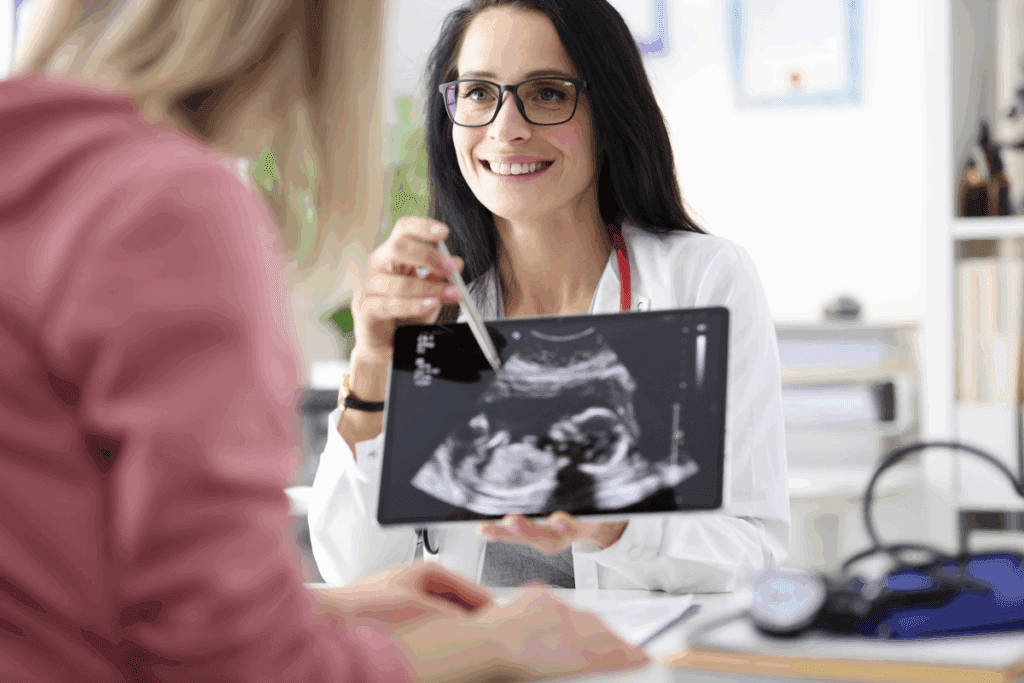
Women should understand these facts when thinking about pregnancy at an older age. Talking to fertility specialists can give them personalized advice and options.
Understanding Ovarian Reserve at Advanced Maternal Age
Ovarian reserve is a key indicator of fertility for women in their late 40s. It shows how many and how good their eggs are. As women get older, their eggs decrease in number and quality. This makes it important to know how this affects their ability to have a baby.
“The ovarian reserve is a critical factor in determining a woman’s ability to conceive,” says Medical Expert, a fertility specialist. “Assessing ovarian reserve helps us understand the remaining egg quantity and quality, guiding us toward the best course of treatment.”
How Woman’s Eggs Quantity Changes with Age
A woman is born with a limited number of eggs. These eggs decrease in both quantity and quality as she ages. By her late 40s, she has fewer eggs available for fertilization.
The decrease in egg quantity also means a drop in egg quality. This makes it harder to get pregnant. The American Society for Reproductive Medicine (ASRM) says the chances of pregnancy drop a lot after 40.
Testing Ovarian Reserve in Your Late 40s
Testing ovarian reserve is key for checking fertility. Tests like the Follicle-Stimulating Hormone (FSH) and Anti-Müllerian Hormone (AMH) tests show how many and how good the eggs are.
These tests help guide fertility treatments, like IVF. They give women important information for making choices about having a baby.
Key factors to consider when testing ovarian reserve include:
- Age
- FSH levels
- AMH levels
- Previous fertility treatments
Healthcare providers use these factors to give personalized advice and treatment plans. This is based on each woman’s unique situation.
IVF at 47 With Own Eggs: Success Rates and Statistics
For women thinking about IVF at 47, knowing the success rates with their own eggs is key. We’ll look at the stats and data on IVF success at this age. It’s important to use reliable sources like the Centers for Disease Control and Prevention (CDC).
CDC Data on Live Birth Rates at 47
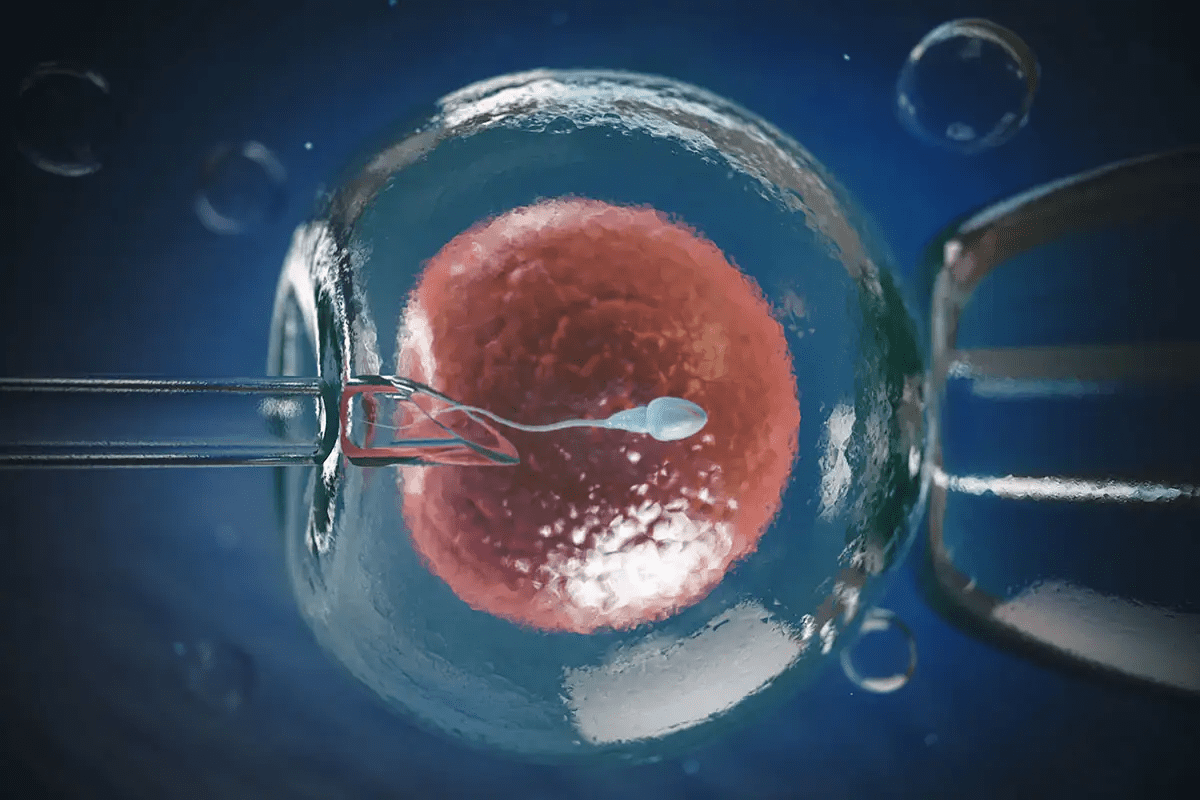
The CDC has detailed data on IVF success, including live birth rates for women using their own eggs. At 47, the live birth rate is about 1 percent per IVF cycle, according to the CDC.
This info comes from the CDC’s annual reports on assisted reproductive technology (ART) in the U.S. These reports gather data from fertility clinics nationwide. They give a wide view of IVF success rates.
| Age | Live Birth Rate per IVF Cycle |
|---|---|
| 45 | 1.3% |
| 46 | 1.1% |
| 47 | 1% |
| 48 | 0.8% |
The 1% Success Rate: What It Really Means
A 1% success rate per cycle might seem low, but it’s important to understand it. It means one out of 100 women aged 47 using IVF with their own eggs can expect a live birth. This rate is affected by egg quality, ovarian reserve, and overall health.
“While the odds are low, they are not impossible. Every woman’s body is different, and individual success can vary greatly.”
It’s also key to remember that IVF success isn’t just about one cycle. Many women try multiple times. The overall success rate can be higher, but it depends on many factors like health, egg quality, and the fertility clinic’s expertise.
When dealing with IVF at 47, it’s vital to have realistic hopes and stay informed. Talking to a fertility specialist can offer personalized advice and support on this journey.
The Biological Challenges of Conception at 47
Trying to get pregnant at 47 comes with big challenges. These include lower egg quality and a higher chance of chromosomal problems. As women get older, their eggs get worse, making it harder to conceive.
Diminished Egg Quality in Advanced Maternal Age
By 47, a woman’s eggs are much lower in quality. Diminished egg quality is a big reason why getting pregnant is tough at this age. Eggs are more likely to have genetic problems, making it hard to get pregnant.
The drop in egg quality is a natural part of aging. But how fast it happens can differ a lot between women. Things like lifestyle, genetics, and health can affect egg quality.
Chromosomal Abnormalities: The 80% Challenge After 42
Another big challenge at 47 is the high chance of chromosomal abnormalities in embryos. About 80% of embryos in women over 42 have these problems. This is a big reason why getting pregnant is hard.
To understand the impact of chromosomal problems, let’s look at some data:
| Age | % of Embryos with Chromosomal Abnormalities |
|---|---|
| 42-44 | 60-70% |
| 45-47 | 75-85% |
| >47 | >80% |
The table shows how chromosomal problems go up with age. By 47, the chance of an embryo having these issues is much higher. It’s important for women to know this when thinking about getting pregnant.
Knowing about these challenges is key for women thinking about pregnancy at 47. Even with tough odds, new medical help and care can help a lot.
Medical Interventions to Improve Fertility at 47
Women aged 47 have several medical options to boost fertility and get pregnant. It’s key to know how these methods work and their benefits.
Specialized Ovarian Stimulation Protocols
For women at 47, IVF includes special ovarian stimulation. This method aims to get more eggs from the ovaries. This increases the chance of getting good embryos for transfer.
These protocols have important parts:
- They use specific medicines based on each woman’s situation.
- They watch the ovaries closely with ultrasound and blood tests.
- They try to avoid a serious side effect called OHSS.
Pre-implantation Genetic Testing (PGT) is also key. It checks embryos for genetic issues before they’re transferred.
Pre-Implantation Genetic Testing for Chromosomal Screening
PGT for chromosomal screening is a detailed method. It helps find embryos without genetic problems. Here’s how it works:
- It takes cells from the embryo.
- It checks these cells for genetic issues.
- Then, it picks the best embryos for transfer.
Using specialized ovarian stimulation protocols and pre-implantation genetic testing can greatly improve IVF success for women at 47.
Even with these methods, success rates can vary. This depends on factors like how many eggs a woman has and her overall health.
Documented Success Stories: Pregnancies at 47-49 With Own Eggs
Some women have successfully conceived at 47 or older using their own eggs. These cases are rare but offer insights into late-in-life pregnancy.
Case Reports of Women Who Conceived at 48-49
Recent studies have shown successful live births at ages 48 to 48 years 10 months using own eggs. For example, a study in a medical journal reported several cases of women in their late 40s getting pregnant through IVF.
A 48-year-old woman conceived through IVF and had a healthy child. Such cases show that pregnancy at an advanced age is possible with the right medical support.
“The fact that women in their late 40s can conceive using their own eggs, albeit with significant challenges, highlights the need for personalized fertility treatment plans,” said a leading fertility specialist.
Common Factors in Successful Late-40s Pregnancies
Looking at successful pregnancies at 47 or older, we find common factors. These include:
- Optimal Health: Women who conceive at an advanced age often have excellent overall health.
- Specialized Fertility Care: Access to advanced fertility treatments, such as IVF with pre-implantation genetic testing, significantly improves success rates.
- Strong Ovarian Reserve: Even at an advanced age, women with a robust ovarian reserve have better chances of conception.
- Personalized Treatment Plans: Tailored treatment approaches that consider the individual’s health and fertility status are key.
These factors together create a more favorable environment for conception, even at ages considered beyond the typical childbearing years.
It’s important to remember that while these success stories are encouraging, the chances of pregnancy at 47 or older are low. Prospective parents should be aware of the challenges and consult with fertility specialists to understand their individual prospects.
Comparing IVF Success Rates Across Advanced Ages
Looking at IVF success rates across different ages shows how fertility drops with age. Women’s chances of successful IVF treatment go down as they get older. Yet, there are cases that give hope.
IVF at 43 With Own Eggs: The 5% Success Rate
At 43, women have about a 5% chance of a live birth using their own eggs. The Centers for Disease Control and Prevention (CDC) says this is a national average. It can change based on health and the clinic’s success rates.
Key statistics for IVF at 43 include:
- Average live birth rate per transfer: 5.1%
- Cancellation rate due to poor response: 20-30%
- Risk of chromosomal abnormalities: 30-40%
IVF at 44-46 With Own Eggs: Declining Possibilities
Between 44 and 46, IVF success rates with own eggs drop even more. The CDC says the live birth rate per transfer is about 2% at 44. It falls to less than 1% by 46. These low rates are mainly because of egg quality and quantity issues.
| Age | Live Birth Rate per Transfer | Cancellation Rate |
|---|---|---|
| 44 | 2.1% | 40-50% |
| 45 | 1.3% | 50-60% |
| 46 | <1% | 60-70% |
IVF at 48-49 With Own Eggs: Rare But Documented Cases
At 48 and beyond, IVF success with own eggs is very rare. Yet, there are cases of successful pregnancies at 48 and 49. These are often due to exceptional ovarian reserve and response to stimulation.
“While the odds are against them, some women in their late 40s achieve pregnancy through IVF with their own eggs, defying the statistical norms.” – Medical Expert, Fertility Specialist
Women thinking about IVF at advanced ages should have realistic expectations. They should also know the risks and challenges. Talking to a fertility specialist can help. They can give advice based on your health and medical history.
Health Considerations for Pregnancy at 47
Thinking about pregnancy at 47? It’s important to know the health risks for both mom and baby. Pregnancy at an older age can lead to more health problems. Women should be aware of these risks to make good choices about their health.
Maternal Health Risks in Advanced Age Pregnancy
Pregnancy at 47 can be riskier for the mom. This includes a higher chance of gestational diabetes, high blood pressure, and needing a cesarean delivery. These risks are key when thinking about health at an older age.
Studies show that older moms face more pregnancy complications. For example, they are at a higher risk for preeclampsia and placenta previa.
“Advanced maternal age is associated with a higher risk of pregnancy-related complications, highlighting the need for careful monitoring and prenatal care.”
| Health Risk | Description | Risk Level at 47 |
|---|---|---|
| Gestational Diabetes | High blood sugar levels during pregnancy | Higher |
| Hypertension | High blood pressure during pregnancy | Higher |
| Cesarean Delivery | Surgical delivery due to complications | More likely |
Potential Fetal Outcomes and Considerations
The health of the baby is also a big concern at 47. Babies born to older moms might have more chromosomal problems, like Down syndrome. It’s important to talk about these risks and the tests available.
Chromosomal Abnormalities: The risk of chromosomal issues grows with age. At 47, the chance of Down syndrome is much higher. Non-invasive prenatal testing (NIPT) and other tests can spot these problems.
It’s vital for women thinking about pregnancy at 47 to understand these health concerns. We suggest good prenatal care and counseling to handle these risks well.
Alternative Fertility Options to Consider
Women in their late 40s have new hope for starting a family. Pregnancy at 47 is tough with one’s own eggs. But, there are other ways to increase the chances of getting pregnant.
Donor Eggs: Significantly Higher Success Rates After 45
Donor eggs are a top choice for those over 45. Donor egg IVF offers much better success rates than using your own eggs after 45. Women using donor eggs can get pregnant like younger women. This is because the eggs come from younger donors, lowering the risk of genetic problems.
“Donor eggs have changed reproductive medicine,” says Medical Expert, a top fertility expert. “It gives women over 45 a real chance at becoming mothers. It’s a big change for those who thought they were out of luck because of their age.”
Embryo Adoption and Other Family-Building Alternatives
Embryo adoption is another great option for building a family. It means adopting embryos from others who didn’t use them. It’s a way to give a loving home to embryos that might be thrown away.
Other choices include gestational surrogacy and adoption. These options have their own challenges but can lead to fulfilling parenthood.
Looking into these options can be tough emotionally. But, with the right help, many have built their families through these paths.
Conclusion: Making an Informed Decision About Pregnancy at 47
Pregnancy at 47 is complex, with many factors at play. These include biological, medical, and emotional aspects. It’s key to understand these to make a smart choice about getting pregnant at this age.
Women thinking about pregnancy at 47 need to know their options. This includes using IVF with their own eggs, donor eggs, and other ways to build a family. Even though IVF success rates drop after 45, there are cases of successful pregnancies at 47 and older.
Choosing to get pregnant at 47 means looking at the challenges and the support available. It’s important to talk to fertility experts. They can help understand your situation and the best options for you.
In the end, the decision to get pregnant at 47 should be well-informed. Women should have all the facts to make a choice that’s right for them.
FAQ
What are the chances of getting pregnant at 47 with my own eggs?
Getting pregnant at 47 with your own eggs is tough. Egg quality and quantity drop with age. The CDC says the live birth rate for women at this age is about 1% per IVF cycle.
How does age affect fertility, and what are the biological changes that occur?
As women get older, their eggs get worse and there are fewer of them. This makes it harder to get pregnant and keep a healthy baby. The ovaries make fewer eggs, and those eggs are more likely to have problems.
What is ovarian reserve, and how is it tested?
Ovarian reserve is how many and how good your eggs are. Doctors check hormone levels like FSH and AMH. They might also look at your ovaries with an ultrasound.
What are the success rates for IVF at 47 with own eggs, and how do they compare to other ages?
IVF success rates go down a lot with age. At 47, the success rate is about 1%. Women under 35 do much better, while those over 48 do much worse.
What medical interventions can improve fertility at 47?
Special treatments and genetic testing can help at 47. Genetic testing checks embryos for problems. This can increase the chance of a healthy pregnancy.
Are there any documented success stories of pregnancies at 47-49 with own eggs?
Yes, there are rare cases of successful pregnancies at 47-49 with own eggs. These often involve good health, a healthy lifestyle, and advanced reproductive technologies.
What are the health considerations for pregnancy at 47?
Pregnancy at 47 can be risky for both mom and baby. Women should know about risks like diabetes and chromosomal problems. They should get careful prenatal care.
What alternative fertility options are available for women over 47?
Options like donor eggs and embryo adoption work better for women over 47. These use eggs or embryos from younger donors. This increases the chance of a healthy pregnancy.
How do IVF success rates compare across advanced ages, such as 43, 44-46, and 48-49?
IVF success rates go down with age. Women at 43 have a 5% success rate. Those at 44-46 do worse. Women at 48-49 have very low success rates, but rare cases of success have been reported.
Can I stil get pregnant naturally at 47 with my own eggs?
Getting pregnant naturally at 47 is very unlikely. Egg quality and quantity drop a lot with age. Women at this age often face infertility or miscarriage.
What is the oldest age at which a woman has given birth using her own eggs?
The oldest age for a woman to give birth with her own eggs is 49. But such cases are very rare and often involve advanced reproductive technologies.
References
National Center for Biotechnology Information. Pregnancy at 47 with Own Eggs: A Possibility. Retrieved from https://www.ncbi.nlm.nih.gov/pmc/articles/PMC5904586/