

In Vitro Fertilization (IVF) is an advanced process where an egg and sperm join outside the body. It treats many infertility causes and offers high success rates.
Send us all your questions or requests, and our expert team will assist you.
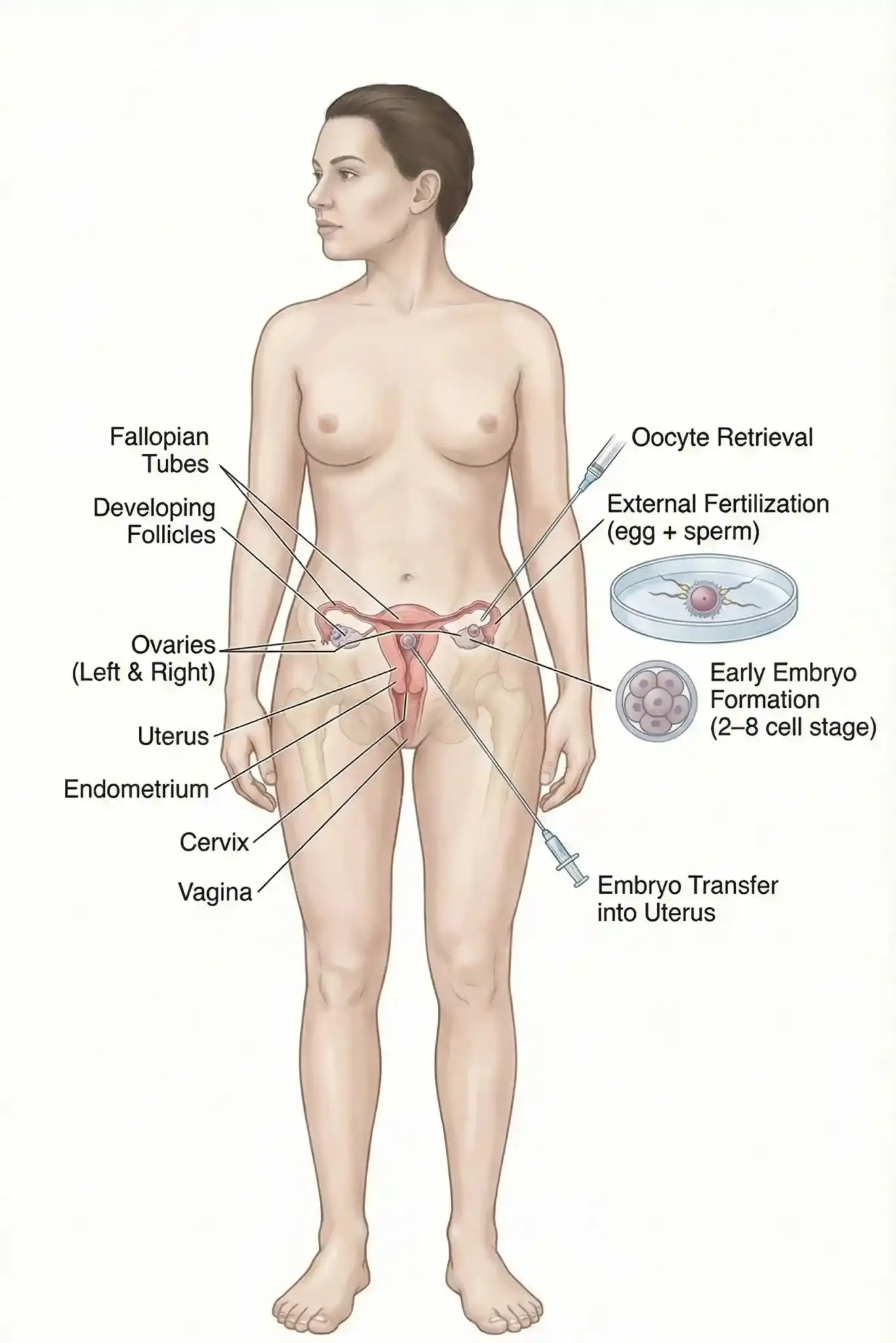
In Vitro Fertilization (IVF) is a key medical procedure in the field of reproductive endocrinology (fertility). The term In Vitro is Latin for “in glass,” referring to the laboratory dish where the process begins. IVF is the scientific method of helping a sperm and egg join outside of the human body to create an embryo. This advanced treatment offers hope and high success rates for couples who are struggling to conceive naturally due to various health conditions.


IVF involves several distinct medical steps. The full process includes using hormonal medications to stimulate the woman’s ovaries to produce multiple eggs, retrieving those eggs, fertilizing them with sperm in a lab dish, and finally, transferring the resulting healthy embryo back into the woman’s uterus. The whole procedure is a highly monitored sequence of medical and laboratory science designed to maximize the chances of a healthy pregnancy.


The term In Vitro (meaning “in glass”) distinguishes this process from In Vivo (meaning “in the living”), which describes conception that occurs naturally inside the body. IVF was first successfully performed in the 1970s, marking a massive breakthrough in medicine. It demonstrated that human life could begin successfully outside the body and led to the birth of the first “test-tube baby” in 1978.
IVF is not a disease treatment itself; it is a specialized procedure used to bypass or correct problems in the reproductive system. The specialist overseeing the process is a Reproductive Endocrinologist (a medical doctor who focuses on fertility hormones).
The entire process involves the reproductive system (ovaries, fallopian tubes, and uterus) for the woman and the testes (for sperm production) for the man. However, the procedure heavily relies on the endocrine system (hormones). The medications used in IVF directly manipulate hormones like Follicle-Stimulating Hormone (FSH) and Luteinizing Hormone (LH) to control the timing of egg development.
Send us all your questions or requests, and our expert team will assist you.
It is important to know what IVF is not. It is NOT simply artificial insemination (IUI), which places sperm directly into the uterus without retrieving the egg. IVF is also NOT a cure for the underlying disease (like endometriosis); it is a solution that bypasses the damage caused by that disease to achieve pregnancy.
IVF is typically recommended when simpler treatments have failed or when the cause of infertility makes natural conception almost impossible. It covers a wide range of male and female health issues.
IVF holds a vital position in modern medicine by offering a successful, standardized solution to a deeply emotional and medical challenge. It is the gold standard for treating many forms of infertility.
IVF is important because it addresses infertility, which is classified as a disease by major health organizations. The procedure requires highly specialized areas:
You should consider seeing a Reproductive Endocrinologist if you are under 35 and have been trying to conceive naturally for one year, or if you are over 35 and have been trying for six months. You should also seek consultation immediately if you know you have a condition like blocked tubes or severe male factor infertility.
In Vitro Fertilization (IVF) is a process where a sperm fertilizes an egg in a lab dish. A Reproductive Endocrinologist (fertility specialist) diagnoses the infertility cause, manages the hormonal medications, and performs the egg retrieval and embryo transfer procedures.
Fertility specialists treat a wide range of conditions that cause infertility, including blocked fallopian tubes, Polycystic Ovary Syndrome (PCOS), severe male factor issues (low sperm count), and unexplained infertility.
The main procedures include hormonal stimulation, egg retrieval (minimally invasive), fertilization in the lab, and embryo transfer (non-surgical). Advanced options include ICSI (sperm injection) and PGT (genetic testing).
You should see a specialist if you are under 35 and have tried to conceive for 12 months, or if you are 35 or older and have tried for 6 months. You should also see one immediately if a known reproductive issue is present.
IVF (In Vitro Fertilization) involves retrieving the egg and fertilizing it outside the body. IUI (Intrauterine Insemination) is a simpler procedure that places the sperm directly into the uterus, relying on the egg to be released naturally and the tubes to be open.


Guide to the ideal location where in the uterus does the embryo implant (upper posterior wall). Knowing embryo implantation location is key for a healthy

Explaining the best location where do embryos implant in the uterus for successful pregnancy. Embryo implantation is a key step in human reproduction, starting a
The bloating after embryo transfer is filled with hope and worry. People watch their bodies for signs of a successful embryo implantation. Knowing what to
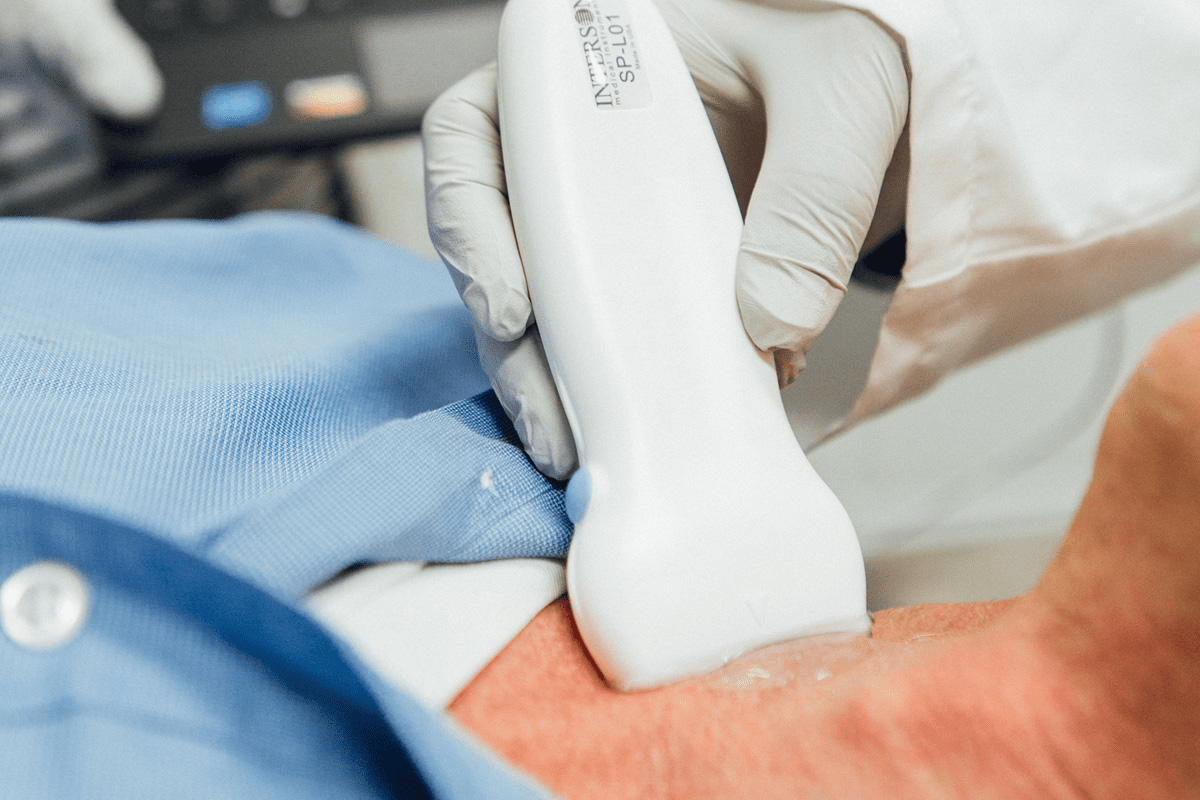
FET ultrasound is key in modern fertility treatments. It helps place embryos exactly in the uterus. This makes IVF treatments more successful for many people.

The Depo-Provera shot is a popular birth control option for many women. But, it’s important to know what happens when you stop using it. This