Last Updated on December 3, 2025 by Bilal Hasdemir

We are seeing a big change in how we treat kidney problems with minimally invasive kidney surgery. This new way of surgery uses small cuts and special tools. Surgeons do this to remove or fix kidney parts. Your ultimate guide to minimally invasive kidney removal surgery. Discover the keyhole techniques that make recovery faster and safer than ever.
Research shows these new surgeries lead to shorter hospital stays. Patients usually stay for 2.45 to 3.8 days. They also have lower readmission rates than old surgery methods.
Patients also see decreased blood loss, usually under 150 mL. And, they face a lower chance of getting sick from the surgery.
Key Takeaways
- Minimally invasive kidney surgery involves laparoscopic and robotic-assisted procedures.
- These procedures result in shorter hospital stays and lower readmission rates.
- Patients experience decreased blood loss and fewer complications.
- Advanced surgical techniques improve patient outcomes and recovery.
- Minimally invasive approaches are becoming the preferred method for kidney surgery.
The Evolution of Minimally Invasive Approaches to Kidney Surgery
Minimally invasive kidney surgery has changed how we treat kidney diseases. It’s now the top choice for many because it’s less invasive and leads to quicker recovery. This is a big leap from traditional open surgery.
Definition and Core Principles
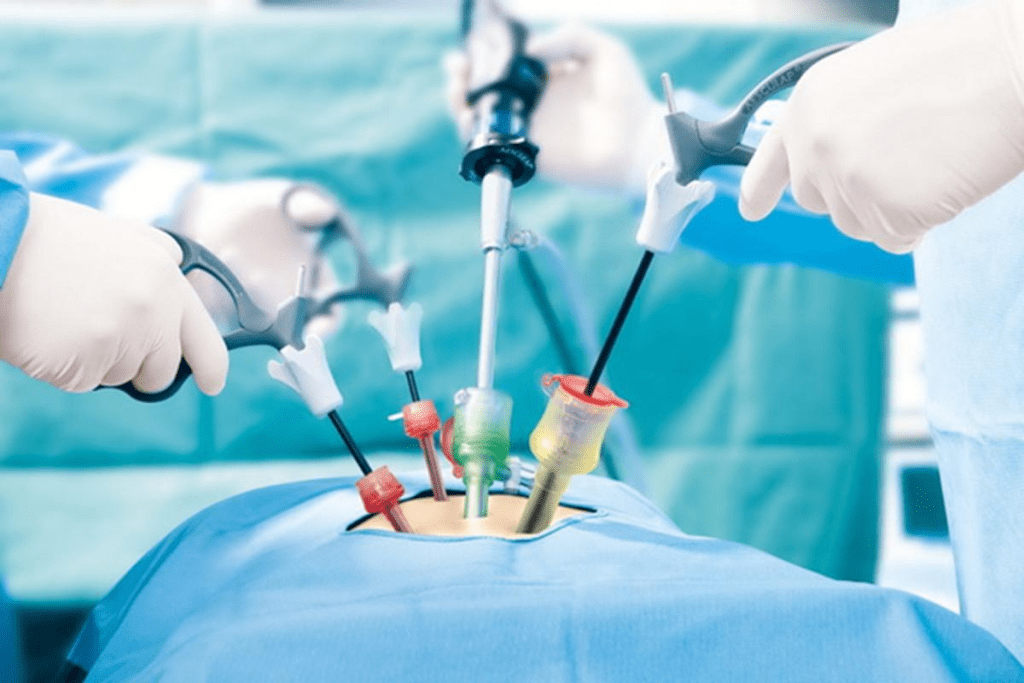
Minimally invasive kidney surgery means making smaller cuts and causing less damage. It aims to reduce pain and improve healing. Laparoscopic nephrectomy is a key example, where a kidney is removed through small openings.
The main goals are to keep patients safe and get the best results. This includes careful planning, using the latest tools, and a team approach. Following these steps helps surgeons give patients the best care with fewer risks.
Historical Development of Techniques
The history of minimally invasive kidney surgery is one of constant improvement. The introduction of laparoscopic surgery in the late 20th century was a big step. It offered a less invasive option compared to open surgery.
Technology has kept advancing, leading to robotic-assisted kidney surgery. This has made surgeries more precise and effective. Today, we’re seeing even more advanced techniques, like better imaging and tools. These advancements are improving results and treating more conditions.
5 Types of Minimally Invasive Kidney Removal Surgery
Today, surgeons have many ways to remove kidneys without big cuts. These new methods make surgery less scary and faster than the old ways.
Laparoscopic Nephrectomy
Laparoscopic nephrectomy uses small cuts and a camera to see inside. It’s less damaging and quicker to heal than old surgeries. We use special tools to remove the kidney, cutting down on blood loss and pain.
Robotic-Assisted Kidney Surgery
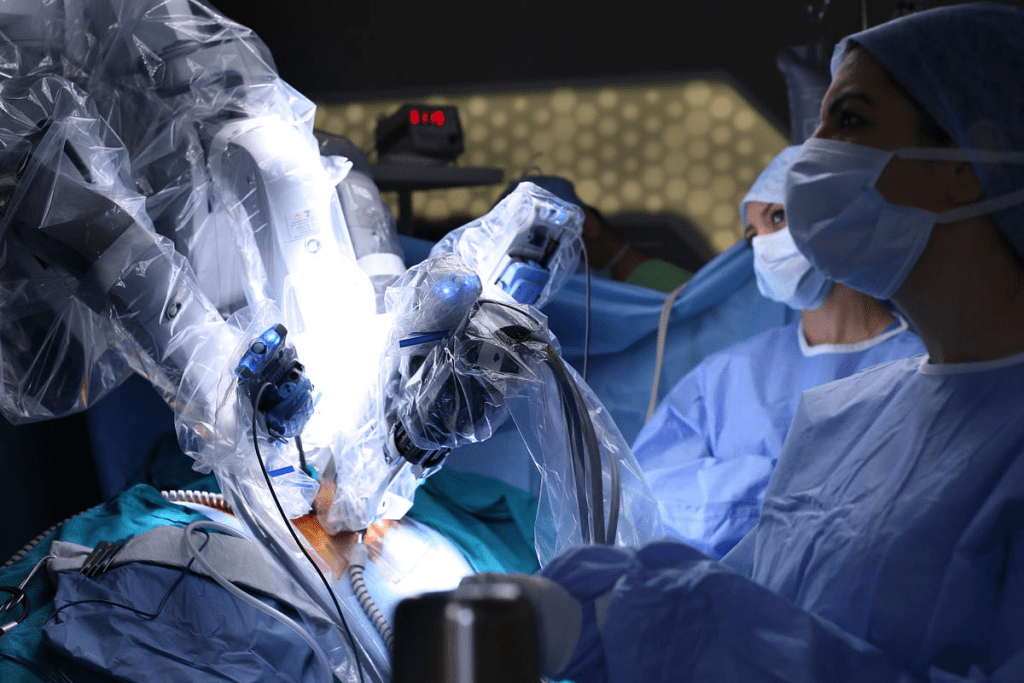
Robotic-assisted surgery uses robots like da Vinci to help surgeons. It gives better control and view, making complex surgeries easier. The robot helps us make precise cuts and stitches, which is great for tricky surgeries.
Partial Nephrectomy Options
Partial nephrectomy takes out just the bad part of the kidney. It’s for people with tumors or other problems. We do it laparoscopically or with robots, which means less damage and faster healing. We pick the best method for each patient.
In summary, these new surgeries have many benefits. They cause less pain and help you heal faster. Knowing about these options helps patients choose the best care for themselves.
7 Key Benefits of Minimally Invasive Kidney Procedures
Minimally invasive kidney procedures have changed urology a lot. They offer many benefits to patients. These new surgical methods are safer and more effective than the old open surgery.
Shorter Hospital Stays
One big plus is that patients don’t stay in the hospital as long. They usually spend 2.45 to 3.8 days there. This means they can go home and recover in a better place.
Lower Readmission Rates
These surgeries also mean fewer times patients have to come back to the hospital. The rate is about 15.1%, much lower than the 21.5% for open surgery.
Minimal Blood Loss
Another great thing is how little blood is lost during and after surgery. Blood loss is usually under 150 mL. This cuts down on the need for blood transfusions and lowers the chance of problems.
Reduced Post-Operative Pain
Patients also feel less pain after these surgeries. This is because the incisions are small and there’s less tissue damage. This makes the recovery easier and more comfortable.
In short, minimally invasive kidney procedures have many benefits. These include shorter hospital stays, fewer times patients have to come back, less blood loss, and less pain after surgery. All these help make patients’ experiences better and their outcomes better, too.
- Shorter recovery times allow patients to return to their normal activities sooner.
- Less risk of complications due to smaller incisions and minimal tissue damage.
- Improved patient outcomes resulting from the combination of these benefits.
The Step-by-Step Process of Minimally Invasive Kidney Surgery
The journey to recovery through minimally invasive kidney surgery starts long before the surgery. It’s important to know each step, from the first check-up to aftercare.
Pre-Surgical Evaluation and Preparation
Before surgery, patients get a detailed check-up. This includes looking at their medical history, a physical exam, and tests like CT scans and lab work. Our team works with patients to make sure they’re ready for the surgery, answering any questions they have.
- Medical history review and physical examination
- Imaging studies (CT scans, MRI)
- Laboratory tests
- Patient education and counseling
We also check the patient’s health and any risks of surgery. This helps us tailor the surgery to fit the patient’s needs, improving the chances of success.
Surgical Procedure Walkthrough
Minimally invasive kidney surgery uses special tools and techniques. The surgery is done through small cuts, with a laparoscope and instruments inserted. Robotic assistance is often used, making the surgery more precise and controlled.
The surgeon and team carefully remove the diseased kidney or part of it. This method causes less damage and trauma than open surgery, leading to faster recovery.
“The precision and flexibility offered by robotic-assisted surgery have revolutionized the field of minimally invasive kidney surgery, enabling surgeons to perform complex procedures with greater ease and accuracy.” – Renowned Urologist.
Post-Operative Recovery Protocol
After surgery, patients are watched in the recovery room before moving to a regular room. Our post-operative care team focuses on a smooth recovery, managing pain and addressing concerns.
- Immediate post-operative monitoring
- Pain management
- Gradual mobilization and return to normal activities
- Follow-up care and check-ups
We stress the importance of follow-up care. We schedule appointments to check on the patient’s progress and remove any stitches. By following our recovery plan, patients can quickly get back to their normal lives, with less scarring and fewer risks.
6 Common Conditions Treated with Minimally Invasive Kidney Surgery
Minimally invasive kidney surgery has changed how we treat kidney problems. It’s safer and more effective than old methods. This new way helps patients recover faster and feel better sooner.
Kidney Cancer and Tumors
Kidney cancer and tumors are common problems we treat with this surgery. Minimally invasive surgery lets us remove tumors precisely. This helps keep the healthy kidney tissue safe.
This method is great for early-stage kidney cancer. It lowers the risk of problems and helps patients heal faster.
Studies show it’s better than old surgery methods. Patients have fewer complications and stay in the hospital less.
Non-Cancerous Kidney Conditions
We also treat non-cancerous issues like benign tumors and cysts with this surgery. Conditions like hydronephrosis and kidney stones are managed, too.
- Benign kidney tumors
- Kidney cysts
- Hydronephrosis
- Kidney stones
These problems can really affect a person’s life. Minimally invasive surgery is a less risky option with quicker recovery.
When Partial vs. Complete Kidney Removal is Recommended
Choosing between partial and complete kidney removal depends on several things. This includes the condition’s type and stage, tumor size and location, and the patient’s health. Partial nephrectomy is often chosen for small tumors or single-kidney patients. It helps keep kidney function.
Complete kidney removal (radical nephrectomy) is needed for larger tumors or advanced cancer. We look at each patient’s situation to decide the best surgery.
Understanding Risks and Considerations for Minimally Invasive Kidney Procedures
Minimally invasive kidney surgery has changed the game. But it’s important to know the risks and considerations. We’ll look at possible complications and when open surgery might be needed. It’s key to understand the good and bad sides of these surgeries.
Potential Complications
Like any surgery, minimally invasive kidney surgery has risks. Robotic surgeries have a 9% complication rate. These can include infections, bleeding, and damage to nearby organs. We do our best to avoid these, but patients need to know about them.
- Infection
- Bleeding
- Injury to surrounding organs
- Reaction to anesthesia
Rare Conversion to Open Surgery
Sometimes, despite our best efforts, we might need to switch to open surgery. This happens in about 1-3% of cases. We make this choice when complications arise that can’t be handled with minimally invasive methods. We talk about this possibility in detail before surgery.
It’s vital to understand the risks and considerations of minimally invasive kidney procedures. The complications and rare need for open surgery are important. But, they should be balanced against the benefits, like shorter hospital stays and less pain after surgery.
Conclusion: Advances and Future Directions in Minimally Invasive Kidney Surgery
Looking at the progress in minimally invasive kidney surgery, we see big steps forward. New technologies and methods keep improving. This has led to better treatments for many kidney problems.
These changes have made care better for patients. They now have shorter stays in the hospital, less pain, and less blood loss. As we move forward, we expect even more improvements in the safety and success of these surgeries.
The future looks bright for kidney surgery. We might see better tools and imaging. This could lead to even more effective treatments for kidney diseases.
FAQ
What is minimally invasive kidney surgery?
Minimally invasive kidney surgery is a type of surgery. It uses small incisions and special tools. This method reduces body trauma and helps patients recover faster.
What are the types of minimally invasive kidney removal surgery?
There are several types of minimally invasive kidney removal surgery. These include laparoscopic nephrectomy, robotic-assisted kidney surgery, and partial nephrectomy. Each has its own benefits and characteristics.
What is the difference between laparoscopic and robotic-assisted kidney surgery?
Laparoscopic surgery uses a laparoscope and special tools. Robotic-assisted surgery, like da Vinci technology, offers more precision and control.
What are the benefits of minimally invasive kidney procedures?
These procedures have many benefits. They lead to shorter hospital stays and lower readmission rates. They also result in less blood loss and less pain after surgery. This means patients can recover faster and more comfortably.
What conditions are treated with minimally invasive kidney surgery?
This surgery treats kidney cancer and tumors, as well as non-cancerous conditions. The choice between partial or complete removal depends on the condition and the patient’s health.
What are the possible risks and complications of minimally invasive kidney procedures?
Risks include bleeding, infection, and injury to nearby organs. The complication rate is about 9% for robotic procedures. In 1-3% of cases, the surgery may need to be converted to open surgery.
What is the recovery process like after minimally invasive kidney surgery?
Recovery starts with a short hospital stay. Then, patients rest and gradually return to their normal activities. Most experience little pain and can quickly get back to their lives.
How is the decision made between partial and complete kidney removal?
The decision depends on the type and stage of kidney cancer, the tumor’s size and location, and the patient’s health and kidney function.
What is the role of robotic-assisted surgery in kidney removal?
Robotic-assisted surgery, like da Vinci technology, improves the surgeon’s precision and dexterity. It allows for more complex procedures with less invasion, leading to faster recovery.
What is the surgical removal of a kidney called?
It’s called a nephrectomy. This can be done with minimally invasive techniques, such as laparoscopic or robotic-assisted surgery.
What is partial kidney removal?
Partial kidney removal, or partial nephrectomy, removes only the diseased or damaged part of the kidney. The rest of the healthy tissue is left intact.
Reference
- National Center for Biotechnology Information. (2021). Minimally Invasive Surgery. Retrieved from https://www.ncbi.nlm.nih.gov/books/NBK441829/