Last Updated on December 2, 2025 by Bilal Hasdemir
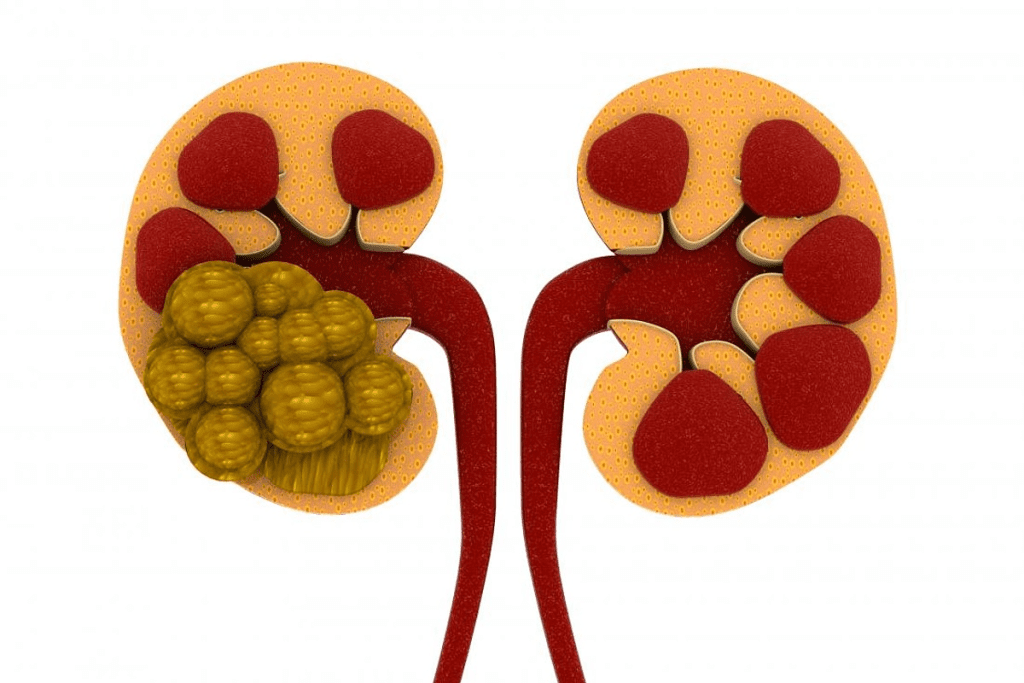
Nephrolithiasis, or kidney stone disease, refers to hard objects that form in the kidneys. A kidney stone develops when there are too many minerals and not enough water in the urine. Over time, these minerals stick together to form a kidney stone.
When a kidney stone becomes too large, it can cause severe pain and often requires medical attention. The size of a kidney stone is very important when deciding if surgery is needed. Usually, kidney stone surgery is considered when the stone is 15“20 mm or bigger.
Key Takeaways
- Surgical intervention is often necessary for kidney stones larger than 15-20 mm.
- Excess minerals and dehydration can lead to the formation of kidney stones.
- Large kidney stones can cause severe pain and require prompt medical attention.
- The size and volume of the stone, along with patient-specific risks, determine the need for surgery.
- Less invasive approaches may be ineffective for larger kidney stones.
Understanding Kidney Stone Sizes and Their Impact
Knowing the size of a kidney stone is key for doctors to choose the right treatment. The size of the stone decides if a treatment is simple or if it needs to be more serious.
Measuring Kidney Stones
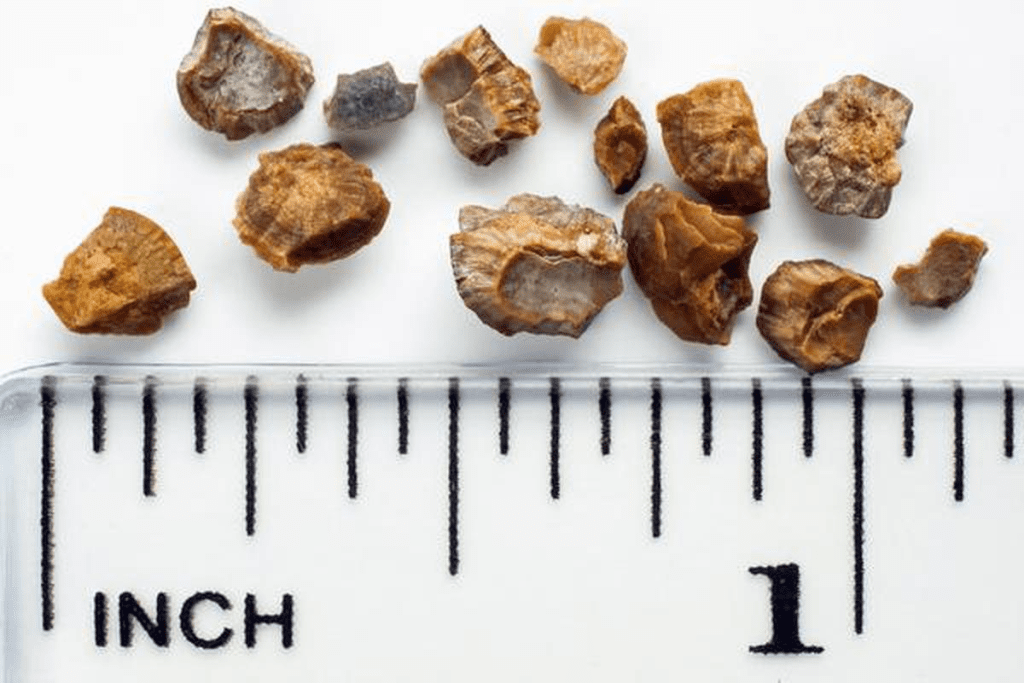
Doctors use tests like ultrasound or CT scans to measure a kidney stone in millimeters (mm). Getting the exact size of a kidney stone is important. It tells doctors whether the kidney stone can pass on its own or if it requires procedures like lithotripsy or surgery. Typically, they measure the kidney stone across its widest part.
A kidney stone larger than 6 mm may need medical help to pass, while a kidney stone over 15 mm often requires surgical intervention. Knowing the size of a kidney stone helps determine the safest and most effective treatment option.
Classification System for Nephrolithiasis by Size
A kidney stone is classified based on its size, among other factors. Although there’s no universal standard, most kidney stone cases are grouped as small (less than 5 mm), medium (5“15 mm), or large (over 15 mm). These categories help doctors choose the appropriate kidney stone treatment.
Smaller kidney stone cases may respond well to hydration and pain management. However, larger kidney stones often require more involved treatments such as shockwave lithotripsy or surgery. Each kidney stone treatment plan is customized based on the stone’s size, location, and type.
Providing proper care means considering more than just the kidney stone size. Treatment also depends on symptoms, overall health, and the likelihood of future kidney stone formation. This personalized approach helps ensure the best outcome in managing kidney stone disease.
The Critical Size Thresholds for Kidney Stone Surgery
Understanding the size of a kidney stone is critical for planning treatment. A small kidney stone may pass without intervention, while a larger kidney stone could require surgery. Knowing these thresholds helps doctors select the best procedure for each kidney stone case.
Accurate size measurements guide treatment decisions and reduce the risk of complications from a kidney stone. Whether it’s watchful waiting, lithotripsy, or surgery, the treatment of a kidney stone should always be based on precise clinical evaluation.

15mm Surgical Intervention Benchmark
A kidney stone under 15 mm usually does well with less invasive treatments. For example, a kidney stone of this size can often be treated with ureteroscopy. This method is safer and leads to quicker recovery for many kidney stone patients.
20mm Threshold for Advanced Surgical Approaches
A kidney stone over 20 mm typically requires more complex surgeries like percutaneous nephrolithotomy (PNL). This is because larger kidney stones can’t be treated effectively with simpler, non-invasive methods.
Watchful Waiting for Smaller Stones
For kidney stones under 5 mm, watchful waiting might be a good first step. This approach involves monitoring the kidney stone for any movement or growth. It might help avoid the need for surgery right away.
The success of kidney stone treatments also depends on the stone’s location in the ureter and its type. Knowing these details, along with size, is critical in choosing the right treatment for a kidney stone.
Surgical Techniques Based on Kidney Stone Size
The size of a kidney stone plays a major role in determining the best treatment. Different techniques are available depending on whether the kidney stone is small, medium, or large.
Minimally Invasive Options for Stones Under 15mm
For kidney stones under 15 mm, Extracorporeal Shock Wave Lithotripsy (ESWL) is often used. This method breaks the kidney stone into smaller fragments using shockwaves. The fragments can then pass out of the body more easily.
Some people turn to natural remedies like Chanca Piedra. While not a substitute for medical care, it may support the body in managing kidney stone symptoms.
Intermediate Approaches for 15“20mm Stones
Kidney stones measuring between 15 mm and 20 mm may need more advanced intervention. Ureteroscopy (URS) is a common option where a scope is inserted to remove the kidney stone through the urinary tract.
Retrograde intrarenal surgery (RIRS) is another effective method for kidney stones in this size range. However, success rates may drop for kidney stones with higher volume.
Percutaneous Nephrolithotomy (PNL) for Stones Over 20mm
For kidney stones over 20 mm, PNL is generally considered the best option. This procedure involves making a small incision in the back to access and remove the kidney stone directly. It’s a powerful solution for large or complex kidney stones.
Factors Beyond Size That Determine Kidney Stone Treatment
Size matters, but it’s not the only consideration. Several factors influence kidney stone treatment choices.
Stone Location in the Urinary Tract
The location of the kidney stone”whether in the kidney, ureter, or bladder”impacts the treatment method. A kidney stone causing a blockage or severe pain must be treated promptly.
Stone Composition and Density
What a kidney stone is made of (e.g., calcium, uric acid, cystine) affects how it responds to treatment. Denser stones may require more aggressive methods.
Patient-Specific Considerations
Each kidney stone case is unique. Doctors consider a patient’s health, history, and preferences when building a treatment plan.
Conclusion: Making Informed Decisions About Kidney Stone Management
Understanding the size, type, and location of a kidney stone is essential for choosing the best treatment. Whether it’s ESWL for small stones or PNL for large ones, the goal is to resolve the kidney stone with minimal risk and maximum relief.
Talking to a specialist can ensure that you receive a treatment plan tailored to your kidney stone situation. Early, informed action can reduce complications and improve long-term outcomes.
FAQ
What is considered a large kidney stone that requires surgery?
Kidney stones over 6mm might need surgery. This is true if they cause a lot of pain, block the urinary tract, or lead to infections. Stones bigger than 15mm to 20mm usually need more serious surgery.
How are kidney stones measured and classified?
Doctors use ultrasound or CT scans to measure kidney stones. They look at the stone’s size, where it is, and what it’s made of. This helps decide the best treatment.
What are the different surgical techniques used to treat kidney stones based on their size?
For stones under 15mm, doctors might use ESWL or URS. These are less invasive. Stones between 15-20mm might need a different approach. Stones over 20mm often need PCNL.
Can kidney stones be treated without surgery?
Yes, small stones (under 6mm) might go away on their own. Doctors might suggest pain meds and drinking lots of water. For small, painless stones, waiting and watching is common.
How does the location of a kidney stone affect treatment decisions?
Where the stone is in the urinary tract matters a lot. Stones in the ureter might need quicker or more serious treatments.
Are there any natural remedies that can help alleviate kidney stone pain or prevent their formation?
Some natural remedies, like Chanca Piedra, might help with pain or prevent stomach problems. But always talk to a doctor before trying these.
What factors beyond size influence the treatment of kidney stones?
More than just size matters. The stone’s makeup, how dense it is, and the patient’s health also play a big role. These factors help decide the best treatment.
How can I get rid of kidney stones?
Treatment depends on the stone’s size, where it is, and what it’s made of. Small stones might pass on their own. But, bigger or more complex stones might need surgery like ESWL, URS, or PCNL.
References
- Assimos, D., Krambeck, A., Miller, N. L., et al. (2016). Surgical management of stones: American Urological Association / Endourological Society guideline. The Journal of Urology, 196(4), 1161“1169. https://www.auanet.org/guidelines-and-quality/guidelines/kidney-stones-surgical-management-guideline