Last Updated on November 27, 2025 by Bilal Hasdemir
Millions of men worldwide suffer from an enlarged prostate. This condition makes everyday life uncomfortable. Minimally invasive laser therapies offer a quick fix with fewer side effects than old-school surgeries.
At Liv Hospital, we use laser surgery for prostate issues like GreenLight Laser Prostatectomy and Holmium Laser Enucleation of the Prostate (HoLEP). These methods help patients recover fast and get back to their daily routines sooner.
We’ll dive into the main advantages and possible downsides of laser treatment for prostate gland enlargement. This will give you a full picture of this cutting-edge treatment.
Key Takeaways
- Minimally invasive laser therapies offer rapid relief from enlarged prostate symptoms.
- Advanced laser surgeries like GreenLight Laser Prostatectomy and HoLEP are highly effective.
- Quick recovery and short hospital stays are significant benefits.
- Fewer side effects compared to traditional surgical methods.
- Liv Hospital provides expert care using internationally recognized laser therapies.
Understanding Benign Prostatic Hyperplasia (BPH)
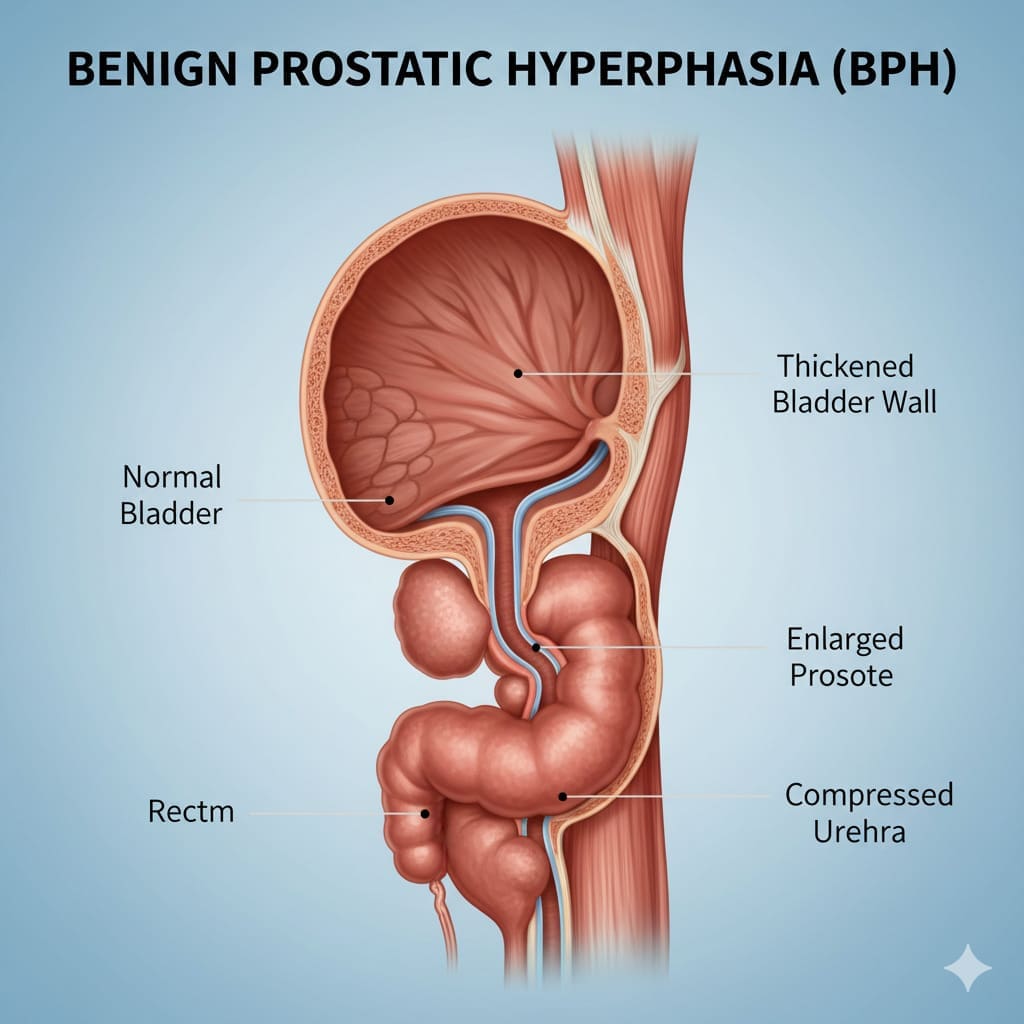
BPH, or Benign Prostatic Hyperplasia, is a non-cancerous growth of the prostate gland. It can greatly affect a man’s life quality. As men get older, their prostate gland changes, leading to BPH.
Causes of Prostate Enlargement
The exact cause of BPH is not known, but hormonal changes with aging are believed to play a role. Dihydrotestosterone (DHT), a testosterone derivative, is key in prostate growth.
“The growth of the prostate gland is influenced by the balance between cell proliferation and cell death, with DHT being a key regulator of this process.”
Prevalence and Risk Factors
BPH is common among older men. The American Urological Association says it affects over 50% of men by 60. By 85, it affects up to 90%.
| Age Group | Prevalence of BPH |
|---|---|
| 40-49 years | 25% |
| 50-59 years | 50% |
| 60-69 years | 70% |
| 70+ years | 90% |
Common Symptoms and Quality of Life Impact
Symptoms of BPH include frequent urination, urgency, weak flow, and waking up at night to urinate. These symptoms can greatly affect a man’s life, impacting sleep and daily activities.
Understanding BPH is key to managing its symptoms and improving life quality. Laser therapy for enlarged prostate is a good treatment option. It is less invasive and has fewer side effects than traditional surgery.
Traditional Treatment Options for Enlarged Prostate
For years, doctors have used many treatments for an enlarged prostate. These include medicines and surgeries. These methods help manage symptoms of an enlarged prostate.
Medication Therapy Approaches
Medicine is often the first choice for treating an enlarged prostate. There are two main types: alpha-blockers and 5-alpha-reductase inhibitors. Alpha-blockers help relax muscles in the prostate and bladder, making it easier to pee. 5-alpha-reductase inhibitors shrink the prostate by blocking a hormone that makes it grow.
But, medicines have downsides. Side effects can include dizziness, tiredness, and problems with sex. Some people don’t see much improvement in their symptoms.
Conventional Surgical Procedures
For those who don’t get better with medicine or have bad symptoms, surgery is an option. The most common surgeries are Transurethral Resection of the Prostate (TURP) and open prostatectomy.
TURP removes parts of the prostate that block urine flow. Open prostatectomy is more serious, involving a cut to reach the prostate. While these surgeries can work, they also have risks like bleeding, infection, and trouble controlling urine.
Limitations and Drawbacks of Standard Treatments
Traditional treatments for an enlarged prostate have their limits. Medicines might need to be taken for a long time, and side effects can affect daily life. Surgeries also come with risks and can lead to complications.
| Treatment | Benefits | Drawbacks |
|---|---|---|
| Alpha-blockers | Relax prostate muscles, improve urine flow | Dizziness, fatigue, sexual dysfunction |
| 5-alpha-reductase inhibitors | Shrink prostate, reduce symptoms | Sexual dysfunction, decreased libido |
| TURP | Effective for severe BPH, improves urine flow | Bleeding, infection, urinary incontinence |
| Open Prostatectomy | Effective for very large prostates | Higher risk of complications, longer recovery |
The problems with traditional treatments show we need new options. Laser therapy is one such alternative. It’s less invasive, has fewer side effects, and recovery is quicker.
Laser Treatment for Prostate: Advanced Technology Overview
Advanced laser technologies are changing how we treat prostate issues. We’re moving towards less invasive methods. These offer quicker recovery and fewer side effects.
GreenLight Laser Prostatectomy Technology
GreenLight Laser Prostatectomy is a top choice for BPH. It uses a laser to remove extra prostate tissue. This improves urine flow and reduces symptoms of an enlarged prostate.
The GreenLight laser is precise. It targets and removes prostate tissue without harming nearby areas. The procedure is done on an outpatient basis. Patients often see symptom relief right after.
The precision and control of GreenLight make it a popular choice. It’s a great option for many patients.
Holmium Laser Enucleation of the Prostate (HoLEP)
Holmium Laser Enucleation of the Prostate, or HoLEP, treats BPH. It removes prostate tissue with a holmium laser. The tissue is then broken down and removed.
HoLEP is effective for all prostate sizes. It offers durable results. It also has fewer complications than traditional surgery.
Other Emerging Laser Technologies
New laser technologies are coming to urology. Diode lasers and thulium lasers are being studied. They have unique benefits and are part of ongoing innovation.
As research grows, we’ll see more laser treatments for prostate issues. These new technologies promise even better, less invasive options in the future.
The 7 Key Benefits of Prostate Laser Therapy
Prostate laser therapy is a new way to treat benign prostatic hyperplasia (BPH). It has many benefits over old surgical methods. We will look at why laser therapy is a good choice for those with enlarged prostate.
Minimally Invasive Approach with Reduced Trauma
Laser prostate therapy is less invasive than old surgeries. It uses smaller cuts, causing less tissue trauma and lowering the chance of problems. This makes recovery easier for patients.
Significantly Reduced Blood Loss and Transfusion Risk
Laser therapy leads to significantly less blood loss than old surgeries. The laser’s precision helps remove prostate tissue accurately. This reduces bleeding and the need for blood transfusions.
Shorter Hospital Stay and Reduced Catheterization Time
Patients who get laser prostatectomy stay in the hospital shorter and use catheters less. The procedure’s less invasive nature helps patients recover faster. It also lowers the chance of getting sick in the hospital.
Rapid Symptom Relief and Improved Urinary Flow
Laser therapy gives quick relief from BPH symptoms like weak urine flow and needing to urinate often. It removes or reduces prostate tissue that blocks urine flow. This improves how well patients can urinate, making their lives better.
Lower Risk of Complications and Improved Safety
The laser’s precision lowers the risk of problems seen in old surgeries. Improved safety is a big plus. It makes laser therapy a good choice for those at higher risk for surgery complications.
Reduced Risk of Incontinence and Sexual Dysfunction
Laser prostate therapy has a lower risk of incontinence and sexual problems than some old surgeries. The laser’s precise nature helps keep surrounding tissues and nerves safe. This lowers the risk of these issues.
Potential for Repeat Procedure if Necessary
In some cases, laser therapy can be done again if needed. This flexibility gives patients peace of mind. They know they can get more treatment if their symptoms come back or if the first treatment doesn’t work fully.
Knowing these 7 key benefits helps patients make better choices for treating BPH. Laser prostate therapy offers many advantages that improve patient outcomes and quality of life.
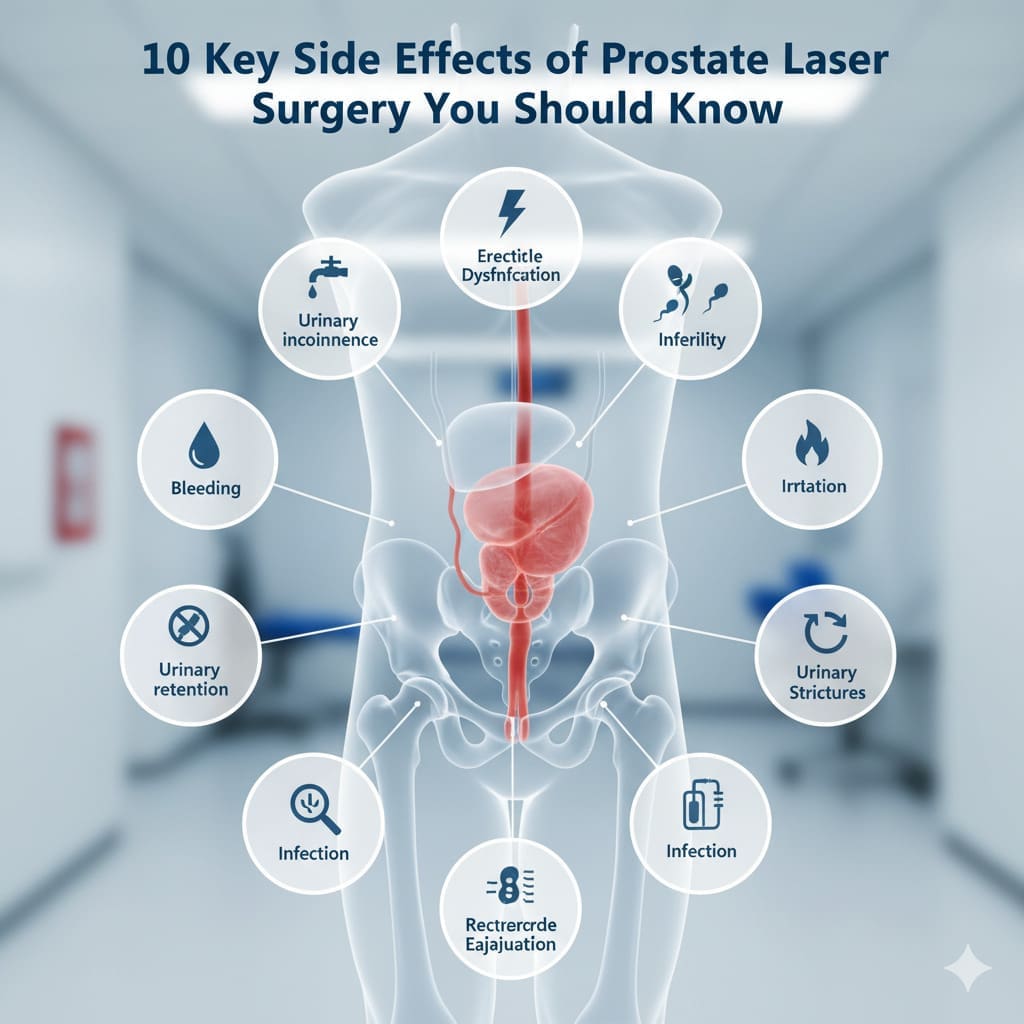
Potential Side Effects and Risks of Laser Prostate Surgery
It’s important to know the risks and side effects of laser prostate surgery. This is key for making informed choices. Laser prostate surgery is usually safe and works well, but it can have risks and complications like any medical treatment.
Common Short-Term Side Effects
People who have laser prostate surgery might face some short-term side effects. These can include:
- Temporary urinary retention or trouble urinating
- Increased need to urinate or urgency
- Mild hematuria (blood in the urine)
- Discomfort or pain when urinating
- Urinary tract infection
These side effects usually go away within a few weeks after the surgery.
Possible Long-Term Complications
Some patients might face long-term issues after laser prostate surgery. These can include:
- Persistent urinary incontinence
- Erectile dysfunction
- Bladder neck contracture
- Retrograde ejaculation
Talking to your urologist about these risks is very important. This helps you understand the benefits and risks fully.
Side Effect Rates Compared to Traditional Surgery
Laser prostate surgery is often better than traditional surgery in terms of side effects. The table below shows some key differences:
| Complication | Laser Prostate Surgery | Traditional TURP Surgery |
|---|---|---|
| Blood Transfusion Rate | <1% | 2-5% |
| Transurethral Resection Syndrome | 0% | 1-2% |
| Incontinence Rate | 1-3% | 2-5% |
| Erectile Dysfunction | 5-10% | 10-15% |
The table shows laser prostate surgery has lower complication rates than traditional TURP surgery.
Talking about side effects and risks can be worrying. But knowing is important for making the right choice for your health. Our team is dedicated to giving you the best care and support during your treatment.
The Laser Prostatectomy Procedure: Patient Experience
The laser prostatectomy procedure aims to ease symptoms of an enlarged prostate. It improves life quality for patients. You’ll learn what to expect, from start to finish.
Pre-Operative Evaluation and Preparation
Before the surgery, patients get a detailed check-up. This includes:
- Medical history review
- Physical examination
- Urinary flow studies
- Prostate-specific antigen (PSA) testing
- Imaging studies (e.g., ultrasound)
Our team will also talk about your current medications. They’ll guide you on what to do before surgery, like diet and medication changes.
Step-by-Step Procedure Overview
The surgery uses advanced laser tech to remove prostate tissue. It involves:
- Insertion of a cystoscope through the urethra to see the prostate
- Using a laser to remove or vaporize the prostate tissue
- Continuous irrigation to keep the area clear and remove tissue
The exact steps can change based on the laser type used. Our surgeons use the latest methods for the best results.
Anesthesia Options and Considerations
Laser prostatectomy can be done under different anesthetics. These include general, spinal, or local anesthesia with sedation. The choice depends on your health, preferences, and the surgeon’s advice.
We talk with patients to find the best anesthesia plan. This ensures you’re comfortable and safe during the surgery.
Immediate Post-Operative Recovery
After surgery, patients are watched in a recovery area. Most will:
- Feel some urgency or need to urinate often
- Have a catheter to help with urination
- Get instructions on care and follow-up
Some pain is normal, but we aim to manage it well. We’re here to help with any concerns during recovery.
Recovery and Aftercare Following Laser Prostate Treatment
Understanding the recovery process after laser prostate treatment is key. Proper aftercare helps avoid complications and ensures the best results. We’ll guide you through the typical recovery and aftercare steps to prepare for the post-procedure period.
Typical Hospital Discharge Timeline
Most patients are discharged from the hospital the same day or within 24 hours after treatment. The exact time can vary based on your health and the procedure. Our medical team will watch your condition closely and guide you on when it’s safe to go home.
Activity Restrictions and Gradual Return to Normal
It’s important to let your body heal after laser prostate treatment. Avoid heavy lifting or bending for 2-3 weeks. You can start driving and light exercise when you feel comfortable. Following our specific instructions is key to avoid complications.
Managing Minor Post-Procedure Symptoms
Some patients may feel minor symptoms like urinary frequency or discomfort after treatment. These symptoms are usually temporary and can be managed with medication and lifestyle changes. We’ll give you personalized advice to manage these symptoms and improve your comfort.
“The key to a successful recovery is not just the treatment itself, but also the aftercare and follow-up care that follows.”
Follow-Up Care Schedule and Importance
Follow-up care is vital for recovery. We’ll schedule appointments to check your progress and remove any devices as needed. Attending these appointments is important to ensure you’re healing well and to address any issues quickly. By following our recommended schedule, you can optimize your recovery and achieve the best outcomes.
By understanding the recovery process and following aftercare instructions, you can avoid complications and have a smooth recovery after laser prostate treatment.
Clinical Evidence and Success Rates of Laser Prostate Therapies
Research on laser prostate treatments is growing. This research shows these treatments are safe and effective. Many studies support using laser therapies for prostate issues.
Long-Term Effectiveness Studies
Studies on laser prostate treatments show lasting benefits. For example, GreenLight laser prostatectomy improves symptoms and flow rates for years. A study in the Journal of Urology found patients had better symptoms and quality of life up to 5 years after treatment.
HoLEP has also been studied a lot. It reduces prostate size and improves urine flow. A meta-analysis showed HoLEP is as good as or better than traditional TURP, with fewer side effects.
Comparing GreenLight and HoLEP Outcomes
GreenLight and HoLEP are two laser treatments for prostate issues. GreenLight vaporizes tissue, while HoLEP removes prostate lobes.
- GreenLight is quicker and has less bleeding.
- HoLEP can handle bigger prostates and has fewer repeat treatments.
A study compared GreenLight and HoLEP. Both improved symptoms, but HoLEP reduced prostate size more. The choice depends on the patient and the surgeon.
Patient Satisfaction and Quality of Life Improvements
Most men are very happy with laser prostate therapy. They see big improvements in symptoms and quality of life. Studies show laser treatments can greatly reduce symptoms and improve flow rates.
These procedures are minimally invasive. Most men can quickly get back to their normal activities. This makes them very satisfied.
Cost-Effectiveness Analysis
Looking at the cost of laser prostate treatments, several things matter. These include the initial cost, managing complications, and quality of life. Laser treatments might cost more upfront, but they often save money in the long run because of fewer complications.
An analysis compared laser treatments to other BPH treatments. It found laser therapies are a good value, even for severe symptoms.
Who Is an Ideal Candidate for Laser Prostate Surgery?
Choosing the right patients for laser prostate surgery is key to success. We look at certain medical criteria to find the best candidates. It’s important to know what makes someone a good fit for this surgery.
Medical Criteria for Patient Selection
Patients with Benign Prostatic Hyperplasia (BPH) or other prostate issues are often good candidates. Medical evaluation checks the prostate size, symptom severity, and overall health. We also look at other health conditions, like diabetes or heart disease, that might affect surgery or recovery.
Special Considerations for High-Risk Patients
For those at higher risk due to age or health, laser surgery is often a better choice. It’s minimally invasive and has fewer risks than open surgery. We weigh the pros and cons to help these patients make informed decisions.
When Alternative Treatments May Be Preferable
Laser surgery isn’t right for everyone. Other treatments, like medication or other minimally invasive options, might be better. We talk about these choices with our patients to find the best treatment.
Important Discussions with Your Urologist
Deciding on laser prostate surgery should involve talking to a urologist. We encourage patients to ask about risks, benefits, and recovery. This open conversation helps patients make the best choice for their needs.
We evaluate each patient’s situation and discuss options to see if laser surgery is right. Our aim is to give the best care and outcomes for our patients.
Conclusion: The Future of Laser Treatment for Prostate Conditions
Laser treatment for prostate conditions is changing how we manage Benign Prostatic Hyperplasia (BPH). It’s less invasive, has fewer risks, and patients recover quickly. This makes laser prostatectomy a top choice for those with BPH symptoms.
The future of laser treatment for prostate looks bright. New advancements in laser tech will likely make treatments even better. Procedures like GreenLight Laser Prostatectomy and Holmium Laser Enucleation of the Prostate (HoLEP) are getting better, giving patients more options.
We expect laser technology to keep getting better, leading to more effective treatments for BPH. This will improve life quality for patients all over the world. As research and development continue, we’ll see even more uses of laser treatment for prostate conditions.
FAQ
What is laser treatment for prostate enlargement?
Laser treatment for prostate enlargement is a new way to fix enlarged prostate. It uses lasers to remove or shrink the extra tissue. This helps improve urine flow and relieves symptoms.
How does laser prostate surgery differ from traditional prostate surgery?
Laser prostate surgery is less invasive than traditional surgery. It causes less bleeding and has shorter hospital stays. This makes it a better choice for many patients.
What are the benefits of GreenLight Laser Prostatectomy?
GreenLight Laser Prostatectomy is precise and minimizes bleeding. It has fewer complications and quick recovery. It’s a good option for treating BPH.
What is HoLEP, and how does it compare to other laser treatments?
HoLEP is a laser treatment that removes prostate tissue. It offers long-term relief from BPH symptoms. It’s great for larger prostates.
Are there any potentially side effects or risks associated with laser prostate surgery?
Laser prostate surgery might have risks like temporary incontinence or infection. But these are rare and usually mild, unlike traditional surgery.
How long does it take to recover from laser prostate treatment?
Recovery from laser prostate treatment is fast. Most patients go home the same day or the next. They can start normal activities in a few days to a week. Full recovery takes a few weeks.
Will laser prostate surgery improve my urinary symptoms?
Yes, laser prostate surgery aims to improve BPH symptoms. It removes or reduces the enlarged tissue, helping with weak flow and frequent urination.
Can laser prostate treatment be used for patients with large prostates?
Yes, treatments like HoLEP work well for large prostates. They offer a good option when other treatments are not as effective or safe.
Is laser prostate surgery covered by insurance?
Insurance coverage for laser prostate surgery varies. It’s best to check with your insurance to know what’s covered and what you might pay out-of-pocket.
How do I know if I’m a good candidate for laser prostate surgery?
A urologist will check your medical history and prostate size. They’ll assess your health and BPH symptoms to decide if laser surgery is right for you.
What advancements can we expect in laser treatment for prostate conditions?
Laser technology is improving. We can expect more precise and effective treatments. Recovery times will likely get shorter, and safety will increase.
References
- National Institute for Health and Care Research (NIHR): Laser surgery for an enlarged prostate is no more effective than standard surgery
PubMed Central (NCBI):GreenLight HPS Laser Vaporization of the Prostate (Specific PMC ID)