Last Updated on November 25, 2025 by
Why would a doctor order a urinalysis? They look for leukocyte esterase and other crucial, powerful signs of infection, disease, or overall health status.
We use urinalysis as a key tool to find and track health problems. It gives doctors important clues about a patient’s health. This helps them spot issues early, before they get worse.

Urinalysis results show signs of infections, kidney disease, and diabetes. Doctors use these findings to create treatment plans. They make choices that help patients get better.
Urinalysis helps us prevent and monitor chronic diseases. It ensures patients get the best care. This simple test is essential for keeping everyone healthy.
Key Takeaways
- A urinalysis is a diagnostic test used to detect and manage various health disorders.
- Doctors order urinalysis to detect infections, monitor chronic conditions, and guide preventive care.
- Urinalysis results provide valuable insights into a patient’s overall health.
- This test helps physicians identify and address health issues early.
- Urinalysis is a vital tool in maintaining public health and guiding effective treatment plans.
Understanding Urinalysis and Its Importance in Medical Diagnostics
Urinalysis lets doctors check urine to find and track health issues. It’s key for seeing how well a patient is doing and spotting problems early.
What Is a Urinalysis and How Is It Performed?
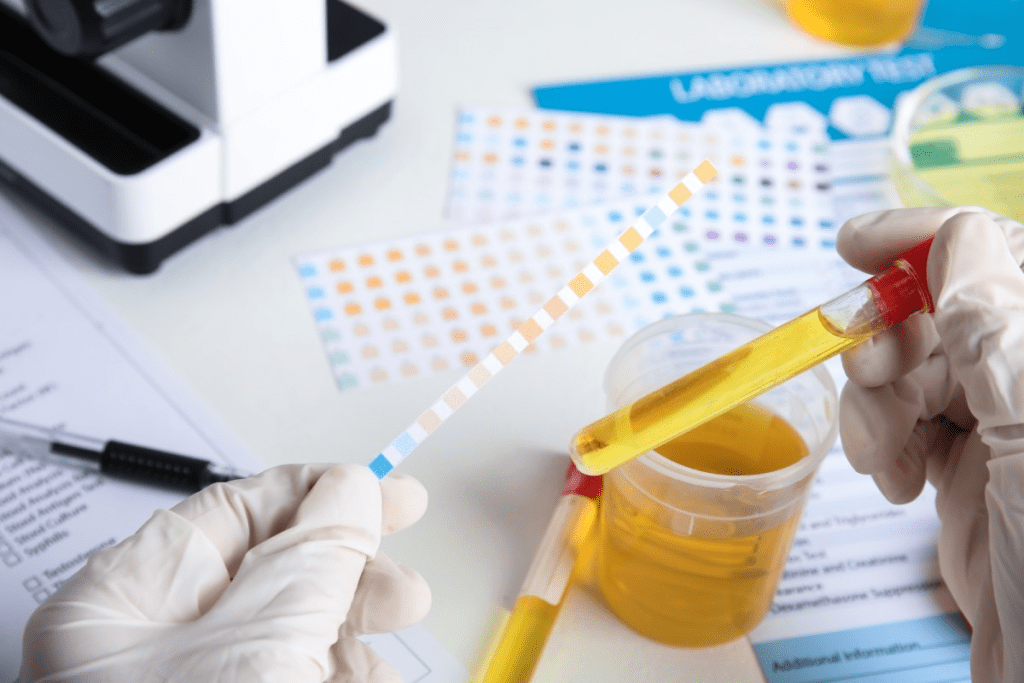
A urinalysis looks at urine’s color, amount, and what’s in it. It’s a simple test done in a doctor’s office. The test includes a visual exam, a dipstick test, and a microscopic exam.
The visual exam checks the urine’s color and clarity. The dipstick test uses a special stick to find things like leukocyte esterase, which shows white blood cells.
Components of a Complete Urinalysis
A full urinalysis looks at several important parts. These parts help doctors diagnose and keep track of health issues. The main components are:
- Physical Characteristics: The test checks the urine’s color, clarity, and specific gravity.
- Chemical Examination: The dipstick test finds things like glucose, ketones, and leukocyte esterase. These can show diabetes or urinary tract infections.
- Microscopic Examination: This part looks at the urine under a microscope. It finds red blood cells, white blood cells, and bacteria.
Knowing what a urinalysis checks is key to accurate diagnosis and treatment. By looking at urinalysis results, doctors can understand a patient’s health better. This helps them make the best care plans.
Detecting Urinary Tract Infections Through Leukocyte Esterase
Leukocyte esterase in urine is a key sign of urinary tract infections. This enzyme is made by white blood cells. Its presence in urine means a UTI might be present. We use this marker to start more tests.
The Significance of Leukocyte Esterase in Urine
Leukocyte esterase is important for early UTI detection. White blood cells in urine often mean an infection. The test for leukocyte esterase is part of a urinalysis, a common test.
This test is key to finding patients who need more tests and treatment.
How UTIs Are Diagnosed Using White Blood Cells in Urine
UTIs are diagnosed by finding white blood cells in urine. This is done through a urinalysis. The presence of white blood cells shows the body is fighting an infection.
Leukocyte esterase is a sign of these cells, making it a reliable UTI marker. We use this info to decide on treatment.
Global Impact: 150 Million UTI Cases Annually
Urinary tract infections affect millions worldwide, with about 150 million cases each year. This shows how important good diagnostic tools like the leukocyte esterase test are. We aim for accurate and quick diagnosis to avoid complications and improve patient care.
Knowing how leukocyte esterase helps detect UTIs is key to healthcare. By using this knowledge, we can improve patient care and lessen the global UTI problem.
Monitoring Kidney Health and Disease Progression
Urinalysis is key in keeping an eye on kidney health. It helps spot problems early. We use it to understand how well our kidneys are working and find signs of kidney disease.
Early Detection of Kidney Disease Through Epithelial Cells in Urine
Epithelial cells in urine can show kidney damage or disease. Finding these cells in urinalysis means we might need to check further or start treatment quickly.
Some important things about epithelial cells in urine are:
- More cells might mean kidney damage or disease
- They can be linked to different kidney problems
- Watching these cells helps us see how a disease is getting worse
Tracking Treatment Effectiveness for Kidney Conditions
Urinalysis is also key for checking if treatments are working. By looking at urinalysis results often, we can see if a treatment is helping. This helps us make changes if needed.
Benefits of using urinalysis for tracking treatment include:
- Seeing if a treatment is working or not early on
- Being able to change treatments quickly
- Better patient results thanks to data-driven choices
Preventing Complications in High-Risk Patients
For those at high risk of kidney disease, regular urinalysis is very important. It helps us catch problems early and take steps to stop them from getting worse.
Ways to help high-risk patients include:
- Regular urinalysis to monitor kidney health
- Making lifestyle changes to lower risk factors
- Specific actions to stop the disease from getting worse
In summary, urinalysis is a powerful tool for monitoring kidney health and disease. By looking at urinalysis results, including epithelial cells, we can find kidney disease early. We can also see how well treatments are working and prevent problems in those at high risk.
Screening for Diabetes and Other Metabolic Disorders
We use urinalysis to find signs of diabetes, like glucose and ketones. These are key to catching the disease early and managing it well.
Diabetes and other metabolic disorders can really hurt a person’s quality. Early detection through urinalysis helps start treatment early. This can lower the chance of serious problems.
Glucose and Ketones: Key Indicators in Urinalysis Results
The presence of glucose and ketones in urine points to diabetes or metabolic disorders. Glucose in urine happens when blood sugar is too high for the kidneys to handle.
- Glucose in urine means diabetes or trouble with glucose control.
- Ketones in urine show the body is burning fat for energy, a sign of diabetic ketoacidosis.
Managing Diabetes Through Regular Urine Testing
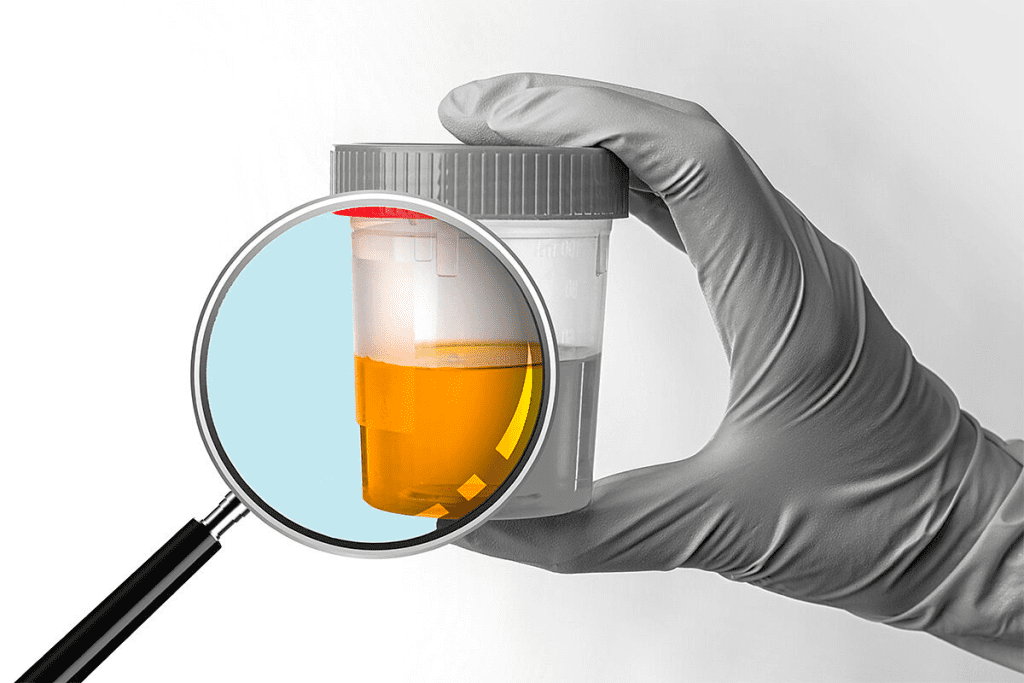
Regular urinalysis is key to managing diabetes. It lets doctors check glucose and ketone levels. This helps see if treatment is working and if changes are needed.
Benefits of regular urine testing include:
- Spotting early changes in glucose or ketone levels for quick action.
- Seeing if diabetes management plans are working.
- Lowering the risk of diabetes-related problems.
Statistics: Diabetes and Kidney Complications
Diabetes is a big cause of kidney disease globally. The International Diabetes Federation says about 463 million adults worldwide have diabetes. This number is expected to grow to 578 million by 2030.
“Diabetes is a major risk factor for kidney disease, and the presence of kidney disease significantly increases the risk of cardiovascular events and mortality in people with diabetes.”
” World Health Organization
The numbers show why regular urinalysis is so important for managing diabetes and avoiding kidney problems.
Conclusion: Advancements in Urinalysis Technology and Future Applications
Technology has made urinalysis more accurate and efficient. This has made it a better tool for doctors. Now, we can diagnose and track many health issues more effectively.
The future of urinalysis looks bright. Ongoing research will lead to even more innovations. This is why the global urinalysis market is expected to grow to USD 3.81 billion by 2034.
Urinalysis will keep being key in medical diagnostics. It helps doctors give better care to patients. By keeping up with new technology, we can make healthcare even better.
FAQ
What is a urinalysis, and why is it ordered by doctors?
A urinalysis is a test that checks urine’s physical, chemical, and microscopic properties. Doctors order it to find and track health issues like urinary tract infections, kidney disease, and diabetes.
What is leukocyte esterase, and what does it indicate in a urinalysis?
Leukocyte esterase is an enzyme from white blood cells. Its presence in urine means there might be a urinary tract infection. This is because it shows white blood cells in the urinary tract.
How is a urinary tract infection (UTI) diagnosed using urinalysis?
We diagnose UTIs by looking for leukocyte esterase and white blood cells in urine. Finding these signs, along with symptoms like painful urination and frequent need to urinate, confirms a UTI.
What is the significance of epithelial cells in urine?
Epithelial cells in urine can signal kidney damage or disease. Their presence is an early sign of kidney problems. This allows us to act early and prevent more damage.
How does urinalysis help in managing diabetes?
Urinalysis helps manage diabetes by finding glucose and ketones in urine. Finding these substances shows poor glucose control. This lets us adjust treatment plans to prevent complications.
What is the role of urinalysis in monitoring kidney health?
Urinalysis is key in monitoring kidney health. It finds early signs of kidney damage, like epithelial cells and proteinuria. Regular tests help us see how well treatments are working and prevent problems in at-risk patients.
How has urinalysis technology advanced in recent years?
Recent advances in urinalysis technology have made it more reliable and efficient. Modern analyzers can find a wider range of substances, including leukocyte esterase, with better accuracy and precision.
What are the benefits of regular urinalysis testing?
Regular urinalysis testing helps find health issues early, track treatment success, and prevent complications. It’s a vital tool for keeping overall health good and preventing chronic diseases.
How does urinalysis aid in the early detection of kidney disease?
Urinalysis helps find kidney disease early by spotting abnormalities like epithelial cells, proteinuria, and hematuria. Finding these early lets us start treatment sooner and slow disease progress.
What is the global impact of urinary tract infections?
Urinary tract infections have a big global impact, with about 150 million cases each year. They are a major cause of illness and healthcare costs worldwide.
References
- Simerville, J. A., et al. (2005). Urinalysis: A comprehensive review. American Family Physician, 71(6), 1153“1162. https://www.aafp.org/pubs/afp/issues/2005/0315/p1153.html
- “Urinalysis in Medical Diagnosis: the Historical and Contemporary Perspective. (n.d.). IDCM Journal / PMC. https://pmc.ncbi.nlm.nih.gov/articles/PMC11243776/