Last Updated on December 2, 2025 by Bilal Hasdemir
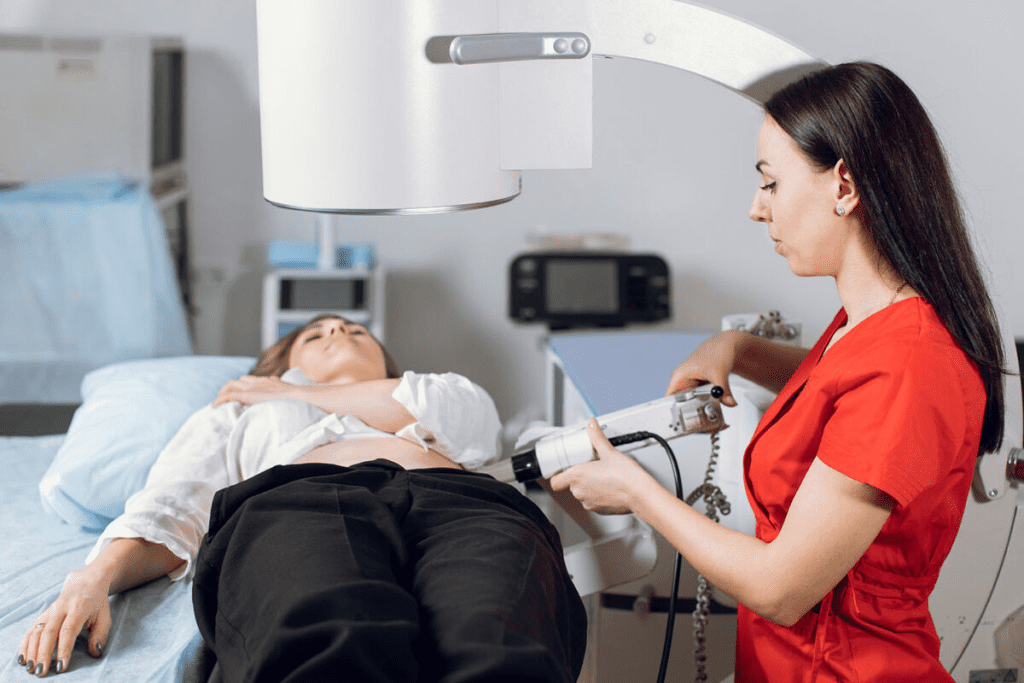
A lithotripsy procedure is a noninvasive treatment that lasts 30 to 60 minutes. It uses shock waves to break up kidney stones. These stones then become small enough to pass through the urinary system.
For those with large kidney stones, lithotripsy is a quick fix. Top hospitals like Liv Hospital use new methods to make sure patients get the best care. They aim to make the experience as good as it can be.
Key Takeaways
- Lithotripsy is a noninvasive procedure for treating kidney stones.
- The treatment duration is typically between 30 and 60 minutes.
- Shock waves are used to break up kidney stones into smaller pieces.
- Lithotripsy is an efficient solution for large kidney stones.
- Innovative protocols enhance patient outcomes and experience.
What Happens During a Lithotripsy Procedure
ESWL is a new way to help people pass kidney stones without surgery. It’s a non-invasive treatment that has changed kidney stone treatments. It’s a less invasive option compared to old surgical methods.
Definition and Purpose of Extracorporeal Shock Wave Lithotripsy
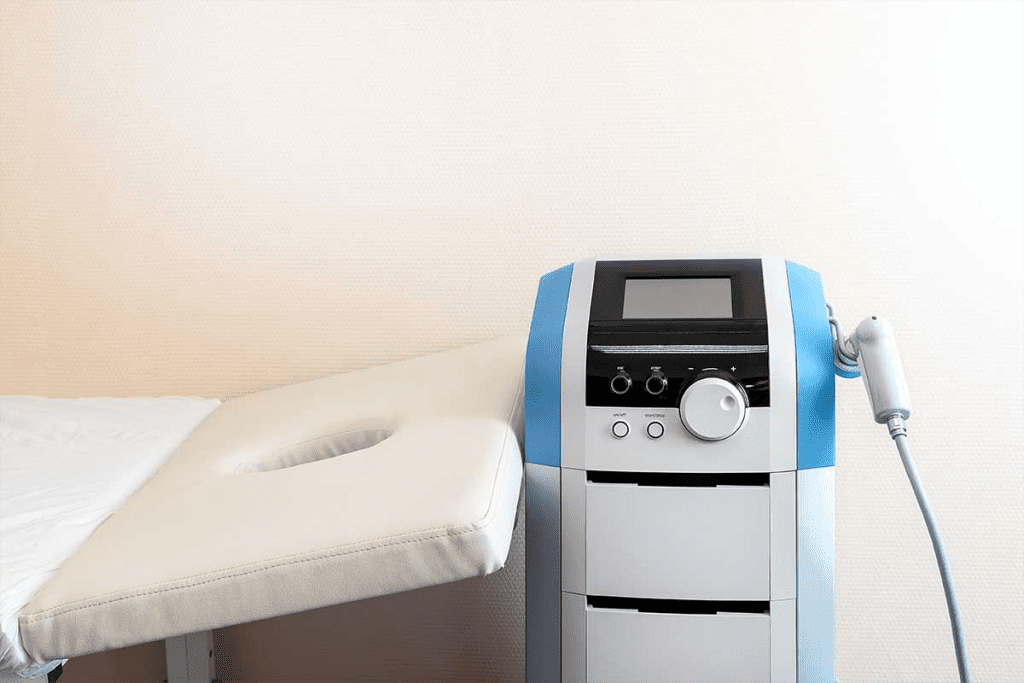
Extracorporeal Shock Wave Lithotripsy (ESWL) is a non-invasive medical procedure. It uses shock waves to break up stones in the kidney, bladder, or ureter. The purpose of lithotripsy is to fragment these stones so they can pass more easily through the urinary tract, relieving pain and urinary obstruction.
The lithotripsy procedure uses a machine called a lithotripter to generate focused shock waves. These waves are guided using X-ray or ultrasound to ensure precision targeting of the stone, with minimal damage to surrounding tissue.
Types of Kidney Stones Treatable with Lithotripsy
Lithotripsy is effective for treating various types of kidney stones, especially:
- Calcium oxalate stones “ the most common type, and highly responsive to lithotripsy.
- Uric acid stones “ which can also be broken down using lithotripsy, even if larger or partially obstructive.
- Cystine stones “ though more resistant, some cases still respond to lithotripsy.
Whether lithotripsy is suitable depends on stone size, location, and patient health. It remains a popular first-line treatment for many kidney stone cases.
Lithotripsy Session Duration: 30“60 Minutes
A typical lithotripsy session lasts between 30 to 60 minutes. The number of shock waves delivered depends on the size and hardness of the stone”usually between 1,000 and 3,000 pulses per session.lly lasts about 30 to 60 minutes. This time can change based on the stone’s size, where it is, and the patient’s health.

Factors Affecting Lithotripsy Procedure Time
Several variables can affect the time and effectiveness of lithotripsy:
- Stone size “ Larger stones may need longer or multiple lithotripsy sessions.
- Stone location “ Deeper or lower tract stones may require precise targeting.
- Patient anatomy “ Body type and existing health conditions can impact how well lithotripsy works.
Outpatient Lithotripsy vs. Inpatient Care
Most lithotripsy procedures are done on an outpatient basis. Patients can usually return home the same day. In some cases, inpatient lithotripsy is used if the patient requires monitoring due to other medical conditions.
Phases of the Lithotripsy Process
The full lithotripsy process includes:
- Pre-treatment preparation “ Includes imaging, fasting, and pre-procedure medication.
- Anesthesia “ Local or general anesthesia is used to keep patients comfortable during lithotripsy.
- Shock wave delivery “ The core of the lithotripsy treatment.
- Post-procedure monitoring “ To check for immediate complications and patient response.
- Recovery and discharge “ Most patients recover quickly after lithotripsy.
Recovery Timeline After Lithotripsy
After lithotripsy, patients may experience minor side effects like blood in the urine or mild discomfort. Drinking plenty of water helps flush out the stone fragments created during lithotripsy. Full recovery usually takes a few days, though complete stone passage might take longer.
Success Rates and Multiple Lithotripsy Sessions
- First-session success: 65“67% of patients pass stones after a single lithotripsy session.
- Cumulative success: After up to three lithotripsy sessions, the success rate rises above 90%.
In cases where lithotripsy is not effective, other surgical options like ureteroscopy or PNL may be considered.
Conclusion: Is Lithotripsy Right for You?
Lithotripsy is a safe, effective, and non-invasive treatment for many kidney stones. With fast recovery and high success rates, lithotripsy is often the first choice for both doctors and patients.ipsy helps you make a choice. This way, you can take charge of your treatment for kidney stones.
FAQ
What is lithotripsy?
Lithotripsy is a noninvasive treatment. It uses shock waves to break up kidney stones. These smaller pieces can then pass through the urinary system.
How long does a lithotripsy procedure take?
A lithotripsy procedure usually lasts between 30 and 60 minutes.
What types of kidney stones can be treated with ESWL?
ESWL can treat many types of kidney stones. This includes stones made of calcium oxalate, uric acid, and others.
What factors can affect the duration of a lithotripsy session?
Several factors can affect the procedure’s length. These include the stone’s size and location, the patient’s health, and the techniques used.
Is lithotripsy an outpatient or inpatient procedure?
Lithotripsy is often done on an outpatient basis. But sometimes, it may require a short hospital stay.
What can I expect during the recovery period after lithotripsy?
After lithotripsy, patients might feel some discomfort or pain. They are advised to drink plenty of fluids to help pass the stone fragments.
How long does it take for the kidneys to pass kidney stones after lithotripsy?
The time it takes to pass the stones can vary. Staying hydrated is key to helping pass the fragments.
What is the success rate of lithotripsy?
Lithotripsy’s success rate is about 65-67% after the first session. It can reach around 90% by the third session.
Are multiple lithotripsy sessions necessary?
Sometimes, more than one session is needed. The time between sessions can differ.
How soon can I return to normal activities after lithotripsy?
The time to return to normal activities varies. Patients are usually advised to avoid strenuous activities for a short time.
Are kidney stones dangerous?
Kidney stones can be painful and serious if not treated. But lithotripsy is a safe and effective treatment.
What are the different methods for kidney stone removal?
Lithotripsy is one method for removing kidney stones. Other options include surgical procedures or medication.
References
- Li, W., et al. (2025). Trends in the prevalence of kidney stones among U.S. adults. Wolters Kluwer Health. https://pubmed.ncbi.nlm.nih.gov/40540246/