Last Updated on October 20, 2025 by
Liver tumors are among the cancers with the lowest survival rates. This makes treating them a big challenge worldwide. The death rate for liver and intrahepatic bile duct cancer is 6.6 per 100,000 people each year.
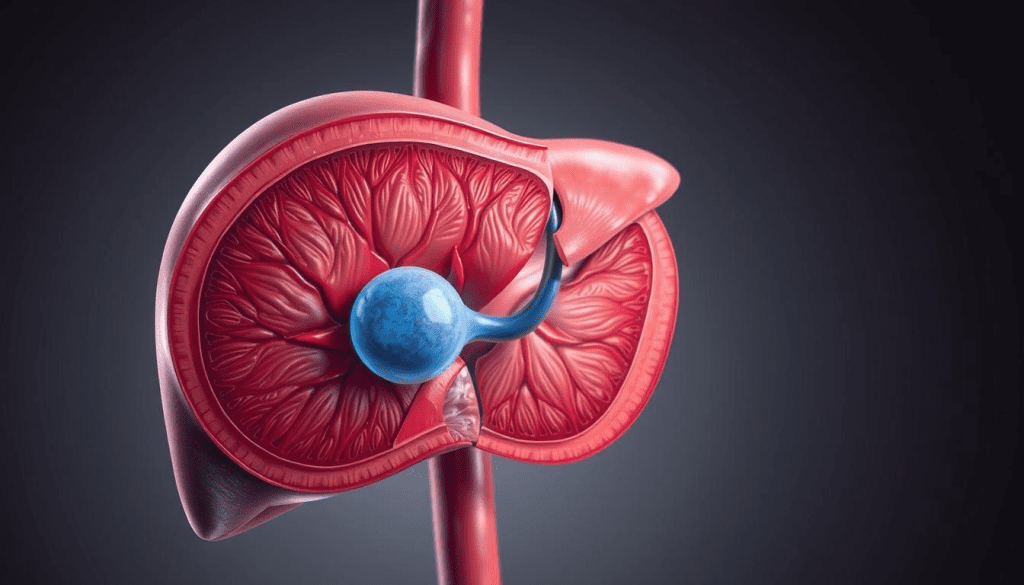
At Livehospital.com, we know how scary a diagnosis can be. It’s key to understand the numbers behind this disease. Men are nearly three times more likely to die from liver cancer than women. This shows a big gap in liver cancer survival rate.
We aim to provide top-notch healthcare. We support international patients with the latest care and protocols. This helps improve their chances of getting better.
Key Takeaways
- Liver tumors have low survival rates globally.
- The age-adjusted death rate is 6.6 per 100,000 people annually.
- Males have nearly triple the mortality rate compared to females.
- Comprehensive support is key for international patients.
- Cutting-edge protocols boost patient outcomes.
Global Mortality Statistics for Liver Cancer
It’s key to understand liver cancer mortality stats to see its global health impact. Liver cancer is a big health issue worldwide. Its death rates show how serious the disease is.
The death rates for liver cancer globally are very high. The age-adjusted death rate is 6.6 per 100,000 people each year. This number shows how much liver cancer affects global health, with a big difference between men and women.

Current Global Death Rates
The stats on liver cancer deaths worldwide are worrying. The disease is more common in some areas, leading to higher death rates there. We know how tough it is for liver cancer patients. Our team works hard to keep up with new research and treatments.
Survival rates for liver cancer depend on when it’s found and other factors. Finding it early is key to better survival chances. We stress the need to know survival statistics for liver cancer to manage patient hopes and treatment plans.
The stage of liver cancer at diagnosis is very important. It affects the prognosis and treatment choices. The liver cancer stages range from early to advanced, each needing different treatments. We aim to give our patients the latest info on their condition and treatment options.
Understanding Liver Cancer Survival Rate
Liver cancer survival rates change a lot based on when it’s found. Knowing these rates helps both patients and doctors make better choices about treatment.
Definition of Survival Rate Metrics
Survival rates for liver cancer are usually measured over five years. This shows how many people live at least five years after being diagnosed. The overall five-year survival rate for liver cancer is about 22%. This number is key for understanding what to expect.
Many things affect survival rates, like the cancer’s stage, the patient’s health, and the treatment’s success. For distant-stage cancer, the five-year survival rate is only about 3%. This shows why finding cancer early is so important.
Survival Rate Trends Over Time
Survival rates for liver cancer have been tracked over years to spot trends. While liver cancer survival rates are lower than many other cancers, they have improved in some groups. We keep an eye on these trends to give our patients the latest info.
Comparison with Other Cancer Types
Liver cancer survival rates are compared to other cancers to see how they stack up. Liver cancer usually has a lower survival rate because it’s often found late. But, new treatments are helping, and we’re here to offer the best care and options.
For example, liver cancer’s five-year survival rate is much lower than breast or prostate cancer’s. But, with more research and better detection and treatment, there’s hope for better survival rates in the future.
Liver Cancer Survival Rate by Stage
Liver cancer survival rates change a lot based on the stage of diagnosis. Knowing the survival rates by stage helps patients and doctors make better treatment plans.
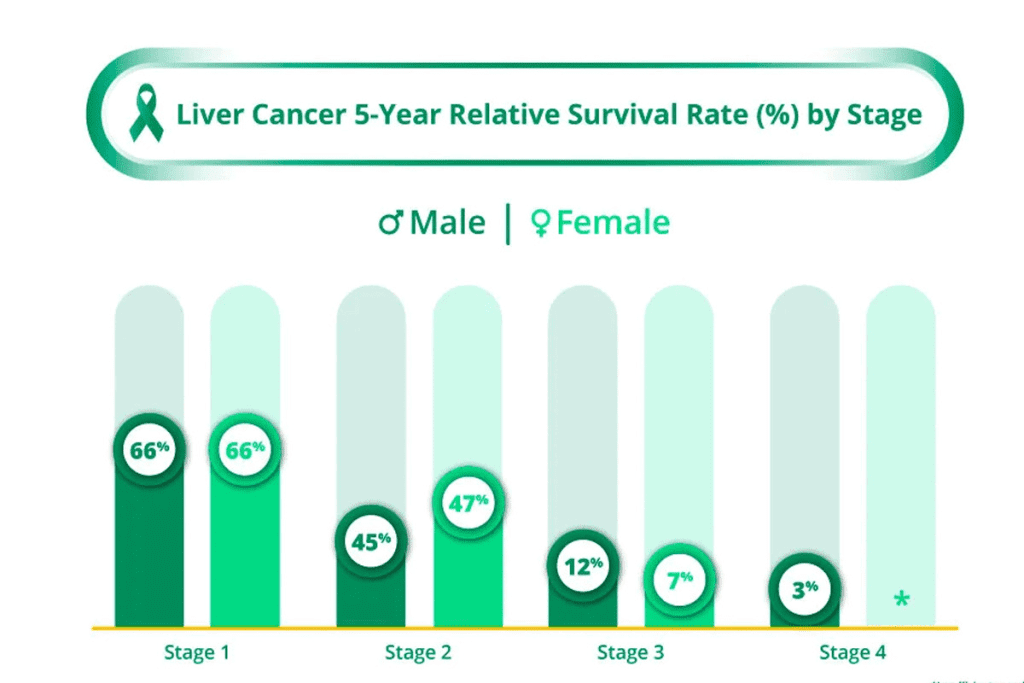
Early diagnosis greatly increases survival chances. For example, people with localized liver cancer have a much better survival rate than those with distant cancer. A recent study found that the 5-year survival rate for localized liver cancer is about 33%. For distant liver cancer, it’s only about 2%.
This big difference shows how important early detection is.
Unstaged Cancer Survival Rates
Sometimes, liver cancer is diagnosed without knowing the exact stage. Without a stage, it’s hard to know the survival rate. But, things like overall health, age, and how well the body responds to treatment are very important.
For stage 3 liver cancer, survival rates depend on the cancer’s details and the patient’s health. Doctors might suggest surgery, chemotherapy, or radiation therapy based on each case.
For stage 4 liver cancer, the outlook is generally less good. But, there are treatments that can help improve life quality and sometimes survival. Thanks to ongoing medical research, the outlook for advanced liver cancer is getting better.
It’s also important to remember that liver cancer survival rate by age matters too. Older patients might have different survival rates than younger ones because of health issues and other conditions.
We aim to provide care and support tailored to each stage of liver cancer. By understanding the stage and survival rates, patients and their families can make better choices about treatment and care.
The Impact of Hepatitis on Liver Cancer Mortality
It’s important to know how hepatitis affects liver cancer. Hepatitis is a big risk for liver cancer, and 80% of patients have had it. We’re committed to helping these patients with targeted care.
Hepatitis B and Liver Cancer Risk
Hepatitis B is a big risk for liver cancer. It can cause cirrhosis and cancer. Studies show HBV carriers are much more likely to get liver cancer. We keep up with new research to help our patients.
Hepatitis C and Liver Cancer Outcomes
Hepatitis C is also a big risk for liver cancer. It can cause inflammation and cirrhosis. New treatments for HCV have improved outcomes for patients. Our team offers the latest treatments.
Surgical Intervention Success Rates
Surgery is a key treatment for liver cancer. Success depends on the cancer stage and patient health. Early surgery can greatly improve survival chances. We help our patients choose the best treatment.
Immunotherapy Response Rates
Immunotherapy is a new hope for liver cancer. It uses the immune system to fight cancer. We’re leading in immunotherapy research, giving patients new treatments.
Hepatitis’s effect on liver cancer is complex. It depends on the virus type, cirrhosis, and treatment success. Important points include:
- The role of hepatitis B and C in liver cancer
- The need for early detection and prevention
- The success of surgery and immunotherapy in improving survival
Understanding these factors helps us tackle liver cancer challenges. We aim to improve the prognosis for patients with hepatitis.
Demographic Differences in Liver Cancer Mortality
Liver cancer mortality rates change a lot across different groups. Some groups face higher risks than others. It’s key to understand these differences to help more people survive.
Gender Disparities in Survival
Males have nearly triple the mortality rate of females. This shows a big gender gap in liver cancer survival. Studies point to the need for treatments and prevention plans that consider gender.
Historical Mortality Patterns
Liver cancer mortality rates have been going up over time. We look at these patterns to find out why and how to improve survival chances.
Projected Future Trends
Looking at future trends helps us prepare for the challenges and chances in fighting liver cancer. Early detection and treatment are key to better survival rates. We aim to stay on top of these trends for our patients’ best care.
It’s vital to understand demographic differences in liver cancer mortality. By recognizing and tackling these differences, we can aim to improve survival rates for everyone.
Improving Survival Rates: Current Approaches
At Livehospital.com, we’re all about boosting liver cancer survival rates. We use the latest treatments and early detection initiatives. Our team works hard to bring in new medical breakthroughs to help patients.
To better liver cancer survival, we need a solid plan. This includes new treatments and strong early detection programs. By focusing on these, we can greatly increase treatment success and survival rates.
Early Detection Initiatives
Early detection is key in fighting liver cancer. Early catches mean better treatment chances and higher survival rates. We’re working on advanced screening and teaching patients about risk factors.
- Advanced imaging techniques for accurate diagnosis
- Regular screening for high-risk patients
- Patient education on liver health and risk factors
We’re aiming to up the liver cancer survival rate and cure rate of liver cancer. Our goal is to give each patient the care they need, tailored to their situation.
We’re dedicated to bettering survival statistics for liver cancer. We keep our treatments and detection methods up to date. This way, we can give our patients the best results possible.
Conclusion: The Future of Liver Cancer Treatment and Survival
Looking ahead, liver cancer treatment and survival will keep getting better. Deaths from liver cancer are going up because of aging and more people. But, we’re hopeful about making things better through our work.
Knowing about liver cancer prognosis is key for patients and doctors. Things like stage 3 cirrhosis and liver failure life expectancy are important. For those with stage 4 cancer, the outlook is tough, but new medical advances bring hope.
At Livehospital.com, we aim to give top-notch healthcare and support to patients worldwide. The question of surviving without a liver is complex. Yet, our goal is to offer the latest care to boost survival chances. We’re dedicated to raising the bar and improving outcomes for those with liver cancer and related issues.
FAQ
What is the survival rate for liver cancer?
The five-year survival rate for liver cancer is about 22%. This drops to 3% for distant stage cases.
How does the stage of liver cancer impact survival rates?
The survival rate changes based on the cancer’s stage. Localized liver cancer has a higher survival rate than distant stage cases.
What is the impact of hepatitis on liver cancer mortality?
About 80% of liver cancer patients have had hepatitis. Hepatitis B and C increase the risk of liver cancer.
Are there demographic differences in liver cancer mortality?
Yes, men are nearly three times more likely to die from liver cancer than women. Demographics greatly affect liver cancer mortality.
What are the current approaches to improving survival rates for liver cancer?
Improving survival rates needs a multi-faceted approach. Early detection is key. We focus on cutting-edge protocols and multidisciplinary care.
What is the age-adjusted death rate for liver and intrahepatic bile duct cancer?
The age-adjusted death rate is 6.6 per 100,000 people each year.
Can you survive without a liver?
No, the liver is essential for survival. Liver resection or transplantation can save lives in some cases.
What is the survival rate for stage 3 and stage 4 liver cancer?
Survival rates for stage 3 and 4 liver cancer depend on several factors. These include the disease’s extent and overall health.
How long can you live with liver failure?
Liver failure’s prognosis varies by cause and damage extent. Liver transplantation can be life-saving in some cases.
What are the survival statistics for liver cancer by age?
Liver cancer survival rates differ by age. Older adults generally have poorer outcomes. Individual outcomes depend on health and disease stage.
References
- Calderon-Martinez, E., et al. (2023). Prognostic scores and survival rates by etiology of hepatocellular carcinoma. World Journal of Gastroenterology, 29(15), 2370-2385. https://pmc.ncbi.nlm.nih.gov/articles/PMC10181349/
- Cassinotto, C., et al. (2023). Life expectancy of patients with hepatocellular carcinoma: A population-based analysis of survivors. European Journal of Radiology Open, 10, 100466. https://www.sciencedirect.com/science/article/pii/S2211568423000025