Last Updated on December 2, 2025 by Bilal Hasdemir

Back pain affects millions of people worldwide and can significantly impact quality of life. Often, this pain comes from pressure on the spinal cord or nerves. A surgery called laminectomy can help with this. Learn what an L4 L5 laminectomy is. Understand this specific type of lumbar surgery used to treat stenosis at these levels clearly.
We’re here to explain what L4 L5 laminectomy is. This surgery removes part or all of the lamina, the bony arch of the vertebrae. It’s done to ease pressure on the spinal cord or nerves. This can help reduce pain and make moving easier for those with certain lumbar spine problems.
Key Takeaways
- L4 L5 laminectomy is a surgical procedure to relieve pressure on the spinal cord or nerves.
- It involves removing part or all of the lamina, the bony arch of the vertebrae.
- The goal is to reduce pain and improve mobility for patients with lumbar spine conditions.
- Laminectomy is considered when conservative treatments fail to alleviate symptoms.
- Understanding the procedure can help patients make informed decisions about their treatment.
Understanding the Lumbar Spine Anatomy

Knowing the lumbar spine’s anatomy is key for diagnosing and treating lower back issues. The lumbar spine, in the lower back, has five vertebrae, from L1 to L5. L4 and L5 are especially important for supporting the upper body and allowing for movement.
The Structure of L4 and L5 Vertebrae
The L4 and L5 vertebrae are in the lower part of the lumbar spine. They have special structures to handle a lot of body weight. Each vertebra has a vertebral body for weight and posterior elements like pedicles and laminae for support. L4 and L5 are bigger than the upper vertebrae to handle more weight.
The discs between L4 and L5, and L5 and S1, are key for shock absorption and spinal flexibility. These discs can wear out or herniate, which may need medical help.
Function of Lamina in Spinal Protection
The lamina is a vital part of the spinal canal’s back wall. It forms a protective arch over the spinal cord and nerves. The laminae of nearby vertebrae join to create this protective wall. For L4 and L5, the laminae are crucial for keeping the spinal canal safe from harm.
In surgeries like laminectomy, parts of the lamina are removed to ease nerve pressure. It’s important for surgeons to know how the lamina works. This helps them balance decompression needs with keeping the spine stable.
Defining L4 L5 Laminectomy

Laminectomy at the L4-L5 level is a common surgery for spinal problems. We’ll look into what this surgery does and why the L4-L5 area often needs it.
What Exactly is a Laminectomy Procedure?
A laminectomy removes part of the vertebrae to open up the spinal canal. This helps decompress the spinal canal, easing pressure on the spinal cord and nerves. It’s used to treat lumbar spinal stenosis and herniated discs, which cause a lot of pain.
The laminectomy procedure includes:
- Making an incision in the back to access the spine
- Removing the lamina to relieve pressure on the spinal cord
- Ensuring the stability of the spine post-surgery
Why the L4-L5 Region is Commonly Affected
The L4-L5 region is prone to wear and tear because of its location and the stress it faces. Issues like herniated discs and spinal stenosis often happen here, making surgery like laminectomy necessary.
Some reasons for this include:
- Mechanical stress due to its position in the lower back
- Degenerative changes associated with aging
- Higher likelihood of disc herniation at this level
Understanding laminectomy and why it’s needed at the L4-L5 level helps patients see their surgical options for lumbar spine issues.
Common Conditions Requiring L4 L5 Laminectomy
Many conditions in the lumbar spine, especially at L4-L5, need laminectomy surgery. This area is often affected by degenerative and traumatic issues. These problems can cause severe back pain and neurological symptoms.
Lumbar Spinal Stenosis
Lumbar spinal stenosis is when the spinal canal narrows. This can press on nerves, leading to pain, numbness, and weakness in the lower back and legs. It often comes from degenerative changes like osteoarthritis, affecting a person’s life quality.
Treatment for lumbar spinal stenosis starts with non-surgical methods. But if these don’t work, a L4 L5 laminectomy might be needed to ease nerve pressure.
Herniated Discs at L4-L5 Level
Herniated discs happen when the soft inner gel leaks out through a tear. At L4-L5, this can cause a lot of pain and nerve symptoms. Herniated discs are a common reason for L4 L5 laminectomy, especially when other treatments don’t help.
Symptoms of a herniated disc include sharp pain, numbness, tingling, and weakness in the lower back and legs. If these symptoms don’t get better or get worse, surgery is often suggested.
Other Indications for Surgery
Other conditions needing L4 L5 laminectomy include spondylolisthesis and degenerative disc disease. These can cause a lot of pain and disability. Surgery can help relieve these symptoms.
| Condition | Description | Symptoms |
| Lumbar Spinal Stenosis | Narrowing of the spinal canal | Pain, numbness, weakness in lower back and legs |
| Herniated Disc | Disc material leaks out and compresses nerves | Sharp pain, numbness, tingling, weakness |
| Spondylolisthesis | Vertebra slips out of place | Lower back pain, nerve compression symptoms |
It’s important to understand these conditions and their effects on the lumbar spine. L4 L5 laminectomy can be a good surgical option. It can help relieve symptoms and improve life quality.
Diagnosing Issues at the L4-L5 Level
To find problems at the L4-L5 level, we use a detailed approach. This includes physical checks, imaging tests, and neurological tests. These tools help us see how much nerves are compressed and if the spine is unstable. This guides us to the best treatment.
Physical Examination Techniques
First, we do a thorough physical check. We look at muscle strength, reflexes, and sensation in the legs. This helps us spot any problems. We also use tests like the straight-leg raise to find nerve issues.
Imaging Studies (MRI, CT, X-rays)
Imaging tests are key in finding L4-L5 problems. Magnetic Resonance Imaging (MRI) shows soft tissues like discs and nerves clearly. Computed Tomography (CT) scans are great for bones. X-rays help see the spine’s alignment and any damage.
Neurological Assessments
Neurological tests are important for understanding nerve function. We check motor function, sensory perception, and reflexes. This tells us how much nerves are affected.
By mixing physical checks, imaging, and neurological tests, we can pinpoint L4-L5 problems. Then, we create a treatment plan that fits the patient’s needs.
When Lumbar Surgery Becomes Necessary
When other treatments don’t work, surgery might be needed. This choice is made after checking the patient’s condition and past treatments.
Conservative Treatment Failures
First, we try non-surgical treatments like physical therapy and medicine. But if these don’t help, surgery could be next. We look at how bad the symptoms are and how they affect daily life.
Common conservative treatments that may fail include:
- Physical therapy
- Medications (pain relievers, muscle relaxants)
- Lifestyle changes (diet, exercise, posture correction)
- Epidural injections
Progressive Neurological Symptoms
Some spine problems can cause symptoms that get worse over time. These include numbness, tingling, and weakness in the legs. Surgery might be needed to stop further damage and help regain function.
Progressive neurological symptoms often mean a serious issue that needs quick action.
| Symptom | Description | Potential Outcome if Untreated |
| Numbness | Loss of sensation in the legs or feet | Permanent nerve damage |
| Tingling | Abnormal sensations (pins and needles) | Chronic discomfort |
| Weakness | Reduced muscle strength in the legs | Loss of mobility |
Quality of Life Considerations
Surgery is also considered if spine problems greatly affect daily life. Chronic pain and limited mobility can really lower a person’s quality of life. Surgery might help improve this.
The decision to have surgery is made for each person. We consider their condition, health, and what they prefer. We make sure patients understand their options and what’s best for them.
Preparing for L4 L5 Laminectomy Surgery
Getting ready for L4 L5 laminectomy surgery is a big step. We’ll help you prepare and plan for it. This way, you’ll be ready for the surgery and the recovery that follows.
Pre-surgical Testing and Evaluation
Before surgery, you’ll go through some tests and checks. These make sure you’re a good fit for the procedure. You might have:
- Blood tests to see if you have any health issues.
- Imaging studies like MRI or CT scans to look at your spine.
- Cardiac evaluation if you’re older or have heart problems.
Medication Adjustments
Some medicines can affect surgery or healing. We’ll check your meds and supplements. We might need to change them.
- Blood thinners might be stopped to avoid bleeding during surgery.
- NSAIDs and certain supplements could be changed or stopped because of their effects on bleeding or healing.
It’s important to follow our advice on changing your meds. This keeps you safe during and after surgery.
Practical Preparations for Recovery
Getting your home and daily life ready for recovery is key. Here are some things you can do:
- Arrange for support: Have someone to help with daily tasks when you’re recovering.
- Modify your living space: Make your home safe by removing hazards and making things easy to reach.
- Stock up on supplies: Keep things like ice packs, comfy clothes, and any needed meds on hand.
By doing these things, you can make your recovery space comfortable and supportive.
The L4 L5 Laminectomy Procedure Step by Step
Let’s walk through the L4 L5 laminectomy procedure step by step to understand what it entails.
Anesthesia and Positioning
The first step is to give the patient anesthesia. This makes sure they are comfortable and pain-free. We use general anesthesia, which makes the patient unconscious.
Once the anesthesia works, we position the patient on the table. They lie face down to help us reach the lumbar spine.
Surgical Approach and Technique
We then make a small incision above the L4-L5 vertebrae. The surgical technique involves gently moving muscles and tissues aside. This lets us see the lamina.
We remove the lamina and any other structures that are pressing on the nerves. This is done carefully to avoid harming the nerves or spinal cord.
“The key to a successful laminectomy lies in the precision of the surgical technique and the ability to decompress the nerves effectively,” says a renowned neurosurgeon.
Closure and Immediate Post-Op Care
After we’ve finished, we close the incision. We sew the muscles and tissues back together and close the skin. Post-op care starts right after surgery.
Our team watches the patient’s vital signs and manages any pain. We also give them instructions for aftercare to help them recover smoothly.
Laminectomy With Fusion vs. Laminectomy Alone
When it comes to surgery for the lower back, there are two main options: laminectomy with fusion and laminectomy alone. The right choice depends on the patient’s condition and the surgeon’s advice.
When Fusion is Recommended at L4-L5
Laminectomy with fusion is often suggested for serious spinal issues. This includes conditions like spondylolisthesis or severe disc disease at L4-L5. Spinal fusion joins vertebrae together using bone grafts and hardware like screws and rods.
Fusion is recommended when extra stability is needed. This is crucial when vertebrae move or slip too much.
Additional Considerations for Fusion Procedures
Fusion adds stability but comes with extra considerations. It’s a more complex surgery with a longer recovery time. It also limits some spinal movement.
It’s vital for patients to talk to their surgeon about their situation. This helps understand if fusion’s benefits are worth the drawbacks.
Comparing Recovery Between Both Approaches
Laminectomy alone has a quicker recovery because it’s less invasive. Patients usually feel less pain and can get back to normal activities faster.
Laminectomy with fusion takes longer to recover from. But, it offers more stability for those with serious spinal issues. This can lead to better long-term results.
It’s important to follow the surgeon’s recovery plan. This ensures the best outcome, no matter the procedure.
Minimally Invasive Options for Lumbar Decompression
The field of spine surgery has made big strides with new, less invasive methods. These modern ways aim to cause less harm and help patients heal faster. They are for those with problems in the lower back.
Endoscopic Techniques
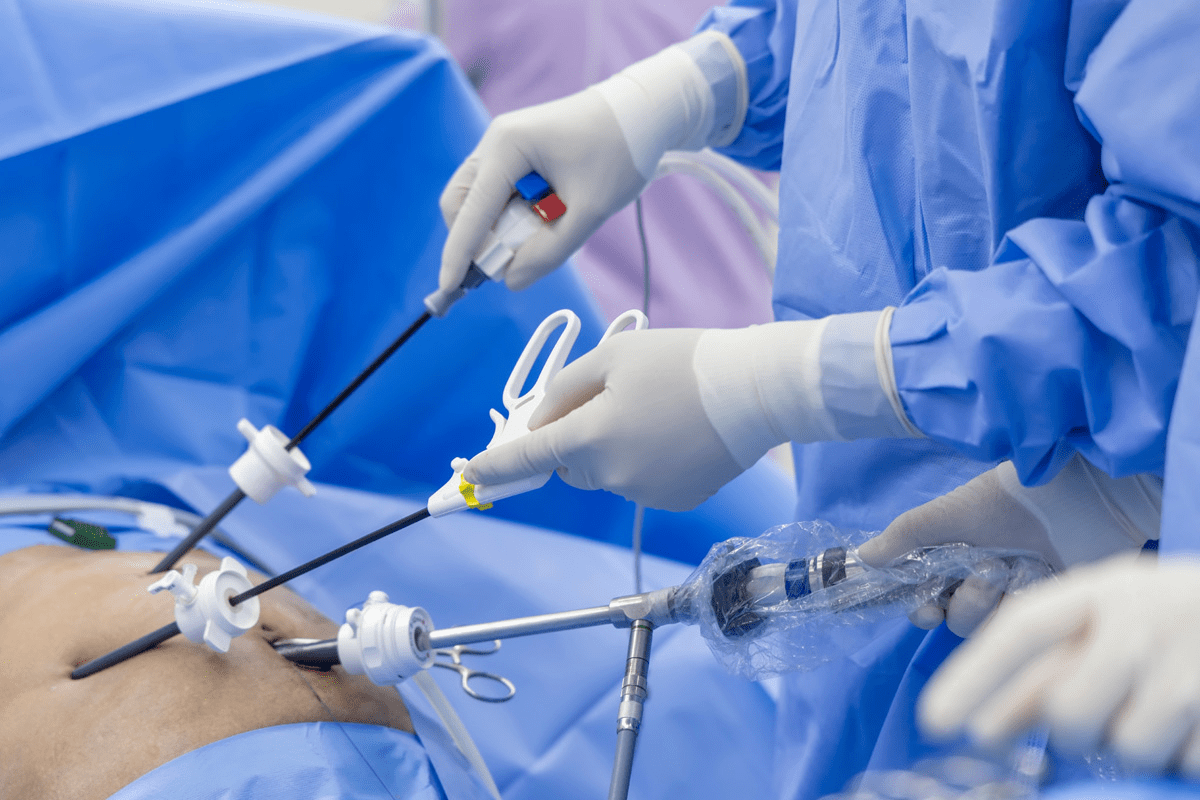
Endoscopic techniques use a small camera and special tools for surgery through tiny cuts. This method lets doctors see clearly and harm less tissue. It’s great for people with lumbar spinal stenosis or herniated discs.
Endoscopic surgery has many advantages. It means smaller cuts, less blood loss, and a lower chance of infection. Patients usually feel less pain after and can get back to their daily life sooner than with old-school surgery.
Tubular Retractor Systems
Tubular retractor systems are another way to do lumbar decompression without big cuts. They use dilators to make a small path to the spine for surgery. This method also helps minimize muscle disruption and cuts down on pain after surgery.
These retractors let surgeons do detailed work through small openings. This means less harm to tissues and a quicker recovery. It’s especially good for those needing more work or who have had surgery before.
Benefits of Minimally Invasive Approaches
These new, less invasive methods have many pluses. They include smaller incisions, less damage, less pain, and faster healing. Patients often get to go home sooner and get back to their routine faster.
Also, these methods can lower the chance of problems and lead to better long-term results. As tech gets better, we’ll see even more effective ways to treat lower back issues.
Recovery Timeline After L4 L5 Laminectomy
After a L4 L5 laminectomy, patients go through a recovery process with different stages. Knowing these stages helps manage expectations and ensures a smooth recovery.
Hospital Stay Expectations
The first step is a hospital stay, lasting 1 to 3 days. This depends on the patient’s health and the surgery’s complexity. During this time, doctors watch the patient’s health, manage pain, and look for any complications.
Before leaving the hospital, patients get instructions on caring for themselves, managing pain, and when to see the doctor again.
First Few Weeks Post-Surgery
In the first weeks, patients should avoid heavy lifting, bending, or hard exercises. This is key for proper healing.
- They are told to start moving more with short walks and light stretching.
- Pain is managed with medicine and rest.
- Seeing the surgeon regularly is important to check on healing.
Long-term Recovery Milestones
Recovering from L4 L5 laminectomy takes months. During this time, patients see big improvements in their symptoms and life quality.
Key milestones include:
- Going back to normal activities, like work and light exercise, in 6 to 12 weeks.
- Starting more intense activities and exercises as the doctor advises.
- Seeing a big drop in pain and better mobility.
It’s crucial for patients to stick to their recovery plan, go to follow-up appointments, and talk to their doctor about any issues or changes.
Outcomes and Success Rates of L4 L5 Laminectomy
Research shows that L4 L5 laminectomy can greatly help patients with certain back problems. This surgery works by easing pressure on the nerves in the spine. This helps fix the main cause of the symptoms.
Statistical Success Rates
Many studies have found that L4 L5 laminectomy works well for most patients. A big number of people see their symptoms get better. Some studies say up to 90% of patients are happy with the results.
| Study | Success Rate | Follow-up Period |
| Study A | 85% | 1 year |
| Study B | 90% | 2 years |
| Study C | 80% | 5 years |
Factors Affecting Surgical Outcomes
Even though L4 L5 laminectomy is very effective, some things can change how well it works. These include the patient’s health, how bad their condition is, and how well they follow up with care after surgery.
Key factors affecting outcomes include:
- Pre-operative health status
- Severity of spinal stenosis or disc herniation
- Presence of comorbidities
- Adherence to post-operative care instructions
Long-term Results and Durability
Most people who have L4 L5 laminectomy find long-term relief from their symptoms. But, how long this relief lasts can depend on many things. This includes the patient’s lifestyle and any new spinal problems that might come up.
Knowing about the success of L4 L5 laminectomy can help patients make better choices about their treatment. It’s important to talk to a doctor to figure out what’s best for you.
Potential Risks and Complications
It’s important to know the risks of L4 L5 laminectomy before making a decision. Like any surgery, it can lead to infection, bleeding, and nerve damage.
Common Surgical Complications
Common issues include infection, bleeding, and nerve damage. Infection can happen, and you should watch for fever or more pain. Bleeding can be minor or serious, sometimes needing blood transfusions. Nerve damage might cause numbness, weakness, or paralysis.
Doctors say, “Proper planning before and care after surgery can lower these risks.”
“Surgical complications, although rare, can have significant consequences. It’s essential to discuss these risks with your healthcare provider.”
Long-term Risks
Long-term risks include spinal instability and stenosis coming back. Spinal instability might need more surgery, like fusion. If stenosis returns, symptoms could come back, needing more treatment.
When to Contact Your Doctor
Knowing when to see a doctor is key. Call your doctor for severe pain, infection signs, or nerve issues like numbness or weakness in your legs.
Spotting and treating problems early can help a lot. So, knowing the risks and watching for signs is important for L4 L5 laminectomy patients.
Physical Therapy and Lifestyle Adjustments
Recovering from L4 L5 laminectomy takes a lot of work. It involves physical therapy and big changes in how we live. Understanding the importance of physical therapy is key to getting back to normal.
Early Mobilization Techniques
Moving around early is very important. Simple exercises help avoid stiffness and aid in healing. Start with easy things like walking and stretching, but only with a doctor’s help.
“Early mobilization after lumbar surgery has been shown to significantly improve patient outcomes by reducing the risk of deep vein thrombosis and improving respiratory function,” as noted in a study on post-operative care.
Progressive Exercise Programs
As you get better, your exercises will get harder. Progressive exercise programs are made just for you. They focus on making your spine stronger.
- Core strengthening exercises to support spinal stability
- Flexibility routines to improve range of motion
- Aerobic conditioning to enhance overall cardiovascular health
Long-term Lifestyle Modifications
Keeping your spine healthy long-term means making lasting changes. Staying at a healthy weight, exercising regularly, and keeping good posture are key. Also, making your home and work spaces more ergonomic can help your back.
By making these changes a part of your daily life, you can greatly improve your health. This can also lower the chance of future back problems.
Conclusion: Making Informed Decisions About Lumbar Spine Surgery
When we talk about L4 L5 laminectomy, it’s vital to understand the importance of making smart choices about spine surgery. Knowing what the procedure does, its good points, and possible downsides helps patients be more involved in their health care.
L4 L5 laminectomy is often used to treat issues like spinal stenosis and herniated discs. By learning about the surgery, including the differences between just a laminectomy and one with fusion, patients can make better choices about their treatment.
It’s key to be well-prepared before and after surgery, including tests and rehab. This helps ensure a smooth recovery. By staying informed and working with healthcare teams, people can make better decisions about their surgery. This can greatly improve their life quality.
FAQ
What is a L4 L5 laminectomy?
A L4 L5 laminectomy is a surgery. It removes part or all of the lamina at the L4-L5 level. This is to relieve pressure on the spinal cord or nerves.
Why is the L4-L5 region commonly affected by spinal issues?
The L4-L5 region is often affected because it’s very mobile and stressed. This makes it prone to problems like spinal stenosis and herniated discs.
What conditions can lead to a L4 L5 laminectomy?
Conditions like lumbar spinal stenosis and herniated discs might need a L4 L5 laminectomy. This is if other treatments don’t work and symptoms are severe.
How is a L4 L5 laminectomy different from a laminectomy with fusion?
A L4 L5 laminectomy removes the lamina to relieve nerve pressure. A laminectomy with fusion also stabilizes the spine. This is usually for those with spinal instability.
What are the benefits of minimally invasive lumbar decompression?
Minimally invasive methods, like endoscopic procedures, have many benefits. They include smaller incisions, less tissue damage, and less blood loss. Recovery is also faster.
What can I expect during the recovery period after a L4 L5 laminectomy?
Recovery starts with a short hospital stay. Then, rest and gradually return to normal activities. Most people see big improvements in a few weeks to months.
What are the potential risks and complications of L4 L5 laminectomy?
Risks include infection, bleeding, nerve damage, and spine instability. It’s important to talk to your doctor about these risks and benefits.
How does physical therapy contribute to recovery after L4 L5 laminectomy?
Physical therapy is key in recovery. It helps restore strength, improve flexibility, and support healing. Tailored exercise programs help maintain spinal health long-term.
Are there any long-term lifestyle adjustments needed after L4 L5 laminectomy?
Yes, maintaining a healthy weight and regular exercise are important. Good posture and avoiding heavy lifting also support spinal health and overall well-being.
What are the success rates of L4 L5 laminectomy?
Success rates vary, but many patients see significant symptom relief. Studies show high satisfaction among those who have the procedure for the right reasons.
References
National Institutes of Health. Evidence-Based Medical Insight. Retrieved from https://www.ninds.nih.gov/low-back-pain-fact-sheet