Last Updated on December 2, 2025 by Bilal Hasdemir
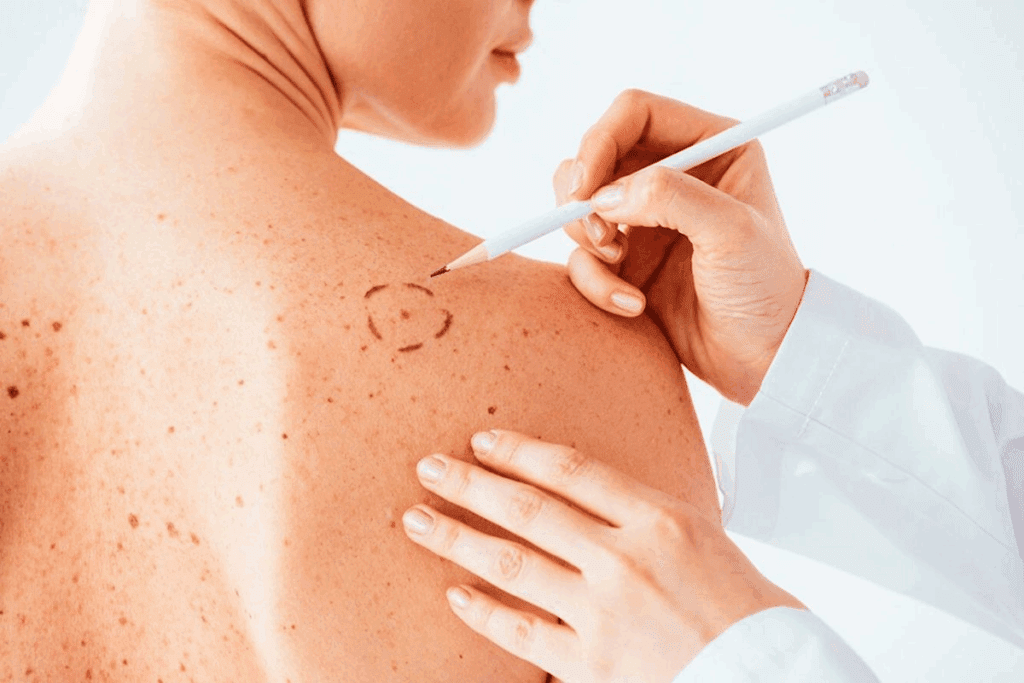
Melanoma represents a significant clinical challenge in dermatology, more so when it’s on the head. We’ll look at how it looks, which can be hard to spot because of where it is. What does melanoma skin cancer on head look like? Learn to recognize the visual characteristics of melanoma on the scalp and face.
In the United States, about 104,960 new cases of melanoma are found each year. Most skin cancer deaths are from melanoma. Melanoma on the scalp shows up as odd spots or patterns, making it important to catch early.
Knowing the risks and signs of melanoma skin cancer is key to treating it well. If you see anything odd on your scalp, face, or head, get it checked right away.
Key Takeaways
- Melanoma on the head can appear as irregular dark spots or unusual bumps.
- Scalp melanomas are often aggressive and detected at advanced stages.
- Early detection is key for effective treatment.
- Dermoscopy can spot atypical networks and blotches.
- Seeking immediate professional evaluation is essential for unusual changes or lesions.
Understanding Melanoma Skin Cancer
It’s important to know about melanoma skin cancer to catch it early and treat it well. Melanoma starts in the melanocytes, which are the skin cells that make pigment.
Definition and Types of Melanoma
Melanoma is the ninth most common cancer in the U.S., with about 106,000 cases each year. It’s aggressive and can spread to other parts of the body. There are different types, like superficial spreading melanoma, which grows across the skin.
Other types include nodular melanoma and lentigo maligna melanoma. These types are found in people who have been in the sun a lot. Knowing about these types helps doctors plan treatment.
Why Melanoma is Dangerous
Melanoma is responsible for most skin cancer deaths, with about 7,100 deaths in the U.S. each year. It’s dangerous because it can spread to organs like the lungs, liver, and brain. Finding it early is key to surviving.
The danger of melanoma comes from its aggressive nature and how hard it is to spot. It often appears on hard-to-see areas like the scalp. Regular checks by yourself and doctors are important to catch it early.
Melanoma Skin Cancer on Head: Statistics and Significance

It’s key to know the stats on melanoma on the head for early catch and treatment. Melanoma on the head and neck is a big worry. It’s common and often caught too late.
Prevalence of Head and Neck Melanomas
Head and neck melanomas are a big concern. They make up about 20 percent of all melanoma cases. This shows we need to be more aware and check our skin often in these spots.
Key Statistics:
| Location | Percentage of Melanoma Cases |
| Head and Neck | 20% |
| Other Body Parts | 80% |
Scalp Melanoma Demographics
Scalp melanoma hits men six times more than women. It usually shows up around age 65. Knowing this helps us spot who’s at higher risk.
This info shows why we need to focus on screening early. It’s most important for older men.
Visual Characteristics of Melanoma on the Head
Knowing how to spot melanoma on the head is key to catching it early. Melanomas on the scalp often look like irregular patches of color. It’s important to know what to look for.
We use the ABCDE rule to spot melanomas. This rule checks for:
- Asymmetry: The mole doesn’t look even on both sides.
- Border irregularity: The edges are not smooth.
- Color variation: The color is not the same all over and might include red, white, or blue.
- Diameter: The mole is bigger than a pencil eraser.
- Evolving: The mole is changing in size, shape, or color.
The ABCDE Rule for Identifying Melanoma
The ABCDE rule helps tell if a mole is cancerous. It looks for signs like asymmetry, irregular edges, color changes, size, and growth. This helps spot melanomas.
A melanoma might start small but grow into something odd-looking. It’s important to check your skin often and see a doctor if you notice anything different.
Unique Features of Head Melanomas
Melanomas on the head, like the scalp, have special signs. They might have:
- Irregular pigmentation
- Unusual shapes or sizes
- Changes in sensation, such as itching or tenderness
Being careful about new or changing spots on your head is vital. Catching melanoma early can make a big difference in treatment.
Common Types of Melanoma Found on the Head
It’s important to know about the different melanoma types on the head for early treatment. Melanoma in this area is risky because it’s close to the brain and can be hard to spot early. We’ll look at the common types, their features, and the risks.
Superficial Spreading Melanoma
Superficial spreading melanoma is the most common type. It often shows up on the trunk in men and legs in women. But it can also be found on the head. This type grows slowly on the skin’s surface before going deeper.
Key characteristics: It has irregular borders, color changes, and is usually bigger than 6mm. The American Cancer Society says the ABCDE rule can help spot suspicious moles.
“The ABCDE rule is a useful guide for identifying suspicious moles: Asymmetry, Border irregularity, Color variation, Diameter greater than 6mm, and Evolving size, shape, or color.”
Nodular Melanoma
Nodular melanoma is aggressive and can appear anywhere, including the head. It grows quickly into the skin, making it hard to catch early.
Distinctive features: It looks like a bump or nodule, which can be black, blue, or flesh-colored. It can bleed or ulcerate, making it stand out.
Lentigo Maligna Melanoma
Lentigo maligna melanoma happens on sun-damaged skin, often on the face or ears. It starts as lentigo maligna, a type of melanoma in situ, and can turn into invasive melanoma if not treated.
Risk factors: Long-term sun exposure, fair skin, and sunburn history raise the risk. Regular self-checks and doctor visits are key for catching it early.
Knowing about these melanoma types on the head helps people spot risks and get medical help fast if they see anything odd on their skin.
Specific Locations: Scalp Melanoma Appearance
Scalp melanomas have unique signs that can be spotted with a close look and dermoscopy. These are a big worry, mainly for men and older folks. They are more likely to get melanomas on their scalp.
Visual Characteristics of Scalp Melanomas
Scalp melanomas show up as odd pigmented spots and strange patterns under dermoscopy. A light pink spot on the scalp might be an early sign of melanoma. But, it’s key to tell it apart from harmless conditions. Dermoscopy is vital for a closer look at these spots.
Scalp melanomas can look different, but they often have certain traits:
- Asymmetry and irregular borders
- Multiple colors or uneven pigmentation
- Diameter larger than 6mm
- Evolution or change in size, shape, or color over time
Why Scalp Melanomas Are Often Diagnosed Late
Scalp melanomas are often found late because they’re hard to spot without a detailed check. Hair can hide early signs, leading to a late diagnosis when the cancer is bigger.
The table below shows why they’re often found late and how to fix it:
| Factors Contributing to Late Diagnosis | Potential Solutions |
| Hair coverage obscuring lesions | Regular scalp examinations by healthcare professionals |
| Lack of self-examination | Patient education on self-examination techniques |
| Difficulty in visualizing the scalp | Use of dermoscopy for detailed examination |
Spotting scalp melanomas early needs awareness, regular checks by patients, and doctor visits. Knowing the signs and risks helps people catch it early and get treatment sooner.
Specific Locations: Face and Ear Melanoma
Facial and ear melanomas are special challenges in diagnosis and treatment. They need a closer look at their characteristics. Melanoma on the face and ears can be very worrying because of how visible they are. They can also affect a person’s appearance and how they feel about themselves.
Facial Melanoma Characteristics
Melanoma on the face can show up in many ways. It’s important to know what to look for. Facial melanoma can look like new or changing moles, shiny bumps, or red and scaly patches. These can be colored or not, making it harder to diagnose.
We need to watch for any new or changing skin spots on the face. Catching it early is key for good treatment. The ABCDE rule is helpful for spotting possible cancerous spots. It stands for Asymmetry, Border irregularity, Color variation, Diameter increase, and Evolving.
Ear Melanoma Appearance
Melanoma on the ear is less common but needs attention because it can be aggressive. It can look like a new or changing mole, a sore that won’t heal, or a scaly patch. It’s important to check the ear well, including the outer ear and ear canal, for any suspicious spots.
Ear melanoma can be hidden, making it harder to find. Regular self-checks and doctor visits are key for catching it early. Any unusual changes or symptoms, like itching, bleeding, or pain, should lead to a doctor’s visit.
Distinguishing Melanoma from Benign Conditions
It’s important to know the difference between melanoma and harmless skin conditions. This is true, even more so for skin lesions on the head. Understanding the difference between harmless growths and dangerous melanomas is key.
Common Benign Skin Conditions on the Head
There are many harmless skin conditions that can appear on the head. These include:
- Seborrheic keratoses: benign growths that can appear as brown, black, or tan lesions
- Dermatofibromas: small, firm bumps that can be pink or brown
- Benign melanocytic nevi: common moles that are usually harmless
Even though these conditions are usually not dangerous, they can sometimes look like melanoma. This is why it’s important to have them checked carefully.
Key Differences Between Benign and Malignant Lesions
So, how can we tell the difference between harmless and dangerous skin lesions? The main difference is in their characteristics. Harmless lesions are:
- Symmetrical
- Uniform in color
- Small in size (typically less than 6mm)
- Stable over time
On the other hand, dangerous lesions are often:
- Asymmetrical
- Multicolored or have an irregular color pattern
- Larger in size (often greater than 6mm)
- Changing in shape, size, or color over time
The ABCDE rule is a helpful guide. It stands for Asymmetry, Border irregularity, Color variation, Diameter, and Evolving. It helps identify potentially dangerous lesions.
| Characteristics | Benign Lesions | Malignant Lesions (Melanoma) |
| Symmetry | Symmetrical | Asymmetrical |
| Color | Uniform | Multicolored or irregular |
| Size | Typically small (<6mm) | Often larger (>6mm) |
| Change Over Time | Stable | Changing |
If you notice any unusual or changing skin lesions on your head, see a doctor. Early detection is key to managing melanoma effectively.
Early Warning Signs of Melanoma Skin Cancer on Head
Knowing the early signs of melanoma on the head is key to better treatment and survival. Melanoma on the head can grow without being noticed. We’ll talk about the signs that might mean you have melanoma on your head, so you can spot problems early.
Light Pink Spots and Early Lesions
One early sign of melanoma on the head is light pink spots or lesions. These can look like harmless skin issues. If you see a light pink spot on the scalp or head, get it checked by a doctor if it doesn’t go away or changes.
Early lesions might also have odd shapes or colors. Watching any new or changing skin marks on your head is important. Catching melanoma early can greatly improve your treatment chances.
Changes to Watch For
Look out for changes in existing skin marks too. These include:
- Asymmetry: If the shape of a mole or lesion becomes irregular.
- Border: Notches, ragged edges, or blurred boundaries.
- Color: Changes in color, including darkening, lightening, or the appearance of multiple colors.
- Diameter: An increase in size.
- Evolution: Changes in shape, size, or color over time.
These signs might mean you have melanoma and need a doctor’s check. Regular self-checks and doctor visits are key to finding melanoma early.
| Signs | Description |
| Asymmetry | If the shape of a mole or lesion becomes irregular. |
| Border | Notches, ragged edges, or blurred boundaries. |
| Color | Changes in color, including darkening, lightening, or multiple colors. |
| Diameter | An increase in size. |
| Evolution | Changes in shape, size, or color over time. |
By watching for these changes and knowing what to look for, you can catch melanoma early. This can greatly improve your treatment chances.
Risk Factors and Prevention
To prevent melanoma skin cancer, it’s key to know its risk factors. Melanoma, mainly on the head, is greatly affected by UV exposure. So, protecting your skin from the sun is very important.
UV Exposure and Sun Protection for the Head
UV radiation from the sun or artificial sources like tanning beds is a big risk for melanoma. It’s vital to protect your head from UV rays. Wearing hats with wide brims and using sunscreen with high SPF can greatly lower the risk of melanoma on the head.
- Wear a hat with a wide brim to cover your face, neck, and ears.
- Apply broad-spectrum sunscreen with SPF 30 or higher.
- Seek shade, specially during peak sun hours (10 am – 4 pm).
- Wear clothing that covers your skin and has a tight weave.
| Sun Protection Measure | Effectiveness | Recommendation |
| Wide-brimmed hat | High | Essential for head protection |
| Sunscreen (SPF 30+) | High | Apply regularly, specially on exposed skin |
| Seeking shade | Moderate to High | Especially during peak sun hours |
Regular Self-Examinations and Professional Screenings
Regular self-exams are key for early melanoma detection. Checking your scalp, face, and ears regularly can spot new or changing moles. Also, getting professional screenings by a dermatologist is important.
Early detection boosts treatment success chances. We suggest:
- Do self-exams monthly.
- See a dermatologist yearly for a full-body skin check.
- Know the ABCDE rule for melanoma (Asymmetry, Border, Color, Diameter, Evolving).
Diagnosis and Treatment Options
Managing melanoma well means getting a correct diagnosis and the right treatment. We’ll look at how to diagnose head melanomas and the treatments available. This depends on the melanoma’s stage and type.
Diagnostic Techniques for Head Melanomas
Diagnosing head melanomas needs a mix of clinical checks and advanced tools. Dermoscopy is a non-invasive way to closely look at skin spots. It helps spot melanoma traits not seen by the eye.
Biopsy is key for a sure diagnosis. It involves taking a piece of the suspicious spot for lab tests. This confirms melanoma and tells us about its thickness and other important details.
Treatment Approaches for Different Stages
Treatment for head melanoma changes with the stage. Early-stage melanoma usually gets surgical excision. This aims to remove the tumor and some healthy skin around it.
For advanced melanoma, treatments like immunotherapy, targeted therapy, or radiation therapy might be used. These choices depend on how far the cancer has spread and the patient’s health. We’ll dive into these treatments, covering their good points and possible downsides.
- Surgical Excision: The main treatment for early melanoma.
- Immunotherapy: Helps the body fight cancer better.
- Targeted Therapy: Goes after specific cancer cell traits.
- Radiation Therapy: Kills cancer cells with high-energy rays.
Knowing about these diagnosis and treatment options is key for patients. It helps them make smart choices about their care. We stress the need for a team effort in treating melanoma. This ensures patients get all the support they need during treatment.
Conclusion: The Importance of Early Detection
Early detection of melanoma skin cancer on the head greatly improves treatment success and survival rates. It’s vital to be aware and educated about melanoma. Knowing the signs and risk factors helps people protect their health.
Skin cancer awareness is key in the battle against melanoma. Regular self-checks and doctor visits can catch problems early. We urge everyone, but those at higher risk, to watch for skin changes and see a doctor if they notice anything odd.
By focusing on early detection and awareness, we can lower melanoma rates on the head. This also boosts the chances of successful treatment for those who get it.
FAQ
What are the common signs of melanoma skin cancer on the head?
Melanoma on the head shows up as odd-looking spots or patches. These can be seen clearly with a special tool called dermoscopy. Look out for signs like uneven shapes, different colors, and growing sizes. The ABCDE rule helps spot melanoma: Asymmetry, Border irregularity, Color variation, Diameter increase, and Evolving shape or size.
What does melanoma on the scalp look like?
Scalp melanomas look like odd moles or spots with different colors. They might itch, bleed, or hurt. Because they’re hard to see, scalp melanomas are often found late.
How can I distinguish melanoma from benign skin conditions on my head?
Look for signs like uneven shapes and colors to tell if it’s melanoma. Benign spots are usually even, smooth, and the same color. If unsure, see a dermatologist.
What are the risk factors for developing melanoma on the head?
Risks include too much sun, fair skin, sunburns, family history, and many moles. Wearing hats, sunscreen, and staying in the shade can help.
What are the early warning signs of melanoma skin cancer on the face?
Watch for new or changing moles, pink spots, or spots that don’t look right. Regular checks and screenings are key for catching it early.
How is melanoma on the head diagnosed?
Doctors use a visual check, dermoscopy, and a biopsy to diagnose. Dermoscopy shows details, and a biopsy confirms it by looking at tissue cells.
What are the treatment options for melanoma on the head?
Treatment varies by the melanoma’s stage and location. Early ones might need surgery. More advanced cases might get other treatments like immunotherapy or radiation.
Can melanoma on the head be prevented?
While not all cases can be stopped, sun protection helps. Use hats, sunscreen, and seek shade. Regular checks and screenings are also important.
Are there different types of melanoma that can occur on the head?
Yes, there are types like superficial spreading, nodular, and lentigo maligna melanoma. Each has its own look and risk. Knowing these helps doctors diagnose and treat right.
References
- National Center for Biotechnology Information. (2025). What Does Melanoma Skin Cancer on Your Head. Retrieved from https://pmc.ncbi.nlm.nih.gov/articles/PMC8504470/