Last Updated on December 1, 2025 by Bilal Hasdemir

PET scans are key in cancer staging. They help doctors see how far cancer has spread. But, some cancers are hard to spot with PET scans, mainly those that don’t use much glucose.
It’s important to know what PET scan technology can and can’t do. While PET scans work well for many cancers, they miss some. This makes cancer staging tricky.
Key Takeaways
- PET scans have limitations in detecting certain types of cancer.
- Cancers with low glucose metabolism are harder to detect.
- Understanding PET scan limitations is vital for accurate cancer staging.
- Accurate diagnosis needs a mix of diagnostic tools.
- Limitations in PET scans can affect treatment planning.
The Science Behind PET Scans and Metabolic Imaging
Understanding PET scans is key to seeing their value in cancer detection. These scans show how cells and tissues work by looking at their metabolic activity.
Basic Principles of PET Technology
PET scans use positrons from radioactive tracers to work. These tracers go to areas where cells are very active, like in cancer. The most used tracer is Fluorodeoxyglucose (FDG), which cells take up based on how much glucose they use.
“The use of PET scans has changed oncology a lot,” experts say. “They let us see how tumors work and where cancer has spread without surgery.”
How Radioactive Tracers Detect Cancer
Radioactive tracers find cancer by showing where cells are most active. Cancer cells use more glucose than normal cells, making them easy to spot on PET scans. FDG is great because it stays in cells, showing where the body is most active.
- FDG goes to cancer cells because they use a lot of glucose.
- The FDG in cells sends out positrons, which the PET scanner picks up.
- This lets us see where the body’s most active areas are.
FDG Uptake and Cellular Metabolism
How much FDG a cell takes in shows its metabolic rate. Cancer cells, with their fast metabolism, take in more FDG. This difference helps doctors spot cancer on PET scans. Things like hyperglycemia and insulin levels can change how much FDG cells take in, so patients need to prepare well before scanning.
Knowing how PET scans work and how tracers find cancer helps doctors use them better. This is for diagnosing, figuring out how far cancer has spread, and checking how well treatments are working.
Fundamental Limitations of PET Scan Technology
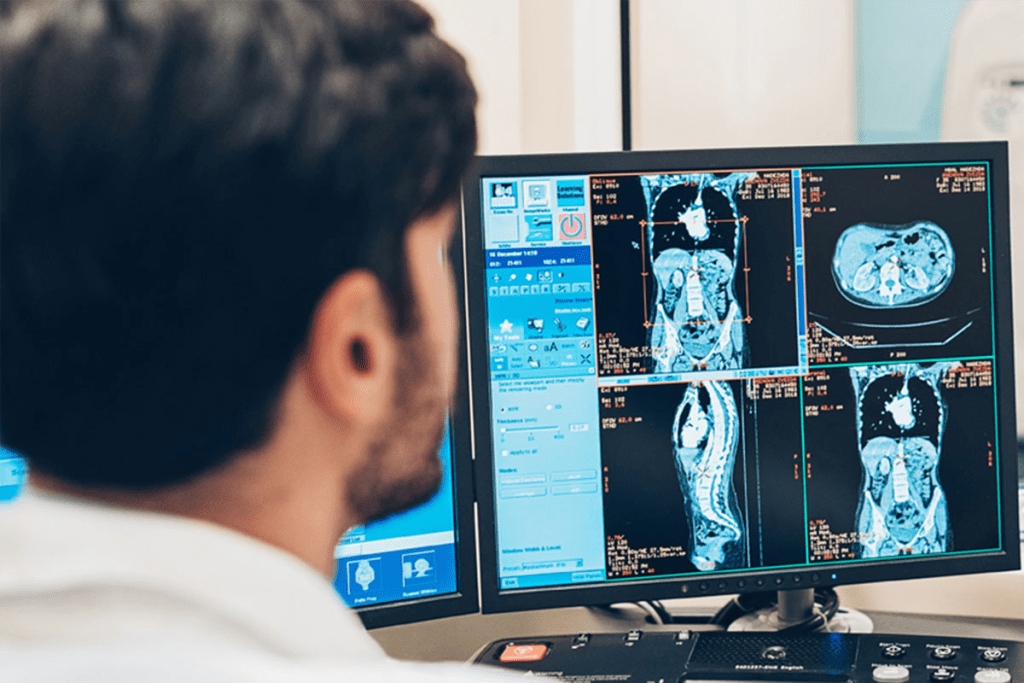
PET scan technology is groundbreaking but has its limits. These limits affect its ability to find certain cancers. It’s key to understand these to read PET scan results right and make good patient care decisions.
Spatial Resolution Constraints
PET scans have a big limit: their spatial resolution. This is how well they can spot two close objects. Most PET scanners can only do about 4-5 mm well. This means they might miss or confuse small tumors.
Partial volume effects happen when a tumor is too small for the scanner. It makes the scanner think the tumor is smaller than it is. This can lead to missing or wrongly identifying small or low-grade tumors.
Sensitivity Thresholds in Cancer Detection
PET scans’ sensitivity is also a big deal for finding cancer. Sensitivity is how well they can spot tumors with low activity. Tumors that don’t take up much glucose are hard to see.
Things like the tracer used, the dose, and the scanner’s tech play a part. For example, 18F-FDG might not work well for some cancers like prostate or low-grade lymphomas. This makes them harder to find.
| Tumor Type | FDG Uptake | Detectability |
| Aggressive Lymphoma | High | High |
| Low-Grade Lymphoma | Low | Low |
| Prostate Adenocarcinoma | Variable | Moderate |
Technical Factors Affecting Image Quality
Many technical things can mess with PET scan image quality. This includes the scanner’s tech, how the patient is prepared, and when the scan is done. For instance, if the patient moves, it can mess up the image.
Also, how the data is processed can change the image a lot. Better algorithms can make the image clearer and more accurate. This helps doctors make better diagnoses.
Low-Grade Tumors: The Metabolic Imaging Challenge
alt=”Metabolic Imaging: PET Scans and Their Role in Cancer and Disease Care”
PET scans have trouble finding low-grade tumors because they don’t show up well. This is because these tumors don’t use much energy. This can lead to false negatives.
Why Slow-Growing Cancers Are Often Missed
Low-grade tumors grow slowly and use less energy than fast-growing ones. This means they don’t take up much of the radioactive tracer in PET scans. They are hard to spot because they don’t use much glucose, which PET scans look for.
Well-Differentiated Tumors and FDG Uptake
Well-differentiated tumors look a lot like normal cells. They don’t use much glucose, which means they don’t take up much FDG. This makes them hard to find with FDG-PET scans. Their low FDG uptake is a big reason for false negatives in PET scans.
The Relationship Between Tumor Grade and PET Visibility
The grade of a tumor affects how well it shows up on a PET scan. Tumors are graded based on how much they look like normal cells and how fast they grow. High-grade tumors are aggressive, have high energy use, and are easy to spot on PET scans.
Low-grade tumors are less aggressive, use less energy, and are harder to see on PET scans. Knowing how tumor grade and PET visibility are related is key to understanding PET scan results.
| Tumor Grade | Metabolic Rate | PET Visibility |
| Low-Grade | Low | Low |
| High-Grade | High | High |
The table shows how tumor grade, metabolic rate, and PET visibility are connected. It points out the problem of finding low-grade tumors with PET scans because of their low energy use and visibility.
Prostate Cancer: A Common PET Detection Challenge
Prostate cancer is hard to spot with PET scans because of its unique traits. The problem lies in both the cancer itself and how PET scans work.
Why Standard FDG-PET Falls Short
FDG-PET scans are used to find many cancers by showing where glucose is used a lot. But, prostate cancer doesn’t use glucose much. This is because it grows slowly, unlike faster-growing tumors.
This makes FDG-PET not very good at finding prostate cancer. It can lead to wrong information about how serious the cancer is. This can change how doctors plan treatment.
Low Metabolic Activity in Prostate Adenocarcinomas
Most prostate cancers, called adenocarcinomas, don’t use glucose much. This makes them hard to see on FDG-PET scans. Their slow growth means they don’t show up well on PET scans.
Alternative Tracers for Prostate Cancer
Scientists are looking for better ways to find prostate cancer. They’ve found tracers like PSMA (Prostate-Specific Membrane Antigen) that work better. PSMA PET/CT scans can spot prostate cancer better than FDG-PET.
New tracers like PSMA are a big step forward. They can find prostate cancer cells better than old methods. This could mean finding cancer sooner and knowing how serious it is.
Breast Cancer Subtypes Poorly Visualized on PET
PET scans have their limits when it comes to breast cancer, like with lobular carcinomas. They work by using radioactive tracers, like FDG, that cancer cells absorb. But, how much they absorb can vary between different types of breast cancer.
Lobular Carcinomas and Detection Difficulties
Lobular carcinomas grow in a way that makes them hard to spot on PET scans. They don’t take up much FDG, which means they’re harder to see than other types. Research shows that invasive lobular carcinoma can sometimes be missed because it doesn’t show up well on PET scans.
Small Breast Lesions Below Resolution Threshold
PET scans can also miss small breast tumors. Tumors smaller than 1 cm might not be seen because of the partial volume effect. This effect makes the tumor’s signal weak, making it hard to spot.
Hormone Receptor Status and PET Visibility
The hormone receptor status of breast cancer affects how well it shows up on PET scans. Tumors that are hormone receptor-positive tend to have lower glucose metabolism. This makes them less likely to be seen by FDG-PET. This is important for certain types like invasive lobular carcinoma, which often has estrogen receptors.
Neuroendocrine Tumors and Carcinoid Challenges
Finding neuroendocrine tumors and carcinoid tumors is hard because they don’t take up much glucose. This makes PET scans less effective. Neuroendocrine tumors come from special cells in our body. They can be either benign or cancerous and act differently.
Low Glycolytic Activity in NET Cells
NETs are hard to spot with PET scans because they don’t use much glucose. Unlike fast-growing cancers, NETs grow slowly. This makes them hard to find with standard PET scans that look for glucose.
Low glycolytic activity in NET cells means we need new ways to find them. Special tracers that target NET cells have shown to be helpful.
Well-Differentiated Carcinoid Limitations
Well-differentiated carcinoid tumors are also tricky to find with PET scans. They grow slowly and don’t take up much glucose. This can lead to missed diagnoses and delayed treatment.
Specialized Tracers for NET Detection
New tracers have made finding NETs easier. Tracers like 68Ga-DOTATATE and 18F-FDG alternatives target somatostatin receptors on NET cells. They are more accurate than traditional PET scans.
| Tracer | Target | Application |
| 68Ga-DOTATATE | Somatostatin Receptors | NET Detection |
| 18F-FDG | Glucose Metabolism | General Cancer Detection |
| Other Novel Tracers | Varies (e.g., amino acid metabolism) | Specific Cancer Types |
These specialized tracers are a big step forward in diagnosing and treating NETs. They help doctors find tumors more accurately. This can lead to better treatment plans and outcomes for patients.
Brain Tumors: Why PET Struggles with Intracranial Malignancies
Brain tumors are hard to spot with PET scans because of the brain’s high glucose use. This problem comes from the brain’s activity and its protective barriers.
High Background Glucose Metabolism in Normal Brain
The brain uses a lot of glucose for energy. This makes it tough for PET scans to find cancer. The scans look for glucose use, but the brain’s high rate makes it hard to see tumors.
Blood-Brain Barrier Considerations
The blood-brain barrier (BBB) keeps the brain safe by controlling what gets in. But, it also makes it hard for PET scans to work. It blocks some PET tracers, making it tough to find tumors, even small ones.
Low-Grade Gliomas and Detection Challenges
Low-grade gliomas grow slowly and don’t use much glucose. This makes them hard to find with PET scans. They blend in with the brain’s activity, making early detection hard.
Knowing these challenges helps us improve brain tumor detection. While PET scans have their limits, new imaging methods and tracers are helping to solve these problems.
Small Lesions and Micrometastases: Size-Related Limitations
PET imaging has a big problem: it can’t always find small lesions and micrometastases. These are key for accurate cancer staging. The issue is PET technology’s technical limits, mainly with very small lesions.
Minimum Detection Thresholds Explained
PET scans have a minimum size they can detect. This size depends on the scanner’s quality and sensitivity. Lesions smaller than this threshold may not be detectable, even if they’re active. The usual limit is 5-8 mm, but it can change with different scanners and settings.
This minimum size is very important. For example, studies show that PET scans often miss lesions under 5 mm. This can lead to cancer being understaged.
Partial Volume Effects on Small Nodules
The partial volume effect (PVE) makes it hard to spot small lesions. PVE happens when a lesion is too small for the scanner to see clearly. It mixes the lesion’s activity with the surrounding tissue, making it harder to find.
PVE is a big problem for small nodules. It can cause false negatives if the lesion’s activity is too diluted. New methods to fix PVE are being worked on, but they’re not common in PET scans yet.
Subcentimeter Lesions Frequently Missed
Lesions under 1 cm are hard to find with PET scans. These small lesions might be active but are too small to detect. As a result, they are frequently missed in PET imaging studies, which can impact treatment and outcomes.
The challenge of finding subcentimeter lesions shows we need better PET technology. We also need to use PET with other imaging like CT or MRI. This combo can give a clearer picture of cancer spread.
Comparing Metabolic Imaging with Anatomic Modalities
Metabolic imaging, like PET scans, shows how tumors work. CT and MRI give detailed views of the body’s structure. This difference is key for diagnosing and staging cancer.
PET vs CT: Functional vs Structural Information
PET scans are great for seeing how tumors work. They use special tracers that show how active cells are. CT scans, on the other hand, show the body’s inside details.
Using both PET and CT together is very helpful. PET can spot active tumors, and CT can show where they are.
When CT Detects What PET Cannot
PET scans are top-notch for finding active tumors. But, CT scans can spot cancers PET can’t. This happens with tumors that don’t use much FDG or are too small.
For example, some prostate cancers might not show up on PET. But, CT or MRI can find them because of their shape and location.
MRI Advantages for Specific Cancer Types
MRI is better for soft tissues, like in the brain or pelvic area. It’s great for certain cancers because of its clear images.
| Imaging Modality | Strengths | Weaknesses |
| PET | Functional information, detects metabolic activity | Limited anatomical detail, may miss low-grade tumors |
| CT | Detailed anatomical information, quick and widely available | Limited functional information, may not detect all tumor types |
| MRI | Superior soft-tissue contrast, useful for specific cancer types | More expensive, may not be as widely available as CT |
Knowing what each imaging modality can do is key. It helps choose the best way to diagnose different cancers.
Hybrid PET-CT: Overcoming Individual Limitations
Hybrid PET-CT systems combine PET and CT scans. This fusion improves cancer detection and understanding. It offers detailed images and functional data, giving a full view of cancer.
Synergistic Benefits of Combined Imaging
Hybrid PET-CT uses the best of both worlds. PET scans show tumor activity, while CT scans provide detailed images. This combo helps doctors pinpoint and understand tumors better.
Having PET and CT together in one scan makes diagnosis faster and more accurate. It helps find the main tumor, check lymph nodes, and spot metastases better than separate scans.
Improved Cancer Staging Accuracy
Hybrid PET-CT is great for cancer staging. It gives both functional and anatomical details. This helps doctors plan the best treatment and predict outcomes.
| Cancer Type | Benefit of Hybrid PET-CT | Impact on Treatment Planning |
| Lymphoma | Accurate staging and assessment of disease activity | Guides chemotherapy and radiation therapy planning |
| Non-Small Cell Lung Cancer | Improved detection of primary tumor and metastases | Influences surgical resection and radiation therapy planning |
| Colorectal Cancer | Enhanced detection of recurrent disease and metastases | Affects surgical and systemic treatment decisions |
Enhanced Lesion Detection and Characterization
Hybrid PET-CT also boosts lesion detection and understanding. It combines functional and anatomical data. This helps tell benign from malignant lesions, which is key for treatment planning and recurrence detection.
It also guides biopsies to active tumor parts, improving results. Hybrid PET-CT is essential for radiation therapy, providing clear targets for treatment.
Factors That Can Lead to False Negatives on PET
PET scans can be affected by several factors that might cause false negatives. It’s important for doctors and patients to know about these factors. This knowledge helps in making accurate diagnoses and treatment plans.
Patient Preparation Issues
Getting ready for a PET scan is key to getting accurate results. Not following the prep guidelines can lead to false negatives. For example, eating or drinking sugary things before the scan can mess up the tracer’s uptake.
Key Preparation Guidelines:
- Fast for at least 4-6 hours before the scan
- Avoid strenuous exercise for 24 hours prior to the scan
- Limit sugar intake before the scan
Hyperglycemia and Insulin Effects
High blood sugar, or hyperglycemia, can mess up PET scan results. High glucose levels can compete with the tracer, leading to false negatives. Taking insulin can also change where the tracer goes.
| Condition | Effect on PET Scan |
| Hyperglycemia | Reduced tracer uptake, potentially leading to false negatives |
| Insulin Administration | Alters tracer distribution, may affect scan accuracy |
Recent Treatments and Timing Considerations
Recent treatments like chemotherapy and radiation can affect PET scan results. When these treatments happen before the scan is important. For instance, scanning too soon after chemo might not show cancer activity well.
Considerations for Treatment Timing:
- Allow sufficient time between treatments and the PET scan
- Consult with a healthcare provider to determine the optimal timing
- Consider the type of treatment and its possible effects on PET scan results
Knowing these factors and how to manage them can make PET scans more accurate. This reduces the chance of getting false negatives.
Advanced Tracers Beyond FDG for Specific Cancers
Researchers are looking into new radiopharmaceuticals for specific cancers. This is key for making PET scans better at finding different types of cancer.
Novel Radiopharmaceuticals for Difficult-to-Image Cancers
Some cancers are hard to spot with standard FDG-PET scans. Novel radiopharmaceuticals aim to tackle these challenges. For example, Fluorothymidine (FLT) helps track cell growth, which is useful for certain tumors.
These new tracers make PET scans better for hard-to-detect cancers. This is a big step forward in targeted molecular imaging. It helps doctors diagnose and plan treatments more accurately.
Targeted Molecular Imaging Approaches
Targeted molecular imaging uses tracers that stick to cancer cells. This method gives detailed info on tumor behavior and treatment response.
For instance, tracers for prostate-specific membrane antigen (PSMA) help find prostate cancer better. These targeted methods are making PET scans more useful in hospitals.
Cancer-Specific Metabolic Pathways
Different cancers have unique metabolic patterns. Understanding these cancer-specific metabolic pathways is vital for creating better tracers. Researchers aim to find and target these pathways to boost PET scan accuracy.
By focusing on these metabolic differences, advanced tracers can better highlight cancer cells. This is a promising field with great promise for better cancer diagnosis and treatment.
Conclusion: Navigating the Limitations of PET in Cancer Diagnosis
Knowing the limits of PET scans is key for accurate cancer diagnosis and treatment planning. We’ve looked at the challenges of PET scans, like missing some cancers. This includes low-grade tumors and prostate cancer.
PET scans face many challenges, like not being able to spot all cancers. This is due to their resolution, sensitivity, and technical issues. Some cancers, like lobular carcinomas and well-differentiated neuroendocrine tumors, are hard to find because they don’t show up well on scans.
Healthcare teams can improve cancer diagnosis by understanding these PET scan limits. They use CT and MRI scans to get a clearer picture. New PET-CT imaging and radiopharmaceuticals also help in cancer staging and treatment response.
In the end, knowing the limits of PET scans helps make better treatment choices. This leads to better outcomes for cancer patients.
FAQ
What are the limitations of PET scans in detecting cancer?
PET scans can miss some cancers, like low-grade tumors and small lesions. This is because of their limited ability to see small details and low metabolic activity in cells.
How do PET scans work, and what role do radioactive tracers play?
PET scans use radioactive tracers to see how cells work. These tracers, like FDG, light up areas where cells are very active. This helps find cancerous tissues.
Why are low-grade tumors often missed on PET scans?
Low-grade tumors are hard to spot on PET scans. They don’t use much energy, so they don’t show up well. They also might not take in enough FDG to be seen.
What are the challenges of detecting prostate cancer using PET scans?
Finding prostate cancer with PET scans is tough. This is because prostate tumors don’t use much energy. But, new tracers might help make them more visible.
How does hybrid PET-CT imaging improve cancer diagnosis?
Hybrid PET-CT imaging combines PET’s metabolic info with CT’s detailed images. This combo helps doctors better understand cancer, find tumors, and plan treatments.
What factors can lead to false negatives on PET scans?
False negatives on PET scans can happen for a few reasons. Poor preparation, high blood sugar, and recent treatments can all affect the scan’s accuracy.
Are there alternative tracers being developed for specific cancers?
Yes, scientists are working on new tracers for different cancers. This includes better ways to spot prostate cancer and neuroendocrine tumors.
How does PET compare to other imaging modalities like CT and MRI?
PET shows how cells work, while CT and MRI show body structure. Each has its strengths and weaknesses. The right choice depends on the cancer and what’s needed for diagnosis.
Can PET scans detect small lesions and micrometastases?
PET scans struggle to find small tumors and tiny cancer spread. This is because they can’t always see tiny details and have limits on what they can detect.
What are the benefits of using advanced tracers beyond FDG?
Using new tracers can help find and understand specific cancers better. They target cancer’s unique ways of working. This leads to more accurate diagnoses and better treatment plans.
References
- Boellaard, R., Krak, N. C., Hoekstra, O. S., & Lammertsma, A. A. (2004). Effects of noise, image resolution, and ROI definition on the measurement of SUVs in lesions: A simulation study. Journal of Nuclear Medicine, 45(9), 1519-1527. Retrieved from https://jnm.snmjournals.org/content/45/9/1519/1527
- Boellaard, R., O’Doherty, M. J., Weber, W. A., et al. (2014). FDG PET/CT: EANM procedure guidelines for tumour imaging: version 2.0. European Journal of Nuclear Medicine and Molecular Imaging, 42(2), 328-354. Retrieved from https://pmc.ncbi.nlm.nih.gov/articles/PMC4315529/