Last Updated on December 3, 2025 by Ugurkan Demir
What is metastatic brain cancer and which primary cancers are most likely to spread to the brain (lung, breast, melanoma)?
Brain metastasis is a turning point in cancer treatment. It changes a patient’s outlook overnight. When cancer reaches the brain, it’s a tough challenge to handle.
Brain metastasis means cancer has spread to the brain from other parts of the body. It’s the most common brain tumor in adults. Any cancer can go to the brain, but lung, breast, colon, kidney, and melanoma are the most common.
At Liv Hospital, we combine international know-how and advanced tests to tackle brain metastases with care.
Key Takeaways
- Brain metastasis is a critical complication of cancer that changes a patient’s prognosis.
- Cancers that commonly spread to the brain include lung, breast, colon, kidney, and melanoma.
- Liv Hospital offers advanced diagnostic capabilities and international expertise to manage brain metastases.
- Understanding the signs and latest treatment options can empower patients and their families.
- Early detection is key in managing brain metastasis effectively.
Understanding Metastatic Brain Cancer
Metastatic brain cancer happens when cancer spreads to the brain from another part of the body. This is a serious step in cancer’s growth. It forms secondary brain tumors from cancer cells that have traveled to the brain.
Definition and Classification
Metastatic brain cancer is when cancer cells from another part of the body land in the brain. These tumors are different from primary brain tumors, which start in the brain. The type of brain metastasis depends on where the cancer first started.
We will look at the cancers that often spread to the brain and what this means.
Difference Between Primary and Secondary Brain Tumors
Primary brain tumors start in the brain’s tissue. Secondary brain tumors, or metastases, come from cancer cells spreading to the brain from elsewhere. Knowing this difference helps doctors choose the right treatment.
More adults have secondary brain tumors than primary ones. Lung, breast, and melanoma cancers are the top causes of brain metastases.
| Category | Annual Incidence in the United States | Percentage of Cancer Patients Affected |
| Brain Metastases | Approximately 98,000 to 170,000 cases | 10 to 26 percent of patients who die from cancer |
| Primary Brain Tumors | Less common than metastases | About 2% of brain tumors in children |
These numbers show how big a problem metastatic brain cancer is. They also highlight the need for more research into treatments.
The Mechanism of Brain Metastasis

Metastasis to the brain is a complex process. It involves cancer cells spreading through the blood. This journey is not just about reaching the brain. It’s about the steps needed to form new tumors there.
The metastatic cascade has several steps. It starts with local invasion into nearby tissues. Then, intravasation into the blood or lymph system happens. Next, extravasation into normal tissue occurs. Lastly, colonization of the brain takes place.
Hematogenous Spread Process
The hematogenous spread is when cancer cells move through the blood. They break away from the main tumor and travel to other parts of the body, like the brain. This is helped by certain molecules and the ability to avoid the immune system.
Once in the blood, cancer cells face many challenges. They must survive the blood’s flow and the immune system. They often stick to small blood vessels and then move into the brain.
How Cancer Cells Breach the Blood-Brain Barrier
The blood-brain barrier (BBB) keeps the brain safe from harmful substances. But, it’s a big obstacle for cancer cells trying to get to the brain. Cancer cells use different ways to get past this barrier, like making it easier for them to stick and move through the BBB.
The battle between cancer cells and the brain’s environment is key. Cancer cells can change the brain’s immune response. They create a good place for themselves to grow.
| Step | Description | Key Factors Involved |
| Local Invasion | Cancer cells invade surrounding tissues. | Matrix metalloproteinases, adhesion molecules. |
| Intravasation | Cancer cells enter the bloodstream or lymphatic system. | Vascular endothelial growth factor, immune evasion mechanisms. |
| Extravasation | Cancer cells exit the bloodstream into normal tissue. | Adhesion molecules, chemokines. |
| Colonization | Cancer cells establish secondary tumors in the brain. | Growth factors, immune suppression. |
Epidemiology of Brain Metastases
Understanding brain metastases is key to better treatment. These metastases are a big problem for cancer patients. They affect their life quality and survival chances. We will look at how common brain metastases are in the U.S. and who they affect.
Annual Incidence in the United States
In the U.S., brain metastases are a big issue. Research shows that 100,000 to 200,000 cases are found each year. This range comes from different reporting methods and the complexity of tracking metastases.
Let’s talk about who gets brain metastases. About 60% of patients are between 50 and 70 years old. The most common age is around 60.
Percentage of Cancer Patients Affected
Brain metastases are common in many cancers. Lung, melanoma, and breast cancers are the top causes. The chance of getting brain metastases varies by cancer type.
| Primary Cancer Type | Approximate Percentage Developing Brain Metastases |
| Lung Cancer | 40-50% |
| Melanoma | 20-40% |
| Breast Cancer | 10-20% |
These numbers show the big problem of brain metastases in cancer patients. It’s most common in lung, melanoma, and breast cancer patients. Knowing this helps doctors plan better care and improve patient results.
Lung Cancer: The Leading Cause of Brain Metastasis
Lung cancer is the most common type of cancer to spread to the brain. This happens because lung cancer cells easily move through the blood. This process is called hematogenous spread.
About 23% to 36% of lung cancer patients get brain metastases. This is a big worry for both patients and doctors. It shows we need better ways to stop and treat brain metastasis in lung cancer.
Small-Cell Lung Cancer
Small-cell lung cancer (SCLC) grows fast and spreads early, including to the brain. Prophylactic cranial irradiation (PCI) is now a key part of SCLC treatment. It helps prevent brain metastases, mainly in patients with limited-stage disease.
PCI aims to kill cancer cells in the brain before they are found. Research shows it lowers brain metastasis rates in SCLC patients. It also helps them live longer.
Non-Small-Cell Lung Cancer
Non-small-cell lung cancer (NSCLC) is the most common lung cancer type. It also has a high risk of brain metastasis. The risk is higher if the cancer is advanced, has spread outside the brain, or has certain genetic changes.
Key factors for brain metastasis in NSCLC include:
- Advanced stage at diagnosis
- Presence of extracranial metastases
- Molecular subtypes, such as those with EGFR mutations or ALK rearrangements
Dealing with brain metastases in NSCLC requires a team effort. This includes surgery, radiation, and treatments based on the tumor’s genetic makeup.
Melanoma and Its Propensity for Brain Metastasis
Melanoma often spreads to the brain, making treatment hard. It’s a big problem because melanoma is rare but affects 6.9 percent of brain metastases. We’ll look at why melanoma goes to the brain and how to treat it.
Why Melanoma Frequently Spreads to the Brain
Melanoma cells like to go to the brain because they’re aggressive. They fit well in the brain’s environment. The brain’s special setup helps melanoma cells grow and multiply.
Medical Expert, a top oncologist, says,
“The high incidence of brain metastases in melanoma patients shows we need better ways to prevent and treat it.”
This shows how important it is to understand why melanoma goes to the brain.
Treatment Challenges with Melanoma Brain Metastases
Dealing with melanoma in the brain is tough. The blood-brain barrier blocks many treatments. Developing resistance to treatments makes it even harder. So, doctors use surgery, radiation, and other treatments together.
New ways like immunotherapy are helping. Using checkpoint inhibitors with other treatments is showing promise. It gives hope to those fighting this tough disease.
We’re working on new ways to fight melanoma in the brain. Our goal is to make treatments better and improve life for patients.
Breast Cancer Metastasis to the Brain
It’s important to understand how breast cancer spreads to the brain. This is key to helping patients. About 5.1 percent of brain metastases come from breast cancer. This shows it’s a serious but not very common issue.
Some molecular subtypes of breast cancer are more likely to spread to the brain. We’ll look at these subtypes and their risks.
Molecular Subtypes and Risk Stratification
Breast cancer is not just one disease. It’s a range of diseases with different traits. The molecular subtypes of breast cancer are important in figuring out the risk of brain metastasis.
The main molecular subtypes include:
- Luminal A: Generally has a lower risk of brain metastasis
- Luminal B: Has a moderate risk
- HER2-positive: Known for a higher risk of brain metastasis
- Triple-negative: Also associated with a higher risk of brain metastasis
HER2-Positive and Triple-Negative Breast Cancer
HER2-positive and triple-negative breast cancers are more likely to spread to the brain. HER2-positive breast cancers have too much HER2 protein. This makes the cancer grow fast.
Triple-negative breast cancers don’t have estrogen, progesterone, or too much HER2. They grow fast and are hard to treat.
Brain metastases from breast cancer are more common in these aggressive subtypes. Knowing the molecular traits of breast cancer helps us figure out the risk of brain metastasis. It also helps us plan treatments better.
When treating these subtypes, we face special challenges. We need new ways to diagnose and treat breast cancer that has spread to the brain.
By understanding the risks of different molecular subtypes, we can do better in diagnosing and treating breast cancer that has spread to the brain.
Other Primary Cancers That Metastasize to the Brain
Brain metastasis is not just for a few cancers. Many cancers can spread to the brain. We’ll look at renal cell carcinoma, colorectal cancer, thyroid cancer, and prostate cancer. We’ll see how they can spread to the brain and what that means.
Renal Cell Carcinoma
Renal cell carcinoma (RCC) can spread to many places, including the brain. Brain metastases from RCC are typically highly vascular, making surgery hard. Finding brain metastases in RCC patients usually means the disease is advanced. But, new treatments have helped some patients.
Colorectal Cancer
Colorectal cancer (CRC) rarely spreads to the brain. But, when it does, it’s a big problem. CRC brain metastases often occur in the setting of widespread systemic disease. Doctors use surgery, radiation, and chemotherapy to treat it, depending on the patient.
Thyroid Cancer
Thyroid cancer, like papillary and follicular types, rarely goes to the brain. But, when it does, the disease is often more aggressive. Radioactive iodine therapy may be used for diagnostic and therapeutic purposes in cases of thyroid cancer brain metastasis. This shows the need for a team effort in treatment.
Prostate Cancer
Prostate cancer rarely spreads to the brain, usually when the disease is very advanced. The mechanisms underlying prostate cancer brain metastasis are not fully understood and are being studied. Treatment focuses on making the patient comfortable and improving their quality of life.
In summary, while rare, cancers like renal cell carcinoma, colorectal cancer, thyroid cancer, and prostate cancer can spread to the brain. Each case presents unique challenges. Knowing how these metastases work is key to better treatment plans.
Clinical Presentation and Symptoms
It’s key to know how brain metastases show up early for better care. These tumors can cause many symptoms, showing how complex the brain is.
Neurological Manifestations
The symptoms of brain metastases depend on the location, size, and growth rate of the tumors. Common signs include headaches, seizures, speech problems, numbness or tingling, and coordination issues. These happen because the tumor affects brain tissue or raises pressure inside the skull.
Headaches are common due to increased pressure. Seizures might happen if the tumor is in a part of the brain that’s prone to them. Speech problems can occur if the tumor hits areas that handle language.
Cognitive and Behavioral Changes
Brain metastases can also lead to changes in thinking and behavior. Symptoms include memory issues, trouble focusing, and changes in personality. How these symptoms show up depends on where the tumor is and how it affects the brain.
Memory problems can be mild or severe, making everyday tasks hard. Trouble focusing can really lower a person’s quality of life. Sometimes, personality changes can cause mood swings or changes in behavior.
Spotting these symptoms early is vital for good care. Knowing how brain metastases present helps doctors create the right treatment plans for each patient.
Diagnostic Approaches and Imaging
Getting a correct diagnosis for brain metastasis is key. It’s done through various methods and imaging tools. This is vital for picking the right treatment and bettering patient results.
MRI and CT Scanning
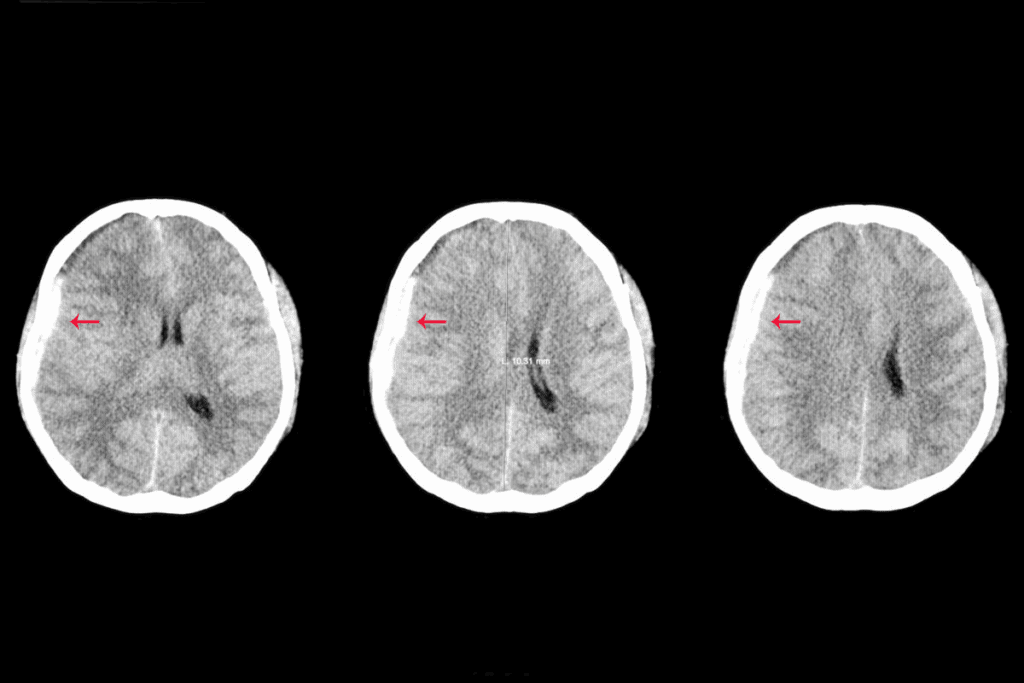
Magnetic Resonance Imaging (MRI) and Computed Tomography (CT) scans are top choices for finding brain metastasis. MRI stands out because it’s very sensitive and shows soft tissues well. It’s great for spotting small tumors and those in hard-to-reach spots.
CT scans, though, are faster and easier to find. They’re good for quick checks in emergencies. But, they’re not as good as MRI for small or tricky-to-find tumors.
PET Scans and Advanced Imaging
Positron Emission Tomography (PET) scans, like those with Fluorodeoxyglucose (FDG-PET), are also helpful. They work best with MRI or CT scans. PET scans show how active tumors are, which helps in choosing treatments.
Other advanced scans, like diffusion-weighted imaging (DWI) and perfusion-weighted imaging (PWI), offer more details. They help figure out how aggressive a tumor is and guide treatment choices.
Biopsy and Molecular Profiling
At times, a biopsy is needed to confirm brain metastasis, like when the cancer’s source is unknown. Biopsy samples can also be used for molecular profiling. This helps find specific genetic changes or markers in the tumor.
Molecular profiling is key for choosing the right treatments. Knowing the tumor’s molecular makeup helps doctors pick the best therapies. This can lead to better patient results.
An oncologist noted, “Using imaging and molecular profiling together is changing how we treat brain metastasis. It leads to more tailored and effective treatments.”
“New imaging and molecular diagnostic tools are changing how we diagnose brain metastasis. They allow for more precise and targeted treatments.”
Expert Opinion
By combining these diagnostic methods, patients get accurate diagnoses and the right treatments. This improves their chances of a good outcome.
Treatment Modalities for Brain Metastases
Healthcare providers look at many factors to choose the best treatment for brain metastases. They consider the number, size, and location of the tumors. They also think about the patient’s health and what they prefer.
Surgical Resection
Surgery is often chosen for patients with a few brain tumors. The goal is to remove as much of the tumor as possible without harming the brain. A study in the Journal of Neuro-Oncology shows surgery can improve life quality and survival for some patients.
Medical Expert. Ganz says, “Surgery can be very effective, even when combined with other treatments like radiation.” The decision to have surgery depends on the patient’s health and the tumor’s characteristics.
Stereotactic Radiosurgery
Stereotactic radiosurgery (SRS) is a precise radiation therapy. SRS is used for patients with a few brain tumors that are hard to reach surgically. It delivers a high dose of radiation to a specific area.
Whole-Brain Radiation Therapy
Whole-brain radiation therapy (WBRT) targets the whole brain. This is often used for patients with many brain tumors or widespread disease. While it can control tumor growth, it can also cause side effects like fatigue and memory loss.
A study in the Journal of Clinical Oncology says WBRT is a key treatment for brain metastases, but it’s carefully considered due to its side effects.
Systemic and Targeted Therapies
Systemic and targeted therapies are becoming more common for treating brain metastases. These therapies can reach cancer cells in the brain. They are used for patients with specific molecular characteristics, like HER2-positive breast cancer or EGFR-mutant non-small cell lung cancer.
As noted by
“The development of systemic therapies that can effectively treat brain metastases represents a significant advancement in the care of patients with metastatic disease.”
The choice of these therapies depends on the tumor’s molecular profile.
Emerging Research and Novel Therapies
New research is changing how we treat metastatic brain cancer. We’re learning more about brain metastases. This knowledge is leading to new treatments.
Immunotherapy Approaches
Immunotherapy is showing great promise for brain metastases, mainly in melanoma and lung cancer. It uses the immune system to target and kill cancer cells. This approach aims to protect healthy tissue.
Checkpoint inhibitors are a key part of immunotherapy. They help the immune system fight cancer more effectively. Early trials suggest these drugs can shrink tumors and improve survival rates.
Benefits of Immunotherapy:
- Targeted approach with reduced harm to healthy cells
- Potential for durable responses and improved survival
- Combination therapies may enhance effectiveness
Blood-Brain Barrier Disruption Techniques
The blood-brain barrier (BBB) makes it hard to get drugs into the brain. Scientists are working on ways to open the BBB. This could help more drugs reach the brain.
| Technique | Description | Potential Benefits |
| Focused Ultrasound | Uses ultrasound waves to temporarily open the BBB | Enhanced drug delivery to the brain |
| BBB Disruption Devices | Implantable devices that deliver drugs directly to the brain | Improved localized treatment |
| Nanoparticle Technology | Engineered nanoparticles that can cross the BBB | Targeted drug delivery with reduced side effects |
These new research areas are very promising for treating brain metastases. As we learn more, we might find even better ways to help patients.
Conclusion
Brain metastasis, or metastatic brain cancer, is a complex condition. It happens when cancer cells from other parts of the body spread to the brain. It’s important for patients and their families to understand what brain mets are and the treatment options available.
In this article, we’ve looked at brain metastasis from different angles. We’ve covered its definition, how common it is, and the cancers that often spread to the brain. These include lung cancer, melanoma, and breast cancer. We’ve also talked about the treatments, like surgery, radiosurgery, and radiation therapy.
Managing brain metastasis requires a team effort. It involves neurosurgeons, radiation oncologists, and medical oncologists. This team approach is key to treating brain metastases effectively.
New research is leading to better treatments for brain metastasis. We urge patients and their families to keep up with the latest research. They should also seek help from healthcare professionals and support groups.
FAQ
What are brain metastases?
Brain metastases are tumors in the brain that start from cancer cells. These cells come from other parts of the body, like the lungs, breasts, or skin.
What is the difference between primary and secondary brain tumors?
Primary brain tumors start in the brain. Secondary brain tumors, or brain metastases, come from cancer cells spreading to the brain from elsewhere.
Which cancers commonly metastasize to the brain?
Cancers like lung, breast, and melanoma often spread to the brain. Lung cancer is the most common.
How do cancer cells spread to the brain?
Cancer cells usually reach the brain through the blood. They break through the blood-brain barrier to form tumors.
What are the symptoms of brain metastases?
Symptoms include headaches, seizures, and weakness. They can also cause changes in thinking and behavior, depending on the tumor’s location and size.
How are brain metastases diagnosed?
Doctors use MRI, CT scans, and PET scans to find brain metastases. They might also do a biopsy and check the cancer’s genes to find where it started.
What are the treatment options for brain metastases?
Treatments include surgery, radiosurgery, and radiation therapy. They also use systemic and targeted therapies. The best treatment depends on the tumor’s size and location.
What is the role of immunotherapy in treating brain metastases?
Immunotherapy is being tested as a treatment for brain metastases. It offers hope, but its success depends on the cancer type and other factors.
Can brain metastases be prevented?
Sometimes, like with small-cell lung cancer, radiation can prevent brain metastases. But prevention isn’t always possible and depends on the cancer and individual factors.
What is the prognosis for patients with brain metastases?
The outlook varies based on the cancer type, number and location of metastases, and treatment success. Modern treatments have improved outcomes for some patients.
References
National Center for Biotechnology Information. (2025). What Is Brain Metastasis and Which Cancers Spread. Retrieved from https://pmc.ncbi.nlm.nih.gov/articles/PMC6093020/