Last Updated on November 27, 2025 by Bilal Hasdemir
Motion-Preserving Spinal Stenosis Treatment is the amazing newest option. Discover how this procedure offers a positive alternative to fusion.
We are a leading provider of world-class healthcare. We keep up with the latest medical advancements. We offer personalized care and support to international patients looking for treatments for spinal stenosis relief.
Our expert team focuses on the most effective and innovative non-surgical spinal stenosis treatment options. We use motion-preserving techniques to ensure the best results for our patients.
Key Takeaways
- Understanding the latest advancements in spinal stenosis treatment
- Exploring motion-preserving techniques for optimal patient outcomes
- Discovering non-surgical options for spinal stenosis relief
- Learning about the benefits of personalized care for international patients
- Recognizing the importance of staying up-to-date with medical advancements
Understanding Spinal Stenosis: Causes, Symptoms, and Diagnosis
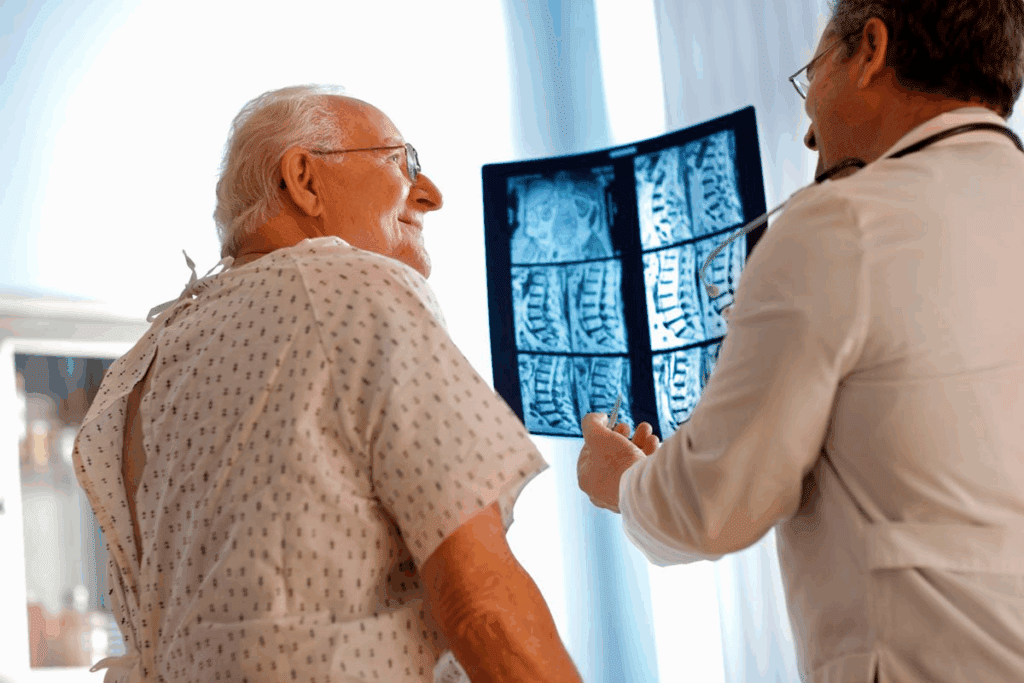
To understand spinal stenosis, we need to look at its causes, symptoms, and how it’s diagnosed. This condition affects millions, causing pain and impacting daily life.
What Happens in Spinal Stenosis?
Spinal stenosis narrows the spine’s spaces, pressing on nerves and the spinal cord. This can happen due to degenerative changes, congenital conditions, or trauma. The nerves get compressed, causing pain, numbness, and weakness in the back, legs, or arms.
Common Symptoms and Warning Signs
The symptoms of spinal stenosis depend on where and how much the spine narrows. Common signs include:
- Pain, numbness, or tingling in the legs, calves, or buttocks
- Weakness in the legs or arms
- Pain or cramping in the legs when standing or walking
- Relief from pain when bending forward or sitting
Spotting these symptoms early is key for timely treatment and better management.
Diagnostic Methods and Imaging Techniques
Diagnosing spinal stenosis involves clinical checks and imaging studies. Magnetic Resonance Imaging (MRI) is a main tool, showing detailed spine and nerve images. Other methods include:
- Computed Tomography (CT) scans to check bone structures
- X-rays to see spinal alignment and degeneration
- Electromyography (EMG) to test nerve function
Getting an accurate diagnosis is vital for a good treatment plan.
Knowing about spinal stenosis’ causes, symptoms, and diagnosis is the first step to relief. By looking into natural remedies and treatments, people can make better care choices.
Traditional Treatment Approaches for Spinal Stenosis
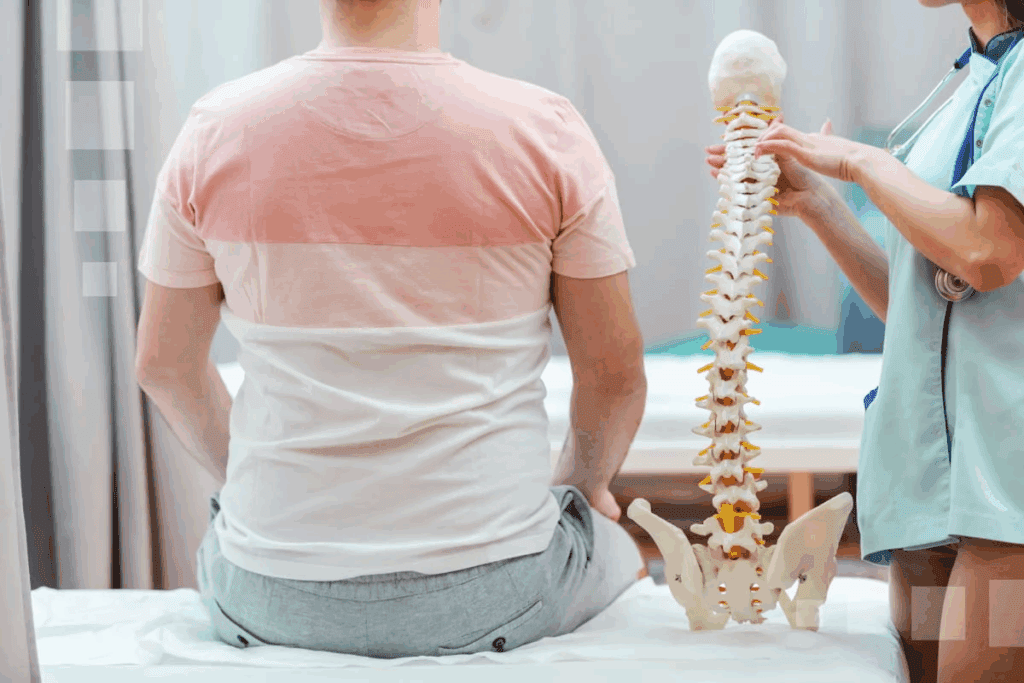
Managing spinal stenosis often involves both conservative and surgical methods. These methods aim to ease symptoms, enhance life quality, and tackle the root causes of the condition.
Conservative Management Options
Conservative treatment is usually the first step for spinal stenosis. It focuses on symptom management and improving function without surgery. Common strategies include:
- Physical therapy to boost flexibility, strength, and range of motion
- Pain management through medication, such as NSAIDs or corticosteroids
- Lifestyle changes like weight loss, exercise, and posture correction
- Epidural steroid injections to cut down inflammation and ease pain
These methods can effectively manage symptoms and sometimes avoid the need for surgery. Yet, their success varies, and some may need more aggressive treatments.
Conventional Surgical Interventions
If conservative methods don’t work, surgery might be considered. Traditional surgeries for spinal stenosis include:
- Laminectomy: a procedure to remove part or all of the lamina to relieve pressure on the spinal cord or nerves
- Spinal fusion: a surgery that involves joining two or more vertebrae together to stabilize the spine
These surgeries aim to ease pressure on the spinal cord or nerves, reduce pain, and enhance function. Yet, they carry risks and require a long recovery time.
| Treatment Approach | Description | Benefits |
| Conservative Management | Non-surgical treatments like physical therapy, pain management, and lifestyle changes | Avoids surgery, potentially fewer complications |
| Laminectomy | Surgical removal of part or all of the lamina to relieve pressure | Relieves pressure on spinal cord or nerves, can reduce pain |
| Spinal Fusion | Surgery to join two or more vertebrae together | Stabilizes the spine, can reduce pain and improve function |
It’s important to understand the pros and cons of these traditional treatments. This knowledge helps in making informed decisions about spinal stenosis care.
The Evolution of Spinal Stenosis Treatments
Spinal stenosis treatment has changed a lot over time. This is thanks to new medical tech and better understanding of the spine. We’re now looking at ways to treat it that are less invasive and keep the spine moving.
Limitations of Traditional Approaches
Old treatments for spinal stenosis include both non-surgical and surgical methods. While they help some, they have big downsides. Non-surgical methods might not work for everyone, and can take a long time. Surgery, like spinal fusion, can help but might make it harder to move and can cause other problems.
A study showed the problems with old surgeries:
| Treatment Approach | Success Rate | Complication Rate | Recovery Time |
| Traditional Spinal Fusion | 70% | 30% | 6-12 months |
| Motion-Preserving Surgery | 85% | 15% | 3-6 months |
The Shift Toward Motion-Preservation
Lately, we’ve moved towards keeping the spine moving in spinal stenosis treatment. This method tries to keep the spine’s natural movement. It uses new tech like devices between the spine’s bones to help the spine move better.
Benefits of Motion-Preservation:
- Maintains spinal mobility, reducing the risk of adjacent segment disease
- Often results in shorter recovery times
- May reduce the risk of complications compared to traditional fusion surgery
As we learn more about spinal stenosis, focusing on keeping the spine moving is a big step forward. These new methods give patients better, less invasive ways to feel better and live better lives.
Motion-Preserving Spinal Stenosis Treatment: A New Paradigm
Motion-preserving spinal stenosis treatment is a new way to care for the spine. It keeps the spine moving naturally, unlike traditional methods that fuse vertebrae. We think keeping the spine mobile is key to better health and happiness for patients.
Benefits of Maintaining Spinal Mobility
Keeping the spine mobile is important for many reasons. It helps keep the spine flexible and reduces stiffness. This can lead to better spinal health and lower the chance of future problems.
Patients who choose motion-preserving surgery often recover faster and face fewer complications than those who have traditional fusion surgery.
These treatments also help keep the spine’s natural movement. By not fusing the spine, they reduce stress on other parts of the spine. This might lower the risk of future damage. This approach fits with our goal of giving our patients the best, most modern care.
Patient Selection Criteria
Not every patient is right for motion-preserving spinal stenosis treatment. Spine specialists carefully check each patient to find the best treatment. They look at how severe the stenosis is, where it is, and the patient’s overall health and lifestyle.
- Severity and location of spinal stenosis
- Patient’s age, health status, and lifestyle
- Presence of any comorbidities or spinal deformities
Our spine specialists work with patients to understand their needs. They create a treatment plan that’s just right for them. By choosing the right patients for this treatment, we can make sure they get the best results and are happy with their care.
The TOPS System is a motion-preserving treatment that has shown great results. By talking about its benefits and who it’s for, we hope to show how this treatment can change how we manage spinal stenosis.
The TOPS System: Total Posterior Spine System
The TOPS System is a new way to treat spinal stenosis. It’s a motion-preserving option compared to old surgical methods. This system keeps the spine moving naturally and stable.
Mechanism of Action
The TOPS System stabilizes the spine while keeping it flexible. It uses a special design that supports the spine without limiting its movement. This helps avoid problems that can happen after traditional spine surgeries.
Clinical Outcomes and Success Rates
Studies show the TOPS System works well, with big improvements in patient health. Patients feel less pain, move better, and are very happy with the results. The system’s success comes from keeping the spine’s natural movement.
Recovery and Rehabilitation
Recovering from the TOPS System is easier than from old spine surgeries. Patients feel less pain and can get back to their lives faster. A good rehab plan is key to getting the best results.
We think the TOPS System is a great option for spinal stenosis. It balances stability and movement. But, it’s important for patients to talk to their doctors to see if it’s right for them.
Interspinous Process Devices: Vertiflex Superion and Beyond
Interspinous process devices are a new way to treat spinal stenosis. They offer relief without major surgery. These devices are placed between the vertebrae’s spinous processes. They distract the space and lessen pressure on the spinal cord and nerves.
Mechanism of Action
Devices like Vertiflex Superion work by limiting spine extension. This reduces pressure on nerves. It helps ease symptoms like pain, numbness, and leg weakness.
Key Benefits:
- Minimally invasive procedure
- Less recovery time than traditional surgery
- Keeps spinal mobility
Procedure and Recovery Timeline
The procedure is done under local or general anesthesia. A small incision is made in the back. The device is then placed between the spinous processes. It usually takes about an hour.
Recovery is quick, with most going home the same day. Avoid heavy lifting and bending for a few weeks. Physical therapy may help regain strength and flexibility.
| Procedure Aspect | Description | Recovery Timeline |
| Anesthesia | Local or General | N/A |
| Incision Size | Small | N/A |
| Procedure Duration | About 1 hour | N/A |
| Hospital Stay | Same-day discharge | Same day |
| Post-Procedure Restrictions | Avoid heavy lifting and bending | 2-4 weeks |
Long-term Effectiveness
Studies show these devices can greatly help with spinal stenosis symptoms. Their long-term success is being studied. But, early results are good, with many patients seeing lasting symptom relief.
Facet replacement is another option. It might be used with or instead of these devices, based on the patient’s needs.
Endoscopic Spine Surgery for Spinal Stenosis
For those with spinal stenosis, endoscopic spine surgery is a new, less invasive treatment. It aims to ease symptoms without harming the spine. This method is getting more attention because it might be safer and more effective than traditional surgery.
Minimally Invasive Decompression Techniques
Endoscopic spine surgery uses a small camera and tools to see and relieve the spinal area. This minimally invasive approach lets surgeons work precisely, without cutting too much tissue or muscle.
The surgery starts with a small cut. Then, the camera and tools go in. This way, the surgeon can see and fix the problem accurately.
Benefits Over Traditional Open Surgery
Endoscopic spine surgery might help you heal faster and feel less pain afterward. Because it uses smaller cuts and less tissue, you could get back to your life sooner.
It also might lower the chance of problems like infections or nerve damage. Keeping the spine stable is a big plus, as it might mean you won’t need more surgeries.
Recovery and Outcomes
Recovering from endoscopic spine surgery is usually quick. You might not stay in the hospital long, and you can start moving around soon. This helps prevent problems and speeds up healing.
| Aspect | Endoscopic Spine Surgery | Traditional Open Surgery |
| Incision Size | Small (typically | Large (often several cm) |
| Recovery Time | Shorter (often weeks) | Longer (often months) |
| Post-operative Pain | Less | More |
| Risk of Complications | Lower | Higher |
Many people find relief from symptoms after endoscopic spine surgery. How well it works depends on the stenosis’s severity, who you are, and the surgeon’s skill.
Advanced Dynamic Stabilization: LimiFlex and Facet Replacement
Dynamic stabilization is changing how we treat spinal stenosis. It offers a flexible and motion-preserving option instead of traditional fusion. This method stabilizes the spine while keeping it flexible, lowering the chance of future problems and improving long-term results.
Preserving Motion through Dynamic Stabilization
Systems like LimiFlex are made to keep the spine moving naturally. Unlike traditional fusion, which can make the spine stiff, dynamic stabilization lets it move freely. This can lead to fewer complications and a lower risk of future problems.
Comparing LimiFlex with Traditional Fusion
LimiFlex is a dynamic stabilization system that helps stabilize the lumbar spine while keeping it moving. It has several benefits over traditional fusion, including shorter recovery times and fewer complications. Here’s a comparison of LimiFlex and traditional fusion:
| Characteristics | LimiFlex | Traditional Fusion |
| Motion Preservation | Yes | No |
| Recovery Time | Typically shorter | Often longer |
| Risk of Complications | Lower | Higher |
Facet Replacement Technologies
Facet replacement is part of dynamic stabilization, focusing on replacing damaged facet joints with artificial ones. It aims to restore the spine’s natural function, providing stability while keeping it flexible. These technologies are evolving, with ongoing research into their effectiveness and long-term results.
As we move forward in treating spinal stenosis, LimiFlex and facet replacement will be key. They help preserve motion and reduce complications, giving patients new hope for effective and less invasive treatments.
Regenerative Medicine Approaches
Regenerative medicine is changing how we treat spinal stenosis. It uses the body’s own healing to fix damaged tissues.
We’re looking into stem cell therapy, prolotherapy, and spinal biologics. These methods offer new, less invasive ways to help patients.
Stem Cell Therapy for Spinal Stenosis
Stem cell therapy uses stem cells to heal and grow new tissue in the spine. These cells can turn into different types of tissue, helping to fix damaged areas.
- Potential Benefits: It can reduce inflammation, improve tissue repair, and ease symptoms.
- Current Research: Studies are ongoing to see if stem cell therapy is safe and effective for spinal stenosis.
Prolotherapy and Regenerative Injection Therapy
Prolotherapy is a regenerative injection therapy. It involves injecting a solution to start the body’s healing process. This method aims to make the ligaments and tendons around the spine stronger.
The benefits of prolotherapy include:
- Stronger ligaments
- Less pain and inflammation
- More stable spine
Spinal Biologics and Growth Factors
Spinal biologics, like growth factors, are being studied for their healing and regenerative abilities in the spine. These biologics help enhance the body’s natural repair processes.
Some key growth factors being researched are:
- Platelet-derived growth factor (PDGF)
- Bone morphogenetic proteins (BMPs)
- Fibroblast growth factor (FGF)
By exploring these regenerative medicine methods, we can offer patients new and effective treatments for spinal stenosis.
Energy-Based Treatments: Laser, Radiofrequency, and IDET
Energy-based treatments are changing how we manage spinal stenosis. They offer hope to those suffering from this condition. These new methods aim to lessen pain, keep the spine working, and offer less invasive options than old surgeries.
Laser Spine Surgery: Facts vs. Marketing
Laser spine surgery has become more popular, but it’s important to know the real facts. Laser technology can precisely treat damaged spinal areas. This can lead to quicker healing and less scarring. Yet, it’s not right for every spinal stenosis case.
- Laser spine surgery can cause less damage and help you heal faster.
- But, it’s only for certain spinal stenosis types and more research is needed on long-term effects.
Radiofrequency Ablation for Pain Management
Radiofrequency ablation (RFA) is a small procedure that uses heat from radio waves to stop pain nerves. It can greatly help those with spinal stenosis, even if other treatments didn’t work.
- The process involves putting a needle electrode near the nerve under imaging.
- Then, radiofrequency energy heats the nerve, blocking pain signals to the brain.
Intradiscal Electrothermal Therapy (IDET)
Intradiscal electrothermal therapy (IDET) heats the disc to cut down pain and swelling. IDET is mainly for those with disc pain linked to spinal stenosis.
IDET is less invasive and can greatly reduce pain. But, choosing the right patients is key for its success.
Technology-Enhanced Surgical Approaches
New technologies are changing how we treat spinal stenosis. We’re moving towards more precise and less invasive surgeries. This is thanks to the latest in surgical technology.
Robotic-Assisted Spine Surgery
Robotic-assisted spine surgery is a big step forward. It uses greater precision and minimally invasive techniques. This means patients recover faster and have better results.
Robotic systems help surgeons be more accurate. This is hard to do with old methods.
3D Navigation-Guided Surgery
3D navigation-guided surgery is also making a big difference. It gives surgeons real-time feedback and detailed info. This helps them do more precise decompression and stabilization.
Spinal Navigation Systems
Spinal navigation systems are key in these new surgeries. They let surgeons navigate complex spinal anatomy better. This lowers the risk of problems and improves results for patients.
These technologies are giving patients better, less invasive treatments for spinal stenosis. As tech keeps getting better, we’ll see even more progress in surgery and patient care.
Choosing the Right Treatment: Factors to Consider
Choosing the best treatment for spinal stenosis is complex. We’ve looked at many options, from traditional to advanced. The decision-making process is detailed.
Severity and Location of Stenosis
The severity and location of spinal stenosis are key. Mild cases might need conservative care. But severe cases might need surgery.
Location matters too: treatments differ for lumbar, cervical, or thoracic stenosis.
Age, Health Status, and Lifestyle Factors
A patient’s age, health, and lifestyle are important. Older or sicker patients might prefer less invasive treatments. Healthier, younger patients might choose more advanced surgery.
Lifestyle, like activity level and job, also affects treatment choice.
Insurance Coverage and Cost Considerations
It’s vital to know about insurance and costs. Talk to your doctor about these to make a good choice.
Understanding the financial side of treatment is key. Talking about costs with your doctor helps you make a better choice.
Questions to Ask Your Spine Specialist
When seeing a spine specialist, ask important questions:
- What are the benefits and risks of the treatment?
- Are there other options?
- What’s the recovery time and process?
- How will the treatment affect my daily life?
Thinking about these factors and asking the right questions helps patients choose wisely for their spinal stenosis treatment.
Conclusion: The Future of Spinal Stenosis Treatment
Spinal stenosis treatment has seen big changes, focusing more on keeping the spine moving and using advanced methods. New approaches like the TOPS System, interspinous process devices, and endoscopic spine surgery are changing how we treat spine problems.
We think the future will bring even more progress in treatments that are less invasive and keep the spine moving. These advancements will likely make patients’ lives better, help them recover faster, and improve their overall health. Our team is dedicated to giving top-notch care and support to patients from around the world who want the latest in spinal stenosis treatment.
As new technologies and methods come along, we’re excited to add them to our practice. This way, our patients will get the best and most innovative care for their spine health.
FAQ
What is spinal stenosis and how is it diagnosed?
Spinal stenosis is when the spinal canal narrows. This can put pressure on the spinal cord and nerves. Doctors use a medical history, physical exam, and imaging tests like MRI or CT scans to diagnose it.
What are the symptoms of spinal stenosis?
Symptoms include back pain, numbness, tingling, and weakness in the legs. You might also feel pain or cramping in your legs when walking or standing.
What are the traditional treatment approaches for spinal stenosis?
Traditional treatments include physical therapy, pain management, and lifestyle changes. Some also opt for surgical options like laminectomy or spinal fusion.
What is motion-preserving spinal stenosis treatment?
This treatment aims to relieve pressure on the spinal cord and nerves. It keeps the spine mobile. The TOPS System and devices like Vertiflex Superion are examples.
How does the TOPS System work?
The TOPS System stabilizes the spine while keeping it mobile. It’s implanted through a minimally invasive surgery.
What are the benefits of endoscopic spine surgery for spinal stenosis?
Endoscopic spine surgery is less invasive than traditional surgery. It can relieve symptoms with less damage and faster recovery.
What is the role of regenerative medicine in spinal stenosis treatment?
Regenerative medicine, like stem cell therapy and prolotherapy, aims to heal and regenerate damaged spinal tissues.
How do energy-based treatments work for spinal stenosis?
Treatments like laser spine surgery and radiofrequency ablation use heat or energy. They help relieve pain and inflammation in the spine.
What are the advantages of robotic-assisted spine surgery?
Robotic-assisted spine surgery is more accurate and safer. It allows for precise implant placement and reduces complications.
What factors should be considered when choosing a treatment for spinal stenosis?
Consider the severity and location of stenosis, age, health, lifestyle, insurance, and cost. These factors are important.
What questions should I ask my spine specialist?
Ask about available treatments, risks and benefits, expected outcomes, and the recovery process. These questions are key.
Are there any non-surgical treatment options for spinal stenosis?
Yes, non-surgical options include physical therapy, pain management, and lifestyle changes. These can help manage symptoms.
What is the role of spinal navigation systems in spine surgery?
Spinal navigation systems improve the accuracy and safety of surgery. They provide real-time guidance during the procedure.
What is the recovery process like after spinal stenosis surgery?
Recovery varies by surgery type. It usually involves rest, physical therapy, and follow-up care with your specialist.
Can spinal stenosis be treated with minimally invasive surgery?
Yes, many cases can be treated with minimally invasive surgery. Options include endoscopic spine surgery or percutaneous lumbar discectomy.
References
- Rodgers, W., & Patel, G. (2025). Minimally invasive lumbar decompression (MILD) for lumbar spinal stenosis: a review of safety and effectiveness. Journal of Neurointerventional Surgery, 17(5), 341-347. https://pmc.ncbi.nlm.nih.gov/articles/PMC12262078/