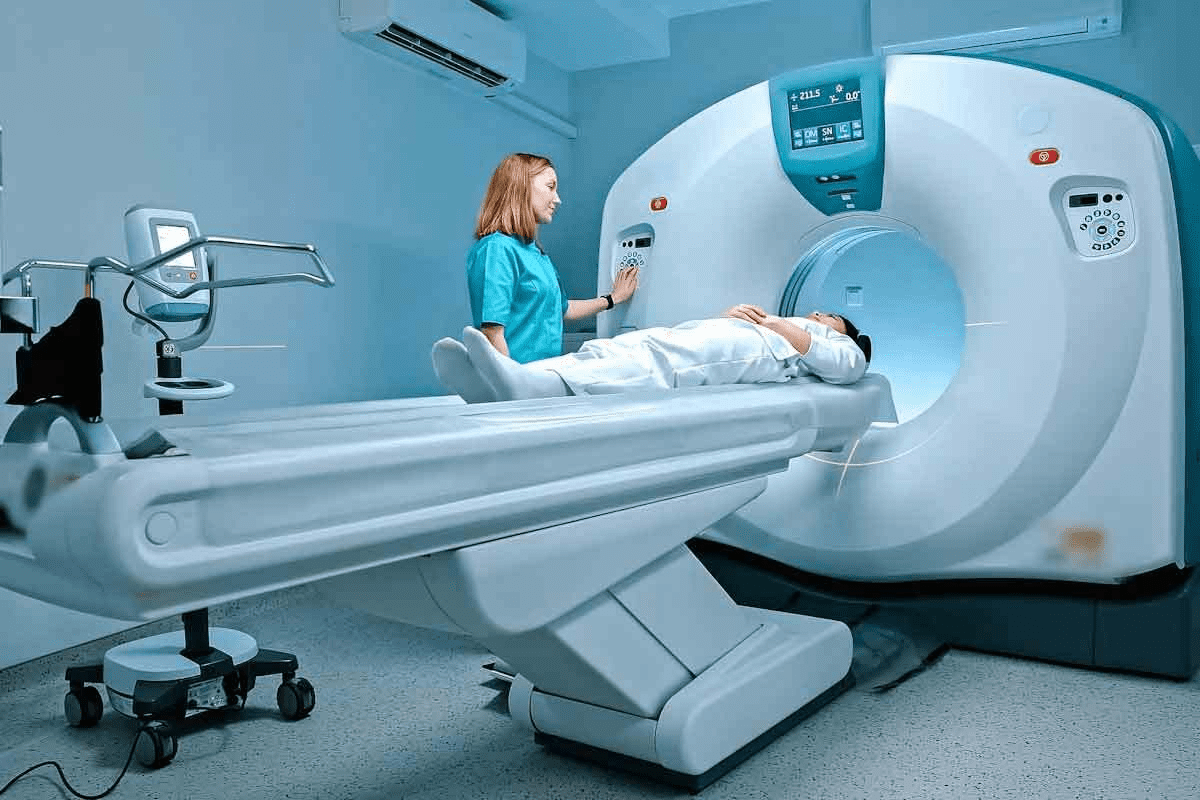
Last Updated on November 27, 2025 by Bilal Hasdemir
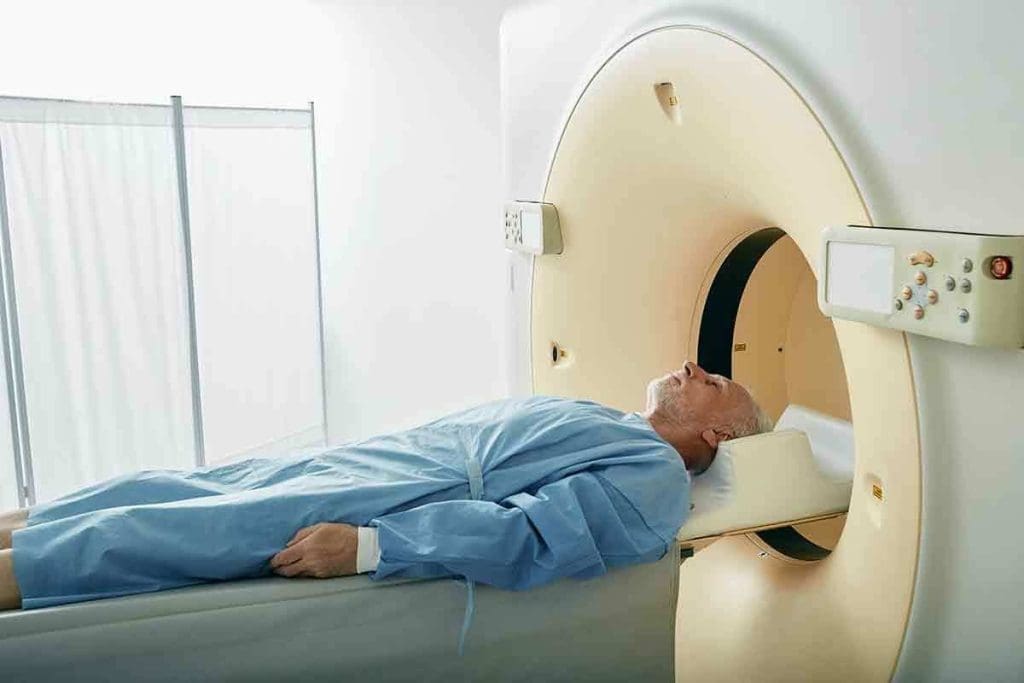
Early detection of head and neck cancers is key to better treatment and survival. At Liv Hospital, we use top-notch imaging to give precise diagnoses and care. A neck cancer CT scan is a key tool, helping us spot and monitor issues in the head and neck area for accurate and timely treatment.
A CT scan gives us detailed images, showing tumors, big lymph nodes, and other problems. This tech lets us see how far cancer has spread. Then, we can plan a treatment that targets the cancer.
Key Takeaways
- CT scans play a critical role in detecting head and neck cancers.
- Advanced imaging technologies enable accurate diagnoses and personalized care.
- Early detection is key for effective treatment and better survival rates.
- Liv Hospital uses top methods for cancer care.
- A CT scan helps spot and check on issues in the head and neck area.
The Critical Role of Imaging in Neck Cancer Detection
Imaging is key in finding neck cancer early. This helps improve treatment results. We use advanced imaging to spot cancers when they’re easier to treat.
Why Early Detection Matters in Head and Neck Cancers
Finding cancers early is vital for better treatment and survival. Early detection means we can use treatments that are less invasive. This greatly improves patient results.
Common Symptoms That Warrant Imaging
Some symptoms make doctors think about using CT scans. These include neck lumps, sore throats, and trouble swallowing.
| Symptom | Possible Indication |
| Persistent neck lump | Potential tumor or lymph node involvement |
| Sore throat | Possible tumor in the throat or larynx |
| Difficulty swallowing | Tumor or swelling obstructing the esophagus |
Understanding imaging’s role in neck cancer detection is important. Recognizing symptoms that need more tests helps us find cancers early. This leads to better treatment results.
Neck Cancer CT Scan: Technology and Principles
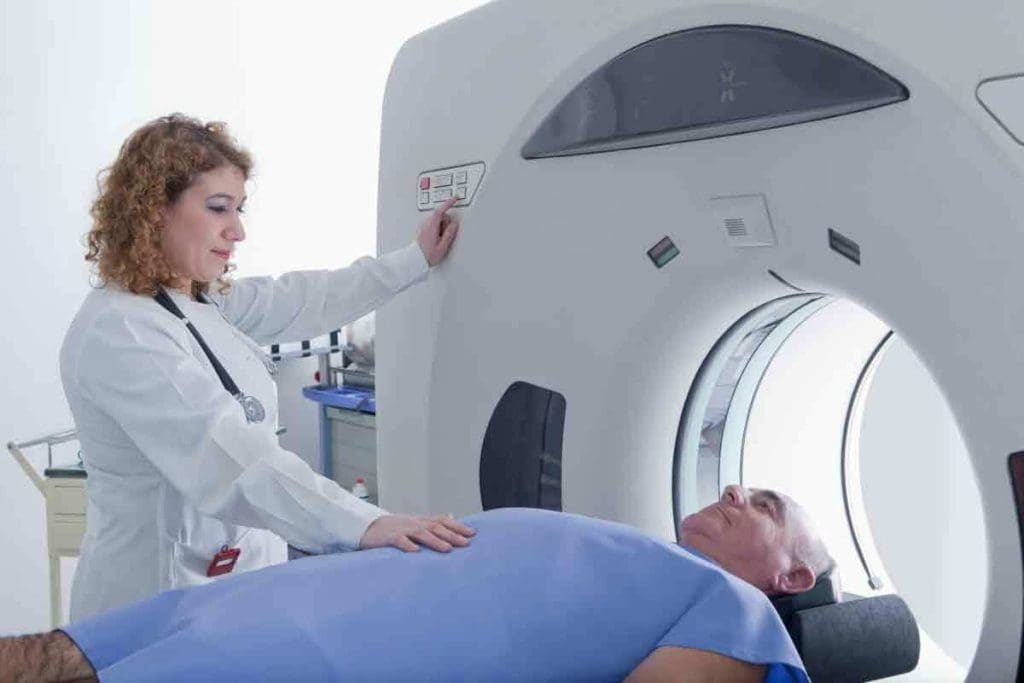
CT scans are key in finding neck cancer. They give us detailed pictures of the neck. This helps us spot tumors and other issues.
How CT Imaging Creates Detailed Cross-Sectional Images
CT imaging uses X-rays and computers to make detailed pictures of the body. A study on PMC shows it’s great for spotting head and neck cancers. It shows bones, soft tissues, and lymph nodes clearly.
Here’s how it works: X-rays are sent from all sides of the body. A computer then makes detailed pictures from these X-rays. This lets us see inside the neck well, helping us find problems.
“CT scans are invaluable in the diagnosis and staging of head and neck cancers, providing critical information that guides treatment decisions.”
Contrast Enhancement in Neck Cancer Detection
Contrast enhancement is a big part of CT scans for neck cancer. We use a contrast agent, like iodine, to make tumors stand out. This makes it easier to see tumors and lymph nodes, helping us diagnose and stage better.
Using contrast agents is common in CT scans for neck cancer. It helps us see different tissues in the neck clearly. This is key to making good treatment plans.
Understanding CT scans helps us see their importance in neck cancer care. The detailed images, made better with contrast agents, are vital. They help us make the right treatment choices and improve patient results.
Types of Malignancies Detectable Through Neck CT Imaging
CT scans of the neck help find different cancers. They show detailed images that doctors use to spot problems. This helps them see if a tumor is cancerous.
Primary Tumors of the Head and Neck Region
Primary tumors in the head and neck come from different tissues. CT scans help see how big these tumors are. This info helps doctors plan the best treatment.
Some cancers in the head and neck that CT scans can find include:
- Nasopharyngeal carcinoma
- Oropharyngeal cancer
- Laryngeal cancer
- Thyroid cancer
- Salivary gland tumors
Metastatic Disease Identification
Metastatic disease in the neck happens when cancer spreads. CT scans are good at finding this spread. They look for big lymph nodes.
| Cancer Type | Common Sites of Metastasis | CT Scan Findings |
| Breast Cancer | Supraclavicular lymph nodes | Enlarged lymph nodes with possible necrosis |
| Lung Cancer | Mediastinal and supraclavicular lymph nodes | Lymph node enlargement, potentially with calcification |
| Head and Neck Cancers | Cervical lymph nodes | Nodal enlargement, sometimes with central necrosis or extracapsular spread |
CT scans are key in finding and understanding cancer. They help doctors make the right treatment plans. Accurate diagnosis is vital for managing cancer well.
Lymph Node Involvement: What CT Scans Reveal
CT scans are key in showing how many lymph nodes are involved in neck cancer. They give us detailed info about these nodes. This info is vital for figuring out the cancer’s stage and planning treatment.
Normal vs. Pathological Lymph Node Characteristics
Lymph nodes are small, bean-shaped parts of our lymphatic system. They’re usually less than 1 cm in size. But, when cancer is involved, they can grow, change shape, or have different inside structures. CT scans help us check these changes.
We look at lymph nodes to see if they’re normal or not. Size is a big clue. If a node is bigger than usual, it might mean cancer.
Evaluating Size, Shape, and Internal Architecture
When we look at lymph nodes on a CT scan, we examine their size, shape, and internal structure. If a node is big, it could mean cancer. Also, if the inside looks different, like it has dead spots or calcium, it might show cancer.
| Characteristics | Normal Lymph Nodes | Pathological Lymph Nodes |
| Size | Typically | Often >1 cm, can be significantly enlarged |
| Shape | Oval or bean-shaped | Can be rounded or irregular |
| Internal Architecture | Homogeneous | May show necrosis, calcification, or heterogeneity |
By looking closely at these details on a CT scan, we learn a lot about lymph node involvement. This knowledge is key to accurate cancer staging and planning the best treatment.
Diagnostic Accuracy of CT Scans for Neck Cancer
CT scans are key in finding neck cancer. They help us see the size, location, and if the cancer has spread. This info is vital for choosing the right treatment.
Sensitivity Rates for Primary Tumors
Research shows CT scans are good at spotting some neck cancers. They work well for big tumors or those that stand out. But, they might miss smaller tumors or those in hard-to-reach spots.
What affects how well CT scans work includes:
- The size and where the tumor is
- Using contrast during the scan
- The skill of the radiologist in reading the images
Specificity and Possible False Positives
Even though CT scans are helpful, they’re not 100% accurate. They can sometimes say a tumor is there when it’s not. This can worry patients and lead to more tests or treatments.
Why false positives happen includes:
- Inflammation or infection in the neck
- Benign growths or cysts
- Issues from the imaging itself
Knowing these issues helps us understand CT scan results better. This way, we can decide on the next steps with confidence.
CT Scans vs. Other Diagnostic Modalities
When diagnosing neck cancer, doctors use different imaging tools. Each tool has its own strengths and weaknesses. Knowing these differences helps doctors choose the best test for each patient.
MRI and Its Role in Head and Neck Cancer Imaging
Magnetic Resonance Imaging (MRI) is a key tool for diagnosing head and neck cancers. It’s great at showing soft tissues, like tumors and their surroundings. This is important for planning treatments.
While CT scans are good at showing bones and calcifications, MRIs are better at soft tissues. This makes MRI a valuable tool to use with CT scans.
A study on the National Center for Biotechnology Information website shows MRI’s importance. It highlights how MRI and CT scans work well together to assess tumors and lymph nodes well.
PET/CT Fusion Imaging: Combining Metabolic and Anatomical Information
PET/CT fusion imaging is a big step forward in cancer diagnosis. It combines PET’s metabolic info with CT’s anatomical detail. This gives a full picture of the disease.
PET/CT is great at finding active tumors and checking for metastasis. It helps doctors see if cancer has spread, which is key for treatment planning.
The Complementary Role of Endoscopy in Throat Cancer Detection
Endoscopy is essential for throat cancer diagnosis. It lets doctors see tumors and mucosa directly. This allows for biopsies to confirm cancer.
While imaging gives info on disease extent, endoscopy shows mucosal details. Combining these findings improves diagnosis and treatment planning.
In summary, CT scans are important for neck cancer diagnosis. But MRI, PET/CT, and endoscopy also play big roles. Understanding each tool’s strengths helps tailor care for better patient outcomes.
Evaluating Neck Lumps and Masses with CT Imaging
CT imaging is often the first step in checking neck lumps and masses. It gives important details about what they might be. CT scans show detailed pictures of the lump or mass, helping to tell if it’s harmless or not.
Differentiating Benign from Malignant Causes
CT scans can spot signs that might mean a lump is cancerous. These signs include irregular shapes, uneven growth, or spreading into nearby areas. Benign conditions usually have clear edges and grow evenly.
For example, a thyroid nodule might show up on a CT scan. Its look can tell if it’s likely safe or if more tests are needed.
CT-Guided Biopsy for Definitive Diagnosis
If a CT scan finds a possibly cancerous lump, a CT-guided biopsy can help. This method uses CT images to guide a needle into the area. It makes sure the sample is taken correctly.
By using CT scans and biopsies together, we can get a clear diagnosis. This is key for deciding the best treatment, like surgery or radiation.
CT scans and precise biopsies help doctors make the best choices for patients. This leads to better care and results for neck lumps and masses.
Patient Experience: Undergoing a Neck CT Scan
Getting a CT scan can seem scary, but we’re here to help. A neck CT scan is key for finding health problems like cancer and issues with lymph nodes.
Preparation and Procedure Details
Before your CT scan, follow some important steps. Take off any metal items, like jewelry or glasses, to avoid scan problems. Also, wear comfy clothes without metal parts.
When it’s time for the scan, you’ll lie on a table that moves into the CT scanner. The scan is fast, lasting just a few minutes. Our radiologists will make sure you’re set up right and the scan goes smoothly.
Radiation Considerations and Safety Protocols
Many worry about radiation from CT scans. Yes, CT scans do use some radiation, but we take many steps to keep you safe. We use the least amount of radiation needed to get clear images. This way, the scan’s benefits are greater than the risks.
We also use shields to protect other parts of your body from radiation. Our radiologists will explain these safety steps with you before the scan.
Knowing what to expect from a neck CT scan can make you feel more at ease. If you have any worries or questions, we’re here to help. We want to support you every step of the way.
Conclusion: Advancing Cancer Care Through Precise Imaging
Precise imaging is key for better cancer care, like finding and checking neck cancer. We use CT scans to help make treatment plans and improve results. A neck cancer CT scan is important for spotting main tumors and spread to lymph nodes.
Other tests like endoscopy are helpful too. But, a CT scan gives detailed views of the body. This helps doctors see how far the disease has spread.
By using advanced imaging and medical knowledge, we can improve cancer diagnosis and treatment. Our goal is to provide top-notch healthcare. We support patients from all over with detailed guidance.
FAQ
Can a neck CT scan detect cancer?
Yes, a neck CT scan is a key tool for finding neck cancer. It also checks how far cancer has spread to lymph nodes.
How does a CT scan detect neck cancer?
CT scans use X-rays and computers to show detailed images of the neck. They help spot tumors and swollen lymph nodes.
What are the common symptoms that may warrant a neck CT scan?
Symptoms like lasting lumps, sore throats, and trouble swallowing might mean neck cancer.
Can a CT scan detect lymph node involvement in neck cancer?
Yes, CT scans show detailed info about lymph nodes. They check size, shape, and what’s inside.
How accurate are CT scans in detecting neck cancer?
CT scans are very good at finding many neck cancers. But, they’re not perfect. Knowing their limits helps us understand results better.
How does a CT scan compare to other diagnostic modalities like MRI?
MRI is better at showing soft tissues, which is great for some tumors. CT scans give detailed images and are often used with other tools.
Can a CT scan be used to evaluate neck lumps and masses?
Yes, CT imaging can tell if neck lumps or masses are cancerous. It helps decide if a biopsy is needed.
What is the role of contrast enhancement in neck cancer detection?
Contrast enhancement during a CT scan makes it easier to see tumors and other issues.
What can a CT scan of the neck detect?
A CT scan can find many types of neck cancers. It also checks if cancer has spread to lymph nodes.
Will an MRI of the neck show cancer?
Yes, an MRI can find neck cancer, mainly for tumors where MRI is better.
Does endoscopy show throat cancer?
Endoscopy helps check throat cancer. Used with CT scans, it gives a full view of the disease.
What is the best scan to detect cancer?
The best scan for cancer depends on the cancer type, location, and patient factors. Often, a mix of CT, MRI, and PET/CT scans is used.
References
- National Institute for Health and Care Excellence. (2016). Spinal injury: assessment and initial management. NICE Guideline NG41. https://www.ncbi.nlm.nih.gov/books/NBK367851/
- Torlincasi, A. M., & Waseem, M. (2025). Cervical injury. StatPearls. https://www.ncbi.nlm.nih.gov/books/NBK448146/