Last Updated on December 1, 2025 by Bilal Hasdemir
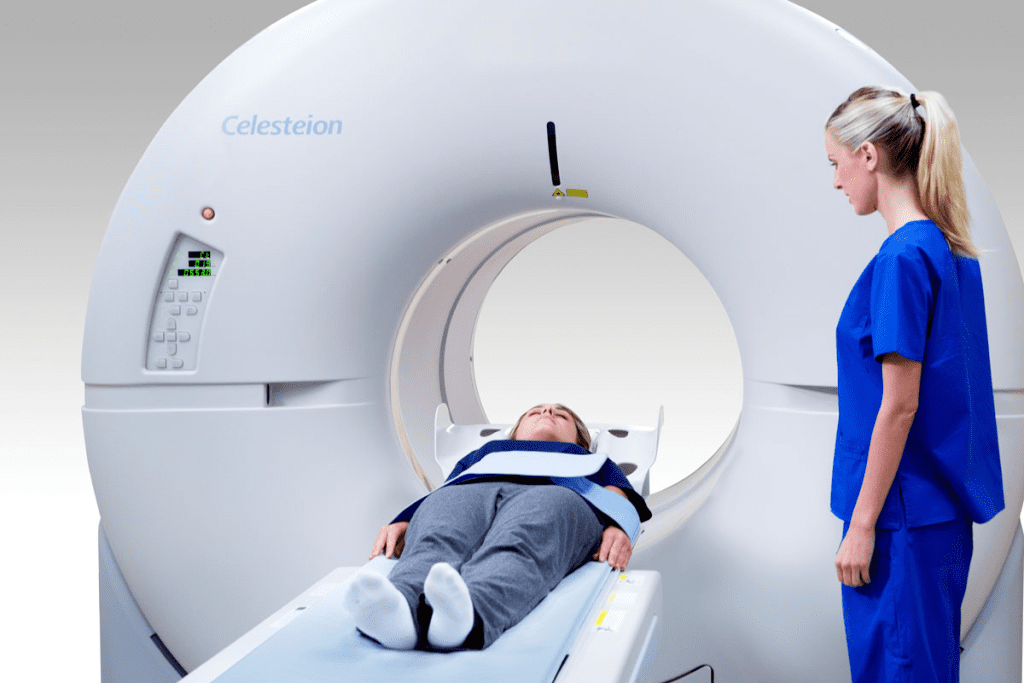
Did you know that over 2 million PET CT scans are performed annually worldwide? They help diagnose and treat various medical conditions.
Going through a PET CT scan can be scary if you don’t know what to expect. It combines CT scans’ detailed images with PET scans’ functional data. This gives a full view of the body’s inner workings and structures.
At our facilities, we aim to make the PET CT scan process easy and comfortable. The scan’s length can change, but it usually takes 30 minutes to a few hours, depending on the scan’s specific needs. Many patients also ask about related procedures such as the nuclear stress test cost, since it helps them plan better for both their health and budget
Knowing about the PET CT scan procedure and its time can ease your worries. It prepares you for what’s ahead.
Key Takeaways
- PET CT scans combine functional and anatomical information for detailed diagnostics.
- The scan’s length can range from 30 minutes to several hours.
- Understanding the process can help reduce anxiety.
- PET CT scans are used for diagnosing and treating many medical conditions.
- Our facilities strive to offer a comfortable and smooth experience for patients.
What is a PET CT Scan?
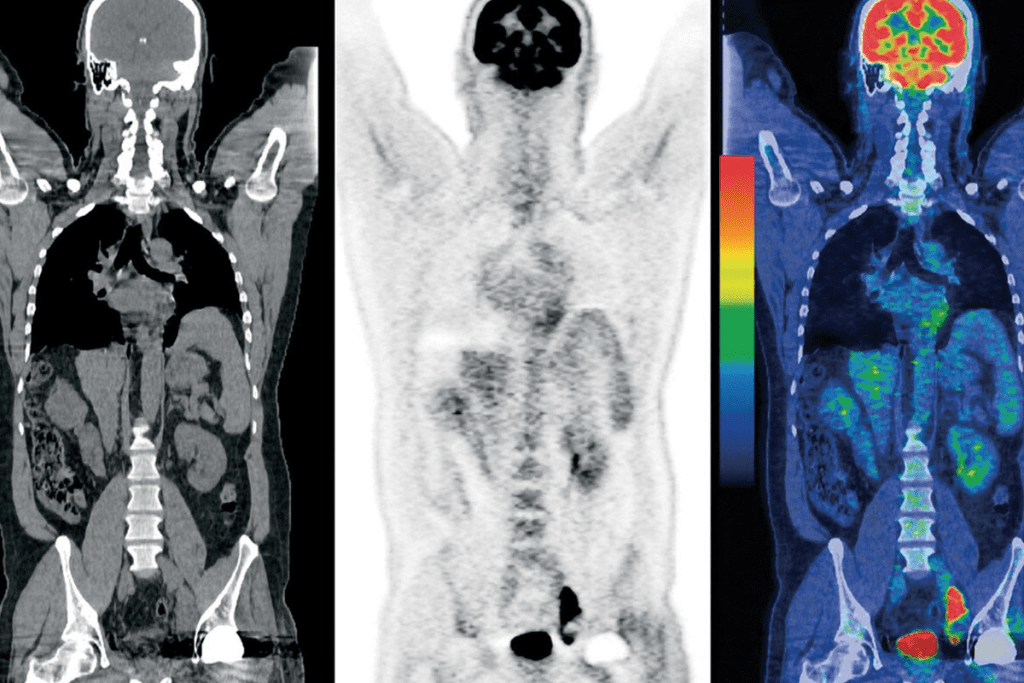
PET CT scans are a big step forward in medical imaging. They give a detailed look at the body’s inside parts and how they work. This tool mixes Positron Emission Tomography (PET) and Computed Tomography (CT) to show many health issues clearly.
Definition and Purpose of PET CT Imaging
A PET CT scan is a test that combines PET and CT scans. It shows detailed info about the body’s inside parts and how they work. PET CT imaging helps find and watch many health problems, like cancer, brain issues, and heart disease.
The goal of PET CT imaging is to get a better diagnosis. It mixes the PET scan’s functional info with the CT scan’s body details. This helps doctors spot problems better and plan treatments that work well.
Difference Between PET, CT, and Combined PET CT Scans
PET scans look at how the body uses certain chemicals. They’re great for finding cancer because cancer cells use more chemicals than normal cells.
CT scans show detailed pictures of the body’s inside parts, like organs and bones. They’re good for finding physical problems, like tumors or injuries.
Combined PET CT scans mix the PET scan’s info with the CT scan’s pictures. This gives a full view of the body’s inside and how it works. It makes diagnosing better and helps plan treatments that work.
Knowing the differences between PET, CT, and PET CT scans helps patients and doctors choose the right tests. This makes sure they get the best care for their health needs.
Typical Duration of a PET CT Scan
Knowing how long a PET CT scan takes can ease worries and get patients ready. We know patients want to know what to expect.
Average Time for the Actual Scanning Procedure
The scanning part usually takes 30 minutes to an hour. But, the whole visit will take longer because of prep and other steps.
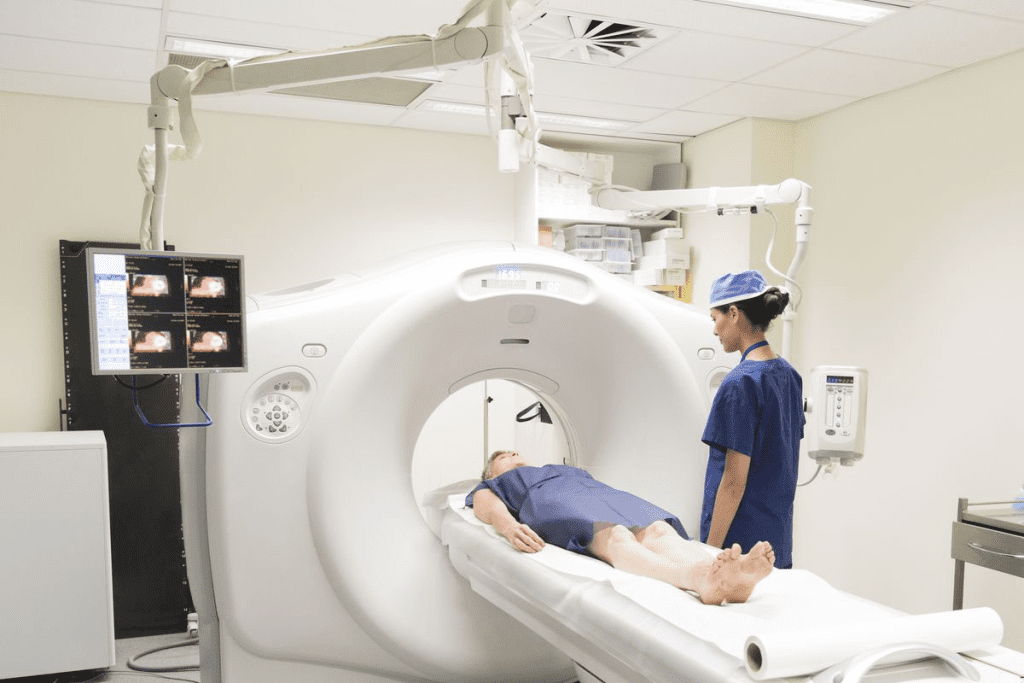
Patients lie on a table that moves into the scanner. The scanner takes pictures of how the body works and its structure. The PET and CT scans together show how the body works and its structure.
Factors That May Extend Scan Duration
Several things can make a PET CT scan longer. These include:
- The specific area of the body being scanned
- The complexity of the scan
- The patient’s ability to remain steady during the scan
- Any extra imaging needed
The table below shows what can affect PET CT scan time and how:
| Factor | Potential Impact on Scan Duration |
| Area of the body being scanned | More time for bigger or more complex areas |
| Patient mobility | More time for patients who can’t move much |
| Additional imaging requirements | More sequences or delayed images add to the time |
We aim to make the PET CT scan smooth and comfy for our patients. Knowing what can change scan time helps us prepare them better.
The Complete PET CT Process Timeline
We’ll walk you through the PET CT process timeline. This will help you get ready for your scan. Knowing each step can make you feel less anxious and ensure a smooth experience.
Pre-Scan Preparation at Home
Before you go to the facility, you need to prepare for your PET CT scan. You’ll have to follow certain dietary restrictions and fasting rules. It’s very important to follow these guidelines to get accurate scan results. Your healthcare provider will tell you exactly how to prepare, including any changes to your medication.
Arrival and Registration at the Facility
When you arrive, you’ll check in at the registration desk. There, you’ll give your ID and any medical records you have. Make sure to arrive a few minutes early to finish any paperwork. Our staff will then take you to the PET CT suite. There, you’ll meet the technologists who will do your scan.
Radiotracer Injection and Uptake Period
A radiotracer is injected into your bloodstream. You’ll wait for about an hour for it to be absorbed by the area being examined. During this time, you’ll need to stay very quiet and not move. This waiting period is key for getting clear images.
Post-Scan Monitoring Before Departure
After the scan, you’ll be watched for a short time to make sure you’re okay. Once you’re clear, you can leave the facility. It’s a good idea to have someone with you when you go home, as you might feel a bit tired.
By knowing the PET CT process timeline, you can better prepare for your scan. If you have any questions or concerns, always ask your healthcare provider.
Preparing for Your PET CT Scan
Before your PET CT scan, you need to follow some steps. This helps make sure the results are accurate and reliable.
Dietary Restrictions and Fasting Requirements
Following dietary restrictions and fasting is key for pet scan prep. You should avoid sugary foods and drinks for at least 24 hours before. Eating a low-carb, high-fat diet for a day or two before can also improve image quality.
Fasting times vary based on the PET CT scan type. Usually, you need to fast for 4-6 hours before. Just drink water during this time. It’s vital to stick to these fasting requirements to get accurate scan results.
Medication Adjustments Before the Scan
Adjusting medications is another important step in preparing for a pet scan. Tell your healthcare provider about all your medications. Some might need to be changed or stopped before the scan to avoid affecting the results.
It’s also important to talk about any medication adjustments with your healthcare provider. They can give you advice based on your health and the scan type.
By following these pet scan preparation guidelines, you can make the scanning process smoother and more successful.
Step-by-Step PET CT Scan Procedure
Knowing what to expect during a PET CT scan can help a lot. It makes the experience less scary. We want to make sure you feel ready and calm.
Initial Patient Assessment
First, we do a patient assessment. This is key to making sure the scan fits your needs. Our team looks at your medical history and any past scans to get ready.
Radiotracer Administration Process
Then, we give you a radiotracer. This is important because it helps us see how your body works. It’s injected into your vein, and we watch to make sure it spreads right.
Positioning in the Scanner
After the radiotracer takes effect, you’ll get on the scanning table. We make sure you’re comfy and in the right spot for the best images.
What Happens During the Scan
The scan itself is painless, but you might feel a bit uncomfortable because you have to stay very quiet. Our team is there to help you and keep an eye on everything.
| Step | Description | Duration |
| Initial Assessment | Review of patient’s medical history and condition | 15 minutes |
| Radiotracer Administration | Injection of radiotracer and uptake period | 30-60 minutes |
| Scanning | PET CT scan procedure | 15-30 minutes |
Understanding the PET CT scan process can help you feel more at ease. It makes the whole thing smoother and less stressful.
Modern PET CT Scanner Technology
Medical imaging has seen big changes thanks to PET CT scanner tech. These changes have made diagnosing diseases more accurate and faster. This helps doctors give better care and improve patient results.
PET CT scanners are now key in medical imaging. They mix PET’s functional info with CT’s body details. This mix helps doctors spot and treat diseases better.
Advancements in PET CT Equipment
PET CT tech has evolved a lot. Makers keep making it better, improving image quality and cutting scan times. New detectors and algorithms have made PET CT scans more useful.
New high-resolution PET CT scanners are a big step forward. They give clearer images, helping doctors find and understand small problems better. A study showed the new scanners find small issues much better than old ones.
| Feature | Older PET CT Scanners | Modern PET CT Scanners |
| Resolution | Lower resolution | High resolution |
| Scan Time | Longer scan times | Reduced scan times |
| Image Quality | Less detailed | More detailed |
Impact of Technological Advances on Scan Times
New tech has made PET CT scans faster. Faster scans and better detectors mean patients spend less time in the scanner.
A study found scan times have dropped by up to 30% with new scanners. This makes patients happier and helps hospitals work more efficiently.
“The advancements in PET CT technology have been instrumental in improving diagnostic accuracy and patient care. We are now able to provide more precise diagnoses and treatment plans, ultimately leading to better patient outcomes.”
As we keep improving PET CT tech, we’ll see even more great things. These advancements will keep making our diagnostic tools better and patient care even more effective.
Patient Experience During a PET CT Scan
Getting a PET CT scan can be scary for many. But knowing what to expect can help ease worries. We aim to make the experience as comfortable as we can for everyone.
Physical Sensations and Comfort Considerations
Patients might feel different things during a PET CT scan. The scan itself doesn’t hurt, but staying very quiet for a long time can be uncomfortable. We keep the room at a good temperature and offer pillows or blankets to make you comfortable.
The radiotracer injection might feel a bit sharp or sting. But this feeling is short-lived. Some might taste metal in their mouth afterward. Our team is here to help with any worries or questions you have.
Managing Anxiety and Claustrophobia
We have ways to help with anxiety or feeling trapped. Our rooms are big and well-ventilated. We also use open-design scanners to reduce feelings of being closed in.
We teach relaxation techniques like deep breathing or listening to calming music. Sometimes, we might give mild sedation to help you relax. Our staff is trained to be caring and keep you informed and comfortable.
| Comfort Measure | Description | Benefit |
| Temperature Control | Adjusting the scanning room temperature to a comfortable level | Enhances overall comfort during the scan |
| Pillows and Blankets | Providing additional support and warmth as needed | Helps patients relax and remain silent |
| Relaxation Techniques | Guiding patients through deep breathing or calming music | Reduces anxiety and promotes relaxation |
| Mild Sedation | Administering mild sedatives for patients with severe anxiety or claustrophobia | Helps patients feel more at ease during the scanning process |
We aim to make PET CT scans as easy and stress-free as we can. Our goal is to create a supportive space for patients. We want to help you get through the scan with as little discomfort or worry as possible.
Potential Risks and Side Effects
PET CT scans are very useful for finding health problems. But, they also have some risks. These scans combine PET and CT to give detailed images. Yet, they can have side effects like any medical test.
Radiation Exposure Considerations
PET CT scans use radiation, which is a big worry. The PET part uses a radioactive tracer, and the CT part uses X-rays. The good news is that the dose is kept low to protect you.
The amount of radiation you get depends on the scan and your size. Usually, it’s between 10 and 25 millisieverts (mSv) for a full-body scan. This is less than the natural radiation you get in a year. We make sure the dose is right for you, balancing safety and quality.
Possible Reactions to Radiotracers
Some people might react to the radiotracer in PET CT scans. The most common one is FDG, a sugar molecule with a radioactive tag. Rarely, people might have an allergic reaction. Symptoms can be mild, like redness, or severe, but this is very rare.
We watch for any bad effects after the radiotracer is given. Though it’s rare, some might feel uncomfortable or have other symptoms. Our team is ready to help and take care of you.
In summary, PET CT scans have risks like radiation and reactions to the tracer. But, we manage these risks well. The scan’s benefits, like helping find health problems, are often worth it. We aim to make sure you’re safe and comfortable during the scan.
Interpreting Your PET CT Scan Results
Understanding your PET CT scan results can seem complex. But, with the right help, you can learn a lot about your health. The scan shows detailed images of your body’s metabolic and anatomical structures.
Radiologist Analysis of PET CT Images
Radiologists are key in looking at PET CT images. They study the combined images from the PET and CT scans. They look for areas of concern by checking metabolic activity and anatomical details.
Key aspects radiologists consider include:
- Abnormal metabolic activity that could indicate disease
- Anatomical abnormalities or structural changes
- Comparison with previous scans to track changes over time
Timeline for Receiving and Understanding Results
The time it takes to get your PET CT scan results varies. It depends on the facility’s workload and your case’s complexity. Usually, you’ll get your results in a few days to a week.
When your results are ready, your healthcare provider will talk them over with you. They’ll explain what they found, what it means for your health, and what to do next. It’s important to ask questions to fully understand your results.
To prepare for your results discussion, consider the following:
- Bring a list of questions to ask your healthcare provider
- Have a family member or friend present for support
- Take notes during the consultation to reference later
By understanding your PET CT scan results and working with your healthcare team, you can make informed decisions. This helps in planning your care and treatment.
Conclusion
We’ve looked into PET CT scans, what they are, why they’re used, and how long they take. A PET CT scan mixes the details of a PET scan with a CT scan’s body map. This gives a full view of the body’s inside parts.
The whole PET CT process, from start to finish, can take hours. Knowing about the pet ct scan process and what’s needed can make things easier. The cost of a pet scan or nuclear stress test cost varies. But, getting accurate diagnoses and treatment plans is worth it for your health.
Being informed about the pet ct scan benefits and what to expect helps patients prepare. We suggest talking to your healthcare provider about any worries or questions. This way, you can get the best results from your scan and treatment.
FAQ
What is a PET CT scan?
A PET CT scan is a test that uses Positron Emission Tomography (PET) and Computed Tomography (CT). It shows detailed pictures of the body’s inside and how it works.
How long does a PET CT scan take?
The actual scan takes about 30 minutes to an hour. But getting ready and recovering can take several hours.
What are the dietary restrictions before a PET CT scan?
You might need to fast before the scan. You might also have to eat a special diet to get accurate results.
Will I experience any physical sensations during the PET CT scan?
You might feel a bit uncomfortable because you have to stay very quiet and calm for a long time. Some people might feel anxious or claustrophobic.
Are there any potentially risks or side effects associated with PET CT scans?
PET CT scans use a little bit of radiation. Some people might react to the special dye used in the scan.
How will I receive my PET CT scan results?
Your doctor or radiologist will look at the images and give you a detailed report. They will share it with you and your healthcare team.
Can I drive myself home after a PET CT scan?
It’s best if someone drives you home. You might feel the effects of the dye or any medicine used during the scan.
How do I prepare for a PET CT scan if I have diabetes?
If you have diabetes, you might need to change your medicine or insulin before the scan. Tell your doctor about your diabetes.
What is the difference between a PET scan and a PET CT scan?
A PET scan shows how active your body’s cells are. A PET CT scan adds CT images to show more about your body’s structures and how they work.
Are PET CT scans available at all medical facilities?
No, not every place has a PET CT scanner. You might need to go to a special imaging center or hospital for the test.
References
- Kapoor, M. (2022). PET scanning. StatPearls. Retrieved February 25, 2025, from https://www.ncbi.nlm.nih.gov/books/NBK559089/