Last Updated on December 3, 2025 by
When thinking about Extracorporeal Shock Wave Lithotripsy (ESWL), knowing the right kidney stone size is key. We look into the best size for ESWL, a non-invasive way to treat urinary stone disease.
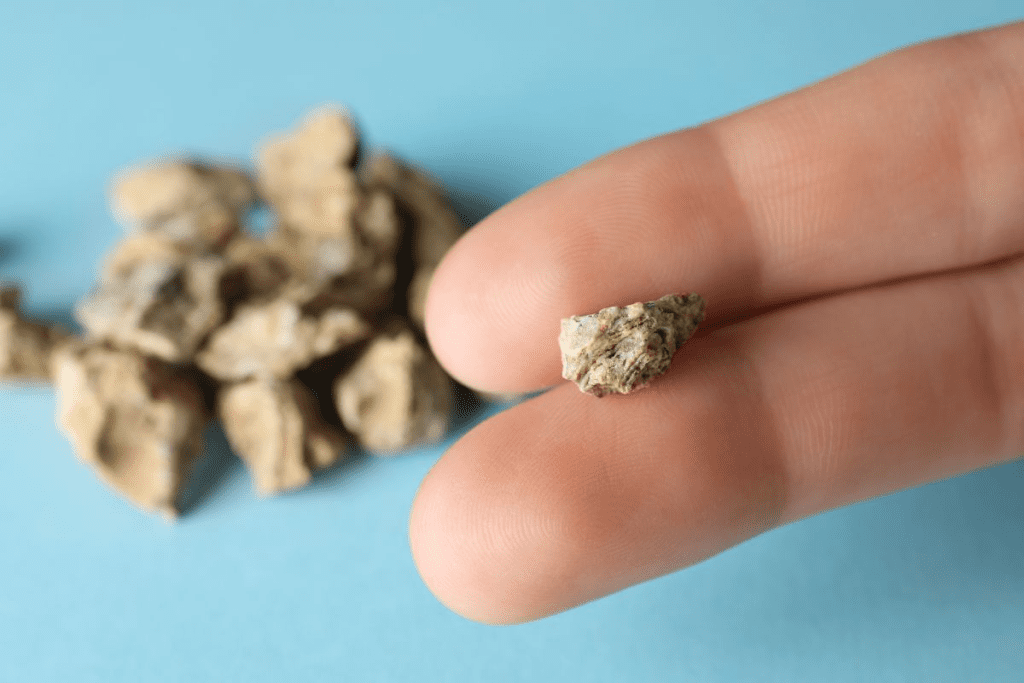
ESWL works best for kidney stones of a certain size. European guidelines and studies say ESWL is the top choice for stones under 2 cm (20 mm). We’ll dive into the latest research and guidelines to give you the facts.
Key Takeaways
- ESWL is most effective for kidney stones between 6 mm and 20 mm.
- European guidelines recommend ESWL as the first-line treatment for renal stones under 2 cm.
- Understanding the ideal stone size is key to ESWL success.
- ESWL is a non-invasive treatment option for urinary stone disease.
- Recent studies back ESWL for stones in the optimal size range.
Understanding ESWL for Kidney Stone Treatment
ESWL is a top choice for treating kidney stones. It uses shockwaves to break stones into smaller pieces. These pieces can then be easily passed out of the body. It’s a non-invasive method, preferred for most patients with stones smaller than 2.5 cm.
What is Extracorporeal Shock Wave Lithotripsy?
ESWL is a procedure that uses shockwaves to break down kidney stones. This method avoids surgery, lowering the risk of complications. It also helps patients recover faster. Our technology ensures the shockwaves hit the stone accurately.
How ESWL Works to Break Down Stones
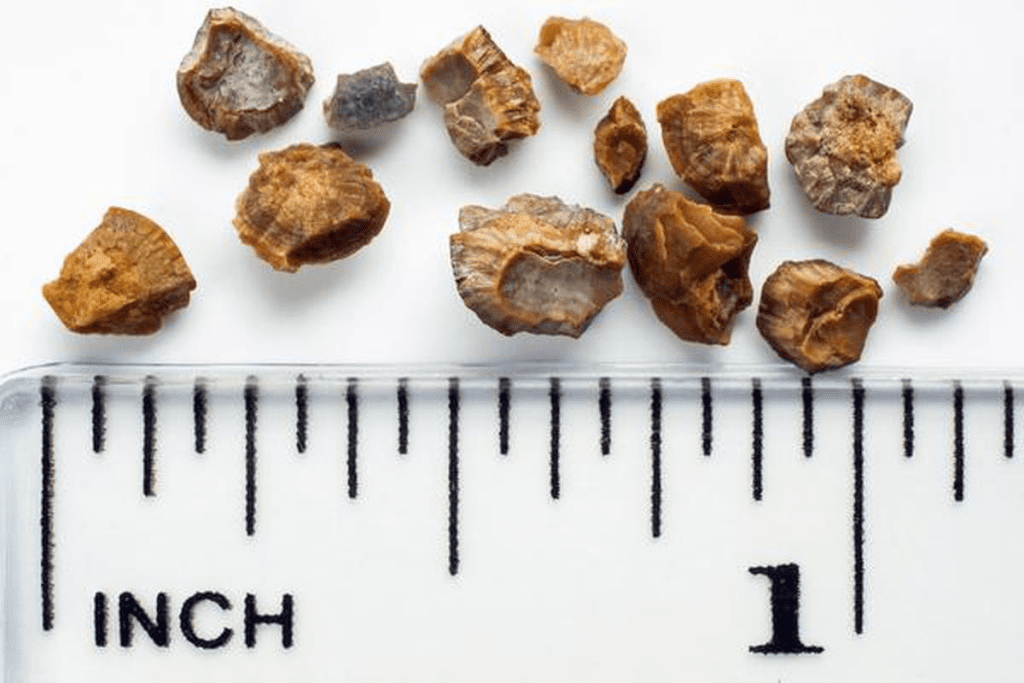
The ESWL process starts with the patient on a treatment table. Imaging, like X-ray or ultrasound, finds the stone. Then, shockwaves are focused on the stone, breaking it into smaller pieces. These pieces can then pass through the urinary tract.
The success of ESWL depends on the stone’s size, location, and type. Our team assesses each patient to find the best treatment.
Benefits of Non-Invasive Kidney Stone Treatment
ESWL is non-invasive, which lowers the risk of surgical complications. Patients often feel less pain and recover faster. This means they can get back to their daily activities sooner.
- Minimally invasive with fewer complications
- Reduced recovery time
- Less pain compared to surgical alternatives
- Effective for stones of various sizes and compositions
Choosing ESWL means a safe and effective treatment. It’s perfect for those who want to avoid surgery and get rid of kidney stones.
Ideal Kidney Stone Sizes for ESWL Treatment
ESWL success rates change a lot based on the stone’s size. It’s important for both patients and doctors to know how stone size affects treatment. This helps in choosing the best treatment plan.
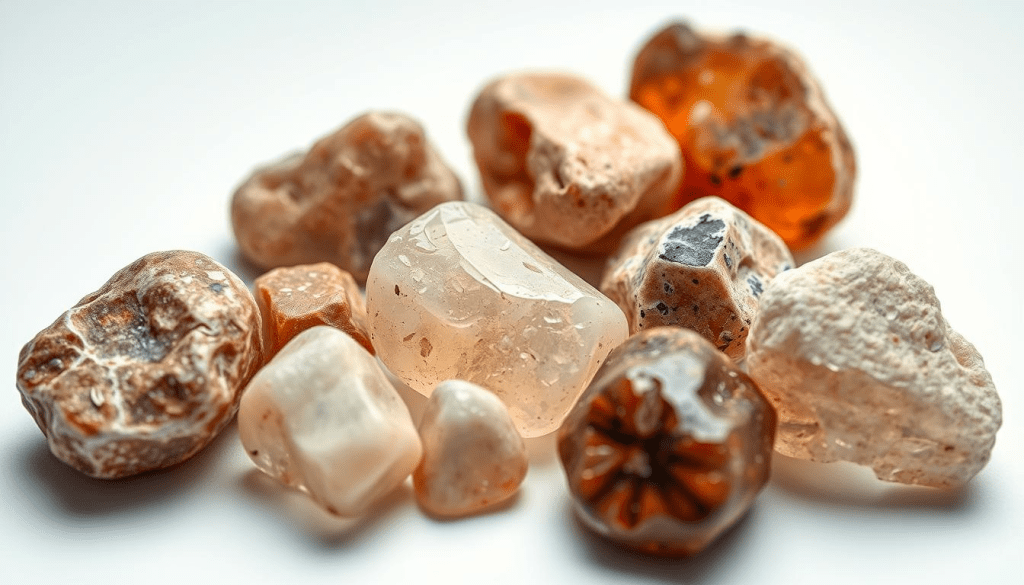
A detailed macro-style photograph showcasing a range of genuine kidney stones, varying in size and color. The stones are displayed against a clean, minimalist background, allowing their intricate textures and distinctive shapes to be the focal point. Soft, directional lighting accentuates the translucent quality and subtle shading of the stones, creating a sense of depth and dimension. The camera angle is slightly elevated, providing an unobstructed view of the different stone specimens, each one a unique natural formation. The overall composition is balanced and visually compelling, effectively illustrating the ideal sizes for ESWL treatment.
Small Stones (Under 10mm)
For stones under 10mm, ESWL works well, with a success rate of about 90%. These small stones break down easily and can pass out of the body. The National Institutes of Health recommends ESWL for these stones because it’s safe and effective.
Medium Stones (10-15mm)
Stones between 10mm and 15mm have a success rate of 81.7% with ESWL. They are a bit bigger than small stones, but ESWL works well for them too. Most patients with stones in this range can benefit from this treatment.
Large Stones (15-20mm)
For stones 15mm to 20mm, ESWL’s success rate is 60.8%. While it’s not as effective as for smaller stones, it’s a good option. The choice to use ESWL for larger stones depends on many factors, like the stone’s location and the patient’s health.
In summary, ESWL is most effective for small stones but is also a good choice for larger ones. Success depends on evaluating the stone’s size and other details, along with the patient’s overall health.
When ESWL Is Not Recommended for Kidney Stones
ESWL is a top choice for treating many kidney stones. But it’s not right for everyone. The size, location, and type of stone play big roles in deciding if ESWL is best.
Knowing these details helps pick the best treatment. We’ll look at when other treatments are better than ESWL.
Stones Larger Than 20mm
For stones bigger than 20mm, ESWL might not work well. In these cases, kidney stone surgery is often needed. PCNL is a good option for big stones, as it can remove them in one go.
PCNL makes a small cut in the back to get to the stone. It’s great for big stones, as it can avoid needing multiple ESWL sessions. This makes recovery faster.
Lower Pole Stones Over 10mm
Lower pole stones are tricky for ESWL. Stones over 10mm here don’t clear well with ESWL. RIRS is a better choice for these stones. It uses a flexible scope to see and remove the stone.
Kidney stone medication might also be used. It helps with symptoms or breaking down small stone pieces. But, for big or hard stones, more direct treatments are needed.
Extremely Hard or Dense Stones
Some stones are very hard and don’t break up well with ESWL. For these, treatments like PCNL or open surgery might be better. The choice depends on the stone and the patient’s health.
Some patients might also need drugs for renal calculi. These drugs help prevent new stones or slow down existing ones. The right treatment depends on the patient’s specific situation and medical history.
In summary, ESWL is great for many, but not all, kidney stones. Knowing when ESWL doesn’t work and what else is available is key. This helps make the best choice for kidney stone surgery and other treatments.
Factors That Influence ESWL Success Beyond Size
When thinking about Extracorporeal Shock Wave Lithotripsy (ESWL) for kidney stones, many things matter more than just the stone’s size. Stone size is important, but it’s not the only thing that decides how well ESWL works.
Stone Location and Accessibility
The spot where the kidney stone is located greatly affects ESWL’s success. Stones in the renal pelvis or upper ureter usually do well with ESWL. But stones in harder-to-reach spots, like the lower pole calyces, might not break up as easily.
Key considerations for stone location include:
- Proximity to the renal pelvis or ureter
- Anatomical variations that may affect stone accessibility
- The presence of any urinary tract obstruction
Stone Composition and Density
The type and hardness of the kidney stone also matter a lot for ESWL. Hard or dense stones, like calcium oxalate monohydrate or cystine, are tougher to break up. But softer stones might break down more easily.
Understanding stone composition can help predict ESWL success:
- Hard stones may need more shock waves or other treatments
- Soft stones usually respond well to ESWL
- Knowing the stone’s type before treatment helps plan better
Patient-Specific Anatomical Considerations
Each patient’s body shape and structure can also affect ESWL’s success. For example, people with certain body shapes or anatomical issues might face challenges in getting the stone to break up properly.
Patient-specific considerations include:
- Body mass index (BMI) and its impact on treatment efficacy
- Anatomical abnormalities that may affect stone accessibility
- Skeletal or other anatomical features that may interfere with shock wave delivery
Healthcare providers can make better treatment plans by looking at these factors. This way, they can help patients get the best results from ESWL for their kidney stones.
Conclusion: Choosing the Right Treatment Approach for Your Kidney Stones
Choosing the right treatment for kidney stones depends on several things. These include the stone’s size, location, and what it’s made of. Also, the patient’s health matters a lot. Extracorporeal Shock Wave Lithotripsy (ESWL) is a good option for some kidney stones.
ESWL works best for small to medium-sized stones. It has a high success rate for stones under 10mm. But, for bigger stones or those in hard-to-reach places, other treatments might be better. It’s key to look at the patient and the stone to pick the best treatment.
Knowing the good and bad of ESWL and other treatments helps patients and doctors make smart choices. This leads to better results in managing kidney stones. It helps reduce the pain and discomfort caused by these stones.
The best treatment depends on a full check-up of the patient. This includes looking at the stone’s size, location, and what it’s made of. Plus, the patient’s overall health and medical history are important. Shockwave therapy, or lithotripsy, is one option for treating kidney stones. Bt the treatment should fit the patient’s specific needs.
FAQ
References
- European Association of Urology. (2024). EAU Guidelines on Urolithiasis. https://uroweb.org/guidelines/urolithiasis
- National Institute of Diabetes and Digestive and Kidney Diseases. (2022). Kidney Stones.https://www.niddk.nih.gov/health-information/urologic-diseases/kidney-stones
What is the ideal size range for kidney stones to be treated with ESWL?
Kidney stones between 4mm and 20mm are best for ESWL. Stones under 10mm have the highest success rates.
How does ESWL work to break down kidney stones?
ESWL uses shock waves outside the body. These waves break down stones into smaller pieces. These pieces can then pass through urine.
What are the benefits of ESWL for kidney stone treatment?
ESWL is non-invasive and has less recovery time. It also has fewer complications than surgery.
What size kidney stones have the highest success rate with ESWL?
Stones under 10mm have a 90% success rate with ESWL. This is the highest success rate.
Are there any kidney stone characteristics that make ESWL less effective?
Yes, ESWL is less effective for stones over 20mm. It’s also less effective for stones in the lower pole or very hard stones.
What alternative treatments are available for kidney stones that are not suitable for ESWL?
For stones not suitable for ESWL, treatments include PCNL, ureteroscopy, and open surgery. The choice depends on the stone’s size, location, and type.
How does stone location affect the success of ESWL?
The stone location greatly affects ESWL success. Stones in the lower pole are harder to treat.
Can ESWL be used for kidney stones of any composition?
ESWL works for many stone types. But harder stones are more resistant to treatment.
What factors beyond stone size influence the success of ESWL?
Success also depends on stone location, composition, and density. Patient anatomy also plays a role.
How long does it take to pass a kidney stone after ESWL?
Passing a stone after ESWL varies. Most pass within days to weeks.
What are the common symptoms after undergoing ESWL for kidney stones?
Symptoms include mild pain, bruising, or blood in the urine. These usually go away in a few days.