Last Updated on October 22, 2025 by mcelik
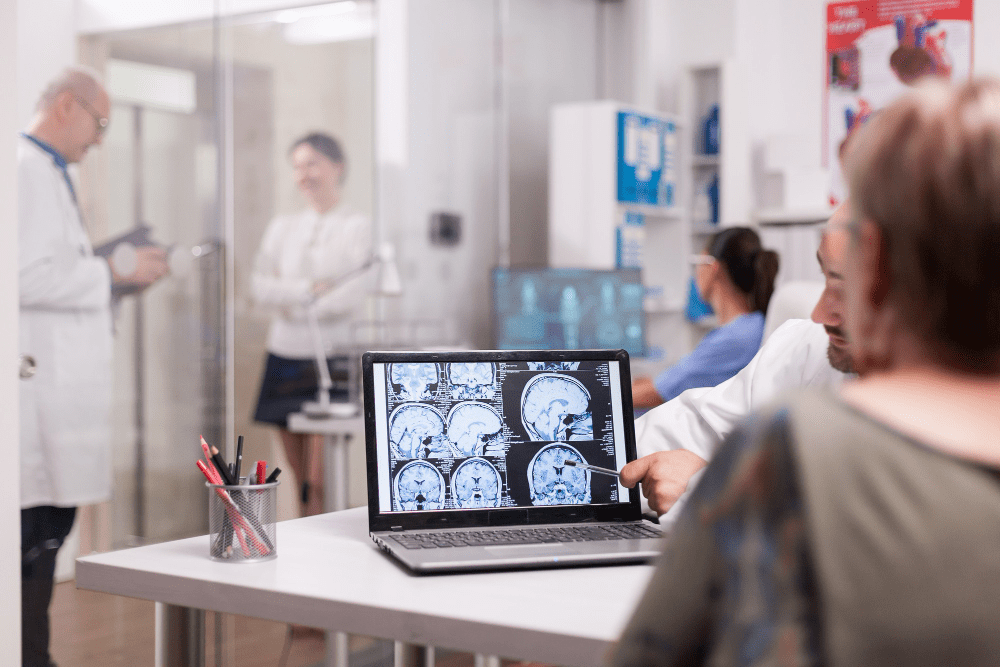
About 1 million people in the United States have Parkinson’s disease. This condition affects how they move, balance, and coordinate.
Finding Parkinson’s early is key to managing its symptoms. New brain imaging methods are showing great promise in spotting the disease.
Neuroimaging tools like MRI and DaTSCAN are helping doctors diagnose and keep track of the disease.
Key Takeaways
- Parkinson’s disease affects 1 million people in the US.
- Early diagnosis is vital for managing symptoms.
- Brain imaging techniques aid in diagnosis and monitoring.
- Neuroimaging can help detect Parkinson’s disease.
- Advances in imaging are improving diagnosis accuracy.
Understanding Parkinson’s Disease

Exploring Parkinson’s disease means looking into its causes and symptoms. It’s a disorder where the brain loses dopamine-producing cells. This loss affects both motor and non-motor functions.
Pathophysiology and Dopamine Depletion
The pathophysiology of Parkinson’s disease involves the degeneration of dopamine-producing neurons in the substantia nigra. This area of the brain is key for controlling movement. The loss of these neurons reduces dopamine levels, causing motor symptoms like tremors and rigidity.
The degeneration of dopamine-producing neurons happens slowly. Symptoms of Parkinson’s disease show up when a lot of these neurons are lost. Studies show that by the time symptoms appear, a lot of dopamine-producing neurons have already been lost.
Clinical Symptoms and Disease Progression
The clinical symptoms of Parkinson’s disease include motor and non-motor symptoms. Motor symptoms are tremors, rigidity, and slow movement. Non-motor symptoms include cognitive decline and mood changes.
| Symptom Category | Symptoms | Impact on Patients |
| Motor Symptoms | Tremors, Rigidity, Bradykinesia | Impaired mobility, Reduced quality of life |
| Non-Motor Symptoms | Cognitive decline, Mood disorders | Cognitive impairment, Emotional distress |
Parkinson’s disease progresses differently for everyone. But, it generally leads to a decline in motor and cognitive functions. Early diagnosis and treatment can help manage symptoms and slow the disease’s progression.
The Challenge of Diagnosing Parkinson’s Disease
Doctors find it hard to accurately diagnose Parkinson’s disease. This is because it can look like other conditions. They mainly use a patient’s medical history and a neurological exam to make a diagnosis.
One big challenge is telling Parkinson’s apart from other diseases that have similar symptoms. Sometimes, doctors use scans to rule out other causes like stroke or tumors. For example, a scan for parkinsonian syndrome can help figure out if it’s Parkinson’s or not.
Clinical Diagnosis vs. Imaging Confirmation
Doctors usually diagnose Parkinson’s based on how well a patient responds to certain treatments and their symptoms. But, scans can also help confirm the diagnosis or rule out other diseases.
Scans like MRI or CT are not used to directly find Parkinson’s. But, they can help rule out other conditions that might cause similar symptoms.
The Role of Neurological Examination
A detailed neurological exam is key in diagnosing Parkinson’s. It checks for symptoms like tremors, stiffness, slow movement, and balance problems. This exam gives doctors important clues about Parkinson’s and helps decide what tests to do next.
By combining a thorough exam with scans when needed, doctors can make a more accurate diagnosis. This careful approach is important for creating a treatment plan that works best for each patient.
Types of Brain Scans Used in Neurological Assessment
Diagnosing Parkinson’s disease often requires advanced neuroimaging techniques. These help doctors see how the brain works and what damage it has. They also check for other conditions that might look like Parkinson’s.
Structural Imaging Techniques
Structural brain scans show the brain’s layout in detail. Doctors use them to spot any odd shapes or sizes. Magnetic Resonance Imaging (MRI) is a top choice for this, giving clear pictures of the brain.
MRIs are great for finding out if something else is causing symptoms like Parkinson’s. This could be a tumor or a blood vessel problem.
Functional Imaging Techniques
Functional brain scans look at how the brain acts, not its shape. Positron Emission Tomography (PET) scans and Dopamine Transporter Imaging (DaTscan) check the brain’s activity and dopamine levels. These scans help doctors spot Parkinson’s by seeing changes in brain function.
Using both structural and functional imaging techniques gives a full picture of Parkinson’s. This helps doctors make better diagnoses and choose the right treatments.
Structural Brain Imaging for Parkinson’s Disease
Structural brain imaging, like MRI and CT scans, is key in understanding Parkinson’s disease. These methods show how the brain changes due to the disease.
MRI Findings
Magnetic Resonance Imaging (MRI) gives detailed views of the brain without harm. It can spot changes in the brain linked to Parkinson’s, though it’s not the main way to diagnose it. An MRI can show normal brain structures or find issues that might be related to Parkinson’s or other problems.
A normal brain MRI can help rule out other reasons for symptoms like tumors or brain pressure issues. Advanced MRI methods, like diffusion-weighted and susceptibility-weighted imaging, offer more insights into brain structure and possible problems.
CT Scan Results
Computed Tomography (CT) scans are also used to check Parkinson’s disease. CT scans are faster and more common than MRI but show less detail of soft tissues. They mainly help find structural issues like strokes or tumors that might cause symptoms.
In Parkinson’s disease, a CT scan isn’t a definitive test but can spot other possible causes of symptoms. For example, it can show vascular disease in the brain, which might cause Parkinson’s-like symptoms.
Both MRI and CT scans help in the diagnosis by ruling out other conditions that might look like Parkinson’s. Even though neither scan confirms Parkinson’s, they are important in the overall diagnosis process.
Parkinson’s Brain Scan: Functional Imaging Approaches
Functional imaging has changed how we diagnose and track Parkinson’s disease. It lets doctors see how the brain works and spot changes linked to the disease.
PET (Positron Emission Tomography) Scans
PET scans show the brain’s activity. They are key in Parkinson’s disease because they check dopamine levels and find affected brain areas.
To do a PET scan, a tracer is injected into the blood. It goes to the brain and sends signals. The PET scanner picks up these signals, making detailed brain activity images.
- PET scans can spot Parkinson’s by showing low dopamine levels.
- They also track the disease’s growth and how well treatments work.
Dopamine Transporter Imaging
Dopamine transporter imaging is another important tool for Parkinson’s diagnosis. It uses a tracer that sticks to dopamine transporters in the brain. This helps see the dopamine system and check if it’s working right.
Dopamine transporter imaging, like DaTscan, is great for telling Parkinson’s apart from other parkinsonism types.
- The tracer is given through an injection.
- A SPECT scanner picks up the tracer’s signals, showing dopamine transporter density.
- These images help doctors diagnose Parkinson’s and rule out other conditions.
Using these imaging methods, doctors can make better diagnoses and create treatment plans for Parkinson’s patients.
DaTscan: The Specialized Test for Parkinson’s
DaTscan imaging is key in diagnosing Parkinson’s disease. It shows dopamine transporters in the brain. This test helps doctors see if someone has Parkinson’s or not.
How DaTscan Works to Visualize Dopamine Transporters
DaTscan uses a tiny amount of radioactive tracer. This tracer sticks to dopamine transporters in the brain. A camera then picks up the radiation, making images of these transporters.
The steps are:
- Administration of the radioactive tracer
- Imaging with a gamma camera
- Analysis of the images to assess dopamine transporter density
Reduced dopamine uptake is a key sign of Parkinson’s. DaTscan shows how much dopamine is missing. This helps doctors understand the brain’s health.
Sensitivity and Specificity of DaTscan
DaTscan is very good at spotting dopamine transporter loss in Parkinson’s. It’s also great at telling Parkinson’s apart from other diseases. This is because it shows how much dopamine is missing.
DaTscan’s main benefits are:
- High accuracy in diagnosing Parkinson’s disease
- Ability to differentiate Parkinson’s from other forms of parkinsonism
- Useful in cases where clinical diagnosis is uncertain
DaTscan imaging helps doctors diagnose Parkinson’s correctly. It’s a big help in managing the disease. As research grows, DaTscan’s role in treating Parkinson’s will too.
What Brain Scans Can and Cannot Show in Parkinson’s
Brain scans have both good and bad sides when it comes to Parkinson’s disease. They can help confirm some neurological conditions. But, they can’t alone say for sure if someone has Parkinson’s.
Doctors usually diagnose Parkinson’s by looking at symptoms and medical history. But, scans can show brain structure and function. This helps in diagnosing and managing the disease.
Visible Brain Changes in Advanced Cases
In later stages of Parkinson’s, scans can show brain changes. For example, MRI scans can spot atrophy in certain brain areas. These changes might match the severity of symptoms.
PET scans can also show patterns in advanced Parkinson’s. They highlight areas with less dopamine activity. This helps confirm the diagnosis and understand how the disease progresses.
Limitations in Early Detection and Diagnosis
Scans have a big problem with early Parkinson’s detection. In the beginning, brain changes are small and hard to spot. So, a normal scan doesn’t always mean you don’t have Parkinson’s.
Researchers are working hard to make scans better for early detection. It’s key for catching Parkinson’s early and treating it sooner.
False Positives and False Negatives
Scans can sometimes show things that aren’t there or miss things that are. A false positive might show Parkinson’s signs when it’s not there. A false negative might show nothing when Parkinson’s is present.
These mistakes can happen for many reasons. It could be the scan quality, the interpreter’s skill, or the tech’s limits. Doctors need to know these issues when they look at scan results.
Differential Diagnosis: Ruling Out Other Conditions
Diagnosing Parkinson’s disease is complex. It involves ruling out other conditions that can look like Parkinson’s. This is because many diseases can cause similar symptoms, making it hard to get a correct diagnosis.
Parkinsonism vs. Idiopathic Parkinson’s Disease
Parkinsonism is a condition with symptoms like tremors and slow movement. While Parkinson’s disease is a common cause, other conditions can also cause these symptoms. Idiopathic Parkinson’s disease is different because it has unique symptoms and no other causes.
To tell idiopathic Parkinson’s from other conditions, doctors use a few tools. They look at the patient’s history, do a clinical assessment, and use imaging studies. For example, a parkinsonian syndrome scan can show differences that help diagnose Parkinson’s.
Vascular Parkinsonism and Structural Lesions
Vascular parkinsonism comes from brain damage due to small blood vessels. It’s often linked to stroke or brain blood vessel problems. Tumors or other brain issues can also cause similar symptoms. MRI or CT scans are key in ruling out stroke or finding these problems.
If vascular parkinsonism is suspected, doctors look at the patient’s risk factors and scan results. Finding a brain issue on a scan can lead to a different diagnosis and treatment plan.
Drug-Induced Parkinsonism and Normal Scans
Drug-induced parkinsonism happens when certain medicines, like antipsychotics, cause symptoms. It usually has symmetrical symptoms. Brain scans are often normal, which helps tell it apart from Parkinson’s disease.
Knowing the patient’s medicine history is key in diagnosing drug-induced parkinsonism. If a patient has symptoms and a normal scan, doctors should think about drug-induced parkinsonism. They will check the patient’s medicines for possible culprits.
Clinical Guidelines for Brain Imaging in Parkinson’s
When diagnosing Parkinson’s disease, doctors follow certain guidelines for brain imaging. These rules help make sure imaging is used wisely and well in patient care.
When Imaging Is Recommended
Not every Parkinson’s patient needs brain imaging. But, there are times when it’s very important. For example, if a patient shows signs that don’t fit Parkinson’s, imaging can help find other possible causes. It’s also key when there’s a chance of vascular parkinsonism or other structural issues affecting symptoms.
American Academy of Neurology Guidelines
The American Academy of Neurology (AAN) sets rules for when to use brain imaging in Parkinson’s. The AAN says most patients with typical symptoms don’t need imaging. But, imaging might be needed if symptoms are unusual or if treatments don’t work.
Movement Disorder Society Recommendations
The Movement Disorder Society (MDS) also has guidelines for brain imaging in Parkinson’s. The MDS advises imaging when there’s uncertainty or unusual symptoms. They stress the need to find secondary causes like vascular issues or hydrocephalus.
By sticking to these guidelines, doctors can make better choices about brain imaging. This leads to better care and outcomes for patients with Parkinson’s.
The Diagnostic Accuracy of Different Scanning Methods
Scanning methods for Parkinson’s disease vary in accuracy. Choosing the right imaging modality is key. Each technique has its own strengths and weaknesses in diagnosing the disease.
Cost-Effectiveness Considerations
Cost is a big factor in choosing diagnostic imaging for Parkinson’s disease. The price of scans and their accuracy affect doctor decisions. For example, DaTscan, a dopamine transporter imaging, is very accurate but pricey.
Cost-effectiveness also looks at long-term savings. A study showed some scans, though costly upfront, save money by improving patient care and reducing healthcare costs.
Choosing the Right Imaging Modality
Choosing the right scan for Parkinson’s disease depends on several factors. These include the patient’s symptoms, medical history, and what the doctor wants to find. For example, PET scans check dopamine levels, while MRI helps rule out other causes.
Guidelines suggest a personalized approach to imaging. This means choosing the best scan for each patient. Doing so improves diagnosis, cuts costs, and boosts patient care.
Research Applications of Neuroimaging in Parkinson’s
Neuroimaging is key in Parkinson’s disease research. It helps scientists understand the disease better. They use different imaging methods to study how the disease progresses and find new treatments.
Biomarker Development for Early Detection
Finding biomarkers early is a big goal in Parkinson’s research. Neuroimaging biomarkers can spot people at risk. This means doctors can start treatment sooner, which might help more.
Methods like Dopamine Transporter Imaging and PET scans are being tested. They might show early brain changes linked to Parkinson’s.
Monitoring Disease Progression and Treatment Response
Neuroimaging is also key for tracking how the disease and treatments change. It shows brain changes over time. This helps researchers understand the disease better and see if treatments work.
This info helps doctors make better choices for patients. It can lead to better care and outcomes.
Clinical Trial Applications
Neuroimaging is vital in clinical trials for Parkinson’s. It lets researchers see how well treatments work. It also helps spot any safety issues early.
This makes it easier to develop new treatments. It helps bring effective treatments to patients faster.
In conclusion, neuroimaging is a powerful tool in Parkinson’s research. It opens new ways to understand and treat the disease. As research grows, so will the use of neuroimaging, helping fight Parkinson’s.
Emerging Brain Imaging Technologies
New brain imaging technologies are giving us a better look at Parkinson’s disease. These tools are key to helping patients and understanding the disease’s complex nature.
Advanced MRI Techniques for Parkinson’s
Advanced MRI methods like diffusion tensor imaging and functional MRI are showing us brain changes in Parkinson’s patients. They help us see how dopamine pathways and other brain areas are affected.
Key Advanced MRI Techniques:
- Diffusion Tensor Imaging (DTI)
- Functional MRI (fMRI)
- Magnetic Resonance Spectroscopy (MRS)
Molecular Imaging Developments
Molecular imaging, including PET and SPECT scans, is being improved to focus on Parkinson’s disease specifics. These methods let us see dopamine levels and other important markers.
| Molecular Imaging Technique | Application in Parkinson’s |
| PET Scan | Assesses dopamine transporter density |
| SPECT Scan | Evaluates dopamine system integrity |
Artificial Intelligence in Parkinson’s Image Analysis
Artificial intelligence (AI) is now used to analyze brain images in Parkinson’s disease. AI can spot patterns and predict how the disease will progress. This helps doctors plan treatments that are just right for each patient.
The use of AI with brain imaging is changing the game. It’s making diagnoses more accurate and earlier.
Patient Experience During Brain Imaging Procedures
The experience of patients during brain imaging is very important. It helps improve care and prepare patients well for their procedures.
Preparing for a Brain Scan
Getting ready for a brain scan takes a few steps. Patients are usually told to:
- Take off any metal items, like jewelry or glasses, that might get in the way.
- Tell their doctor about any implants, like pacemakers or artificial joints.
- Speak up if they have claustrophobia or anxiety, as it might affect the scan choice.
A neurologist says, “Good preparation is essential for a brain scan. Knowing what each scan needs helps avoid delays or problems.”
What to Expect During Different Imaging Procedures
Each imaging procedure is different. For example:
| Imaging Modality | Procedure Characteristics | Patient Experience |
| MRI (Magnetic Resonance Imaging) | High magnetic field, radio waves | May feel claustrophobic, hear loud noises |
| CT (Computed Tomography) Scan | X-rays, quick imaging | May get some radiation, might need dye |
| PET (Positron Emission Tomography) Scan | Small radioactive tracer | May get a tracer injection, scan takes longer |
As the table shows, each scan is different. Knowing this helps manage patient worries and expectations.
Radiation Exposure and Safety Considerations
Some scans, like CT scans, use radiation. But the benefits are often worth the risk. Patients should talk to their doctor about their concerns.
“The risk of radiation must be balanced against the scan’s benefits,” says a radiologist. “Patients should know how to reduce exposure and stay safe during the scan.”
Understanding what patients go through during brain scans helps doctors improve care. It ensures patients are well-prepared and supported.
Integrating Brain Scans into the Diagnostic Process
Brain scans have changed how we diagnose Parkinson’s disease. They make the process more accurate. By using brain scans, doctors can better diagnose patients.
Combining Clinical Assessment with Imaging Results
Doctors use both clinical assessment and brain scans to diagnose. Clinical evaluation looks at symptoms and medical history. Brain scans show the brain’s structure and function.
Clinical assessment checks for symptoms like tremors and rigidity. Brain scans give insights into the brain’s health.
| Diagnostic Tool | Information Provided | Diagnostic Value |
| Clinical Assessment | Motor and non-motor symptoms, medical history | Essential for initial diagnosis |
| Brain Scans (MRI, PET) | Brain structure and function | Confirms diagnosis, rules out other conditions |
| Sequential Testing | Monitoring disease progression | Helps in adjusting treatment plans |
The Diagnostic Value of Sequential Testing
Sequential testing uses brain scans over time to track the disease. It shows how the disease progresses and how well treatments work.
Sequential testing helps doctors adjust treatment plans. It shows if current treatments are effective and if changes are needed.
When to Seek a Second Opinion
Some patients might want a second opinion if they’re unsure about their diagnosis or treatment. A second opinion can offer more insights and reassurance.
Patients should consider a second opinion if they’re unsure about their diagnosis or treatment. Or if their symptoms change a lot.
Conclusion
Parkinson’s disease diagnosis and management have seen big improvements thanks to brain imaging. A brain scan for Parkinson’s is key in making a diagnosis. It works best when used with a detailed neurological check-up.
Neuroimaging, like MRI, CT, and PET scans, has made diagnosing Parkinson’s more accurate. These scans help tell Parkinson’s apart from other similar conditions. This is a big step forward in medical science.
New brain imaging technologies are on the horizon. They promise to help catch Parkinson’s early and track how it changes over time. By combining scan results with doctor’s assessments, treatments can be made more precise for each patient.
FAQ
Can Parkinson’s disease be detected using MRI or CT scans?
While MRI and CT scans can’t confirm Parkinson’s disease, they help. They check for other conditions that might cause symptoms like Parkinson’s. This includes looking for structural issues or vascular problems.
What is DaTscan, and how is it used in diagnosing Parkinson’s disease?
DaTscan is a scan that shows dopamine transporters in the brain. It helps diagnose Parkinson’s by showing if dopamine levels are low.
How accurate are brain scans in diagnosing Parkinson’s disease?
The accuracy of brain scans varies. It depends on the scan type and the condition being diagnosed. PET scans and DaTscan can show dopamine levels and disease progress.
Can brain scans detect Parkinson’s disease in its early stages?
Some scans, like DaTscan, can spot early dopamine depletion in Parkinson’s. But, others might not show changes until the disease has advanced.
What are the limitations of using brain scans to diagnose Parkinson’s disease?
Brain scans have their limits. They can give false positives or negatives. They might not catch Parkinson’s early or tell it apart from other syndromes.
How do clinical guidelines recommend using brain imaging in Parkinson’s disease diagnosis?
Guidelines from groups like the American Academy of Neurology suggest using brain imaging. They recommend it to rule out other conditions and support a Parkinson’s diagnosis, when it’s not clear.
What emerging brain imaging technologies are being developed for Parkinson’s disease diagnosis?
New technologies are coming. These include advanced MRI, molecular imaging, and artificial intelligence in image analysis. They aim to improve diagnosis and understand disease progression better.
How can patients prepare for brain imaging procedures, and what can they expect during the scan?
Patients should follow specific instructions before a scan. This includes removing metal objects and following dietary rules. During the scan, they’ll lie on a table and might need to undergo certain procedures, like contrast agent injection.
How are brain scans integrated into the diagnostic process for Parkinson’s disease?
Brain scans are part of the diagnostic process. They’re used with clinical assessment and other tests to confirm Parkinson’s disease. Combining imaging results with clinical evaluation helps get a more accurate diagnosis.
References
- Bega, D., Kuo, P. H., Chalkidou, A., Grzeda, M. T., Macmillan, T., Brand, C., Sheikh, Z. H., & Antonini, A. (2021). Clinical utility of DaTscan in patients with suspected parkinsonian syndrome: A systematic review and meta-analysis. npj Parkinson’s Disease, 7(48). https://www.nature.com/articles/s41531-021-00185-8
- Suwijn, S. R., Booij, J., de Jong, B. M., & Willemsen, A. T. (2015). The diagnostic accuracy of dopamine transporter SPECT imaging (DaTSCAN) in patients with parkinsonism: A systematic review. Journal of Neurology, Neurosurgery & Psychiatry. https://www.ncbi.nlm.nih.gov/pmc/articles/PMC4385258/
- Zarkali, A., Thomas, G. E. C., Zetterberg, H., & Weil, R. S. (2024). Neuroimaging and fluid biomarkers in Parkinson’s disease in an era of targeted interventions. Nature Communications, 15(5661). https://www.nature.com/articles/s41467-024-49949-9