Last Updated on December 1, 2025 by Bilal Hasdemir

Positron Emission Tomography (PET) scans are key in medical imaging. If you’re set for a PET scan, you might wonder about the prep needed. A common question is if you can brush your teeth before the scan.
PET scan biggest disadvantage is often linked to the chance of false-positive results. While PET scans are highly valuable in detecting cancers, heart problems, and neurological conditions, they sometimes highlight areas of activity that are not actually disease. This can lead to unnecessary worry, extra testing, or procedures. For example, normal activities like brushing your teeth before a scan can cause misleading results in head or neck imaging. Understanding the biggest disadvantage helps patients prepare better and reduces the risk of confusion during diagnosis.
Brushing your teeth is a part of daily hygiene. It’s natural to want to keep up with your routine on the day of a medical procedure. Some guidelines say you can brush your teeth in the morning before a PET scan. But, it’s important to know the limits and false positive results of PET scans.
Key Takeaways
- You can brush your teeth before a PET scan.
- PET scans have several limitations, including false positives.
- Understanding the preparation and implications of PET scans is key.
- PET scan results can be affected by various factors.
- It’s essential to follow specific guidelines for PET scan preparation.
What Happens During a PET Scan Procedure

A PET scan uses a special camera to detect energy from a radioactive tracer. This creates detailed images of what’s happening inside the body.
Definition and Basic Principles
A PET scan is a way to see how the body works. It uses a special drug that lights up areas of high activity, like cancer cells. This helps doctors understand what’s happening inside.
The scan works by catching gamma rays from the drug. These rays come from the drug’s decay. The PET scanner then uses these rays to make detailed pictures of the body’s inside.
Step-by-Step Process
The PET scan process has several steps:
- Preparation: Patients might need to fast and wear a hospital gown.
- Injection of Radiotracer: The drug is given through a vein.
- Uptake Period: The patient waits for about an hour for the drug to spread.
- Scanning: The patient lies on a table that slides into the scanner.
- Image Reconstruction: The scanner’s data is used to make detailed images.
Duration and What to Expect
A PET scan usually takes about 2 hours. The actual scan time is shorter, from 30 to 60 minutes.
Patients will lie on a table while the scanner moves around them. It’s important to stay very quiet and not move to get clear images.
| Procedure Step | Average Time | Description |
| Preparation | 15-30 minutes | Changing into a hospital gown, removing jewelry, etc. |
| Radiotracer Uptake | About 1 hour | Waiting for the radiotracer to accumulate in the body |
| Scanning | 30-60 minutes | Lying on the scanning table while the PET scanner captures images |
“The PET scan has become an indispensable tool in oncology, cardiology, and neurology, providing critical information that guides treatment decisions.”
” A, Nuclear Medicine Specialist
Knowing what happens during a PET scan can make patients feel more at ease. It helps them understand what to expect.
Pre-PET Scan Instructions: The Complete Guide
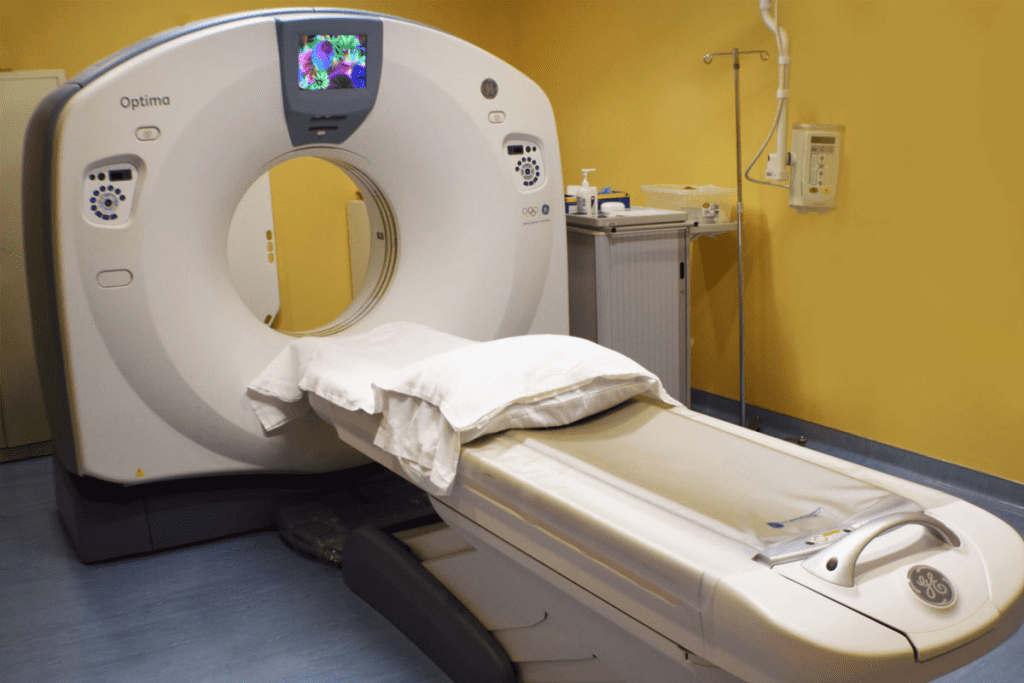
A PET scan needs careful preparation. This includes dietary restrictions, managing medications, and adjusting activities. It’s important to follow the instructions given by your healthcare provider to get accurate results.
Fasting Requirements
Fasting is key for a PET scan. The fasting time can change based on the scan type and radiotracer. Usually, patients fast for 4 to 6 hours before the scan. They should only drink water during this time.
A study in the Journal of Nuclear Medicine found fasting improves PET scan images. “Fasting before a PET scan is important,” it says. “It helps reduce stomach uptake and ensures better image quality.”
| Fasting Duration | Allowed Intake | Not Allowed |
| 4-6 hours | Water | Food, sugary drinks, caffeine |
Medication Management
Managing medications is also important before a PET scan. Patients should keep taking their medicines unless told not to by their doctor. Some medicines might need to be changed or stopped before the scan.
Tell your doctor about all medicines, supplements, and vitamins you’re taking. This helps check for any problems with the PET scan.
“Patients should provide a complete list of their medications to their healthcare provider to ensure safe and effective PET scan procedures.” – A College of Radiology
Activity Restrictions
Before a PET scan, you might need to avoid hard exercise and some activities. You should keep up with your usual daily activities unless told not to.
By following these steps, you can help make sure your PET scan results are right. If you have any worries or questions, always talk to your healthcare provider.
Oral Hygiene Before Your PET Scan
Brushing your teeth before a PET scan is okay, but you need to be careful. Keeping your mouth clean is key, but you must also follow your doctor’s advice. This ensures the scan works right.
Can You Brush Your Teeth? The Definitive Answer
Some say you can brush your teeth in the morning before a PET scan. But, it’s important to check with your doctor first. Brushing is usually okay, but the toothpaste might have rules.
Use just a little toothpaste and don’t swallow it. The worry is that toothpaste could mess with the scan’s special dye. Some toothpaste ingredients might change how the dye works, which could mess up the scan.
Toothpaste Considerations and Restrictions
Not all toothpastes are the same when it comes to PET scans. Some might have things like fluoride that could mess with the scan. Here’s what to do:
- Choose a simple, non-gel toothpaste
- Stay away from toothpaste with whitening agents
- Don’t use toothpaste with too much fluoride
Below is a table that shows what toothpaste is okay before a PET scan:
| Toothpaste Type | Recommendation | Reason |
| Simple, non-gel | Allowed | Minimal ingredients |
| Whitening toothpaste | Not recommended | Contains abrasive particles |
| High fluoride content | Not recommended | Potential interference with radiotracer |
Mouthwash, Floss, and Other Dental Products
Other oral care products need careful use before a PET scan too. Mouthwash can be a problem because it might change how the dye works in your mouth.
“Patients should avoid using mouthwash or any other oral rinse containing ingredients that might interfere with the PET scan results.”
Here’s what to do:
- Talk to your doctor about mouthwash and other oral care products.
- Don’t floss right before the scan to avoid mouth irritation.
- Follow your healthcare team’s advice on oral care before the PET scan.
Why Dental Care Matters for Accurate PET Scan Results
Dental care is key for getting accurate PET scan results. Good dental hygiene is essential for reliable diagnostic info.
Potential Interference with Radiotracer Distribution
Dental work or oral infections can affect radiotracer distribution in PET scans. Some dental materials might cause artifacts or block radiotracer uptake. This could lead to wrong scan results.
Common dental issues that may impact PET scan accuracy include:
- Dental implants or prosthetics
- Oral infections or abscesses
- Recent dental procedures
Impact on Head and Neck Imaging
PET scans are great for the head and neck area. Dental structures are close to important areas here. Good dental care is vital for clear images.
Nuclear medicine specialists stress the need for clean teeth and tell them about dental work before the scan.
Recommendations from Nuclear Medicine Specialists
To get accurate PET scan results, follow these dental care tips:
- Tell your healthcare provider about dental work or issues.
- Keep up with good oral hygiene, like brushing and flossing.
- Stay away from dental products that might mess with the scan.
By following these tips, patients can help make their PET scan results as accurate as they can be. This helps doctors diagnose and plan treatment better.
The PET Scan Biggest Disadvantage: Radiation Exposure Risks
Radiation exposure is a big worry with PET scans. These scans use small amounts of radioactive tracers. They help diagnose and monitor conditions like cancer and heart disease.
Understanding Radiation Doses in PET Imaging
The dose from a PET scan is measured in millisieverts (mSv). The dose can change based on the tracer, how much is used, and the patient’s size. For example, a F-FDG PET scan might have a dose of 7-10 mSv.
For comparison, the average yearly background radiation in the U.S. is 3.1 mSv. So, a PET scan is like getting a few years’ worth of background radiation all at once.
Comparison with Other Diagnostic Procedures
It’s useful to compare PET scan doses with other imaging methods. Here’s a table showing doses from different procedures:
| Imaging Procedure | Typical Effective Dose (mSv) |
| Chest X-ray | 0.1 |
| CT Scan (Abdomen and Pelvis) | 10-20 |
| PET Scan (F-FDG) | 7-10 |
| Mammogram | 0.4 |
The table shows PET scans have doses similar to CT scans but higher than X-rays or mammograms.
Long-term Health Considerations
Research is ongoing about the long-term health risks of PET scans. The main worry is the chance of getting cancer. The National Cancer Institute says the risk is small but not zero.
“The biological effects of low doses of ionizing radiation are not fully understood, and there is ongoing debate among scientists about the most appropriate models for estimating cancer risk at low doses.” – National Research Council
While the risk for one scan is small, many scans raise concerns about population risks.
PET Scan Limitations in Disease Detection
PET scans are very useful but have some limits. They help doctors see how the body works by showing what’s happening inside. But, like all tools, they have their own problems.
Resolution Constraints
PET scans can’t see very small things very well. This is because they don’t have the same sharpness as MRI or CT scans. Small structures or lesions might not be accurately detected or delineated.
The quality of a PET scan depends on the scanner and the tracer used. A study in the Journal of Nuclear Medicine found that PET scans can’t see things smaller than 4 to 6 mm. This makes it hard to find small lesions.
Small Lesion Detection Challenges
Finding small lesions is hard for PET scans. Lesions smaller than the scanner’s resolution may not be visible or may be misinterpreted. This can lead to false negatives, where a disease is present but not detected. New technology and better algorithms have helped, but it’s a big challenge.
Specific Conditions with Limited Visibility
Some conditions are harder to spot with PET scans. Some types of tumors may not take up the radiotracer sufficiently to be distinguishable from surrounding tissue. Inflammatory conditions can also look like cancer on PET scans.
A researcher said, “The variability in radiotracer uptake by different tissues and pathologies complicates the interpretation of PET scans.” This shows we need to think carefully about what the scan means and might need other tests too.
In short, PET scans are great for finding diseases, but we must know their limits. By understanding these, doctors can make better choices for patients.
False Positive PET Scan Results: Causes and Consequences
PET scans are very useful but can sometimes show false positives. This means they might say there’s disease when there isn’t. This can cause a lot of worry and more tests.
It’s important to know why PET scans might show false positives. This helps doctors make the right diagnosis and plan the best treatment. Several things can cause these false positives, like inflammation, benign conditions, and how the body naturally works.
Inflammatory and Infectious Processes
Inflammation and infections can make PET scans show false positives. Conditions like arthritis, sarcoidosis, and tuberculosis can lead to this. Doctors need to think about these when they look at PET scan results.
For example, someone with arthritis might show activity in their joints that looks like cancer. Infections in the lungs or other places can also look like tumors on PET scans.
Benign Conditions Mimicking Malignancy
Some benign conditions can look like cancer on PET scans, causing false positives. These include:
- Fibroids in the uterus
- Adenomas in the thyroid or adrenal glands
- Cysts in various organs
- Benign tumors such as lipomas or hemangiomas
These conditions can make the body’s cells work harder, which might look like cancer on a scan.
Physiological Uptake Patterns
Normal body functions can also lead to false positives on PET scans. For example, muscle activity can make glucose uptake higher, mainly in the neck and shoulders. Also, brown fat turning on can cause false positives, often in the neck, above the collarbone, and along the spine.
It’s key to know about these normal body activities to understand PET scan results correctly. Doctors need to think about the patient’s recent activity, diet, and other factors that might affect the scan.
| Cause of False Positive | Description | Potential Misinterpretation |
| Inflammatory Processes | Increased glucose metabolism due to inflammation | Malignant tumor |
| Benign Tumors | Benign growths with increased metabolic activity | Cancerous lesion |
| Physiological Uptake | Normal metabolic activity in muscles or brown fat | Malignant activity |
Knowing why PET scans might show false positives helps doctors make better diagnoses and reduce worry for patients. It’s a complex issue that needs careful thought and sometimes more tests to confirm or rule out disease.
Cost and Accessibility: PET Scan Drawbacks
PET scans are valuable but have big drawbacks. High costs and access issues can stop patients from getting them.
Average Costs in the United States
In the United States, PET scan costs vary a lot. Factors like location and facility type affect the price. On average, a PET scan can cost between $1,000 and $5,000 or more. This high cost is a big problem for many patients, mainly those without good insurance.
Here are some approximate costs for PET scans:
- PET scan alone: $1,000 – $3,000
- PET/CT scan: $1,500 – $4,000
- PET/MRI scan: $2,000 – $5,000 or more
Insurance Coverage Challenges
Insurance for PET scans is complex and varies a lot. Many plans cover PET scans for some conditions, but there are specific criteria for approval. Patients might face:
- Pre-authorization needs
- Out-of-network costs
- Coverage limits for certain conditions
- High deductibles and co-pays
Dealing with these insurance issues can be hard for patients. It might delay or make getting PET scans harder.
Geographic Availability Issues
PET scan facilities are not spread out evenly. Most are in urban areas. This makes it hard for people in rural or remote places to get a PET scan.
The high costs, insurance problems, and uneven availability limit PET scan access. Fixing these issues is key to making this important tool available to those who need it.
Patient Experience Challenges During PET Imaging
Patients going through PET scans face many challenges. Claustrophobia and discomfort are common, affecting the scan’s quality and the patient’s experience.
Claustrophobia and Anxiety Management
Claustrophobia or anxiety is a big challenge for patients. The enclosed environment can cause discomfort and even prevent some from finishing the scan. To help, some places use open-bore PET scanners or offer relaxation techniques.
Strategies for managing claustrophobia include:
- Pre-scan counseling to prepare patients for the procedure
- Use of mild sedation if necessary
- Presence of a companion during the scan
Comfort Issues During Extended Scanning
PET scans can last several hours. Keeping patients comfortable is key for a successful scan. Facilities try to make the environment as comfortable as possible.
A study found that comfort is important. “Comfortable patients are more likely to remain steady during the scan, leading to better images.”
| Comfort Measure | Description | Benefit |
| Comfortable Clothing | Patients are advised to wear loose, comfortable clothing. | Reduces anxiety and promotes relaxation. |
| Adjustable Scanning Table | The scanning table can be adjusted for optimal comfort. | Helps in minimizing movement during the scan. |
| Relaxation Techniques | Techniques such as deep breathing or meditation are offered. | Assists in reducing stress and anxiety. |
Movement Restrictions and Their Impact
Moving during a PET scan can ruin the image quality. This might lead to wrong diagnoses or needing to do the scan again. Staying perfectly steady is hard, but it’s essential.
To keep patients from moving, they’re given clear instructions. Sometimes, they might need extra support or devices to stay in place.
PET Scan Issues for Special Patient Populations
Special patient groups face unique challenges with PET scans. They need special care to get safe and accurate results.
Pediatric Considerations
Pediatric patients have smaller bodies and are growing. The amount of radiotracer used must be just right to avoid too much radiation. They might need sedation to stay calm during the scan, which is risky and needs close watch.
A study in the Journal of Nuclear Medicine says, “PET/CT in kids needs a balance between benefits and radiation risks.”
“The dose of FDG should match the child’s weight, and the scan should aim to use less radiation.”
Pregnancy and Breastfeeding Concerns
Pregnancy makes PET scans risky because of radiation to the fetus. Doctors must carefully decide if a PET scan is needed. If it is, they try to reduce the fetus’s exposure.
For breastfeeding moms, there’s worry about the radiotracer in milk. They might need to stop breastfeeding for a while after the scan. How long depends on the radiotracer used.
| Radiotracer | Recommended Cessation Period |
| FDG (Fluorodeoxyglucose) | 24 hours |
| Other tracers | Varies by tracer |
Diabetic Patient Challenges
Diabetic patients face issues with PET scans, mainly with glucose-based tracers like FDG. Their blood sugar levels can affect how FDG is taken up, which might lower image quality. Before the scan, they might fast and manage their insulin.
Diabetic patients should follow these steps:
- Fasting for at least 4-6 hours before the scan
- Avoiding hard exercise on the scan day
- Keeping blood sugar levels as the doctor advises
Healthcare providers can improve PET scans for special patients. This ensures the best results and safety.
Technical and Interpretive PET Scan Challenges
PET scans are a powerful tool for diagnosis, but they face technical and interpretive challenges. The quality of the scan depends on the equipment, the skill of the operators, and the protocols used. These factors are key to the scan’s accuracy and reliability.
Image Quality Variability
One big challenge is the variability in image quality. This can be due to the scanner type, the radiotracer used, and patient factors like BMI and movement. Advances in scanner technology have helped, but variability is a concern, more so in studies using different scanners and protocols.
Standardization Problems
Standardization is a big issue in PET imaging. Without standard protocols, image quality and accuracy can vary. Efforts to standardize are ongoing, with groups like the Society of Nuclear Medicine and Molecular Imaging (SNMMI) providing guidelines.
Reader Experience Dependencies
The skill of the reader greatly affects PET scan interpretation. Specialized training in nuclear medicine is key for accurate interpretation. The use of artificial intelligence (AI) and machine learning in interpretation is also being explored to improve accuracy and reduce variability.
In summary, PET scans are valuable but face technical and interpretive challenges. Advances in technology, standardization, and AI in interpretation are essential. These steps will help improve PET scans’ utility in clinical practice.
Comparing PET Scans with Alternative Diagnostic Methods
Diagnostic imaging is key in today’s medicine. Many technologies are available, each with its own benefits and drawbacks. Healthcare providers have choices like PET scans, CT scans, and MRI scans for diagnosing and managing conditions.
PET vs. CT: Strengths and Weaknesses
PET scans and CT scans are both important tools. But they are used for different things and have different strengths. PET scans are great for showing how the body’s cells work, which helps in finding cancer.
CT scans, on the other hand, are better at showing the body’s structure. They give clear images of organs and tissues. But, PET scans can see how cells are working, which is key in cancer diagnosis and treatment.
| Characteristics | PET Scan | CT Scan |
| Primary Use | Functional imaging, metabolic activity | Anatomical imaging, structural detail |
| Strengths | Early detection of metabolic changes, useful in oncology | Fast, detailed anatomical images |
| Weaknesses | Limited anatomical detail, radiation exposure | Limited functional information, possible false positives |
PET vs. MRI: When Each is Preferred
MRI scans give detailed images of soft tissues without radiation. They are a good choice when CT scans aren’t the best option. The choice between PET scans and MRI depends on what the doctor needs to see.
PET scans are best for looking at how tissues work, like in cancer. MRI is better for soft tissue images, like in the brain or muscles.
Hybrid Imaging: Advantages and Limitations
Hybrid imaging, like PET/CT and PET/MRI, combines different imaging types. This gives a full view of disease in one scan. It’s a big step forward in imaging.
The good things about hybrid imaging are better accuracy and more detailed images. But, there are downsides like more radiation, higher costs, and needing special equipment and skills.
In summary, knowing the good and bad of PET scans compared to other methods is key for better patient care. Choosing the right imaging can lead to better diagnoses and treatments.
Overcoming PET Scan Obstacles: Technological Advancements
Technological advancements are changing PET scan technology. They are solving long-standing problems in diagnostic imaging. The field of nuclear medicine keeps getting better, with new ideas to make PET scans more accurate and efficient.
Next-Generation Scanner Developments
Recently, PET scanner technology has made big strides. New scanners have better resolution, sensitivity, and speed. For example, digital PET scanners improve image quality and cut down scan times. This makes the process easier for patients.
Total-body PET scanners are another big leap. They can scan the whole body at once. This gives a clearer picture of disease spread and metabolism. It could change how we stage and monitor cancer.
| Feature | Conventional PET Scanners | Next-Generation PET Scanners |
| Resolution | 4-6 mm | 2-4 mm |
| Sensitivity | Baseline | Significantly Improved |
| Scan Time | 20-30 minutes | 5-15 minutes |
New Radiotracer Innovations
New radiotracers are also making a big difference. Traditional tracers like FDG (Fluorodeoxyglucose) are being joined by newer ones. These new tracers are more specific for certain cancers and diseases.
“The introduction of novel radiotracers has expanded the diagnostic capabilities of PET imaging, enabling more precise detection and characterization of various pathological conditions.” – A Nuclear Medicine Specialist
For instance, tracers for prostate-specific membrane antigen (PSMA) help find prostate cancer better. Tracers for somatostatin receptors also improve diagnosing and staging of neuroendocrine tumors.
Artificial Intelligence in PET Interpretation
Artificial intelligence (AI) is being used more in PET imaging. It helps in analyzing PET data and spotting patterns that humans might miss. This makes interpretations more consistent.
AI in PET imaging isn’t just for analysis. It’s also being explored for predicting patient outcomes and personalizing treatments. This could make PET scans even more useful in medical practice.
Conclusion
PET scans have changed how we diagnose diseases, giving us deep insights into health issues. Yet, they have their own set of downsides and limitations.
There are challenges in using PET scans, like not being able to see small details clearly. Some activities or substances can also mess with the images. Knowing these limitations is key for making accurate diagnoses and planning treatments.
There are also downsides to PET scans, like the risk of radiation exposure and high costs. Not everyone can get a PET scan because of these issues. Plus, the quality of the images can vary, affecting the scan’s reliability.
But, new tech is coming along, like better scanners and AI to help read scans. These advancements aim to fix some of the problems with PET scans. By facing these challenges head-on, doctors can use PET scans more effectively, leading to better care for patients.
FAQ
Can I brush my teeth before a PET scan?
Yes, you can brush your teeth before a PET scan. But, avoid toothpaste or mouthwash with ingredients that might affect the radiotracer.
What are the fasting requirements before a PET scan?
Fasting needs vary by PET scan type and radiotracer. Usually, you must fast for several hours to get the best results.
How long does a PET scan procedure take?
A PET scan takes about 30-60 minutes. This includes getting ready and the actual scan.
What are the biggest disadvantages of PET scans?
PET scans expose you to radiation. This can raise your risk of health problems like cancer over time.
Are PET scans limited in detecting certain diseases?
Yes, PET scans can miss small lesions or specific diseases. This includes some cancers or inflammatory diseases.
What causes false positive PET scan results?
False positives can happen due to inflammation, benign conditions, or normal body processes. These can look like cancer.
How much does a PET scan cost on average?
PET scans in the U.S. cost between $1,000 and $5,000. Prices vary by location, facility, and scan type.
Are PET scans accessible everywhere?
No, PET scans aren’t available everywhere. Access can be limited by location or insurance.
Can patients with claustrophobia undergo a PET scan?
Yes, people with claustrophobia can get a PET scan. They might need sedation or anxiety help for the scan.
Are PET scans safe for pregnant or breastfeeding women?
PET scans are not safe for pregnant women due to radiation risks. Breastfeeding women might need to stop temporarily after a scan.
How do PET scans compare to other diagnostic methods like CT or MRI?
PET scans give functional info that CT or MRI can’t. Hybrid scans like PET/CT or PET/MRI combine these strengths.
Are there any new developments in PET scan technology?
Yes, new PET scan tech is coming. This includes better scanners, radiotracers, and AI. It aims to improve quality and accuracy.
What are the challenges in interpreting PET scan results?
Reading PET scans can be tough. It’s due to image quality, reader experience, and the need for standardization.
Can diabetic patients undergo a PET scan?
Diabetic patients can get a PET scan. They might need to adjust their meds or glucose levels for the best results.
References
- Ganesh Diagnostic. (2023, July 16). Role of PET scan in oral cancer: What is it, uses, preparation & procedure. https://www.ganeshdiagnostic.com/blog/role-of-pet-scan-in-oral-cancer
- Brown University Health. (n.d.). How to prepare for your PET/CT scan – General directions. https://www.brownhealth.org/centers-services/pet-ct/preparing-your-petct-exam/how-prepare-your-petct-scan-general-directions
- University of California San Francisco Radiology Department. (2023, March 6). PET/CT scan: How to prepare, what to expect & safety tips. https://radiology.ucsf.edu/patient-care/prepare/pet-ct
- Craig Hospital Imaging. (n.d.). The day before your PET/CT scan: Patient instructions. https://www.craimaging.com/media/xn4pkaaa/pet-patient-instructions.pdf