Last Updated on December 1, 2025 by Bilal Hasdemir
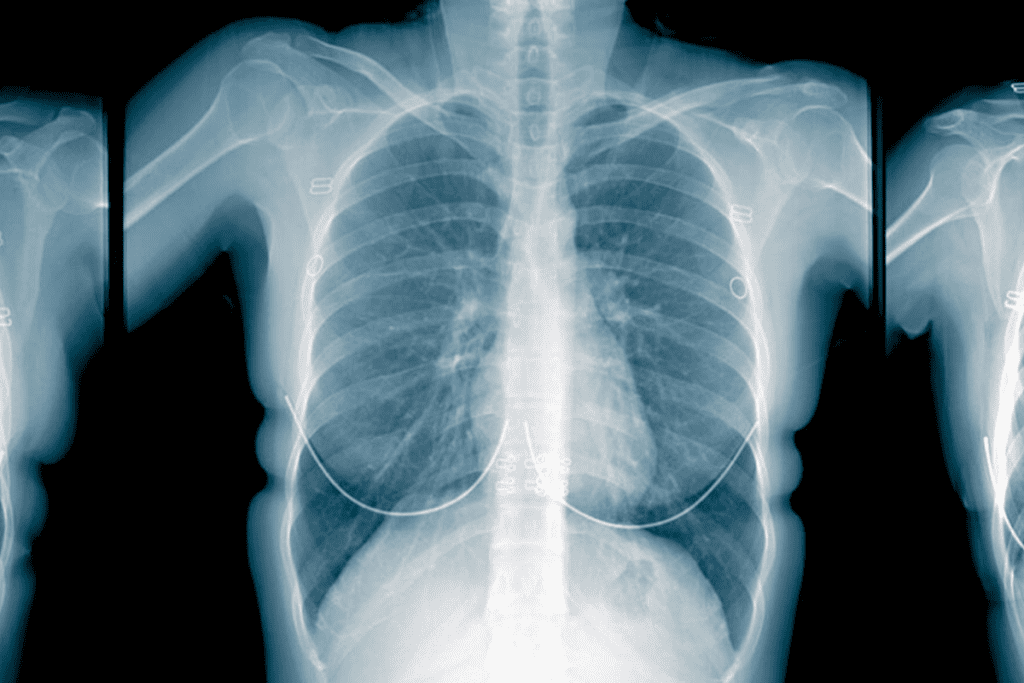
Lung cancer is a top cause of cancer deaths worldwide, and finding it early is key to improving survival chances. That’s why tools like PET Scan Lung Mass Cancer Detection are so important in the fight against lung cancer.Doctors rely on PET scans to figure out if a lung mass is cancerous. This accurate process plays a critical role in getting the right diagnosis and selecting the most effective treatment. With the advancement of technology, PET Scan Lung Mass Cancer Detection has become a major part of identifying, staging, and understanding lung cancer, giving patients a clearer path to treatment.
Key Takeaways
- PET scans play a significant role in detecting lung cancer.
- Early detection improves survival rates for lung cancer patients.
- Accurate diagnosis is key for effective treatment planning.
- PET scans help figure out if a lung mass is cancerous.
- New tech in PET scans makes diagnosis more accurate.
Understanding Lung Masses and Cancer Concerns
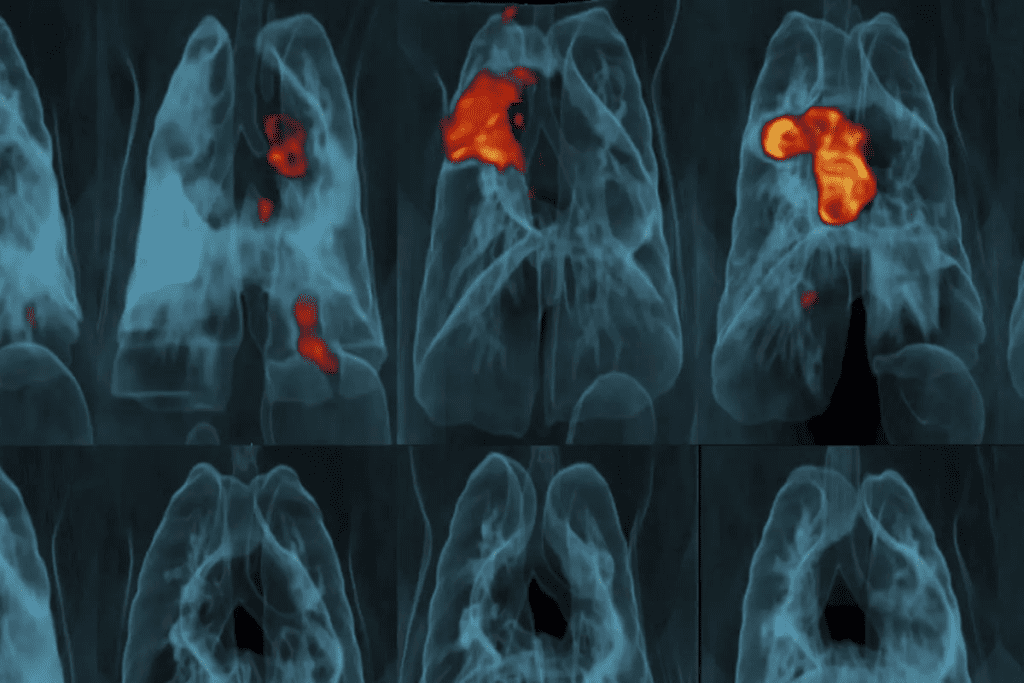
It’s important to know about lung masses to understand lung cancer risks. These masses can be either benign or malignant. Knowing the difference is key for diagnosis and treatment.
Types of Lung Masses and Their Prevalence
Lung masses come in different types based on their origin and characteristics. The most common types include:
- Benign Tumors: These are non-cancerous growths that don’t invade or spread.
- Malignant Tumors: These are cancerous growths that can invade and spread.
- Cysts and Inflammatory Masses: These look like tumors but aren’t cancerous.
Studies show that up to 20% of lung nodules on CT scans are benign.
Benign vs. Malignant Characteristics
It’s vital to tell benign from malignant lung masses. Signs of malignancy include:
- Rapid growth
- Irregular borders
- Large size
Benign masses have smooth borders, are stable, and may show calcifications.
Why Early Detection Matters for Survival Rates
Early lung cancer detection greatly improves survival chances. Studies show early-stage lung cancer patients have much better five-year survival rates than those diagnosed later.
| Stage at Diagnosis | Five-Year Survival Rate |
| Stage I | 60-80% |
| Stage III | 15-30% |
| Stage IV | <5% |
Early detection is key to better outcomes in lung cancer patients.
Common Symptoms That Prompt Imaging
Common symptoms that lead to imaging tests include:
- Coughing
- Chest pain
- Difficulty breathing
- Weight loss
These symptoms may indicate lung masses. Quick investigation is needed to find the cause.
“Early detection of lung cancer through imaging can significantly improve patient outcomes by allowing for timely intervention.”
Pulmonologist
The Basics of PET Scan Technology
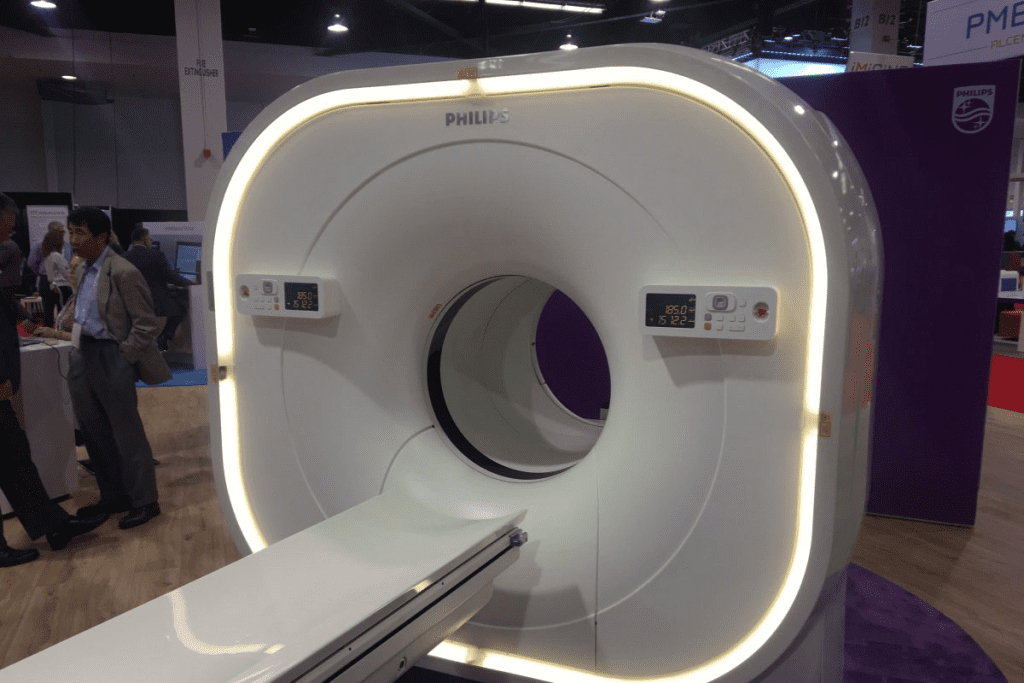
Understanding PET scan technology is key to seeing its role in fighting cancer. PET scans use special tracers to spot areas with high activity, which might mean cancer. This tech is great for finding out if cancer has spread and how well treatments are working.
What is a PET Scan and How It Works
A PET scan is a test that shows how active the body’s tissues and organs are. It uses a tiny amount of radioactive tracer injected into the blood. This tracer is picked up by cells and emits signals that the scanner catches.
These signals help create detailed images of the body’s activity. This is how PET scans work.
The Role of Radioactive Tracers
Radioactive tracers are vital for PET scans. The most used one is Fluorodeoxyglucose (FDG), a sugar molecule with a radioactive tag. Cancer cells, with their high activity, take up more FDG, making them visible on scans.
The right tracer depends on the cancer type and the scan’s purpose.
Difference Between PET and Other Imaging Tests
PET scans are different from CT and MRI scans. While CT and MRI show the body’s structure, PET scans show how active it is. This makes PET scans great for finding cancer, as it shows up differently in scans.
Evolution of PET Technology
PET technology has grown a lot over time. Better scanners, tracers, and algorithms have made scans clearer and more accurate. Today’s PET/CT scanners mix metabolic info from PET with detailed CT images, making diagnosis better.
Research keeps improving PET tech, like making new tracers for different cancers.
PET Scan Lung Mass Cancer Detection: Accuracy and Reliability
PET scans are key in finding lung cancer. They are very sensitive and specific. We’ll look at how well PET scans work in finding lung cancer, their strengths and weaknesses, and what affects their accuracy.
Sensitivity and Specificity Rates in Clinical Studies
Studies show PET scans are very good at finding lung cancer. A study in the Journal of Nuclear Medicine found a 96.8% sensitivity and 77.8% specificity in spotting cancerous lung nodules.
| Study | Sensitivity (%) | Specificity (%) |
| Journal of Nuclear Medicine | 96.8 | 77.8 |
| Radiology | 95.6 | 83.2 |
| European Journal of Nuclear Medicine | 97.3 | 81.4 |
False Positives and False Negatives: Understanding the Limitations
PET scans are very accurate but not 100% perfect. False positives can happen due to inflammation or other non-cancerous issues. False negatives might occur if the tumor is small or doesn’t show much activity.
“False positives and false negatives are inherent limitations of PET scans, stressing the need for careful interpretation and correlation with clinical findings.”
Nuclear Medicine Specialist
Factors Affecting Diagnostic Accuracy
Several things can change how accurate PET scans are. These include how well the patient is prepared, the technology of the scanner, and the skill of the doctor reading the scan.
- Patient preparation: Proper fasting and glucose control are key for accurate results.
- Scanner technology: Newer scanners have better image quality and accuracy.
- Physician expertise: Doctors with experience are vital for correct interpretation.
Statistical Reliability for Different Lung Cancer Types
PET scans work differently for different lung cancers. They are very good at finding non-small cell lung cancer (NSCLC). But, they might not be as accurate for certain types like adenocarcinoma in situ.
We know how important PET scans are in diagnosing and treating lung cancer. By knowing their strengths and weaknesses, doctors can make better decisions and care for their patients better.
When Doctors Recommend PET Scans for Lung Masses
PET scans are key in diagnosing and managing lung masses. They help when other tests are unclear. We use them to learn more about lung masses, guiding us in patient care.
Initial Diagnostic Pathway After Finding a Lung Mass
When a lung mass is found, we start a detailed diagnostic process. “We look at the patient’s history, symptoms, and imaging to decide on further tests,” says A pulmonologist. If it looks like cancer, a PET scan is often next.
A study shows PET scans’ value in complex cases like mesothelioma.
Risk Factors That Prompt PET Imaging
Some risk factors make a PET scan more likely for lung masses. These include smoking, asbestos exposure, and lung cancer family history. These factors suggest a higher chance of cancer, and PET scans help pinpoint aggressive areas for biopsy.
Follow-up After Inconclusive CT Findings
If a CT scan is unclear about a lung mass, a PET scan can help. PET scans show metabolic activity, helping tell if a mass is benign or malignant. This is key for indeterminate nodules or masses.
Monitoring Treatment Response in Confirmed Cancer Cases
PET scans are also used to check how lung cancer responds to treatment. “They show changes in tumor activity, helping us see if treatments are working,” says an oncologist. This helps us adjust treatment plans for better outcomes.
By using PET scans at different stages, we offer more tailored care for lung mass patients.
The Science Behind How PET Scans Detect Cancer
PET scans have changed how we find cancer. They use the special way cancer cells work. We’ll look at how this technology works, focusing on cancer cell activity and the role of FDG tracers.
Metabolic Activity and Glucose Uptake in Cancer Cells
Cancer cells use a lot of glucose to grow fast. This is key for PET scans to find them. Unlike normal cells, cancer cells need more glucose to grow quickly.
Key aspects of cancer cell metabolism include:
- Increased glucose uptake
- Enhanced glycolysis
- Altered metabolic pathways
How FDG Tracer Highlights Cancerous Tissue
The FDG tracer finds cells based on how much glucose they use. Cancer cells use more FDG because they grow fast. This makes them show up on PET scans.
Molecular Basis for Cancer Detection
PET scans find cancer by looking at how cells use glucose. Cancer cells have special transporters that help them take in glucose and FDG. This lets PET scans spot cancer by its activity.
| Molecular Feature | Role in Cancer Detection |
| Glucose Transporters | Facilitate glucose and FDG uptake |
| Hexokinase Activity | Traps FDG inside cells, boosting signal |
Differentiating Cancer from Inflammation
It can be hard to tell cancer from inflammation with PET scans. But, the way FDG is taken up and the patient’s history help. These clues help doctors make the right call.
Factors that aid in differentiation include:
- Intensity and pattern of FDG uptake
- Clinical history and symptoms
- Correlation with other imaging modalities
Preparing for Your PET Scan
To get the most out of your PET scan, it’s important to prepare well. Proper preparation helps ensure accurate and reliable results. These results are key for your diagnosis and treatment plan.
Dietary Restrictions and Fasting Requirements
Adhering to dietary restrictions and fasting is a key part of preparing for a PET scan. Patients usually need to fast for 4 to 6 hours before the scan. This means no food or drink except water during this time. Also, eating a high-fat, low-carb meal the night before can improve image quality.
Following these dietary guidelines closely is critical. Eating certain foods or drinks can affect the tracer’s distribution. This could lead to inaccurate results.
Medication Considerations and Possible Interactions
Before your PET scan, tell your healthcare provider about any medications you’re taking. Some medications may need to be adjusted or stopped to avoid interactions with the PET scan tracer. This includes prescription and over-the-counter drugs, as well as supplements
| Medication Type | Action Required | Reason |
| Diabetes Medications | Adjust dosage | To avoid affecting blood glucose levels |
| Insulin | Discuss with your doctor | To determine the best timing for administration |
| Certain Antibiotics | Potential discontinuation | To prevent interference with the tracer |
What to Wear and Bring to Your Appointment
On the day of your PET scan, wear comfortable, loose-fitting clothing without metal fasteners. Avoid jewelry and other metal objects that could interfere with the scan. Bring any relevant medical records, a list of your medications, and any previous imaging studies related to your condition.
Special Preparations for Diabetic Patients
Diabetic patients need to take extra precautions when preparing for a PET scan. It’s essential to manage your blood glucose levels to ensure the scan’s accuracy. Discuss your insulin regimen and any oral diabetes medications with your healthcare provider to make necessary adjustments before the scan.
By carefully following these guidelines, you can help ensure that your PET scan is conducted safely and effectively. This provides your healthcare team with the information they need to make informed decisions about your care.
The PET Scan Procedure: What to Expect
The PET scan is a key tool for doctors. It shows how active your body’s cells are. This helps find and treat diseases like lung cancer.
Before the Scan: Tracer Injection and Uptake Period
A radioactive tracer is given through a vein in your arm before the scan. This tracer, called FDG, goes to active areas like tumors. The tracer injection is quick and easy.
Then, you wait for about 60 minutes. This uptake period lets the tracer spread through your body. You’ll need to stay calm and quiet during this time.
| Step | Description | Duration |
| Tracer Injection | FDG tracer is injected into your bloodstream. | Instantaneous |
| Uptake Period | Waiting period for tracer distribution. | Approximately 60 minutes |
During the Scan: Positioning and Duration
When the waiting is over, you’ll lie down on a table. This table moves into the PET scanner. The PET scan duration is usually 30 to 60 minutes.
It’s important to stay very quiet and follow any breathing directions. The scanner will capture the signals from the tracer. This creates detailed images of your body’s activity.
After the Scan: Recovery and Precautions
After the scan, you can usually go back to your normal day. Unless your doctor says not to. Drinking lots of water helps get rid of the tracer.
Some people might feel a bit uncomfortable where the tracer was given. But these feelings don’t last long.
Managing Anxiety During the Procedure
Getting a PET scan can make you anxious. To help manage anxiety during the PET scan, try relaxation methods. Deep breathing or meditation can help.
Our team is here to answer any questions. We’ll make sure you feel supported and calm during the scan.
Interpreting PET Scan Results for Lung Masses
Understanding PET scan results is key to knowing what a lung mass is. A PET scan shows how active the lung mass is. This helps us tell if it’s benign or malignant.
Understanding SUV Values and What They Mean
SUV stands for Standardized Uptake Value. It shows how much a radioactive tracer is taken up by the body. Higher SUV values often mean more activity, which can point to cancer. But, SUV values alone are not enough to make a final judgment.
An SUV value above a certain level might suggest cancer. But, inflammation or infection can also raise SUV values. So, we look at the whole picture when we interpret SUV values.
What “Hot Spots” Indicate in the Lungs
“Hot spots” in a PET scan show where the tracer is taken up more. In lung masses, hot spots can mean high activity, possibly cancer. But, not all hot spots are cancerous; they can also be inflammation or infection.
The size, intensity, and location of hot spots are important. Along with clinical information, radiologists can tell us what they mean. Their expertise helps us understand the findings.
How Radiologists Analyze and Report Findings
Radiologists are key in looking at PET scan results. They check the images, SUV values, and hot spots. They compare these with other studies and clinical info to give a full picture.
The radiologist’s report will detail what they found. It will also suggest next steps or treatment. We work with radiologists to make sure patients get accurate and timely diagnoses.
Timeframe for Receiving Results
How long it takes to get PET scan results varies. It depends on the facility’s workload and the case’s complexity. Usually, results are ready in a few days to a week.
Talking to your healthcare provider about when to expect results is important. We aim to give timely and accurate results to help with treatment planning.
PET Scans for Lung Cancer Staging
Accurate lung cancer staging is key, and PET scans are essential. They give us detailed info on how far cancer has spread. This info is vital for choosing the right treatment.
How PET Helps Determine Cancer Stage
PET scans are vital in finding out lung cancer’s stage. They show where cancer is active. This helps us know if it’s just in one place or has spread.
PET scans use a special tracer to find cancer. They look for areas that use more sugar than normal. This helps us stage lung cancer accurately.
Detecting Metastasis to Lymph Nodes
Checking if cancer has reached lymph nodes is important. PET scans are great at finding this out. They look at lymph nodes in the chest and elsewhere.
Identifying Distant Metastases
PET scans also find cancer in distant parts of the body. They check the whole body for cancer in organs like the liver, bones, or brain. This helps us understand how far the cancer has spread.
Impact on Treatment Planning
PET scans greatly influence how we plan treatment for lung cancer patients. They help us decide between surgery, chemo, radiation, or a mix. This makes treatment more effective and reduces risks.
In summary, PET scans are vital for lung cancer staging. They give us important info on cancer spread and help plan treatment. This leads to better outcomes and fewer unnecessary treatments.
Limitations of PET Scans in Lung Cancer Detection
PET scans have changed how we find lung cancer. But, it’s key to know their limits for the best care. They work well for finding active tissues, but they’re not perfect.
Size Limitations for Small Nodules
PET scans struggle with small nodules. Tumors under 8-10 mm might not show up. This can cause false negatives, missing small but dangerous tumors.
Certain Cancer Types That May Be Missed
Not every lung cancer shows up on PET scans. For example, adenocarcinoma in situ and some adenocarcinomas might not light up. This is why we need to use other tests too.
Inflammatory Conditions That Mimic Cancer
Inflammation can look like cancer on PET scans. This is because inflamed tissues take up glucose. This can lead to false positives, making diagnosis harder.
Technical Limitations and Image Quality Issues
Many things can affect how clear a PET scan is. The scanner, the tracer dose, and how the patient is prepared all matter. Bad images can lead to wrong readings, showing the need for top-notch equipment and protocols.
| Limitation | Description | Impact on Diagnosis |
| Size Limitations | Difficulty detecting nodules | Potential for false negatives |
| Cancer Types | Low metabolic activity in certain cancers | May be missed by PET scan |
| Inflammatory Conditions | Inflammation can mimic cancer | False positives, complicating diagnosis |
| Technical Limitations | Variability in scanner quality and protocols | Impact on image quality and accuracy |
Combining PET with CT Scans: The Power of PET/CT
PET and CT scans together, known as PET/CT, have changed how we see inside the body. They mix the metabolic activity from PET scans with the detailed images from CT scans. This gives us a full view of the body’s inner workings and how they work.
Benefits of Integrated Imaging Technology
PET/CT scans are better than PET or CT scans alone. They offer more accurate diagnoses by combining metabolic and anatomical info. This helps spot and understand lesions, tumors, and other issues better.
Key benefits of PET/CT scans include:
- Enhanced diagnostic accuracy
- Improved staging capabilities for cancer
- Better treatment planning due to more precise information
- Reduced need for multiple separate scans, improving patient comfort and reducing overall cost
Improved Diagnostic Accuracy and Anatomical Context
PET/CT scans give us both the metabolic activity and detailed images. This is key in oncology, where knowing how tumors work is vital for treatment.
| Diagnostic Aspect | PET Scan | CT Scan | PET/CT Scan |
| Metabolic Activity | High | Low | High |
| Anatomical Detail | Low | High | High |
| Diagnostic Accuracy | Moderate | Moderate | High |
Better Staging Capabilities for Treatment Planning
PET/CT scans are key in cancer staging. They show how far the disease has spread. This info helps choose the best treatment, like surgery or chemotherapy.
“The use of PET/CT in oncology has significantly improved our ability to stage cancer accurately, which in turn allows for more personalized and effective treatment strategies.”
Oncologist
Reduced Need for Multiple Separate Scans
PET/CT scans mean fewer imaging tests for patients. This makes them more comfortable and saves money on tests.
In conclusion, PET/CT scans are a big step forward in medical imaging. They improve diagnosis, staging and reduce the need for extra scans. As technology grows, PET/CT scans will be even more vital in fighting diseases like cancer.
Comparing PET Scans to Other Lung Cancer Diagnostic Methods
Diagnosing lung cancer can be done in several ways, like PET scans, CT scans, MRI, and biopsies. Each method has its own good points and not-so-good points. Knowing these differences is key for finding and treating lung cancer effectively.
CT Scans vs. PET Scans: Strengths and Weaknesses
CT scans and PET scans are both used to find lung cancer. CT scans show detailed pictures of the body’s structure, helping spot lung masses. But, they might not tell the difference between harmless and harmful growths.
PET scans, on the other hand, show how active tissues are metabolically, helping spot cancer cells. They’re great at catching metabolic changes but don’t show as much detail as CT scans.
Using both CT and PET scans together can give a clearer picture of lung masses. This combo can make diagnosis more accurate and help decide on the best treatment.
MRI for Lung Masses: When It’s Preferred
MRI isn’t usually the first choice for lung cancer imaging, but it has its uses. MRI gives detailed views of soft tissues, which is helpful in some cases. It’s good for checking how far a tumor has spread or if it’s pressing on the spinal cord.
MRI might be chosen when you need to see soft tissues better or if you can’t have CT or PET scans for some reason.
Biopsy: The Gold Standard for Definitive Diagnosis
Even though imaging tests like PET scans are useful, biopsy is the best way to confirm lung cancer. A biopsy takes a tissue sample from the lung mass. This sample is then checked to see if it’s cancer.
This step is vital for knowing the cancer type and stage. It helps doctors decide on treatment and predict how well you’ll do.
Liquid Biopsies: A Complementary Approach
Liquid biopsies are a newer, less invasive way to diagnose. They look at DNA or biomarkers in the blood. Liquid biopsies can tell us about tumor genetics and how well treatment is working.
They’re not a full replacement for traditional biopsies but can help with treatment planning. They work well with imaging tests to guide care.
Risks and Side Effects of PET Scans
PET scans help diagnose lung cancer but come with risks. They are useful but have downsides.
Radiation Exposure Concerns and Context
PET scans use a radioactive tracer, which means some radiation exposure. This is a worry for many. The amount of radiation is usually safe, but talk to your doctor if you’ve had other tests.
Radiation exposure is a big deal, mainly for young people or those needing many scans. We always think about the benefits and risks.
Allergic Reactions to Tracers: Frequency and Management
Allergic reactions to PET scan tracers are rare but can happen. Symptoms include rash, itching, or trouble breathing. We try to avoid allergic reactions and are ready to handle them.
If an allergic reaction does happen, our team can help right away. It’s important to tell us about any allergies before the scan.
Special Considerations for Pregnant Women
If you’re pregnant or think you might be, tell your doctor before a PET scan. The radiation is a concern. We decide if the scan is worth the risk.
For pregnant women, we might choose other tests. We work with them to find the safest option.
Weighing Benefits Against Potentail Risks
For most, the benefits of a PET scan are greater than the risks. But, it’s key to talk to your doctor about your situation.
We look at your medical history, the lung mass, and how the scan will help plan treatment. This helps us decide if a PET scan is right for you.
Cost and Insurance Coverage for PET Scans
Understanding the cost of PET scans is key for those facing lung cancer. The price of these tests can be a big worry.
Average Costs in the United States
In the U.S., PET scan prices vary a lot. This depends on where you are, the facility, and if it’s a PET/CT scan. Costs usually fall between $1,000 and $5,000 or more. Many find these prices hard to handle.
Medicare and Private Insurance Coverage Criteria
But, many insurances, including Medicare, cover PET scans for lung cancer. Medicare usually covers it when it’s needed. Private insurance rules can differ, so it’s key to check your policy. We suggest talking to your doctor and insurance about what’s covered.
Prior Authorization Requirements
Getting prior approval is often needed for PET scans. This means getting okay from your insurance before the scan. It makes sure the scan is really needed. We advise working with your healthcare team to get this done.
Financial Assistance Options for Uninsured Patients
If you don’t have insurance, there are ways to get help. Some places offer financial aid or lower fees based on income. Non-profit groups might also help. We urge uninsured patients to look into these options and talk to their healthcare provider about their financial situation.
In summary, while PET scans can be pricey, there are many things to consider and ways to get help. We’re here to support our patients every step of the way.
Recent Advances in PET Technology for Lung Cancer
Recent PET technology changes are making lung cancer diagnosis and treatment better. These changes include new tracers, improved imaging systems, and AI use. They help doctors give more precise and effective care.
New Tracers Beyond FDG for Specific Cancer Types
PET scans used to mainly use Fluorodeoxyglucose (FDG) to find cancer. Now, scientists are making new tracers that target specific cancer cells. For example, Fluorothymidine (FLT) helps see how fast cells are growing, giving more detailed tumor info.
These new tracers help identify and understand different lung cancer types. This means doctors can tailor treatments better. It’s a big step towards personalized medicine.
Higher Resolution Imaging Systems
New PET imaging systems can see smaller tumors and metastases. This is key for early lung cancer diagnosis and staging.
These systems also help track how well treatments are working. This is important for making treatment plans that fit each patient’s needs.
AI-Assisted Interpretation and Detection
AI is being used in PET imaging, too. AI helps radiologists by pointing out important areas and giving detailed data. This teamwork makes diagnoses more accurate and faster.
| AI-Assisted Feature | Benefit |
| Automated Detection | Early identification of possible tumors |
| Quantitative Analysis | Precise measurement of tracer uptake |
| Comparative Analysis | Tracking changes over time or between scans |
Future Directions in PET Imaging Research
The future of PET imaging in lung cancer looks bright. Research is working on better tracers, higher resolution images, and more AI use. These efforts will help us detect and treat lung cancer even better.
As PET technology gets better, lung cancer care will become more personalized. We’ll see better patient results. PET imaging will keep working with other diagnostic and treatment methods in research and development.
Conclusion: The Role of PET Scans in Lung Cancer Care
PET scans are key in diagnosing, staging, and planning treatment for lung cancer. They show how active lung masses are metabolically. This helps tell if a growth is benign or cancerous.
PET scans help doctors see how far cancer has spread and if it has reached other parts of the body. They also help track how well treatments are working. By using PET and CT scans together, doctors get a clearer picture of the disease. This is vital for making effective treatment plans.
In summary, PET scans are vital in lung cancer care. They give insights that help doctors make better decisions. As PET technology gets better, we’ll see even more precise care for lung cancer patients. This will improve their quality of life and chances of survival.
FAQ
What is a PET scan, and how does it help in detecting lung mass cancer?
A PET scan uses a radioactive tracer to see how cells in the body work. It spots lung mass cancer by finding areas that use a lot of sugar, a sign of cancer.
How accurate are PET scans in detecting lung cancer?
PET scans are very good at finding lung cancer, thanks to their high sensitivity and specificity. But, how well they work can depend on the tumor size, cancer type, and technical issues.
What are the benefits of using PET/CT scans for lung cancer diagnosis?
PET/CT scans are more accurate and help stage lung cancer better. They combine imaging to show both how cells work and their location. This helps find and understand lung masses better.
How do I prepare for a PET scan for lung cancer detection?
To get ready for a PET scan, you might need to eat less, avoid some medicines, and fast for hours. People with diabetes might have special steps. Always tell your doctor about any health issues or allergies.
What are the risks and side effects associated with PET scans?
PET scans use radiation and might cause allergic reactions to the tracer. Pregnant women should talk to their doctor about the risks. The benefits of using PET scans for cancer often outweigh the risks.
How much does a PET scan cost, and is it covered by insurance?
PET scan costs vary, and insurance coverage depends on your provider and situation. Medicare and private insurance often cover PET scans for cancer, but you might need to get approval first.
Can PET scans detect all types of lung cancer?
PET scans work well for many lung cancers, but not all. Some cancers, like small cell lung cancer, might not show up as clearly. The scan’s success depends on the cancer type and size.
How do PET scans compare to other diagnostic methods for lung cancer?
PET scans have unique benefits for lung cancer detection and staging. But, other tests like CT scans, MRI, and biopsies are also important. The right test depends on the case and needed information.
What is the role of PET scans in lung cancer staging?
PET scans help figure out lung cancer’s stage by spotting spread to lymph nodes and other organs. This info is key for planning treatment and understanding the cancer’s outlook.
Are there any new advancements in PET technology for lung cancer detection?
Yes, PET technology is getting better with new tracers, higher resolution, and AI help. These updates aim to make PET scans even better at finding and managing lung cancer.
References
Wang, H.-Q., Zhao, L., Zhao, J., & Wang, Q. (2015). Analysis on early detection of lung cancer by PET/CT scan. World Journal of Oncology, 6(3), 390“396.
Deppen, S. A., et al. (2014). Accuracy of FDG-PET to diagnose lung cancer in areas with endemic infectious lung disease. JAMA Oncology, 1(6), 783“791.
Liu, C., et al. (2023). A machine learning-based PET/CT model for automatic diagnosis of early-stage lung cancer. Frontiers in Oncology, 13, 1192908.
Lindell, R. M., et al. (2012). A retrospective review of PET in 22 non-small cell lung cancer screening patients. American Journal of Roentgenology, 185(1), 61-67.